Tag: Trai

  • TV18, Sony Pictures India announce new channel rates

    TV18, Sony Pictures India announce new channel rates

    MUMBAI: Days after Zee announced its new tariff rates, TV18 Broadcast and Sony Pictures Networks India (SPNI) have also made public their own rates, in accordance with TRAI tariff rules.

    IndiaCast, the authorised distributing agency of TV18 channels, has updated the new format based Reference Interconnect Offer (RIO) on its website. This updated RIO will be effective for the term commencing from 29 December 2018. SPNI has also published its new RIO on its website.

    All TV18 channels will be available on an a-la-carte basis, as required by regulations. The a-la-carte rate of all SD & HD channels is under Rs 19 per month. The maximum retail price (MRP) of the basic bouquet for Hindi speaking market (HSM) named as Hindi Base starts at Rs 36 which includes Colors, MTV, Rishtey and CNN News 18. The Hindi Ultra pack has been priced at Rs 58. There’s an India Base pack which includes important channels from all regions and each genre at Rs 79.

    The broadcaster has announced multiple bouquets for several regional markets including base and ultra-pack both in SD and HD. Karnataka Base pack will cost Rs 53, while Maharashtra Base pack price has been fixed at Rs 45 and Bengal Base at Rs 41.

    SPNI is also providing a total of 32 channels including SD and HD on a-la-carte basis at under Rs 19 per month.

    SPNI has also declared ten bouquets concentrating on different regional markets as well along with focusing on its premium channels. The base pack BST Regular pack has been fixed at Rs 55 while its variants of regional languages are priced higher. SPN Blockbuster Pack priced at Rs 86.4 includes SET, Sony Yay!, Sony BBC Earth and ESPN. The Blockbuster pack also has variants with Bengali and Marathi languages.

    Two different packs focusing on the South Indian market are also available. The Big HD pack with all HD channels is priced at Rs 116 where Sony Marathi HD is proposed to be launched in place of TEN Golf HD. While the viewers of HD channels are growing slowly but gradually, two HD bouquets, one for South, are also available.

    The deadline given by TRAI was 31 August for publication of RIO, declaration of MRP and nature of channels, in connection with its tariff order. Zee Entertainment Enterprises Limited (ZEEL) was the only broadcaster to publish its RIO before the given deadline.

    Star India is the only big broadcaster which has not filed its ROI yet. The broadcaster is also one of the main petitioners against the TRAI tariff and interconnect order which will now be heard on 5 September by the Supreme Court.

  • SC defers hearing of Star India petition on TRAI tariff order to 5 September

    SC defers hearing of Star India petition on TRAI tariff order to 5 September

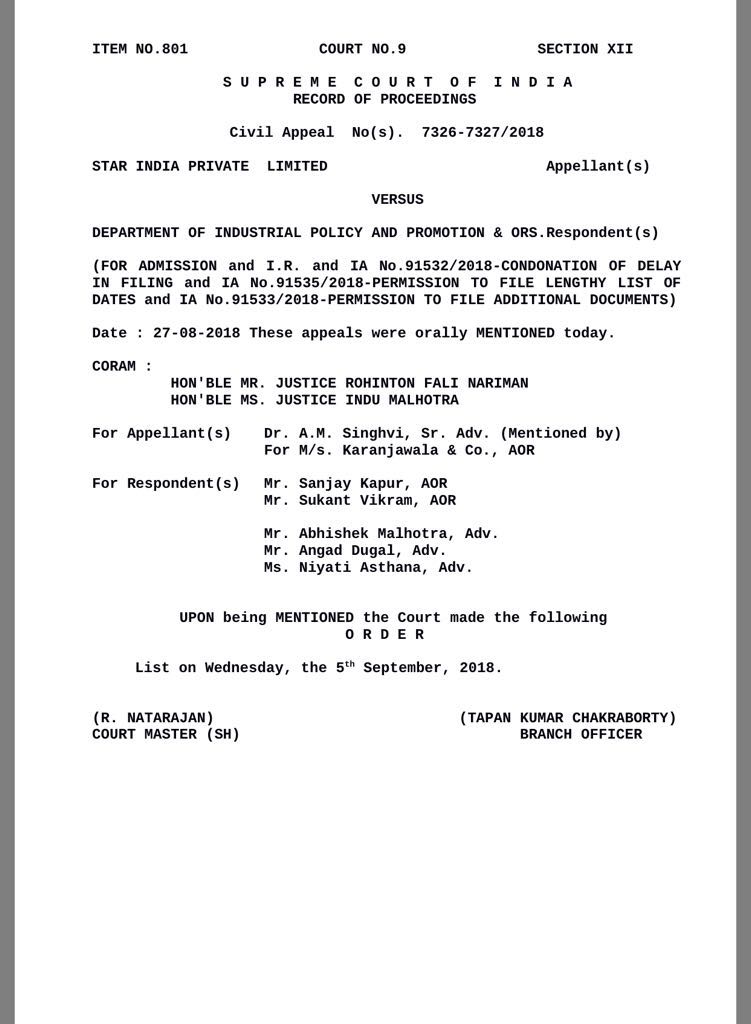
    NEW DELHI: The Supreme Court has deferred the hearing of Star India’s petition filed against TRAI tariff and inter-connect order to 5 September, 2018.  The order had been given a go-ahead by the Madras High Court.

    The TRAI tariff orders, first contested in Madras High Court by the petitioners, were cleared by the Chennai court with certain riders after hearings that continued almost over 16 months in front of two benches of the court.

    Though the petitioners were unable for comments, a legal eagle explained that the very fact the Supreme Court has allotted a day for hearing the petition of Star India and Vijay TV, which basically revolves around copyright and why the regulator doesn’t have jurisdiction over such issues, highlights the fact that the judge doesn’t want to take a decision in a hurry.

    However, ahead of 31 August 2018 deadline for publishing TV channel prices in a new format Zee Entertainment Enterprises Ltd  (ZEEL) has made public its channel prices in line with the tariff order, setting an example for owners of other TV channels.

    All ZEEL channels will be available on a-la-carte basis, as required by regulations, and the consumers will also have the option to choose from specifically created bouquets for Hindi speaking markets (HSM) and different regional language markets like Marathi, Bangla, Odia, Bhojpuri, Tamil, Telugu, Kannada and Malayalam.

    After the Madras HC had given a thumb up to TRAI tariff order, and both the petitioners and the defendant (TRAI) had filed caveats in the Supreme Court, the regulator had bowled a googly saying that its tariff order would come into effect from 3 July 2018 as all judicial compliances had been completed.

    “Having complied with  the  judicial  mandates  in  the  matter,  the Telecommunication (Broadcasting and Cable) Services (Eighth) (Addressable Systems)  Tariff   Order, 2017 and  the Telecommunication (Broadcasting and Cable) Interconnection (Addressable Systems) Regulations, 2017 as upheld by the Hon’ble Madras High  Court and the Telecommunication (Broadcasting and Cable) Services Standards  of   Quality  of  Service and  Consumer  Protection (Addressable Systems) Regulations, 2017 come into effect from 3rd July 2018,” the regulator had said in a statement pointing out that all timelines mentioned in the original order should be adhered to immediately.

    According to TRAI, implementation of the new regulatory framework will “bring in transparency”, enable provisioning of affordable broadcasting and cable TV services for the   consumer and, at the   same time, “would lead to an orderly growth of the sector”.

  • ZEEL announces new TV channel prices ahead of deadline

    ZEEL announces new TV channel prices ahead of deadline

    MUMBAI: Ahead of 31 August 2018 deadline for publishing TV channel prices in a new format and a day before the Supreme Court hears a case relating to TRAI’s new tariff regime, Zee Entertainment Enterprises Ltd  (ZEEL) has made public its channel prices as suggested by the regulator in 2016, setting an example for owners of other TV channels.

    All ZEEL channels will be available on a-la-carte basis, as required by regulations, and the consumers will also have the option to choose from specifically created bouquets for Hindi speaking markets (HSM) and different regional language markets like Marathi, Bangla, Odia, Bhojpuri, Tamil, Telugu, Kannada and Malayalam, an official statement from ZEEL said on Monday evening.

    The Punit Goenka-led ZEEL’s initiative to be first off the blocks with a-la-carte pricing could very well put pressure on other broadcasters to follow the example. Goenka also happens to be the president of the Indian Broadcasting Foundation, an industry body that claims its members manage 350+ TV channels and about 90 per cent of television viewership across the country.

    [[{“fid”:”836178″,”view_mode”:”default”,”fields”:{“format”:”default”,”alignment”:””,”field_file_image_alt_text[und][0][value]”:”graph”,”field_file_image_title_text[und][0][value]”:”graph”},”link_text”:null,”type”:”media”,”field_deltas”:{“1”:{“format”:”default”,”alignment”:””,”field_file_image_alt_text[und][0][value]”:”graph”,”field_file_image_title_text[und][0][value]”:”graph”}},”attributes”:{“alt”:”graph”,”title”:”graph”,”height”:266,”width”:624,”class”:”media-element file-default”,”data-delta”:”1″}}]]

    Meanwhile, according to ZEEL, for each market, there will be multiple bouquets available to consumers across the country at different price points. Each bouquet would constitute a mix of channels of different genres, including general entertainment, movies, news, infotainment and music. The starting bouquet (B1) is likely to exclude English entertainment and English movie channels whereas the premium bouquet would include all channels offered by Zee.

    ZEEL is likely to keep the prices of Hindi language bouquets from Rs. 45 upwards. For other languages, bouquet prices will be higher in those markets where Zee has multiple offerings and lower in other cases. For the discerning high definition (HD) consumers, Zee is creating additional bouquets that will make it convenient for various operators to offer to their respective subscribers, the statement said. The Hindi language HD bouquets are likely to be priced Rs. 60 upwards.

    ZEEL has decided to offer all its News channels along with its other popular channels like Zee Anmol, Big Ganga and Big Magic as part of these pay bouquets. As a result, these channels would not be available in the FTA pack.

    In a related development, the Supreme Court is scheduled to hear a case filed by Star India and Vijay TV against Madras High Court clearing regulator TRAI’s new tariff regulations, which were first announced middle 2016 but has been in suspended animation since late 2016 due to various legalities.

  • WhatsApp needs to have local entity answerable to Indian laws: Govt

    WhatsApp needs to have local entity answerable to Indian laws: Govt

    NEW DELHI: The Indian government’s unambiguous and non-encrypted message to WhatsApp: set up a local entity in the country that is answerable to local laws, and find a tech solution to trace the origin of fake messages and content on the platform.

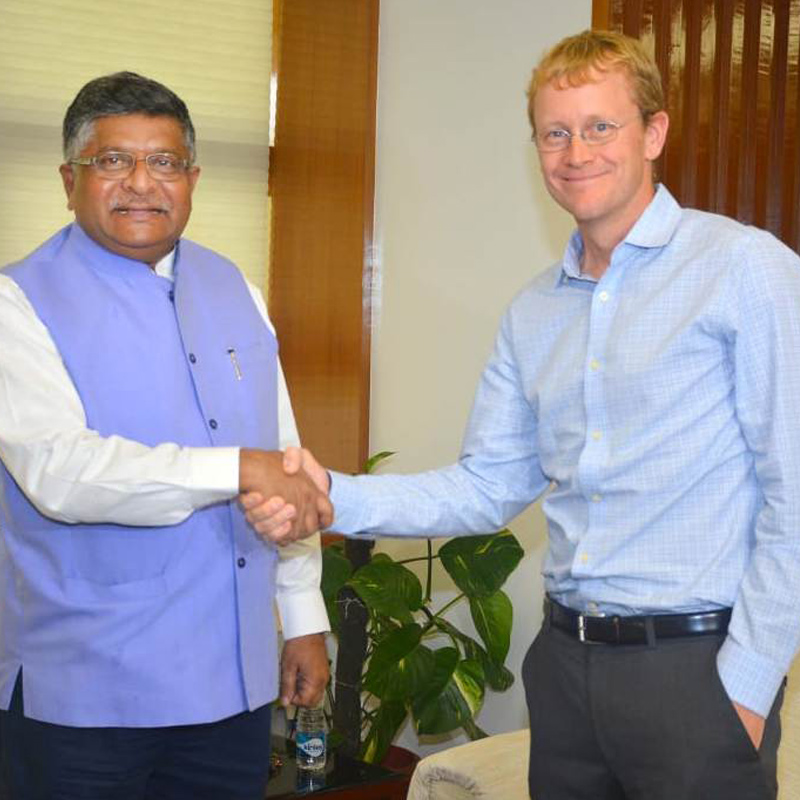
    “I had a productive meeting with Chris Daniels, the CEO of WhatsApp. I complimented him for the awakening, which WhatsApp has led in the entire country… But there are also sinister developments like mob lynching and revenge porn, you must find solutions to these challenges, which are downright criminal and [in] violation of Indian laws,” Minister of Electronics and Information Technology (Meity) Ravi Shankar Prasad was quoted by PTI as having said after meeting WhatsApp head Chris Daniels yesterday.

    While admitting that the Facebook-owned messaging app has contributed significantly to India’s digital story, Prasad said he has asked WhatsApp to set up a corporate entity in India, appoint a grievance officer and find a technical solution to tracing the origin of fake messages on its platform.

    “I requested CEO WhatsApp Chris Daniels to set up a grievance officer in India; establish a corporate entity in India & comply with Indian laws. He assured me that #Whatsapp will soon take steps on all these counts,” Prasad said in a tweet.

    Later talking to reporters in the capital, the minister added: “I had said earlier also; it does not take rocket science to locate a message being circulated in hundreds and thousands…you must have a mechanism to find a solution.”

    According to Prasad, Whatsapp could face abetment charges if no action is taken by it. The messaging platform has taken some corrective steps in the recent past like limiting the number of forwards that an individual can make in India.

    In recent times, WhatsApp has been facing the heat as it had been accused of being the platform via which hateful messages and rumours were spread in India leading to violence and crimes. The issue, which some critics said was akin to shooting the messenger instead of upholding the law of the land, has also reverberated in the Indian parliament with lawmakers trying to put the government on the mat for WhatsApp-spread rumours-linked deaths and crimes.

    While Prasad is on record saying he’s in favour of gradually evolving a policy for regulating the likes of WhatsApp, Facebook and Twitter, his ministry’s nudge has made the Department of Telecoms circulate a missive to telecom players and industry bodies seeking suggestions on ways to block services that ride the telecom infrastructure. The proposal has been criticized by many, including a chamber of commerce, Assocham.

    Telecoms regulator TRAI is also exploring regulations for OTT services like WhatsApp.

  • RS Sharma re-appointed TRAI chairman till Sept 2020

    RS Sharma re-appointed TRAI chairman till Sept 2020

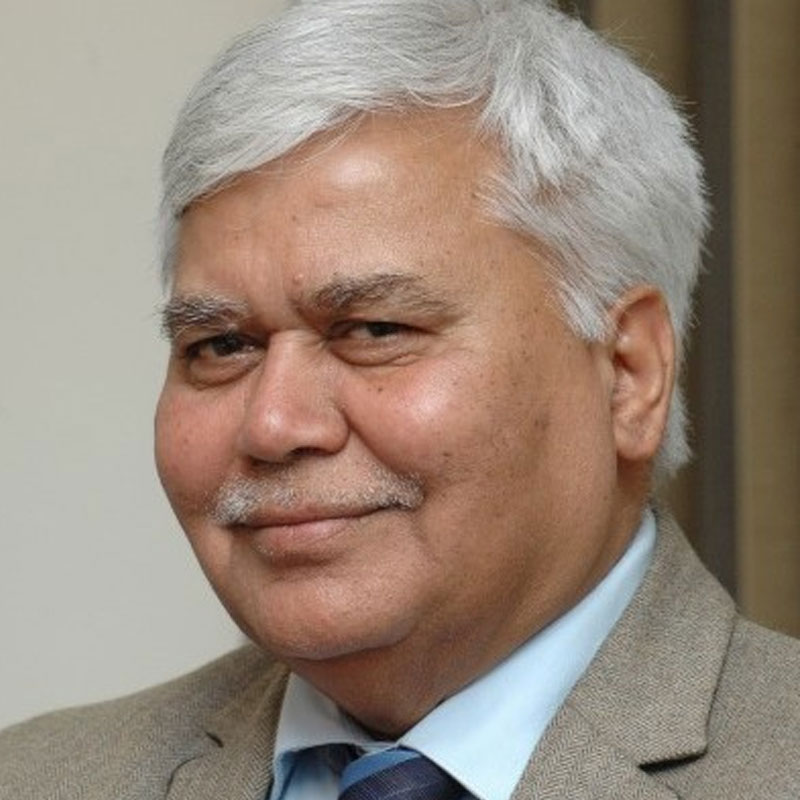
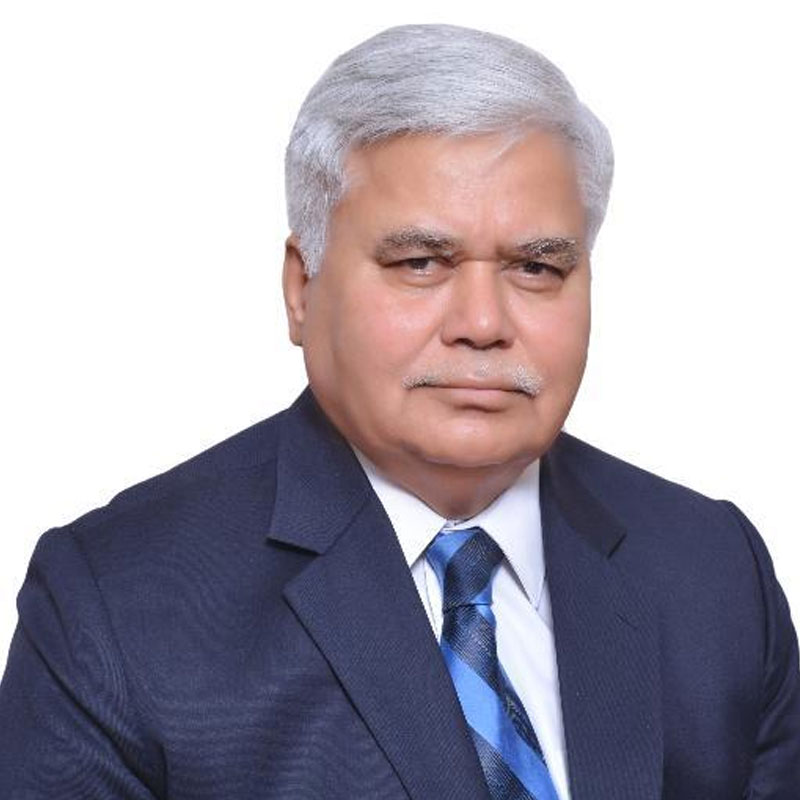
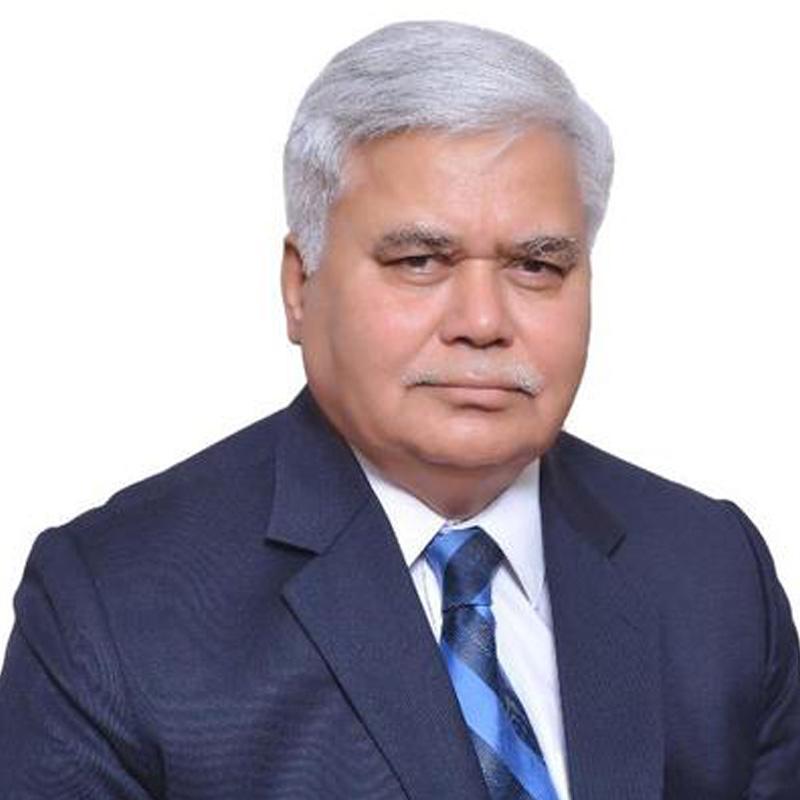
    MUMBAI: The Indian government on Thursday re-appointed RS Sharma as the chairman of Telecom Regulatory of India (TRAI) till 30 September 2020 when he attains the age of 65 or till further notice. Sharma completed his first tenure as the chairman on 9 August 2018.

    This decision was taken today by the appointment committee of the cabinet and necessary communication in this regards has been sent to the Department of Telecommunications.

    Talking to PTI on Wednesday, Sharma said,”Some people take the line that if you are pro-consumer, you are anti-industry… that is far from the truth. Pro-consumer does not mean anti-industry. It is not a zero-sum game, one should be conscious of that.”

    Sharma noted that the telecom sector has undergone a “fundamental change” marked by operator consolidation, the explosion of data and fierce market competition.

    “There are concerns about the quality of service and those concerns, unfortunately, remain till date. TRAI has tried to do the best, within the framework of the Act.

    There is a new regulation on service quality that is granular and will be helpful…operators have also become sensitive to the fact that they cannot leave one area or tower unattended for long,” Sharma said.

    More recently, industry body Cellular Operators Association of India (COAI) raised a red flag over TRAI’s new regulations on curbing pesky calls and messages, saying tailoring of systems, and use of blockchain technology will involve Rs 200-400 crore investment and 18 months for the rollout, at a time when the sector is financially-stressed.

    Sharma on Wednesday said that “reasonable time” has been given to the telecom operators on norms to curtail pesky telemarketing calls and messages. The rules, he said, came about only after a prolonged discussion with the industry.”I think reasonable time has been given…My position has been that the regulation has come after a lengthy year-long discussion process. It is not the knee-jerk reaction of TRAI, that it has issued these regulations,” Sharma said.

  • Being pro-consumer does not mean one is anti-industry: TRAI chairman RS Sharma

    Being pro-consumer does not mean one is anti-industry: TRAI chairman RS Sharma

    MUMBAI: Outgoing TRAI chairman RS Sharma, whose tenure saw major, at times controversial, decisions on issues like termination charge and predatory pricing, on Wednesday said he is of the firm belief that being pro-consumer does not mean one is anti-industry.

    The TRAI Act itself calls for ensuring consumer protection and growth of the sector in equal measure, Sharma said.

    “Some people take the line that if you are pro-consumer, you are anti-industry… that is far from the truth. Pro-consumer does not mean anti-industry. It is not a zero-sum game, one should be conscious of that,” Sharma told PTI.

    The TRAI Act mandates that the regulator has to ensure fair competition, consumer protection and growth of the industry, said Sharma who is set to complete his term as TRAI chief on Thursday.

    In the past, decisions by Telecom Regulatory Authority of India (TRAI), ranging from slashing of call-connect charges to its stance on the provision of points of interconnect (sought by Reliance Jio at the start of its services), and predatory pricing rules have come under the industry’s attack. 

    Earlier this year, TRAI’s predatory pricing norms sparked-off a furore as old telecom operators and industry association criticised the new rules.

    More recently, industry body Cellular Operators Association of India (COAI) raised a red flag over TRAI’s new regulations on curbing pesky calls and messages, saying tailoring of systems, and use of blockchain technology will involve Rs 200-400 crore investment and 18 months for the rollout, at a time when the sector is financially-stressed.

    Sharma on Wednesday said that “reasonable time” has been given to the telecom operators on norms to curtail pesky telemarketing calls and messages. The rules, he said, came about only after a prolonged discussion with the industry.

    “I think reasonable time has been given…My position has been that the regulation has come after a lengthy year-long discussion process. It is not the knee-jerk reaction of TRAI, that it has issued these regulations,” Sharma said.

    Recounting his early days in TRAI, Sharma admitted that he had initially been somewhat apprehensive on whether the regulatory role would imbibe a developmental aspect.

    “… initially, I was a bit apprehensive as I had, through my life, been engaged in developmental work … I was wondering whether the regulatory role had any developmental facet. But I had the advantage of being in technology space for quite some time, and telecom is more about technology today…I have thoroughly enjoyed this role,” he said.

    Sharma noted that the telecom sector has undergone a “fundamental change” marked by operator consolidation, the explosion of data and fierce market competition.

    “There are concerns about the quality of service and those concerns, unfortunately, remain till date. TRAI has tried to do the best, within the framework of the Act.

    There is a new regulation on service quality that is granular and will be helpful…operators have also become sensitive to the fact that they cannot leave one area or tower unattended for long,” Sharma said.

  • MIB seeks details to simply forex payments for broadcasters, teleport ops

    MIB seeks details to simply forex payments for broadcasters, teleport ops

    MUMBAI: In what it says is aimed at further easing norms for doing broadcast business, the government has asked for particulars from TV channels and teleport operators using services of foreign satellites for uplinking and temporary uplinking so payment of foreign exchange processes could be simplified.

    Broadcasters need to provide the name of the company, name of the service provider, name of the country of the service provider, purpose for bandwidth utilization, service order number and validity of agreement, Ministry of Information and Broadcasting said in a recent advisory.

    In 2014, the Ministry of Information and Broadcasting (MIB) advised all broadcast companies and teleport operators to strictly follow the guidelines under the provisions of the FEMA Act 1999 and a notice by the RBI requiring prior approval of the MIB for making remittance of foreign exchange towards availing transponder services on foreign satellite for up-linking of TV channels/teleport services/DSNG operations/temporary events.

    The TRAI has also urged (http://www.indiantelevision.com/regulators/trai/trai-releases-recommendations-on-easing-broadcast-business-180226) the government to simplify the norms regarding licensing and clearance processes for broadcast companies. It even suggested that satellite spectrum allocation must be done through the year for the convenience of broadcasters.

    It asked for streamlining of process for granting permission, giving security clearances within 60 days and setting up an integrated portal for everyone’s convenience.

    Late last year, the ministry had asked TRAI (http://www.indiantelevision.com/regulators/trai/trai-paper-seeks-to-streamline-uplinking-downlinking-norms-171219 )to come up with a new set of rules for uplinking and downlinking norms since the previous one was six years old and technological advances have changed the broadcast sector. One of the key questions was whether there was a need to redefine the meaning of news and current affairs and non-news channels.

  • TRAI releases recommendation on auction of spectrum

    TRAI releases recommendation on auction of spectrum

    MUMBAI: The Telecom Regulatory Authority of India (TRAI) on 1 August released the recommendations for  “Auction of Spectrum in 700 MHz, 800 MHz, 900 MHz, 1800 MHz, 2100 MHz,  2300 MHz, 2500 MHz, 3300-3400 MHz and 3400-3600 MHz Bands”.

    The Department of Telecommunications (DoT) through its letter dated 19 April 2017 requested TRAI to provide applicable reserve price, quantum of spectrum to be auctioned and associated conditions for auction of spectrum in all the bands mentioned above, for all the LSAs under the terms of clause 11 (1) (a) of TRAI Act, 1997 (as amended).

    TRAI sought additional information/ clarifications on some of the issues from DoT. However, to speed up the process, based on the available information, TRAI issued the consultation paper (CP) on 28 August 2017 after which an open house discussion (OHD) was conducted. 

    The salient features of the recommendations are given below:

    • Entire available spectrum should be put to auction in the forthcoming auction.

    • Barring the specific locations or districts where ISRO is using the 25 MHz (3400 MHz-3425 MHz) of spectrum, the entire spectrum from 3300 MHz to 3600 MHz should be made available for access services and should be included in the forthcoming auction.

    • 3300-3600 MHz should be auctioned as a single band and TDD based frequency arrangement should be adopted for this band.

    • Spectrum in 3300-3600 MHz band should be put to auction in the block size of 20 MHz. To avoid monopolisation of this band, there should be limit of 100 MHz per bidder. Since the TSPs are allowed to trade their partial or complete spectrum holding to another TSP, the limit of 100

    MHz spectrum in 3300-3600 MHz band, shall also apply for spectrum trading.  In case a TSP acquires more than one block, the entire spectrum should be assigned to it in contiguous form.

    • No roll out obligations should be mandated for spectrum in 3300-3600 MHz band. However, to avoid any misuse of not mandating any roll-out obligations, the lock-in period for spectrum in this band for becoming eligible for spectrum trading should be five years instead of two years.

    • The revised provisions of spectrum cap (i.e.  35 per cent overall cap and a cap of 50 per cent on the combined spectrum holding in the sub-1 GHz bands) should be extended to 3300-3600 MHz band also. Additionally, in 3300-3600 MHz band, there should be a spectrum holding cap of 100 MHz per licensee

    • There is an urgent need of audit for all allocated spectrum both commercial as well as spectrum allocated to various PSUs/ Government organisations. This should be done by an independent agency on a regular basis.

    • Recommended reserve price for various spectrum bands is as per table given below:

    public://list_19.jpg

  • Chrome DM services help optimise viewership ratings: Pankaj Krishna

    Chrome DM services help optimise viewership ratings: Pankaj Krishna

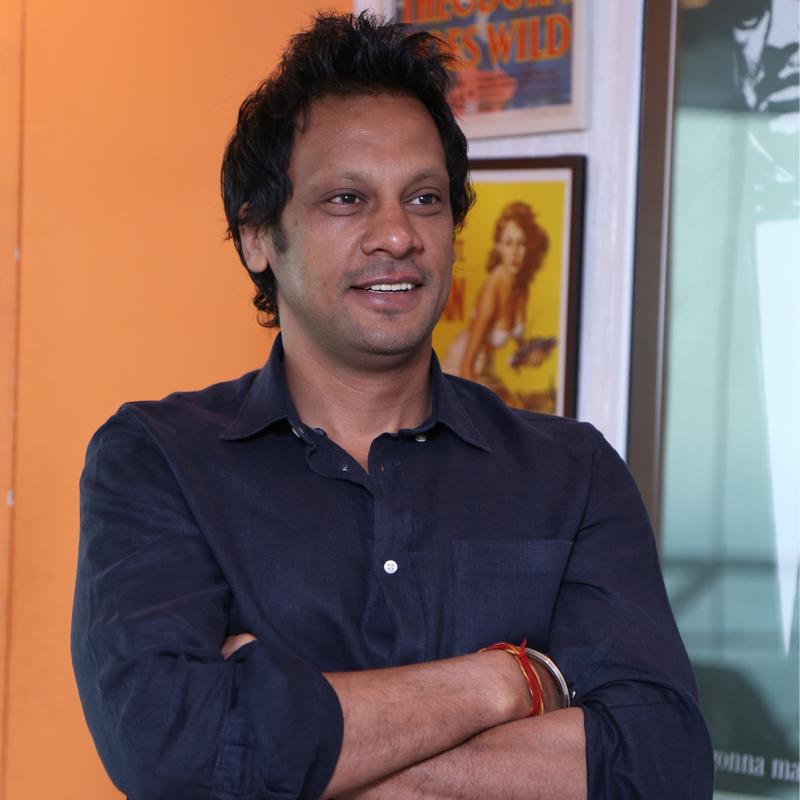
    As you walk into the Chrome Data Analytics & Media’s office on the outskirts of Delhi, you see the company chief executive Pankaj Krishna ‘talking to himself’ in the wide-glass paned conference room. Only after being ushered in, you realise, he’s actually holding a business conversation with his colleague in the Mumbai office whose live images also appear on the big TV screen placed in the room. “This connection is always ‘live’ so any issue can be discussed asap,” he informs languidly, pushing back the chair’s backrest to the maximum.

    For a technology-driven market research and advisory firm with a pan-India on-ground presence and a list of clients that include Indian and global companies, apart from a prominent political party, Krishna looks less like a chief executive and more like a person out on a beach holiday. His hair pulled back in a casual pony-tail, and clad in a stylishly crumpled linen shirt, cotton trousers and kohlapuri chappals, he seems out of place in an office that’s buzzing with activity and some serious data analytics. “Just returned to office some time back after being up the whole night in the office with the masons, plumbers, etc. trying to get the main washroom relocated and refurbished according to Vaastu (the Indian system of architecture),” the man offers an explanation apologetically. Huh!!?? Probably, that’s also an indication of the nature of the person that he likes to get involved in even the smallest details of business.

    As of late 2017, the organisation had a team of big team of field staff, 150+ managerial staff and 450 tele-callers speaking over 22 languages to gather data from over 3,000 towns. With a major presence in villages too, Chrome DM also has a fairly expansive reach into rural India. That’s what the company website states. Krishna adds that there could be some small changes in those numbers as the company forays into new verticals (human resources placements, for example) and targets new avenues to monetise the huge amount of data that’s collected on a daily basis. So, you can very well be India’s Cambridge Analytica, one asks him cheekily. Without batting an eyelid, Krishna guffaws and counters: “Yes certainly, but minus the data leaks. We are very particular about data protection.”

    Chrome DM’s office on the eight floor of a building overlooking the expressway connecting the industrial hub of Noida to Delhi offers a great view, especially from Krishna’s personal office adjacent to the conference room. The vastness of the view also compares with the vision with which the company had been set up to do research, offer advisory and indulge in data crunching for an expanding list of clients — many of them from India’s billion-dollar broadcast and cable sectors.

    Indiantelevision.com engages Krishna, a first-generation entrepreneur, on a variety of issues ranging from TV audience-related research, dual LCNs, piracy of TV signals, India’s ongoing digitisation of TV services and data analytics. Excerpts from the interview:

    How would you describe what Chrome DM does?

    Chrome DM is a tech driven primary research and data analytics advisory catering to over 450 clients (broadcasting, FMCG, policy, government organisations, etc.) with over 1,000 data collection executives (field and tele-calling) covering 3,300 towns and 315,000 villages in India.

    Chrome DM has two major verticals: broadcast and media solutions (B&MS), and consumer and brand analytics (CBA). B&MS operates in real-time distribution tracking and monitoring and content research. CBA offers quantitative and qualitative research to brands in the form of primary surveys, retail audits, focus groups and campaign assessments.

    Is the company also into TV audience and viewership measurement?

    The company acts as an advisory for its broadcasting clients to optimise viewership ratings through efficient distribution practices and qualitative content research through its proprietary tools.

    How is the company different from BARC India, which measures what India watches and its numbers are used as benchmarks?

    Chrome DM is not in the viewership ratings space, but in the advisory space to enhance the same. We provide actionable data into optimising distribution, content and FPC practices, which have a direct bearing on ratings. Additionally, there are fundamental differences in sampling methodologies from what BARC India follows. Chrome operates in real time tracking through its proprietary Chrome Boxes, installed at respondents’ homes, offered to broadcasting clients as Chrome Live. However, that does not mean we do not respect what BARC does.

    Are all the services paid-only services?

    Chrome DM’s products are a mix of subscription services and one-time cost offerings.

    What are the new services/initiatives being launched by the company?

    Chrome DM is launching Chrome Live, an unprecedented service that lets broadcasters watch what the audience is watching while they are watching it. The technology, developed in-house, uses proprietary ChromeBox (patent is pending registration) installed at the respondent end that enables access to the respondent’s TV screen. This live access to the screen is complimented by advanced data analytics to create a one-stop, fully automated broadcasting solutions. The same is used as part of the advisory B&M services, which help in optimising channel spends towards maximising ratings 

    How does live tracking work and in what way such data would benefit a TV channel or a subscriber of the service?

    Live tracking lets broadcasters know in real time the effect of their distribution practices, content planning and air presentation on audiences. It also helps TV channels to identify areas where piracy is being done and helps taking precautionary measures. It could also help government organisations in understanding how’s and when’s of piracy of TV signals and other maladies prevalent in the industry and help them in cracking the regulatory whip for the benefit of the industry at large.

    (A demo given during the interview showed how on a particular day around 12.45 pm, a popular Hindi GEC was being aired illegally to the subscribers of a cable network in a Bihar town. After the LCO had been switched off by the broadcaster owing to some differences, the LCO was downloading signals of the said TV channel from a DTH platform and illegally relaying it on his network for its subscribers. Even the logo of the DTH platform could be seen on the TV screen via the ChromeBox installed on consumer premises. The routine was repeated for another GEC and this time the piracy was happening in a small town of Uttar Pradesh.)   

    If the owners and managers of the two TV channels shown for your benefit here could get hold of such an information on real time basis, then it would help them a lot in identifying the trouble spots and take corrective measures immediately.

    Has live tracking service being formally commissioned and how many clients are there at present?

    Chrome Live has just been launched and already been subscribed by some of the major broadcasting companies across genres. We are also in the process of closing negotiations with the remaining existing clients. As a value proposition, Chrome Live is the future of distribution, content and on-air- presentation (OAP) monitoring.

    Are Chrome DM data services mobile app based or can be tracked/accessed by a client in a traditional way on his/her desktop?

    The service comes in the form of a comprehensive web dashboard as well as an Android and iOS technology, as we prefer to call them. The technology is just one of the interfaces our clients can access Chrome Live on. Incidentally, the tech itself is a global first, and a mix of proprietary software and hardware. Clients can log on to the web dashboard at chromelive.in and access the technology on Google Playstore too.

    Is the analysis of data done in-house or outsourced to a third-party vendor? How is data protection ensured considered Chrome would be sitting over huge amount of consumer data?

    The analytics division is 100 percent in-house with a 150+ strong data analytics team. All data collected is anonymous and securely encrypted. The data is also collected with the express consent of respondents so nobody can accuse of mining data illegally.

    How is generating and analysing TV-related data different from, say, data/analysis done for a political party?

    While the nature of projects remains very different, the guiding principle of reducing human error and turn-around time by introducing technology remains the same. Often, learning from one leads to procedural improvements in the other.

    What, according to you, are some of the ills affecting the distribution of TV services in India?

    A lack of transparency, even after the introduction of digitisation, remains the foremost concern. In analog feeds, we have seen under-declaration of subscribers. Piracy remains rampant. Multiple subscriber management systems in the digital MSO space, akin to keeping two books of records, is also witnessed. 

    Hasn’t ongoing digitisation of TV services brought about more transparency in the whole eco-system or is the system still as opaque as before?

    Yes, and no. Chrome Live registers some 34,000 fluctuations every week on the ground. These could be anything from LCN change to channels being switched off/on. But we also see majorly analog markets, like Tamil Nadu and parts of Andhra Pradesh, along with smaller pockets of other states, which have so far resisted the digitisation process.

    As many TV companies and even distribution platforms now have in-house anti-piracy units, do you think the practice of piracy has gone down?

    Curbing piracy will always be a function of effective monitoring of the feed at the audience end. Chrome DM monitors 3,300 unique feeds on a daily basis, and we see that piracy remains a consistent practice. In a recent week, we had 173 instances of piracy being caught by our data collection team.

    How rampant is the use of dual LCN?

    According to Chrome Live, there were some 1,433 instances of dual LCN across all genres across the country in our Week 28, for example. Of these, TV channels falling in the genre of tele-shopping, Hindi GEC, Hindi movie, Hindi news and kids were the top five genres where dual LCNs were employed.

    Did regulator TRAI’s ban on employing dual LCN impact the industry?

    As stated earlier, with 1,433 instances of dual LCN in a single week, the practice is obviously prevalent. The objective of dual LCN is to monetise the simplest law of probability on the ratings. Of the over 1,250 channels we monitor, the fight is for the 106 channels in analog or approximately 300 in digital realm. This difference in supply and demand is made worse by dual LCNs. The practice is mostly seen during blockbuster events like presentation of Union Budget (for business news genre) and during new launches as part of the channel’s marketing exercise. 

    As the data that the company generates relating to TV services are based on sample sizes, how many boxes are actually seeded in the market?

    Chrome operates on a census-based distribution monitoring service — there are over 3,400 unique cable feeds (parent + child) — and we monitor each and every one of them. Of the 183.7 million cable and satellite TV households (Urban+Rural, ChromeTrack 2.0, May 2018), Chrome DM covers 119.8 million households.  

    Are there plans to ramp up number of boxes as the total number of TV HHs have gone up?

    Absolutely. As I mentioned, this is a real time track of distribution, OAP and programming. We have a long way to go, and the seeding process will continue going strong in the foreseeable future.

    Are the Chrome Boxes made in India or imported from East Asian countries like most other such boxes?

    Majority of the boxes have been indigenously created, with small parts being sourced from markets like Taiwan and China.

    How much of the tech in the boxes proprietary?

    The software and hardware have been designed and developed in-house and third-party vendors have been commissioned for manufacturing of boxes for large-scale seeding.

    As the company expands, investments are needed. How are funds being raised and how much does the company plan to invest in the current FY on expansion, technology and manpower?

    The business itself is hugely profitable, so we have enough working capital being generated. Most of the major investments have been into R&D, technology, including setting up and expanding the in-house tech team, and shoring up infrastructure like the seeding of boxes. These investments have been promoter driven.

    Are there any plans to take the company public?

    At the moment, there are no conscious plans of doing it. But we are not averse to the idea of exploring the option at the right time.

    Are Chrome DM services available only in India or are they available in other countries too?

    Chrome DM services can be replicated in any market in a cost-effective manner owing to the wealth of experience the team brings in. We’re actively looking at several markets other than India to expand into. Apart from bagging our first international client in the Q3 of last year (Trivago, Germany, for our media planning tool Chrome Optimal), we’re looking for suitable markets in the Middle East, South East Asia and Australia/New Zealand. 

  • TRAI chief defends broadcast tariff order, data protection suggestions

    TRAI chief defends broadcast tariff order, data protection suggestions

    MUMBAI: The much touted and highly anticipated live session of TRAI Chairman RS Sharma on Twitter yesterday didn’t throw up surprises. The moderator relayed more queries on the telecom sector and very few on the broadcast segment and in the few that were answered, the chief regulator defended his organisation’s stand ably.

    One such query relating to the broadcast sector revolved around whether India was a highly regulated market and then sought a status report on TRAI’s latest directives, including those relating to broadcast and cable sector tariff, inter-connect agreement amongst stakeholders and quality of service.

    Denying that India was a highly regulated market — “no case of over-regulation…,” he said — Sharma pointed out that though the present set of regulations, implemented after almost 18 months, had “seen a lot of litigation”, they were “wonderful” and aimed at ensuring “transparency” in the whole eco-system.

    “The customers [of TV services] would benefit,” Sharma emphasised.

    For the uninitiated, TRAI’s tariff guidelines, originally issued in 2016, remained mired in legal tangles till earlier this year when Madras High Court upheld the regulator’s contentions. Subsequently, on 3 July 2018 TRAI issued a statement saying as all judicial compliances were completed, its tariff order came into existence with immediate effect. However, the Supreme Court is set to hear a case filed by original petitioners Star India and Vijay TV against the high court order late August. Some confusion still prevails regarding a cap of 15 per cent on prices of TV channels offered by broadcasters as the Chennai court had frowned down on this stipulation.

    Coming back to the TRAI on Twitter session, asked about indifferent quality of service relating to mobile broadband, Sharma batted for use of satellites to also deliver broadband services. In fact, in its several recommendations, the regulatory body has pushed for an open sky policy signifying usage of Indian and foreign satellites to deliver a host of services, including television and broadband.

    According to the chief regulator, all options of delivering broadband services should be explored, including satellites, cable TV and DTH platforms. Such an approach could also result in bringing down costs, Sharma said in reply to a question on indifferent broadband services in hilly and logistics-challenged areas like the north-eastern part of India.

    Queried on the logic behind issuing recommendations on data vis-à-vis its ownership and privacy ahead of a government-mandated panel appointed to look into these issues, Sharma explained it as a necessity as the ecosystem was changing. Currently, India is consuming more data than the US and China put together, he pointed out, adding, therefore, the issue of data security, privacy and ownership had become extremely important.

    “If data is flowing, new players have emerged [and] they also have to accept the responsibility and… take care of consumer data. Hence, after the consultation process running for about a year, we came up with this recommendation saying similar kind of rules must apply to the telecom, browser, devices…” Sharma clarified. However, the Justice BN Srikrishna committee, asked by the government to look into issues relating to data, has expressed its displeasure on TRAI recommendations ahead of its own conclusions.

    “Justice Srikrishna committee is drafting an…overall data protection law and we have said while there may be general questions relating to data protection, it is important that till that time, apply more or less the same rules of data protection as applicable for telecom service providers,” Sharma defended his organisation’s stand.

    Asked about the Apple controversy that proposed strict actions against the US giant as it was not complying with TRAI request on consumer data, Sharma clarified that it had nothing to do with any particular company and termed the situation as “misconstrued” — “It is totally related to the issue of unsolicited communication,” he added.

    Interestingly, through its various apps, aimed at consumer assistance (like checking the broadband speed being provided by the telecom service provider on mobile handsets of consumers), TRAI itself collects huge amount of data, which critics have said could be exploited if leaked.

    Asked about the data that the regulator mines and ways its protection is ensured, Sharma said that the organisation has “adopted privacy” as a default mechanism, which ensures data protection of consumers.

    The 1978 batch Indian Administrative Service officer Sharma was appointed as TRAI chairman three years ago. His tenure is scheduled to end in August 2018 and the government, according to sources, has received as many as 45 applications for the post that was advertised on the website of Department of Telecoms.