Tag: Trai

  • TRAI, telco chiefs to meet in December over OTT regulation

    TRAI, telco chiefs to meet in December over OTT regulation

    MUMBAI: The Telecom Regulatory Authority of India (TRAI) is scheduled to meet top executives of telcos in the month of December. The meeting is being lined up in order to discuss plans for 2019. The regulator may also issue a consultation paper next week on whether over-the-top (OTT) apps such as Skype, WhatsApp and Google Duo should be regulated.

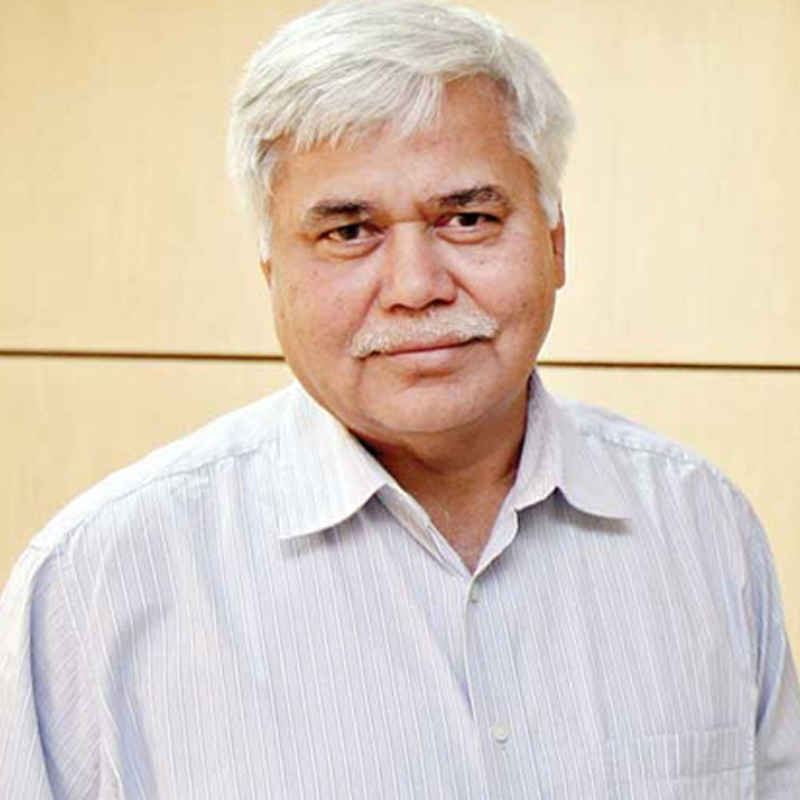
    Speaking to Economic Times, TRAI chairman Ram Sewak Sharma said, “We are going to call chief executives of telecom service providers in the month of December to actually finalise the agenda and roadmap for the next year.”

    The regulator will also separately meet the Indian broadcasting industry stakeholders and multiple system operators, informed Sharma.

    As these apps are already being regulated under the Information Technology Act, telcos have demanded that OTT communication apps should be brought under a regulatory regime similar to theirs since they provide comparable services without the liabilities associated with being a licence holder.

    TRAI chairman confirmed that they were coming out with a consultation paper next week as the final document was almost ready.

  • Q2 results: Hinduja Ventures reports total income of Rs 26.72 crores

    Q2 results: Hinduja Ventures reports total income of Rs 26.72 crores

    MUMBAI: HVL on standalone basis reported a total income of Rs. 26.72 Crores for the half year ended September 30, 2018.

    Pursuant to adoption of INDAS, the mark to market gains in respect of equity shares held by the Company in IndusInd Bank Limited were reflected in the Balance Sheet as on March 31, 2018.The price at which the mark to market adjustment was carried out in the Balance Sheet on March 31, 2018 was Rs. 1796.75 per share. The corresponding market price as on September 30, 2018 was Rs. 1690.05 per share. This reduction in value in respect of shares held as “Stock in trade” is reflected in the Profit & Loss Account for the current period and in respect of shares held as “Investments” is reflected in “Other Comprehensive Income” in the reserves of the Balance Sheet for the current period.

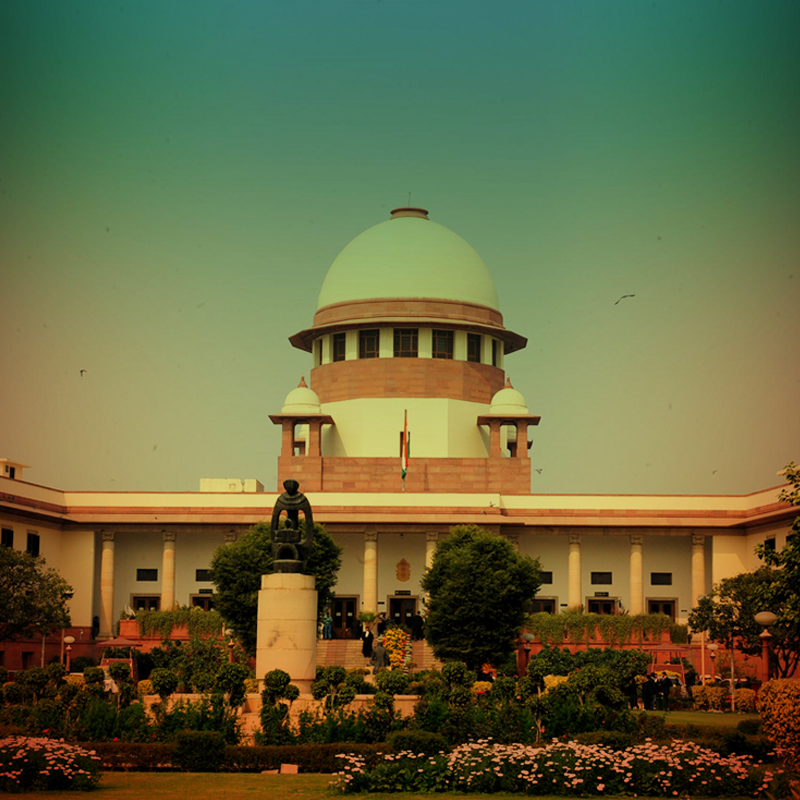
    The Supreme Court by its Order dated 30th October 2018, has dismissed the appeals made to it against the decision of the Madras High Court upholding the Digital Tariff Order issued by the Telecom Regulatory Authority of India (TRAI). 

    This decision of the Supreme Court is a major positive development for IndusInd Media & Communications Limited (“IMCL”) as it ensures that the pay channel costs which are a major drag on IMCL’s profitability today will in future be a pure pass through cost and in addition IMCL is assured a minimum guaranteed revenuethrough network operating fees. A combination of these factors will ensure that IMCL will begin to become profitable effective the implementation of the Tariff Order. This ordertakes effect from January 03, 2019 in the fourth quarter of the current financial year.

    IMCL has expanded its offerings to 700 TV Channelsand is today providing the largest number of TV channels across the country. The Cable TV industry is today witnessing consolidation and fresh investments. This consolidation is beneficial to IMCL as this enables it to align with a large number of mid-sized operators who are looking at partnering with a large MSO.  IMCL has today close to 5 million subscribers and has plans to double this number. The superior HITS technology continues to fuel the organic growth of the Company in the Phase III & IV locations across the country. 

  • SC upholds TRAI Act over Copyright Act in tariff order case

    SC upholds TRAI Act over Copyright Act in tariff order case

    MUMBAI: The two-judge bench of the apex court with Justices Rohinton Fali Nariman and Navin Sinha dismissed the Star India’s appeal against Telecom Regulatory Authority of India’s (TRAI) recent tariff order. The principal area of the argument by the broadcaster was that the pricing of the content cannot be regulated by TRAI as it comes under the Copyright act. The verdict has clearly pronounced that the as TRAI Act is in public interest, it should prevail over the Copyright Act.

    “The best way in which both statutes can be harmonised is to state that the TRAI Act, being a statute conceived in public interest, which is to serve the interest of both broadcasters and consumers, must prevail, to the extent of any inconsistency, over the Copyright Act which is an act which protects the property rights of broadcasters. We are, therefore, of the view that, to the extent royalties/compensation payable to the broadcasters under the Copyright Act are regulated in public interest by TRAI under the TRAI Act, the former shall give way to the latter,” the Supreme Court order said.

    The 123-page judgment read that a copyright is meant to protect an owner’s work (original or re-broadcasted) and isn’t concerned with the interest of the end user or consumer and hence does not fall under the purview of the Copyright Act. It is the TRAI Act that needs to focus on the consumers’ interest.

    The Supreme Court added that the Copyright Act will operate within its own sphere giving broadcasters full flexibility to change royalty or compensation. On the other hand, TRAI does not, in substance, impinge upon these acts. It even observed that broadcasters have freedom to provide their own choice of content and arrange their own pricing as long as they aren’t discriminatory or force subscribers to choose either bouquets or a-la-carte.

    In the Supreme Court order, it was also noted that one of the functions of the authority, is to “facilitate competition and promote efficiency in the operation of telecommunication services (which includes broadcasting services) so as to facilitate growth in such services.”

    The tariff order has been the subject matter of extensive discussions between TRAI, all stakeholders and consumers. The order read further that the focus of TRAI has always been to provide a level playing field to both broadcaster and subscriber.

    Though the impending ruling led to lack of clarity, all the major broadcasters published their Reference Interconnect Offers along with the line of the order. As Star India was the petitioner, it did not publish its RIO.

    “The SC order has empowered consumers across the nation. While the overall media and entertainment landscape has been evolving rapidly, it is for the first time in 26 years that such a strong and positive step has been taken to eradicate the lack of transparency in the cable and broadcast value chain,” ZEE and Essel Group chairman Subhash Chandra commented.

    “This is the watershed moment we have all been waiting for. We feel that the new framework will bring in much needed transparency, parity, promote exercising of choice for the consumer and ensure orderly growth of the sector. The onus is now on all service providers to put their best foot forward and keep consumer interest in mind by complying with the required initial timelines and activities at the earliest,” AIDCF president Rajan Gupta said.

    While along the same line TRAI chairman RS Sharma said it is a big win for consumers as per a PTI report, the verdict undoubtedly has far-reaching impact in broadcast industry.

    Earlier in the Madras High Court, division bench consisting of Justice M Sundar J and Chief Justice Indira Banerjee gave a spilt verdict. While M Sundar’s ruling was in favour of Star India, a third judge upheld the tariff order except certain riders.

  • AIDCF welcomes Supreme Court judgement which upholds TRAI jurisdiction

    AIDCF welcomes Supreme Court judgement which upholds TRAI jurisdiction

    MUMBAI: In the matter of the new Tariff Order and Interconnection Regulations as notified by TRAI in March 2017, the Supreme Court has today upheld the jurisdiction of TRAI to frame the above mentioned regulations. It may be recalled that the issue of TRAI jurisdiction was subsequently challenged by Star India and Vijay Television in the Supreme Court after their appeal to Madras High Court was turned down by 3rd judge, Hon’ble Mr. Justice M.M. Sundresh.

    This marks a new era for the Broadcasting sector and also the end of a long wait for the new framework to finally get effectuated. Most service providers have already started working towards meeting the timelines as specified by TRAI in their circular dated 3rd July 2018.

    Mr. Rajan Gupta, President of AIDCF, while welcoming the judgement of the Hon’ble Supreme Court said that – “This is the watershed moment we have all been waiting for.

    We feel that the new framework will bring in much needed transparency, parity, promote exercising of choice for the consumer and ensure orderly growth of the sector. The onus is now on all service providers to put their best foot forward and keep consumer interest in mind by complying with the required initial timelines and activities at the earliest.”

    ABOUT All India Digital Cable Federation (AIDCF) is India’s apex body for Digital Multi System Operators (MSOs). The federation works towards the overall growth of the sector and creates an environment for not only complete digitisation of cable TV under regulatory guidelines but also delivers the benefits of digital services including broadband and other value added services to the people of India thus fulfilling the dream of ‘True Digital India.’

    AIDCF is the official voice for the Indian digital cable TV industry and interacts with ministries, policy makers, regulators, financial institutions and technical bodies. It also provides a platform for discussion and exchange of ideas between these bodies and the service providers, who share a common interest in the development of digital cable TV in the country. It also collaborates with other industry associations such as IBF, CII, FICCI, ASSOCHAM association etc., with the objective of presenting an industry consensus view to the government on crucial issues relating to the growth and development of the industry.

    Members of AIDCF have a market share of more than 75% in the Cable TV Industry.

  • TRAI wins tariff order case in Supreme Court

    TRAI wins tariff order case in Supreme Court

    MUMBAI: The Telecom Regulatory Authority of India has come out victorious in the long running battle on whether pricing of content comes under its purview. The Supreme Court has finally given the long-awaiting verdict on Star India versus Telecom Regulatory Authority of India case on tariff order while arguments related to the case ended on October 11. A source close to the development informed Indiantelevision.com that the ruling is in favour of TRAI.

    Speaking on the verdict Zee and Essel Group chairman Subhash Chandra said, "I am extremely glad to note the Supreme Court’s order and I think it is THE best thing that could have happened to the industry, the players in the value chain and the consumers at large. We at ZEE & Essel Group have always focused on keeping our consumers as our first priority and I am very glad that the Supreme Court’s order has empowered the consumers across the nation. While the overall media & entertainment landscape has been evolving at a rapid pace, it is for the first time in 26 years that such a strong & positive step has been taken to eradicate the lack of transparency in the entire value chain of the broadcast & cable industry. It will certainly help the LCOs, MSOs and the broadcasters.”

    Zee Entertainment Enterprises Ltd (ZEEL) was first out of the blocks in publishing the RIO, declaring the MRP and nature of channels in connection with its tariff order , which had a 31 August deadline. The Punit Goenka-led company was followed by TV18 Broadcast Ltd ( TV18) and Sony Pictures Networks India Private Ltd (SPNI), who adhered to the regulator’s directive on 4 September. Later, Disney India, Turner India International, Sun TV Networks have also published their RIOs in compliance with the order.

    Speaking on the news, AIDCF president Rajan Gupta said, “This is the watershed moment we have all been waiting for. We feel that the new framework will bring in much needed transparency, parity, promote exercising of choice for the consumer and ensure orderly growth of the sector. The onus is now on all service providers to put their best foot forward and keep consumer interest in mind by complying with the required initial timelines and activities at the earliest.”

    The TRAI tariff orders, first contested in Madras High Court by the petitioners, were cleared by the Chennai court with certain riders after hearings that continued almost over 16 months in front of a two-member bench

    After the Madras HC had given a thumb up to TRAI tariff order, and both the petitioners and the defendant (TRAI) had filed caveats in the Supreme Court, the regulator had bowled a googly saying that its tariff order would come into effect from 3 July 2018 as all judicial compliances had been completed.

    According to TRAI, implementation of the new regulatory framework will “bring in transparency”, enable provisioning of affordable broadcasting and cable TV services for the consumer and, at the same time, “would lead to an orderly growth of the sector”.

  • MIB proposes to change mandatory sports feed sharing norms

    MIB proposes to change mandatory sports feed sharing norms

     NEW DELHI: In what could have far reaching effects on the financial viability of sports TV channels or streaming platforms, which acquire exlcusive rights for sporting events for the India region spending billions of dollars, the government proposes to amend rules relating to mandatory sharing of feeds of sports of national importance with not only the pubcaster, but with other distribution platforms. Reason for proposed changes: people with less purchasing power should not lose out on the sporting excitement.

    “…viewers, who do not have DD FreeDish [pubcaster Doordarshan’s FTA DTH platform] or Doordarshan’s terrestrial network, are either unable to watch these sporting events of national importance or are compelled to watch these sporting events on highly priced sports channels and, thus, the very objective with which the Parliament had enacted the Sports Act has been defeated,” Ministry of Information and Broadcasting (MIB) said in a notice issued on 17 October 2018, adding that public comments were invited within a month on the changes proposed in the relevant regulation relating to sharing by rights holding private TV channels of broadcasting feed with the pubcaster.

    As per provisions of the Sports Act, the live feed received by Prasar Bharati from the content rights owners or holders is only for the purpose of re-transmission of the said signals on Doordarshan’s own terrestrial and DTH network (DD FreeDish) and not for
    cable operators or other distribution networks. The ad sales is also done by private companies after taking the pubcaster into confidence with the additional ad revenue shared between the rights holding TV channel and DD.

    Though the sports rule was legislated in 2007, the shared signals on DD were sometimes donloaded by distribution platforms from satellite-delivered channels and re-transmitted not only in India but also in some neighbouring countries. Seeing this trend, Star India, which was investing heavily in sports, had moved the courts and in August 2017 got a favourable ruling from the Supreme Court that ruled the shared feed of sporting events of national importance, as mandated by the government, can only be re-transmitted on DD terrestrial network and DD FreeDish to avoid piracy and possible loss of revenue for the rights holder.

    Additonally, private DTH platforms and MSOs/LCOs were barred from showing DD's non-terrestrial channels that re-transmitted the shared feeds after the August 2017 Supreme Court ruling for the duration of the that particular event and it was stressed on also by Prasar Bharati fearing adverse reaction from the apex court.

    Within few  days of the SC ruling favouring the rights holding TV channel or broadcaster and few days before the lucrative IPL cricket rights bids were opened last year, Jawahar Goel, chairman and MD of Dish TV, India's first DTH platform started by the Zee group, raised an alarm on Star's emerging cricket monopoly.
    In a hard-hitting letter, addressed to various Indian government organisations, including MIB, regulator TRAI and the anti-monopoly authority, Goel had alleged that combined with the financial muscle and near-monpoly over cricket for India region, Star's acquistions will impact "every stakeholder in the broadcasting industry, starting from the distributors of  TV channels". Star India finally outplayed other bidders for the IPL rights for the next five years in 2017 by coughing up a whopping $2.4 billion.

    In the light of recent developments in the distribution segment of the Indian broadcast system, MIB's latest move gains importance. So, what's the proposed amendment being sought to be inserted in the 

    Sports Broadcasting Signals (Mandatory Sharing with Prasar Bharti) (Amendment) Bill, 2018?

    The relevant portion of the amendment being proposed for which stakeholders' comments have been invited reads: “No content rights owner or holder and no television or radio broadcasting service provider shall carry a live television broadcast on any cable and/or Direct-to-Home network and/or IPTV and/or terrestrial network or radio commentary broadcast in India of sporting events of national importance, unless it simultaneously shares the live broadcasting signal, without its advertisements, with the Prasar Bharati to enable them to re-transmit the same on its own terrestrial network and Direct-to-Home network and on other television distribution platforms/networks where is it mandatory to broadcast mandatory channels notified by the Union Government under Section 8 of the Cable Television Networks (Regulation) Act, 1995 in such manner and on such terms and conditions as may be specified.”

    At present, Star India and Sony Pictures Networks India — the latter has a partnership with ESPN that got a divorce from Star for sports channels in 2012 — are two networks that own and manage sports channels in India. However, in recent times digital players like Facebook, Reliance Jio, Amazon and Alibaba-controlled Indian digital wallet company PayTM have shown interest and bid for cricket properties in India. Facebook also won the India rights for La Liga football that was streamed free on the digital platform, while being sub-licensed to Sony for normal TV broadcast.

    However, an industry observor pointed out that apart from the fact that the pubcaster's DD FreeDish platform could get further hit financially if the proposed changes are legislated, it was also highlighted  that what could have further spurred the government into action is that after TRAI's new tariff regime kicked in last month, most broadcast companies and TV channel managers converted FTA TV channels into pay channels  depleting further the basic FTA bouquet aimed at people with low purchasing power.

    It would be interesting to watch how this proposed change plays out with stakeholders.
  • Star India vs TRAI: Arguments conclude, SC likely to deliver verdict after Dussehra

    Star India vs TRAI: Arguments conclude, SC likely to deliver verdict after Dussehra

    MUMBAI: Arguments in the case relating to TRAI and Star India ended today in the Supreme Court. According to a source close to the development, the top court is likely to pronounce the verdict in the matter after the Dussehra holidays.

    Despite the impending ruling, most broadcasters have already published their RIOs.

    Zee Entertainment Enterprises Ltd (ZEEL) was first out of the blocks in publishing the RIO, declaring the MRP and nature of channels in connection with its tariff order , which had a 31 August deadline. The Punit Goenka-led company was followed by TV18 Broadcast Limited ( TV18), Sony Pictures Networks India Private Limited (SPNI), who adhered to the regulator’s directive on September 4. Later, Disney India, Turner India International, Sun TV Networks have also published their RIOs in compliance with the order.

    All the broadcaster have stuck to a maximum 15 per cent MRP discount to distributors. Earlier, Madras High Court chief justice did not uphold TRAI’s proposal of allowing highest 15 per cent cap on discounts despite giving the go-ahead to all other proposals. As any clarification did not come from TRAI, all the broadcasters are adhering to the order to avoid any further confusion.

    The TRAI tariff orders, first contested in Madras High Court by the petitioners, were cleared by the Chennai court with certain riders after hearings that continued almost over 16 months in front of two benches of the court.

    Though the petitioners were unable for comments, a legal eagle explained that the very fact the Supreme Court has allotted a day for hearing the petition of Star India and VijayTV, which basically revolves around copyright and why the regulator doesn’t have jurisdiction over such issues, highlights the fact that the judge doesn’t want to take a decision in a hurry.

    After the Madras HC had given a thumb up to TRAI tariff order, and both the petitioners and the defendant (TRAI) had filed caveats in the Supreme Court, the regulator had bowled a googly saying that its tariff order would come into effect from 3 July 2018 () as all judicial compliances had been completed.

    “Having complied with  the  judicial  mandates  in  the  matter,  the Telecommunication (Broadcasting and Cable) Services (Eighth) (Addressable Systems)  Tariff   Order, 2017 and  the Telecommunication (Broadcasting and Cable) Interconnection (Addressable Systems) Regulations, 2017 as upheld by the Hon'ble Madras High  Court and the Telecommunication (Broadcasting and Cable) Services Standards  of   Quality  of  Service and  Consumer  Protection (Addressable Systems) Regulations, 2017 come into effect from 3rd July 2018,” the regulator had said in a statement pointing out that all timelines mentioned in the original order should be adhered to immediately.

    According to TRAI, implementation of the new regulatory framework will “bring in transparency”, enable provisioning of affordable broadcasting and cable TV services for the consumer and, at the same time, “would lead to an orderly growth of the sector”.

  • DoT to inquire TRAI about 28 GHz band for 5G service

    DoT to inquire TRAI about 28 GHz band for 5G service

    MUMBAI: The Department of Telecommunications (DoT) is planning to initiate talks for new bands to support 5G services in the country. The DoT will soon start discussing with the telecom regulator TRAI for 28GHz band for 5G commercial deployments. As per Economic Times, the DoT will also analyse pricing estimates of such airwaves.

    The practicability of this spectrum band in the country for 5G is being checked out by the government of India. The government is exploring the chances of allocating the spectrum band in India as very soon after South Korea auctions these airwaves and the US Federal Communications Commission makes a decision to do so from 14 November.

    According to a senior DoT official, “It is mandatory to refer the matter of assessing suitability of a specific bandwidth and its pricing to TRAI (Telecom Regulatory Authority of India), and the government shall do so before taking a call on allocating millimetre spectrum in 28 GHz band for early 5G deployments in India.”

    A panel will be soon formed to study the chances of installing 5G systems in the 28 GHz band and coinciding with the working satellite services in the same band.

    As per the DoT official, the government had been interested in this 5G airwave prospect after a recent meeting of Asia-Pacific Telecommunity wireless group in Bangkok. Globally, 28 GHz is perceived as “a frontier 5G band” and considered very crucial for early 5G deployments.

    TRAI’s proposed base price of Rs 492 crore per unit of 3500 MHz 5G spectrum is higher than the Rs 65 crore a unit of the recent 5G auction in South Korea. Hence, specialists say that Vodafone Idea and Bharti Airtel may skip the 5G spectrum auctions.

  • DTH subscriber growth slow in first half of 2018

    DTH subscriber growth slow in first half of 2018

    BENGALURU: Growth of direct to home (DTH) subscriber base of private players in India was the slowest in five half-years for the half year ended 30 June 2018 (HY 2018, half year under review) as per Telecom Regulatory Authority of India (TRAI). The good news is that the quarter ended 30 June 2108 saw a reversal of fortunes. From a loss of about 30,000 (0.003 crore, 0.3 million, 0.3 lakh) subscribers in the quarter ended 31 March 2018 (Mar-18), DTH subscriber growth was positive 18.4 lakh (0.184 crore, 1.84 million) for the quarter ended 30 June 2018 (Jun-18, quarter under review).

    The figure below shows a q-o-q growth of DTH subscribers between the period Mar-16 and Jun-18.It may be noted that Mar-16 growth of 25.5 lakh (0.255 crore, 2.55 million) is with respect to Dec-15.

    According to TRAI data, the overall private DTH active subscriber base grew by 0.419 crore or 4.19 million (7.8 percent) in calendar year (CY 2017) to 4.19 million or 67.56 million from 6.256 crore or 62.65 million in CY 2016. Comparatively, in 2016, the overall private DTH active subscriber base grew by 6.67 million or 0.667 crore (11.9 percent) from 55.98 million or 5.598 crore in CY- 2015.

    Please refer to the figure below for the DTH subscriber numbers as per Trai data:

    The merger between Dish TV and Videocon d2h that was effective since October 2018 has created the largest DTH services company in India and the second largest globally in terms of number of active subscribers. Please refer to the three figures below for approximate market share of the private DTH players in India in CY 2017, CY 2017 and CY 2018:

    It must also be mentioned that the government’s FreeDish DTH service is the largest DTH player by far in terms of subscribers with an estimated 22 million or 2.2 crore subscribers in 2016 as per the KPMG-FICCI Indian Media and Entertainment Industry Report 2017 (KPMG-FICCI M&E Report 2017) titled Media for the Masse: The Future Unfolds. It must however be noted that an exact number for registered or active subscribers is not available since this is a free DTH service. Also, the merger of Videocon d2h with Dish TV will create the largest private television carriage player in India and quite likely the second largest in the world, be it cable, internet television or DTH or any other.
     

  • TRAI to hold discussions with stakeholders on new policy goals

    TRAI to hold discussions with stakeholders on new policy goals

    MUMBAI: In a bid to prepare a roadmap for the implementation of the National Digital Communications Policy 2018, the Telecom Regulatory Authority of India (TRAI) is planning to hold discussions with stakeholders.
    TRAI chairman RS Sharma said, “We are readying ourselves and consult stakeholders on the policy aspects that require attention. The newly-approved National Digital Communications Policy also contained proposals put forth by the sector regulator.”
    According to him the new policy clearly lays down principles for the Digital India of tomorrow and the fifth-generation (5G) technology. The cabinet has approved the National Digital Communications Policy 2018 that aims to attract $100 billion worth of investment and create as many as 40 lakh new jobs by 2022 in the sector.
    According to the reports, Gram Panchayats or village blocks, according to the government, would be provided with up to 1 gbps connectivity by 2020 and 10 gbps by 2022. The new policy also seeks to ensure broadband coverage to uncovered regions with every citizen to be provided with connectivity of up to 50 mbps and to create common service ducts and utility corridors in cities and national highway projects.
    TRAI’s top official said, “There are multiple opportunities to create common infrastructure. Common ducts should also be implemented.”
    The initiative would allow infrastructure providers to deploy a common terminal or box for optic fibre and digital TV cable with an objective to mitigate Right-of-Way issues. Telecom infrastructure, including fiberisation, according to Sharma, would be critical part of the delivery of digital services in the country.