Tag: Trai

  • TRAI extends deadline for comments on OTT consultation paper

    TRAI extends deadline for comments on OTT consultation paper

    MUMBAI: India’s telecom and broadcast regulator TRAI released a new consultation paper last month on OTT services seeking to expand the definition of the sector and also the regulator’s jurisdiction over a sector till now “unregulated”. The deadline for receiving comments on the consultation paper has been extended up to 7 January 2019 and counter comments by 21 January.

    Earlier dates for the comments and counter comments on the issues raised by the paper were 10 December and 24 December respectively. As TRAI said in a release, the deadline has been extended on request from the stakeholders.

    “Would inter-operability among OTT services and also inter-operatability of their services with TSPs services promote competition and benefit the users? What measures may be taken, if any, to promote such competition? Please justify your answer with reasons.” Questions like these in the paper hint that the government and the regulator are looking at regulations for the OTT services that would include both audio and video services.

    Earlier, the authority issued a consultation paper on  Regulatory Framework for Over-the-top (OTT) services on the 27 March 2015, which also included questions on the principles of net neutrality, the reasonableness of traffic management practices, non-price based discrimination of services and transparency requirements. Due to a large number of issues and their complexity, it became difficult to deliberate upon and conclude all of them together. Therefore, the authority decided to deal with related issues in separate parts, keeping a focus on a core set of issues each time.

  • TRAI tariff issue back in Supreme Court

    TRAI tariff issue back in Supreme Court

    NEW DELHI: The twists and turns in the case of a new tariff regime being sought to be implemented by broadcast and telecoms regulator TRAI continues. It has filed a petition in the Supreme Court on the issue of 15 per cent cap on discount on a bouquet price of TV channels to consumers that had been set aside by Madras High Court while upholding TRAI’s right to regulate the broadcast sector.

    On a matter that’s complicated, TRAI’s petition, in layman’s language, exhorts the Supreme Court to set aside that portion of the high court judgement that frowns on the 15 per cent cap on discounts on bouquet prices of TV channels.   

    The Madras High Court, while upholding most of the TRAI tariff order — issued middle of 2016 and challenged by Star India and Vijay TV later that year on grounds of overstepping of jurisdiction — had struck down as arbitrary almost 18 months later the 15 per cent cap on bouquet prices.

    With the case finally disposed of by the Supreme Court earlier this year, upholding the high court’s views, TRAI had issued a notification stating that India’s broadcast and cable industry stakeholders implement its tariff regime in phases and report on compliance.

    As the final compliance deadline nears the end of the year, the new twist in the tariff tale — nudged by an appeal of Chandigarh-headquartered MSO Fastway in disputes tribunal TDSAT — may add to the ambiguity and result in further delays in signing of contracts between TV channels and distribution platforms.

    A hearing of the fresh TRAI petition is likely early next week. Keep tuned in for soap-opera type twists in the script.

  • Comment: Is there light at the end of the tunnel for broadcasters?

    Comment: Is there light at the end of the tunnel for broadcasters?

    The period between August 2017 and September 2018 will be remembered by the Indian broadcasting sector for more reasons than one. Interestingly, the main protagonists seem to be common – Star India and the Supreme Court of India – and this combination has worked well to lay down a roadmap for the sector. Only time will tell whether it is for the good or bad!

    Before we go further, let’s fact check the status of the Indian broadcasting sector.  According to Ministry of Information & Broadcasting that as on 31 October 2018 there are 866 permitted TV channels in India.

    As per FICCI-EY Report, “Re-Imagining India’s M&E Sector” the broadcasting industry “grew from Rs 594 billion to Rs 660 billion in 2017, a growth of 11.2 per cent”. This includes the advertising revenue of Rs 267 billion comprising 40 per cent of revenues and the distribution revenue of Rs 393 billion comprising 60 per cent of total revenues. The broadcasting sector generates millions of jobs directly and indirectly, contributes to economic growth with a rate almost twice the GDP and provides an immeasurable ancillary contribution by serving a platform for the growth of several other industries.

    This proves that television in India – even in the age of digital media explosion – remains a mass medium and plethora of stakeholders from content creators, broadcasters, teleport operators, satellite operators, advertisers, distributors and a larger television audience viewing audience are involved in one way or other.

    Is it time to nationalise sports?

    Let’s now examine some of the stunning reverses suffered by the broadcasters before the judiciary in this period.

    First amongst them is the judgement delivered by the Supreme Court in 2017 in the Sports Broadcasting Signals (Mandatory Sharing with Prasar Bharati) Act, 2007 which involved Star India and Prasar Bharati.

    In a long-drawn battle of more than ten years, the Supreme Court finally confirmed the Delhi High Court’s finding when it adjudicated that the original intent of the act was to achieve twin purposes of making available a live feed of a sporting event of national importance to economically weaker section of the society and consequently, the same should be made available on a free or no cost basis. 

    The Supreme Court whilst allowing the sporting events of national events to be shared mandatorily with Prasar Bharati ruled that the public broadcaster cannot utilise it on a notified channel which has to be compulsorily carried by private distribution platforms. Although the ruling of the Supreme Court was not followed by letter and spirit by Prasar Bharati, it put the onus on sports broadcasters to take legal action against erring private commercial platforms carried “live” sports feeds. Rather than encrypt Doordarshan’s feed, the Ministry ordered the distribution platform operators to run a ticker stating that “the match/game can be viewed in free-to-air mode on DD Sports Channel, on DD Free Dish and DD’s terrestrial network”. 

    Whilst the Supreme Court put away any confusion on the Sports Act and a private commercial sporting event like IPL anyway ought not to be considered as sporting events of national importance, Smriti Irani who was piloting the I&B Ministry in April 2018 had other ideas.

    During her time in Shastri Bhawan it seemed Star India was wrong when it fiercely bid to acquire long-term exclusive media rights for the Indian Premier League along with BCCI international and domestic matches for an approximate value of Rs 16,350 crore and Rs 6,150 crore respectively.

    2017 was the first year for Star India after it acquired rights for the IPL and the Ministry inexplicably made them sweat out before granting temporary live uplinking permission for live broadcast of the IPL matches on their channels till the very last moment. This was nothing else but to arm-twist Star India to share all the live matches of Indian Premier League with Doordarshan for free, even though IPL, which is a privately-owned club cricket league and can no way be considered as a sporting event of national importance.  In the end, Star India had no other option but to give something to the power that be and they gave in to share with Prasar Bharati the inaugural, the playoffs held on weekends and the last four matches of IPL, with a deferred live feed of at least 60 minutes. No surprise, Smriti Irani claimed victory for bringing IPL for the first time ever on Doordarshan.

    Not getting the “live” feed of IPL matches and unable to make legislative moves to amend the judgement of the Supreme Court as she did not find support amongst her ministerial colleagues the Irani-led Ministry issued a notice mandating all sports channels broadcasting live sports of “national importance” to display a ticker stating the same match was also available on DD’s free-to-air platform squirming sports broadcasters. Not only are the rights holders required to give live sports content free to DD as per the Sports Act, but they are also required to run a marketing campaign for Doordarshan to drive audiences away from themselves to go somewhere else to watch it!

    Now, if the broadcasters believed that the Supreme Court’s decision on the Sports Act in August 2017 had finally settled the issue, unfortunately, it was not to be. On 24 October the Ministry released a notice seeking feedback/comments on draft Sports Broadcasting Signals (Mandatory) sharing with Prasar Bharati (Amendment) Bill, 2018.  The ministry wants to amend Section 3(1) of the Sports Act to ensure mandatory sharing of the signals of such sporting events with “other networks, where it is mandatory to show the Doordarshan channels as per the Cable Television Networks (Regulation) Act, 1995”. 

    Here's a suggestion : rather than doing it in a piecemeal manner in forcing sports broadcasters to share more sporting events why doesn’t the government nationalise at one go so there is clarity on sports broadcasting?  This will also make Doordarshan the only sports broadcaster in the country and thus can ring-fence them from competition from private sports broadcasters!

    Changing landscape?

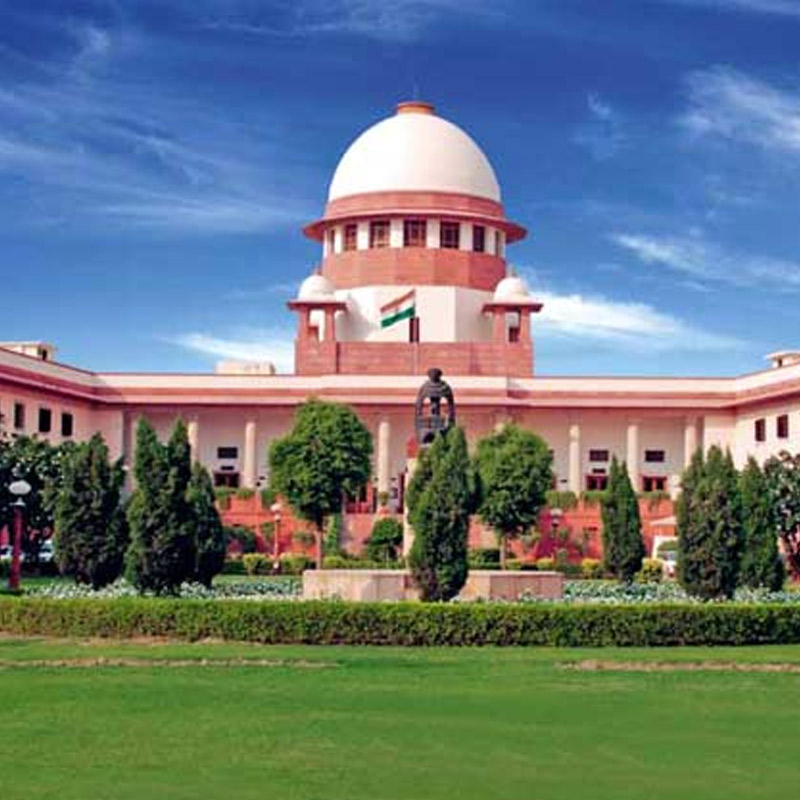
    However, the biggest one of all is the Supreme Court judgement on 30 October dismissing the plea of Star India challenging the jurisdiction of TRAI in regulating the broadcasting sector through Tariff Orders.

    The Supreme Court judgement has far-reaching consequences for the broadcast industry since it settled the long pending debate of who is the regulator of the Indian broadcasting sector.  Star India had challenged TRAI’s jurisdiction to frame the tariff order arguing that the exploitation of intellectual property (IP) rights are covered under Copyright Act.  The Supreme Court whilst refusing to entertain Star India’s challenge by 2:1 majority held that (1) the Copyright Act had nothing to do with the inter se relationship between the broadcaster and the distributor in the activity of broadcast and (2) it also does not deal with the price of a channel that an end consumer pays to the broadcaster.

    Whilst the Supreme Court empowered the end-consumer through its order but the implementation is not going to be smooth.  Although TRAI proposed to bring DTH, cable TV, HITS, IPTV operators under unified quality of service framework way back in 2015, poor implementation at the ground level means, the cable operators have still not put in place any consumer redressal mechanisms nor will they issue any bill or invoice.  Worse still, many distribution platform operators (DPOs) have not even fulfilled technical requirements under the DAS mandate or installed subscriber management systems to inform the authorities how many subscribers they service in their areas of operation even though the new tariff order is going to become effective from 1 January 2019.

    According to industry experts, although the new Tariff Order is expected to benefit the consumer as he can now pick and choose his channels rather than being saddled with hundreds of them but the cost of monthly cable bill may go up.  In other words, a new concept of ‘pay less for less, pay more for more’ is going to be a reality for Indian broadcast consumers.

    The moot question is after the Supreme Court empowering the consumer vis-à-vis broadcasters, has TRAI empowered the consumer vis-à-vis DPOs?  The quality of service (QoS) by the DPOs has always been a bone of contention because of its implementation on the ground by the licensor, MIB or its authorised officers at the district level or by the regulator, TRAI.

    Even after the implementation of the Digital Addressable System (DAS), the analogue transmission is still transmitted in many parts of the country and the cable operators have not yet fulfilled the technical requirements to meet the DAS mandates.  Even today in many parts of the country kutcha bill is the norm and no sign of any kind of customer care.  When it is brought to the notice of the policymakers they don’t want to see the reality.

    Although TRAI notified the Telecommunication (Broadcasting and Cable) Services Standards of Quality of Service and Consumer Protection (Addressable Systems) Regulations, 2017 the experience so far shows it will be a tall order to implement on the ground on issues such as establishment of customer care centre, website, consumer care channel and publication of manual of practice, etc.

    As a result, there will never be an end to the disputes amongst stakeholders which is the bane of the Indian broadcasting sector and where is the possibility of changing landscape?
  • TRAI directs DPOs to remove TV channels from landing page

    TRAI directs DPOs to remove TV channels from landing page

    NEW DELHI: The Telecom Regulatory Authority of India (TRAI) on Monday directed all distributors of TV channels and broadcasters to restrain with immediate effect from placing registered television channel, whose TV rating is released by ratings agency, on the landing page or the boot-up screen.

    The reason behind this order, according to TRAI, was to protect the interest of service providers and consumers while ensuring “orderly growth of the sector”.

    Though the TRAI diktat comes into effect immediately, the regulator has given some breather to stakeholders to become fully compliant by 31 March 2019 by making necessary changes in agreements that may have been already signed. However, distributors and TV channels have been asked to revert to the regulator with updates within seven days.

    Landing channel or landing page or landing logical channel number (LCN) refers to the default LCN that is displayed whenever a STB is switched on. TV channel placed on this page is available to all STBs connected to the network of a distributor and is regarded as a prized real estate by DPOs.

    During a consultation process on the issue, many broadcasters had admitted that placing a TV channel on the landing page could influence the audience data or TV rating points (TRPs), while MSOs and other distributors had stated there were no such influence on ratings or if any, they were minimal.

    TRPs, according to TRAI, indicate the popularity of a programme or a TV channel by providing information about the television watching habit (for example, time spent by a viewer on a particular TV channel) of viewers from different socio-economic backgrounds. In an environment that prevails in India, despite digitisation of TV services, advertisers and corporate media planners still depend on TRPs while budgeting media spend on television.

    The issue of landing page had cropped on when some stakeholders cried foul over a year back and the regulator had been forced to issue interim orders, which were challenged at the disputes tribunal TDSAT. Ministry of Information and Broadcasting too had directed BARC India , collators of audience data, to desist from including data from landing page channels for its overall weekly figures.

  • TRAI seeks stakeholders’ inputs on audience measurement overhaul

    TRAI seeks stakeholders’ inputs on audience measurement overhaul

    MUMBAI: Television audience measurement in India continues to remain one of the key subjects that evoke reactions from stakeholders. Given that advertising expenditures are typically guided by such data and, in the wake of the matter being raised at various fora, TRAI has come out with a public consultation on various facets of TV audience measurement and how the existing system could be made more robust.

    Telecom Authority of India (TRAI)’s move gains importance as stakeholders during meetings with the regulator, leading up to the present consultation, had conveyed that the present measurement system, spearheaded by a joint industry body Broadcast Audience Research Council India (BARC India), has done a credible job till now, but additional improvements could be made, including making data collection more robust and finding ways to curb panel infiltrations leading to possible manipulations. More so as the industry has already invested in the present system over the past three years and it would be improper to try find alternate mechanisms at this juncture.

    Keeping such views in mind, TRAI has raised issues relating to RPD(return path data) and whether set-top-boxes deployed in the country were technically adept at catching such figures — initiatives that would add to data robustness. The specific questions asked is: What percentage of STB supports transferring viewership data through establishing a reverse path/connection from STB? What will be the additional cost if existing STBs without return path are upgraded?

    Asking whether regulatory tweaks were needed to reduce the impact of manipulation of measurement panels — an issue red-flagged by BARC India itself in an earlier consultation — TRAI has sought comments on the country-wide panel size and also the size of the individual panels in rural and urban areas.

    The consultation paper highlights several such issues, including if BARC India, the organisation presently doing audience measurement, has been able to accomplish its purpose.

    Industry observers said though the regulator may have raised pertinent issues, some of them could be answered by the stakeholders only if they decide to take a firm view on them. For example, TRAI asks whether the present sample size of bar-o-meters employed to collect data is adequate. The answer is, maybe no. But to increase the sample size, the stakeholders need to commit more financial investments and give BARC India the go-ahead — though annually some boxes are added to live up to promises made at the time Ministry of Information and Broadcasting green-lighted the BARC project.

    The TRAI paper also seeks inputs from the stakeholders regarding shareholding/ownership pattern of BARC India and whether its credibility and neutrality can be enhanced further, while highlighting various methods of collating such data in other countries, including the US, the UK and France.

    Some of the other issues highlighted in the TRAI paper are the following:

    # Is there a need to promote competition in television rating services to ensure transparency, neutrality and fairness to give TAM rating?

    # What regulatory initiatives/measures can be taken to make TV rating services more accurate and widely acceptable?

    # Is the current audience measurement technique used by BARC apposite?

    # Does broadcasting programmes that are out of their category or in different languages for some time during the telecast affect the TAM (TV audience measurement) rating? If so, what measures should be adopted to curb it?

    # Can TV rating, based on limited panel homes, be termed as truly representative?

    # What should be done to reduce the impact of manipulation of panel home data on overall TV ratings?

    # What should be the panel size both in urban and rural India to give true representation of audience?

    # What method/technology would help to rapidly increase the panel size for television audience measurement in India? What will be the commercial challenge in implementing such solutions?

    # Should DPOs be mandated to facilitate collection of viewership data electronically, subject to consent of subscribers to increase data collection points for better TRPs?

    # What percentage of STB supports transferring viewership data through establishing a reverse path/connection from STB? What will be the additional cost if existing STBs without return path are upgraded?

    # What method should be adopted for privacy of individual information and to keep the individual information anonymous?

    # What should be the level/granularity of information retrieved by the television audience measurement agency from the panel homes so that it does not violate principles of privacy?

    # What measures need to be taken to address the issue of panel tampering/infiltration?

    # Should BARC be permitted to provide raw level data to broadcasters? If yes, how secrecy of households, where the people meters are placed, can be maintained?

    BARC India, set up in 2015, is a joint venture amongst broadcast and advertising industry bodies IBF, AAAI, ISA with Indian Broadcasting Foundation or IBF being a majority shareholder. India’s public broadcaster Prasar Bharati also sits on the BARC India board. Apart from TV audience data, BARC India is also exploring rolling out similar figures for digital platforms.

  • Dish TV’s Jawahar Goel writes to TRAI on rationalizing DTH costs, taxes

    Dish TV’s Jawahar Goel writes to TRAI on rationalizing DTH costs, taxes

    MUMBAI: Even as the Indian government is readying a new DTH policy, aimed at providing some succor to the financially beleaguered sector, Dish TV MD Jawahar Goel has written to the broadcast and telecom regulator TRAI exhorting it to rationalize costs and taxes being levied presently on the operators.

    “With regard to our request for allowing deduction of the subscription amount paid to the broadcaster for determining the DTH license fee, it is stated that DTH services operators have been regularly appraising the TRAI and MIB [Ministry of Information and Broadcasting] on the matter of the heavy cost they have been incurring for the provision of the services,” Goel points out in a recent letter.

    According to the communication, reviewed by Indiantelevision.com, Indian DTH operators not only pay taxes to the tune of 33 per cent, but also cough up around 30- 35 per cent of their revenue as content cost. There are huge investments in subsidizing the consumer premises equipment to the consumers of which the STB being the major component, the letter states.

    Pushing for a major reduction in annual license fee to 6-8 per cent of the gross revenue of an operator, Goyal, who had earlier too bemoaned neglect of the sector by the government, contends that the principle of application of license fee on the adjusted gross revenue (AGR) should be similar to what is done for the telecom sector.

    “The AGR in case of DTH service should mean total revenue as reflected in the audited accounts from the operation of DTH, as reduced by (a) subscription fee charges passed on to the pay channel broadcasters (b) sale of hardware including integrated receiver decoder required for connectivity at the consumer  premise, [and] service/entertainment   tax  actually  paid to  the  Central/State  government  if gross revenue had included them,” Goel argues in his missive to the regulator.

    This is not the first time that the feisty Goel has fired salvos at the government and the regulator. Not only has he raised issues pertaining to the DTH sector, but has also voiced his concern on general matters relating to the Indian entertainment and broadcast sectors as Dish TV and its other siblings have had to grapple in recent times with lackluster economy and government apathy.

    In an effort to garner more support from the regulator, Dish TV highlights that a consultation paper on the DTH sector prepared by TRAI had acknowledged the satellite platforms needed a level playing field vis-a-vis cable operators who paid no license fee. “The DTH services are subjected to multiple taxation, which inter-alia includes service tax @ 12.36 per cent, entertainment tax at different rates by State governments and VAT@ 12.5 per cent. In addition, if license fee @10 per cent is also added, the cumulative taxation would come to a significant amount, which leads to high incidence of levies and taxes for DTH service[s],” Goel contends.

    “Since the Government is in the process of finalizing the terms and conditions of the new DTH license, we would sincerely request you [TRAI] to kindly issue necessary recommendation to the government of India in this regard before such terms and conditions are laid down”, Goel concludes making a case for rationalization of taxes on DTH operators, especially as new content delivery techs like OTT invade Indian shores.

    Meanwhile, sources in Ministry of Information and Broadcasting (MIB) tell Indiantelevision.com that the much-discussed new DTH policy is being given final touches before it’s sent to the Cabinet for approval.

    “Ideally we would have liked to send the new DTH policy to the Cabinet for approval within 2018 itself, but various government processes, like getting feedbacks from various ministries, could push finalization of the policy to early 2019,” a source in MIB said, adding the government is likely to provide some relief to the sector, though major reduction in the license fee seems unlikely.

  • DoT & TRAI officials feel satcom policy needs ‘fundamental rethink’

    DoT & TRAI officials feel satcom policy needs ‘fundamental rethink’

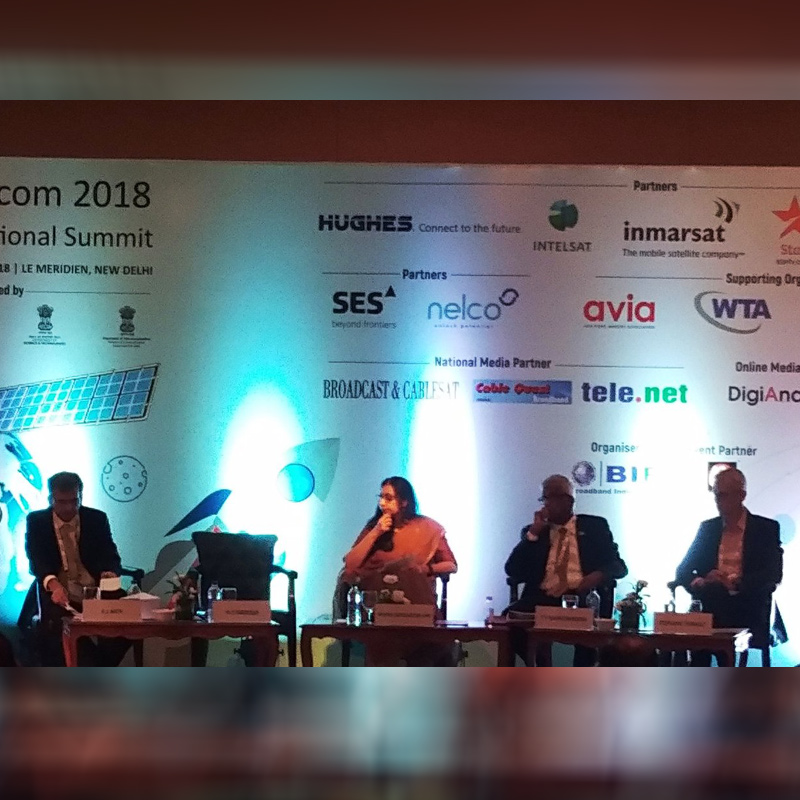
    NEW DELHI: Two top Indian government officials from Telecom Ministry and TRAI feel the country must have a "fundamental rethink" on satellite communication policy to meet rising connectivity needs that are being fuelled by mobile data growth, digital aspirations, demand from the country’s broadcasting sector and advent of new-age technologies.

    Telecom secretary Aruna Sundararajan on Wednesday outlined the massive growth in mobile data consumption, driven by first-time users, and India's increasing digital clout, and said there is "no looking back" for the country when it comes to strengthening its communications infrastructure.

    She said that in an era of 5G and Internet of Things (IoT), the demand for communication infrastructure "far from slowing down, will increase exponentially".

    "We must have digital communications infrastructure that facilitates all this…We really must have a fundamental rethink on India's satcom policy in light of what are the emerging requirements and India's aspirations," Sundararajan said addressing the annual satcom summit 'India SatCom-2018' organised by Broadband India Forum (BIF), a PTI report stated.

    She further said that the demand for communication network is also being propelled by financial service industry, digital payment companies, smartphone usage and social media.

    Sundararajan noted that the draft national digital communications policy aims to provide universal broadband connectivity at 50Mbps to every citizen by 2022, create four million additional jobs, and also talks of enhancing the contribution of digital communications sector to eight per cent of India’s GDP from approximately 6 per cent now.

    "If we are to achieve robust modern digital communications infrastructure that the country needs…it has estimated the need for investment at USD 100 billion. Often, we in government are asked if that is a high figure, but I don't think so…I think this is realistic investment number in sync with our infrastructure requirements," PTI quoted her as saying.

    Stating that the country must embark on comprehensive review of its satellite communications policy, she stressed on the need to strike a balance between autonomy, security and the country's communications demand. "…it is possible to find a sweet spot between these three aspects. Other countries have done so, and I don't think it is impossible for India to strike a calibrated position keeping these three imperatives in mind…Keeping our strategic capabilities and requirements in mind, we need to look at how we can bridge the deficit in term of communication requirements," she pointed out.

    The summit also delved on various aspects of communications, including broadband connectivity to the remote parts of the country, satellite mobility, inflight connectivity, new technologies and innovations.

    Echoing sentiments similar to Sudararajan, telecom and broadcast regulator TRAI secretary SK Gupta, while addressing the valedictory session of the event, opined that “mainstreaming of satcom” issues was heartening.

    Pointing out that satellite transponder allocation process in India “needs a review” and the mechanism an “overhaul”, Gupta said that no regulatory hurdle should be created against use of any technology as satellite communication is very important for various applications and services.

    The one and half day satcom conference saw the convergence of not only ideas and trends, but also of representatives from the industry and government, including those from India’s space agency ISRO, Ministry of Information and Broadcasting and BECIL.

  • TRAI to meet telecom players next month to fix 2019 agenda

    TRAI to meet telecom players next month to fix 2019 agenda

    MUMBAI: To fix the agenda to be taken up in next calendar year, Telecom Regulatory Authority of India (TRAI) is expected to meet telecom industry players next month. The discussion, which is now an annual feature, is likely to involve a wider set of players in the telecom sector this time including operators, infrastructure providers and others.

    “The meeting will take place next month. We will talk to them and ask them about the items they think should be taken up in the next calendar year,” TRAI chairman RS Sharma said on Monday on the sidelines of an interactive session on ‘New Regulatory Framework for Broadcasting and Cable Services’, according to a PTI report.

    As Sharma noted, this time it would not be limited to telecom service providers alone but a broader consultation to figure out the new areas to be deliberated next year.

    While the regulatory body launched a consultation to explore the regulatory framework for OTT apps like WhatsApp, Facebook and Google Duo that provide calling and messaging services similar to that by telcos, he also added that TRAI will be able to finalise its views on the issue of a regulatory framework for OTT players in the coming 5-6 months.

    Supreme Court recently dismissed a petition challenging TRAI’s March 2017 regulations and tariff order paving the way for implementation of the order for the broadcast sector. Sharma while addressing the interactive session said the new comprehensive framework for the sector entailing tariffs, service quality and interconnect aspects, is aimed at “growth”.

    “It is not aimed at hurting players but ensuring growth of the sector in an orderly manner and keeps the interest of stakeholders in mind,” Sharma said.

    Local cable operators and multi system operators raised concerns on issues ranging from operationalising the new norms to ‘a la carte rates’. He urged players to give the new framework a fighting chance along with cautioning that technological changes, which improve service quality and enhance capacity, can also be disruptive.

  • Star India publishes RIO as per TRAI tariff order

    Star India publishes RIO as per TRAI tariff order

    MUMBAI: After Supreme Court of India gave the verdict in favour of Telecom Regulatory authority of India (TRAI) in the tariff order case, the petitioner Star India has published its reference interconnect offer (RIO) in accordance with the Tariff Order and Interconnect Regulations 2017.

    As per the new rate card, the popular channels of the broadcaster including Star Plus, Star Jalsha, Maa TV, Asianet, Star Sports have been priced at Rs 19. Except for few HD channels, most of the channels under the category have been also priced at Rs 19.

    Star India is also offering 28 bouquets with 4 different variations to cater to the diverse consumer segments based on their consumption. The variations of the bouquets are base, premium, HD-base, HD premium. While the base bouquet offers the best of entertainment, sports and movies channels in the customer’s language of choice, the premium bouquet includes English language offerings and channels with a differentiated content proposition on the top of Base offering.

    The base and premium bouquets for SD channels in Hindi, Bengali and Marathi have been priced at Rs 49 and Rs 79 per month respectively while base and premium bouquets in other languages are priced at Rs 39 and Rs 69 respectively.

    The base and premium HD bouquets in Hindi, Marathi, and Bengali have been priced at Rs 85 and Rs 120 per month. For other languages, the base and premium bouquets are priced at Rs 75 and Rs 110 a month.

    The network has also revealed the name of four channels under sports and movies categories which will be launched by 31 December. The soon-to-be launched channels are Star Sports 1 Telugu, Star Sports 1 Kannada, Star Gold Thrills, Star Gold Thrills HD.

    Recently, the two-judge bench of the apex court with Justices Rohinton Fali Nariman and Navin Sinha dismissed Star India’s appeal against Telecom Regulatory Authority of India’s (TRAI) recent tariff order. The principal area of the argument by the broadcaster was that the pricing of the content cannot be regulated by TRAI as it comes under the Copyright Act. The verdict has clearly pronounced that the as TRAI Act is in public interest, it should prevail over the Copyright Act.

    As the tug-of-war was going on for a while, all the other major broadcasters already published their RIOs in late August and early September.

  • TRAI releases paper on OTT expanding its definition

    TRAI releases paper on OTT expanding its definition

    MUMBAI: India’s telecom and broadcast regulator TRAI today released another consultation paper on OTT services seeking to expand the definition of the sector and also the regulator’s jurisdiction over a sector hitherto “unregulated”.

    “Would inter-operability among OTT services and also inter-operatability of their services with TSPs services promote competition and benefit the users? What measures may be taken, if any, to promote such competition? Please justify your answer with reasons.” Questions like these in the paper hint that the government and the regulator are looking at regulations for the OTT services that would include both audio and video services.

    Earlier,    the    Authority  issued   a   consultation   paper  on    Regulatory Framework for  Over-the-top (OTT) services on  the   27th of  March, 2015, which also included questions  on  the   principles of  net neutrality, reasonableness of traffic management practices, non-price based discrimination  of  services and  transparency  requirements.  Due to the large  number   of   issues  and  their  complexity, it   became   difficult  to deliberate upon and  conclude all  of  them  together. Therefore, Authority decided to  deal with related issues in  separate parts, keeping focus on  a core  set  of issues  each time. Accordingly, the  following actions have been taken:

    a. The  Authority issued regulations on  Prohibition of Discriminatory Tariffs for  Data Services Regulations,  2016.

    b. Recommendations on provisioning of free data given to Government on  19th December  2016,

    c. Recommendations on  Net  Neutrality to  Government on   Nov  28,

    2017.

    d. Recommendations on privacy, security, and data ownership issues in the telecom sector submitted to Government on  July 16,  2018.

    3.     Questions relating to the potential market failures in each segment, the appropriate tools to address those failures and the costs and benefits of any possible regulatory interventions have also been investigated.

    4.  Keeping in  v1ew the fast evolving nature of the  sector,  it is also considered useful to   examine  OTI related aspects, after taking into account the changes that have taken place since March, 2015.

    5.  The objective of  this Consultation Paper is to  analyse and discuss the  implications of  the  growth of  OTis;  the  relationship between OTI players and TSPs; the similarity, if any, between services provided by  the TSPs and  OTI  players;  changes  that  may be   required in the current regulatory framework to  govern these entities; and the manner in  which such changes should be  effected . While preparing this consultation paper, information collected by    the   Authority in response to previous consultations has also been used. It  may also be   noted that current consultation is not intended  to  revisit regulations  or   recommendations given  by the  Authority earlier on  OTI, which had broader implications and were  therefore concluded first following due consultation and diligence.

    6.  Comments on the issues raised in the consultation paper are invited from the stakeholders by  10.12.2018 and counter comments, if any,  by 24.12.2018.