Tag: Trai

  • Media and entertainment industry: hindsight 2018, foresight 2019

    Media and entertainment industry: hindsight 2018, foresight 2019

    MUMBAI: The Indian media and entertainment industry continued to be robust in 2018, aided by the domestic consumption story remaining strong, as well as the impact of one-time events such as demonetisation and GST progressively fading away. The sharp increase in digital access and consumption, with continued investments by telecom operators on 4G and content, was a major growth driver in the sector. Digital video has seen an explosion in terms of consumption, with 250 million online video viewers out of 450 million broadband users in FY18, and platforms already looking at adding the next 250-300 million online video viewers in the next three to four years. However, despite the rapid growth of digital media, India remains one of the unique markets in the world where traditional media continues to grow.

    TMT Convergence – the rise of ecosystems

    The media and entertainment industry in India started witnessing a structural shift in FY18 with convergence across telecom, media and technology (TMT) companies beginning to take shape. While the telecom and technology companies are building competencies to offer content directly to consumers through acquisitions and partnerships, traditional broadcasters and media companies have started building platforms to reach the end consumers directly. One of the recent examples in this space includes the acquisition of two traditional cable companies by a major telecom player. 

    In addition the competition, the industry has also been witnessing collaboration within the TMT ecosystem. Effective bundling of content by telecom players has ensured that the distribution ceases to be a challenge, allowing standalone content players to focus heavily on original content. 

    The advent of 4G and the rise of TMT ecosystems has resulted in the surge in online video consumption with the number of video and entertainment app downloads witnessing a 5x increase from September 2016 to June 2018 and the data usage on these apps increasing by 25x during the same period.

    Despite the industry seeing rapid growth in the consumption of digital media, monetization has lagged behind till now, with AVOD models still dominant and SVOD not seeing significant traction. Introduction of third-party digital measurement, compelling content across languages and an effective micropayments infrastructure are factors which could help monetization in the near future.

    The growing emphasis on rural and regional markets

    With the viewership of regional language (non-Hindi and non-English) content on television close to 40-45 per cent of the overall consumption, the industry is increasingly looking at rural and regional language markets as the key to success. Additionally, while the rural internet penetration stands at less than 20 per cent (as of June 2018), it presents a considerable upside to organizations who have already started developing local language digital content. 

    Key focus areas for the regional and rural markets in the past year have included – continued digitization across phase 3 and 4, increased focus of broadcasters through the launch of language sports channels and adaption of popular reality shows into local languages, inclusion of rural into measurement metrics through BARC and a focus on digital regional content. 

    Data Analytics – moving from ‘good to have’ to ‘must have’

    Increasing digital consumption is resulting in the availability of large consumer data sets which the industry is trying to collect, integrate, analyze and derive value from. Organizations across the value chain are investing heavily in data analytics around areas such as content creation, customer acquisition, pricing, distribution, and content management.

    Implementation of the TRAI tariff order – a game changer

    With TRAI’s tariff order getting the green light from the Hon’ble Supreme Court (effective 29 December 2018), broadcasters have started to publish Reference Interconnect Offers (RIO) and MRPs of their individual channels. The tariff order is expected to bring in the much-needed transparency ensuring equitable distribution of revenue across the players in the value chain. 

    However, the pricing strategies are at an early stage with some leading broadcasters having priced their flagship channels closer to the cap of INR 19 while some of the niche channel broadcasters are seeing a reduction in MRPs and bouquet prices. Further, the outcome of the ongoing litigation over the 15 per cent discount condition on bouquets may also fundamentally impact the strategies of the stakeholders. With only a few days to go for the implementation deadline, consumer education is expected to be a major challenge for distributors. 

    Looking ahead, the media and entertainment sector is expected to continue seeing growth on the back of growing digital access and consumption, strong domestic (particularly rural) demand supported by GDP growth and growing penetration into non-urban and regional user base across media sectors.

    The author is partner and head (media and entertainment) for KPMG in India

  • Rajinikanth forum files for TV channel trademark

    Rajinikanth forum files for TV channel trademark

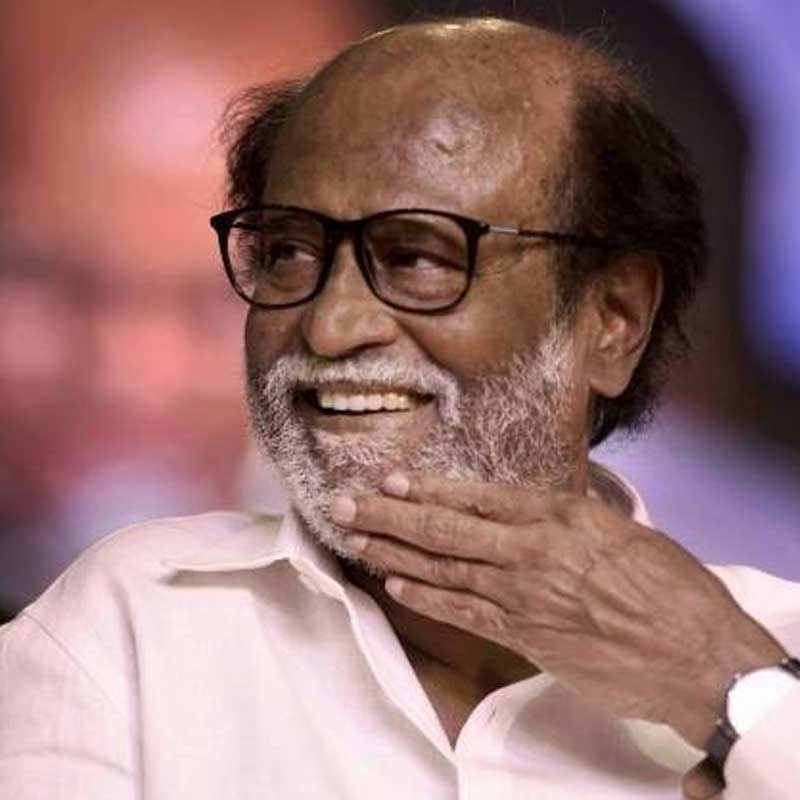
    MUMBAI: Things are getting interesting as India’s general elections loom ahead next year and as film stars poise to join the political bandwagon. Ahead of the launch of superstar Rajinikanth's political party, efforts are underway for starting a television channel by a forum floated by him.

    The actor has authorised the use of his name and photograph in the proposed TV channel’s logo. 

    In a letter to the Registrar of Trademarks, Rajinikanth has stated that an application made by the forum chief for trademarks be processed and he had no objection to the use of his name and photo in the logo of the proposed channel.

    The matter came to light after the letter went viral on social media and sources close to the Tamil actor Friday confirmed its veracity, a PTI report from Chennai said.

    Administrator of the Rajini Makkal Mandram, seen as a precursor to his party, V M Sudhakar applied for the trademarks  SUPERSTAR TV, RAJINI TV, THALAIVAR TV, which all have references to the actor.

    The move is seen as keeping in line with the tradition of political parties in Tamil Nadu having their own TV channels to effectively propagate their policies and programmes.

    Indiantelevision.com could not independently confirm whether the superstar’s colleagues, managing the forum backed by him, have also applied for necessary permissions to the government. Ministry of Information and Broadcasting sources refused to comment on the issue.

    Meanwhile, the PTI report stated while the ruling AIADMK had recently launched 'News J' to propagate its views, a bouquet of channels under the Kalaignar TV and the Maran family-owned Sun TV are said to be backing the opposition DMK.

    Jaya TV, managed by the relatives of jailed aide of former chief minister J Jayalalithaa, V K Sasikala, was originally a mouthpiece of the AIADMK. But now the channel backs sidelined party leader T T V Dhinakaran since his fallout with current Chief Minister K Palaniswami last year.

    In his letter to the Trademarks Registrar, Rajinikanth said he had "no objection to use my name, photo on the logo and label", adding the applications may be processed to the "next level". 

    The 68-year old actor had announced taking the political plunge in December 2017 while interacting with his fans here.

    Broadcast carriage regulator TRAI in an earlier recommendation made several years ago, gathering dust at MIB, had stated that government entities, political parties and/or active politicians should not be allowed direct entry into broadcasting space.

  • Respite for Tata Sky, Airtel Digital TV, Discovery as TRAI assures no action till 10 Jan

    Respite for Tata Sky, Airtel Digital TV, Discovery as TRAI assures no action till 10 Jan

    MUMBAI: Direct to home (DTH) operators  Tata Sky, Bharti Telemedia-owned Airtel Digital TV and Discovery Communication India were handed a breather on Wednesday after the Telecom Regulatory Authority of India (TRAI) assured the Delhi High Court that it will not take any action against the trio until January 10, which is when the matter is scheduled to be heard next.

    Tata Sky is unlikely to upload its RIO for now unlike Discovery, which has already published the same on its website.

    Irrespective of the respite, the regulator’s counsel argued that the DTH operators must implement the TRAI order and regulations.

    A source familiar with the matter added that Discovery has complied with TRAI’s tariff order and regulations under protest.

    In 2017, Bharti Telemedia, Tata Sky and Discovery Communication India had filed petitions against TRAI, challenging its tariff order and the interconnect regulations.

    Unlike the position adopted by Star India wherein it questioned the regulatory powers of TRAI, the matter in the Delhi HC questions on the regulator’s power to wipe out deals that operators enter into to fix commissions and rates for customers.

    While the fate of the two DTH operators hangs in the balance in this matter, all other distribution platform operators (DPOs) continue to be bound by the tariff order.

    TRAI on Tuesday cautioned stakeholders against spreading  “concocted and fabricated facts” against its new tariff directive while releasing a list of TV channels along with their respective maximum retail prices as per information received from broadcasters.

    The TRAI statement insisted that the new tariff regime will bring about more transparency in the eco-system by “separating the network capacity fee and pay channel price” and added any “malpractice” from service providers will compel the regulator to intervene.

    Pointing out that a section of the broadcasting and cable industry was creating confusion by insinuating the new tariff regime will increase the monthly cost of consumers for watching television by making inaccurate comparisons, TRAI said comparisons were “skewed” and far from the “market discovered” prices of TV channels.

    Though the Pune Cable Operators Association a few days back said it’d move the Bombay High Court against TRAI’s new tariff regime as it could hurt LCOs’ earnings as also consumers, the regulator allayed such fears saying comparisons were not based on “reasoned analysis” and the standard interconnect agreements protected the revenue model of LCOs.

    The regulator also released the maximum retail price of 332 pay channels offered by broadcasters to subscribers.

    As per the  MRP list released by TRAI, NHK World Premium’s HD version is the costliest TV channel in the group at a stated price of Rs 1,800.

    Though most TV channels are running against time to meet the year-end deadline to disclose MRPs and also conclude signing of agreements with distributing platforms, the issue of tariff is unlikely to settle down soon as TRAI itself has filed a petition in the Supreme Court to get clarifications on the issue of 15 per cent cap on discounts on channel pricing. 

  • ZEEL CMO Prathyusha Agarwal on TRAI tariff order, channel pricing and content strategy

    ZEEL CMO Prathyusha Agarwal on TRAI tariff order, channel pricing and content strategy

    MUMBAI: Just 10 days away from D-Day, Zee Entertainment Enterprises Ltd (ZEEL) has embarked on a mission to educate and enlighten consumers about the new Telecom Regulatory Authority of India (TRAI) tariff order and how it will benefit them.

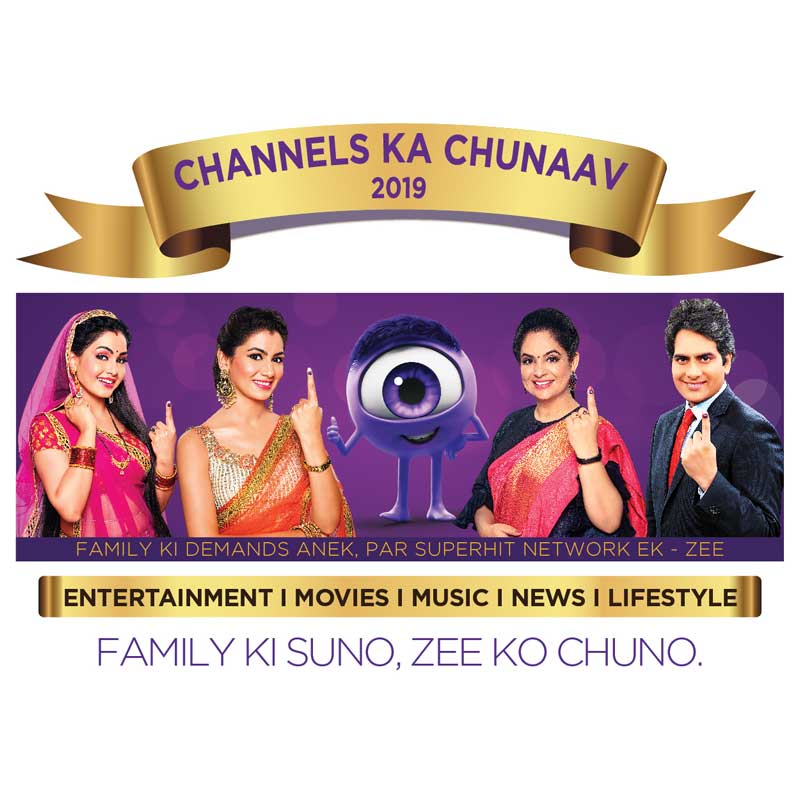
    Till now, packs focused on family viewing and bundled channels keeping everyone in mind. Now, it has launched a new multimedia multi-stakeholder communication initiative ‘Channels Ka Chunaav 2019’.

    Talking to media, ZEEL CMO Prathyusha Agarwal said rather than looking at it as a multimedia campaign their approach is in the form of a behavioural change. While in terms of choosing channels broadcast sector had a very low involvement from consumers, the scenario is going to change soon as TRAI has put the power in the hands of consumers. Over a period of time, consumers will gradually start to evaluate what they are paying for. Explaining the structural change across the value chain, Agarwal spoke about ZEEL’s initiatives as well as the new regime’s impact on the industry.

    On the new behavioural change program

    We did a lot of work. We have done price modelling and consumer research in terms of path-to-purchase. The biggest worry is if they will end up compromising someone’s need in the family because budget remains the same. Is that a reality? Not necessarily true. Because once they start doing the exercise, they will realise that they are able to reallocate to the ones which they want. The entire behavioural insight focuses on the variety of needs of each family member and how to meet that demand.

    The other one we have realised while doing this is that TV is seen as a family asset. So, when they are titrating it, the optimisation happens on the person fulfilling the needs of the family and hence the pricing of the bouquet is based on which is optimised for everyday entertainment needs. This is the monthly fee someone is willing to shell out that has been optimised for the everyday needs of everybody in the family. This is the ZEE approach and the behavioural campaign.

    On readiness of DPOs

    The DTH guys have systems in place and DTH consumers are already equipped with this. In terms of LCOs, it’s not as if every LCO is unprepared. I met an LCO who had his own app which he would look at for collecting payments and what he is giving to consumers. I met another LCO who did not have a clue. People who are already attuned to viewers’ demand will be the first movers and gainers. The rest of the mass majority will follow after that. Those who haven’t taken technological support are still empowering their salesmen.

    On protests from LCOs

    Every time there’s a change, there will be protests. First, they will ignore things, and then they will be listening and gearing up for action. I don’t think anybody is not wanting to do. Moreover, many times education and understanding help in a big way. Things will fall into place in the 29th-5th cycle when they go to collect money. By 25-26th of this month, they have to take the call.

    On the change of pricing model

    Currently, based on the pricing modelling that has been done, our pricing has been put by ZEEL which we believe is the right demand-led pricing. This is the channel which has a certain love from its viewers hence certain pricing has been fixed. It will get titrated because it was never an open market pricing. Earlier it was always a fixed bundle or fixed fee which is never a true representation of value.

    On the change in subscription cost for consumers

    The narrative is about reallocation, not increase. There might be or might not be an increase. India is a country where we always have a habit of trading up for what we want and trading down what we don’t need. So that is going to play out even in this sector. They will reallocate their monthly budget. If it does not fall in their budget they are going to shell that incremental money for what they really love. For consumers paying Rs 350, it’s going to be in the budget. Among those paying Rs 200, a little bit of reallocation and titration will happen.

    On whether channel price will be relooked if SC strikes down 15 per cent cap

    In TV ecosystem, now subscription pricing becomes an open market variable and hence you need to be ready not just when regulator intervenes but you have to be thinking about it at a conscious variable and hence be geared for it. Your consumer understanding of what is demand-led pricing will keep you in a good state in the long run. Obviously what the regulator is saying will make you go back and look at pricing. But even otherwise, we are really looking at it as the first pricing that has gone out. There is a behavioural change and there is a certain feedback loop that will happen from consumers saying what I am willing to pay for you. That will take six months to settle down. We will do continuous research.

    Impact on advertising revenue

    It’s a virtuous cycle. Brands which have the strength, pull and reach are going to actually benefit because the reach will keep going up. Because consumers will pick and choose, the reach will keep galloping and hence advertising revenues will go up. Where the product is not good, obviously you will not anyway get advertising revenues for it because there’s no reach. If it’s an open market, your offering and its quality will make you stand in a good state in both places. Till now there’s an artificial not knowing whether your product is doing well or not from the subscription side, now it will get opened up.

    Content strategy

    You never had random content being pushed doing well. When they don’t work, we shut those channels. So any good broadcaster who is committed to good content offering has always evaluated if it is performing well. You had the reach numbers to tell you if it’s catching eyes or not. It isn’t as if because of the new regime people will start evaluating their content. The good thing is there will be feedback on what is being pulled or consumed which will refine your strategy.

  • ZEE puts Family First with ZEE Family Packs

    ZEE puts Family First with ZEE Family Packs

    MUMBAI: Currently, the Broadcasting ecosystem operates as part of a packaged bouquet environment where consumers pay a fixed amount and receive a pre-configured bouquet of channels. As per the TRAI mandate, the new tariff/pricing regime will come into effect from December 29th, 2018. In the new scenario, the power of choice shifts to the viewers who will have the freedom to choose their favourite channels and packs and pay only for what they want to watch. The new channel pricing regime also standardizes channel prices across all service providers / distribution platforms and ensures an open market operation that will lead todemand-led pricing in the category.

    ZEEL, the No 1 television network of the country, leading the change agenda for the new pricing regime, was the first to roll out multiple customer-centric packs and demand-led channel pricing. Speaking on the occasion, Mr. Punit Misra, CEO, Domestic Broadcast Business, ZEEL said,“The new pricing regime by TRAI is a transformational structural reform that will go a long way in strengthening the sector with the creation of a uniform pricing model. It puts the power of choice with the consumer, giving him the flexibility to opt for channels and bouquets he loves and pay only for those. For over 26 years, it has been our commitment at ZEE to bring families together through the power of television. Our research on subscriber choice modelling and path-to-purchase understanding pointed towards consumers treating television as a family asset.The monthly purchase is optimized for everyday entertainment needs of all the family members.  Hence our approach towards pack configuration has been ‘family first’ – offering the top genres that contribute up to 85% of family viewing needs of our viewers on a daily basis.”

    Championing the “Freedom of Choice”, ZEE promotes “Channels Ka Chunaav 2019” – a multimedia multi-stakeholder communication initiative, urging viewers to fulfil demands of all family members through Family Ki Suno, Zee Ko Chuno!Keeping with the topicality of elections and the power of choice that has the ability to change status quo, Zee, with this campaign, aims to be the catalyst for the transformational change expected across the TV ecosystem.

    As content in themother tongue is usually the primary destination for TV viewing across India, the ZEE family packs have been configured regional language-forward with attractive packs across 11 languages – Hindi, Urdu, Marathi, Bengali, Oriya, Bhojpuri, Tamil, Telugu, Kannada, Malayalam and English.  With a sound understanding of the viewer consumption basket of channels across regions and languages, ZEE has three types of packs to cater to different viewer needs. Prime packs based on core regional language consumption, Family Packs that offer the top genres for every household and All-in-One Packs that offer all genres at great value. These packs come in very attractive pricesranging from the lowest at Zee Prime Pack Tamil-SD at Rs 10 for 8 channels, Zee Family Pack – Hindi SD at Rs 45 for 24 channels to the ZEE All-in One pack that brings the entire lot of 27 channels at just Rs 60 only. What’s more, ZEE has an exclusive launch offer of Zee Keralam at an unheard price of 10 Paise Per Month only.

    Tailor-made to fulfil multiple demands from family, the ‘Zee Family Pack’ targeted at the Hindi Speaking Market (HSM), is highly affordable, priced at Rs. 45 per month for a suite of 24 channels. The Zee Family Pack includes leading channels such as Zee TV, &TV, Zee Cinema, &Pictures, Zee Bollywood, Zee News, Zee Anmol, Big Ganga, Zing, Living Foodz and many others, cutting across multiple genres such as entertainment, movies, news, music and lifestyle thereby offering content that caters to every member of the family, every day. 

    To cater to the multi-genre needs of the premium viewers whose primary language is English, Zee has created the Zee Prime Pack English SD that includes premium channels such as Zee Café, & Flix, Living Foodz and WION priced at Rs 25 per month and the HD pack that includes & Prive HDin addition to these at Rs 35 per month.

    With a total of 59 channels (43 SD & 16 HD) in 11 languages reaching a total of 148 million households every day, ZEEL has been offering audiences in India ‘superhit’ entertainment cutting across genres.Whether it’s Pragya, Preetha, Zara Siddique or Bhabhiji in the Hindi Belt to Rani Rashmoni in Bangla, Radhika in Marathi, Parvati in Telugu,Bhoomi in Oriya, Sembaruthi in Tamil, Kamli in Kannada&and many more in every region, our characters share a deep bond with viewers wanting them as dinner-table companions every day! The No.1 TV network that fulfils all the demands is Zee with its family packs that bring together the right assortment of superhit channels across the top genres of entertainment, movies, news, music and lifestyle, making it a must-have for every family!

  • TRAI issues warning against spreading ‘fabricated’ facts on tariff

    TRAI issues warning against spreading ‘fabricated’ facts on tariff

    MUMBAI: The Telecom Regulatory Authority of India (TRAI) on Tuesday cautioned stakeholders against spreading “concocted and fabricated facts” against its new tariff directive, while releasing a list of TV channels along with their respective maximum retail prices as per information received from broadcasters.

    The TRAI statement insisted that the new tariff regime will bring about more transparency in the eco-system by “separating the network capacity fee and pay channel price” and added any “malpractice” from service providers will compel the regulator to intervene.

    Pointing out that a section of the broadcasting and cable industry was creating confusion by insinuating the new tariff regime will increase the monthly cost of consumers for watching television by making inaccurate comparisons, TRAI said comparisons were “skewed” and far from the “market discovered” prices of TV channels.

    Though the Pune Cable Operators Association some days back said it’d move the Bombay High Court against TRAI’s new tariff regime as it could hurt LCOs’ earnings as also consumers, the regulator allayed such fears saying comparisons were not based on “reasoned analysis” and the standard interconnect agreements protected the revenue model of LCOs.

    Meanwhile, TRAI yesterday also released the maximum retail price of 332 pay channels offered by broadcasters to subscribers.

    As per the MRP list released by TRAI, NHK World Premium’s HD version is the costliest TV channel in the group at a stated price of Rs 1,800.

    Though most TV channels are running against time to meet the year-end deadline to disclose MRPs and also conclude signing of agreements with distributing platforms, the issue of tariff is unlikely to settle down soon as TRAI itself has filed a petition in the Supreme Court to get clarifications on the issue of 15 per cent cap on discounts on channel pricing.

    Star India on Monday was the latest one to announce the new a-la-carte prices for its TV channels and company MD Sanjay Gupta made it clear the organisation would adapt to any new pricing structure if necessitated by a future court ruling.

  • IBF to intervene in TRAI’s SC petition on 15% discount cap

    IBF to intervene in TRAI’s SC petition on 15% discount cap

    MUMBAI: The TRAI tariff order, which remained a topic of intense debate and discussion in 2017 and 2018, is likely to dominate discourse early on in 2019 too, at least from a legal standpoint as the Supreme Court resumes work after the winter vacations.

    A source close to the development has told Indiantelevision.com that the Indian Broadcasting Foundation (IBF) is set to intervene in the matter — a special leave petition (SLP) filed by the regulator seeking clarifications on 15 per cent discount cap — when it gets listed.

    All parties, including Star India, which were part of the Madras High Court proceedings, are involved in TRAI’s petition on the issue of 15 per cent cap on discount on a bouquet price or a la carte price of TV channels to consumers.

    The IBF was not originally a party, but an intervener. Hence it wasn’t incumbent upon the TRAI to make it a party in the fresh SLP. However, the IBF will now implead itself in the petition.

    Currently, the tariff order and regulations are getting implemented without the 15 per cent cap as confusion prevails over its validity, though a section of the industry is of the opinion that the Madras High Court had struck down the discount cap issue. TRAI had not issued any clarification on this while setting a roadmap earlier this year for the new tariff regime’s implementation after the Madras HC order.

    On Monday, Star India’s MD Sanjay Gupta during a media roundtable, responding to a question from Indiantelevision.com on the broadcaster’s position on the 15 per cent discount cap said, “It is up to the court to decide that. Now, as an SLP is in the SC…the courts will decide. I don’t have a view beyond that. In the current ruling, there is no discount cap. It may change going forward depending on the SC ruling.”

    Gupta, however, was confident in adapting to a new pricing structure should the SC uphold the high court’s view on the 15 per cent cap.

    “In case the court has a new ruling that discounts have changed, pricing [too] needs to change, both a-la-carte and bouquet pricing in that case, because the distance between them has to be only 15 per cent. I think we are still awaiting the court’s decision and if we need to adapt to it, then we’ll adapt to it. But there will be a shift again in pricing if that comes through,” he added.

    TRAI’s petition demands that the SC set aside the portion of the high court judgment that frowns on the 15 per cent cap on discounts on bouquet prices of TV channels.   

    The Madras High Court, while upholding most of the TRAI tariff order — issued middle of 2016 and challenged by Star India and Vijay TV later that year on grounds of overstepping of jurisdiction — had struck down as arbitrary almost 18 months later the 15 per cent cap on bouquet prices.

    With the case finally disposed of by the Supreme Court earlier this year, upholding the high court’s views, TRAI had issued a notification stating that India’s broadcast and cable industry stakeholders implement its tariff regime in phases and report on compliance.

  • Sanjay Gupta on executing the new tariff regime, Star India’s strategy and channel pricing

    Sanjay Gupta on executing the new tariff regime, Star India’s strategy and channel pricing

    MUMBAI: Star India MD Sanjay Gupta is a veteran of many high-stake battles. The one he’s currently involved in could be long drawn, unpredictable, unlike anything he’s encountered before and potentially his toughest in a while. However, as India’s broadcast bosses put their heads down to implement TRAI’s new tariff regime, Gupta and Star seem to be first off the blocks. Over the weekend, the network unleashed a nation-wide, multi-media and multi-starrer campaign to educate the consumers across about the radical changes.

    While Star fought the TRAI order tooth and nail in India’s top court, Gupta and team deserve full marks for the sheer scale and speed at which they seem to have got things moving after an unfavourable ruling on 30 October. Gupta says his team at Star is ‘excited’ and sees the new tariff regime as an ‘opportunity’. More power in the hands of the consumer and transparency in the value are the two major highlights as India’s broadcast sector undergoes a facelift, he feels.

    That’s not all. Gupta also articulated his views on Star India’s strategy, channel pricing, disruption in the value chain, the SLP filed by the TRAI in the SC, its implications and more as he fielded wide-ranging questions on a balmy Monday morning on the 37thfloor of Star House.

    On the tariff order’s impact

    The biggest change the tariff order is making is bringing transparency into the whole system of how content gets created to how content gets bought. The biggest change you’re going to see is the transparency, which is existent in almost every industry. It is the biggest shift this industry could have asked for and is great value from a consumer point of view. 

    On preparedness of the system 

    I think people will learn. Over the next two-four weeks, it’ll be an intense learning experience. The good thing in this country is people learn very well quickly. The biggest change in this tariff order is the transparency and power to the consumer.

    On Star India’s strategy

    Our strategy has been in delivering great value to consumers. You know that we invest in making marquee content. Be it our channels in drama, movie, sports, National Geographic or any other content that we deal with. And the question that we ask ourselves is how do we ensure that we provide great value to our consumer through our pricing. We offer content in every geography – be the drama we create with Star Plus and Star Bharat in Hindi, Asianet in Malayalam, Star Vijay in Tamil, we add movies to it in each of the markets, National Geographic – which has some of the best infotainment content to consumers – and on top of it sports. What we are trying to do is make the price affordable to ensure that every consumer has access to this content. Not only do they have power but it is power at a great value from a Star bouquet point of view.

    On channel pricing

    The reason we started the communication early, at Star and IBF, is to let the consumers know that a change is happening. I think it requires a lot of education and communication for people to talk to. To my mind, it’s critical and important. And we wanted to begin early, as early as practically possible. Our price is not led by sports but it is also regionally decided. So, we have a different price in Tamil Nadu as compared to Bengal. Depending on what we think is the strength of our bouquet and the quality of content we are offering. So there is differential pricing like in any business that you decide it regionally and locally. We have a strong channel in Asianet, we have a much weaker channel in Vijay. So we are trying to ensure that consumers get dramatic value in each geography.

    For content with mass requirement, we have tried to make it as cheap as possible within the constraints of the investment we make in each of the businesses.

    On weaker channels

    As I said, the real big change is the power to consumers. They have a choice to decide. Less performing channels cannot come to consumers if they don’t like it. The business will be forced to perform better and better to meet consumer expectations.

    On viewership and ad revenue

    If the channels are powerful and the consumers want you, they will take that option. I think the real question is – Are the channels and content powerful enough? Great content will get viewership. It will force everyone to up their game in terms of the kind of content they offer.

    On TRAI’s SLP in SC

    It is up to the court to decide that. I think now as an SLP is in SC, whenever it gets picked up, the courts will decide. I don’t have a view beyond that. But at this moment, the current ruling is that there is no discount cap. It may change going forward depending on the SC ruling.

    In case the court has a new ruling that discounts have changed, pricing needs to change, both a-la-carte and bouquet pricing in that case, because the distance between them has to be only 15 per cent. I think we are still awaiting the court’s decision and if we need to adapt to it, then we’ll adapt to it. But there will be a shift again in pricing if that comes through.

    On whether distribution chain is ready

    I think we will know closer to time. It is possible that they are all not ready at one time and at that point in time TRAI will have to take a view whether they’ll give more time for people to transit. For now, 29 December is the deadline and we are following the TRAI deadline fully in our intent, in our communication and our effort on ground. In the last few months, we have invested aggressively both in putting together our communication, putting up our pricing on the website, training our teams internally because this is such a massive change. All our internal teams need to get prepared too because this has never been done before. It requires a complete re-understanding within the organisation and briefing our partners.

    On potential change in pricing

    Pricing once defined will remain the same. This is the pricing we have published. People can change their pricing but once consumers pick it up, it applies for the next one year. You can’t change it then. This will also bring about discipline in the industry.

    On the impact on advertisers

    I don’t have a firsthand view on it. But I think this will mean some challenges in implementation. A massive shift of this kind brings out a bit of chaos in the beginning. But I think when I look back – when we went from analogue to digital there were similar concerns, and personally, I carry that worry more than anyone else. But if you look back, it happened more smoothly than what all of us anticipated. Given the enterprise of our partners and consumers, we find solutions to difficult problems quickly. So I think this transition will be a little chaotic but hopefully, it will settle down in a few weeks.

    On disruption in distribution chain

    Consumers are used to buying everything else on MRP and choosing. So, they are used to it across business and categories. It is a big shift for people who deliver content to them, i.e., all of us and distributors – both DTH and cable. I think I personally feel all of them have been working hard over the last few months to prepare.

    On readiness of DPOs

    I think DTH is ready in any case because they do this for a living. DTH covers around 60 million homes. They are fully ready. I think cable is ready from a technology point of view. I think from a people point of view they are getting ready. They have been working hard to get ready. I do hope that given the value this is going to unleash, given the power to consumer this is going to provide, our consumers will really come forward and adopt it and force the transition to happen quickly and smoothly.

    On nature of agreements with DPOs

    Now the nature of agreements is simple – there is no long term agreement. You offer your RIO, which is offered by all content owners on the website. People can download and sign it. Basis the number of consumers that you get every month and the price that you set, you get paid. So it’s a fully transparent way of working for everyone. There is nothing like a long-term agreement anymore.

    On how content will be offered to consumers 

    I think DPOs will decide that. But we are offering to every DPO a-la-carte content and bouquet content both. It’s the same price to DTH and cable. It’s a transparent price to all. They can now choose to make their own bouquets by using a-la-carte channels or they can combine bouquets of different broadcasters. I think that’s the strategy each distributor will define on its own. The interesting thing will be from a consumer point of view, you’ll know everything – what’s the a-la-carte price for a channel, what’s the DPO bouquet and what’s the content bouquet. This kind of transparency has never existed in content business ever before.

    On impact on content offering

    Low performing channels will be under pressure. It will put pressure on content to be better and better. Hence, everybody will have to invest in quality to ensure your channels become better. Content has to work well.

    On consumer awareness

    We have launched a big campaign across eight languages. We are doing a big digital push led by Hotstar and digital assets outside. We are trying to make a very simple communication, at both IBF and Star, to simply explain to consumers what is the change. I’m sure all DPOs and channels are investing equally. The amount of communication consumers will see on this front will be quite significant. So I think communication will be a big draw for both the distribution industry and the content industry in the next few weeks.

    On the relationship between broadcasters and distributors

    One big change that is happening is (and that is the power of the TRAI ruling) that pricing is the same for all distribution partners. There is no difference. It’s equitable and it’s transparent, which means more trust. I think this should help drive a much better and a deeper partnership with the distributors.

    On measuring viewership

    As consumers shift, each of them won’t behave the same way. Each distributor won’t behave the same way. Some of the challenges on measurement would be the sampling, which is an important backbone of any measurement, might go for a toss. Because there are 180 million homes measured through 40 thousand boxes. So if there is chaos in 10 thousand boxes, the ratings may not reflect. Hence the IBF made a request (to not release viewership data for two months) to BARC. Now the BARC board has to decide what the next step should be.
  • MIB to hold MSO conference on 18 December

    MIB to hold MSO conference on 18 December

    MUMBAI: Ministry of Information and Broadcasting (MIB), through Broadcast Engineering Consultants India Ltd (BECIL), is organising a conference of MSOs, the cable TV industry representatives, that will be held on 18 December in New Delhi. The discussions will pertain to several issues related to broadband services through cable TV networks.

    The aim is to discuss various issues as well as seek views of MSOs about feasibility, affordability, and ubiquity on the issue of broadband services through cable TV networks, infrastructure required for the same and modalities of payment and segregation of revenue earned for broadband activities.

    One of the major topics which will be in focus is the willingness of the operators to invest in the infrastructure required. The payment of 8 per cent adjusted gross revenue (AGR) as a fee to DoT, whether to be paid only on the broadband services or on overall revenue earned in respect of both the businesses will be also discussed. The need of creating a separate entity for broadband activities for segregation of the revenue earned on it will be also examined.

    As per the MIB release, the conference will see participation from major MSOs, MIB, DOT, TRAI and BECIL officials.

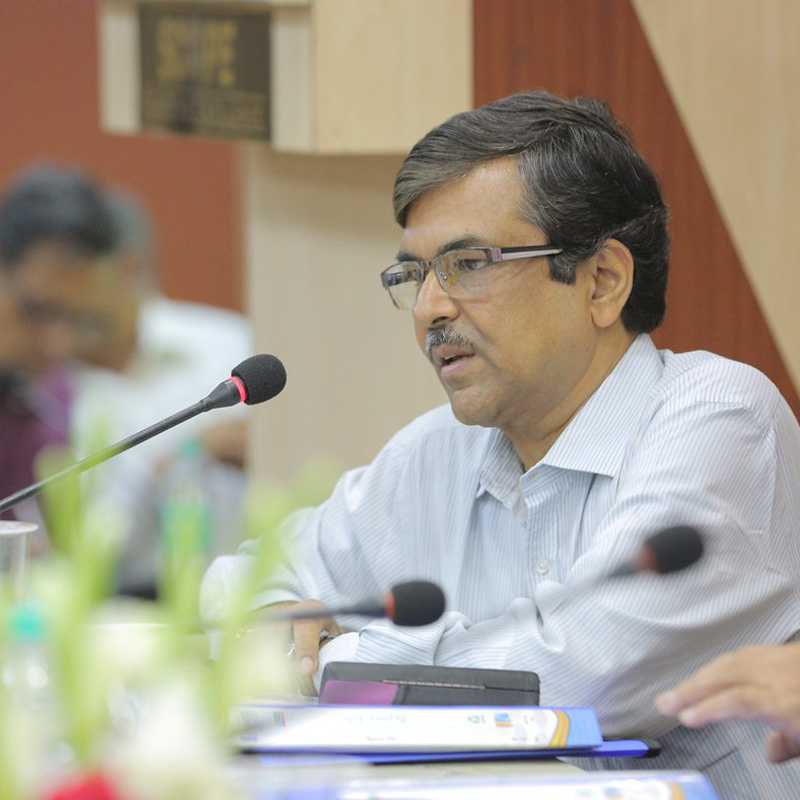
  • TRAI secretary Sunil K Gupta explains need for tariff order

    TRAI secretary Sunil K Gupta explains need for tariff order

    GOA: After several twists and turns, Telecom Regulatory Authority of India’s (TRAI) new tariff order crossed its last legal hurdle in the Supreme Court on 30 October. Now, with less than one month left for the implementation of the regulations, several questions still concern the industry stakeholders. On the second day of the Video and Broadband Summit 2018, TRAI secretary Sunil K Gupta spoke on the new regime via Skype and answered questions raised by stakeholders. He also threw light on the initiatives taken by the regulatory body to make consumers aware of the radical changes.

    Indiantelevision.com needs to clarify here that since the VBS session was held in Goa last month, a development has taken place in the form of TRAI, last week, filing a fresh petition in the Supreme Court for review of the Madras High Court observations on a cap of 15 per cent discount on bouquet prices of TV channels.

    Gupta started the session explaining the need to have a comprehensive regulatory framework for dealing with the problems of the broadcasting sector. Talking about the problems faced by different stakeholders, he cited the example of the issues faced by MSOs and LCOs, broadcasters as well as consumers.

    In the case of MSOs and LCOs, the biggest problem was discriminatory treatment by broadcasters. As a result, it was almost impossible for smaller MSOs to get the content at the appropriate price from the broadcasters because the agreements were not transparent. Moreover, the problem was concerning customers as well due to the different rate of channels at different platforms. They didn’t have the power to choose and were forced to take channels provided by the DPOs.

    Broadcasters also faced various difficulties due to the lack of transparency in the entire ecosystem. While they were giving free-to-air channels, they felt that, in many cases, those channels were being actually charged. This menace reduced the probability of use of those channels resulting in fewer viewers. As the revenue of FTA channels is highly based on viewership, the business was getting affected.

    “Similarly, there were problems with broadcasters also as many time broadcasters were complaining that the content which is given to the consumers is not of high quality. Secondly, there are certain channels which were demanded by few stakeholders and because of the cap such channels could not be launched as there were serious issues particularly if you look at channels that are a requirement of a select class of stakeholders,” he said.

    “So considering all these issues and also the issues of non-transparency, we have come up with a very comprehensive framework. The comprehensive framework gives rights to the broadcasters to price their channels properly and transparently communicate to consumers,” he added.

    Gupta also explained that TRAI has made arrangements so that price of a particular channel can clearly be displayed on the electronic programme guide. He later added that due to the new regime, subscribers would have choice of channels as well as all the information. Moreover, Gupta said subscribers can get all the related information on the website of the MSOs in the tab which is called ‘customer corner’.

    “As far as MSOs are concerned, there were issues that they did not have funds to upgrade their network for good quality experience to consumers. Now, there will be dedicated money for MSOs and LCOs so the network can be upgraded and good quality service can be given to consumers. Broadcasters also have the freedom to choose what price they can get from subscribers and also appropriately optimise the prices so that they can get maximum revenue of advertisement as well as subscriptions from the consumers,” he added.

    Responding to a question from the audience, Gupta said there is no change in the license of the LCOs and they are supposed to take registration form from the post office only. But he also mentioned that they are working with MIB so that the process can be made online.

    Many MSOs and LCOs raised the concern that it looks like they are being reduced to merely a commissioned agent. Gupta said the functions of LCOs and MSOs have properly been described under the Model Interconnect Agreement (MIA) and the Standard Interconnect Agreement (SIA) divisions.

    “Here the framework is that a channel price which is being prescribed is the broadcaster’s understanding of the price of the particular channel. Now 20-35 per cent discount which is being given is to do certain work for that particular channel. Here, Rs 130 is being given differently and separately to MSOs and LCOs as they are providing the connectivity to consumers and consumers are getting the service from them. In addition to that, the portion of the discount on the content which is either 20 per cent or anything in between 20-35 per cent will also be accounted for sharing between the MSOs and LCOs,” he explained rejecting the claim that MSOs are only about to get commissions.

    TRAI is also taking measures to inform consumers properly about the upcoming change. There will be big campaigns as well as meetings in cities like Delhi, Jaipur, Hyderabad, Kolkata, Mumbai and Bhopal. In addition to that, TRAI is also going to start a programme to inform the consumers. Even jingles will be played on radio and other media to grab consumer attention.