Tag: Trai

  • TRAI reminds consumers they can pick a-la-carte channels

    TRAI reminds consumers they can pick a-la-carte channels

    MUMBAI: In its latest missive the Telecom Regulatory Authority of India (TRAI) has taken note that broadcasters are only advertising bouquets of their channels and not informing customers about a-la-carte options. As per the new regulatory framework, consumers must be given the choice of picking individual channels too.

    “Now it has been noticed that several broadcasters are advertising their channels in the form of bouquets only. However customer may note that they have option to choose channels on a-la-carte also,” TRAI said in the release.

    It went on to state, “Consumer has complete freedom to choose their desired 100 standard definition (SD) channels within the network capacity fee of maximum Rs 130. The desired channels could be in a-Ia-carte free to air channels or pay channels or bouquet of pay channels or any combination thereof. The choice completely rests with the consumers.”

    TRAI has also mentioned that the maximum retail price (MRP) of a channel on a-la-carte can be viewed in the Electronic Programme Guide (EPG) or Menu of the TV screens of customers. However, Distribution Platform Operators (DPO) such as cable operators, DTH operators may provide discount on the MRP.

    For informing consumer properly, DPOs have been requested to run Consumer Information channel preferably on channel number 999 wherein consumer-related information including the prices of channels on a-la-carte and bouquets are made available.

    LCOs, MSOs, DTH operators are coming up with various options to consumers so that they can exercise their choice conveniently. LCOs can be reached by personal contact while the option of calling on call centre number is also available for many DPOs. Along with the website facility, many DPOs are also providing the option of apps.

    It once again reminded subscribers to make their picks in advance to avoid last minute hassles.

  • TRAI tariff order: Topline projections for broadcasters, MSOs

    TRAI tariff order: Topline projections for broadcasters, MSOs

    MUMBAI: In what is probably the acting collaboration of the year, Aamir Khan teamed up with Pankaj Tripathi for an infomercial for broadcasting behemoth Star. The 1 minute 22-second video, available both on TV and digital platforms, is an ad for Star’s new bouquet of channels, with the tagline“#Sachmein?”.Created to take the new TRAI tariff order ruling head-on, the ad seems to sum up the urgency broadcasters must be feeling to be ahead of the curve on this issue.

    The ad also starkly displays customers being at the mercy of cable and DTH providers for a fair offer. The new tariff order, however, will change this by favouring consumer choice and bringing in transparency, equitable distribution and parity. That the broadcaster had to call out the big guns (Khan, Tripathi) to make their point is a fair reflection of how seriously they expect the TRAI order to affect the television industry. And, all things considered, this might be the next revolution in the industry, one that will put consumers firmly at the centre of the ecosystem.

    The background

    In the past, negotiation took place between the rates channels agreed upon with the DPO and those that reached the consumers. The customers were never clear how much they were paying for which channels. Now, broadcasters will be creating fair bouquets, which the distributors have to package attractively in order for customers to subscribe to them.

    What the tariff order is all about:

    ·         All channels are offered on an a-la-carte basis.

    ·         Channels must be declared as pay channels or FTA-free to air channels and cannot be mixed in a single bouquet.

    ·         Distributors have to offer a base pack consisting 100 FTA channels in which 26 channels from Doordarshan are mandatory.

    ·         A bouquet of pay channels cannot contain a pay channel exceeding MRP Rs19.

    ·         The prices of bouquets and a-la-carte channels will be uniform across distribution platforms. No regional pricing is allowed.

    All stakeholders will finally be at par

    1. For the broadcaster: An obstacle to be worked around

    The broadcaster will now have to announce the MRP of each channel individually and set reasonable a la carte prices.

    They have to decide how much they can corner from advertising, subscription revenue and engage in intelligent pricing. They are even allowed to indulge in promotional pricing twice a year for up to 180 days in total. For broadcasters, opportunities need to be identified within the given framework. Those displaying good content will benefit while those used to bundling channels with no demand will take a hit.

    Our research shows that broadcasters may take a substantial hit, but strictly only in an ideal a la carte scenario. If we accept the ideal scenario, the Chrome Content Consumption Index shows that consumers will choose, on a national average, six pay channels. So apart from the basic cost of Network Capacity Fee (Rs 130), plus one flagship channel (~Rs 19) and five secondary channels (5*Rs 3), the new ARPUs stand at Rs 164, down from the current average of Rs 208.

    However, this needs to be tempered by the fact that most consumers will go for bouquets instead of ordering a la carte channels, largely due to the ease of ordering in one go, and if this is the case, the numbers need to be reworked. Broadcasters will sell their first bouquet for Rs 49 (led by driver/mass entertainment channel), the second for Rs 25 (led by a secondary driver/mass entertainment channel) and the 4 remaining channels (4*Rs 3), which will together amount to 86 rupees. In addition to the existing network capacity fee of Rs 130, the new ARPU is placed at Rs 216, an increase in the current ARPUs.

    Over the next few months, how it plays out, remains to be seen.

    2. Distributors and last mile operators (LMOs)

    Broadcasters will now be directly linked to end consumers and the intermediaries have the most to lose. In the past, they used to gain out of leakages and from money, which was not accountable. With the tariff order bringing in transparency, money can be tracked and the government will receive its due taxes.

    On the other hand, broadcasters will no longer coerce the distributors either. Rather than fixed deals between the two, which occurred in the past, the order will bring in objective, transparent deals based on content. They will now be able to create bouquets from different broadcasters at prices declared by them and can incentivise customers to purchase the same.

    Distributors and LMOs have to sign an agreement for revenue sharing on a mutually agreeable percentage share. If they both do not reach an agreement then recommended revenue share will be distributor at 55 per cent and LMO at 45 per cent.

    3. The audience: empowering consumers across the nation

    The belief is that the customer is the same everywhere.

    Overall prices are to be brought down through transparency of the pricing structure. The unfair advantage held by broadcasters will finally be dismantled as the consumers gain freedom to cherry pick their content and pay for the same. Not only is the price of each channel known, but viewers can also pro-actively, economically choose content from a wide range of choices. 

    What remains to be seen…

    Many have hailed the new regime as the right way forward where service providers and consumer interests are balanced. A fair deal is negotiated between broadcasters, distributors and the consumers as per the tariff regulations. However, its successful implementation remains to be seen and operational difficulties are being predicted.

    In terms of advertising, that second revenue pillar of broadcasting, the new order should render sampling quite obsolete, especially with more than 50,000 variations in packages. This will be the time when distribution data will become ‘oil’ for the industry. Channel availability, and not sampling, will drive media buying in the short to middle term.

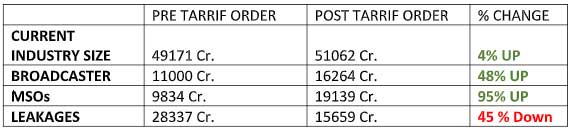
    Industry topline projections

     The conclusion

    In the end, this is a much-needed step in the right direction, although the ideal scenario of 100 per cent a-la-carte channels might still be an improbability. The tariff order promotes transparency, empowers the audience, and plugs the revenue leakages, thereby increasing accountability of the key industry stakeholders. 

    (The author is chief executive officer and co-founder, Chrome DM. The views expressed here are his own and Indiantelevision.com may not subscribe to them) 

  • Disney XD to be rebranded Marvel HQ

    Disney XD to be rebranded Marvel HQ

    MUMBAI: Disney XD, the action, adventure and comedy channel for boys from The Walt Disney Company (India) umbrella brand is all set to rebrand as Marvel HQ.

    According to broadcaster’s RIO published by the TRAI website, Marvel HQ will be an SD channel and priced at Rs 4. As per the new tariff regime that was supposed to be implemented by all the broadcasters, the MRP and the price of the bouquets were reworked in order to ensure wide adoption of the channels by the consumers. Similarly, if you buy the company’s four kids channels — Disney Junior, Hungama, Disney XD (Marvel HQ) and Disney Channel — it will cost Rs 12 per month.

    The channel runs shows like The Avengers: Earth's Mightiest Heroes, Marvel's Avengers Assemble, Phineas and Ferb and Hulk and the Agents of S.M.A.S and among others. Apart from English and Hindi, it also has Tamil and Telugu audio feeds. 

  • TRAI tariff order, disruption posed challenges to DPOs in 2018

    TRAI tariff order, disruption posed challenges to DPOs in 2018

    MUMBAI: Distribution platform operators (DPOs) in India trod a tricky terrain throughout 2018. Both DTH and cable operators continued to face the heat of Jio FTTH, the rapid growth of over-the-top (OTT) platforms and the uncertainties posed by the implementation of the new tariff regime towards the end of the year.

    OTT platforms and challenge of cord cutting

    With the fall in data triggered by Jio, OTT went beyond male, metro, and millennial which posed a potential threat to the cable and DTH industry. As online viewership increased rapidly, traditional distributors were exposed to the threat of cord-cutting.

    What bothered cable operators more than independent platforms was traditional broadcasters driving the B2C lane. Almost all the major broadcasters strengthened their presence on digital, offering catch-up TV along with original content, thus allowing them to bypass revenue sharing with traditional distributors without having to worry about the tariff order or down-linking permission from the government.

    KCCL CEO Shaji Mathews pointed out that broadcasters are trying to develop OTT platforms in such a way that their dependence on cable and DTH is reduced. He also added that they are developing it to push for additional viewership and to have an alternative medium.

    Jio’s FTTH foray

    After leading the wireless data revolution, Mukesh Ambani-led Jio Infocomm returned with another blockbuster offering last year – Jio GigaFiber. The grand entry in the fixed-line broadband sector was not only a challenge for broadband service providers but for cable, DTH players also as the FTTH service is bundled with additional benefits including TV service. Given that the Jio FTTH service will come at a lower cost as compared to market rates, another price war is likely to be unleashed by India’s richest man. In addition to that, the higher amount of data at better speeds will convert more people into binge-watchers of online content increasing the risk of cord-cutting.

    Jio’s entry in India’s low-penetrated FLBB sector has created opportunities for larger MSOs as the former quickly realised the difficulty of last-mile connectivity.

    “If you talk about Jio coming in the industry, we are very much positive towards it that they have recognised our structure – broadcaster, distributor, MSOs, LMOs. Since they have recognised it and tied up with major players like Den and Hathway, it’s a win-win situation for industry also,” Maharashtra Cable Operators Foundation member Asif Sayed said.

    According to Mathews, it is not the first time that the cable industry has been subjected to disruption. The advent of DTH too was rooted in disruption. According to him, the cable industry is well equipped to face the impending Jio onslaught.

    DD FreeDish growth

    Public broadcaster Prasar Bharati’s free-to-air (FTA) platform DD FreeDish too became a cause for concern for the distribution industry. The new tariff framework caps monthly cable or DTH bill of television households at Rs 130 (plus taxes) for the first 100 FTA channels. However, DD Free Dish offers the same free of cost. Doordarshan director general Supriya Sahu believes DD FreeDish is not only used by a marginal section of the society but is also evolving as an alternative option which clearly indicates that it could be a potential threat for DPOs. As per consulting firm EY, the number of DD FreeDish subscribers is expected to reach over 40 million by 2020.

    DPOs forged new alliances

    With the threat of disruption looming large, cable and DTH operators adopted new strategies to survive. Major DTH players as well as MSOs signed content deals with popular OTT platforms and rolled out hybrid set-top boxes as a counter.

    Essel group-promoted Siti Networks unveiled “SITI PlayTop” with YouTube and YouTube Kids in-built, its first hybrid set top box, in September 2018. Another leading MSO, Hathway, launched two new products – an OTT set-top box and a cable hybrid box. Mumbai-headquartered MSO IMCL’s group company ONE Fiber also introduced an OTT device. DTH companies too got in on the act. In the first half of 2018, Harit Nagpal-led Tata Sky entered into a strategic partnership with streaming giant Netflix. India’s largest DTH operator Dish TV announced the national launch of its OTT platform and DishSMRT Stick – a streaming device to make any TV smart. Jawahar Goel’s company has also planned new consumer-friendly initiatives including the launch of Hybrid connected box and integration of voice assistance in next-generation smart STB.

    Added focus on broadband

    Realising the importance of online video in the entertainment sector, MSOs and some LCOs with their existing resources focused on broadband business to further cement their positions. Cable operators with a reach of over 100 million households can easily upgrade fixed line coaxial cable to carry high-speed broadband. Fastway CEO Peeush Mahajan said his company expanded its broadband service in new locations in 2018 and the MSO’s focus will be expanding further in as many as areas possible this year. Even DTH operator Tata Sky rolled out broadband service in 15 cities as it remodeled itself as a video and broadband company.

    KCCL’s Mathews said that most major MSOs have now started investing in broadband and FTTH. He also added that the implementation of fixed-line broadband has been hampered because of various governmental issues like lack of coordination between the various ministries on issues like license fee and difficulties in acquiring licenses.

    VAS remained key

    While the ARPU growth was on the lower side across the ecosystem, DTH operators invested in various value-added-services to drive growth. Dish TV launched VAS services for both DishTV and D2H brands such as ‘Bhojpuri Active’, ‘Fitness Active’ among others with an objective of delivering quality content to consumers across regions in their language. Tata Sky too expanded its regional services with the launch of VAS like Tata Sky Telugu Cinema and Tata Sky Tamil Cinema. At the end of year, it also launched Tata Sky ShortsTV, a service dedicated to curated short stories and films.

    DTH sector’s sluggish growth

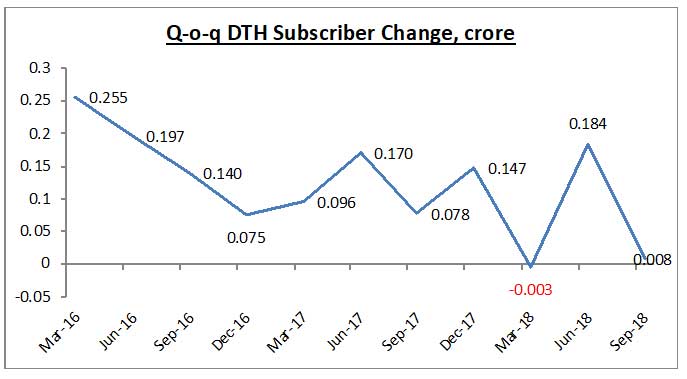
    The growth of direct to home (DTH) subscriber base of private players in India was the slowest over the last five years for the nine month period ended 30 September 2018 (TQY 2018, TQY period, three quarters of the year under review) as per TRAI. The good news was that the quarter ended 30 June 2018 (Jun-18, last or previous quarter) saw a reversal of fortunes. From a loss of about 30,000 (0.003 crore, 0.3 million, 0.3 lakh) subscribers in the quarter ended 31 March 2018 (Mar-18), DTH subscriber growth was positive 18.4 lakh (0.184 crore, 1.84 million) for the quarter ended 30 June 2018 (Jun-18). However, in the case of the quarter ended 30 September 2018 (Sep-18), subscriber growth has once again nose-dived to just 8,000 subscriber additions.

    New tariff regime

    The most crucial development of 2018 was TRAI’s win against Star India in the Supreme Court with regards to the new tariff order. With the radical change in the overall ecosystem, the organisations sounded cautiously optimistic. The new rule is expected to bring transparency in the value chain along with creating a level playing field for all stakeholders.

    While broadcasters and DTH platforms are likely to be benefitted, LCOs seem highly concerned about what’s in store for them. LCOs feel the 80-20 revenue share will work for DTH operators but not for MSOs. They prefer a share cap for LCOs instead of taking it out from the 20 per cent that MSOs have. While the deadline to implement the order was 28 December 2018, TRAI offered respite to the sector handing an extension until 31 January 2019 to ensure a smooth transition.

    With less than a month to go, DPOs have also started updating new channel prices and packages on their websites to inform consumers. Many large MSOs like Hathway, DEN Networks and Siti Cable have come up with "suggestive packs" bundling popular channels of all major broadcasters. Moreover, as TRAI has withdrawn its appeal before the Supreme Court to reinstate the 15 per cent cap on discounting of channel bouquets under the new regime, DPOs say now the order lacks value. As broadcasters now can give a discount of 50-60 per cent on bouqets keeping the a-la-carte channel price high, DPOs will not be in a position to package their products.

    Given the fact that there will be some time needed for consumers to adjust to the new structure, broadcasters may call for a rating blackout for at least six to eight weeks. However, it will not be the first rating blackout. When the industry went from analogue to digital distribution, the ratings were held back for around nine weeks. Though initially there was chaos, later both cable operators and DTH platforms reaped benefit from digitisation. “TRAI tariff order implementation provides transparency in the system and gives more choice to the consumer. Dish TV has been prepared to implement the new tariff order and stands to benefit with faster and healthier growth,” India’s largest operator Dish TV feels.

    Standing at the next revolution in TV industry, time will tell how the new regime will pan out for stakeholders. 

  • “Put Your Family First with ZEE Family Packs!”

    “Put Your Family First with ZEE Family Packs!”

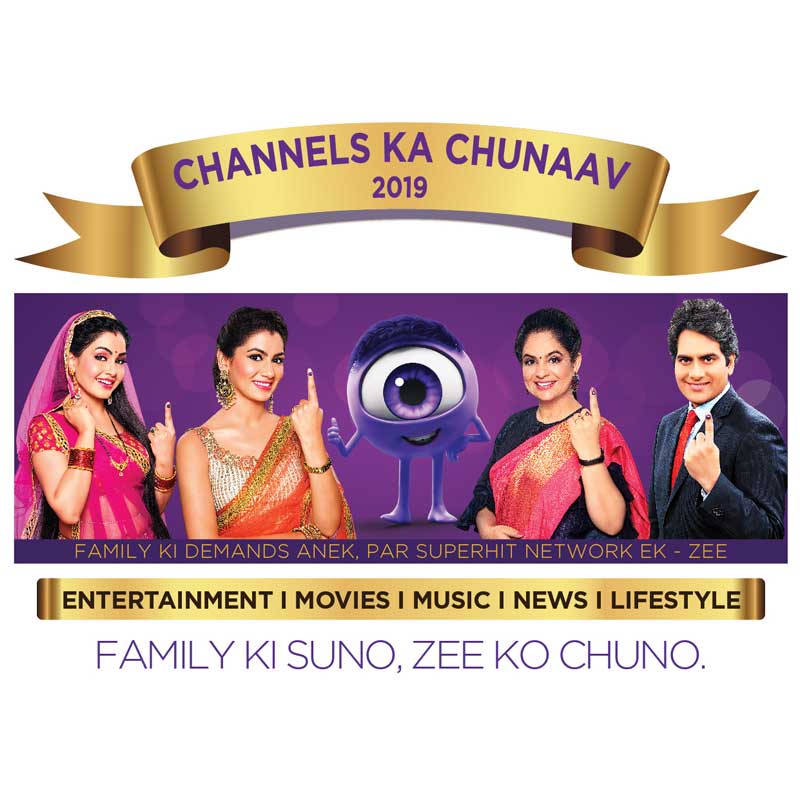
    MUMBAI: Up until date, the Broadcasting ecosystem operated as part of a packaged bouquet environment where consumers paid a fixed amount and received a pre-configured bouquet of channels. As per the TRAI mandate, a new tariff/pricing regime has come into effect from December 29th, 2018 and expected to be implemented across the value chain by February 1st. In the new scenario, the power of choice shifts to the viewers who will have the freedom to choose their favourite channels and packs and pay only for what they want to watch. ZEE, the No. 1 television network of the country, leading the change agenda for the new pricing paradigm, was the first to roll out its multiple customer-centric packs. In a display of network strength and breadth cutting across genres, some of ZEE’s most popular faces – Guddan (Zee TV), Angoori Bhabhi (&TV), Radhika of Mazhya Navryachi Baayko (Zee Marathi), anchor Hemali Mohite (Zee 24 Taas) and Chef Ajay Chopra (LF) came together to urge everyone to subscribe to the Zee bouquet of channels before February 1, 2019.

    Speaking of the core insight that shaped the configuration of ZEE’s packs, Prathyusha Agarwal, CMO, ZEE said, “When it comes to consumption of television content, everybody in the family has different demands and the monthly purchase is made keeping everyone’s preferences in mind.  Hence, our approach towards pack configuration has been ‘family first’ – offering the top genres such as Entertainment, Movies, News, Music and Lifestyle that are critical to the everyday entertainment needs of the entire family! The Zee Family Pack offers top channels across genres like Zee TV, Zee Cinema, Zee Marathi, Zee News, Zee Café, LF making it the superhit entertainment choice for consumers.”

    Mr. Atul Das, Chief Revenue Officer – Affiliate Sales, ZEE said, “The new pricing regime brings in a major shift in the way television has been consumed in India. On one hand, it brings in transparency to consumers about the price of channels, while on the other hand it offers the complete freedom of choice to pay for all those channels they want to watch. Consumers, who do not watch a particular set of channels, would be able to choose not to subscribe to those channels and manage their budget accordingly. Importantly, the new pricing regime brings in benefits to the entire value chain. DPOs will get separate fees for managing their networks, while broadcasters get freedom to price their channels, based on market dynamics. This will be beneficial to all stakeholders. Zee, on its part, has announced MRP of its channels on an a-la-carte basis. To offer greater value to its viewers, we have also created attractive packs – Zee Prime Packs & Zee Family Packs. The best of Zee content is bundled together at very attractive prices to make sure that the demands of the entire family is catered to.”

    As content in the mother tongue is usually the primary destination for TV viewing across India, the ZEE family packs have been configured regional language-forward with attractive packs across 11 languages – Hindi, Urdu, Marathi, Bengali, Oriya, Bhojpuri, Tamil, Telugu, Kannada, Malayalam and English. With a sound understanding of the viewer consumption basket of channels across regions and languages, ZEE has three types of packs to cater to different viewer needs. Prime packs based on core regional language consumption, Family Packs that offer the top genres for every household and All-in-One Packs that offer all genres at great value. The ‘Zee Family Pack’ targeted at the Hindi Speaking Market (HSM) has been priced at Rs. 45 per month for 24 channels. The Zee Family Pack includes leading channels such as Zee TV, &TV, Zee Cinema, &Pictures, Zee Bollywood, Zee News, Zee Anmol, Big Ganga, Zing, LF and many others, cutting across multiple genres such as entertainment, movies, news, music and lifestyle thereby offering content that caters to every member of the family, every day.  

    It’s going to be a blockbuster year for movies on Zee with the biggest World Television Premieres and the most awaited film awards night. From Salman Khan’s Race 3, Superstar Rajinikanth’s 2.0 to SRK’s Zero, Ranveer Singh’s Simmba, Akshay Kumar’s Kesari, Vicky Kaushal’s Uri: The Surgical Strike, Kangana Ranaut’s Manikarnika, Kedarnath, Accidental Prime Minister and many more, the Zee Hindi Movies Cluster comprising Zee Cinema, &pictures, Zee Bollywood and Zee Anmol Cinema will be the one-stop destination for your daily dose of superhit movies. That’s not all! Get ready to be dazzled as Bollywood’s biggest stars descend on a single stage to celebrate cinematic brilliance only at Zee Cine Awards.

    Actor Kanika Mann who plays the title role in Zee TV’s Guddan Tumse Na Ho Payega said, “I sincerely urge all Zee TV loyalists and viewers at large to subscribe to the Zee Family Pack before 1st Feb. My journey of Guddan is on the brink of an exciting phase where she realizes that the family she has ended up marrying into is one that she does care about and is willing to give her marriage a sincere shot and make things work with Akshat. Please make sure you do not miss out on your daily appointment with me and your other favourite, much-loved Zee TV characters like Pragya, Preeta, Zara and Mohini. The year ahead for Zee TV holds the excitement of gripping twists and turns across popular shows such Kumkum Bhagya, Kundali Bhagya, Ishq Subhan Allah, Tujhse Hai Raabta, my own show – Guddan Tumse Na Ho Payega and introduction of new shows like Rajaa Betaa, the finale of Sa Re Ga Ma Pa, an all-new season of the immensely popular Sa Re Ga Ma Pa Líl Champs and a host of exciting awards shows, weekend specials, mahasangams and more!”

    Shubhangi Atre who essays the role of Angoori Bhabhi in &TV’s Bhabhiji Ghar Par Hai added, “All viewers of &TV are sure to be entertained in a khaas andaaz in 2019! Get ready for great shows in different genres throughout the year and follow the new adventures of your favorite character Angoori Bhabhi from Bhabhiji Ghar Par Hain. There is an offering for everyone in the family with shows like the horror-mystery Daayan, the epic fantasy Vikram Betaal Ki Rahasya Gaatha and the soon to be aired love story Main Bhi Ardhangini amongst others. To keep watching &TV and its shows, do choose the attractively priced ZEE Family Pack and stay entertained!”

    Anita Date who plays Radhika of Zee Marathi’s Mazhya Navryachi Bayko added, “The new year will bring new twists on ‘Mazhya Navryachi Bayko’. Will my character Radhika outsmart the plots and schemes hatched by Guru and Shanaya? Tune in to find out and watch all the other exciting developments across your favorite shows of Zee Marathi – be it the grand wedding on Tula Paahte Re, the comeback of the popular musical show Nakshatraanche Dene or the season 2 of the hit show Raatricha Khel Chaale or the world television premieres of films like Pushpak Vimaan, Ye Re Ye Re Paisa and Naal but for that, make sure you opt for the Zee Family Pack – Marathi before 1st Feb.”  

    Hemali Mohite, popular anchor of Zee 24 Taas said, “Being the the first 24-hour Marathi news channel that ensured that Maharashtra gets a voice, Zee 24 Taas continues to be the ultimate destination for every Maharashtrian to stay abreast of everything from global developments to local connect. Our lead shows like Good Morning Maharashtra, the entertainment news ‘Spotlight’, the youth show Awaz Tarunanchi, RokThok – the best debate show in the Marathi news space, our evening slot leaders like Nivduk 24Taas & ZEE 24Taas Vishesh, and our analysis-based news ‘Laksyavedh’ are just some more reasons for you to opt for the Zee bouquet before 1st February”.

    Chef Ajay Chopra, LF said, “Nothing can connect better with you than food, travel and culture because these dimensions of life celebrate YOU. You have loved my show 'Northern Flavors' for 2 seasons in a row and I am coming soon with the 3rd season this year. LF has been a part of your lives, taking you on a thousand journeys with every bite. With shows like Station Master's Tiffin, Curries of India, Ganga The Soul of India and many more you have lived the journeys and traveled with anchors like – Ranveer Brar, Kunal Kapur, Dia and me to explore India like never before. It's time to continue your journey with LF with newer season of Northern Flavors, new shows like Dakshin Diaries, 3 Course with Pankaj season 2 and many more. Don't forget to subscribe to the Zee Family Pack before 1st Feb to keep getting your daily dose of Foodtainment on LF. Continue to be the Loyal Fans of LF. Live Free, Live Fabulous and be Lifestyle Forward with LF! #ChooseZeeFamilyPack #ChooseLF”.

    With a total of 59 channels (43 SD & 16 HD) in 11 languages reaching a total of 148 million households every day, ZEEL has been offering audiences in India ‘superhit’ entertainment cutting across genres.  Whether it’s Pragya, Preetha, Zara Siddique or Bhabhiji in the Hindi Belt to Radhika in Mahasrashtra, Rani Rashmoni in West Bengal and many more in every region, our characters share a deep bond with viewers wanting them as dinner-table companions every day! The No.1 TV network that fulfils all the demands is Zee with its family packs that bring together the right assortment of superhit channels across the top genres of entertainment, movies, news, music and lifestyle, making it a must-have for every family!

  • DTH subscriber growth see-saws in three quarters of 2018

    DTH subscriber growth see-saws in three quarters of 2018

    BENGALURU: Growth of direct to home (DTH) subscriber base of private players in India was the slowest over the last five years for the nine month period ended 30 September 2018 (TQY 2018, TQY period, three quarters of the year under review) as per Telecom Regulatory Authority of India (TRAI). The good news was that the quarter ended 30 June 2108 (Jun-18, last or previous quarter) saw a reversal of fortunes. From a loss of about 30,000 (0.003 crore, 0.3 million, 0.3 lakh) subscribers in the quarter ended 31 March 2018 (Mar-18), DTH subscriber growth was positive 18.4 lakh (0.184 crore, 1.84 million) for the quarter ended 30 June 2018 (Jun-18). However, in the case of the quarter ended 30 September 2018 (Sep-18), subscriber growth has once again nose-dived to just 8,000 subscriber additions. As a matter of fact, the industry has faced one of the worst TQY periods – subscriber growth in TQY-18 was just 1,89,000 (0.0189 crore, 0.189 million) as compared to 3,44,000 (0.0344 crore, 0.344 million) in TQY-17 and 5,92,000 (0.0592 crore, 0.592 million) in TQY-16.

    The figure below shows a q-o-q growth of DTH subscribers between the period Mar-16 and Sep-18.It may be noted that Mar-16 growth of 25.5 lakh (0.255 crore, 2.55 million) is with respect to Dec-15.

    According to TRAI data, the overall private DTH active subscriber base grew by 0.419 crore or 4.19 million (7.8 percent) in calendar year (CY 2017) to 6.756 crore or 67.56 million from 6.256 crore or 62.65 million in CY 2016. Comparatively, in 2016, the overall private DTH active subscriber base grew by 6.67 million or 0.667 crore (11.9 percent) from 55.98 million or 5.598 crore in CY- 2015.

    Please refer to the figure below for the DTH subscriber numbers as per TRAI data:

    The merger between Dish TV and Videocon d2h that was effective since October 2018 has created the largest DTH services company in India and the second largest globally in terms of number of active subscribers. Please refer to the three figures below for approximate market share of the private DTH players in India in CY 2017, CY 2017 and CY 2018:

    It must also be mentioned that the government’s FreeDish DTH service is the largest DTH player by far in terms of subscribers with an estimated 22 million or 2.2 crore subscribers in 2016 as per the KPMG-FICCI Indian Media and Entertainment Industry Report 2017 (KPMG-FICCI M&E Report 2017) titled Media for the Masse: The Future Unfolds. It must however be noted that an exact number for registered or active subscribers is not available since this is a free DTH service. Also, the merger of Videocon d2h with Dish TV will create the largest private television carriage player in India and quite likely the second largest in the world, be it cable, internet television or DTH or any other.

  • Zee strengthens early primetime with ‘Rajaa Betaa’

    Zee strengthens early primetime with ‘Rajaa Betaa’

    MUMBAI: After launching four new shows last year in the primetime slot, Zee is adding another feather to its cap by launching yet another show named Rajaa Betaa in the early primetime. It will premiere on 15 January, Monday to Saturday at 6.30 pm and is produced by Sobo films.

    Zee TV business head Aparna Bhosle said, “Zee was pretty set in its prime time and the next strategy that we wanted to tackle was to strengthen our pre-prime slots." Therefore, Raabta, Guddan and Man Mohini were launched last year.

    She added further that a good show is time agnostic. A good show will attract viewers even at the last hours of 4pm.

    As far as content strategy is concerned during big events like IPL and the country's main election, "Zee actually grew in IPL last year. When your content offering is strong, viewership invariably follows," she said.

    The recent TRAI tariff order will have given a jolt to broadcasters where they are likely to lose chunks of viewers. But Zee is unfazed. Zee's strong primetime viewership, says Bhosle, is testimony to its good content that people will demand for.

    However, she expects significant changes in viewing patterns to take place. According to her, people consume at max 130 channels when surfing. So, some channels may not make it to a viewer's list.

    Zee, on the other hand, seems ready to tackle challenges head on.

  • TRAI says no postponement of tariff order implementation in fresh clarification

    TRAI says no postponement of tariff order implementation in fresh clarification

    MUMBAI: The Telecom Regulatory Authority of India (TRAI) has clarified that it won't be giving any more extensions to the implementation of the new tariff regime beyond the deadline of 31 January. It has given an additional month for customer migration to new tariff regime after which there have been speculations that the authority may be further postponing or stopping or revising the rule. Quashing rumours, TRAI has issued a press release and clarified that the new framework has come into effect on 29 December itself.

    TRAI also states that  it has been monitoring the progress in regards to availability of consumer corner, choices to the consumers, provision of consumers care channel, percentage of consumers whose choice has been obtained etc. on day to day basis. It even noted that almost all the service providers have started providing consumer care channel on channel number 999.

    The authority further added that the schedule of activities has been properly communicated to all the service providers for reaching out to the consumers and obtaining choices. In addition to that, TRAI is conducting review meetings regularly to monitor the progress.

    TRAI has again advised all the service providers to strictly observe the timelines as provided in the migration plan.

    It has also asked subscribers to exercise their options without waiting for the last minute to avoid any inconvenience and to ensure that they continue to view their favourite channels.

    As the date for implementation of tariff order was nearing, stakeholders were highly concerned how the transition would pan out for consumers. Bringing relief to them, TRAI gave time till 31 January for consumers to opt for channels of their choice under the new regime. Customers will be migrated to new plans as per their choice from 1 February.

    Earlier there were speculations about a complete blackout of TV channels in December as the system allegedly is not ready for such a big move. Then too TRAI asserted in a release that it has advised all the broadcasters, DPOs, and LCOs to ensure there is no disruption of TV services.

    Left with less than one month in hand, DPOs have also started updating new channel prices and packages on their websites to inform consumers. Many large MSOs like Hathway, DEN Networks, Siti Cable have come up with "suggestive packs" bundling the popular channel of all major broadcasters.

    As per TRAI, the new tariff order will give consumers the power to choose and will also lower the prices for TV channels. This new framework allows them to select and pick channels that they like to watch and pay accordingly. It also requires the TV broadcasters to disclose maximum retail price (MRP) of their respective channels and also of the channel bouquets.

  • BTVI choose to put viewers first by offering priceless insights and opinions FREE TO AIR

    BTVI choose to put viewers first by offering priceless insights and opinions FREE TO AIR

    MUMBAI: Business Television India (BTVI), India’s Premier English Business News Channel will be available to audiences for free under a revised Tariff order from Telecom Regulatory Authority of India (TRAI’s).

    According to the new tariff order, every broadcaster has to offer its channels either for free or at some price. Customers will receive 100 free to air channels for Rs. 130 and can subscribe to select pay channels at an additional cost.

    Megha Tata, COO, BTVI said, “It is a very interesting time in the history of broadcasting where the consumers get a choice to select and pay only for what they want to watch. The new tariff order will bring in place a clear demarcation whether content is king or distribution. It will further put pressure on content creators in improving the quality of programming. We at BTVI have decided to offer our priceless insights and opinions free to air. This is our endeavour to prioritise our viewers and ensure we help them to ‘Save. Invest. Prosper’ sans any additional costs.”

    Adding to the same Anuj Katiyar, Head Marketing, Research and Branded Content adds “BTVI always had a large audience base who were loyal and now we are putting our viewers before anything else and providing them our channel at no extra cost to them. BTVI is the only business news channel that is FTA. This will not only help us reach out to our loyal viewers without any hinderance but also new viewers who are looking at receiving business news, without putting any burden on their pockets.”

  • Indian M&E saw mix of regulations change the game in 2018

    Indian M&E saw mix of regulations change the game in 2018

    MUMBAI: If TRAI’s tariff regime for the Indian broadcast and cable sectors did not occupy top mind space of the industry in 2018, the year just gone by could also boast of some other major regulatory exploratory moves that could have deep impact on the sector in the near future; especially those relating to data protection, digital communication policy and online content that, according to some critics, is on a freeway with no checks and balances.

    Though many would say that the Indian media sector continues to be a challenging market (a polite euphuism for high level of regulation) offering tantalising opportunities because of sheer numbers on offer, Indian policy-makers have always had to counter such perceptions and, like their peers in many other parts of the globe, have at times found themselves outpaced by technology.

    Increasing protectionism aka economic nationalism around the world, led by the likes of US, the UK and China, resonates very well with Indian politicians and policy-makers too. And, such a trend is led more by regulations.

    Year 2018 has seen an interesting mix of regulations (some are still in the formative stages) for the Indian media and entertainment sector. Here we try to capture some of the annual highlights.

    Telecom Regulatory Authority of India

    Broadcast carriage regulator Telecom Regulatory Authority of India (TRAI)’s new tariff regime that had been embroiled in legal tangles hogged the limelight throughout 2018 with judicial directions clearing some hurdles. The last part relating to the 15 per cent discount cap was also dismissed as withdrawn in the Supreme Court.

    Issued early 2017, tariff regime aims to do away with bundling of TV channels and offering them on a la carte basis to consumers, apart from other directions like caps on discounts to consumers and distributors of content. The regulation’s main aim was to empower further a consumer who has primarily grown up on a diet comprising free meals. I-should-have-access-to-200-TV-channels-and-best-content-but-will-pay-a-nominal-monthly-fee attitude has over the years definitely spoilt the Indian consumer and part of the blame does lie with the industry that has been subsidising costs in a mad race for numbers.

    Now that TRAI wants to break those shackles of the consumer, industry stakeholders also have been pushing back against changes in the status quo. If content aggregators or broadcasters are to be blamed for subsidising costs, distributors, especially LCOs, too should be blamed for refusing to change with time and technology that have now brought them to the precipice where saying no to technological changes and upgradation could only hurl them towards closure. Lack of proper awareness and education of consumer too has created a vote bank of sorts that wants to consume global dishes at Indian rates.

    TRAI could be blamed for many things, but certainly not for lack of transparency. One of the most transparent regulators in the country, not only does it hold wide ranging discussions with stakeholders and industry, but has made some good recommendations too. For example, the regulator’s suggestions on ease of doing broadcast business, a new DTH policy and even use of foreign satellites or Open Sky Policy are not only radical but progressive and industry-friendly.

    However, many such nuggets are not implemented by nodal ministries like the Ministry of Information and Broadcasting, Department of Telecoms and Department of Space.

    In 2019 it is to be seen the stand TRAI takes on issues like proposed changes in audience measurement, OTT platforms (excluding video content) and the fast disappearing boundaries between telecom and traditional media companies as business interests converge.

    Ministry of Information and Broadcasting

    For MIB the year 2018 has been a roller-coaster ride with a former minister making more news than policies it has framed and rolled back. Whether it was a purported crackdown on social media and online journalists or handing out diktats to Indian TV channels to shift to Indian transponders or face the music or planning a social media hub within the ministry to track Indians’ digital footprints, TV-actress-turned-politician Smriti Irani has been in the limelight too often… till a Cabinet reshuffle saw her relinquish her MIB responsibilities to her junior minister Rajyavardhan Rathore in the first quarter of the year.  

    Irani waded into controversies because of her largely perceived unpopular move to create a panel in April 2018 to explore regulations for online media/news portals and online content. It did not help her or the government’s cause as this announcement, though being hinted at for several months, came close on the heels of a widely protested move to cancel accreditation of journalists if found peddling fake news, while the government did not define clearly what constituted fake news.

    Though the order was rescinded at the behest of the PM’s Office, the move had antagonised not just online journalists, but also social media players (many of whom are backed and funded by government’s sympathisers) and video-on- demand portals. That the responsibilities have been now passed on to Ministry of Electronics and Information Technology (Meity) tells how hot a potato it had been — and still continues to be with the latter being able to only partially address some of the issues.

    It would be an understatement to say that the past two years have been a difficult period for the Indian media and entertainment (M&E) sector what with after-effects of demonetisation of high value currency notes late 2016 and a new tax regime of GST rolled out last year. The story remains the same for ease of doing business in the sector as well.

    MIB is still to focus on the recommendations made by TRAI on 'Ease of Doing Business in Broadcasting Sector’ and implement them in letter and spirit. A unilateral decision by the previous leadership of MIB to impose a processing fee of Rs 100,000 per day/channel on temporary live uplinking of events (such as sports) and the same amount for seeking minor amendments (like change in name, logo, etc) is still causing heart burns.

    What was the rationale behind such moves to review processing fees? Allegedly non-revision for several years and that such a move could bring in some revenue for the government. But, should a government use licensing/permission fee as means of revenue maximisation? Probably, no.

    Towards the end of 2018, a proposal to amend the mandatory sports sharing rules to allow all distributing platforms to re-transmit sports programmes on Doordarshan’s terrestrial network where the rights lie with a private sector TV channel is unlikely to please those broadcasters who have invested billions of dollars in getting premium content for the Indian region. Giving up exclusivity would hurt the business, the sports broadcasters have chorused. It is to be seen how the MIB reacts to criticism of such a proposal.

    A revision of the DTH policy too is hanging fire as is an overhaul of the film certification processes as suggested by the Shyam Benegal committee. Interestingly, clearances for new TV channels too slowed down in 2018.

    Ministry of Electronics and Information Technology (Meity)

    For the Indian M&E sector, Meity gained importance in 2018 as proposals to regulate OTT platforms like WhatsApp, Facebook, YouTube, etc fell in its lap as has the proposal to frame content guidelines for the country’s burgeoning digital sector.

    If online video distribution is growing in India, so has the demand for content regulation. Even as Indian policy-makers struggle to understand the business model(s) for digital players, the cry for regulation to suit Indian sensibilities (or lack of it) too has increased. Netflix Indian original Sacred Games is still fighting out a legal case, while informal warnings have gone to other Indian OTT platforms too to tone down edgy programming being streamed.

    Bouncing amongst several government organisations (MIB, TRAI and Meity), the issue of online content regulation was a hotly debated topic in India with a large section of the industry pushing for self-regulation like those prevailing for TV content.

    If not in 2018, some sort of content regulation for online video will definitely come. With general elections round the corner in Q1 of 2019, Meity has preferred to sit over the issue of online content regulations.

    In response to a question asked by Congress Party’s Dr AM Singhvi few days back, the government informed Rajya Sabha or Upper House  that it has no proposal to introduce a legislation to codify web media and news portals or to introduce legislation for mandatory registration of web news portals. So, it’s truce for the time being.

    Department of Space

    Indian Space Research Organisation (ISRO) over the years has done some incredible work, including making the country an important player in the realm of global space industry. But in its zeal it has also ended up with several conflicts of interest — most importantly being a player and a gatekeeper or a regulator too.

    Thus, despite PM Modi’s government claiming it has eased norms for doing business in India, the foreign players in the space sector will always say otherwise. Year 2018 was no change from previous years as DoS and ISRO continued to push for increased reliance on Indian satellites for delivering broadcast and telecoms services while having inadequate capacities to match ballooning domestic demand.

    That satellites can play a critical role in deployment of broadband in remote places in India makes it imperative that a collaborative outlook on Indian and foreign satellites is taken. However, a new space policy, drafted in 2018 and likely to be brought in Parliament sometime in 2019, has left most foreign players and investors with an uneasy feeling as early readings suggest restrictive norms.  

    Department of Telecoms

    One of the biggest telecoms market in the world, India’s total subscriber numbers are a shade over 1191.40 million, while the wireless segment clocked a subs base of 1,169.29 million end of September 2018 as per data collated by TRAI. And, this humungous growth in mobile tele density has been fuelled by cheap feature phones and data packages at throwaway prices, though the internet infrastructure continues to be patchy.

    And, one of the biggest policy decisions of 2018 has been the formulation of the National Digital Communications Policy (NDCP), 2018 that seeks to unlock the transformative power of digital communications networks to achieve the goal of digital empowerment by attracting investments of about $ 100 million over the next few years.

    The NDCP 2018 aims to accomplish the strategic objectives by 2022 of broadband for all, creating four million additional jobs in the digital communications sector, enhancing the contribution of the digital communications sector to 8 per cent of India’s GDP from 6 per cent in 2017 apart from several other aims.

    The NDCP will aim to have more synergies amongst various government organisations, stopping just short of creating an over-arching communications regulatory body for broadcast, telecoms and digital realms.

    In some ways every new beginning comes with a mix of hope and fear, but India’s telecoms, broadcast, cable and digital sectors do have many upsides to look out for in 2019. That is, if policy-makers do uphold their part of the bargain of easing norms for doing businesses even while empowering the consumer and making the country an investor-friendly destination.