Tag: Trai

  • Calcutta HC vacates stay on TRAI tariff order, hands LCOs time till 8 February

    Calcutta HC vacates stay on TRAI tariff order, hands LCOs time till 8 February

    MUMBAI: In a major development, the Calcutta High Court, which has jurisdiction over West Bengal and the Union Territory of the Andaman and Nicobar Islands, on Thursday vacated the stay imposed by it on the implementation of the tariff order till February 18.

    Local cable operators (LCOs) have now been given time till 8 February to negotiate contracts with multi-system operators (MSOs). Thereon, revenue share within the distribution value chain will be split in line with the TRAI’s tariff order.

    On Wednesday, the court had asked the TRAI to submit a report on the matter on 13 February, which is when the next hearing was due to take place. The court’s directive was a result of 80 cable operators filing a petition against the TRAI mandate.

    However, realizing the urgency of the situation, the regulator's lawyers, on Wednesday itself, filed an application to vacate the stay. 

    In its application, TRAI had argued that the court had been misled by the petitioners, and placed the Supreme Court judgment in the court. 

    The petitioners’ lawyer Debabrata Saha Roy argued that the revenue-sharing model under the new regime will significantly reduce the cable operators’ share to just nine per cent. 

    With 80% will go into the broadcasters’ kitty, MSOs stand to get just 11 per cent, thus making it an unsustainable business proposition for operators.

    Earlier the regulator had offered an extension till 31 January to the distribution platform operators (DPOs) for implementation.  


  • TRAI to DTH operators: Honour commitment on long-duration packs

    TRAI to DTH operators: Honour commitment on long-duration packs

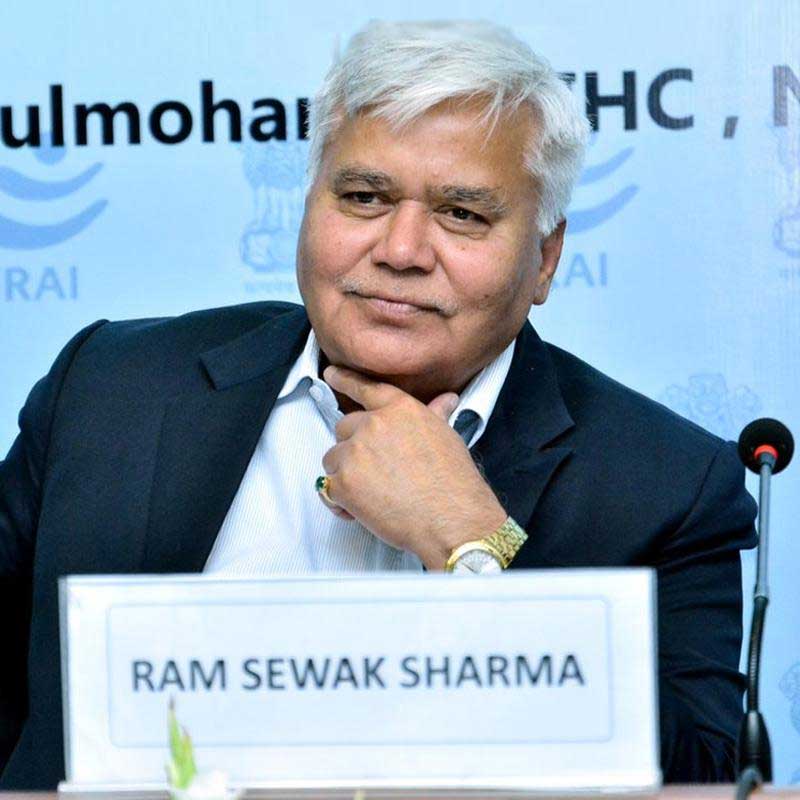
    MUMBAI: Telecom Regulatory Authority of India (TRAI) on Wednesday asked DTH operators to honour pre-paid commitment on ongoing long-duration packs of consumers (if they want). TRAI chairman RS Sharma also reiterated that there would be no change in the February 1 deadline for consumer migration to its new tariff regime.

    According to a report by news agency PTI, Sharma statted that if a DTH subscriber with a long duration pack wants to choose new channels mid-way, then the balance amount should be adjusted by operator. He also expressed his confidence with regards to a smooth switchover without any inconvenience to viewers on the concerned day.

    The new regulatory framework by TRAI for broadcasting sector is set to overhaul the entire ecosystem. For the first time ever, consumers will be able to choose channels or packages for pay TV on their own. While the new regime puts power in the hands of consumers, many stakeholders remain sceptics about its impact.

    Moreover, the TRAI continues to face legal hurdles. While the verdict of a petition made by Tata Sky challenging the order is still pending in the Delhi High Court, Calcutta High Court on Tuesday stayed the implementation of the tariff order till 18 February.

  • Tata Sky vs TRAI: No interim order as Delhi High Court adjourns case to 4 February

    Tata Sky vs TRAI: No interim order as Delhi High Court adjourns case to 4 February

    MUMBAI: The next chapter of direct-to-home operator Tata Sky’s ongoing legal tussle with the TRAI and its new tariff regime, in which Bharti Telemedia-owned Airtel Digital TV and Sun Direct are a part, will unfold on 4 February after the Delhi High Court adjourned the matter without passing an interim order.

    With arguments being inconclusive on Wednesday, the Tata Sky counsel will continue to argue when the next hearing commences.

    On Tuesday, Calcutta High Court stayed the cable switchover till 18 February. The court’s directive was a result of 80 cable operators from the city filing a petition against the TRAI mandate.

    The petitioners’ lawyer Debabrata Saha Roy argued that the revenue-sharing model under the new regime will significantly reduce the cable operators’ share to just nine per cent. With 80% will go into the broadcasters’ kitty, MSOs stand to get just 11 per cent, thus making it an unsustainable business proposition for operators.

    Earlier the regulator had offered an extension till 31 January to the distribution platform operators (DPOs) for implementation. 

    On Thursday, the Harit Nagpal-led company finally unveiled the new pricing of channels and packs after it was served a show-cause notice by the TRAI.

    TRAI's show-cause notice said, "Tata Sky has failed to provide options to its 17.7 million subscribers in compliance with the new framework to exercise their choices for TV channels. Tata Sky has put its subscribers in a situation of great difficulty despite no fault of theirs by not complying with the provisions of the new regulations and the tariff order.”

    Despite the delay in announcing channel prices, Tata Sky MD and CEO Nagpal is confident that his team can complete the tricky task of implementing the new norms within a relatively short span of time.

    “Tata Sky has always been compliant to regulatory requirements. We have gone live with our modes of communication across the Tata Sky website, Tata Sky mobile app and also equipped the dealers that subscribers can reach out to. We were confident that we would be able to complete the task in 1 week’s time. hence we used this time to create a seamless and smooth transition for all our subscribers. We have ensured that choosing channels and packs is as easy as 1, 2, 3 for any subscriber,” the veteran executive said.

    In a press release issued by the TRAI on Thursday, it had singled out one DTH operator for not providing options to its subscribers to exercise their choices. The press note also mentioned that the said DTH operator had assured in writing that it would comply with the new regulatory framework.

    In 2017, Bharti Telemedia, Tata Sky and Discovery Communication India had filed petitions against TRAI, challenging its tariff order and the interconnect regulations.

    Unlike the position adopted by Star India wherein it questioned the regulatory powers of TRAI, the matter in the Delhi HC questions the regulator’s power to wipe out deals that operators enter into to fix commissions and rates for customers.

  • Calcutta High Court stays switchover to new TRAI tariff regime till 18 February

    Calcutta High Court stays switchover to new TRAI tariff regime till 18 February

    MUMBAI: Just two days ahead of the deadline for consumer migration to new channel packages under Telecom Regulatory Authority of India’s (TRAI) tariff order, Calcutta High Court has stayed the switchover till 18 February. 

    The court has also asked the TRAI to submit a report on the matter on 13 February, which is when the next hearing will take place. The court’s directive was a result of 80 cable operators filing a petition against the TRAI mandate.

    The petitioners’ lawyer Debabrata Saha Roy argued that the revenue-sharing model under the new regime will significantly reduce the cable operators’ share to just nine per cent. With 80% will go into the broadcasters’ kitty, MSOs stand to get just 11 per cent, thus making it an unsustainable business proposition for operators.

    Earlier the regulator had offered an extension till 31 January to the distribution platform operators (DPOs) for implementation.  


  • Madras HC dismisses PIL against TRAI tariff order

    Madras HC dismisses PIL against TRAI tariff order

    MUMBAI: After the Supreme Court verdict that went in favour of the Telecom Regulatory Authority of India’s tariff scheme, the Madras High Court has dismissed a petition challenging this 2017 order.

    A news item by the Press Trust of India said that the bench consisting of justices S Manikumar and Subramonium Prasad also upheld the deadline of 31 January which was an extension by TRAI to the broadcast industry to finalise necessary arrangements for implementing the new tariff regime from 1 February.

    Dismissing the PIL, the HC quoted part of the Supreme Court judgment by stating that TRAI could not only regulate operations but also lay down terms and conditions for providing services. The report mentioned the HC as stating: “It cannot be said that TRAI has been acting hastily or implementing its directions in a hurried manner, without taking into account the interest of all the participants.”

    The Supreme Court’s verdict came on 30 October and from 1 February the new tariff scheme where consumers will get to decide their channels is to commence.

  • Sun Network’s R Mahesh Kumar says TRAI tariff order will have positive impact on subscription revenue

    Sun Network’s R Mahesh Kumar says TRAI tariff order will have positive impact on subscription revenue

    MUMBAI: With the new tariff order of the Telecom Regulatory Authority of India (TRAI) coming into effect from 1 February 2019, Sun TV Network president R Mahesh Kumar believes subscription revenue will be positively impacted with the radical change.

    "We have to wait and see how it pans out. I think it will have a positive impact on subscription revenue," news agency PTI quoted him as saying.

    Mahesh Kumar is also of the opinion that the distribution landscape in south India will witness major impact due to the new norms.

    “Analog connection in Tamil Nadu, one of our major market, is still at 35-40 percent," he further added.

    The behemoth network is set to roll out it's latest offering – Sun Bangla – on 3 February. The network is expected to invest close to Rs 150 crore into the GEC channel in the first year.

    "Sun Bangla will start airing from February 3 and we hope to garner sizeable market in the Rs 1200 crore Bengali general entertainment category channels," Sun Group CFO S L Narayanan had said during a post-earnings conference call.

    The Sun Network also has a Marathi channel in the pipeline.

  • TRAI recommendations on OTT communication regulation likely by February end

    TRAI recommendations on OTT communication regulation likely by February end

    MUMBAI: Towards the end of 2018, Telecom Regulatory Authority of India(TRAI) published a recommendation paper on OTT communication services, requesting feedback from all stakeholders. On Monday, the regulator confirmed that its recommendations on the issue would be made public by the end of next month.

    "We will be organising open house discussions soon. And hopefully, by the end of the next month, we should be able to come up with recommendations," TRAI Chairman R S Sharma was quoted as saying by news agency PTI.

    In November last year, the TRAI released a consultation paper focusing on apps such as Whatsapp, Facebook, Google Duo among others, offering calling and messaging services similar to telecom service providers along with their basic functions. TRAI also sought public opinion on whether OTT applications should fall under the same regulatory ambit as telecom operators.

    The Cellular Operators’ Association of India (COAI) is of the opinion that OTT players should be licensed by introducing ‘OTT Communication Authorization’ under the unified licence. 

    According to COAI, players in the telecom industry invest in licence fee, spectrum, telecom equipment and security apparatus. Hence, similar voice, video and data services without regulatory cost make for a non-level playing field.

    However, the Internet and Mobile Association of India (IAMAI) and the Broadband India Forum (BIF) have stood against the position by telecom operators. According to IAMAI, telecommunication regulations should not be automatically extended to online applications because of the fundamental “technical and business differences” between traditional services and apps.

    “OTT providers offer an array of different services that are accessed by users through the data services provided by TSPs (telecom service providers). Thus, the services provided by TSPs, while they enable access to OTT services, are fundamentally different,” BIF said in its written response to TRAI

  • TRAI optimistic about onboarding 90% consumers by tariff order deadline

    TRAI optimistic about onboarding 90% consumers by tariff order deadline

    MUMBAI: Before the 1 February deadline of consumer migration to new plans in line with the Telecom Regulatory Authority of India’s (TRAI) tariff order, chairman RS Sharma seems confident of onboarding 90 per cent consumers to the new regime.

    According to news agency PTI report, Sharma has noted a trend in the past few days of a sudden surge in the recording of customer preferences by service providers. Seeing the positive response from consumers, TRAI chairman thinks the desired figure of 100 per cent onboarding will be reached soon.

    “Looking at the trend, we feel, we will be able to reach the figure of over 90 per cent by January 31 there may be 10 per cent cases where people may be travelling or not present at home,” he said.

    For smooth implementation, as well as consumer awareness, the regulatory body has come out with advertisements and created YouTube videos. It is also holding regular meetings with broadcasters, direct to home (DTH) operators and multi system operators (MSO) to review the customer choice collection progress.

    “We are reviewing it on a day-to-day basis. We are also looking into apps of various DTH operators to see how customer-friendly they are for recording of viewer choices,” Sharma stated.

    The new regulatory framework puts power in hands of consumers to choose the channels they want to watch through a-la-carte and broadcaster or DPO packages as well. 

    Many industry experts have speculated that it will raise the monthly cable bill. Sharma feels that the monthly bills of those customers who only select the channels they watch will certainly go down. He also advised that viewers should not unnecessarily hoard channels as they can addchannels to cart whenever they wish.

    “Many a times, people buy goods they don't need today but think they will need tomorrow. Tomorrow, if they want to watch a channel they can buy it… why should they hoard the channel because it is a costly hoarding as they have to pay for it too,” he said.

    The regulator on 24 January said that 40 per cent of consumers have exercised their options of selecting TV channels under the new tariff order. 

    On the same day, TRAI published a cautionary note writing to all broadcasters and DPOs, asking them to comply by the new regulatory framework within the stipulated time.

  • Tata Sky vs TRAI: Case, argued partly by DTH operator, adjourned to 30 January

    Tata Sky vs TRAI: Case, argued partly by DTH operator, adjourned to 30 January

    MUMBAI: The next instalment of direct-to-home operator Tata Sky’s ongoing legal tussle with the TRAI and its new tariff regime, in which Bharti Telemedia-owned Airtel Digital TV and Sun Direct are a part, will play out in two days time after the Delhi High Court adjourned the matter to 30 January with arguments being inconclusive.

    The matter was argued partly by Rajiv Nayar on behalf of the DTH operator on Monday.

    On Thursday, the Harit Nagpal-led company finally unveiled the new pricing of channels and packs after it was served a show-cause notice by the TRAI.

    TRAI's show-cause notice said, "Tata Sky has failed to provide options to its 17.7 million subscribers in compliance with the new framework to exercise their choices for TV channels. Tata Sky has put its subscribers in a situation of great difficulty despite no fault of theirs by not complying with the provisions of the new regulations and the tariff order.”

    Despite the delay in announcing channel prices, Tata Sky MD and CEO Nagpal is confident that his team can complete the tricky task of implementing the new norms within a relatively short span of time.

    “Tata Sky has always been compliant to regulatory requirements. We have gone live with our modes of communication across the Tata Sky website, Tata Sky mobile app and also equipped the dealers that subscribers can reach out to. We were confident that we would be able to complete the task in 1 week’s time. hence we used this time to create a seamless and smooth transition for all our subscribers. We have ensured that choosing channels and packs is as easy as 1, 2, 3 for any subscriber,” the veteran executive said.

    In a press release issued by the TRAI on Thursday, it had singled out one DTH operator for not providing options to its subscribers to exercise their choices. The press note also mentioned that the said DTH operator had assured in writing that it would comply with the new regulatory framework.

    In 2017, Bharti Telemedia, Tata Sky and Discovery Communication India had filed petitions against TRAI, challenging its tariff order and the interconnect regulations.

    Unlike the position adopted by Star India wherein it questioned the regulatory powers of TRAI, the matter in the Delhi HC questions the regulator’s power to wipe out deals that operators enter into to fix commissions and rates for customers.

  • Tata Sky reveals new channel prices after TRAI’s show-cause notice

    Tata Sky reveals new channel prices after TRAI’s show-cause notice

    MUMBAI: Leading direct to home (DTH) operator Tata Sky on Thursday finally unveiled the new pricing of channels and packs after it was served a show-cause notice by the Telecom Regulatory Authority of India (TRAI). With just a week for the new tariff order to kick in Tata Sky’s decision to announce its pricing comes as a relief to consumers, some of whom had even complained about the same to the TRAI.

    According to a report by news agency PTI, TRAI's show-cause notice said, "Tata Sky has failed to provide options to its 17.7 million subscribers in compliance with the new framework to exercise their choices for TV channels. Tata Sky has put its subscribers in a situation of great difficulty despite no fault of theirs by not complying with the provisions of the new regulations and the tariff order.”

    Despite the delay in announcing channel prices, Tata Sky MD and CEO Harit Nagpal is confident that his team can complete the tricky task of implementing the new norms within a relatively short span of time.

    “Tata Sky has always been compliant to regulatory requirements. We have gone live with our modes of communication across the Tata Sky website, Tata Sky mobile app and also equipped the dealers that subscribers can reach out to. We were confident that we would be able to complete the task in 1 week’s time. hence we used this time to create a seamless and smooth transition for all our subscribers. We have ensured that choosing channels and packs is as easy as 1, 2, 3 for any subscriber,” the veteran executive said.

    The DTH operator has come up with a number of packs that will serve consumers of different interests. The packs not only focus on several genres like entertainment, news, sports, and lifestyle but also on all the regions across the country. Even in terms of pricing, the packs provided by the DTH operator offers a wide variety. Apart from its own packages, Tata Sky has also updated the information about broadcasters’ packages and price of the channels available on a-la-carte basis.

    For making the transition easier for its subscribers, a dedicated pack selection portal has also been provided on the website. Users need to log in via their registered mobile number or subscriber ID, post which they can exercise the options.

    The DTH operator has also notified that users with long duration packs will be migrated to monthly packs starting 1 February and the remaining balance will be credited to their Tata Sky account.

    Tata Sky is currently embroiled in a legal battle, of which Bharti Telemedia-owned Airtel Digital TV and Sun Direct are a part, with the TRAI in the Delhi High Court. Unlike the position Star India had adopted, wherein it questioned the regulatory powers of TRAI, the matter in the Delhi HC questions the regulator’s power to wipe out deals that operators enter into to fix commissions and rates for customers. The court is likely to pronounce its verdict in the matter on 28 January.

    In a press release issued by the TRAI on Thursday, it had singled out one DTH operator for not providing options to its subscribers to exercise their choices. The press note also mentioned that the said DTH operator had assured in writing that it would comply with the new regulatory framework.

    TRAI wrote to all broadcasters and DPOs, asking them to comply by the new regulatory framework within the stipulated time. The regulator has also revealed that 40 per cent of consumers have exercised their option of selecting TV channels under the new tariff order.