Tag: Trai

  • Tata Sky vs TRAI: Delhi High Court adjourns case to 13 February

    Tata Sky vs TRAI: Delhi High Court adjourns case to 13 February

    MUMBAI: The Delhi High Court on Friday adjourned Tata Sky’s ongoing legal battle, in which Discovery,  Bharti Telemedia-owned Airtel Digital TV and Sun Direct are a part, with the Telecom Regulatory Authority of India(TRAI) and its new tariff regime to 13 February.

    Earlier this week, the regulator had served Airtel a show-cause notice after several of its subscribers complained about a DTH blackout. Airtel Digital TV was handed a three-day period to respond to the notice.

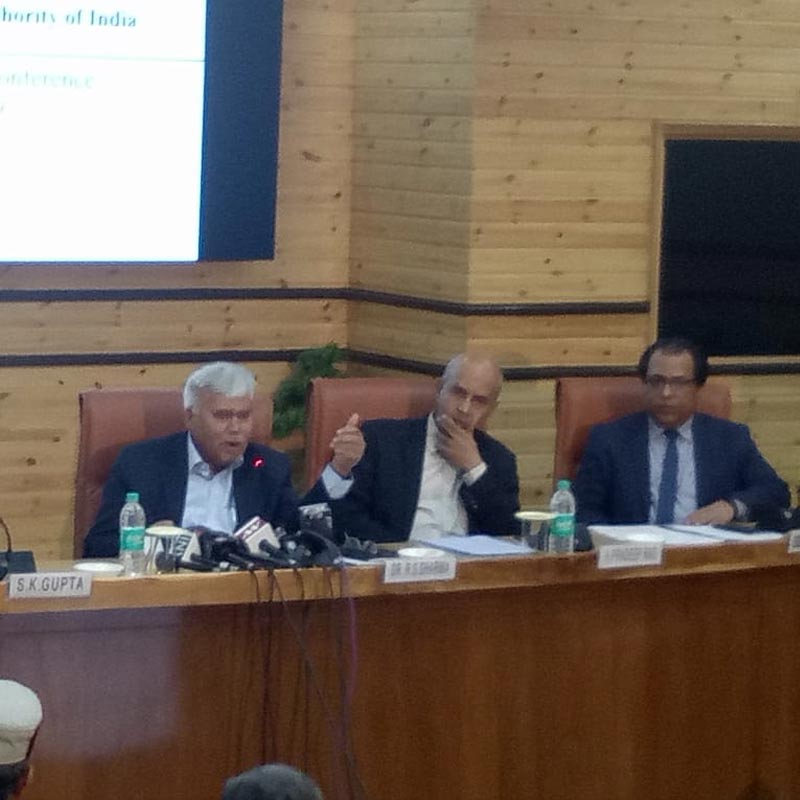
    TRAI chairman RS Sharma also addressed a press conference in the national capital, rubbishing a Crisil report that claimed cable and DTH bills were bound to increase after the implementation of the tariff order.

    On Thursday, Indian Society of Advertisers' (ISA) executive council advised its members to not use the BARC data for media buying, planning and evaluation perspective during the transition periond, which it feels will stretch up to six weeks.

    On 4 February, after senior lawyer Kapil Sibal, representing Tata Sky, concluded his arguments including legal submissions, Discovery India Communication’s counsel Gopal Jain laid the foundation for his arguments.

    The broadcaster is likely to conclude its arguments during the next hearing of the case.

    The regulator informed the court that the new tariff order has already been implemented from 1 February.

    Earlier the TRAI had offered an extension till 31 January to the distribution platform operators (DPOs) for implementation.

    On 24 January, the Harit Nagpal-led company finally unveiled the new pricing of channels and packs after it was served a show-cause notice by the TRAI.

    TRAI's show-cause notice said, "Tata Sky has failed to provide options to its 17.7 million subscribers in compliance with the new framework to exercise their choices for TV channels. Tata Sky has put its subscribers in a situation of great difficulty despite no fault of theirs by not complying with the provisions of the new regulations and the tariff order.”

    Despite the delay in announcing channel prices, Tata Sky MD and CEO Nagpal is confident that his team can complete the tricky task of implementing the new norms within a relatively short span of time.

    “Tata Sky has always been compliant to regulatory requirements. We have gone live with our modes of communication across the Tata Sky website, Tata Sky mobile app and also equipped the dealers that subscribers can reach out to. We were confident that we would be able to complete the task in 1 week’s time. Hence we used this time to a seamless and smooth transition for all our subscribers. We have ensured that choosing channels and packs is as easy as 1, 2, 3 for any subscriber,” the veteran executive said.

    On 29 January, Calcutta High Court stayed the cable switchover till 18 February. The court’s directive was a result of 80 cable operators from the city filing a petition against the TRAI mandate. However, the high court later vacated the stay.

    The petitioners’ lawyer Debabrata Saha Roy argued that the revenue-sharing model under the new regime will significantly reduce the cable operators’ share to just nine per cent. With 80% will go into the broadcasters’ kitty, MSOs stand to get just 11 per cent, thus making it an unsustainable business proposition for operators.

    In 2017, Bharti Telemedia, Tata Sky and Discovery Communication India had filed petitions against TRAI, challenging its tariff order and the interconnect regulations.

    Unlike the position adopted by Star India wherein it questioned the regulatory powers of TRAI, the matter in the Delhi HC questions the regulator’s power to wipe out deals that operators enter into to fix commissions and rates for customers.

  • TRAI extends deadline for comments on TV audience measurement consultation paper

    TRAI extends deadline for comments on TV audience measurement consultation paper

    MUMBAI: Telecom Regulatory Authority of India(TRAI) came out with a public consultation on various facets of TV audience measurement and how the existing system could be made more robust in December 2018. The regulatory body has now extended the deadline for the second time on the request of stakeholders.

    The last date for receipt of written comments and counter-comments from the stakeholders has been extended up to 15 February and 28 February respectively. At the time of the release of the consultation paper, the last dates were 2 January and 16 January which were later extended up to 2 February and 16 February respectively.

    Television audience measurement in India continues to remain one of the key subjects that evoke reactions from stakeholders. Given that advertising expenditures are typically guided by such data and in the wake of the matter being raised at various fora, TRAI came out with the consultation paper.

    Telecom Authority of India (TRAI)’s move gains importance as stakeholders during meetings with the regulator, leading up to the present consultation, had conveyed that the present measurement system, spearheaded by a joint industry body Broadcast Audience Research Council India (BARC India), has done a credible job till now, but additional improvements could be made, including making data collection more robust and finding ways to curb panel infiltrations leading to possible manipulations. More so, as the industry has already invested in the present system over the past three years and it would be improper to try find alternate mechanisms at this juncture.

    Keeping such views in mind, TRAI has raised issues relating to RPD(return path data) and whether set-top-boxes deployed in the country were technically adept at catching such figures — initiatives that would add to data robustness. The specific questions asked are: What percentage of STB supports transferring viewership data through establishing a reverse path/connection from STB? What will be the additional cost if existing STBs without return path are upgraded?

    Asking whether regulatory tweaks were needed to reduce the impact of manipulation of measurement panels — an issue red-flagged by BARC India itself in an earlier consultation — TRAI has sought comments on the country-wide panel size and also the size of the individual panels in rural and urban areas.

    The consultation paper highlights several such issues, including if BARC India, the organisation presently doing audience measurement, has been able to accomplish its purpose.

    Industry observers said though the regulator may have raised pertinent issues, some of them could be answered by the stakeholders only if they decide to take a firm view on them. For example, TRAI asks whether the present sample size of bar-o-meters employed to collect data is adequate. The answer is, maybe no. But to increase the sample size, the stakeholders need to commit more financial investments and give BARC India the go-ahead — though annually some boxes are added to live up to promises made at the time Ministry of Information and Broadcasting green-lighted the BARC project.

    The TRAI paper also seeks inputs from the stakeholders regarding shareholding/ownership pattern of BARC India and whether its credibility and neutrality can be enhanced further, while highlighting various methods of collating such data in other countries, including the US, the UK and France.

    Some of the other issues highlighted in the TRAI paper are the following:

    # Is there a need to promote competition in television rating services to ensure transparency, neutrality and fairness to give TAM rating?

    # What regulatory initiatives/measures can be taken to make TV rating services more accurate and widely acceptable?

    # Is the current audience measurement technique used by BARC apposite?

    # Does broadcasting programmes that are out of their category or in different languages for some time during the telecast affect the TAM (TV audience measurement) rating? If so, what measures should be adopted to curb it?

    # Can TV rating, based on limited panel homes, be termed as truly representative?

    # What should be done to reduce the impact of manipulation of panel home data on overall TV ratings?

    # What should be the panel size both in urban and rural India to give true representation of audience?

    # What method/technology would help to rapidly increase the panel size for television audience measurement in India? What will be the commercial challenge in implementing such solutions?

    # Should DPOs be mandated to facilitate collection of viewership data electronically, subject to consent of subscribers to increase data collection points for better TRPs?

    # What percentage of STB supports transferring viewership data through establishing a reverse path/connection from STB? What will be the additional cost if existing STBs without return path are upgraded?

    # What method should be adopted for privacy of individual information and to keep the individual information anonymous?

    # What should be the level/granularity of information retrieved by the television audience measurement agency from the panel homes so that it does not violate principles of privacy?

    # What measures need to be taken to address the issue of panel tampering/infiltration?

    # Should BARC be permitted to provide raw level data to broadcasters? If yes, how secrecy of households, where the people meters are placed, can be maintained?

    BARC India, set up in 2015, is a joint venture amongst broadcast and advertising industry bodies IBF, AAAI, ISA with Indian Broadcasting Foundation or IBF being a majority shareholder. India’s public broadcaster Prasar Bharati also sits on the BARC India board. Apart from TV audience data, BARC India is also exploring rolling out similar figures for digital platforms.

  • Dish TV’s Jawahar Goel says cable bills won’t increase in new TRAI tariff regime

    Dish TV’s Jawahar Goel says cable bills won’t increase in new TRAI tariff regime

    MUMBAI: Managing director of Dish TV Jawahar Goel, on Wednesday, allayed fears of consumers, saying there was no question of cable and DTH prices increasing due to the TRAI tariff order. According to him, there has been a reduction in the bills of consumers who have moved to the new regime.

    “There have been rumours that cable bills will go up by 5-6 times. There is absolutely no truth to this. Bills of those subscribers (Dish TV or other DPOs) that have migrated to the new regime have in fact reduced. If you drop channels that you don’t watch, then your bill will further reduce. There is no question of bills increasing,” he stated.

    Goel drew a parallel with the telecom business to suggest that a radical change of this nature is bound to benefit the consumers.

    “Earlier in the telecom business, call rate was Rs 16 per minute. Today it isn’t even 10 paisa per minute. In the new tariff regime, you will only pay for channels you opt for,” he said.

    The Dish TV promoter also hit out at those spreading rumours with regards to the new tariff order.

    “Consumers should not fall for rumours and speculation. Those who feel threatened due to the new regulation are the ones fuelling these rumours and trying to mislead the consumers,” Goel highlighted.

    On Tuesday, Dish TV reported profit after tax (PAT) of Rs 152.69 crore for the quarter ended 31 December 2018 (Q3 2019, quarter under review) as compared to  loss of Rs 168.29 crore in the corresponding year ago quarter and a profit of Rs 19.73 crore in the immediate trailing quarter Q2 2109.  These PAT numbers were boosted by certain income tax adjustments of prior years.

    Dish TV and Videocon d2h were merged on March 22 2018 and hence Q1 2019 was the first full reporting quarter for the merged entity.

    Subscription revenue declined 2.1 percent q-o-q in Q3 2018 to Rs 141.26 crore as compared to Rs 1,453.6 crore in Q3 2018. Advertisement revenue for the quarter under review increased 26.2 percent y-o-y to Rs 30 crore from Rs 23.8 crore.

    “I am glad that all opposition to the tariff order has now finally been put to rest. We continue to strongly believe that the regulation should minimise discriminatory pricing by ensuring a level playing field between cable and DTH platforms and should be beneficial for the entire industry thus leading to higher earnings going forward,” Goel said.

  • TRAI issues show-cause notice to Airtel over DTH service blackouts

    TRAI issues show-cause notice to Airtel over DTH service blackouts

    MUMBAI: Telecom and DTH operator major Airtel has been served a show-cause notice by the Telecom Regulatory Authority of India (TRAI) over issues of blackout faced by some Airtel Digital TV subscribers during transition to the new tariff regime, a report by news agency IANS said.

    The regulator, which sent the notice earlier this week, has given Airtel three days to respond.

    Airtel's DTH service had 15 million customers at the end of the third quarter, up 7.6 per cent over the corresponding quarter in 2017.

    Commenting on the regulator’s notice, an Airtel spokesperson said: "We have over 15 million customers who are being migrated to the new tariff regime. Due to massive surge in last-minute requests, particularly on 31 January and 1 February, few customers may have experienced some delays in provisioning of channels."

    "Customer experience is of paramount importance to us. We remain fully committed to ensuring compliance with all TRAI guidelines and will file our response to the notice," he added.

    The new tariff order for cable and DTH TV services came into effect on 1 February post a month-long extension that was granted by TRAI to all stakeholders.

    The regulator has held constant meetings with DPOs and broadcasters to ensure a smooth transition to the new system.

    "The authority has noticed that due to heavy rush, the website of some DPOs have crashed intermittently and a little inconvenience was caused to come subscribers due to sporadic local issues. However, by and large the migration of subscribers to the new regulatory framework has been smooth," TRAI said in a press note on Wednesday.

    This isn’t the first time the regulator has shown that it means business. Last month, the TRAI sent a show-cause notice to Tata Sky.

    According to a report by news agency PTI, TRAI's show-cause notice said, "Tata Sky has failed to provide options to its 17.7 million subscribers in compliance with the new framework to exercise their choices for TV channels. Tata Sky has put its subscribers in a situation of great difficulty despite no fault of theirs by not complying with the provisions of the new regulations and the tariff order.”

    While both DTH operators have now complied by the TRAI’s tariff order, they, along with Sun Direct and Discovery Communication India, continue to battle against the new norms in the Delhi High Court.

  • TRAI expects DPOs to declare special schemes for multiple TV connection households

    TRAI expects DPOs to declare special schemes for multiple TV connection households

    MUMBAI: After Telecom Regulatory Authority of India’s new tariff regime empowering citizens to choose channels, came into effect from 1 February, consumers as well as distribution platform operators (DPOs) are facing several issues. To address such concerns, the authority held a press conference at TRAI headquarters in New Delhi.

    One topic discussed was the presence of multiple TV households. These subscribers prefer a cheaper scheme for the second TV. To keep it same under new regime, TRAI has sought details of special schemes for provision of second or subsequent connection. The regulatory body expects that DPOs will declare special schemes for multiple connections within a TV home in a day or so. TRAI said it is keeping an eye on the development and will intervene if required.

    While TRAI has always promoted the view that the new order will put power in the hands of consumers, there have been speculations that it will actually increase the monthly pay TV bill. Recently, ratings agency Crisil also published a report on price hike along the same line. TRAI refuted the report saying it is not based on focused analysis and research.

    “The report is based on choosing top rated channels on all India basis and considers only one weekly report dated 25th January 2019, from TV Rating Agency, BARC. The selection of channels by subscribers is primarily driven by language, genre, region and culture. The report fails to appreciate that even among top three channels, that is Sun TV, Zee Anmol and Star Maa, the language is Tamil, Hindi and Telugu respectively,” TRAI commented.

    TRAI has claimed so based on the logic that it is unlikely to expect one family to choose Tamil, Hindi and Telugu channel simultaneously. The regulatory body added that this is more glaring in the scenario where TV channels of Hindi, Tamil, Telugu, Bangla, Malayalam and English have been considered together.

    Apart from lashing out at the report for “misleading subscribers”, TRAI added the preliminary data analysis reflects actual savings by subscribers to the tune 10 to 15  per cent  in metro towns and between 5 to 10 per cent in non-metro (DAS 3 and DAS 4) areas.

    TRAI has again assured that subscribers availing pre-paid services will face no disruption, if there is a credit balance available in the subscriber’s wallet/ account.

    “The authority received information that while migrating consumers, one large service provider has caused blackout on the TV screen of a few-thousand subscribers. Taking a serious view, the authority has issued show cause notice to that service provider,” it added. DPOs were strictly told to cause no disruption in services. 

  • New TRAI’s tariff regime unlikely to reduce TV bills for most subscribers: Report

    New TRAI’s tariff regime unlikely to reduce TV bills for most subscribers: Report

    MUMBAI: The network capacity fee (NCF) and channel prices announced by broadcasters and distributors as per the Telecom Regulatory Authority of India’s (TRAI) new guidelines could increase the monthly bill of most subscribers of television channels as per the CRISIL report.

    TRAI’s new regulatory framework for broadcasting and cable services industry is intended to usher in transparency and uniformity, and will afford far greater freedom of choice to viewers.

    More than 90 per cent of TV viewers flip 50 or fewer channels, and the new rules will let them subscribe to what they want and not be saddled with channels they are not interested in.

    The regime, which came into effect on 1 February 2019, will benefit popular channels and hasten adoption of over-the-top (OTT); or content providers who stream media over the internet, such as Netflix and Hotstar) platforms, and will be a mixed bag for viewers and distributors.

    Ratings senior director Sachin Gupta said, “Our analysis of the impact of the regulations indicates a varied impact on monthly TV bills. Based on current pricing, the monthly TV bill can go up by 25 per cent from Rs 230-240 to ~Rs 300 per month for viewers who opt for the top 10 channels, but will come down for those who opt upto top 5 channels.”

    The new regime could drive consolidation in the broadcasting industry because content will clearly be the king and key differentiator. Subscription revenues of broadcasters would rise ~40 per cent to Rs 94 per subscriber per month compared with Rs 60-70 now. With viewers likely to opt for popular channels, large broadcasters will have greater pricing power. Conversely, broadcasters with less-popular channels will find it tough to piggyback on packages, and the least popular ones will hardly have a business case and could go off air.

    For distributors (DTH and cable operators), the new regulations are a mixed bag. While content cost will become a pass-through, protecting them from fluctuations, they may lose out on the benefits of value-added services such as bundling content across broadcasters, customisation, and placement revenue.

    Currently, most distributors are charging NCF at the cap rate of Rs 130 per month. Similarly, broadcasters have priced subscription for the most popular pay channels at the cap rate of Rs 19 per month.

    But these are early days and the situation may evolve with prices charged by broadcasters and distributors declining depending on market forces, viewership and competitive intensity.

    Ratings director Nitesh Jain “In all this, OTT platforms could emerge as the big beneficiary because many viewers could shift because of rising subscription bills. And low data tariffs also encourages viewership on OTT platforms.”

  • Tata Sky vs TRAI: DTH operator concludes arguments; Delhi High Court lists case for 8 February

    Tata Sky vs TRAI: DTH operator concludes arguments; Delhi High Court lists case for 8 February

    MUMBAI: The next hearing of the direct-to-home operator Tata Sky’s ongoing legal battle, in which Discovery,  Bharti Telemedia-owned Airtel Digital TV and Sun Direct are a part, with the Telecom Regulatory Authority of India(TRAI) and its new tariff regime, has been scheduled for 8 February.

    On Monday, after senior lawyer Kapil Sibal, representing Tata Sky, concluded his arguments including legal submissions, Discovery India Communication’s counsel Gopal Jain laid the foundation for his arguments, which are expected to be concluded during the next hearing.

    The regulator informed the court that the new tariff order has already been implemented from 1 February.

    Earlier the TRAI had offered an extension till 31 January to the distribution platform operators (DPOs) for implementation.

    On 24 January, the Harit Nagpal-led company finally unveiled the new pricing of channels and packs after it was served a show-cause notice by the TRAI.

    TRAI's show-cause notice said, "Tata Sky has failed to provide options to its 17.7 million subscribers in compliance with the new framework to exercise their choices for TV channels. Tata Sky has put its subscribers in a situation of great difficulty despite no fault of theirs by not complying with the provisions of the new regulations and the tariff order.”

    Despite the delay in announcing channel prices, Tata Sky MD and CEO Nagpal is confident that his team can complete the tricky task of implementing the new norms within a relatively short span of time.

    “Tata Sky has always been compliant to regulatory requirements. We have gone live with our modes of communication across the Tata Sky website, Tata Sky mobile app and also equipped the dealers that subscribers can reach out to. We were confident that we would be able to complete the task in 1 week’s time. Hence we used this time to a seamless and smooth transition for all our subscribers. We have ensured that choosing channels and packs is as easy as 1, 2, 3 for any subscriber,” the veteran executive said.

    On 29 January, Calcutta High Court stayed the cable switchover till 18 February. The court’s directive was a result of 80 cable operators from the city filing a petition against the TRAI mandate. However, the high court later vacated the stay.

    The petitioners’ lawyer Debabrata Saha Roy argued that the revenue-sharing model under the new regime will significantly reduce the cable operators’ share to just nine per cent. With 80% will go into the broadcasters’ kitty, MSOs stand to get just 11 per cent, thus making it an unsustainable business proposition for operators.

    In 2017, Bharti Telemedia, Tata Sky and Discovery Communication India had filed petitions against TRAI, challenging its tariff order and the interconnect regulations.

    Unlike the position adopted by Star India wherein it questioned the regulatory powers of TRAI, the matter in the Delhi HC questions the regulator’s power to wipe out deals that operators enter into to fix commissions and rates for customers.

  • Bombay, Telangana HCs yet to decide on TRAI tariff cases

    Bombay, Telangana HCs yet to decide on TRAI tariff cases

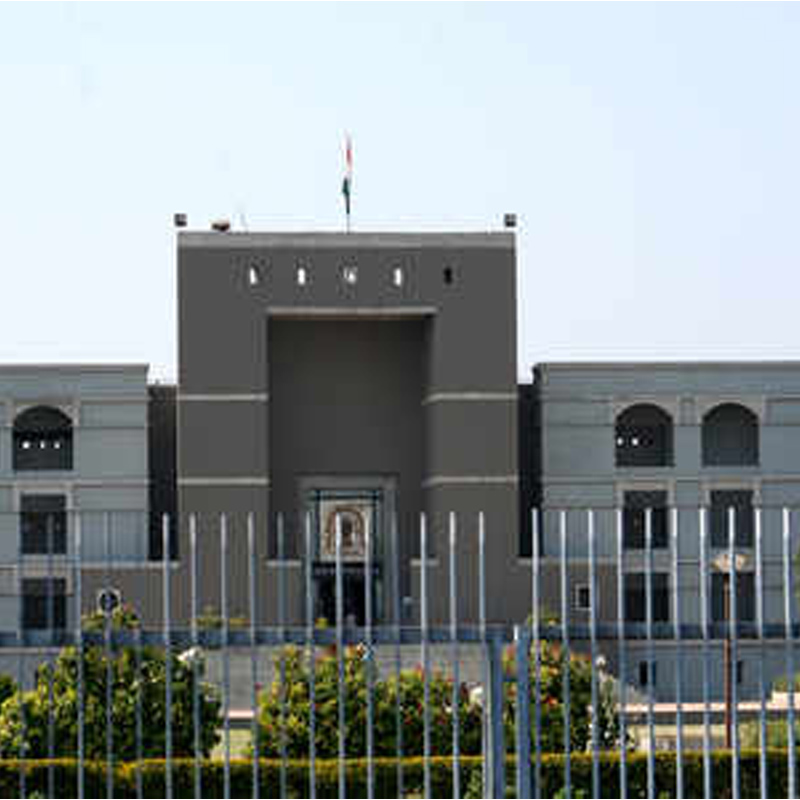
    MUMBAI: Cases have been filed in various courts across the country and while the Calcutta High Court has vacated the stay on the case and the Gujarat High Court has asked for a response from TRAI, the Bombay and Telangana courts are yet to decide on similar petitions.

    The Telangana HC reserved judgment on a case filed by local cable operators who said that the regulations are arbitrary. The Pune Cable Operators Association went ahead and challenged TRAI as well, asking for a stay on the lines of the Calcutta High Court order. The bench, however, asked them to submit a copy of the order and refused to provide relief.

    The Madras High Court dismissed the PIL against the TRAI tariff order last week by quoting the Supreme Court judgment that went in favour of the regulator late last year.

    On 14 January, a similar case before the Kerala High Court was also dismissed which related to the revenue sharing aspect as well.

    LCOs all over the country are up in arms against some suggestions that have been made in the new tariff regime by TRAI that came into effect from 1 February. After TRAI won the case against Star India in October, the regulator gave the industry time till December end to put things into action. This was later extended to 31 January which was confirmed to the last date and no more extensions would be granted beyond that.

    Two days ago, TRAI claimed that all the stakeholders were ready with the new regime’s requirements. It also praised itself for ensuring that a large number of customers had exercised their options.

  • Gujarat HC issues notice to TRAI over MSO-LCO profit sharing

    Gujarat HC issues notice to TRAI over MSO-LCO profit sharing

    MUMBAI: The Gujarat High Court issued a notice to the Telecom Regulatory Authority of India (TRAI) and the centre on 1 February 2019, over a petition filed by local cable operators (LCOs) challenging the decision to fix the ratio of profit sharing between LCOs and multi-system operators (MSOs).

    In 2017, TRAI issued a notification fixing the ratio of sharing of service charges collected towards cable connections at 55:45 between MSOs and LCOs. This was done by inserting clause 12(7) in the Telecommunications (broadcasting & cable) Services Interconnection (Addressable Systems) Regulations.

    A bench headed by acting chief justice A S Dave has sought reply from the authorities and posted the matter for further hearing after two weeks.

    The Cable Operators Association Of Gujarat filed the petition through advocate Pratik Jasani challenging the insertion of the clause, fixing the revenue sharing between MSOs and LCOs. The cable operators have urged the HC to quash the arrangement before implementation of the 2017 notification, though the government consulted other stakeholders.

  • TRAI claims stakeholders ready as new tariff regime kicks in

    TRAI claims stakeholders ready as new tariff regime kicks in

    MUMBAI: The Telecom Regulatory Authority of India (TRAI) states that it has held meetings with MSOs, DTH operators and HITS operators over the course of the last few weeks, the last being on 31 January, and all of them have confirmed that they are ready to migrate to the new tariff regime from 1 February 2019.

    Lauding its own efforts, TRAI said that a large number of subscribers have exercised their options and their choices have been recorded by service providers which must be processed on priority basis. For those who have not yet chosen, a smooth migration plan needs to be made and their choices must be taken from a variety of means such as mobile apps, SMS, website or direct communication through LCOs.

    Answering a question on additional TV connections by a customer, the TRAI directed them to follow the rules of Rs 130 as network fee for 100 SD channels and slabs of 25 channels with a cap of Rs 20. Any other discounts can be made within these caps but need to be uniform in the market.

    TRAI reiterated that consumers are free to choose both FTA and pay channels on a-la-carte or combination and any forceful measures on the end of the provider must be brought to the authority’s notice.

    The release also states: “Subscribers may note that the new regime empowers them to change their choices whenever they desire with maximum lock-in period of one month. The subscribers can always request their DPOs to modify their selection even after choosing any package at present.”