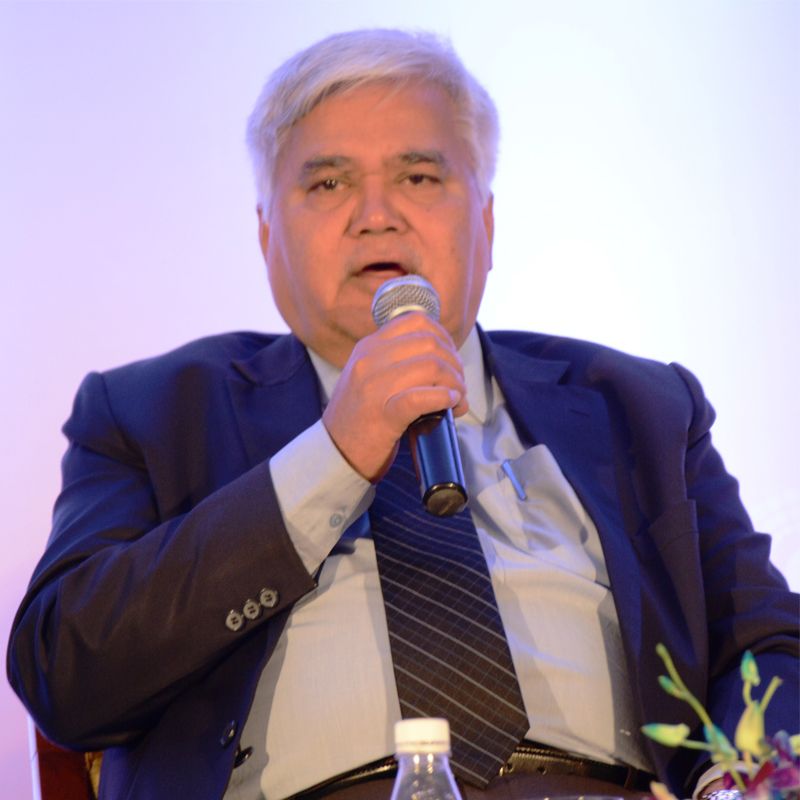
Tag: Trai

  • TRAI extends deadline to share feedback on broadband connectivity CP

    TRAI extends deadline to share feedback on broadband connectivity CP

    KOLKATA: The Telecom Regulatory Authority of India (TRAI) has extended the deadline for receiving comments on a consultation paper concerning “Roadmap to promote broadband connectivity and enhanced broadband speed.” The last date for submission of written comments is now 9 November. Counter-comments can be sent in by 23 November.

    The authority released the consultation paper on 20 August. The last dates for receiving written comments and counter comments from stakeholders were fixed as 21 September and 05 October respectively.

    Initially, considering the requests from Industry Associations for extension of time, the last date for submission of written comments was extended to 19 October and for counter-comments to 2 November.

    Read more news on TRAI

    “Now, TRAI has again received request from Industry Association for extension of last date for submission of comments citing various reasons such as curtailed working scenario due to Covid2019 outbreak, need of expert analysis to respond to the issues raised in the consultation paper etc.,” it has stated in the release.

    However, TRAI has clearly mentioned it would not agree to any further delay.

  • Indian broadband subscribers growth down in July 2020

    Indian broadband subscribers growth down in July 2020

    BENGALURU: Indian broadband internet subscribers growth for the month ended 31 July 2020 (Jul-20) was less than half (49.6 per cent) of the growth in Jun-20 as per the latest Telecom Regulatory Authority of India (TRAI) data. The broadband subscriber base grew by just 71.7 lakh in Jul-20 as compared to 1.447 crore in the previous month.

    Overall, in calendar year 2020, the country has seen addition of 4.347 crore broadband internet subcribers or 6.2 per cent growth until Jul-20. Apr-20, the first month of the Covid2019 lockdown, had seen broadband internet subscribers decline by 1.13 crore.

    There were 70.54 crore broadband internet subscribers in India in Jul-20 as compared to 66.194 crore in Jan-20 and 69.823 crore in Jun-20.  

    The top five service providers constituted 98.91 percent market share of the total broadband subscribers at the end of July-20. These service providers were Reliance Jio with 40.196 crore, followed by Airtel with 15.574 crore, Vodafone Idea with 11.527 crore, the public sector BSNL with 2.303 crore, and Atria Convergence Technologies with 16.9 lakh broadband internet subscribers.

    Mobile devices users (Phones and dongles)

    The largest growth driver has been through mobile devices, which include phones and dongles, with addition of 4.254 crore broadband internet subscribers or a 6.2 per cent growth in CY 2020 until Jul-20. Mobile devices are the largest platform for broadband internet in India with a more than 97 per cent share of subscribers. There were 68.464 crore broadband internet subscribers through mobile devices in Jul-20 as compared to 64.219 crore in Jan-20 and 67.779 crore in Jun-20.

    The top five wireless broadband service providers in Jul-20 were Jio with 40.08 crore, Airtel with 15.325 crore, Vodafone Idea with 11.526 crore, BSNL with 1.517 crore, and Tikona Infinet Ltd with 3 lakh subscribers.

    Wired broadband internet subscribers

    The second largest broadband internet services platform with a 28-29 per cent share of broadband internet is the wireline or wired platform. This segment has witnessed a growth of 4.9 per cent in Jul-20 as compared to the beginning of the year, with the addition of 9.9 lakh subscribers, for a total of 2.013 crore subscribers in Jul-20.

    The top five wired broadband service providers in Jul-20 were BSNL with 78.6 lakh subscribers, Airtel with 24.9 lakh, Atria Convergence Technologies with 16.9 lakh, Jio with 11.6 lakh, and Hathway Cable & Datacom at 10.1 lakh subscribers.

    Fixed wireless subscribers (Wi-Fi, Wi-Max, Point-to-Point Radio & VSAT)

    Fixed Wireless platform (Wi-Fi, Wi-Max, point-to-point radio & VSAT) is the smallest of the three with about 0.09 per cent share of the total broadband internet subscribers in the country. This platform has seen growth 0f 4.7 per cent in CY 2020 until Jul-20 to 6.4 lakh subscribers, as compared to 6.1 lakh subscribers in Jan-20.

  • Bombay high court questions TRAI on twin conditions, DPO bouquets

    Bombay high court questions TRAI on twin conditions, DPO bouquets

    KOLKATA: Within a very short span of the new tariff order (NTO) implementation, the Telecom Regulatory Authority of India (TRAI) issued a set of amendments at the beginning of 2020. These have been challenged legally by the major broadcasters, and the litigation is still in progress.

    In an interesting twist, at today's hearing yesterday, the bench at Bombay High Court has questioned the relevance of a few important clauses of the regulation.

    The division bench of the Bombay high court comprising Justice AA Sayed and Justice Anuja Prabhu Desai asked whether the twin conditions were placed by TRAI for consultation. The industry regulator had introduced this clause citing “manipulation” of consumer choice by broadcasters.

    Read more news on Trai

    “The sum of the a-la-carte rates of the pay channels (MRP) forming part of a bouquet shall in no case exceed one and half times the rate of the bouquet of which such pay channels are a part. The a-la-carte rates of each pay channel (MRP),forming part of a bouquet, shall in no case exceed three times the average rate of a pay channel of the bouquet of which such pay channel is a part,” TRAI said along with introducing the Rs 12 cap for introducing a channel in a bouquet.

    TRAI has been upholding (amended tariff order) NTO 2.0 for bringing rationality between a-la-carte price and the bouquet price. But several reports have indicated that consumers opted for the distribution platform operator (DPO)-designed bouquets post NTO 1.0.

    Considerably, the bench also mentioned that more than 90 per cent bouquets in the market are DPO bouquets which do not appear to be under the same restrictions as the broadcaster’s bouquets. The bench asked TRAI's counsel to explain how and whether DPO bouquets are bound by restrictions as compared to the broadcasters.

    Giving an example of NTO 1.0 which was implemented without the discount cap on the formation of a bouquet by the broadcasters, the bench asked whether NTO 2.0 could be implemented without some of the provisions.

    Read more news on NTO

    The counsel appearing for TRAI has sought time to respond till the next date of hearing, 8 October.

     It is expected that counsels for the union of India and TRAI will complete their arguments during the next hearing. However, keeping in mind the rejoinder to be made by the broadcasters, the first half of Friday has been kept as reserve time.

    Over the past couple of years, the industry has been overburdened by regulations. According to a FICCI -EY report, NTO 1.0 reduced the number of TV subscribers by 26 million. While broadcasters are reeling from the Covid2019 impact, it is of serious concern how another change will impact the industry. 

  • Guest Column: TRAI needs to focus on sectoral hygiene rather than economic regulation

    Guest Column: TRAI needs to focus on sectoral hygiene rather than economic regulation

    MUMBAI: A silent crisis has been brewing in the residential segment of TV viewing sector. Even as its viewership increased during the Covid-induced lockdown, sectoral revenues took a severe hit. While Covid was termed an act of god, TV’s current state appears to be a man-made disaster. TV is an integral part of media, the fourth pillar of democracy. Therefore, it is crucial to respect and preserve it.

    TV accounts for over 40 per cent of the Indian media and entertainment ecosystem’s revenues, making it the sector’s largest contributor. As per pre-pandemic estimates, the M&E industry was slated to grow at 10 per cent CAGR to touch $34 billion by 2022. Covid’s impact has slowed down that march, particularly because advertisement revenues have shrunk, production of new entertainment programs remained suspended and the addition of new subscribers, by direct marketing, has become difficult. The alternative lies in adopting a subscription-led model.

    Broadcasters source content from content producers and manage its distribution over electronic media for viewer consumption. There are costs involved in this management such as content editing, server storage, opex for uplinking, transponder rentals and taxes. Broadcasters rely on meeting these expenses through advertisements inserted into and cheek by jowl with content.

    Besides these, distribution platform operators (DPOs) charge broadcasters a fee to carry programs and their placement in their electronic program guides (EPGs). TV players  have to pay this fee even for channels which are free for viewers. Advertisement revenue covers approximately 60 per cent of such costs. The DPOs, in turn charge subscribers for connectivity and pay content charges besides taxes.

    Read more news on Trai

    Since the nineties, business models were skewed in favour of ad-driven revenues because the amount of video content to be distributed over the  networks exceeded network capacity. Further, business practices were not transparent as broadcasters were unable to verify how many subscribers were watching their channels.

    2011 onwards, the TV digitisation process was supposed to usher in transparency and help overcome capacity constraints by relaying encoded and encrypted program streams from broadcasters to consumers via approximately 1,500 MSOs and over 60,000 cable operators. Digitisation improves picture and sound quality and allows more content to be transmitted using the same resources, thus enhancing consumer choice. Coupled with encryption, this system is called the digital addressable system (DAS), which means the facility to enable or disable program viewing selectively and remotely. Encrypted broadcasting signals can only be decoded via a set top box (STB) programmed uniquely for each consumer as per their indicated choice. Consequently, consumers can access and watch only those programs that they have chosen and pay accordingly. Empowering consumers to exercise choice was the intended first step to enable a subscription-led industry model.

    While the government claims that the entire digitisation process was over in March 2017, the truth is otherwise. MIB tracked DAS implementation using only the number of STBs reportedly shipped out of headend service providers’ warehouses. It did not consider if these STBs had been programmed to show only those channels that viewers had opted for. The STBs, therefore, functioned only as digital to analog converters that enabled viewers to watch all programs in the network’s stream. The task force to oversee DAS implementation did not seek proof to verify that ‘addressability’ had actually been implemented in the subscriber management system, which was the very essence of DAS implementation. Thus, a lot of TV subscribers do not have STBs which allow them to watch only those programs that they opt for.

    In 2017, TRAI issued a tariff order that supposedly aligns regulations with the new digital regime. However, the explanatory memorandum of the tariff order is full of contradictions, attributable to limited knowledge of ground realities.

    One possible infirmity, in TRAI’s demonstrated inability, could be that their staff consists of bureaucrats and professionals from the IT enabled services sector. Telecom generically facilitates one-to-one communication without any concern for the content it carries. The charges too cover fixed and variable levies based on usage time. With such a background, TRAI has been entrusted with regulation of broadcast, which is based on content that is intended for mass consumption.  Since 2004, they have not been able to acquire information about how broadcasters price their content.

    Read more news on broadcasters

    In the explanatory memorandum to the tariff order from March 2017, TRAI says that content pricing is a dynamic process, best understood by broadcasters. At the same time, it restricts them from deciding the price of pay programs included in bouquets. A commercial approach to determine prices requires an understanding of the expected channel viewership, and the cost of producing or acquiring content. Addressing ground realities is important to gather accurate data on channel viewership.

    One must understand that most subscribers use cable operators’ networks, which are local monopolies. Such operators get STBs issued in bulk without requisite programming and pairing them with subscriber details. These STBs enable access to all programs contained in the stream net casted from the MSO, since they are not individually programmed to cater to consumer choice. The cable operators then started charging subscribers a fixed monthly sum without any bill or receipt.

    To address this situation, multiple suggestions were made to TRAI. An important one was to incorporate broadcast expertise, which differs from telecom, into regulation. This is especially important for content handling to ensure that the deployed distribution networks meet desired addressability and content security norms. This author too has suggested that an eminent person, with broadcast video distribution experience, should conduct a demonstrative audit for all empaneled auditors. However, TRAI remains reluctant to change its telco-oriented mindset, where the concern for content has never factored in. The most glaring example is  the regulator’s latest list of auditors to audit the digitalization process. Almost all of them are charted accountants with no experience in broadcast audit. The regulations prescribe the employment of a graduate engineer in the empaneled auditors’ teams, without even mentioning his/her educational background. Finding suitable talent is also challenging, as broadcast engineering, in general, and wired line broadcasting, in particular, are yet to find a place in Indian academia. To sum up, one can’t get the TV business right without getting the number of consumers right.

    TRAI will therefore do well to pay attention to the safe and secure delivery of content, rather than economic regulation that is confined to subscription fund flow audits. As it is, the regulator’s misadventure since March 2019, has resulted in a loss of estimated 26 million subscribers, besides reported closing down of multiple video broadcast programs. It can’t and shouldn’t create a situation where more programs are forced to go off air.

    (The author of the article is Lt. Col. V C Khare, a cable TV expert. The views are personal and Indiantelevision.com may not subscribe to them)

  • The challenges & opportunities before incoming TRAI chairman PD Vaghela

    The challenges & opportunities before incoming TRAI chairman PD Vaghela

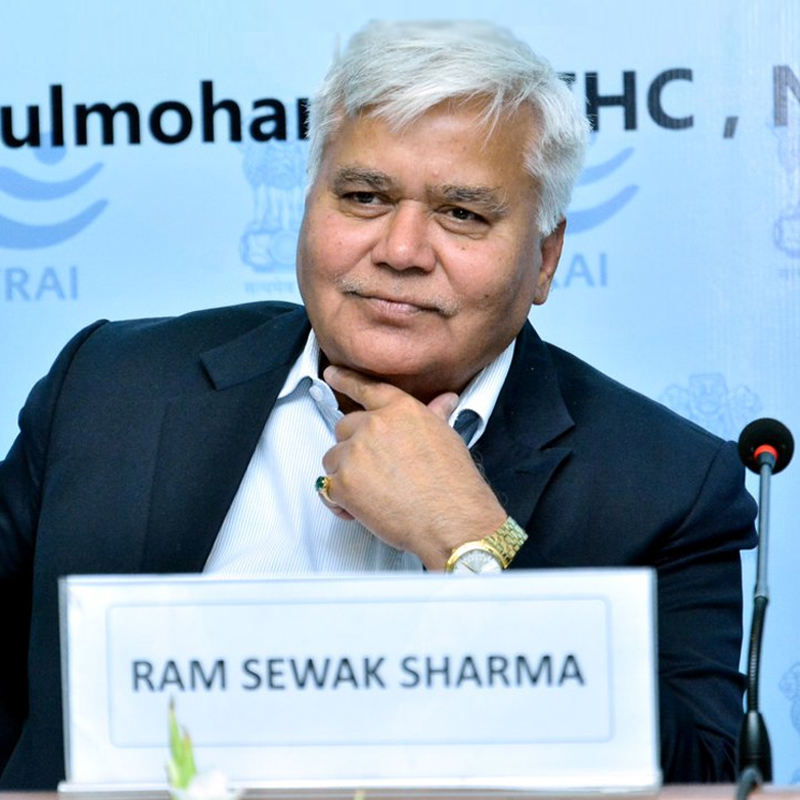
    KOLKATA: As the extended five-year term of Ram Sewak Sharma as chairman of the Telecom Regulatory Authority of India (TRAI) concludes today (30 September), industry will be looking closely at his replacement, PD Vaghela. The Gujarat cadre 1986 batch IAS officer is the outgoing  pharma department secretary who celebrated his sixtieth birthday on 22 September. Prior to that, he was the chief commissioner of commercial tax in Gujarat. He is also believed to have played an important role in the roll out of the goods and service tax in 2017. Also

    Vaghela is taking the chair at what can be termed a very crucial time for both the telecom and broadcasting sectors. While his predecessor has been widely criticised by stakeholders for over-regulating, Vaghela will have to bring more balance if he wants to narrow down the gap and sense of distrust between industry and the regulator.

    A task which could be challenging as he apparently has not had much to do with the broadcasting sector during his 34 years of being a civil servant. A B.Com graduate from Gujarat, he has masters degree from an institute in the The Hague, a post-graduation in business administration and finally a doctorate in sociology.

    Vaghela has held senior positions in the Kandla Port Trust, with Gujarat tourism, with the industries and mines department, the rural development department, as municipal commissioner (Bhavnagar), and in the home ministry.

    Read more news on TRAI

    One school of thought in the industry is that given his background and the circumstances during his appointment, Vaghela will mostly follow Sharma’s path during his tenure.

    At this moment, broadcasters are indulged in legal battles with the industry watchdog on many fronts including the ad cap and the amended new tariff order.

    A senior executive at one of the big four broadcasters says while the court’s verdict will have to be implemented by both broadcasters and the TRAI, Vaghela’s first challenge will be the direction TRAI will take once the litigation between industry and the regulator is adjudicated upon.  According to him, the new chairman has to also look after the viability of small cable operators who are worried about their future.

    The executive also adds that everyone is now perceiving broadband, not broadcasting, as the future of entertainment. Hence, he adds that the new chairperson can play an important role in carefully steering the future of the broadcasting industry.

    While there is a high chance that a number of consumers will shift to IP-based streaming content via OTT services, Vaghela will have to tread carefully, balancing digitisation and safeguarding traditional broadcasters’ interests.

     “The RS Sharma regime has failed broadcasters. He served an important role in UIDAI implementation. Hence, we had huge expectations from him but we have been disappointed at the end,” a senior industry source states. 

     Although the executive is not very optimistic about the new chairman being able to dilute this sentiment, he thinks the industry should at least observe him for the next few months, before pronouncing any judgements.

    However, another industry veteran claims Vaghela is quite likely going to continue to carry on in the same vein as Sharma. Like his peers in the industry, he acknowledges that there have been frequent changes in regulation which have been challenging, but he also credits Sharma for bringing in some semblance of order in to the TV distribution ecosystem.

    Read more news on NTO 2.0

    “There was so much of scrapping between MSOs, LCOs and broadcasters,” he says. “By pushing cable TV digitisation and mandating some sort of price standardisation through regulation, he forced the industry’s hand to try and work together, which they are doing currently. Yes, there is some irritation from time to time, but the value chain is working closer together, keeping rules modernisation, upgradation and customer service in mind.”

    The veteran also adds that Sharma played a large role in pushing ahead the Narendra Modi-led government’s digitisation agenda, by allowing new pricing models as far as mobility is concerned. “The Jio phenomenon of cheap data, free calls, has been a game changer for the spread of the internet where incumbents such as Airtel and Vodafone and Idea were working with legacy business and consumer models.”

    The CEO of a TV network points out that even though the court cases against NTO 2.0 continue in the courts, Vaghela will very much have to “balance value for consumers with the interest of broadcasters along with operators. He will also possibly play a significant role in OTT legislation as the government is gearing up its efforts to regulate this rapidly growing vertical.”

    “Along with working on major rollouts like 5G implementation, enhancing fibre-to-home broadband connectivity across the country on the telecom side, Vaghela can choose to leave his mark as far as cable TV amendments, a national broadcaster policy, DTH licensing are concerned. Additionally, he could things take a step further and start looking at drawing up a national video policy encompassing TV, streaming, and possibly mobile delivery of video,” says the CEO.

    On the telecom side, Vaghela has contentious issues like super high 5G pricing (at Rs 492 crore per MHz in the 3500 Mhz band) which could deter the ailing telecom service providers(TSPs)  from making a bid. The adjusted gross revenue ruling has gone against at least two of them who have been reeling courtesy the price war that Jio has waged for the past few years. The consultation paper on whether a floor price needs to be put in place for telecom services will also take up his attention. Then, he will have to decide on interconnect usage charges that TSPs charge each other for calls made by customers. They are due to be scrapped by early next year.

    Of course, he will have a bunch of old hands who have been at the regulator for a few years. There’s the TRAI secretary Sunil Gupta, and numerous other advisers who provided back end support for almost every decisive direction, recommendation, and regulation the watchdog has given over the years. How he takes their advice and inputs and formulate these into law for broadcasting and telecom will decide whether he will be blessed or vilified by the industry.

    (This piece has been penned following conversations with real executives from the business of television. Most of them requested that their identity be kept secret while using their quotes and views in this piece) 

  • PD Vagehla to replace RS Sharma as TRAI chairperson

    PD Vagehla to replace RS Sharma as TRAI chairperson

    MUMBAI: The speculation about who is going to head the Telecom Regulatory Authority of India has finally ended.

    When chairman Ram Sewak Sharma’s term ends on the night of 30 September, into his shoes will step PD Vaghela a 1986-batch Gujarat cadre IAS officer.

    His appointment today was approved by the appointments committee of the cabinet. Vaghela is currently the secretary of the department of pharmaceuticals. And his appointment to the TRAI is for three years or until he attains the age of 65. Prior to the pharmaceutical posting, Vaghela was the commissioner of commercial taxes and he is believed to have played an important role in the rolling out of the goods and entertainment tax in 2017. 

    Vaghela’s  predecessor RS Sharma held his position for five years. The normal term is three years, and Sharma’s tenure ended in August 2018, but he was given a two-year extension which is a rarity. During his stint, Sharma saw intense compeition in the telecom sector, with Jio playing price warrior, and emerging as the largest mobile operator in the country, leaving Airtel and Vodafone-Idea far behind.  

    Vaghela’s immediate challenge as far as the broadcast sector is concerned is dealing with NTO 2.0 which the industry has been opposing rather vehemently saying it is impacting them  extremely negatively.

  • Jio overtakes Hathway wired broadband subscriber base in Jun-20

    Jio overtakes Hathway wired broadband subscriber base in Jun-20

    BENGALURU: Mukesh Ambani’s Reliance Jio Infocomm (Jio) has been the largest broadband internet services provider in the country – a major portion of its subscriber base is wireless internet – through the mobile phone. However, the player is also making strides in terms of customer acquisition for its wireline broadband internet services. Per Telecom Regulatory Authority of India (TRAI) data for the month ended 30 June 2020 (Jun-20), Jio climbed up one spot to fourth place in terms of wireline broadband internet subscribers, pushing down its sister company Hathway Cable & Datacom (Hathway) to fifth rank. Overall, wired broadband internet subscriber base grew 2.29 percent month-on-month (m-o-m) to 1.982 crore (198.2 lakh, 19.82 million) in Jun-20 from 1.938 crore (193.8 lakh, 19.38 crore) in May-19. Jio’s wireline subscriber base grew 9.3 percent m-o-m in Jun-19 to 0.106 crore (10.6 lakh, 1.06 million) from 0.097 crore (9.7 lakh, 0.97 million) in May-20.

    The public sector Bharat Sanchar Nigam Limited (BSNL) had the largest wireline internet subscriber base of 0.79 crore (79 lakh, 7.9 million) in Jun-19 as compared to 0.793 crore (79.3 lakh, 7.93 million) in the previous month. Bharati Airtel (Airtel) was ranked second in terms of wireline broadband subscriber base. The telecom major closed June 2020 with 0.247 crore (24.7 lakh, 2.47 million) subscribers, up by around 60,000 as compared to the 0.241 crore (24.1 lakh, 2.41 million) wireline broadband subscribers in May-20. 

    Read more news on Hathway

    At third place was Atria Convergence Technologies (ACT) with 0.168 crore (16.8 lakh, 1.68 million). Subscribers as compared to 0.164 crore (16.4 lakh, 1.64 million).As mentioned above, Jio was ranked fourth followed by Hathway at fifth rank. Hathway subscriber base grew by 70,000 to 0.097 crore (9.7 lakh, 0.97 million) in Jun-20 from 0.09 crore (9 lakh, 0.9 million) in May-20. Please refer to the figure below:

    All Broadband Internet Subscribers

    Subscriber base across All Broadband Internet platforms grew 2.11 percent in Jun-20 to 69.823 crore (6,982.3 lakh, 698.23 million) from 68.377 crore (6,837.7 lakh, 683.77 million) at the end of the previous week. Subscriber base growth was led by Mobile devices users to 67.779 crore (6,777.9 lakh, 677.79 million) at the end of Jun-20 from 66.378 crore (6,637.8 lakh, 663.78 million) in May-30. Fixed wireless subscribers (Wi-I, Wi-Max, Point-to-Point Radio and VSAT) grew by 2.23 percent to 0.063 crore (6.3 lakh, 0.63 million) in Jun-20 from 0.061 crore (6.1 lakh, 0.61 million) above. Data for wireline subscribers have been indicated above.

    Read more news on Jio

    Please refer to the figure below:

    The top five service providers constituted 98.93 percent market share of the total broadband subscribers at the end of June-20. These service providers wereJio with 39.831 crore (3,9831 lakh, 398.31 million), Airtel 15.13 crore (1,513 lakh, 151.30 million), Vodafone Idea with 11.645 crore (1,164.5 lakh, 116.45 million), BSNL 2.3 crore (230 lakh, 23 million) and ACT with 0.168 crore (16.8 lakh, 1.68 million).

    As on 30th June, 2020, the top five Wireless Broadband Service providers were Jio with 38.725 crore (3,972.5 lakh, 397.25 million), Bharti Airtel with 14.884 crore (1,488.4 lakh, 148.84 million), Vodafone Idea with 11.644 crore (1,164.4 lakh, 116.44 million), BSNL with 1.51 crore (151 lakh, 15.10 million) and MTNL with 0.016 crore (1.6 lakh, 0.16 million).

  • Active DTH subscribers reach 70.26 million, Tata Sky solidifies its lead

    Active DTH subscribers reach 70.26 million, Tata Sky solidifies its lead

    KOLKATA: The Telecom Regulatory Authority of India (TRAI) today released ‘The Indian Telecom Services Performance Indicators’ data for the January- March’20 quarter. Sustaining its growth pace for three quarters in a row, Tata Sky has solidified its lead yet again in the DTH and Pay TV category clocking in a market share of 32.33 per cent and a growth of 2.1 per cent in the quarter ending March’20. 

    According to the report, the Indian DTH service has displayed phenomenal growth since its launch in 2003. The total number of active subscribers with pay DTH operators (Tata Sky, Airtel, Dish TV, Sun Direct) in India in the quarter ending March 20 is 70.26 million. This is in addition to the Tata subscribers of DTH Free Dish (free DTH services of Doordarshan).

    Read more coverage on India’s DTH sector:

    A Tata Sky spokesperson commented on the report, “The TRAI report shows that Tata Sky has been consistently gaining market share and subscribers at a pace that is faster than any other platform. We believe this can be attributed to our customer centric outlook. The overall increase in DTH subscribers is also a great sign for the M&E sector.”

    Among other players, Tata sky’s close competitor Dish TV-D2H’s combine market share fell from 31.23 per cent in the quarter ending September 2019 to 29.49 per cent in March 2020. Airtel Digital TV and Sun Direct has seen slight growth in the same period.

  • TRAI issues recommendations on cloud services

    TRAI issues recommendations on cloud services

    KOLKATA: Following a multistage consultation process, the Telecom Regulatory Authority of India (TRAI) has released recommendations on cloud services.

    The regulatory body issued a consultation paper on 23 October 2019 inviting inputs on the number of industry bodies, requirements for any CSP to become a member of an industry body, membership fee, governance structure and initial seeding of the industry body, etc. for comments and counter comments from stakeholders. Subsequently, an Open House Discussion (OHD) was held on 28 February 2020 at Delhi, where stakeholders participated and deliberated on the issues.

    Read more coverage on TRAI

    The salient features of the recommendations are:

    . Initiating a light-touch regulatory framework by setting up an industry body through a three-step process: enrollment of CSPs operating in India; formation of an ad hoc body to frame broad rules, organizational structure, election procedure, etc.; and the election of office-bearers to take over it’s functioning as a regular industry-led body.

    . Industry body to be registered under the Societies Registration Act, 1860, and to be formed using the approach followed for the formation of the M2M body by DoT.

    .  Scope of Cloud Service Providers, initially, to be limited to cloud service providers of Infrastructure as a Service (laaS) and Platform as a Service (PaaS) who are providing services in India.

    . Telecom Service Providers not to be allowed to share infrastructure and platforms related to Telegraph with a Cloud Service Provider (CSP] who is not a member of CSPs’ industry body registered with DoT.

    . The industry body so created to review its experience and further deliberate upon the need to form multiple bodies for different purposes, such as to address requirements of different market segments. DoT may require this review after two years of commencement of the functioning. of the first industry body, or such time as it considers appropriate.

  • TRAI says nyet to regulating communication  OTTs

    TRAI says nyet to regulating communication OTTs

    MUMBAI: The Indian communication OTT ecosystem can breathe easier now. After slapping oodles of regulation on the TV sector, as voiced regularly by the television broadcasting community, the Telecom Regulatory Authority of India (TRAI)  has recommended that no controls need to be imposed on  OTT services such as voice over internet telephony, SMS, video calling, and instant messaging services.

    On three counts, the TRAI has agreed to wait for it to evolve and consensus on regulations at the ITU level to emerge before imposing any further controls on OTTs:

    . Market forces may be allowed to respond to the situation without prescribing any regulatory intervention. However, developments shall be monitored and intervention as felt necessary shall be done at appropriate time.

    The TRAI further said in a report released today that the increase in usage of OTT, traffic of telecom service providers has also grown. “Various studies on appropriate business models are already under consideration in various jurisdictions and it is emerging. Therefore, any regulatory prescription in haste may leave adverse impact on industry as a whole.”

    Read our coverage on TRAI

    No regulatory interventions are required in respect of issues related with privacy and security of OTT services at the moment.

    The TRAI noted that:  ”After studying the issues, it has been observed that architecture of OTT communication services is evolving to protect the end users and encryption technology deployed in a manner which prevents intermediaries from getting the communication in a clear text or in an intelligible form. Imposition of any requirements to cater to get the details of communication in an intelligible form or clear text would either lead to change in the entire architecture of such OTT services which might not provide same level of protection as offered today or would require to introduce provisions which may make the agents involved in the communication vulnerable to unlawful actors.”

    It is not an opportune moment to recommend a comprehensive regulatory framework for various aspects of services referred to as OTT services, beyond the extant laws and regulations prescribed presently. The matter may be looked into afresh when more clarity emerges in international jurisdictions particularly the study undertaken by ITU.

    Regulation of OTT services is a widely debated topic in many jurisdictions as well as in ITU. While few jurisdictions have started exploring possibilities to regulate some aspects of a few OTT services through legal and technical measures but these efforts are yet in nascent stage and the overwhelming majority of jurisdictions and the ITU are still studying various aspects of OTTs. Since, ITU deliberations are also at study level, therefore conclusions may not be drawn regarding the regulatory framework of OTT services. However, in future, a framework may emerge regarding cooperation between OTT providers and telecom operators. The Department of Telecommunications (DoT) and Telecom Regulatory Authority of India (TRAI) are also actively participating in the ongoing deliberations in ITU on this issue. Based on the outcome of ITU deliberations DoT and TRAI may take appropriate consultations in future.

    Market forces may be allowed to respond to the situation without prescribing any regulatory intervention. However, developments shall be monitored and intervention as felt necessary shall be done at appropriate time.

    Industry has anywhere for some time been stating that the Code of Criminal Procedure, 1973 and the Information Technology Act, 2000 are robust enough to regulate the OTT sector.