Tag: Trai

  • Broadcasters write to Bombay HC requesting timely verdict on NTO 2.0 case

    Broadcasters write to Bombay HC requesting timely verdict on NTO 2.0 case

    KOLKATA: Broadcasters have lodged an application before the Bombay high court requesting speedy pronouncement of verdict in the amended new tariff order (NTO 2.0) case.

    The petitioners have mentioned that detailed arguments on the case were heard in September-October 2020. Subsequently, the judgement was reserved via an order on 20 October. However, the revised tariff regime has not been implemented so far and TV broadcasting ecosystem has continued to operate under the NTO price regime implemented in 2019.

    “It is submitted that the judgement remains reserved and since the issues pending for adjudication before the honourable court are substantial, an early pronouncement of judgement will be in the best interest of all stakeholder,” the petition read.

    In this regard, the Telecom Regulatory Authority of India (TRAI) also wrote to Bombay high court in late February requesting urgent listing of the case, so that a verdict may be passed soon in the matter. An industry source close to the developments in the court said at that time: "With this filing of application before the Bombay high court, the newly appointed chairman of TRAI, PD Vaghela has made it clear that the authority seeks to implement NTO 2.0 as soon as possible. “

    TRAI’s decision to implement NTO 2.0 in the beginning of 2020 came as a shocker for the broadcasting industry. In an unprecedented move, all major broadcasters came together to challenge the new tariff regime in court. Following continuous hearings from the end of February to early March 2020, the judgment was reserved on 4 March, after which the lockdown was imposed. A praecipe dated 15 June was filed by TRAI for the verdict. Post that, the matter was heard throughout September- October. The parties in conflict have wrapped up their arguments and written submissions have also been filed.

    The authority has defended its decision saying the amendments will usher in better consumer offerings. On the other hand, the industry stated the over-interference of TRAI, especially in the area of pricing, is hurting the stability of the sector. TRAI released directives for immediate implementation of NTO 2.0 even during the pandemic, which was restrained by the Bombay high court.

  • 2020: The year of the government intervention

    2020: The year of the government intervention

    KOLKATA: 2020 was the year when the government – both the Centre and states – pushed back against the media. Strongly. Whether it was mainline television or print or digital or social media, authorities showed that they could deal a heavy hand against the fourth estate and digital platforms. Everyone would have to comply or get caned.

    The year ended with the government bringing digital media under the ministry of information and broadcasting and imposing foreign equity restrictions in such ventures. 26 per cent is the overseas investment limit, the department of promotion of industry & internal trade under the ministry of commerce & industry stated in a clarification in October 2020. Ventures involved in aggregating, writing, distribution, streaming of news or current affairs on websites, apps or other platforms will have to bring down the foreign investment to 26 per cent and get government approvals for the same by October 2021, have an Indian CEO, a majority of Indians on their boards, security clearances for foreign personnel employed or contracted for more than 60 days.

    The big news for the year was the ban on all things Chinese following the muscle flexing and murder of Indian armed forces by China on its border at Ladakh with India. More than 267 Chinese apps were shown the door over six months. The biggest of these was the user generated content platform TikTok which had more than 200 – million users in India. PUBG, La – a game which has more than a few million followers amongst India’s uh-uh gamers, was also blocked overnight.

    But the natives were not to be denied their favourite entertainment: under the government’s make in India initiative: a slew of local apps were spawned TakaTak, Roposo, Bolo Indya, Chingari. While not many could better the TikTok algorithm, they quickly signed on millions of subscribers hungry for a platform to show case their short form video talent. And at the time of writing FAU-G was slated to be released in India.

    The Central government and the industry regulator Telecom Regulatory Authority of India ( TRAI) intervened in the case of the industry monitoring agency Broadcast Audience Research Council (BARC) as well. At the beginning of the lockdown, TRAI issued a consultation paper suggesting an overhaul of the measurement body saying there were concerns over the neutrality and reliability of the existing system. It recommended various measures like equal representation from broadcasters, brands, agencies, increased sample size, independent members on board including technological experts.

    Later in the year, as the credibility of the rating agency had come under greater question with the TRP scam unfolding, the ministry of information and broadcasting notified a committee to be headed by Prasar Bharati CEO Shashi Shekhar Vempati to assess  the existing rating system for TV channels. The government emphasised there is need to have a fresh look at the guidelines particularly keeping in view the latest TRAI recommendations.

    Along with linear TV, the new age streaming platforms also came under the government's watchful eagle eye. Throughout the year, a number of PILs have been filed against a number of online premium shows for allegedly hurting “Indian sensibilities”. Several conservative groups have carried out social media campaigns with #boycott or #censor trends. Amid increasing pressure, OTT platforms were already pushed to form self-regulation codes. But self-censorship did not save the day as the government rejected the code asking to restructure  Igniting the censorship fear further, the government notified to bring all online content under MIB.

     The latest notification stated that films and audio-visual programmes made available by online content providers, news and current affairs content on online platforms will come under MIB’s purview. Just a few days post announcement, media reports floated that is it preparing to file a petition seeking the transfer of all court cases in India against OTT platforms to the supreme court. The ministry notified the Punjab and Haryana High Court about its move to approach the apex court.

    At the same time, social media giant Facebook also faced regulatory pushback this year. After a report on the Wall Street Journal that claimed the platform did not comply with hate speech rules properly, it came under tremendous political scrutiny. While some officials were blamed for having a ruling party bias, union law minister Ravi Shankar Prasad alleged that Facebook employees had abused top ministers on record and their certain ideologies led to an inherent bias.

    Facebook India vice president and managing director Ajit Mohan was summoned by a Delhi Assembly panel which was examining Facebook’s role to curb hate speech in connection with the Delhi riots of February 2020. Later, the platform moved to the court to challenge the summons issued by the Delhi government. The parliamentary standing committee on information technology, headed by senior Congress leader Shashi Tharoor also called Facebook officials multiple times to examine if there was any political bias.

    At the state level too, governments bared their fangs. While Delhi government got into a tussle with Facebook, the conflict between Maharashtra government and Republic TV editor-in-chief Arnab Goswami also deepened. Goswami was arrested in the Anvay Naik suicide case by Mumbai Police which was widely seen as a politically motivated move. He also moved to Bombay High Court questioning the police’s decision to re-investigate the case. Finally, Goswami was granted bail by  the apex court.  Even, many other state governments were also criticised for arresting dissent journalists during the pandemic.

    Despite numerous protests by certain ecosystem players, the government stayed put on rolling back or making any changes to the NTO 2.0, to which many had complained.

  • What will it take to make Indian CAS acceptable to MSOs?

    What will it take to make Indian CAS acceptable to MSOs?

    KOLKATA: Despite the overwhelming importance of Conditional Access System (CAS) in the overall content distribution network, there have been few discussions on CAS. Moreover, the market has been dominated by foreign vendors for a long time now. If the government comes up with clear standardisation of CAS and offers Indian vendors viable, competitive solutions, the transition may begin, believe industry leaders.

    At a virtual roundtable organised by Indiantelevision.com, moderated by founder, CEO & editor-in-chief Anil Wanvari, panellists discussed how the cable industry can be self-reliant in terms of security equipment and technology. TRAI advisor (broadcasting & cable service) Arvind Kumar, MyBox Technologies MD and CEO Amit Kharbanda, SITI Networks Ltd CEO Anil Malhotra, Maharashtra Cable Operators Federation (MCOF) president Arvind Ramesh Prabhoo, Metro Cast Network promoter Nagesh Narayandas Chhabria, Kerala Communicators Cable Ltd (KCCL) business head N Padmakumar, Safe View chairman Pradeip Nanda participated in the session.

    What did MSOs look for while setting up a security system during digitisation?

    The moderator kickstarted the session asking what were the main areas looked at by MSOs while setting up a security system during digitisation. Malhotra mentioned that the whole purpose of addressability post digitisation is lost without proper security in place. He shared that his MSO focuses on a robust system, ease of operation, 24/7 support system, scalability, the ability to satisfy broadcasters’ audits while choosing a security system.

    “Unfortunately, there is no security which is fool-proof and every security will get breached after a certain period of time. You have to consider a security system that survives the onslaught of hackers for up to 12 years at least, which is the life of an STB. When we choose anything for our network, we keep these things in mind,” Malhotra added.

    In 2013-14, Metro Cast had surveyed which CAS vendors had already deployed services to more than a million or two million customers before selecting one, shared Chhabria. Initially, they went to European CAS vendors but later moved on to Chinese vendors as their service was 30-40 per cent cheaper. Unfortunately, there was no significant Indian CAS vendor at that time, he noted.

    MCOF’s Prabhoo said that the local cable operators had limited choice because CAS and SMS as per regulation were supposed to be in the purview of MSO. So, they had very little say in which are the STBs and which is the backend SMS. It was the MSO that had the onus of choosing it.

    “On the broadband and internet side, the first important thing was what was the availability. Therefore, with a ban on products from China, we had to look into more Indian products – which is cost-effective – and what service we got from them. These were the prime considerations while we were upgrading our networks,” he commented.

    Is ‘Vocal for Local’ story taking off?

    “Efforts should be made to adopt Indian technologies. Entrepreneurs, vendors didn’t have aspirations to become big or go global in the past. Now after a major push by the government in terms of initiatives and the narrative of vocal for local, they are aspiring to grow. But they can’t do it without support from the service providers who are catering to the masses. The supply chain must be endorsed by DTH operators, MSOs, whoever in the chain, then only it will encourage new or existing entrepreneurs,” TRAI’s Kumar said.

    For instance, Safe View is a domestic producer who is very keen on working with Indian MSOs. Nanda mentioned that it is a 100 per cent Indian company and 120 small and big MSOs work with it. Moreover, it has a huge footprint overseas. Safe View has been in the market for six years with three million subscribers on its system.

    Talking about the trust deficit with Indian vendors, KCCL’s Padmakumar added that the concern is more about security and quality. In his view, CAS should be secured entirely so that customers don't get affected and there should not be any scope for piracy in the system. If domestic players can provide such CAS internally, the industry would be happy to utilise their services, he said. However, it should be cost-effective as well.

    On the other hand, Malhotra pointed out that Indian CAS entered quite late in the market, when the majority of the STBs had already been deployed. Had they come at the beginning of 2012 as the MSOs were deciding which CAS to take, the majority of STBs would have bought from Indian companies only.

    “Even now also with Atmanirbhar Bharat, we are not seeing a push on the set top boxes because it is not an overnight thing. One needs to start integrating and create a road map. The Indian companies are still not talked about much, because there’s still hope that the government will understand and let imports continue. Six months later we will say we do not have the same volume that we have even now. However, the government is very clear now, Make in India cannot be an assembled product. And that for me is where we missed the bus time and again,” Kharbanda elaborated.

    Chhabria also noted that the manufacturers are not getting total support from the Centre in keeping prices competitive. Naturally, price conscious MSOs are going for the Chinese players. If the same product is given at a competitive rate, then they would love to go with the Indian product. Hence, he is of the view that the government has to support the manufacturers with some incentives.

    “As far as TRAI is concerned, we have already given recommendations on indigenous telecom equipment manufacturing. We are also mulling over what we can do for the broadcasting sector also. Recommendations on interoperability of STB have already been given. I think this is the right time to blend vocal for local narrative with interoperable STBs. Security part also becomes stronger with indigenous technology,” TRAI’s Kumar commented.

    Standard guidelines for CAS is need of the hour:

    However, all the MSOs agreed that adoption will be higher once TRAI comes up with clear guidelines and standardisation of CAS. In addition to that, if TRAI or an independent agency starts certification of CAS, then it will enhance the trust of MSOs. Testing procedures for CAS in the country also need to be initiated as early as possible.

    “Every stakeholder has to play a role. There is a role for the government and the regulator also. We are making a framework for standardisation and I think that will happen very soon. In telecom, we had given recommendations to the government on telecom equipment manufacturing. Similar recommendations can be given to the government for the broadcasting sector. Most importantly, stakeholders, especially MSOs, have to come forward to use Indian-origin technology. It should be their call that at least all STB or CAS should be replaced by homegrown tech in future. As far as CAS is concerned, it is a question of only a thousand distributors who have to adopt indigenous technology. Hence, it should be the MSOs' will to support Indian CAS vendors,” Kumar stated.

  • Webinar: Building a homegrown content distribution security system

    Webinar: Building a homegrown content distribution security system

    KOLKATA: Taking ahead its webinar with experts across media and entertainment industry, Indiantelevision.com will be hosting a panel discussion on content security distribution ecosystem.

    Moderated by Indiantelevision.com founder, CEO and editor-in-chief Anil Wanvari, the discussion will revolve around – “Television: getting back to business; building a homegrown viable content security distribution ecosystem.” It will focus on other areas like acceptance of Indian origin CAS, digital TV tech, and how the vocal for local narrative will yield results for operators.

    Some of the prominent speakers include MyBox Technologies MD and CEO Amit Kharbanda, SITI Networks Ltd CEO Anil Malhotra, TRAI advisor Arvind Kumar, among others. It will be held on Wednesday, 16 December at 4 pm.

  • LCOs fire back at TRAI for ‘conduits’ remark before Bombay HC

    LCOs fire back at TRAI for ‘conduits’ remark before Bombay HC

    KOLKATA: Local Cable Operators (LCOs) appear to be agitated with industry regulator Telecom Regulatory Authority of India (TRAI) for portraying them as ‘conduits’ between the multi-system operators (MSOs) and subscribers. According to sources, TRAI has overlooked the role played by LCOs as last mile owners in a reply to ongoing litigation against NTO 2.0 in the Bombay high court.

    The Maharashtra Cable Operators Federation (MCOF) is of the view that it might lead to subscriber ownership transferred to the MSO. While the TRAI may indicate it is not concerned about LCO’s revenue, it also portrays LCOs as mere recharge operators in the mobile business.

    “TRAI has worsened our situation by making assertive statements going against our interests,” the MCOF said in a memo.

    In another statement, TRAI has conferred the credit for creating infrastructure to the MSOs. Despite putting lakhs of kilometres of a network together, the LCOs may stand to lose over Rs 1,00,000 crore worth of infrastructure due to the incorrect statement, the MCOF asserted.

    According to the federation, TRAI has overlooked the imbalance where benefits flow to broadcasters and MSOs at the cost of LCOs regardless of whether the subscriber pays more or less than pre-NTO days under compulsion to justify its judgemental errors. The unsubstantiated justification for reducing NCF on additional STB completely discounts the fact that most of the STBs are serviced by the LCO who incurs per visit costs that are not billed for.

    The federation has urged the operators to raise their voices and protest the statement to make TRAI file a revised affidavit before the high court.

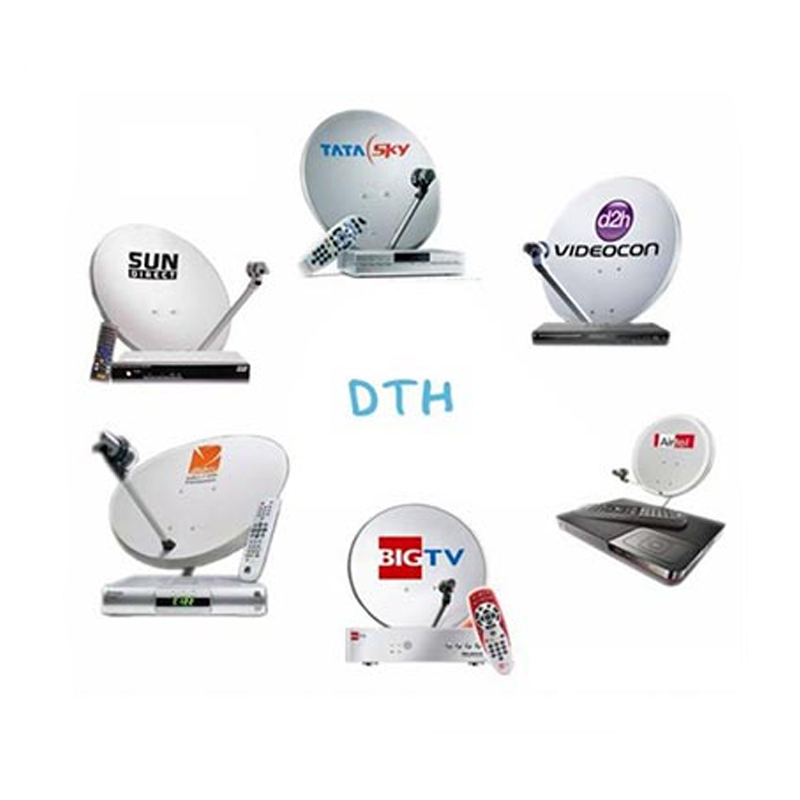
  • Pay DTH subscriber base perks up a bit

    Pay DTH subscriber base perks up a bit

    BENGALURU: The latest DTH subscriber numbers released by Telecom Regulatory Authority of India (TRAI) must bring cheer to the private television direct to home (DTH) industry. TRAI recently published quarterly subscriber data as on 30 June 2020. According to the data, the number of pay DTH subscribers using services provided by private DTH operators had declined from a peak of 72.44 million as on 31 March 2019 to a low of 68.92 million during the very next quarter end date – 30 June 2019 because of a change in the way of reckoning active DTH subscribers. Till March 2019, the subscription figure of the total active subscribers included inactive and temporarily suspended subscribers for not more than the last 120 days. However, as per new regulatory framework of Broadcasting and Cable TV Services, the total active subscribers are now counted to include only those subscribers who are inactive/ temporarily suspended for not more than the last 90 days. 

    Since 30 June 2019, the number of pay DTH subscribers using services provided by private DTH service providers has been increasing slowly until 30 June 2020. As on 30 June 2020, the number of pay DTH subscriber using services provided by private DTH service providers stood at 70.58 million. This is in addition to the subscribers of DD Free Dish (free DTH services of Doordarshan). 

    Please refer to the chart below:

    Further, as on March 2019, the number of private DTH subscribers had fallen to four from five previously. Also, TRAI commenced publication of break up of market share to an accuracy of two decimal percentage places from the quarter ended 30 September 2019 onward. Extrapolating the overall number of pay DTH subscribers using services provided by private DTH operators with the total number of pay DTH subscribers (provided in millions, to two decimal places) and the share percentage of the service providers reveals that except for Dish TV, the other three providers had seen subscriber numbers grow. Besides Dish TV’s slow but steady decline in subscriber numbers during all the four quarters for which data is available, the largest service provider in terms of number of subscribers – Tata Sky witnessed a decline in subscriber numbers in the quarter ended 30 June 2020. Please refer to the figure below:

    Cable TV operators

    TRAI reports state that the country has achieved 100 percent digitization of cable TV network. This is a stupendous achievement making India the only large country where 100 percent digital cable has been achieved through mandatory regulations.

    As on 30 June 2020, there were 1,666 MSOs registered with the ministry of information & broadcasting (MIB) as compared to 1,613 MSO registered as on 31 December 2019. Further, as per the data reported by MSOs/HITS operators, there were 12 MSOs and one HITS operator who had a subscriber base of more than one million. Details of the total active subscribers of these 12 MSOs and one HITS operator are given in the following table. Please refer to chart below:

    In the case of cable TV, the largest player Siti Networks seems to be witnessing a slow but steady loss of subscribers since the quarter ended 31 December 2019. Two other players have also witnessed a subscriber declines – Fastway Transmissions Pvt Ltd and Asianet Digital Network, while most others have gained subscribers during the four quarters in this report.

    Satellite TV Channels

    A total of 909 private satellite TV channels have been permitted by the MIB for uplinking only/ downlinking only/both uplinking and downlinking, as on 30 June 2020. The quarter-wise figures of the total number of TV channels is depicted in the chart given below.

  • Wired broadband subscribers up 1.72 per cent

    Wired broadband subscribers up 1.72 per cent

    MUMBAI: Although the wired internet subscriber base still represents a small portion of overall internet users in India, the sector is showing continuous growth in last three months. The total wired broadband subscriber base reached 20.47 million in August, up by 1.72 per cent compared to July.

    The Telecom Regulatory Authority of India (TRAI) has released the telecom subscription data as on 31 August 2020.  As per the report, the top five Wired Broadband Service providers were BSNL (7.85 million), Bharti  Airtel  (2.53 million), Atria Convergence Technologies (1.70 million), Reliance Jio Infocomm Ltd (1.25 million) and Hathway Cable and Datacom (1.03 million). Other than the state-run BSNL, all other players were able to add new subscribers to its existing base.

    Shaking off the Covid2019 effect on the telecom sector, the total number of broadband subscribers reached 716.19 million at the end of August with an overall growth of 1.53 per cent. In July, the report showed broadband subscribers at 705.40 million.

    The top five service providers constituted 98.89 per cent market share of the total broadband subscribers at the end of August. These service providers were Reliance Jio Infocomm Ltd (403.92 million), Bharti Airtel (158.98 million), Vodafone Idea (119.91 million), BSNL (23.75 million) and Atria Convergence (1.70 million).

    Overall broadband (wired+wireless) subscriber base was led by Jio with a 56.40 per cent share, followed by 22.20 per cent for Bharti Airtel, and 16.74 per cent for Vodafone Idea.

    As on 31st August, the top five wireless broadband Service providers were Reliance Jio Infocom Ltd (402.67 million), Bharti Airtel (156.45 million), Vodafone Idea (119.91 million), BSNL (15.90 million) and Tikona Infinet Ltd. (0.31 million).

  • TRAI report shows healthy growth in DTH subscriber base in Q1 FY21

    TRAI report shows healthy growth in DTH subscriber base in Q1 FY21

    KOLKATA: Witnessing two consecutive quarters of growth, India’s DTH subscriber base grew by 3.2 lakh during the April-June quarter, as per the Indian Telecom Services Performance Indicators April-June 2020 by the Telecom Regulatory Authority of India (TRAI). The sector saw better, albeit marginal growth compared to the January-March quarter.

    Currently, pay DTH subscriber stands at 70.58 million, compared to 70.26 million in the previous quarter.At the end of 2019, pay DTH subscriber base was 69.98 million.

    Tata Sky has retained its leadership position in the segment clocking in a market share of 32.09 per cent . During last four quarters, the DTH operator has gained 7.5 lakh subscribers in line with the growth of the DTH sector. Among other players, the leader is followed by Dish TV India (28.67 per cent), Bharti Telemedia (23.83 per cent), Sun Direct (15.41 per cent)

    “We remain the No. 1 DTH and No.1 Pay TV platform having increased the lead over our nearest competitor. It is heartening to see the overall DTH sector maintain its resilience even in this quarter,” a Tata Sky spokesperson commented.

    While the TRAI report indicates healthy growth of the DTH sector in FY21, a recent Crisil report also said DTH operators have added a significant number of subscribers and could register a 4-6 per cent revenue growth this fiscal. In the last financial year, DTH sector had declined by 2 million.

    A total number of 909 private satellite TV channels have been permitted by the ministry of information and broadcasting (MIB) for uplinking only or downlinking only or both uplinking and downlinking, as on 30 June 2020. There are 332 pay channels, which include 235 SD (standard definition) pay TV channels and 97 HD (high definition) pay TV channels.

    Currently, there are 1666 MSOs registered with MIB. Moreover, there are 12 MSOs and one HITS operator who have subscriber base greater than one million.

    The latest TRAI report has also stated that the total number of internet subscribers increased from 743.19 million at the end of the last quarter of FY20 to 749.07 million at the end of the first quarter of FY21, registering a quarterly growth rate of 0.79 per cent. In addition to that, wired Internet subscribers increased from 22.42 million at the end of Mar-20 to 23.06 million at the end of Jun-20 with quarterly growth rate of 2.86 per cent.

  • NTO 2.0 case: Judgement reserved, TRAI can’t take any coercive step

    NTO 2.0 case: Judgement reserved, TRAI can’t take any coercive step

    KOLKATA: The Bombay High Court bench today reserved its judgement on the NTO 2.0 case. After hearing both sides, the court has also ordered the Telecom Regulatory Authority of India (TRAI) not to take any coercive action against the broadcasters for non-implementation of the amended tariff order.

    Within a very short span of new tariff order (NTO) implementation, TRAI had issued a set of amendments at the beginning of 2020. It was challenged legally by the major broadcasters. Even while the case was sub-judice, TRAI had released fresh directives on 24 July, asking broadcasters to publish details including maximum retail price per month of channels and maximum retail price per month of bouquets of channels, the composition of bouquets and also amended RIO and other details. This further irked the broadcasters.

    In the last couple of years, the industry has been overburdened by regulations. According to a FICCI -EY report, NTO 1.0 reduced the number of TV subscribers by 26 million. While broadcasters are reeling from the impact of Covid2019 , it is of serious concern how another change will impact the industry.

  • MCOF’s Prabhu sounds the alarm for cable TV fraternity

    MCOF’s Prabhu sounds the alarm for cable TV fraternity

    KOLKATA: Although linear television remains the primary mode of viewing for most Indian households, cableTV  operators still face numerous challenges – what the rapid uptake of OTT services and the inflexible pricing regulations set by the regulator. And the situation is not getting any better for the tribe, says Maharashtra Cable Operators Foundation (MCOF) president Arvind Prabhu.

    He claims that matters took a grim turn with Covid2019 causing a 25-30 per cent drop in subscribers for the cable TV trade operators in the first four months of the crisis,

    mainly due to lack of fresh TV content, labour migration and the closure of commercial establishments. He further projects that only 5-10 per cent of these subscribers might come back.

    While a lot the of users had moved to OTT during the beginning of the pandemic, Prabhu says there are fewer chances of them returning  to TV as the platforms are already offering linear TV content, streaming live sports events.

    Read more news on MCOF

    How far is normalcy?

    There had been a challenge at the operational level too with the onset of this pandemic. However, the situation is normalising inch by inch, thanks to the stage by stage unlocks, and it is comparatively easier at this moment, says Prabhu. However, 60-65 per cent of workers are not coming to offices regularly.

    Given that cable TV is an essential service, the government should have looked at insurance for its staff, insists Prabhu. Moreover, vendor supplies have also slowed down. The scene is a little different in rural areas, where manpower is available but getting equipment is an issue. Hence, it would take another month or so to reach normalcy, he expresses.

    Due to restrictions in movement, the MSOs have been demanding online payments. While others claim that 70-80 per cent of subscribers have shipped out,  Prabhu dismisses these figures. He says it is the subscribers of the MSOs that is the cable TV operators themselves who have moved to digital payments; not the end subscribers. So far, cable TV operators have been collecting payments traditionally from 50-60 per cent of their subscriber bases.

    What are the long-term challenges?

    Putting aside the challenges imposed by Covid2019, cable TV operators have been in distress for a while now. With the Telecom Regulatory Authority of India (TRAI) introducing a cap on NCF under NTO 2.0, their worries have only increased. Prabhu claims that TRAI did not take into consideration the suggestions that were given following the NTO consultation paper. He goes on to add that MSOs manipulated NTO 1.0 and it failed to bring end-to-end transparency.

    However, the MCOF president acknowledges that former TRAI chairman RS Sharma did his best to help small cable TV operators. “If the new chairman (PD Vaghela) does not quickly help us to revive the overall economic situation, we will be in dire straits. What we ask of the new chairman is to look at all the correspondence sent by cable TV operator associations. He will immediately realise that there has been a serious breach of regulations,” says Prabhu, and he urgesVaghela to call a meeting of all stakeholders at the earliest so they can figure out a solution together.

    Way to a sustainable future:

    Prabhubelieves that there is a way for cable TV operators to stem the loss of subscribers to OTTs: provide broadband services as that would help them to survive in a changing ecosystem, and integrate the billing for those with cable TV. He also mentions that many operators have already started offering android boxes. On the cable TV side, operators are trying to reduce subscriber loss with long-term packages. Hence, they have requested MSOs to offer some discounts on those.

    Going forward, cable TV operators who focus on futuristic services like broadband and hybrid boxes will be able to sustain themselves, says Prabhu. He is optimistic that the new boxes will go beyond urban areas and see good traction in tier II, tier III cities. While these boxes are expensive at the moment, the cost is predicted to come down once demand picks up, leading to increased adoption in rural areas too. Prabhu also highlights that the industry needs government intervention, such as providing loans to the last mile players for investing in new technology.

    But broadband and hybrid boxes are not a sure-shot road to success. With the entry of deep-pocketed players in the segment, operators are worried about not having a level playing field. “It is important to find out how to control the big brother coming and taking away everybody’s job. Even if it takes over everything, there should be some alternative modes for us,” says Prabhu.

    Need of the hour:

    Alongside the long-term strategies, the operators are facing short-term issues as well. “First and foremost, there should be a signing of model interconnect agreements. Nobody has signed a model interconnect agreement, whatever was signed was two-three years ago. The ownership of a set-top box needs to be defined. If a consumer is buying then it is his property; if a cable operator is buying to give it to consumers it belongs to him.; if it is being rented or leased, then it is owned by MSOs. Clarity on that is needed,” he states.