Tag: Trai

  • Digitisation: Trai directs MSOs and LCOs to comply with QoS in DAS areas

    Digitisation: Trai directs MSOs and LCOs to comply with QoS in DAS areas

    NEW DELHI: For the Telecom Regulatory Authority of India (Trai), it is time to take audit of the first phase of implementation of digital addressable system (DAS) by cable TV networks. Though satisfied with the deployment of set-top boxes (STBs), the broadcast sector regulator now seems to be wanting faster progress made on packaging of channels and billing so that cable TV subscribers can select their channels according to their budgets.

    In a toughening of stance, Trai has directed multi-system operators (MSOs) and the local cable operators (LCOs) to make their subscriber management system (SMS) fully operational in DAS areas. The systems are provided for under Regulation 20 of the Standards of Quality of Service (QoS) Regulations.

    Trai has asked the MSOs and the LCOs to file a compliance report of the QoS within seven days from the date of issue of this directive. The sector regulator had sent the directive on 22 February.

    “It has come to the notice of the Trai that this feature has not been implemented effectively by many MSOs. Also, in many of the cases the LCOs have not provided the completed subscriber application forms to their linked MSOs,” Trai said.
    The compliance report to be given to the Authority will contain total number of STBs received from the linked MSO, total number of STBs seeded and operationalised, total number of consumer application forms duly filled and complete in all respects (all the relevant consumer details and his choice of channels/ bouquets) and submitted to the linked MSO.

    An addressable system “enables the subscribers to exercise their choice of services and budget their bills accordingly”. It also “facilitates the MSOs to effectively manage their accounting and billing of the services rendered”.

    Though the process of SMS had started, senior executives of several MSOs said on condition of anonymity that the entire system would take some time. They also admitted that they faced resistance from some LCOs, following which there was delay in selling channel packages to their subscribers and implementing a proper billing system. Meanwhile, some LCOs have carried out protests to express their dissatisfaction over Trai‘s prescribed revenue share with the MSOs in DAS markets.

  • Trai seeks clarity from MIB on its powers to act against ad duration violation

    NEW DELHI: The Telecom Regulatory Authority of India (Trai) which had last year issued regulations relating to advertisement time on television channels has now sought clarity from the Information and Broadcasting Ministry on its powers in acting against violators.

    Upset over inaction on complaints against broadcasters, Trai wants to know if it is empowered to enforce rules on duration and format of TV advertisements if it wants to avoid possible “embarrassment” and litigation.

    According to newswire PTI, Trai has written a letter to the I&B ministry in this regard, noting that “broadcasters continue to breach the rules repeatedly.

    “Movies screened on entertainment channels that should, at best, last for three hours (for two and half hour film) easily stretch to four or more hours,” the letter noted.

    “This has led to a groundswell of public opinion against the blatant violation of the rules and, more importantly, against the perceived inaction by the government in terms of enforcement of the rules,” the letter said.

    Referring to a sample report provided to it by the Ministry, Trai noted that there has been substantial number of complaints reported to the Ministry regarding violations of the advertising code with respect to the duration and format of advertisements.

    “The report provided by Ministry, leads the Authority to observe that, so far, almost none of the reported violations to it have culminated in any tangible action against the respective service providers,” the Trai letter was quoted as saying by the sources.

    From sample report, Trai has observed that popular entertainment programmes consistently have advertising breaks well in excess of the 12 minutes per hour limit imposed in the rules.

    Trai had issued standards for Quality of Service on duration of advertisement in television channels in May 2012. The regulation has been challenged by broadcasters in Telecom Disputes Settlement and Appellate Tribunal (Tdsat) and jurisdiction of Trai to issue such regulation has been raised in the case.

  • I&B sees need to regulate local cable TV channels, seeks Trai’s views

    I&B sees need to regulate local cable TV channels, seeks Trai’s views

    MUMBAI: Alarmed by the mushrooming of cable channels, the Ministry of Information & Broadcasting (MIB) has sought the recommendations of Telecom Regulatory Authority of India (TRAI) regarding issues relating to transmission of local channels or ground based channels operated at the level of cable TV operator/MSOs.

    In its reference to Trai, the MIB has sought to know whether there was a need to put in place a comprehensive set of provisions for local channels which would cover issues related to registration mechanism, including eligibility requirements, fee, terms and conditions to be provided for such channels, including the definition of local or ground based channels and their area of operation.

    In the reference to Trai, MIB has also sought its views with regard to the issue of transmission of local channels at local cable operator level in Digital Addressable System (DAS) regime.

    Trai in its recommendations dated 25 July, 2008 had recommended that Local Channel Operators (LCOs) shall be permitted to transmit their ground based channels.

    However, in the current DAS regime only digital addressable signals can be carried out on the cable network which is generated at the MSO head end.

    The Ministry in its reference has also requested Trai to state whether there was a case for putting a cap on the total number of ground based channels operated by a single MSO/cable operator.

    Trai has also been requested to examine whether there was a need to prescribe separate eligibility criteria for cable operators transmitting local news and current affairs channels at their level.

    Specific recommendations have been sought with regard to eligibility criteria, terms and conditions including foreign investment levels, net worth criteria and requirement of security clearance etc. for such channels.
     
    The need for putting in place a regulatory framework for local channels being operated at the level of cable TV operators has been engaging attention of the Ministry of Information and Broadcasting for quite some time.

    This has assumed a greater significance in view of the digitisation of cable TV sector being implemented in the entire country in a phased time bound manner. Presently, Cable TV operators/MSOs are transmitting local news, videos and other locally developed content as separate televisions channels in addition to satellite TV channels obtained from broadcasters.

    These channels, popularly known as local channels, are presently not subject to a regulatory framework unlike private satellite TV channels permitted under the uplinking/downlinking guidelines of the Ministry. As a result, local channels continue to mushroom all over the country without having registration /license.

    Since the area/jurisdiction within which the programme generated at the level of cable operators can be transmitted has not been defined in the Cable Television Networks (Regulation) Act, 1995, it is possible for Local Cable Operators (LCOs)/Multi System Operators (MSOs) operating at the local levels to broadcast local channels over a larger geographical area i.e at Regional/State/National level by transmitting the same content over their entire network.

    Instances have been brought to the notice of the Ministry that some cable operators are also venturing into transmission of local channels over wider geographical area which includes inter-state and intra state transmission by sharing the same content with others on their network. In such a scenario, local channels are basically operating as State/Regional/National channels like permitted private satellite TV channels without getting any permission.

    The intent of allowing cable operators to generate and transmit local programme is to keep the local people informed of relevant local issues. However this intent is not fulfilled when LCOs and MSOs start networking of the content to cover a larger geographical area. Given the present state of technological advancement, the tendency to network content at a larger geographical area has gained strength, the MIB said in a statement.

  • Karunanidhi defends denial of licence to Arasu

    Karunanidhi defends denial of licence to Arasu

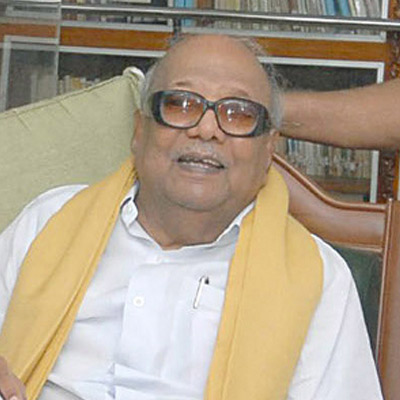
    MUMBAI: DMK chief M Karunanidhi has come out in support of the United Progressive Alliance (UPA) government for not giving Digital Addressable System (DAS) licence to the Tamil Nadu government-owned Arasu Cable TV Corporation.

    Karunanidhi, who had set up Arasu Cable TV Corporation during his reign as chief minister, said the UPA government was going by the Telecom Regulatory Authority of India‘s (Trai) recommendation that prevents government or government-owned entities from entering the television broadcasting or distribution business.

    “The Centre can decide on issuing DAS Licence only based on the recommendations of Trai guidelines. Trai had recommended that Centre and state governments should not involve in cable TV broadcasting,” he said in an interview to party mouthpiece ‘Murasoli‘.

    He also expressed disdain at Jayalalithaa‘s accusation that the government was deliberately not issuing licence to Arasu in order to benefit his family.

    The DMK chief also said it was not proper on her part to make such remarks at the National Development Council meeting.

    Jayalalithaa had at the National Development Council (NDC) meeting recently lambasted the government for deliberately holding licence in order to a ‘political‘ family in a veiled reference to Karunanidhi and his family.

    Arasu is yet to receive a DAS licence to operate in Chennai despite repeated plea by the state government and AIADMK MP‘s, who taken the issue to Prime Minister Manmohan Singh as well. Arasu had applied for a DAS licence in July.

    Karunanidhi and his family hold considerable interest in television and distribution business in Tamil Nadu. While Karunanidhi‘s family owns Kalaignar TV, his grand nephew Kalanithi Maran owns the Sun Group, which has interests in television, print, radio, DTH and cable distribution.

    Pertinently, Trai had on 28 December reiterated its November 2008 recommendation that central and state governments or entities owned by them should not be allowed to be in broadcasting and television channel distribution businesses.

    The regulator had submitted its recommendations to the Information & Broadcasting (I&B) Ministry on “Issues related to entry of government or government entities into the business of broadcasting and/or distribution of TV channels”.

    It also reiterated its view that the government should provide an appropriate exit route to government or government-owned companies which have already been accorded permission to carry on the business of television channel distribution.

    The recommendations are expected to impact Arasu, which had received licence in 2007 to operate in Tamil Nadu.

  • Trai against allowing govt or govt entities in broadcasting and distribution

    Trai against allowing govt or govt entities in broadcasting and distribution

    MUMBAI: The Telecom Regulatory Authority of India (Trai) has stuck to its November 2008 recommendation that central and state governments or entities owned by them should not be allowed to be in broadcasting and television channel distribution businesses.

    Trai on Friday submitted its recommendations to the Information & Broadcasting (I&B) Ministry on "Issues related to entry of government or government entities into the business of broadcasting and/or distribution of TV channels".

    The I&B Ministry had made a reference to the regulator in November to give its views on allowing central government ministries, central/state government departments, central/state government owned companies, central/state government undertakings, joint venture of the central/state governments and the private sector and central/state government funded entities may in the business of broadcasting and/or distribution of TV channels.

    Trai has also reiterated its view that the government should provide an appropriate exit route to government or government-owned companies which have already been accorded permission to carry on the business of television channel distribution.

    The immediate impact of the Trai recommendation is on Arasu Cable TV Corporation, the Tamil Nadu government-owned company engaged in cable TV distribution business.

    Trai has recommended that suitable provisions be incorporated in the proposed new legislation on broadcasting to provide for an appropriate exit route for such entities which have been already granted permission by the government but are likely to be hit by the proposed disqualifications.

    Trai has also said that the government should further strengthen the arm‘s length relationship between the public broadcaster Prasar Bharti and the central government. Trai said measures should ensure functional independence and autonomy of Prasar Bharti.

    Pending enactment of any new legislation on broadcasting, the disqualifications recommended for political bodies to enter into broadcasting and/or distribution activities should be implemented through executive decision by incorporating the disqualifications into Rules, Regulations and Guidelines as necessary, Trai further said in its recommendations.

    These recommendations are in continuation of the earlier recommendations that it had made in November 2008 following an exhaustive consultation process after the I&B Ministry in December 2007 sought Trai‘s recommendations whether state governments and political bodies should be permitted to enter into broadcasting and distribution activities.

    In the consultation process, Trai had comprehensively examined the issue in the broader context of both central as well as state governments and their respective organs.

    Trai based its recommendations on the Sarkaria Commission report which said a political party controls the executive and there could be "a temptation to use the media wrongly in party interest and not necessarily in national interest".

    While the observations in Sarkaria Commission report were made in the context of the Union Executive, the same logic, Trai says, applies to a state government as the spirit of the observation pertains to the exercise of power and control wielded by the government in question.

  • Trai asked to expedite views on govt entities in cable TV after Jayalalitha letter

    Trai asked to expedite views on govt entities in cable TV after Jayalalitha letter

    MUMBAI: The Information & Broadcasting ministry has asked the Telecom Regulatory Authority of India (Trai) to expedite the process of re-examining granting of Digital Addressable System (DAS) licence to a government or government-owned entity.

    The move comes in the wake of Tamil Nadu Chief Minister J Jayalalitha writing to Prime Minister Manmohan Singh to expedite the matter of granting DAS licence to the state government-owned cable distribution company Arasu Cable TV Corporation, which has been hanging fire for more than five months.

    "There is a larger question. I am aware of the concerns raised by the Tamil Nadu Chief Minister. The Members of Parliament have also come and met me. That is why we have requested the TRAI chairperson to expedite their consideration… so that we can take a conclusive decision at the earliest," I&B minister Manish Tewari said.

    "We have referred the matter back to the TRAI for reconsideration as to whether the state government or the central government entities should be allowed in the broadcasting or the distribution business," Tewari added.

    Arasu, the dominant MSO in Tamil Nadu, applied for DAS licence on 5 July but is yet to get the licence as the government is mulling whether or not to grant broadcasting or the distribution licences to government-owned entities.

    The government has till date issued DAS licence to 11 MSOs in Chennai.

    While acknowledging that Arasu was granted a license in 2008, he said that there was a recommendation from Trai which doesn‘t allow state government or their instrumentalities to enter distribution or in the broadcasting business.

    Arasu has already placed orders for the supply of Set Top Boxes (STBs), Conditional Access System and Subscriber Management System and erection of Head-End at a cost of about Rs 500 million.

    Arasu, which was lying defunct under the DMK regime, was revived by AIADMK government after it stormed to power in April last year.

    It commenced cable TV services in all the 31 Districts of Tamil Nadu on 2 September, 2011 barring Chennai, which was a conditional access system area.

    Arasu Cable is providing 100 channels to the subscribers at a cost of Rs 70 per month per subscriber. It has 23,000 local cable operators in its network with a subscriber base of six million.

  • Trai seeks views on carriage & placement fees and carriage of minimum channels

    Trai seeks views on carriage & placement fees and carriage of minimum channels

    MUMBAI: The Telecom Regulatory Authority of India (Trai) has issued a consultation paper seeking comments from all stakeholders on placement and carriage fees and also over the requirements of minimum channel carrying capacity to be set up by MSOs.

    These three provisions in the Interconnection Regulations have been set aside by the Telecom Disputes Settlement & Appellate Tribunal (Tdsat) on petitions by MSOs.

    The consultation paper issued on Thursday also attempts to make amendments to the Tariff Order applicable for addressable systems – both MSOs and direct-to-home (DTH) services, through the consultation process. Trai has sought responses from stakeholders on its plan to link the prices of channel bouquets and individual (or a-la-carte) channels, to make it mandatory for provision of both free-to-air and pay channels on a-la-carte basis and to restrict offer of channels requiring special type of STBs only on a-la-carte basis or as part of separate bouquets that consists of only those category of channels that require a particular type of specialised STB.

    Trai has called for submission of views and reasons thereof by all the stakeholders by 11 January.

    Responses Sought on following issues related to amendments to the Interconnection Regulations:

    Whether the following proviso should be introduced in the clause 3(2): "provided that the provisions of this sub-regulation shall not apply in the case of a multi-system operator, which seeks signals of a particular TV channel from a broadcaster, while at the same time demanding carriage fee for carrying that channel on its distribution platform."

    Clause 3(2) has safeguards with regard to charging of carriage fee: (1) Carriage fee to be transparently declared in the RIO of the MSO, (2) The carriage fee is to be uniformly charged (3) The carriage fee not to be revised upwardly for a minimum period of 2 years, and (4) The details of the carriage fee are to be filed with the Authority and the Authority has a right to intervene in cases it deems fit.

    Trai said if any of the stakeholder is against this provisions, it should state the reasons thereof.

    (a) Whether there is a need to specify certain minimum channel carrying capacity for the MSOs in the interconnection regulations for DAS.

    (b) If yes, what should be the different categories (example cities/town/rural area) of areas and the minimum channel carrying capacity for each area.

    Whether there is a need for regulating the placement fee in all the Digital Addressable Systems. If so, how it should be regulated. The stakeholders have been asked to submit their comments with justifications.

    Responses sought on following Issues related to amendments to the Tariff Order applicable for Addressable Systems:

    Trai has suggested (a) a ceiling on the a-la-carte rates of pay channels forming part of bouquet(s) which shall not exceed three times the ascribed value of the pay channel in the bouquet and (b) that the a-la-carte rates of pay channels forming part of bouquet(s) shall not exceed two times the a-la carte rate of the channel offered by the broadcaster at wholesale rates for addressable systems.

    The stakeholders have been asked to offer their comments on the above conditions to prevent perverse a-la-carte pricing of the pay channels being offered as part of the bouquet(s). The stakeholders can also submit any other formulation that can achieve the same objective, along with its justification.

    To deletion of the word "Pay" to make it mandatory to offer both free-to-air and pay channels on a-la-carte basis. Trai calls it: "Freedom to choose the channel(s) on a-la-carte and/or bouquet(s)."

    Whether the channels that require special type of STB be offered only on a-la-carte basis or as part of separate bouquets that consists of only those channels that require a particular type of specialised STB.

  • Trai releases recommendations on amendment in ISP licence agreement

    Trai releases recommendations on amendment in ISP licence agreement

    MUMBAI: The Telecom Regulatory Authority of India (Trai) has released its recommendations on ‘Amendment in the ISP Licence Agreement for incorporating the terms and conditions mentioned in Notice Inviting Applications (NIA)‘ dated 25 February, 2010 for use of Broadband Wireless Access (BWA) spectrum.

    Trai received a reference from Department of Telecommunications (DoT) seeking Trai’s recommendations for amendment in the ISP Licence Agreement to incorporate the terms and conditions mentioned in Notice Inviting Applications (NIA) for use of Broadband Wireless Access (BWA) spectrum.

    Accordingly a consultation paper “Amendment in the ISP Licence Agreement for incorporating the terms and conditions mentioned in Notice Inviting Applications (NIA) dated 25.02.2010 for use of Broadband Wireless Access (BWA) spectrum” was issued on 15 March 2012.

    Written comments of the stakeholders on the proposal that all the terms and conditions related to licence conditions, mentioned in the NIA may be incorporated in the licence agreements of the ISPs, who have successfully obtained BWA spectrum through the auction process, the Ministry of Communications and IT said.

    The present reference from DoT has only sought Trai’s recommendations for amendment in ISP licence, but in order to ensure uniform and equitable application of terms and conditions of NIA related to BWA spectrum to all the licensees (UAS, CMTS, ISP) who have obtained BWA spectrum in auction, the Authority has also examined the amendments notified by the DOT in UAS / CMTS Licence for the use of BWA spectrum.

    Accordingly, in addition to the recommendations for including relevant terms and conditions of NIA in ISP licence for use of BWA spectrum, amendments in UAS and CMTS licences have also been recommended to ensure uniform and equitable application of terms and conditions of NIA.

  • Govt asks Trai to draft rules to check cable monopolies

    Govt asks Trai to draft rules to check cable monopolies

    MUMBAI: Information & Broadcasting minister Manish Tewari Monday said the government has asked the Telecom Regulatory Authority of India (Trai) to draft rules that would help in keeping a check on monopolies in the cable television distribution space.

    The broadcast sector regulator will be looking into monopolies at a local, state or regional level, a move that can have deeper repercussions in the cable TV industry. It will also examine other related gamut of issues.

    "A near monopoly like situation exists in at least three states – Tamil Nadu, Punjab and Orissa. In local areas, a second cable operator is often not allowed. This move will ensure competition, protect consumers and benefit broadcasters," said the head of a multi-system operator (MSO).

    India‘s digitisation drive, thus, will come with accompanied policy changes.
    “I have requested the Ministry to make a reference to the Trai as to how do we ensure that monopolies do not continue to subsist in the marketplace,” Tewari said during his first formal interaction with the media after being appointed as I&B minister.

    Tewari said monopolies will kill the entire purpose of cable TV digitisation which is to give more choice to the customers. Digitisation, he said, will provide several tangible benefits to customers including picture quality, freedom of choice and value added services, which will make it interactive.

    “Monopolies are the anti-thesis of choice so I have asked the Ministry to make a reference specifically so that we can deal with this issue as go forward with the digitisation between now and 2014,” he added.

    He also allayed fears that the government was targeting any specific MSO in the garb of checking monopoly saying that the objective is to allow wider choice to customers.

    “Essentially this is not about any state. I think the issue is very germane. When you are trying to create a transparent architecture which empowers the consumer, I think in the process of empowerment, it is also essential that they need to have a wider choice in terms of operators that they could choose from. There are similar provisions with regard to sectoral caps in telecom. Even when we do the radio auction, we mandate such caps,” he said.

    Interestingly, the reference to Trai comes in the backdrop of the government holding back issuance of a DAS (digital addressable system) licence to Tamil Nadu government-owned MSO Arasu Cable. Arasu applied for a licence in July but its application is still to be cleared. In Punjab, Fastway Cable Network is a dominant player while Ortel is a powerful local MSO in Orissa.

    Talking about the first phase of digitisation, Tewari said the digital penetration in the four metros stands at 96 per cent which goes up to 97 per cent if direct-to-home (DTH) connections are also added.

    “If you look at it in a broad sweep, the fact is that we could go through a process which involved almost a crore households across the four major cities of India without any major obstacles. I think this has been a significant achievement,” he held.

    He also said that the support of state governments was paramount for the success of second phase of digitisation across 38 cities. The deadline for the second phase is 31 March 2013.

    “Since we are going into the second phase of digitisation, I would request all the state governments to co-operate with the Ministry. This is critical to the success of the digitisation which is going to be a catalyst in empowering the consumer,” he asserted.

    On the issue of bringing news broadcasters under the ambit of Press Council of India (PCI), Tewari said the government was in favour of self regulation.

    “On balance we would like to lean on the side of self regulation and if at all the stakeholders do desire that we play some role in strengthening those self regulatory mechanisms, then we are prepared to look at it with an open mind."

    Tewari also felt that it was not appropriate to bring news broadcasters under PCI as the sector came into existence much after the council was formed. “I think it would not be appropriate to extrapolate a mechanism which was there in existence earlier to a sector which has been opened up later,” he averred.

    Mamata Banerjee in ‘favour‘ of Digitisation

    The I&B minister told reporters that the West Bengal chief minister Mamata Banerjee had ordered for set-top boxes (STB) for state secretariat which reflects her support for digitisation.

    "If I am correct…I read that she had placed order for set top boxes for Writers Building the day the deadline came to an end. This clearly shows that the digitisation process is a good move for the consumers and the sector as a whole," Tewari said.

    Tewari also ruled out action against MSOs in Kolkata for not adhering to the digitisation deadline saying, "We have been patient and we would expect that the state governments and MSOs concerned do honour the deadline."

    According to I&B secretary Uday Kumar Verma, 1.85 million cable TV homes in Kolkata have been digitised. "It is a matter of days for achieving digitisation," he said.
  • Trai not to implement ad regulations till further orders from Tdsat

    NEW DELHI: The Telecom Disputes Settlement and Appellate Tribunal (Tdsat) has directed the Telecom Regulatory Authority of India (Trai) to hold on to its commitment of not implementing regulation of advertisement on television channels till its further orders.

    The commitment that the Standards of Quality of Service (Duration of Advertisements in Television Channels) Regulations, 2012 dated 14 May 2012 will not be implemented till 30 August was given by Trai during a Tdsat hearing on July 17.

    Broadcasters had moved Tdsat challenging the authority of Trai to implement the provision in the Cable Act that restricts the total advertisements in an hour to 12 minutes.

    Trai will not take steps to implement the regulations on advertisement limit till the next hearing. Tdsat chairman S B Sinha and member P K Rastogi have listed for further hearing on 3 December the petitions filed by broadcasters and organisations against ad regulations.

    Tdsat gave its directive after Trai Counsel Saket Singh gave an assurance that the regulator was prepared to discuss the issue with broadcasters and other stakeholders. Singh also pointed out that Trai had, in fact asked all stakeholders to respond by 11 September to amendments proposed in the draft regulation “Standards of Quality of Service (Duration of Advertisements in Television Channels) (Amendment) Regulations, 2012”. The draft amendment was released on 27 August.

    The petitioners have questioned the powers of Trai contending that the regulator has no power to limit the ad times. According to the broadcasters, such power vests with the central government and that only it can issue such directions under The Cable Television Networks (Regulation) Act, 1995.

    The Tribunal was hearing different petitions by the Indian Broadcasting Foundation, the News Broadcasters Association,. ESPN Software India Pvt. Ltd., Multi Screen India Pvt. Ltd., Neo Sports Broadcast Pvt. Ltd., and Discovery Communication India which had been clubbed together.

    Some of the petitions had been filed when the first Regulations were issued on 14 May while those affecting sports channels were filed following the amended draft issued on 27 August.

    Counsel A J Bhambani who represented some of the petitioners in the appeal challenging the Trai Regulations said the regulator should not have issued any amended regulations in view of its assurance to the tribunal in July that it would not implement its regulation till 30 August.

    Singh said Trai had only issued draft Regulations as part of the consultation process and had no intention of enforcing it till all the stakeholders had been heard.

    Trai had first issued a notification on 14 May limiting the duration of advertisements in TV channels to 12 minutes per hour. Any shortfall of advertisement duration in any hour cannot be carried over, the telecom regulator had said. Trai in its regulation had also said that the minimum time gap between any two consecutive advertisement breaks should not be less than 15 minutes and not less than 30 minutes for movies.

    Trai in its draft amendment of 27 August has proposed to withdraw the requirement of a 15-minute gap between ad breaks, while sticking to the overall ad time of 12 minutes per hour. For sports broadcasters, Trai has proposed to remove the clause that permitted ads only during breaks in case of live broadcast of a sporting event.

    Also read:

    Broadcasters get breathing space as Tdsat stays Trai‘s ad cap rule Trai willing to discuss with broadcasters on TV ad time issue