Tag: Trai

  • TRAI warns Kolkata MSOs to meet the 23 August deadline

    TRAI warns Kolkata MSOs to meet the 23 August deadline

    NEW DELHI: The Telecom Regulatory Authority of India (TRAI) has expressed serious concern over the slow progress in filling up of consumer details in Kolkata despite a deadline of 23 August for subscriber application forms (CAF).

    After a meeting in Kolkata with multi-system operators who are required to update their subscriber management system for supplying signals to cable operators, TRAI said only around 30 per cent of the subscriber information was available with the MSOs. The meeting was addressed by N Parameswaram, Principal Advisor (Broadcasting) in TRAI.

    ‘This situation is totally unacceptable and alarming’, a press note signed by Parameswaram said, adding that all MSOs have been asked to initiate immediate steps to remedy the situation.

    He said TRAI may be forced to take penal action against MSOs/ local cable operators in case the deadline is not met.

    While requesting subscribers to cooperate, he said that MSOs would have no option but to switch off signals to those subscribers who have not given complete CAFs by 23 August.

    Furthermore, he said MSOs who do not switch off the signals to offending subscribers would be in breach of the law.

  • About 300,000 illegal telemarketing companies axed by TRAI

    About 300,000 illegal telemarketing companies axed by TRAI

    NEW DELHI: A total of about 300,000 telephone connections of un-registered telemarketers have been disconnected by the Access Service Providers and the name and address of 25,295 such subscribers have been put into the blacklist.

    Minister of State for Communications and Information Technology Milind Deora told Parliament that this follows concerted action taken by the Telecom Regulatory Authority of India (TRAI).

    TRAI issued the Telecom Commercial Communications Customer Preference (Twelfth Amendment) Regulation on 23 May this year. This regulation provides for disconnection of all the telecom resources of subscribers sending unsolicited calls/SMSs, blacklisting of the name and address of such subscribers for two years, disconnection of telecom resources to such subscriber by the other service providers within twenty four hours of blacklisting of such subscriber. No telecom resources shall be allotted to such blacklisted subscriber by any Access Provider for two years.

    Through the Telecom Commercial Communications Customer Preference Regulation, 2010 TRAI has laid down a revised framework for addressing Unsolicited Commercial Communications (UCC) and these regulations came into force with effect from 27 September 2011. TRAI has also issued various amendments to these regulations and a number of directions to make the regulatory framework more effective.

    The Minister said complaints related to unauthorised telemarketing activity from un-registered telemarketers (who are not registered with TRAI), had increased during the last one year.

    To make the framework more effective an amendment to the Telecom Commercial Communications Customer Preference Regulation (Tenth Amendment) has been issued by TRAI on 5 November last year to further control the unsolicited commercial communications, especially relating to commercial SMS from unregistered telemarketers. One of the key provision of this regulation includes restricting unregistered telemarketers from sending bulk promotional SMSs using software applications.

    Through this regulation TRAI has mandated the Access Service Providers to put in place a solution, which will ensure that no commercial SMSs are sent having same or similar characters or strings or variants from any source or number. The solution will ensure that no more than 200 SMSs with such similar ‘signature’ are sent in an hour. 

  • Telemarketers penalised by TRAI for various violations

    Telemarketers penalised by TRAI for various violations

    NEW DELHI: Fifteen telemarketers have been blacklisted while another 245 have been issued notices by the Telecom Regulatory Authority of India for unwanted calls and text messages.

    The regulator has also deducted Rs 1.36 crore security deposit for violations of various norms. TRAI, which had implemented Telecom Commercial Communications Customer Preference Regulations from 27 September 2011, had laid down that telemarketers have to deposit some amount to their service provider as security deposit.

    The 15 telemarketers have been blacklisted from 27 September 2011 till 25 June this year, and the deduction of security deposit is for violations from 27 September 2011 to 30 July 2013.
    There is a provision of deduction from Rs 25,000 to Rs 2.5 lakh in case of violation by telemarketers under the regulations. Telemarketers are required to register with TRAI in order to send commercial communications to telecom consumers.

    Subscribers who have registered with the National Customer Preference Registry, earlier known as ‘Do Not Call Registry’ are not supposed to receive commercial communications.

    A different set of numbers starting with ’70’ were issued to telemarketers to help unregistered subscribers identify commercial calls and decide whether to accept or reject them. But TRAI has come across instances when the commercial communication was not sent by the registered telemarketers.

  • Kolkata’s cable TV ecosystem struggles to cope with CAF

    Kolkata’s cable TV ecosystem struggles to cope with CAF

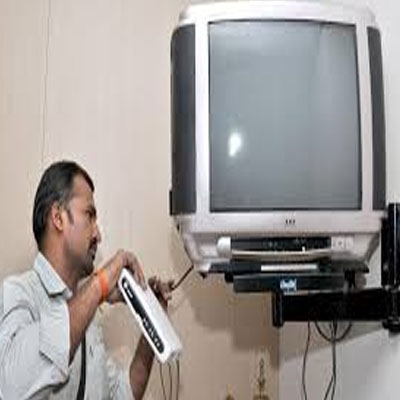
    KOLKATA: Ritika Saha, a city based Gujarati engineer, recently installed a set top box (STB) at a cost of Rs 1,400 and has still not been able to mention in writing about her preference for channels. The reason: her cable operator has not yet approached her with a consumer application form (CAF).

    “I hardly stay at home. For news and updates, a cheaper DAS package is more than enough for me. If the local cable operator does not provide me with the form, I shall not have access to cable TV post August on account of no fault of mine,” says Saha, adding that her hectic schedule does not allow her to follow up with her operator.

    “Had I placed the order for the STB eight months ago, it would have cost me just about Rs 800. The prices of these STBs have sky rocketed in the past few months,” she rues, little knowing that the depreciation of the Indian rupee against the US dollar has led to the rise in import cost of these boxes.

    There are many in Kolkata who have not yet filled up their CAFs. This is the situation even after TRAI’s order to the cable TV ecosystem in Kolkata undergoing digitisation to complete the process of collecting subscriber details before 23 August Saha is not the only one. There are many in Kolkata who have not yet filled up their CAFs. This is the situation even after the Telecom Regulatory Authority of India’s (TRAI) order to the cable TV ecosystem in Kolkata undergoing digitisation to complete the process of collecting subscriber details before 23 August. “TRAI plans to crack the whip against any MSO that fails to abide by the deadline of submitting CAFs,” informs a Kolkata based cable operator.

    CAF collection rate in Kolkata currently is about 25 per cent and should be around 60-75 per cent by 28 August,” says Siticable Kolkata director Suresh Sethia. “The implementation of DAS and its performance is not upto the mark in Kolkata,” adds media analyst Namit Dave.

    According to a report issued by TRAI last month, only 20 per cent of the city’s subscriber details and choices for channels were put up in the subscriber management system as part of the digitisation process.

    “The MSOs and cable operators are likely to miss the deadline,” says the Association of Cable Operators’ cable operators digitalisation committee convener Swapan Chowdhury. “Achieving the target by 30 August is next to impossible. Kolkata will miss the deadline,” he adds.

    “There are many other teething problems. One, not many CAFs were in supply; Two, from past seven days only the MSOs are supplying the forms to people and three even feeding in customer details is time consuming. For an exercise so massive and with so many loopholes in the process, more time is needed,” informs Chowdhury.

    While one local service provider complains of not receiving any subscriber information and management forms from his MSO, there is another MSO who says that his cable operator continues to be lethargic and has been loathe to do anything even after the forms were given to him.

    Both the MSOs and LCOs will appeal to the TRAI to extend the deadline by 15-20 daysm Both, MSOs and LCOs will appeal to the TRAI to extend the deadline by 15-20 days. “The operators and MSOs can send the subscribers’ choices of package till 31 August. And the billing can start from 1 September,” informs Sethia. “Though the MSOs will not switch off channels, the decision has been left on TRAI.”

    While 30 lakh STBs have already been installed in Kolkata, the steeper sticker prices – following the rupees downslide- makes digitisation of another 200,000 cable TV homes in Kolkata nigh impossible.

    With the depreciation of the Indian rupee to Rs 61.70 (approx) against the dollar, the import price of STBs has gone up by Rs 500-Rs 600. And this extra burden has been passed on by the distributors to consumers, says Chowdhury, adding that for some in the low income category in Kolkata, digital cable TV looks unaffordable now. “Despite the extension of the digitisation deadline, 100 per cent achievement is not possible,” he informs.

    Abhishek Cable director Rajendra Prasad Agarwal, feels that out of 35 lakh cable TV subscribers, around 30 lakh have taken STBs. “Houses with four to five cable connections have not yet taken up set top boxes,” he says. Contradicting this claim is Sethia whose estimate is that 27 lakh homes have been digitised with no analog connections left in the metropolitan area of the city.With 11.5 lakh cable TV subscribers, SitiCable is a giant in Kolkata which offers 410 channels.

    Manthan Broadband Services, another big daddy has a 34-35 per cent marketshare with a 350 channel service. . “We have 6.5 lakh to seven lakh subscribers. The CAF rate is around 25 per cent as of now,” informs Manthan Broadband Services director Sudip Ghosh. According to industry sources Hathway Cable and Datacom and Digicable Network (India) have jointly achieved 5.5 lakh installations so far.

    While the current average revenue per user in Kolkata is around Rs 180-Rs 200, cable operators in south Kolkata charge anything from Rs 350–Rs 475. What’s more is that operators in Shyam Bazaar and north Kolkata have been complaining that customers who are used to monthly subscription fees of Rs 120 are yelping about a hike to Rs 150. MSOs get to keep only Rs 70 on an average out of what subscribers are paying to local cable operators. “The local operators make huge profits,” informs Ghosh.

    Turfs have been maintained in Kolkata with everyone maintaining their position and no mergers or acquisitions taking place, unlike in the neighbouring states of Shillong, Jaharkhand, Orissa and Assam where there has been a flurry of activity.

    When asked if DTH is making inroads in Kolkata, Chowdhury says, “Since the performance of the DTH is subject to weather conditions, some dissatisfied customers will definitely opt for a digital cable connection. This can happen more so if their queries are not well addressed by the DTH players.”

    So will Kolkata meet the 31 August deadline? Answers Dave, “For the next few weeks nearly 5,000 local cable operators and 14 MSOs, which provide service in DAS area will have a herculean task to perform.”

    Yes it’s something the entire Kolkata cable TV ecosystem will have to jointly and collaboratively work together to achieve. Failing which, cable TV subscribers will see their cable connections cut.

  • AFs: Mumbai switch offs begin; Kolkata quo vadis?

    AFs: Mumbai switch offs begin; Kolkata quo vadis?

    MUMBAI: With Delhi under control now, the Telecom Regulatory Authority of India (TRAI) is focusing increasingly on the other two metros to ensure that all the consumer application forms (CAFs) come in to the MSOs.

    Following a meeting held on 2 August with MSOs operating in Mumbai and Kolkata, a decision has been taken that the time for carrots is over, now one needs to use the stick to get customers to get moving on their CAFs. And that stick is like Delhi is switching off their cable TV service, if the CAF is not yet in.

    “There will be no further extensions like in the past,” says a senior TRAI official. “In fact, the switch offs have already begun from 3 August. The process for switching off the set top boxes will take at least four to five days because we are talking about a huge number.”

    Hathway Cable & Datacom MD and CEO Jagdish Kumar agrees that his network has started switching off subscribers who are being tardy from 3 August. “But the process will be tedious,” he says. “So far, we have managed to collect 80 per cent of the forms duly filled.”

    Indiantelevision.com spoke to another three MSOs operating in the financial capital and all of them stated that CAF collection was between 70 and 80 per cent. Going by that yardstick, it appears as if cable TV subscribers don’t seem to be too disturbed about the stick, as the numbers mentioned by MSOs to indiantelevision.com even a month ago were in that range. Could they be opting for a DTH connection? We do not know, but a media observer, says that it could be a possibility.

    The TRAI official says that Kolkata should not expect to be treated with kid’s gloves. “When Delhi can meet the deadline why not Kolkata?” he questions. “We are sure that Kolkata will be able to meet the 23 August deadline as it does not have any other option.”

    Well cable TV operators and subscribers in Kolkata, that’s as ominous a warning as you can get!

  • TRAI attempts to rein in TV channel aggregators in new consultation paper

    TRAI attempts to rein in TV channel aggregators in new consultation paper

    NEW DELHI: It has been saying it will bring some order to the TV channel aggregation and distribution business. And the Telecom Regulatory Authority of India (TRAI) is now showing that it means what it has been saying.

    It today issued a consultation paper attempting to regulate the distribution of television channels from broadcaster to platform operators and discipline the distributors (aggregators). The paper involves amendments to the Tariff and Interconnection orders, and Register of Interconnect Regulations, and so TRAI has given stakeholders time till 27 August to send in their comments.

    The essence of these is that it wants to clip the immense clout that the four main aggregators MediaPro Enterprises (distributes 75 channels), IndiaCast UTV Media Distribution (distributes 35 channels), Sun Distribution Services and MSM Discovery (distributeing 30 channels each) have on the TV ecosystem in India.

    The main points of the consultation paper are that:

    * Broadcasters and not the authorised distribution agency shall publish the reference interconnect offers (RIO) and enter into interconnection agreements with the distribution platform operators.

    * If a broadcaster appoints a person as its distribution agent, it shall ensure that –

    a) The authorised distribution agent does not change the composition of the bouquet formed by the broadcaster while providing it to the distributors of TV channels.

    b) The authorised distribution agent does not bundle bouquet or channels of the broadcasters with the bouquet or channels of other broadcasters. In other words, in case the authorised distribution agency represents more than one broadcaster, they shall not link offerings of broadcasters they represent.

    c) While acting as an authorised distribution agent, such person acts for, on behalf and in the name of the broadcaster.

    The regulator has also proposed that it will give broadcasters three months to rework the RIOs and to enter into fresh interconnect agreements and filing the same with it.

    Based on the above, it has issued several orders under which it has chosen to amend earlier orders issued by it.

    These include:

    * The Telecommunication (Broadcasting & Cable) Services (Fourth) (Addressable Systems) Tariff (Third Amendment) Order 2013 to amend The Telecommunication (Broadcasting & Cable) Services (Fourth) (Addressable Systems) Tariff Order 2010 (1 of 2010)

    * The Telecommunication (Broadcasting & Cable) Services (Second) Tariff (Tenth Amendment) Order 2013 to amend The Telecommunication (Broadcasting & Cable) Services (Second) Tariff Order 2004 (6 of 2004)

    * The Telecommunication (Broadcasting & Cable Services) Interconnection (Seventh Amendment) Regulations 2013 to amend The Telecommunication (Broadcasting & Cable Services) Interconnection Regulation 2004 (13 of 2004).

    * The Telecommunication (Broadcasting & Cable Services) Interconnection (Digital Addressable Cable Television Systems) (Second Amendment) Regulations 2013 to amend The Telecommunication (Broadcasting & Cable Services) Interconnection (Digital Addressable Cable Television Systems) Regulations 2012 (9 of 2012).

    * The Register of Interconnect Agreements (Broadcasting & Cable Services) (Fifth Amendment) Regulations 2013 to amend The Register of Interconnect Agreements (Broadcasting & Cable Services) Regulation 2004 (15 of 2004)

    Background to TRAI’s attempt to regulate Aggregators

    In the paper, the TRAI says that broadcasters, MSOs, cable operators, DTH, HITS and IPTV operators are recognised as entities in the policy guidelines and regulatory framework of the Ministry and TRAI respectively. Aggregators have not been specifically defined anywhere; neither in the law or the statutory rules, nor in the regulatory framework for the broadcasting and cable TV services sector.

    As on date there are around 233 pay channels (including HD and advertisement-free channels) offered by 59 pay broadcasters. These channels are distributed by 30 broadcasters/aggregators/ agents of broadcasters.

    In the broadcasting and cable TV sector, TV channels are distributed by the broadcasters themselves or through their authorised distribution agencies to the distribution platforms viz cable TV, DTH, IPTV, HITS etc. Many such agencies operate as authorised agents (aggregators) for more than one broadcaster. After obtaining the distribution rights from one or more broadcasters, such distribution agencies form bouquets, many of which also consist of channels of one or more broadcasters. They publish Reference Interconnect Offers (RIOs), negotiate the rates for these bouquets/channels with operators of various distribution platforms and enter into interconnection agreement(s) with them.

    As on date, the distribution business of around 73 per cent of the total pay TV market, including high definition (HD) TV channels, is controlled by a few authorised distribution agencies. These channels include almost all the popular pay TV channels. These authorised distribution agencies wield substantial negotiating power which can be, and is, often misused leading to several market distortions.

    Explaining its move, TRAI said the business of distribution of TV channels from the broadcaster to the consumer has two levels:

    i) Bulk or wholesale level – wherein the distribution platform operator obtains the TV channels from the broadcasters, and ii) Retail level – where the distribution platform operator offers these channels to the consumers, either directly or through the last mile operator.

    Even as TRAI was in the process of reviewing the regulatory framework for broadcasters and their authorised agencies, the Information and Broadcasting Ministry said there have been several complaints from Multi system operators (MSOs) about the modus operandi of such entities, e.g. it has been highlighted that MSOs are forced to subscribe to certain packages. Concerns have been vehemently voiced by various MSOs and LCOs regarding the monopolistic practices of such major authorised distribution agencies of broadcasters, in view of their control over a large number of popular channels.

    The MSOs have complained that the aggregators have abused their market power by forcing them to accept all the channels of the aggregator, fixed fee deals, charging based on the entire subscriber base and not as per actual uptake of channels, insisting on minimum guarantee and other unreasonable terms and conditions.

    The TRAI further adds, in the consultation paper, that in the absence of any regulatory framework for the aggregators (including possible restrictions on the authorised agencies), they started to bundle channels of more than one broadcaster and form bouquets. These bouquets, having popular channels of a number of broadcasters, provided a better marketing proposition. These bouquets grew larger and larger with time, as the aggregator started to piggy back more and more channels, especially those having lesser standalone market values.

  • BSNL continues to top the list of ISPs in country with share of over 60%

    BSNL continues to top the list of ISPs in country with share of over 60%

    NEW DELHI: The Bharat Sanchar Nigam Limited (BSNL) continues to top the list of broadband service providers in the country with a market share of 60.74 per cent in the first quarter of 2013.

    The state-run BSNL has 13.12 million internet subscribers at the end of March 2013, according to the report for the first quarter by the Telecom Regulatory Authority of India (TRAI).
    Reliance Communications is the second highest provider with 2.49 million internet users followed by MTNL with 1.96 million.

    TRAI says the total number of internet subscribers including internet access by wireless phone subscribers at the end of March 2013 was 164.81 million. This telecom statistics does not include internet accessed by mobile phones.

    There were 21.61 million internet subscribers excluding those subscribers accessing internet through wireless phone at the end of March 2013 as compared to 21.57 million at the end of December 2012, registering a quarterly growth of 0.16 per cent.

    In the internet subscription (excluding internet access through wireless phone), the share of broadband subscription is 69.65 per cent and share of narrowband subscription is 30.35 per cent at the end of March 2013.

    TRAI says the number of broadband subscribers increased from 14.98 million at the end of December 2012 to 15.05 million at the end of March 2013, registering a quarterly growth of 0.45 percent and year-on-year growth of 8.98 percent.

    The number of narrowband subscribers decreased from 6.59 million to 6.56 million.

  • TRAI ad cap: Why news channels want concessions?

    TRAI ad cap: Why news channels want concessions?

    MUMBAI: News channels have been rather miffed with TRAI’s ruling that advertising air time should be restricted to just 12 minutes per hour. And they have been seeking some succor from government. Two weeks ago they got a lifeline when the Telecom Disputes Settlement Appellate Tribunal (TDSAT) allowed them to appeal against the TRAI mandate.


    And apparently, if sources are to be believed that appeal was filed with the TDSAT today, the hearing for which will be on 19 September.


    “In a democracy you have the legal right to approach the court against injustice and that is what we are doing,” says one of the broadcasters who wished to remain unnamed.


    Certain issues that news providers are grappling with are high carriage fees, falling advertising revenues, an unfavourable economy and low subscription rates. These have already nearly crippled the broadcast news industry with all of them being forced to cut back ad time per hour to 20 minutes from 1 July.


    Those in the know say the News Broadcasters Association (NBA) perspective is that other genres can cope with the ad restriction better because their shows are pre-produced. News-based and news-oriented shows which are live are unpredictable.


    “In news, generally there are discussions. What will we do if a discussion ends a minute early or a minute late?” asks the news broadcasting executive. “Sometimes, news channels cover incidents without even a break. In such cases, it puts a lot of strain on news channels as they either violate the rule or fall short of fulfilling it. Also in the case of natural disasters where death has occurred we find it difficult to carry advertising. And this could continue for days. What about the loss of air time then?”


    Lowering of advertising air time will work better in a digitised cable TV universe, is the news broadcasters view, as substantial subscription revenues will kick in (most news channels run as free to air services now) and carriage fees will drop to almost zilch. But that is in the future, they say, as digitisation has still some way to go nationally and has happened in only a limited number of cities.


    “We had asked TDSAT to phase it out in such a way that it comes into effect at the same time that digitisation takes place in the country,” says another broadcaster.


    Sources indicate that TRAI is unlikely to relent on allowing any increases in air time as chairman Rahul Khullar is pretty clear that quality of services is something which is the regulator’s responsibility. But they add that one area where he may give concessions is when round the clock news reportage is forced upon news channels by natural or manmade disasters or events.


    “We believe there has been an informal agreement with the TRAI agreeing to the news broadcasters’ demands that if they don’t consume the air time within the day because of live coverage they will be allowed to consume it in the next 24 hours,” says a source.”Now that has to be written into law.”


    It’s over to the two Ts – TDSAT and TRAI – now.

  • TRAI releases FDI in media consultation paper; seeks industry feedback

    TRAI releases FDI in media consultation paper; seeks industry feedback

    NEW DELHI: Even while reiterating its earlier proposal for increasing foreign direct investment (FDI) in FM Radio to 49 per cent, the Telecom Regulatory Authority of India (TRAI) in its consultation paper today said that permissible FDI in teleports, DTH, HITS, mobile and cable television networks must be raised to 100 per cent.


    It took up the FDI issue in the paper following a reference by the Information and Broadcasting Ministry on 22 July. The TRAI has conceded a long-standing demand of news and current affairs television channels by recommending that they should be permitted 49 per cent FDI. Stakeholders have to respond to the paper by 12 August.


    However, TRAI has said that in the cases of both FM Radio and news channels where the existing limit is 26 per cent, the clearance would be through the Foreign Investments Promotion Board.


    In the case of teleports, DTH, HITS, mobile and cable television networks where the limit was 74 per cent, TRAI says that it can be raised to 100 per cent of which 49 per cent would be automatic and the rest would be through FIPB.


    No change has been recommended in the case of downlinking of TV channels and uplinking of general entertainment (non-news) channels where the upper limit is 100 per cent through FIPB.


    TRAI says that in its reference, the Ministry had indicated it was re-examining the current FDI policy and liberalising the limits/caps with a view to easing FDI inflow. In this context ministry has requested the Authority to examine the FDI limits of various segments in the broadcasting sector and to furnish its recommendations.


    TRAI had earlier given recommendations on the same subject in April 2008 and again on 30 June last year following Ministerial references, on the basis of which changes had been carried out. The last such change was on 20 September 2012.


    Currently, the FDI limit in carriage services is 74 per cent , of which 49 per cent is permissible through the automatic route. Any FDI beyond 49 per cent has to go through the FIPB route. The same FDI limits and approval route were prescribed for broadcast carriage services and telecom services on the ground that both are infrastructural services akin to each other and there is a growing convergence between the broadcasting and telecom infrastructures.


    The Government is contemplating enhancement in the FDI limit for telecom services to 100 per cent with FDI up to 49 per cent through the automatic route and FDI beyond 49 per cent through FIPB. Carrying the same logic forward, and keeping in mind the fact that the ongoing digitisation of cable TV services in the country would give a big impetus to the convergence of broadcasting and telecom infrastructure, the same limits and route ought to be made applicable to carriage services in the broadcasting sector, it says.


    For downlinking of TV channels, no distinction has been made between the two categories while prescribing FDI limits. This is because the ingredients of content can only be controlled at the uplinking end. Hence, 100 per cent FDI is allowed in downlinking of channels in India. However, FIPB approval is required. Further, in case of channels uplinked from a foreign land, additional conditions have been mandated for permitting downlinking in the Policy Guidelines for downlinking of Television Channels dated 11 November 2005.


    While granting permissions for uplinking of channels from within the country as well as for downlinking of all channels uplinked from within the country or abroad, the MIB takes security clearance from the Home Ministry. Since content can be sensitive in nature, it is appropriate to have checks and balances at different stages namely to screen for any potential hazard from a national perspective. In view of these considerations, the status quo ought to be maintained regarding the route for approval of any FDI.


    For uplinking of TV channels of the non-news and current affairs category, 100 per cent FDI is permitted through the FIPB route. The status quo may continue, TRAI says..


    For uplinking of TV channels of news and current affairs category, the existing FDI limit is 26 per cent through the FIPB route. An increase in the FDI limit for news & current affairs channels will enable access to more resources for these channels at competitive rates. These resources can be applied for upgrading news gathering infrastructure and quality of presentation. It could also reduce the dependence of TV channels on advertisement revenue. Therefore, the FDI limit for news & current affairs channels in the uplinking guidelines may be increased from 26 per cent to 49 per cent through the FIPB route.


    There are existing provisions in the uplinking guidelines to safeguard management and editorial control in news creation. These include: i) requirement to employ resident Indians in key positions (CEO of the applicant company, three fourth of the Directors on the Board of Directors, all key executives and editorial staff), ii) the largest Indian shareholder should hold at least 51 per cent of the total equity, iii) reporting requirements when any person who is not a resident Indian is employed/ engaged etc.


    If the FDI limit in uplinking of TV channels of the news and current affairs category is enhanced to 49 per cent , then as per provision in ii) above the remaining Indian shareholding (51 per cent) would have to be with a single Indian shareholder. The more general issue, on which stakeholders may wish to make suggestions, is whether or not any changes are at all required in these conditions. In fact, a better way to ensure that content deemed undesirable or subversive in nature is not broadcast through TV channels is by having proper content monitoring and regulation through a content code, instead of using FDI limits as the tool for this purpose.


    The Government has announced the Phase III of expansion of FM radio. In this phase it is envisaged that 839 new private FM radio stations will come up, expanding the coverage of private FM radio stations from 87 cities to 313 cities. The auction of frequencies for FM radio is likely to be taken up by the Government shortly. Easy availability of capital to operators through multiple sources at competitive rates would ensure better participation in the auction by the operators.


    The phase III policy also expands the sphere of activities that can be taken up by the FM radio operators. These include carriage of information pertaining to sporting events, live commentaries of sporting events of a local nature, traffic and weather, cultural events and festivals, examinations, results, admissions, career counselling and employment opportunities, public announcements pertaining to civic amenities like electricity, water supply, natural calamities, health alerts as provided by the local administration etc. For building up of infrastructure for such services, additional investments will be required. Keeping in view all these aspects, the FDI limits may be enhanced from 26 per cent to 49 per cent through FIPB route for the FM radio sector.


    In the past, FDI limits for FM radio have been fixed on the same lines as that for TV news channels, on the rationale that FM radio and news and current affairs channels are of a similar nature from the sensitivity point of view. Enhancing the limit to 49 per cent through the FIPB route will also ensure that the FDI policy for FM radio will remain aligned to the FDI policy for uplinking of the news and current affairs channels, which is also being considered for enhancement to 49 per cent through the FIPB route.


    The Phase III policy of the Government for FM Radio also prescribes a similar condition for safeguard of managerial control of radio channels as in the guidelines for uplinking of news and current affairs channels. If the FDI limit for FM radio is enhanced to 49 per cent, then, as in the case of news and current affairs channels, the remaining Indian shareholding (51 per cent ) has to be with a single Indian shareholder.

  • The coming storm?

    The coming storm?

    MUMBAI: The two-week long standoff between IBF, AAAI and ISA finally ended mid-last week as the three constituents came up with a consensus. However, if one goes through it, it clearly appears that the three bodies bought in a forced peace.


    Industry watchers are asking how long before something else flares up. A big question mark still hangs over the ad rate hike which is expected to be made by broadcasters following the imposition of an ad cap by the TRAI. 1 October is not so very far away. Will advertisers, agencies and broadcasters sort out any moves in this direction in a calm composed manner? Or will they get into another round of fisticuffs?


    “Rate hike is a definite thing now. The more important question here is that by how much percentage it’s going to go up by. Channels, of course, can’t increase it at one go and hence, will do it in parts,” says a south Indian media planner, who didn’t wish to be named.


    Even another media planner from the city feels that it is market forces which will define by how much one can charge and how much will one pay. Most agree that with the new TAM viewership metric television viewership per thousand (TVT) coming soon, the channels will try to make the best of it.


    Almost everyone agrees that GECs will benefit when the ad cap comes into play. However, none of them wanted to comment on it. Whereas smaller channels were more than pleased to express what it could do for them.


    Sony Max senior vice-president and business head Neeraj Vyas told indiantelevision.com last week: “It is the biggest blessing that is going to happen to the genre. One needs to understand that the biggest problem for the genre is the time spent, so our time spent was close to around 65 to 68 minutes a week and 122 to 130 minutes for the GECs. Now there are clear reasons, GECs shows you original content everyday; and out here, there are repeats all the time. So now, if ads come down, ad time comes down, a viewer tends to stick on and watch more.”


    He further stated that the time is right for the movie channels to push for higher ad rates. “Traditionally, the Hindi movie channels have been sold at a a very low rate. The correction should have happened years ago, which did not happen. So probably this is the right time to make that switch. It is a survival issue for all.” (Read interview: “Bollywood is not making films suited for home viewing on TV today”)


    Agreeing with him, Food Food channel promoter Sanjeev Kapoor states as a matter-of-fact that someone will have to pay for it. And broadcasters cannot afford to pay, so either the viewers will pay or the brands will. “Fortunately for us, it’s not much of a problem because we are a new channel. In a new channel the inventory consumption is not 100 per cent in the beginning, it builds over time. So we are in a process of building that. And hence, our impact may be lower than others whose inventory consumption may be 100 per cent. However, that doesn’t mean we won’t be affected at all. I think older players, where time for ads is much higher, will be impacted by about 25 per cent. So either the brands will pay or both or it will be a three way split.”


    Even news channels which have filed an appeal with TDSAT regarding the ad cap feel that the only way ahead they can see is through a steep increase in ad rates. Zee News’ CEO Alok Agarwal feels that there could be a 70-100 per cent hike in the genre!


    The only party which will have to shell out money from their pockets is the advertisers. But they are trying to find a silver lining in the dark cloud.


    HDFC Life EVP – marketing & direct channels Sanjay Tripathy asserts, “At this moment there is a lot of speculation going on. Once the ad cap happens, we will be clear on what exactly the scenario will be. To be frank, it will be a demand and supply situation. Popular channels will quite likely get better price increments. The less popular ones will face a tough time. So just let’s wait for the right time and let’s not speculate more on this without knowing any facts.”


    Godrej & Boyce Manufacturing , vice-president (sales & marketing) Kamal Nandi says, “When you say that it would be tough on the advertisers, I would say there is a flipside to it that the TV viewing experience of viewers will improve on account of and less clutter. We are internally speaking to our media partners to develop an ROI to work out the cost vs benefit. Also, because of the reduced number of ads, the possibility of our commercial connecting and being viewed by the viewer at home will be higher.”


    While an industry expert feels that it is a complicated situation and keeping in mind the current economic scenario, it will be difficult to come up with a “solution” soon. “I wish it was simple. But no other country in the world has more than 650 channels that too in various languages catering to a very wide audience. Hence, all parties will have to sit and work on the economics of price, time, volume and content,” he explains.


    So can one expect fireworks again? He laughs and says, “The intelligent channels have already started working out things while others are waiting and will blame it on the market or industry.”


    For instance, the Sun Network announced a hike in ad rates of 19 per cent for its weekday prime time slots in late-May. Then Colors and Star India had said that it was taking up ad rates by 30 per cent and 20 per cent respectively in late May too. Colors CEO Raj Nayak last week told indiantelevision.com that advertisers had responded well to the increase in rates and the channel had managed an average uptick of between 12 and 18 per cent following the hike.


    Another expert from the opposite side of the table says, “It’s a flea market. Anyone can demand whatever they like, of course, depending on the ratings. And whoever is willing to shell out that much will advertise on it or else look for another option.”


    He goes on to clarify, “If by any chance there is a standoff, then I don’t expect collective action from the three associations, as prices are dictated by market forces and intervention is not something that will work.”


    Knowing the hyperactive Indian Broadcasting Foundation, don’t expect it to take things lying down in case advertisers and agencies stonewall broadcasters. Will it be fireworks before Diwali?