Tag: Trai

  • Arvind Prabhoo shares LMO perspective at IDOS 2013

    Arvind Prabhoo shares LMO perspective at IDOS 2013

    GOA: In this special session, the Maharashtra Cable Operators Federation president Arvind Prabhoo addressed some dire issues currently being faced by the last mile owners (LMOs).

    Prabhoo thanked Telecom Regulatory Authority of India (TRAI) for pushing digitisation as he feels that the cable industry has been stagnant for nearly 10-12 years. He went on to introduce how the cable industry has been blossoming in India. “Let’s go back to 1989 when we first started to replace nearly eight million fixed line phones with cable and the process was completed in merely two years.”

    He elaborated on how the LMOs have been investing and re-investing to improve the quality of signals that have been transmitted to their consumers and this without any financial backing or infrastructure provision.

    “Let me demystify an LMO for you – we are entrepreneurs to the core, self-motivated and self-learned men. We have the highest SLA track record among service providers,” he added.

    Prabhoo further spoke on the LMOs’ contribution towards the progress of DAS, he said that nearly 95 per cent of the STBs of the two crore boxes have been installed by LMOs in individual houses. “Contrary to common belief, it was us who purchased the boxes from MSOs at subsidised rates and installed in our customers’ homes.”

    There is no argument that cable is a preferred medium for better quality of picture and sound, “LMOs are the roots, so strengthen us to face the storms ahead as the economy is going through tough times now.”

    He further elaborated on the implementation of DAS and the fact that customers are still to enjoy the benefits of DAS roll out. “The benefits are still invisible for the consumers, there is still no clarity on the ownership of STBs, the consumer has already lost nearly Rs 200 crore in one year alone because of not having the option of just going in for FTA channels (which according to Prabhoo nearly 30 per cent of the customers would prefer watching) and to add to that extra cost charged as entertainment tax… so where are the benefits? And who is gaining out of this?” questioned Prabhoo.

    So what is the way ahead for LMOs: Prabhoo expounded, “It’s going to be tough for us, we only stand to lose out customer base and revenue, there will be marginalisation in customer care and the most pressing issue remains the lack of settlement mechanism between MSOs and LMOs.”

    What the LMOs are really wishing for is G’NOC’OLISED (globalised, nationalised and localised) content and to work in a mutually beneficial manner with the MSOs and bring about a revolutionising change to the way cable is being perceived today.

    “A-la-carte is the way forward, and the customer will always be the one whom we cater to,” ended Prabhoo.

  • The final word on cable TV digitisation

    The final word on cable TV digitisation

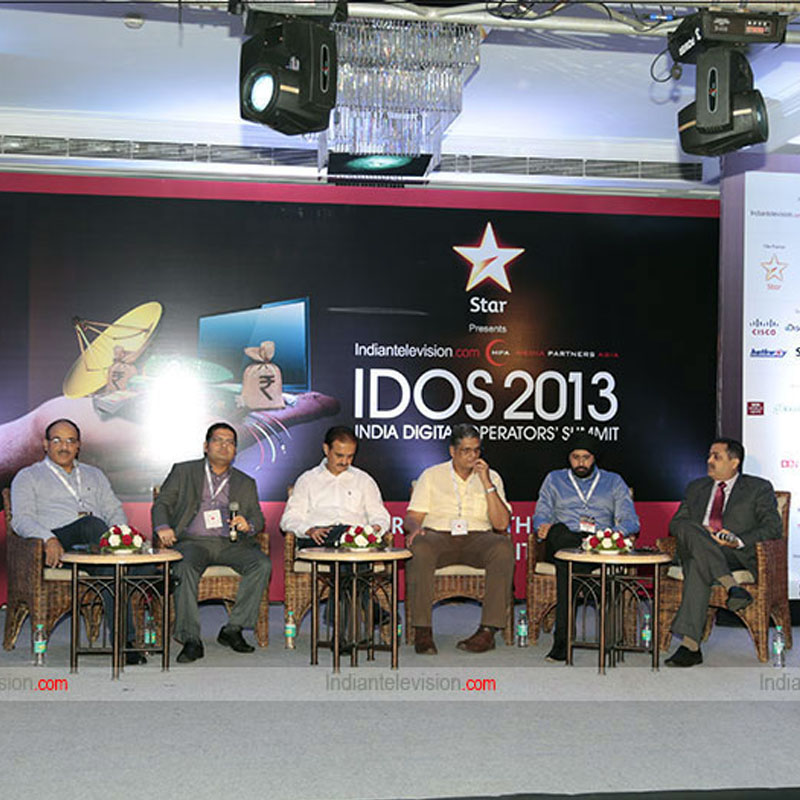
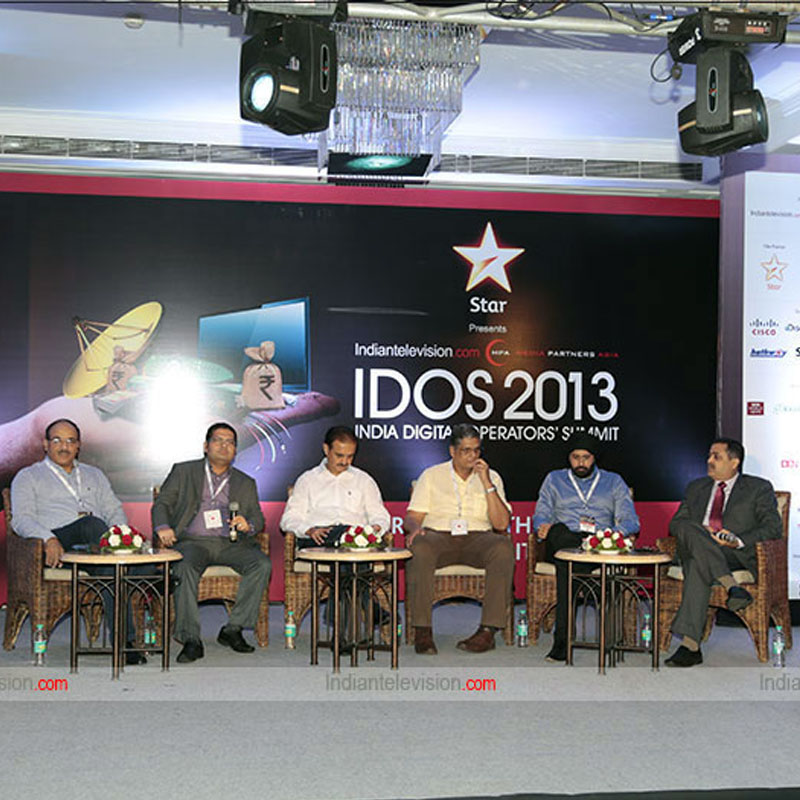
    GOA: With phase I and phase II on the cusp of completion, what are the lessons the digitising cable TV ecosystem has learned from their efforts? And how can this be put to use when industry moves into phase III and phase IV? This was the focus of the last session of the well-attended (it was houseful even on day two) IDOS 2013 in Goa.

    DEN Networks CEO SN Sharma said that his cable TV network was willing to take the punt and had enough investment to push into the territories it was targeting. “It won’t be easy but we are totally committed to doing it. Additionally, a lot of phase II was also done by local MSOs.  We see consolidation. In UK it happened. Five MSOs consolidated and are feeding around 90 per cent of the population there.”

    Hathway president Milind Karnik said that the last mile owner in many parts of phase III and phase IV has already upgraded and has awareness of and has already done some upgradation of infrastructure. “They will form cooperatives and consolidate and do what is needed. We too are going to move ahead forging relationships with local cable operators there, apart from serving some communities with our own headends.”

    Telecom Regulatory Authority of India (TRAI) principal advisor N Parameswaran said: “We expect like the telecom sector there will be some sharing of infrastructure.  We have learnt from phase I and phase II and there are many things we could have done better and will put those learnings in practice. There has to be some hygiene brought in terms of transparency and every other part of the process. Bill has to be generated to the subscriber. Service has to be provided. There will not be any looking back after that.”

    He urged MSOs and other players to understand that the dividends from phase I and phase II will start coming in with the addition of broadband delivery to subscribers. He further said a model has to be worked out between the MSOs and LCOs and TRAI would facilitate that.

    Also, in the wake of the continued depreciation of the Indian rupee against the dollar, the MSOs and LCOs feel that the government should give some subsidy to local manufacturers who are interested in setting up local units in the county to give a fillip to the industry.

    “We have got to come together. It has to be done together to resolve all the issues,” said Indian Broadcasting Foundation secretary general Shailesh Shah.

    Shah further added that the stakeholders would have to think how they can go deeper while addressing infrastructure problems. Carriage issue would also get resolved in a phased manner.

    Magnaquest CMO Ramakrishna Mashetty felt the landscape for the next phase of digitisation is different as compared to phase I and II as the cities are fragmented and low markets are there in the chart. “Most of the LCOs and market are unorganised,” he said.

    Telecom and Media lead analyst Rajiv Sharma said if the digitised headends start delivering incremental revenues in terms of services and ARPUs go up, return on investment (ROI) will improve. “Lot of external foreign investors are watching the space carefully,” he stated, adding that this imperative that some element of broadband be built in to the set top box so that the incremental revenues start accruing very quickly.

    Chrome Data Analytics & Media founder and MD Pankaj Krishna said the campaign in phase III and IV would be different. “The first two phases communicated and played on the principle of fear of blackout for consumers. The communications to the consumer during the third and fourth phase should focus on the benefits that a box can provide to users.”

    Parameswaran also addressed the issue of entertainment tax. “We have been working on understanding taxation levels which are a state subject versus a federal TDS or income tax,” he said. “But we are not averse to once again address this issue.”

    But what added spark to the panel discussion was the disclosure that the ministry of information and broadcasting was working with the department of telecommunications and MSOs to enable them to use already existing government and other infrastructure to help them as things start moving into phase III.

    The other good news is that bills – especially in Delhi – are slated to go out to subscribers in October, and online bills will follow later but interests of the LMO will be kept in mind.

    Parameswaran had the final word. Said he: “Digitisation will go ahead as planned. We are totally committed to it.”

  • TRAI directed not to implement ad cap for music channels

    TRAI directed not to implement ad cap for music channels

    NEW DELHI: The Telecom Regulatory Authority of India (TRAI) was today directed not to take any coercive action against four music television channels with regards to ad cap.

    Telecom Disputes Settlement and Appellate Tribunal (TDSAT) member Kuldip Singh after hearing counsel Kunal Tandon directed the matter to come up for further hearing on 21 October.

    The petitions were filed on behalf of Mastiii (owned by TV Vision, Mumbai), B4U, 9X Media, M Tunes HD and Music Xpress.

    Earlier, TDSAT had accepted a similar petition by the News Broadcasters Association (NBA) which challenged the constitutional validity of the regulations of TRAI enforcing the ad cap. That petition has been listed for hearing on 11 November.

    The Tribunal said while the channels will maintain weekly records of the advertising time per hour on a weekly basis, they will not be required to submit this to the regulator. Unlike the current practice, the records will only be submitted to TDSAT at the time of the hearing of the case.

    At that time, Counsel A J Bhambani for the NBA had said that a delegation of the Indian Broadcasting Foundation (IBF) had submitted a formula to the regulator but that did not preclude the broadcasters from challenging the validity of the regulations.

    He also said that this was only a compromise reached between the broadcasters and the regulator and could not form the basis of penal action since it was not a regulation or legal provision.

  • IDOS 2013 to kick off in Goa on 27 Sep

    IDOS 2013 to kick off in Goa on 27 Sep

    MUMBAI: The countdown to the ninth edition (and second under its current
    nomenclature) of the annual India Digital Operators Summit (IDOS) has begun with the two-day event kicking off tomorrow at The Leela in Goa.

    A joint initiative of the Indiantelevision.com Group and Media Partners Asia, the summit will discuss and debate the hot-button topic of the digital television opportunity in India, what with the implementation of Phase II of digitisation nearing completion in three major metros – Delhi, Kolkata and Mumbai and in another 38 cities all over India.

    IDOS 2013, themed ‘Harvesting the fruits of digitisation’ will highlight pertinent issues faced by industry and offer valuable insights into how other key Asian markets have succeeded in their digital transition.

    Participants include leaders from regulatory, cable distribution, DTH, broadcast, TV distribution and technology segments as also content providers and investors in the broadcasting and pay TV industries.

    Flagging off the summit will be Indiantelevision.com Group founder, CEO and Editor-in-Chief Anil Wanvari, who will share the vision behind the event. Following suit will be Media Partners Asia executive director Vivek Couto with a presentation on India’s digital TV ecosystem and lessons learnt from other global markets.

    Day one’s inaugural session titled ‘Opening Keynotes and In Conversation’
    will discuss how digitisation is no longer a goal but the means to a critical end, where national economic benefit, advanced infrastructure and content democratisation converge to create a win-win for all. The panelists include TRAI principal advisor N Parameswaran, DEN Networks chairman & MD Sameer Manchanda, Tata Sky CEO Harit Nagpal and Star India president & general counsel Deepak Jacob. They will share their views on the progress so far in Phase II of digitisation. The session will be moderated by Couto and Wanvari.
        
    The second session, ‘Cable 2.0 – Profits across the pipe’ will see leaders across the cable and distribution industry share insights into the key challenges faced by industry as it moves into billing, tiering and rolling out of new services. The session will be moderated by NDTV head-affiliate sales & network distribution Rahul Sood while the panellists include Hathway Cable and Datacom MD & CEO Jagdish Kumar, Den Network CEO S N Sharma, HSBC Securities lead analyst – telecom & media Rajiv Sharma, Media Pro COO Gurjeev Singh Kapoor, Digicable MD & CEO Jagjit Singh Kohli, SITI Cable Network ED & CEO VD Wadhwa and Indiacast Group COO Gaurav Gandhi.

    Next up, ‘DTH – Driving the value equation’, will be moderated by Couto with panelists including Dish TV India’s Gaurav Goel, Videocon D2H CEO Anil Khera, Kotak Securities senior analyst Amit Kumar and Macquarie Capital Sr
    VP Ausang Shukla. The session will seek to answer the question: What are the key catalysts for the next phase of DTH’s value creation story?

    Titled ‘The business of specialised and premium channels’ and powered by BBC World News, the fourth session will study the proliferation of niche channel launches. To be moderated by BBC Global News COO – Indian Operations Preet Dhupar, the participants include Viacom18 SVP & GM – English Entertainment Ferzad Palia, Discovery Networks Asia-Pacific SVP and GM -South Asia Rahul Johri, FoodFood promoter & director Sanjeev Kapoor, Disney UTV Media Networks MD MK Anand and HBO India MD Monica Tata.

    This will be followed by a session on ‘HD as a mass driver for distribution platforms’ chaired by Castle Media director Vynsley Fernandes along with Videocon D2H deputy CEO Rohit Jain, Times Television Network CEO – English Entertainment Channels Ajay Trigunayat, Dolby Laboratories India country manager Pankaj Kedia and Chrome Data Analytics & Media founder & MD Pankaj Krishna.

    The next session, ‘Hidden gems riding the digital wave’ will look at how on the back of digitisation, distribution majors (MSOs and DTH) hold the promise to create ample value. The panelists include What’s-On CEO Atul Phadnis, Amagi Media Labs co-founder Srinivasan K A and Cisco Sr. business development manager – APAC Fabien Gauthier with Castle Media director Vynsley Fernandes as moderator.

    Day one’s closing session, ‘New media monetisation’ will discuss how Hindi GECs and youth channels are increasingly making content available across newer media platforms. Chaired by Wanvari, the discussion will see participation from Zenga TV CTO & MD Shabir Momin, IBM India ED & partner Raman Kalra and Exset global head – sales and marketing Rahul Nehra.
        
    Day two will start with a presentation on ‘Sports & Pay-TV – The Path to Value Creation’ by Couto followed by a Q&A session. The Last mile operator community will be represented by a presentation by Maharashtra Cable Operators Federation head Arvind Prabhu, who will talk about their role in a digitised ecosystem.

    The closing session ‘Driving digitisation deeper’ will be moderated by Wanvari and Couto and will analyse how action is going to shift next to India’s heartland which houses nearly 70-80 million TV homes among other key issues. The panellists include DEN Networks CEO S N Sharma, Hathway Cable and Datacom MD & CEO Jagdish Kumar, TRAI principal advisor N Parameswaran, Indian Broadcasting Foundation secretary general Shailesh Shah, Chrome Data Analytics & Media founder and MD Pankaj Krishna, Founder & MD, Magnaquest CMO Ramakrishna Mashetty and HSBC Securities lead analyst – telecom & media Rajiv Sharma.

    “As organizers of IDOS, our aim is to provide unity and strategic vision to drive forward digitalization and bring new value, profit and sustainable growth across the television ecosystem,” read a joint statement by Indiantelevision.com group founder Anil Wanvari executive director and cofounder Media Partners Asia Vivek Couto.

    “The next year is critical as the cable industry steps up on its B2C execution with billing, tiering and subscriber management,” added VivekCouto.”IDOS will explore the issue of co-operation with last mile local cable partners to create a valuable ecosystem for the consumer; one in which differentiated content, customer service and value added offerings are at the highest level. That will be worth paying more for and will drive ARPUs higher.”

    “It’s an important evolution,” said Wanvari, “as it helps scale and grow the cable industry and enables broadcasters and content providers gain the ROI they so desperately need to invest. It also eases the burden on the DTH sector and provides effective competition at the ground and consumer level And the entire evolution gives the regulators to mull over deregulating pricing.”

    *IDOS 2013 is powered by Star India, while summit partners include Discovery Channel, Dolby, CISCO, Hathway Cable and Datacom, SES, and Videocon d2h. The associate partners are BBC World News, Exset, Indiacast and Media Pro. 24 Frames is the webcast partner.

  • TRAI gives final deadline for filling CAFs, SMS

    TRAI gives final deadline for filling CAFs, SMS

    New Delhi: Multi System Operators (MSOs) can now collect duly filled consumer application forms (CAFs), along with choice of channels and services and entry of complete details in their subscriber management systems (SMS) in 38 cities covered under phase-II of DAS implementation, by 15 November.

    Extending the deadline, the Telecom Regulatory Authority of India (TRAI) said ‘this is the last and final extension.’ The earlier deadline set by TRAI was 20 September. 

    A meeting was held in TRAI with leading MSOs on 25 September to review the progress in this regard. The authority observed that there is still substantial pendency on this account. The MSOs cited the enormity and complexity of the task involved as the prime reason for the pendency and requested for an extension in the time -line for completion of the task. 

    The extension is being given to achieve full coverage by 15 November, and ‘with a view to minimise consumer inconvenience that could result from MSOs disconnecting set top boxes immediately’.

    Consumers were requested by TRAI to cooperate and submit the CAFs, complete in all respect, to the respective cable operator/ MSOs in accordance with the revised deadline of 15 November, as ‘this is truly the very last opportunity’.

    In event of failure to do so, MSOs will have no option but to switch off the signal to those consumers who have not submitted their CAF, otherwise such MSOs would be in breach of the law.

  • TRAI notifies draft DAS tariff & interconnect rules

    TRAI notifies draft DAS tariff & interconnect rules

    NEW DELHI: The Telecom Regulatory Authority of India (TRAI) has made life a little simpler for MSOs. Last weekend (20 September 2013) it notified the amendments to interconnection regulations applicable for Digital Addressable Systems (DAS) and also to the tariff order for DAS the drafts of which it had released for industry consultation on 4 June 2013. 

    It has some further changes following industry feedback. Amongst these include: 

    * The removal of the minimum channel carrying capacity of 500 channels for MSOs.

    * It has clarified that subscribers can either opt for channels on a-la-carte basis or bouquet or combination of both, as per their choice. 

    * It has disallowed MSOs from seeking a channel from a broadcaster while at the same time seeking carriage fees from it. 

    * It has forbidden MSOs from charging placement fees. 

     The amendments in the Telecommunications (Broadcasting and Cable) Services (Fourth) (Addressable) Systems) Tariff (Second Amendment) Order 2013 modify the ‘twin conditions‘ that regulate the a-la-carte rate of channels vis-a-vis the bouquet rates at retail level protecting subscribers’ interests. It also clarifies the position that subscribers can either opt for channels on a-la-carte basis or a bouquet or a combination of both, as per their choice. 

    Considering the fact that the operators would be required to make appropriate changes, both in pricing and packaging, the Authority has decided to make the ‘twin conditions’, prescribed through this tariff order mandatory with effect from 1 January 2014. However, during the period from the notification of this tariff order till 31 December 2013, operators would be required to offer channels, complying to either of the two conditions, specified in the ‘twin conditions’. 

    The operators are, however, free to make their offering, complying to the ‘twin conditions’, if they wish to do so before 1 January 2014. 

    Further, in case a channel forms part of more than one bouquet then the above conditions will have to be satisfied for all such bouquets. Further, if the operator offers discounts to its subscribers on bouquet rates, the above said ‘twin conditions’ should also be satisfied with such discounted bouquet rates. 

    Therefore, the Authority felt it appropriate to extend the a-la-carte provisioning of channels to cover both the FTA and pay channels carried over the network of an operator.

    Accordingly, vide the tariff amendment order dated 30 April 2012, it was mandated that every operator providing services to its subscribers using an addressable system shall offer or cause to offer all channels, whether pay or FTA, offered by it to its subscribers on a-la-carte basis. In sync with this provision, the word “pay” has been deleted from the heading of clause 6 and also from the clause 6(2) of the principle Tariff order dated 27 July 2010. With the removal of word ‘pay’, an operator can specify a minimum commitment period, not exceeding three months for both ‘pay’ and ‘FTA” channels, subscribed on a-la-carte basis. 

    The TRAI has noted that “it has been observed that, some of the DTH service providers have been imposing pre-condition for subscribing to a particular bouquet before add-on-bouquets and/or a-la-carte channel(s) can be subscribed. The Authority is of the view that such conditions are unreasonable and the consumer should be free to choose any combination of the channel(s) or bouquet(s) offered by the operator. In the tariff amendment order dated 30 April 2012, a provision was made which allowed the DAS subscriber to subscribe to basic service tier or basic service tier and one or more pay channel or only free to air channels or only pay channels or pay channels and free to air channels at his option i.e. consumer is free to choose any combination of the channel(s) or bouquet(s) offered by the operator. 

    Accordingly, sub-clause (4) of clause 6, applicable for addressable platforms other than DAS, has been suitably amended and a proviso has been added to bring in parity amongst various addressable platforms as well as to ensure that consumers of these platforms are on equal footing. 

    The Interconnection Regulation applicable for DAS has the following safeguards with regard to charging of carriage fee: carriage fee to be transparently declared in the RIO of the MSO; the carriage fee is to be uniformly charged; the carriage fee not to be revised upwardly for a minimum period of 2 years, and the details of the carriage fee are to be filed with the Authority and the Authority has a right to intervene in cases it deems fit. 

    The Authority has decided that the phrase “having the prescribed channel capacity” appearing in sub-regulation 3(2) of the Telecommunication (Broadcasting and Cable Services) Interconnection (Digital Addressable Cable Systems) Regulations 2013  should be deleted as the same will have no relevance with the deletion of the minimum channel carrying capacity criteria from the regulations.

    For the time being, the Authority has decided not to specify the capacity to carry a minimum number of channels by the MSOs, on the expectation that market dynamics will take care of the emerging situation. However, in the event the Authority notices that the market dynamics are not allowed to function freely by the service providers, resulting in creation of an artificial capacity constraint, it will intervene appropriately. 

    Analysing the issue of placement fee, TRAI has noted that the DAS technology provides for an Electronic Programme Guide wherein the channels being carried on an MSO’s network can be arranged in a simple, easy to understand, manner so that the subscriber can easily go through this guide and select the channel of his choice instead of flipping through all the channels.

    The genre-wise display of channels in the EPG, where all the channels of a particular genre are listed under relevant genre, has been mandated through regulations. Moreover, in digital systems, signal quality of the channels is independent of the placement of the channel. 

    Further, the Interconnection Regulation already has a provision (sub-regulation 3 (11)) that if an MSO, before providing access to its network, insists on placement of the channel in a particular slot or bouquet, such precondition amounts to imposition of unreasonable terms. Thus, adequate provisions already exist in the regulations. Accordingly, sub-regulation 11A of regulation 3 of the interconnection regulation has been deleted. 

    The amendments follow a judgment of the Telecom Disputes Settlement and Arbitration Tribunal and a consequent fresh consultation paper by TRAI and reactions on it from stakeholders. 


  • Former I&B Secretary proposes fresh study into ad cap

    Former I&B Secretary proposes fresh study into ad cap

    NEW DELHI: It’s been a month and more since former Information & Broadcasting secretary Uday Kumar Varma relinquished his post to Bimal Jhulka. But you can’t get broadcasting  out of Varma’s blood. After all he and his team in the I&B almost single handedly forced a fragmented cable TV sector and a disbelieving television ecosystem to follow the government mandate for digitsation.  

    Now the former secretary has proposed that with the onset of digitisation, it is  possible for the Telecom Regulatory Authority of India (TRAI) to get all the data needed for a fresh look at the 12 minute ad cap which the regulator had mandated earlier this year.
    Uday Kumar Varma

    Speaking exclusively to indiantelevision.com Varma said  that the Telecom Disputes Settlement & Appellate Tribunal (TDSAT) has stayed the implementation  of the ad cap on news channels, and the TRAI should use this time to conduct a study on how much time is being devoted to advertising by the various television channels and determine how much can and should actually be devoted by them.  He stated that the regulator should be able to complete a thorough study in two or three months.

    Varma said that while the ad cap was sought to be enforced in view of the provisions of the Cable Television Networks (Regulation) Act 1995, the situation had changed considerably since with a much larger number of television channels than previously anticipated.

    He felt the 12-minute ad cap was in any case arbitrary as it was based on the experiences in other countries rather than in the Indian context.

    He agreed that there were some channels – particularly regional language ones – which aired up to 30 minute per hour of ads, but pointed out that the new regime under digitisation afforded TRAI the freedom to study the issue afresh.

    He said a method had to be found to enforce whatever ad cap is decided upon finally, since many channels are not members of either the News Broadcasters Association or the Indian Broadcasting Foundation. Even otherwise, he said all broadcasters were not on the same page on this issue.

    Asked about the demand that the ad cap be put off to December 2014 by when the entire country would have gone digital, Varma declined to comment as he said the matter was before the TDSAT.

    Merger of Phase III and IV of DAS

    On the topic of the merger of Phase III and IV of the digitisation process, Varma said it had been found this would work better since towns and rural areas in these two phases come under the jurisdiction of district collectors, and management would be easier.

    The merger would also give more time to stakeholders to put their infrastructure in place.

    Analogue Switch-off Justified

    Meanwhile, Varma said he stood by the decision to switch off analogue transmissions when resorting to digital addressable systems.

    He further added that permitting the co-existence of  both analogue and DAS, as had been done in the United States or the United Kingdom, would have led to a ‘warped policy’ in a country like ours.

    Digitisation should be seen as a means to make the broadcasting sector more transparent and give a better choice and viewing experience to the consumer, he said, adding that it  had also led to greater investments from India and overseas.

    The very fact that subscribers, who have switched over to DAS were not complaining and there were many others opting for the new system, meant the average Indian had become more conscious of what they were watching on TV.

    Affordability is not a major issue as those who have not yet bought digital set top boxes ‘will do so without being coerced’ once they see the advantages in terms of quality of picture, services, and value added services that may follow.

    Varma felt the method of collection and sharing of subscription fees too is undergoing a major change, and the consumer will be able to see the benefits of this. Furthermore, carriage fees charged by cable TV operators and MSOs had also come down and this would be reflected in the fee they charge subscribers.

    Varma believes that even the rural TV viewer will be in a position to partake of the fruits of cable TV digitisation. He pointed out that fatter wallet subscribers in metros and cities who will be paying  for value-added services and other benefits  will, in a sense, subsidise the rural consumer who is not so rich.

    As the adage goes, take from the rich to feed the poor. Even in television!

  • Lex Witness Presents The 2nd Annual Edition of Media, Advertising & Entertainment Legal Summit

    Lex Witness Presents The 2nd Annual Edition of Media, Advertising & Entertainment Legal Summit

    Lex Witness- India’s 1st Magazine on Legal and Corporate Affairs today hosted a well-conceptualized The 2nd Annual Edition of Media, Advertising & Entertainment Legal Summit (MAELS) 2013 at Hotel Le Mridien in New Delhi. The daylong summit saw over a 100 proficient industry veterans including media professionals, Law Firm partners and teams, In House Counsels and stakeholders engaging in an interactive discussion on increasing business complexities being faced by the Media, Advertising and Entertainment sectors rising due to changes in and regulations.


    In an official message sent for the initiative;


    Kapil Sibal, Honble Minister of Law and Justice, shared that the Indian Media, Advertising and Entertainment industry plays a pivotal role in India’s economic growth through its magnificent channel of reach. However, the industry has been subject to various strides of regulations which affect the businesses and require discussions and debates to understand their impact. Further Mr. Kapil Sibal conveyed his greetings and best wishes for the success of the Summit.


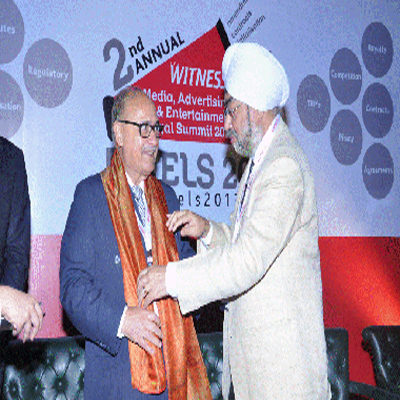
    With all the media and legal professionals under one roof, Mr. Amarjit Singh Chandhiok, Additional Solicitor General of India felicitated Dr. Lalit Bhasin, President, SILF; for his outstanding contributions to the legal industry of India. Mr. Bhasin is one of the most respected authorities on legal matters in India and has recently completed 50 years as a successful personality in the fraternity.


    Over the past few years, the alignment of entertainment, information and telecommunication have increasingly affected India’s Media, Advertising and Entertainment business. According to the latest CII-PwC Industry report, release on 13th Sept 2013, India’s Entertainment & Media sector is expected to exceed INR 224,500 Cr growing at a CAGR of 18% from 2012 to 2017. However, despite of the growth patterns the M&E fraternity is witnessing various regulations and grey areas in the law revealing a different set of challenges to its members.


    Lack of clarity on the practical and commercial implications of the amended Copyright Act 2012, absence of direction on the issue related to royalty, its payment and distribution has left all the industry in a state of perplexity. Also, the regulatory changes have made it difficult for the existing business ecosystems to sustain with Telecom Regulatory Authority of India’s (TRAI) ad cap mandate, high carriage fees and below par subscription revenues. Furthermore, the process of regulation regarding content and over objectionable advertisement for TV, Radio and Internet too falls under grey area and has no apex body to monitor or dictate guidelines.


    Speaking on the occasion, PBA Srinivasan, Editor-in-Chief, Lex Witness said, Though the Indian media and entertainment industry is eyeing robust growth, yet there are legal challenges affecting the big business. Areas like contract management and arbitration in media fraternity, Technological and IPR issues associated with entertainment and advertising sectors require special attention.


    The summit gave a stage to all the panelists to share their expert viewpoints on implications of The Copyright Amendment Act 2012, its impact on business due to Royalty Payments, Change in Tax Laws, Business and Legal solutions for Performers, Authors, Producers, Broadcasters and Content Aggregators, Regulation of content and Advertisement Perspective and views from Regulators, Current challenges and issues, Proposed amendments to Cinematograph Act and impact, Carriage and Distribution Regulation Revenue squeeze with ad caps, Resolution on current differences between LCO, MSO & Broadcasters, Competition Act Implication for Media and Entertainment Industry, Contracts and Dispute Resolution, Arbitration Clauses and Industry Practices and other regulations passed.


    The expert speaker’s panel at MAELS 2013 included, Vir Sanghvi, Member, BCCC Shailesh Shah, Secretary General, IBF Nishith Desai, Founder & Managing Partner, Nishith Desai Associates Amarjit Singh Chandhiok, Additional Solicitor General of India, Supreme Court of India Vineet Magan, Regional Tax Manager, BBC Gowree Gokhale, Partner, Nishith Desai Associates Abhishek Malhotra, Partner, TMT Law Practice Avnindra Mohan, President (Legal & Regulatory), Zee Network Ajay Thomas, Registrar, LCIA India Amit Arora, Executive Vice President, IndiaCast Media Distribution Private Limited Narayan Ranjan, Chief Financial Officer, Viacom 18 Anil Lale, Associate Vice President Legal, Viacom 18 Lalit Bhasin, President, SILF Preet Dhupar, CEO, BBC Zameer Nathani, Head Legal, Balaji Telefilms Limited and Balaji Motion Pictures Limited Ayan Roy Chowdhury, Senior Manager Legal, Sony Entertainment Television Rajesh Simhan, Head International Tax Practice, Nishith Desai Associates Ashish Chandra, Head Media & Technology, Reliance Industries Rajiv Khattar, President Projects, Dish TV M.M. Sharma, Head-Competition Law and Policy, Vaish Associates Advocates Kunal Rajpal, AVP Legal & Secretarial, Viacom 18 Kaushik Moitra, Partner, TMT Law Practice


    Commenting on the significance of the Summit, Shyam Grover, Group Editor & CEO, Lex Witness said, The Indian Media & Entertainment industry is essentially being driven by augmented digitization, growth of regional media and emergence of new media for content virality. But at each stage, the industry is facing challenges affecting their future growth. MAELS 2013 is our attempt to bring the thought leaders together to interact and confer on these issues and develop their legal and business response strategies.


    The 2nd Annual MAELS 2013 initiative was supported by IBF as Principal Partner, SEPC as Official Summit Council, TMT Law Practice as Gold Partner, Nishith Desai Associates as Legal Partner, Vaish Associates Advocates as Associate Partner, Deepak Sabharwal & Associates as Kit Sponsor, Blackpen LCC as Litcom Partner DMAI, SILF, LCIA India, ICCA as Fraternity Partners, Ad Gully as digital Partner, Lawyers Club India as Online Media Partner and Indian Law Journal, Indian National Bar Association, NAI Press, IOD as Supporting Partners.
  • TRAI Open House: Aggregators given another week to respond

    TRAI Open House: Aggregators given another week to respond

    NEW DELHI: Television aggregators were today given a period of one week to give any recommendations they may have on the regulations relating to them issued earlier by the Telecom Regulatory Authority of India (TRAI).

    At an Open House that was well-attended, TRAI Chairman Rahul Khullar said any stakeholder wanting to give views in writing may do so within a week.

    Around 200 persons representing all stakeholders were present at the meeting, and put forth their views. While a majority said there was need for regulations, many felt that TRAI needed to fine-tune the regulations. MediaPro CEO Arun Kapoor, Dish TV’s Jawahar Goel, legal representatives of Airtel, Reliance, IndiaCast, apart from cable operators such as Vicki Choudhary, Roop Sharma, Money Oberoi were present at the open house.

    Khullar had TRAI Advisers N Parameswaran and Wasim Ahmed and other senior officials also present in the house.

    According to TRAI spokespersons, the discussions were frank and free and a final view would be taken after written representations are received.

    An aggregator attendee at the open house said that it was apparent from Khullar’s body language that he was not too happy with the state of affairs in the aggregation business today.

    Says he: “Khullar made three or four very important observations. The first is that aggregated bouquets of channels owned by rival bouquets creates a monopoly situation which is not a healthy one and needs to be addressed. Second: he recognised that the networks like Star, Zee, Sun, Network18 own channels across several corporate entities as licence holders and this needs to be considered. Third: smaller broadcasters and networks could face problems in distribution across the vast Indian cable TV landscape and this also should be borne in mind. Finally, he acknowledged that aggregation can help keep prices in check on account of bulk discounting”

    Adds another attendee: “Change is something that Khullar wants to bring in. We expect some change; the clout that aggregators enjoy is not something that the regulator wants to see continuing. He clearly wants aggregators to be brought under control. We are reading the writing on the wall, and we are readying for the change. How we manage this change is something we have to deal with.”

  • TRAI recommends guidelines for TV ratings agencies

    TRAI recommends guidelines for TV ratings agencies

    MUMBAI: The Telecom Regulatory Authority of India (TRAI) is once again showing it means business. It has come out with its final recommendations on what should serve as guidelines to put in place a transparent, credible and reliable television ratings process in India. These recommendations have been made after the consultation paper which was first issued by the authority on 17 April 2013. The consultation paper had then called for comments from various stakeholders after which an open house was held on 1 July.

    The problems surrounding the television rating system was raised by the Information & Broadcasting Ministry (MIB) in January 2008. It was then that the authority recommended the adoption of self regulation through the industry led body The Broadcast Audience Research Council (BARC).

    Based on these discussions with the various stakeholders, the TRAI has come up with its own analysis and recommendations which were made public today.

    Amongst the recommendation is that the MIB has to notify the guidelines for regulating television rating agencies based on TRAI‘s recommendation within two months. Any agency wanting to offer TV viewership monitoring or rating services has to perforce get itself registered with the MIB if it fulfills the following guidelines: The rating agency shall be set up and registered as a company under the Companies Act, 1956; any member of the board of directors of the television rating agency should not be in the business of broadcasting/ advertising/advertising agency; the rating agency should have a minimum net worth of Rs 20 crore; the rating agency should also meet the prescribed cross-holdings requirements.

    TRAI has said that to keep the ratings process credible, there should be a minimum of 20,000 panel homes which have to be set up within six months of the guidelines being implemented. Thereafter the number of panel homes has to be increased by 10,000 every year until it reaches 50,000.

    It has recommended that it be mandatory for the industry to observe a voluntary code of conduct for maintaining secrecy and privacy of panel homes and that data and reports should be made available to all stakeholders in an equitable manner on a paid basis.

    Also no single company/ legal entity, either directly or through its associates or inter-connected undertakings, should have substantial equity of 10 per cent or more holding in both rating agencies and broadcasters/advertisers/ advertising agencies.
    TRAI says that ratings agencies will be penalised if they fail to follow the guidelines on cross-holding, methodology, secrecy, privacy, audit, public disclosure and reporting requirements. A penalty of Rs one crore will be levied in the first instance; the second instance will lead to the cancellation of registration.

    For other guidelines, the penal provisions shall be a graduated financial penalty of Rs 10 lakh to Rs one crore for the first three instances of non-compliance and, for the fourth instance, cancellation of registration.

    However, TRAI says an opportunity should be given to each party before invoking any penal provisions. Once guidelines for rating agencies are issued by MIB, these will have to be equally complied by all rating agencies including new entrants.

    In keeping with the fact that the existing rating agency (TAM Media) may require some time for complying with the guidelines, the authority has given it six months to allow it to meet the cross-holding and panel size requirements guidelines.

    It says that it would like industry to implement these recommendations and to show that it means business it says it will suo motu intervene in the larger public interest if the former does not comply.

    Obviously, TRAI is trying its hardest to change the paradigm of TV ratings. Will Indian industry pay heed?

    Click here for the complete final recommendation