Tag: Trai

  • 87% drop in complaints against VAS after regulations: TRAI

    87% drop in complaints against VAS after regulations: TRAI

    NEW DELHI: There has been a decline of around 87 per cent in the number of complaints made against wrong activation of value added services (VAS) like mobile internet and caller tunes since July.

    The drop has been witnessed after the Telecom Regulatory Authority of India (TRAI) issued directives to operators for putting an end to such practices.

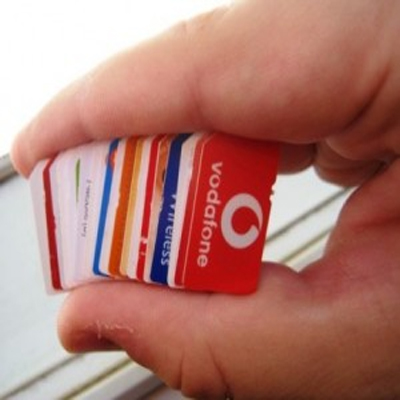
    On 10 July, TRAI issued directives to telecom operators to take double confirmation from consumers before activating VAS and refund money of subscriber if the complaint is made within 24 hours for services that are valid for more than a day and six hours if a service is valid for a day.

    Under the rules, consumers can register complaints about wrongful activation of VAS on a toll-free common number, 155223, irrespective of the network they use.

    The regulator observed that total number of complaints received for VAS almost halved from 1,85,468 in July to 95,510 in August.

    The VAS activation on mobile network also came down by about 57 per cent from about 70 million in June – when rules were not in place – to 30 million in July.

    The data did not incorporate details of state-run BSNL, Sistema Shyam, Videocon and Punjab based Quadrant. 

  • Broadband base up in July, with monthly growth at rate of 0.33%

    Broadband base up in July, with monthly growth at rate of 0.33%

    NEW DELHI: The total Broadband subscriber base in the country has increased from 15.19 million at the end of June 2013 to 15.24 million at the end of July 2013. This is a monthly growth of 0.33 per cent. The yearly growth in broadband subscribers is 3.79 per cent during the last one year (July 2012 to July 2013).

    The top five internet service providers in terms of market share (based on subscriber base) are: BSNL (9.97 million), Bharti Airtel (1.43 million), MTNL (1.10 million), Hathway (0.37 million) and You Broadband (0.32 million).

    According to the latest telecom subscription data as on 31 July 2013 released by the Telecom Regulatory Authority of India, there are 161 internet service providers (ISPs) which are providing broadband services in the country. Out of these, 121 ISPs (having 98.48 per cent market share) have provided broadband subscription data for the month of July 2013, for the rest of the ISPs data from previous month has been retained.

    Meanwhile, Indian rural telecom has faced downturn – despite service providers’ special packages – as mobile user base declined by two million in July 2013. TRAI said net mobile additions declined 0.57 per cent or by 2 million to 349.09 million from 351.10 million in June.

    In July – according to TRAI data – Indian urban mobile user base increased by 3.52 million or 0.67 per cent to 525.78 million from 522.27 million in June.

    The share of urban wireless subscribers has increased from 59.80 per cent to 60.10 per cent whereas share of rural wireless subscribers has decreased from 40.20 per cent to 39.90 per cent.

    TRAI statistics says total wireless subscriber base increased from 873.36 million in June to 874.88 million in July 2013, registering a monthly growth of 0.17 per cent. The overall wireless Teledensity in India has reached 71.13 per cent in July from 71.08 per cent of previous month. Wireless subscription in urban areas increased to 525.78 million in July.

    The urban wireless teledensity has increased from 139.16 to 139.87 whereas rural teledensity has decreased from 41.14 per cent to 40.88 per cent.

    Wireline subscriber base declined from 29.73 million in June 2013 to 29.58 million in July. The net reduction in wireline subscriber base was 0.15 million at the rate of 0.50 per cent.

    The share of urban subscribers has decreased from 78.11 per cent to 78.0 per cent whereas share of rural subscribers has increased from 21.89 per cent to 22.0 per cent. The overall wireline Teledensity has decreased from 2.42 per cent in June 2013 to 2.40 per cent in July 2013, with urban and rural Teledensity being 6.14 per cent and 0.76 per cent respectively.

    BSNL and MTNL, the two PSU operators hold 78.65 per cent of the Wireline market share.

  • TRAI should reconsider Spectrum Trading, says DoT

    TRAI should reconsider Spectrum Trading, says DoT

        
    NEW DELHI: A Department of Telecommunications (DoT) committee has for the present turned down any proposal to permit spectrum trading.

    In a report to the Telecom Commission, this Committee has however admitted that this finds place in the National Telecom Policy (2012). It has said there is need for a more holistic view on the matter to prevent ‘some unintended consequences’.

    It feels that the Telecom Regulatory Authority of India (TRAI) should be asked to give a detailed recommendation in this regard. At present, only right-to-usage of spectrum is auctioned and the legal framework under which it can be treated as transferable and tradable in whole or part needs to be prepared, the Committee added.

    According to the report, any Presidential Reference on this issue should be in conformity with the Supreme Court order in the 2G spectrum allocation case.

    The Committee says there is need for assessment of market sale of spectrum. This would assume more importance in merger and acquisition (M&A) cases, for assessment of the fair value of spectrum, where the entire business might be taken over as a going concern along with the spectrum, without separate determination of the price. It should also have provisions to curb fly-by-night operators entering for only trading benefits.

    Earlier, the DoT had sought TRAI’s views on the conditions and timing for allowing trading of what got through auction, the quantity for trading by an operator, revenue payable and the legal, regulatory and technical framework. This followed a recommendation by Planning Commission Deputy Chairman Montek Singh Ahluwalia to Communications and Information Technology minister Kapil Sibal to allow trading of spectrum. The matter was also discussed in a meeting of the Empowered Group of Ministers (EGoM) on telecom headed by Finance Minister P Chidambaram.

    The DoT committee has said TRAI should reconsider sharing of spectrum. Guidelines are to be finalised for the sharing of spectrum in accordance with the TRAI suggestion on a spectrum management and licencing framework. However, the present recommendation for a flat spectrum usage charge would impact the previous recommendation, it felt.

  • More regional TV channels join the petition in TDSAT against the TRAI adcap

    More regional TV channels join the petition in TDSAT against the TRAI adcap

    NEW DELHI: Some more channels today joined the large number of news and general entertainment channels whose matters challenging the issues relating to the adcap sought to be implemented by the Telecom Regulatory Authority of India (TRAI) will be heard by the Telecom Disputes Settlement and Appellate Tribunal (TDSAT) on 31 October.


    Member Kuldeep Singh of TDSAT tagged along with the other cases those by Eenadu group of Andhra Pradesh and the Sarthak Entertainment group of Odisha.


    While TDSAT had on 1 October listed all matters to come up on 21 October, it had deferred this date to 31 October following a mention by News Broadcasters Association (NBA) who had earlier been given the date of 11 November for hearing the petition challenging the constitutional mandate of TRAI in the matter of adcap.


    TDSAT had earlier accepted an assurance by TRAI not to take any coercive action against the channels.


    Counsel for TRAI Saket Singh had told TDSAT in an earlier hearing that an anomalous situation had been created with some channels having accepted the adcap with effect from today, 1 October. It was therefore requested that the matter be resolved once for all.


    The Tribunal had earlier said that while the channels will maintain weekly records of the advertising time per hour on a weekly basis, they will not be required to submit this to the regulator. Unlike the current practice, the records will only be submitted to TDSAT at the time of the hearing of the case.


    At that time, Counsel A J Bhambani for the NBA had said that a delegation of the Indian Broadcasting Foundation (IBF) had submitted a formula to the regulator but that did not preclude the broadcasters from challenging the validity of the regulations.

    He also said that this was only a compromise reached between the broadcasters and the regulator and could not form the basis of penal action since it was not a regulation or legal provision.

  • News Broadcasters case on adcap to be heard by TDSAT on 31 October

    News Broadcasters case on adcap to be heard by TDSAT on 31 October

    NEW DELHI: The petition by the News Broadcasters Association (NBA) challenging the constitutional validity of the regulations of Telecom Regulatory Authority of India (TRAI) enforcing the ad cap is to come up for hearing on 31 October.


    The fresh date was fixed on a mention by counsel A J Bhambani for the NBA to the effect that the cases relating to general entertainment channels could not be clubbed with news broadcasters who had challenged the authority of TRAI to take decisions in the matter.


    Earlier on 30 August, the Telecom Disputes Settlement and Appellate Tribunal (TDSAT) had listed the matter for 11 November.


    However, when some general entertainment channels including music channels approached TDSAT in various petitions, the Tribunal decided to club all the cases together and hear them on 21 October after counsel for TRAI told TDSAT during a hearing earlier this month that an anomalous situation had been created with some channels having accepted the adcap with effect from 1 October. It was therefore requested that the matter be resolved once and for all.


    It remains to be seen whether general entertainment channels will seek a change in date in view of the new date for the NBA case. However, counsel for some of the GECs told indiantelevision.com that TDSAT was expected to hear all matters together on 31 October.


    Meanwhile, TRAI had been forbidden on 30 August from taking any ‘coercive action’ against news channels who are not abiding by the agreement relating to advertisement time on news channels.


    The Tribunal also said that while the news channels will maintain weekly records of the advertising time per hour on a weekly basis, they will not be required to submit this to the regulator as being done at present and will only submit these to TDSAT at the hearing of the case.


    Bhambani had said on 30 August that a delegation of the Indian Broadcasting Foundation (IBF) had submitted a formula to the regulator but that did not preclude the broadcasters from challenging the validity of the Regulations. He also said that this was only a compromise reached between the broadcasters and the regulator and could not form the basis of penal action since it was not a regulation or legal provision. He had added that there were many members who were common to both the IBF and the NBA, and therefore the IBF had submitted a ‘proposal’ on 29 May this year, which the TRAI accepted. But this could not be construed as a regulation.


    Even otherwise, he argued that TRAI was only empowered by its own Act to make ‘recommendations’ on issues like advertisements and not bring about or enforce regulations and resort to prosecution.


    When the law was invoked by the Authority in May 2012, it was disputed by television broadcasters which had also challenged the jurisdiction of TRAI in this regard before the Tribunal.

  • Reliance joins the horde of TV channels challenging the 12 minute ad cap in TDSAT

    Reliance joins the horde of TV channels challenging the 12 minute ad cap in TDSAT

    NEW DELHI: The Telecom Disputes Settlement and Appellate Tribunal (TDSAT) today said a petition by Reliance Big Broadcasting, Mumbai, relating to their television channels will be heard along with other matters challenging issues relating to the ad cap sought to be implemented by the Telecom Regulatory Authority of India (TRAI).


    The matters will be heard by the TDSAT on 21 October along with other channels such as Music Xpress, Mastiii, B4U Music, M Tunes and 9XM.


    Earlier, TDSAT had accepted an assurance by TRAI not to take any coercive action against television channels from 1 October, when the ad cap of 12 minutes per hour was to have come into force.


    In a hearing earlier this week in a similar matter, counsel for TRAI had told TDSAT that an anomalous situation had been created with some channels having accepted the ad cap with effect from 1 October. It was therefore requested that the matter be resolved once for all.


    TRAI has so far admitted a large number of matters including one by the News Broadcasters Association (NBA) which seeks to challenge the status quo of TRAI in the matter. That petition had been listed for hearing on 11 November but will now be heard along with the others.


    The Tribunal had earlier said that while the channels will maintain weekly records of the advertising time per hour on a weekly basis, they will not be required to submit this to the regulator. Unlike the current practice, the records will only be submitted to TDSAT at the time of the hearing of the case.


    At that time, Counsel A J Bhambani for the NBA had said that a delegation of the Indian Broadcasting Foundation (IBF) had submitted a formula to the regulator but that did not preclude the broadcasters from challenging the validity of the regulations.


    He also said that this was only a compromise reached between the broadcasters and the regulator and could not form the basis of penal action since it was not a regulation or legal provision.

  • Ad cap: Petitions to be heard on 21 Oct by TDSAT

    Ad cap: Petitions to be heard on 21 Oct by TDSAT

    NEW DELHI: So it looks like the Sony Entertainment Television network’s position on the ad cap situation seems right – at least for now. It was announced today that all matters challenging the issues relating to the ad cap sought to be implemented by the Telecom Regulatory Authority of India (TRAI) will be heard by the Telecom Disputes Settlement and Appellate Tribunal (TDSAT) on 21 October.

    After hearing counsel Abhishek Malhotra and other counsel, TRAI assured TDSAT that it will not take any coercive action against any more television channels including New Delhi-based E24 run by E 24 Glamour and Chennai-based Polimer Media’s channel, among others.

    The counsel for TRAI told TDSAT that an anomalous situation had been created with some channels having accepted the ad cap with effect from today, 1 October. It was therefore requested that the matter be resolved once and for all.

    Last week, TRAI had given a similar order in the case of Mastiii (owned by TV Vision, Mumbai), B4U, 9X Media, M Tunes HD and Music Xpress.

    Earlier, TDSAT had accepted a similar petition by the News Broadcasters Association (NBA) which challenged the constitutional validity of the regulations of TRAI enforcing the ad cap. That petition had been listed for hearing on 11 November but will be heard along with the others.

    The Tribunal had earlier said that while the channels will maintain weekly records of the advertising time per hour, they will not be required to submit this to the regulator. Unlike the current practice, the records will only be submitted to TDSAT at the time of the hearing of the case.

    At that time, Counsel A J Bhambani for the NBA had said that a delegation of the Indian Broadcasting Foundation (IBF) had submitted a formula to the regulator but that did not preclude the broadcasters from challenging the validity of the regulations.
    He also said that this was only a compromise reached between the broadcasters and the regulator and could not form the basis of penal action since it was not a regulation or legal provision.

  • TRAI issues DTH licensing consultation paper; Dish TV given extension

    TRAI issues DTH licensing consultation paper; Dish TV given extension

    NEW DELHI : Currently, India has six pay DTH operators, apart from the free-to-air DD Direct Plus operated by Doordarshan. Dish TV, was the first DTH licencee which got the wireless operating licence (WOL) for starting its DTH services on 1 October 2003. The other five DTH operators got the WOLs during 2006 to 2008. Dish TV’s licence was due to expire on 30 September 2013. The DTH Guidelines are silent on the course of action to be adopted after expiry of the 10 year licence period.


    As the time left before the due date of expiry of the licence period for the first licencee (Dish TV) was ‘simply not sufficient for TRAI to follow the due consultation process,’ it suggested some interim measures on 11 September to the Minister for the protection of the interests of consumers and keeping in view the large subscriber base of the said licencee.


    It was suggested that, in the interim, the Ministry may consider allowing Dish TV to continue its operations/services on the existing terms and conditions subject to Dish TV renewing the existing bank guarantee and a suitable undertaking that once the final policy in this regard is laid down by the government, the said DTH operator will comply with that policy for the interim period also. Any financial obligations arising from the change in policy shall also be honoured.


    The existing DTH Guidelines provide for the issue of a licence for 10 years. They do not explicitly provide for an extension or a renewal, implying that at the end of the 10-year period of validity, the licence expires.


    TRAI has noted that ‘starting a DTH business entails a huge investment of resources. It would, therefore, be a reasonable expectation on the part of DTH licencees that, on the expiry of the initial 10 year licence, they would be eligible to apply for issue of a new licence so that they can continue their business.’


    DTH broadcasting services were opened up in the country in 2001. On 15 March 2001, the government issued the ‘Guidelines for obtaining licence for providing Direct-to-Home (DTH) broadcasting service in India’ (hereinafter referred to as ‘DTH Guidelines’). These guidelines prescribe the eligibility criteria, the procedure for obtaining the licence to set up and operate DTH services in India, and the basic terms and conditions/obligations reposed in the operators.


    After a company applies for a licence, the Ministry obtains the security clearance from the Home Ministry and clearance for usage of satellite from the Department of Space. Once the clearances are obtained, the player is asked to pay the entry fee of Rs 10 crore. On payment of the entry fee, the Ministry communicates its intent to the applicant to issue a licence, after which it needs to approach the Wireless Planning and Coordination (WPC) for Standing Advisory Committee for Frequency Allocation (SACFA) clearance. Once the SACFA clearance is obtained, the company has to give a bank guarantee of Rs 40 crore and sign the licence agreement with the Ministry.


    After this, the company has to apply to WPC for obtaining the WOL. The duration of the DTH licence is 10 years from the date of issue of the WOL. Licences to establish, maintain and operate the DTH platform are granted under Section 4 of the Indian Telegraph Act 1885, and the Indian Wireless Telegraphy Act, 1933.

  • TRAI issues DTH licensing consultation paper; Dish TV given extension

    TRAI issues DTH licensing consultation paper; Dish TV given extension

    NEW DELHI : Currently, India has six pay DTH operators, apart from the free-to-air DD Direct Plus operated by Doordarshan. Dish TV, was the first DTH licencee which got the wireless operating licence (WOL) for starting its DTH services on 1 October 2003. The other five DTH operators got the WOLs during 2006 to 2008. Dish TV‘s licence was due to expire on 30 September 2013. The DTH Guidelines are silent on the course of action to be adopted after expiry of the 10 year licence period.

    As the time left before the due date of expiry of the licence period for the first licencee (Dish TV) was ‘simply not sufficient for TRAI to follow the due consultation process,‘ it suggested some interim measures on 11 September to the Minister for the protection of the interests of consumers and keeping in view the large subscriber base of the said licencee.

    It was suggested that, in the interim, the Ministry may consider allowing Dish TV to continue its operations/services on the existing terms and conditions subject to Dish TV renewing the existing bank guarantee and a suitable undertaking that once the final policy in this regard is laid down by the government, the said DTH operator will comply with that policy for the interim period also. Any financial obligations arising from the change in policy shall also be honoured.

    The existing DTH Guidelines provide for the issue of a licence for 10 years. They do not explicitly provide for an extension or a renewal, implying that at the end of the 10-year period of validity, the licence expires.

    TRAI has noted that ‘starting a DTH business entails a huge investment of resources. It would, therefore, be a reasonable expectation on the part of DTH licencees that, on the expiry of the initial 10 year licence, they would be eligible to apply for issue of a new licence so that they can continue their business.‘

    DTH broadcasting services were opened up in the country in 2001. On 15 March 2001, the government issued the ‘Guidelines for obtaining licence for providing Direct-to-Home (DTH) broadcasting service in India’ (hereinafter referred to as ‘DTH Guidelines’). These guidelines prescribe the eligibility criteria, the procedure for obtaining the licence to set up and operate DTH services in India, and the basic terms and conditions/obligations reposed in the operators.

    After a company applies for a licence, the Ministry obtains the security clearance from the Home Ministry and clearance for usage of satellite from the Department of Space. Once the clearances are obtained, the player is asked to pay the entry fee of Rs 10 crore. On payment of the entry fee, the Ministry communicates its intent to the applicant to issue a licence, after which it needs to approach the Wireless Planning and Coordination (WPC) for Standing Advisory Committee for Frequency Allocation (SACFA) clearance. Once the SACFA clearance is obtained, the company has to give a bank guarantee of Rs 40 crore and sign the licence agreement with the Ministry.

    After this, the company has to apply to WPC for obtaining the WOL. The duration of the DTH licence is 10 years from the date of issue of the WOL. Licences to establish, maintain and operate the DTH platform are granted under Section 4 of the Indian Telegraph Act 1885, and the Indian Wireless Telegraphy Act, 1933.

  • A fractured ad cap mandate dawns

    A fractured ad cap mandate dawns

    MUMBAI:  Who ever thought a cap could generate such a lot of brouhaha? The TRAI’s ad cap, which comes into effect from 1 October, has fractured the industry. The Indian Broadcasting Foundation (IBF) and most of its members have taken a decision to follow the TRAI’s mandate on limiting air time per hour to 12 minutes to ensure good quality of service and viewing experience to Indian TV viewers.

    Zee TV, Colors and Star Plus, according to company executives, have decided to follow TRAI’s diktaat. But the breakaway is Sony Entertainment Television that says it will continue booking commercials as before, beyond the 12 minute limit. That is a bold stance by its CEO Man Jit Singh if there was any, and it has totally confused one and all.

    Star India, sources say is insisting on implementing its ad rate hike following its adhering to the air time restrictions, something which advertisers such as Levers, Reckitt Benckeiser, among others have been resisting. In fact, the Indian Society of Advertisers has accused the broadcasters of being in breach of contract.

    Broadcasters have in turn stated that they are only following and complying with TRAI’s mandate. “The situation is quite confrontationist,” says a media veteran.

    Zee TV on its part has stated that it will adhere to TRAI’s order but has been relatively flexible on its ad rate revision, if one goes by unconfirmed reports.

    What has probably prompted Man Jit to take his decision is the fact that both the News Broadcasters Association (NBA) and a bunch of music channels have got reprieves on toeing the ad cap line from the TDSAT.  While the NBA got a stay against the TRAI order in August allowing them to continue operating status quo till the next hearing on 11 November, the music channels too got relief when the appellate tribunal gave them the same leeway till the next hearing on 21 October. The Sun Network too filed a petition with the TDSAT last week, the outcome of which is awaited, at the time of writing.

    “Sony Entertainment Television has done its legal homework and believes that whatever decisions have been taken against the TRAI ad cap is extendible to all channels and genres. It has also got some strong properties like KBC for which it has signed deals. Additionally, the Star and Zee group have enough inventory available to sell to advertisers, thanks to the number of strong existing and new channels in their portfolios,” says a media observer.

    “We are waiting for the outcome of the hearings on 21 October and 11 November before acting on the ad cap mandate,” says Sony Entertainment president Rohit Gupta.

    Advertising Agencies Association of India president Arvind Sharma believes that the parachute which was provided to news and music channels by TDSAT is applicable to the entire broadcast sector. Says he: “The TDSAT has said that ad cap cannot be implemented and no action will be taken against anyone. AAAI fully supports it.”

    However, a highly placed source at the IBF confirmed that the law will kick in from tomorrow and how it will play out is for everyone to guess. “There is no doubt that confusion still prevails,” he says.

    Some such as Discovery Networks have not been impacted by the ad cap at all. Says senior vice-president & GM south Asia and head of revenue, pan regional ad sales and south east Asia Rahul Johri,  “We telecast international programming with varying lengths and varying break patterns, and we have always followed the 12 minutes advertising cap. So this does not change anything for us.”

    Some speciality channels such as FoodFood have decided to walk the 12 minute ad line as the threat of criminal charges for violators is proving a major deterrent, says a source.

    An IBF member gives a perspective on the ad cap clap trap. Says he “There are two scenarios: IBF members comply with TRAI’s order. Then let’s say the TDSAT quashes the rights of TRAI on this issue on 21 October or 11 November. The ruling will be valid for everyone and every broadcaster (even those who have decided to comply with 12 minute ad cap) can go back to the old system.   In the second scenario, news and music channels lose the case in TDSAT. They can approach the Supreme Court for succor. Then let’s say the Supreme Court puts a stay on the ad cap, then it will be back to as the world was operating before this ad cap announcement by TRAI.”

    Apparently, it seems that we have not heard the last of it as yet!