Tag: Trai

  • The puzzling case of TRAI’s ad cap

    The puzzling case of TRAI’s ad cap

    MUMBAI: The Telecom Regulatory Authority of India (TRAI) found some unlikely supporters on the ad cap issue last week. On the one hand, Zee Entertainment, Star India and Viacom18 approached the Telecom Disputes Settlement and Appellate Tribunal (TDSAT) saying that they were in favour of a limit to how much advertising should be allowed per hour and that they would like to become respondents to the cases filed by other broadcasters. Among these figure the News Broadcasters Association (NBA), regional and music channels all of whom have been opposing the regulation and have sought relief from the tribunal. The other supporter of the ad cap is an NGO called MediaWatch which said the ad cap should be extended to cable TV also and that TRAI should also ensure that broadcasters don’t cross the line on audio levels of commercials and also specialised ad formats on the TV screen.

    Though the intervention filed by Zee, Star India and Viacom18 was rejected in the hearing that took place on 31 October, the tribunal has asked the networks to file a separate application, which would be heard only after the main case filed by NBA, music and regional channels, the next court hearing for which is 11 November.

    “Well! We had filed for an intervention which was postponed,” is what Star India president and general counsel – legal and regulatory affairs Deepak Jacob said when Indiantelevision.com contacted him to enquire more about the case. However, he refused to divulge any more on the matter.

    The three mainline Hindi GECs have been following the 10+2 ad cap regulation since 1 October, which was the deadline set by TRAI.

    Industry watchers are asking what is it that made the three networks come out so blatantly in support of the ad cap when fourth network Sony Entertainment has not been following the TRAI diktat at all?

    “They are in a position of strength as they have a tremendous share of viewer eyeballs,” says a media observer. “Hence, they can afford to take a hard stance in favour of the ad cap. Their belief is that advertisers have no alternative but to advertise on their channels. Their following the ad cap allowed them to jack up air time rates which more than made up for the drop in inventory. They would ideally like the status quo of lower advertising time to continue as it has benefited them and will continue to benefit them because paucity will result in better yields and rates.”

    Another media observer believes that the approaches that the leading GECs have taken will add to the chaos and confusion. “The TV broadcast industry seems to have learnt very well how to stall any disruptive regulatory changes,” says a media planner laughingly. “You have several opposing and pro-voices speaking up at the same time which tends to lead to policy paralysis.”

    She elaborates: “On the one side, the advertisers, agencies, news broadcasters, music channels and niche channels are against the TRAI ad cap. One of the major networks are also opposing it; while the other three are showing that they want it. It will be tough for anyone to decide which direction should things move. If the ad cap is on – in an election year – the news channels will take umbrage and the government cannot afford to have a negative fallout in an election year. If the ad cap is stalled for a while, that is good for everyone: the leading GECs have already got rate hikes of some sort; Sony can join in and hike rates and finally the news channels will not be faced with shriveling air time revenues. So they will be happy.”

    “We are also taking a leadership position by complying with the TRAI regulations,” says an executive with one of the three networks. “We believe the time for change on TV advertising is now and hence are supporting it.”

    What move will the telecom industry’s conscience – the TDSAT – and the regulator – TRAI- make next? Our guess is as good as any, but the ad cap game play is surely beginning to resemble a very complicated game of chess.
  • Mergers and acquisition policy being given final touches

    Mergers and acquisition policy being given final touches

    NEW DELHI: Though the Department of Telecom (DoT) is expected to drop the three-year mandatory lock-in period for promoters of telecom companies under the new mergers and acquisition rules expected this week, the recent reports of high reserve price for spectrum may prove to be counter-productive.

    Initially, the government had introduced the lock-in period to prevent speculative players from misusing the opportunity to sell spectrum at market price after acquiring spectrum from the government under the first-come-first-served policy.

    But since fresh spectrum allocation is being done only through auction and older players who had got spectrum under the earlier dispensation have completed more than three years, the government has decided that the lock-in period is not necessary.

    The draft of the M&A norms say that “Further lock-in condition may hamper the progress and roll out of capital intensive telecom projects as shareholders may not be able to invest further equity.”

    Industry sources feel that some of the players in each circle may want to leave because of poor financial returns and increasing debt.

    The proposed M&A policy may not allow such players to leave, and rules are clear on issues such as spectrum trading, and the draft also says the buyer will have to pay the government the market price for any spectrum the seller holds under the older dispensation of first-come-first-served.

    While the TRAI had initially proposed a flat fee, the DoT is keen to retain the existing slab system where operators with higher amount of spectrum have to pay a higher revenue share. 

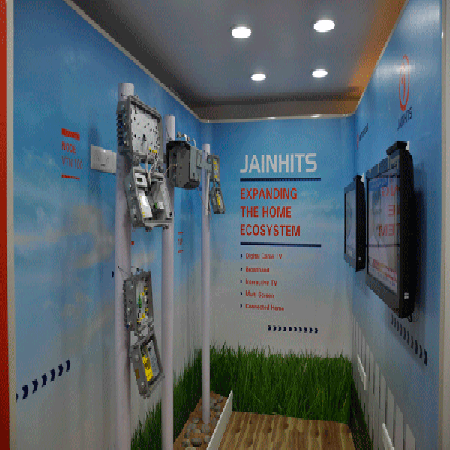
  • Decks cleared for JAINHITS to get TV signals of MSM Discovery, ESPN and SUN channels

    Decks cleared for JAINHITS to get TV signals of MSM Discovery, ESPN and SUN channels

    NEW DELHI: In less than two months since Media Pro Enterprises India was given directions to supply the channels it distributes to JAINHITS, the country’s only headend-in-the-sky (HITS) platform, the Telecom Disputes Settlement and Appellate Tribunal (TDSAT) today directed Sun, Sony (MSMD) and ESPN to provide their television channel signals to the platform by this evening.

    The three channel aggregators between them provide more than fifty prominent channels, but had been delaying giving their channels to Noida Software Technology Park Ltd (NSTPL) – which manages JAINHITS – which had approached the authorised content aggregator for these channels owned by Sony, Sun and ESPN.

    TDSAT Chairman Justice Aftab Alam and member Kuldip Singh were not impressed by the argument that all operators had created fresh Reference Interconnect Offer for HITS which was yet to get the clearance of the Telecom Regulatory Authority of India (TRAI). They asked the counsel for respondents whether this did not amount to breach of violation of section 3.2 of the Digital Access System (DAS) regulations of the cable interconnect agreement.

    With this, JAINHITS will now be able to transmit over 250 channels to consumers all over the country. The 12 September order relating to Media Pro had brought a total of around 75 channels into the JAINHITS fold.

    The only satellite-based platform for the distribution of digital TV channels, NSTPL is currently the only distribution platform of TV channels that is providing advanced HITS services to consumers through local cable operators.

    NSTPL founder and chairman of Jain TV Group Dr. J.K. Jain said, “The mission of JAINHITS is to build and operate digital highways in collaboration with cable network owners. We thank TDSAT for the ruling as this is an important announcement not only for the 60,000 cable operators across the country but also to the consumers. Without proper digitisation, government is losing huge revenue.”

    Senior counsel for NSTPL Vivek Chib told indiantelevision.com that this order would not only be in the larger interest of the government’s digitisation policy, but would ultimately benefit the end-user with greater choice and better quality.

    NSTPL had filed the petition under sections 14 and 14A of the TRAI Act 1997 seeking directions to enter into the Interconnect Agreement on mutually agreed terms or in case the two sides are unable to come to any mutually agreed terms, as per the respondent’s Reference Interconnect Offer (RIO) and to provide to it the content/TV channels under the latter’s control.

    NSTPL obtained from the Information and Broadcasting Ministry in 2003 the licence to establish, install, operate and maintain “headends in the sky” system to provide digital cable services in India. Apparently, the licence was granted even before provisions were made for accommodation of the HITS operator in the regulatory framework. Suitable provisions were made in the regulations to accommodate the HITS operators.

    NSTPL claimed that it had even got its system checked by the Broadcast Engineering Consultants (India) Ltd.  

  • The TRAI, TDSAT and the ad cap story: Waiting for Godot?

    The TRAI, TDSAT and the ad cap story: Waiting for Godot?

    So everyone has bought themselves some more time. The Telecom Disputes Settlement and Appellate Tribunal (TDSAT) decided to postpone till 11 November the date of hearing for the 10+2 ad cap case filed by the News Broadcasters Association (NBA), music channels as well as the regional channels on grounds of lack of information. The extra fortnight gave it more days to ruminate over what has clearly proved to be a major thorn in almost everyone’s side whether it is the government or broadcasters or agencies or advertisers.


    The Telecom Regulatory Authority of India (TRAI) started it all when under the quality of services rules it decided to force broadcasters to limit commercial air time to 12 minutes per hour a year or so ago. The decision was postponed and rolled over until mid-2013 when it decided enough is enough and passed an order which would see general entertainment channels first reduce advertising airtime to 16 minutes per hour, while the news channels were to cut it down to 20 minutes per hour from 1 July till 30 September. Following this, the GECs from 1 October had to reduce the advertising airtime to 12 minutes per hour and the news channels to 16 minutes per hour.


    The decision was postponed and rolled over until mid-2013 when it decided enough is enough and passed an order which would see general entertainment channels first reduce advertising airtime to 16 minutes per hour, while the news channels were to cut it down to 20 minutes per hour from 1 July till 30 September.
    _____****_____________________________________________________

    Broadcasters – especially the news one – saw red instantly and screamed as if their life was being squeezed out of them. They obviously did not think about the viewer who was at times being inundated with almost 30 minutes or more of ads on TV to watch news. They went ahead and appealed to the TDSAT that what was being called for was draconian and unacceptable. Their claim that news could not have fixed time duration such as TV shows and hence such a restrictive law would sound the death knell for them. However, syncing it with the completion of digitisation was that found favour with them.


    The GECs seemed unperturbed and said that they were all right with the TRAI diktat and announced that they would compensate the inventory reduction by raising per 10 second rates by 20-30 per cent. They seemed a very united bunch until one day the management at Multi Screen Media (Sony) woke up and said it would walk its own path and not reduce air time. The music channels too followed and filed an appeal with TDSAT.


    In the meanwhile, the Information and Broadcasting Ministry too got into the act with minister Manish Tewari stating categorically that the reduction of air time should happen as digitisation gets completed by December 2014, giving the broadcasters some much needed support. The mandarins at Shastri Bhawan were asked to evaluate how the reduction of air time would impact the TV channels.


    Advertisers and agencies sucked in their collective breaths and protested as loudly as they could that the broadcast industry was unilaterally trying to raise rates without any rationale despite having contracts in place and that they would not allow that.


    The noise continued for weeks until the hearing date came up on 31 October morning. Everyone was expecting that the TDSAT would be supportive and would rule in favour of the broadcasters. Hence, the postponement of the hearing was quite anti-climactic, though many expected it to follow that course..


    The GECs seemed unperturbed and said that they were all right with the TRAI diktat and announced that they would compensate the inventory reduction by raising per 10 second rates by 20-30 per cent.
    _____****_____________________________________________________

    The argument that the NBA needs more time seems a little specious, but it worked with the TDSAT. They were anyway slated to be heard on 11 November itself but their case got advanced as the number of cases went up, so for them it is back to base one.


    The networks – Star India, Zee TV, and Viacom18 (who had earlier stated that they would toe the TRAI line) now filed an intervention with the tribunal but have been asked to come back with a separate case.


    Now what after 11 November? What are the various scenarios that could play out? One, the TDSAT will turn down the appeal and tell everyone to obey the TRAI. Right now and pronto!. Two, it could postpone the hearing further, thus giving everyone more time. Third, it could decide that the reduction of air time is a good move but needs more time to be implemented. Fourth, broadcasters, advertisers and agencies could file further cases and a decision could well be put in abeyance until all the cases get sorted. The TDSAT on its part could give a ruling in one case and say that it is applicable to others, but that does not look feasible because each television channel genre has its own set of challenges.


    The question on everyone’s minds is whether it would give rope till 2014 December. This is something that can be debated and be seen as wishful thinking. But who knows the TDSAT may well end up playing the fairy godmother.


    Now, let’s say the TDSAT rules against the broadcasters, it is quite likely that they will head to the higher courts. And knowing Indian courts, it won’t be easy to reach a quick decision. Industry experts expect the air time cap to take its own course and time. That it will happen is a given, but predicting how soon is like attempting to play Russian roulette. Welcome to the world of television which has become more of a gamble in recent times.

  • TRAI issued notice on appeal by consumer body seeking proper regulation of ads on channels

    TRAI issued notice on appeal by consumer body seeking proper regulation of ads on channels

    NEW DELHI: The Telecom Disputes Settlement and Appellate Tribunal (TDSAT) has issued a notice to the Telecom Regulatory Authority of India (TRAI) on a petition by a consumers body demanding the proper regulation of advertisements on cable and satellite television channels.


    TDSAT said yesterday that it will hear the appeal after other related matters such as the appeal by the News Broadcasters Association have been heard.


    Consumer group MediawatchIndia had approached TDSAT with an appeal that had sought to ‘remind TRAI of its statutory responsibility to check the illegal and unfair practices of television broadcasters who had been indulging in ‘part-screen’ and ‘high-decibel’ ads.’


    The consumer group has complained that commercials played during programmes have a higher decibel level than the programme they are interrupting. Commercials as well as promotions of other shows keep appearing on the screen in the middle of the programmes thus distracting the viewer.


    Mediawatch in its appeal sought to “challenge the abrupt, unilateral and mala fide act of TRAI in omitting sub-regulations 3(5) & 3(6) Standards of Quality of Service (Duration of Advertisements in Television Channels) Regulations 2012 that deals with “distracting formats of advertisements (part-screen and drop down ads, scrolls etc. interfering the main programme)” and “loud commercials (high audio levels of advertisements vis-?-vis that of programme).”
    Mediawatch, earlier in June, made a representation before the Information and Broadcasting Ministry requesting action on the issue.

  • TRAI sticks to its recommendations on reserve price

    TRAI sticks to its recommendations on reserve price

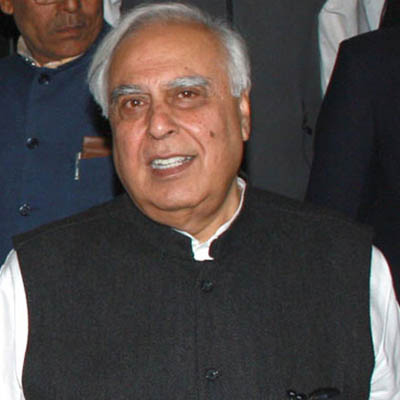
    NEW DELHI: Even as Communications Minister Kapil Sibal said the reserve price for the spectrum auction would go down in December auction, the Telecom Regulatory Authority of India has said the Reserve Prices for 1800 MHz and 900 MHz will remain unchanged and at the level already recommended by the Authority.


    Since the recommendations on the reserve price obtained for different LSAs follow, in logical sequence, from the valuation through adoption of different economic methodologies, the authority did not find any scope to “reconsider” the reserve price, as suggested by the Department of Telecommunications.


    TRAI had sent its recommendations on “Valuation and Reserve Price of Spectrum” on 9 September to the Department of Telecommunications which had on 11 October sought clarifications/ reconsideration on some of the recommendations.


    After considering the comments given by the DoT, the Authority has furnished its response to the Government. The authority has reiterated its earlier recommendations with detailed reasoning.  Thus TRAI has reiterated its recommendation regarding no reservation/priority in the 900/1800 MHz band in order to have an open, transparent, objective, responsive, unrestricted and successful auction of 900 MHz and 1800 MHz spectrum and to ensure a level playing field amongst bidders.
    Other recommendations reiterated by TRAI are:


        In order to correct the present urban-centric bias in the roll-out obligations as also to harmonise the roll-out obligations with the objectives of NTP 2012, the authority has reiterated its recommendations on roll-out obligations to enhance rural coverage.

        The DoT has conveyed its in-principle acceptance on spectrum trading. Accordingly, the authority will shortly work-out the detailed guidelines on spectrum trading.
        On auction of 800 MHz spectrum, the Authority has again recommended that the Government must first explore the feasibility of adoption of the E-GSM band before reaching any hasty conclusion.  

        On Spectrum Usage Charges (SUC), the Authority has reiterated its recommendations for a graduated transition from the existing regime with its many limitations, to a more balanced, equitable and rational system.


  • Reserve price of spectrum expected to be lower for December auction, indicates Sibal

    Reserve price of spectrum expected to be lower for December auction, indicates Sibal

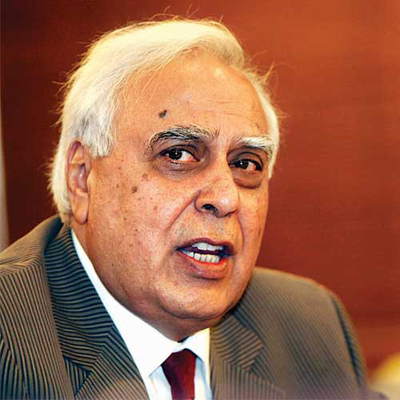
    NEW DELHI: The reserve price for the next round of spectrum auction slated for December will be lower than last time, Communications and Information and Technology Minister Kapil Sibal has indicated.

    Sibal said this in a video message on the occasion of re-branding of the Cellular Operators Association of India.

    “What will be set for floor price on which telecom operators will bid will be, I think, relatively lower for them to make competitive bids,” he said.

    However, he said this would be finally decided by the inter-ministerial panel of the Telecom Commission. The Ministry will then send its views to the Empowered Group of Ministers, which will forward its recommendations to the Cabinet for the final decision.

    Meanwhile, a separate Inter-Ministerial Committee formed for overseeing auction modalities has tentatively set 7-8 January 2014 to start the auctions.

    The Telecom Regulatory Authority of India (TRAI) had recommended nearly 62 per cent reduction in base price of premium 2G spectrum and up to 37 per cent in case of radio waves freed from the cancellation of 122 licences, compared to the amount fixed for previous auction.

    The Telecom Commission has sought clarity on explanations given by TRAI to lower reserve price and the next meeting of the Commission is scheduled for 29 October.

    However, COAI is still not satisfied with the pricing. “India has become a case of limited spectrum quantum availability and high reserve price per MHz of spectrum,” COAI chairman and Idea Cellular MD Himanshu Kapania said.

    He said that based on the April-June quarter revenues, the Indian mobile industry has grown to an estimated Rs 1,60,000 core or $ 27 billion.

    “But the nation remains a global pygmy in revenue terms – a meager 2.3 per cent of estimated the global telecom revenue of $ 1.16 trillion. This is because Indian operators have sacrificed short term gains by offering among the lowest global tariffs,” Kapania added.

    He said the internet penetration in India is still at an abysmal low level of just 4.9 per cent, against China’s 17.2 per cent, Singapore’s 123.3 per cent, Japan’s 113.1 per cent, and the US’ 74.7 per cent, according to an ITU report in 2012.

  • Zeel Q2-2014 results exceed Q2-2013 results

    Zeel Q2-2014 results exceed Q2-2013 results

    BENGALURU:  The Subhash Chandra led content and broadcast player Zee Entertainment Enterprises Limited (Zeel) reported total income from operations of Rs 1,101.28 crore for Q2-2014, up 15.5 per cent as compared to the Rs 953.50 crore for the corresponding quarter of FY-2013  and  13.2 per cent higher than the Rs 973.25 crore for the preceding quarter Q1-2014. PAT for Q2-2014 at Rs 236.31 crore was 26 per cent higher than the Rs 186.7 crore for Q2-2013 and 5.5 per cent more than the Rs 223.9 crore for Q1-2014.

    Let’s take a look at Zeel’s Q2-2014 performance

    Advertising revenue for Q2-2014 at Rs 583.3 crore was 10.5 per cent higher than the Rs 528.1 crore for Q2-2013 and 10 per cent more than the Rs 530.1 crore for Q1-2014. Zeel claims that without sports, its ad revenues would have grown by more than 20 per cent in Q2-2014 as compared to Q2-2013.

    Zeel’s subscription revenue jumped 16 per cent in Q2-2014 to Rs 458.1 crore from Rs 394.95 crore in Q2-2013 and was higher by eight per cent as compared to the Rs 424.1 crore for Q1-2014.

    The company’s total expense for Q2-2014 at Rs 799.9 crore was 7.3 per cent more than the Rs 745.4 crore for Q2-2013, and 15.9 per cent more than the Rs 690.4 crore during Q1-2014. Operating cost which formed a major chunk of expense for Q2-2014 at Rs 504.1 crore was 5.2 per cent more than the Rs 479 crore for Q2-2013, and substantially higher by 22.7 per cent as compared to the Rs 410.8 crore for Q1-2014.

    Selling and other expense for Q2-2014 at Rs 187.5 crore was 24 per cent more than the Rs 169.5 crore for Q2-2014.

    Zeel chairman Subhash Chandra said, “The M&E industry growth is marginally impacted by the overall slowdown of the economy. The television sector, in particular, continues to grow on the back of better subscriber growth linked to increasing digitisation. There was an apprehension about the trends in advertising spends given the overall weakness in the economy, but the television media industry has continued to grow in double digits during the second quarter. Zeel has outpaced the industry advertising revenue growth once again.”

    Zeel managing director and CEO Punit Goenka said, “Sports performance for the quarter has been good, but due to a heavy sports calendar and rupee depreciation, the business is expected to be in losses for some time to come.”

    “Beginning next quarter, we will see a reduction in advertising inventory across the network in line with TRAI regulations. We are in the process of negotiations with advertisers and are confident that this will not have any major impact on revenue monetization. Digitisation will lead to fragmentation of audiences. At Zeel, we believe that this creates a huge opportunity to create new products for specific segments, which will allow us to monetise this opportunity, both from advertising and subscription standpoint. Therefore, we continue to innovate in terms of our format and content,” added Goenka.

  • Ad Cap: The Story continues….

    Ad Cap: The Story continues….

    MUMBAI: That both music channels and news channels had approached the Telecom Disputes Settlement and Appellate Tribunal (TDSAT) against the 12 minute ad cap ruling by the Telecom Regulatory Authority of India (TRAI) is known.

    We had also reported that while the TDSAT hearing for music channels was scheduled for 21 October, that for news channels had been brought ahead to 31 October from 11 November.

    We want status quo, no matter which way the verdict goes, says Rohit Gupta

    But there’s one more twist in this tale for music channels too will now have to wait, much like their news counterparts, till 31 October to hear the TDSAT ruling on the matter.

    And it doesn’t end there. Industry sources reveal there is still confusion regarding the ad cap with nearly 50 per cent of television channels not implementing it, a few of which are following the earlier mandate of 16 and 20 minutes advertising, and still others ‘flouting the rule completely.’

    In fact, a source states the number of antacid pills being consumed by planners and buyers in agencies and by ad sales executives in TV channels has gone up thanks to the constant bickering between the two of them.

    Indeed, Sony Entertainment Television took everyone by surprise when the network unanimously decided not to follow the 10+2 mandate. Network CEO and Indian Broadcasting Foundation president Man Jit Singh had then said: “There should be status quo and there should be one law for all channels from all genres.”

    Till date, Sony stands by its CEO’s statement. “We will wait for the verdict from TDSAT, which comes out at the end of this month. We want status quo, no matter which way the verdict goes,” says MSM president network sales, licensing and telephony Rohit Gupta.

    On the other hand, representatives of Star Network and Viacom 18, which have been happily following the ad cap, maintain that their respective managements will take a call after the TDSAT ruling. “We will follow the law,” they say.

    Meanwhile, Zee has an entirely different take on the issue. “We will continue with the 10+2 ad cap no matter what the TDSAT decides,” says Zeel chief sales officer Ashish Sehgal.

    He justifies this stance saying: “Not that we are too happy with the scenario, but we need to bring in discipline. We are now going to the international norm of 12 minutes of advertising per hour. The network has already created its business plan around the new rule. A lot of planning has gone into this. We have increased our content and decreased the inventory and revising this again is not on our agenda.”

    We will continue with the 10+2 ad cap no matter what the TDSAT decides, says Ashish Sehgal

    On their part, advertisers are unhappy with the few networks that are implementing the mandate voluntarily and charging high rates. The big question facing them is what if TDSAT overrules TRAI’s diktat. “Will the channels revert to their earlier air time allocation as everyone else is doing or will they further hike the rates?” one of the advertisers questioned voicing his apprehensions on condition of anonymity.

    As far as the industry is concerned, an IBF member says: “Let’s say the TDSAT quashes the TRAI order. The ruling will be valid for everyone and every broadcaster (even those who are complying with the 12 minute ad cap) can go back to the old system. Or news and music channels lose the case in TDSAT. They can approach the Supreme Court for succour. Then let’s say the Supreme Court puts a stay on the ad cap, it will then be back to the way the world was operating before this ad cap announcement by TRAI.”

    News broadcasters say that if the verdict is in support of the ad cap, it will be implemented by end-November, if not earlier. “With Diwali round the corner, we are unsure how many days the court will take to come up with the verdict. Though if it is implemented, it is bad news for news channels,” says a member of NBA (News Broadcasters’ Association). Asked if the NBA will then appeal to the Supreme Court, the member dismisses it as a hypothetical question.

    Some advertisers believe that the new ad cap regime could take longer to roll out completely. Some expect it to spill over to mid-2014. Or it could be even later, if things go back and forth in court as they are wont to do.

    For the industry, however, what could be the best outcome is that Union I&B Minister Manish Tewari’s suggestion (that ad cap be implemented post completion of digitization in December 2014) is taken seriously and becomes a reality.

    But then there are the cynical observers. Says one of them: “Don’t get into the politics. Ministers say something and do something else. After all, where did the request for the ad cap come from…”

  • Ad Cap: The Story continues.

    Ad Cap: The Story continues.

    MUMBAI: That both music channels and news channels had approached the Telecom Disputes Settlement and Appellate Tribunal (TDSAT) against the 12 minute ad cap ruling by the Telecom Regulatory Authority of India (TRAI) is known.

    We had also reported that while the TDSAT hearing for music channels was scheduled for 21 October, that for news channels had been brought ahead to 31 October from 11 November.

    ut there’s one more twist in this tale for music channels too will now have to wait, much like their news counterparts, till 31 October to hear the TDSAT ruling on the matter.

    And it doesn’t end there. Industry sources reveal there is still confusion regarding the ad cap with nearly 50 per cent of television channels not implementing it, a few of which are following the earlier mandate of 16 and 20 minutes advertising, and still others ‘flouting the rule completely.’

    In fact, a source states the number of antacid pills being consumed by planners and buyers in agencies and by ad sales executives in TV channels has gone up thanks to the constant bickering between the two of them.

    Indeed, Sony Entertainment Television took everyone by surprise when the network unanimously decided not to follow the 10+2 mandate. Network CEO and Indian Broadcasting Foundation president Man Jit Singh had then said: “There should be status quo and there should be one law for all channels from all genres.”

    Till date, Sony stands by its CEO’s statement. “We will wait for the verdict from TDSAT, which comes out at the end of this month. We want status quo, no matter which way the verdict goes,” says MSM president network sales, licensing and telephony Rohit Gupta.

    We will continue with the 10+2 ad cap no matter what the TDSAT decides, says Ashish Sehgal

    On the other hand, representatives of Star Network and Viacom 18, which have been happily following the ad cap, maintain that their respective managements will take a call after the TDSAT ruling. “We will follow the law,” they say.

    Meanwhile, Zee has an entirely different take on the issue. “We will continue with the 10+2 ad cap no matter what the TDSAT decides,” says Zeel chief sales officer Ashish Sehgal.

    He justifies this stance saying: “Not that we are too happy with the scenario, but we need to bring in discipline. We are now going to the international norm of 12 minutes of advertising per hour. The network has already created its business plan around the new rule. A lot of planning has gone into this. We have increased our content and decreased the inventory and revising this again is not on our agenda.”

    On their part, advertisers are unhappy with the few networks that are implementing the mandate voluntarily and charging high rates. The big question facing them is what if TDSAT overrules TRAI’s diktat. “Will the channels revert to their earlier air time allocation as everyone else is doing or will they further hike the rates?” one of the advertisers questioned voicing his apprehensions on condition of anonymity.

    As far as the industry is concerned, an IBF member says: “Let’s say the TDSAT quashes the TRAI order. The ruling will be valid for everyone and every broadcaster (even those who are complying with the 12 minute ad cap) can go back to the old system. Or news and music channels lose the case in TDSAT. They can approach the Supreme Court for succour. Then let’s say the Supreme Court puts a stay on the ad cap, it will then be back to the way the world was operating before this ad cap announcement by TRAI.”

    News broadcasters say that if the verdict is in support of the ad cap, it will be implemented by end-November, if not earlier. “With Diwali round the corner, we are unsure how many days the court will take to come up with the verdict. Though if it is implemented, it is bad news for news channels,” says a member of NBA (News Broadcasters’ Association). Asked if the NBA will then appeal to the Supreme Court, the member dismisses it as a hypothetical question.

    Some advertisers believe that the new ad cap regime could take longer to roll out completely. Some expect it to spill over to mid-2014. Or it could be even later, if things go back and forth in court as they are wont to do.

    For the industry, however, what could be the best outcome is that Union I&B Minister Manish Tewari’s suggestion (that ad cap be implemented post completion of digitization in December 2014) is taken seriously and becomes a reality.

    But then there are the cynical observers. Says one of them: “Don’t get into the politics. Ministers say something and do something else. After all, where did the request for the ad cap come from…”