Tag: Trai

  • TRAI study reveals telecom sectors growing pains

    TRAI study reveals telecom sectors growing pains

    MUMBAI: With foreign promoters increasing their stakes or purchasing the stakes of Indian promoters in telecom companies such as Aircel, Unitech, Sistema Shyam, Bharti Airtel and Vodafone, the latter’s total shareholding of major telecom access providing companies has dropped from 59.77 per cent in the year 2007-08 to 40.42 per cent in 2011-12.  A study paper released today by the Telecom Regulatory Authority of India (TRAI) on shareholding, financing and capital pattern of Indian private telecom access service providers (TSPs) has revealed this.


    It attempts to provide an overview of the capital structures (deployment of funds in the form of owners’ equity and loan fund) of companies operating in the telecom sector based on the annual accounts and other information provided by 24 Private Telecom Access Service Providers.


    The study paper also points out that while the share of Indian promoters in the equity shareholding declined from 59.70 per cent in 2007-08 to 56.63 per cent in 2011-12, the share of the foreign promoters has increased from 5.30 per cent to 13.90 per cent in the same period. So while Unitech, Tata and Vodafone have reported a decline in Indian promoters’ equity, Bharti, Unitech, Tata, Sistema Shyam, Loop and Vodafone have seen an increase in the stake of foreign promoters in equity shareholding.


    The study paper is a comparative study of facts in the year 2007-2008 and 2011-2012. The trend indicates that the preference shareholding of Indian promoters and others has declined from 60.89 per cent (2007-08) to 2.62 per cent (2011-12). This decline is mainly in the case of the Tata group. The share of the foreign promoters in the total preference shareholding has gone up sharply from 0.59 per cent to 95.84 per cent. The increase in foreign promoter’s shareholding is Rs 5,988 crore and is mainly in the Aircel group.


    Foreign currency loans for these companies have gone up from Rs 13,929 crore in 2007-08 to Rs 40,045 crore in 2011-12. The increase in foreign currency loans in 2008-09 over the previous year was attributed to the borrowings by Reliance Communications and Idea Cellular.  Reliance, Tata, Bharti Airtel and Idea have the major share (88 per cent) in foreign currency loans/bonds outstanding at the end of year 2011-12.


    The study shows that Bharti, Vodafone and Reliance have not shown any change in their share capital.  Idea’s share capital has increased 26 per cent from Rs 2,635 crore in 2007-08 to Rs 3,309 crore in 2011-12, making it the only TSP showing that kind of growth. Total reserves and surplus in respect of Vodafone have declined from Rs 9,991 crore to Rs 2,975 crore, whereas the total reserves and surplus of other companies have shown an increase.  As on 31 March 2012, while Bharti, with Rs 50,470 crore had the highest reserves and surplus; Tata showed negative reserves and surplus of Rs 4,748 crore.


    As on 31March 2012, Vodafone had the highest debt of Rs 45,332 crore followed by Reliance at Rs 31,195 crore and Tata at Rs 23,986 crore. Vodafone and Tata have shown persistent increase in debt during the past five years whereas the other three service providers have shown fluctuating trends in debt.


     The study also highlights the fall in EBITDA margins for almost all the TSPs over the past five years.  Bharti’s EBITDA has gone up from Rs 11,447 crore in 2007-08 to Rs 15,441 crore in 2011-12; however as a margin it has fallen from 41.96 per cent to 33.82 per cent. Vodafone’s and Reliance’s EBITDA has declined from Rs 6,247 crore and Rs 5,175 crore in 2007-08 to Rs 4,248  crore and Rs 3,018 crore in 2011-12 respectively.


    Vodafone’s PBIT has declined very sharply from Rs 3,473 crore in 2007-08 to Rs 27 crore in 2011-12 while Tata’s has been negative throughout the period and has declined progressively from a negative Rs 1,194 crore to a negative Rs 2,275 crore over the past five years.  Ditto with Reliance which has seen its PBIT fall during 2008-09 and become negative in 2009-10 and 2010-11; however it has improved and become positive in 2011-12.


    The study talks about the problems plaguing the TSP sector.  It says that “After their initial success, the Indian telecom companies are confronted today with serious growth challenges. The sector is characterised by mounting competition, declining average revenue per user (ARPUs) and rising costs. All these factors have put tremendous pressure on operating margins. The main reason cited by telecom service providers for declining profitability are their inability to pass on cost inflation due to hike in the price of power and fuel, debt servicing burden and the declining value of the rupee. This has been further aggravated by the prevalent tariff competition.”


    It goes on to add:  “Each telecom service provider is endeavoring to focus on growth and investment, improvement of profitability and cost control without compromising on the quality of service to the customer.  Of the several strategies being adopted by the sector to witness growth include: focus on development of network and eco-system for 3G and 4G services; shifting towards outsourcing model where various medium and long term leasing arrangements for towers and other network infrastructure have been made with the third party operators or equipment vendors; maximising share of passive infrastructure in the short-term and initiating efforts to share active infrastructure over the longer term etc.”


    The study concludes that the low market tariffs and the presence of large number of service providers in each licence service area have caused profitability to decline and made the telecom sector less attractive for infusion of equity.


    New investments are therefore being financed through debt. Sector indebtedness is growing.  However, the sector’s debt-equity ratio has not as yet reached alarming proportions. On the other hand, the declining profitability of the sector, which lies at the root of the inability to attract fresh investment, is a cause for deep concern.


    The study also indicates that some portion of debt is being utilised for interest payments and other liabilities rather than for acquisition of new assets, which potentially places the companies in a debt trap. Replacing debt financing by equity financing could help increase profitability by reducing the interest burden.


    The report published by the TRAI also says that in order to turn around the financing pattern and the deteriorating profitability position of the sector, apart from measures and strategies of individual companies, clarity needs to emerge on the following policy issues and optimal utilization of resources:


     · Emergence of an enabling environment for mergers and acquisitions to aid in market consolidation;


    · Permission and policy framework for sharing, trading and sale of underutilised or unutilised spectrum by service providers so that spectrum is optimally utilised;


     · Liberalisation of spectrum usage to enable flexibility in deployment of alternative technologies;


     · Improvement in the availability of power to run telecom networks so that network operations require less fuel and captive power generation.

  • DAS Phase II MSOs get 29 November deadline for activating SMS

    DAS Phase II MSOs get 29 November deadline for activating SMS

    MUMBAI: The noose is tightening around those operating in digital addressable system (DAS) phase II areas. The Telecom Regulatory Authority of India (TRAI) today stated that MSOs have until 29 November 2013 – less than 10 days from today to complete the process of collecting the consumer application forms (CAFs) with information which includes the name, address, choice of channels and bouquets and entering the information into their subscriber management systems (SMS).  They have been directed to have the SMS operationalised by then and also submit a compliance report.


    The direction states that the SMS system has to comply with the digital addressable cable TV system requirements as mentioned in regulation 20 of the Telecommunication (Broadcasting and Cable Services) Interconnection (Digital Addressable Cable Television Systems) Regulations, 2012, for ensuring efficient and error-free service to the subscribers by recording and providing individualised preferences for channels, billing cycles or refunds.


    It is to be noted that the regulator had first on 26 April directed the MSOs to ensure that the SMS is operationalised and the signals of TV channels are transmitted to only those subscribers whose details such as name, address, choice of channel and bouquets etc are entered into the SMS. The MSOs were also directed to disconnect TV signals of the subscribers whose details were not entered into the SMS system and allow such subscribers to surrender their set top boxes. The MSOs had then been asked to furnish compliance report by 7 May.


    Again on 19 July, the Authority convened a meeting of the MSOs operating in Mumbai, Kolkata and other 38 cities covered under DAS phase-II to review the progress of implementation of DAS, wherein the MSOs were asked to collect the CAFs, complete in all respects, including choice of channels/ services and enter the complete details of the subscribers in the SMS by 20 September.  The regulator had even issued a letter on 23 July directing MSOs to ensure compliance and communicate the same to the LCOs and furnish the report in the given deadline. But with the MSOs failing to comply yet again, the regulator again held a meeting on 25 September with the MSOs to review the progress of implementation of digitization in DAS phase II cities. The MSOs in this meeting had requested for the extension of the deadline to 15 November. Once again, they slipped on that deadline.
    With the new sunset date being set as 29 November, can we expect compliance or another extension?


  • TRAI recommendations on accreditation of rating agencies accepted: Tewari

    TRAI recommendations on accreditation of rating agencies accepted: Tewari

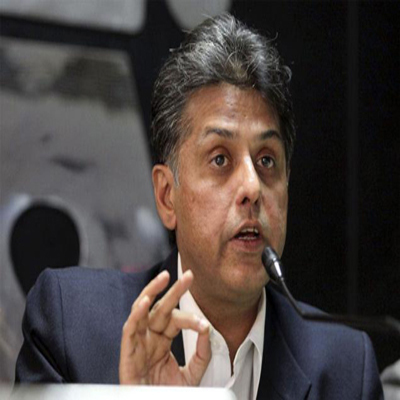
    NEW DELHI: Even as the industry body Broadcast Audience Research Council (BARC) is struggling with its teething problems, the Information and Broadcasting Ministry (I &B) has accepted view of the Telecom Regulatory of India (TRAI) that the minimum number of homes that a rating agency should measure should be 20,000 within six months of the guidelines coming into force, after which the number should be increased by 10,000 every year to reach 50,000.


    Minister Manish Tewari has said that his Ministry would place these guidelines before the union cabinet, a note for which has already been circulated. The Ministry had earlier asked the regulator to provide its guidelines on the issue, after which TRAI had in September released its recommendations including a condition that they be notified within two months.


    He said most recommendations had been “more or less accepted.” “Once we have the cabinet approval, we will notify the guidelines,” he added. Interestingly, Tewari, during his speech, also touched upon the dispute on whether the foreign direct investment should be raised for the print media.  While the Press Council of India (PCI) had submitted its recommendations that the current levels of FDI in print media should be maintained, the Indian Newspaper Society (INS) had favoured raising the limit to 49 per cent. “We are trying to build a political consensus after all media is a sensitive area,” Tewari said.


    The TV audience measurement mechanism has been a subject of controversy in the past with many channels expressing dissatisfaction with TAM ratings.


    Tewari said the amendments to the Press and Registration Books Act were already on the Ministry website and stakeholders’ had sought fresh consultations on issues including ‘paid news’, which had been slated for Tuesday.


    Replying to a question related to setting up of a National Gaming and Animation Centre in Mohali in Punjab, Tewari said there was a problem as it was intended to be a Public-Private Partnership (PPP) but the private sector had not responded.


    He said government was considering a plan to set up the institute with Japanese assistance. Tewari said bills to give special status to Film and Television Institute of India (FTII) and Satyajit Ray Film and TV Institute had been sent to the Law Ministry. He said another proposal to give the status of ‘institute of national importance’ to the Indian Institute of Mass Communication was by and large ready.

  • Star Sports plays hard ball with Siti Cable

    Star Sports plays hard ball with Siti Cable

    MUMBAI: Star Sports has come out with a pan India notice against India’s Multisystem operator Siti Cable. The notice that was issued in select newspapers on 15 November as per the Telecom Regulatory Authority of India (TRAI) guidelines has hauled up the multiple system operator (MSO) on several grounds.


    “A huge outstanding and non-signing of agreement in both DAS as well as non-DAS markets are the two major reasons for this notice,” says Star Sports India COO Vijay Rajput.  “I would like to point out here that Siti Cable has not submitted subscriber reports for any of the DAS I and DAS II markets.  Also there have been instances of piracy. Earlier in October, we had filed an FIR against Siti Vision Digital, a joint venture unit of Siti Cable Network at Saifabad police station in Hyderabad, for illegal transmission of the Star Sports channels.”


     The sports network has come out heavily against Siti Cable for not playing with a straight bat.   “We have been following up with Siti Cable for all these issues but have not received a favorable response from its  officials. Therefore, as per the law of the land we have issued a 21 day public notice. We will avail all options available to us if in case Siti Cable fails to resolve the stated issues within the stipulated period,” adds Rajput.


     Star Sports had earlier played hardball with GTPL and yanked its channels off the cable network. Now it’s the turn of Siti Cable. Rajput says that he has been forced to take these steps. “These are the two specific cases that we are trying to address primarily due to non-payment and non-renewal of agreements.”


     So what is it that Siti Cable plans to do post this notice? Answers Siti Cable chief operating officer Anil Malhotra, “Well, this is a regular practice adopted by every broadcaster as per the TRAI regulation, when an agreement is about to end or has ended. The notice is a precursor to negotiation.”


     Malhotra claims that his cable network is already intalks with the sports channel for the renewal of contract. “We had signed the agreement last year in October-November. So the agreement is due for renewal and, so, this notice. We will amicably resolve the issue.”

    Star Sports says it is ready to revisit the matter if the MSO resolves the issues in the set deadline.

  • TRAI issues supplementary consultation paper on DTH licensing

    TRAI issues supplementary consultation paper on DTH licensing

    MUMBAI: The Telecom Regulatory Authority of India (TRAI) issued a supplementary consultation paper on issues related to new DTH licences late 14 November evening.

    This follows up the consultation paper it had issued on 1 October on issue/extension of DTH licences at the behest of the Ministry of Information and Broadcasting (I&B).

    The new consultation paper seeks to get the views of industry stakeholders on the comprehensive review of the provisions in the existing DTH guidelines it is seeking to undertake.

    Among those are:

    Cross-holdings and control between a DTH licencee, broadcasting entities and TV channel distribution entities.

     
    It is seeking to modify clause 1.4 of the DTH guidelines from “The licencee shall not allow broadcasting companies and/or cable network companies to collectively hold 20 per cent of the total paid up equity in its company at any time during the licence period” to “the licencee shall not allow any entity controlling broadcasting and/or any TV channel distribution operator to control it…”

    Clause 1.5 is proposed to be changed from “The licencee company  not to hold or own more than 20 per cent equity share in a broadcasting and/or cable networking company”  to “any entity controlling the licencee should not control any broadcasting and/or any TV channel distribution operator.”

    The term TV channel distribution operator covers operators of cable TV, DTH, HITS, and IPTV.
    The consultation paper has defined what “control” can mean:

    *A company owns 20 per cent of another firm directly or indirectly though associate companies, subsidiaries and/or relatives

    * De jure control through having not less than 50 per cent of voting rights in second company; appointing 50 per cent of the members of the board of directors; controlling the management of affairs through decision-making in strategic affairs of the second company and appointment of key personnel.

    * Exercises de facto control by being a party to agreements, contracts or understandings…that enable it to control business decisions in the second company.

    The TRAI has said that if one were to go with this definition of control, then amendments will have to be made to laws relating to cable TV operators, broadcasters, HITS operators and some DTH operators will have to be given time to comply with the new provisions.
    Interoperability of DTH STBs

    The TRAI has stated that Clause 7.1 of the guidelines is open to interpretation. It states: “The open architecture (non-proprietary) set top box which will ensure technical compatibility and effective interoperability amongst different DTH providers shall have such specifications as laid down by the government from time to time.”

     
    It has emphasised that this could be modified to put the onus on the Bureau of Indian Standards and the government shall ensure that “the BIS specifications are based on open architecture and should incorporate the latest technological developments with respect to interoperability of DTH STBs taking into account its practicality as well as international experience.”

    Additionally, it states that “the BIS specifications should clearly specify the contours of interoperability between the STBs based on different technological standards.”

    Finally, it has pointed out that the licence conditions should be amended to mandate compliance to BIS specifications for the STB to be offered to all new subscribers within a suitable period of say six months.”

    Licence Fee:

    It has recommended that the licence fee and the definition of adjusted gross revenues (AGR) for the DTH sector be aligned with that specified in the Unified Licence. And that the licence fee may be charged at eight per cent of AGR. The AGR could be calculated “by excluding service tax on provision of service tax and sales tax actually paid to the government if gross revenue had included components of sales tax and service tax.”

    Under the current guidelines, DTH licencees have to pay an initial non-refundable entry fee of Rs 10 crore before the issue of the letter of intent by the licensor, and an annual fee of 10 per cent of its gross revenue in the particular financial year after the issue of the wireless operational licence by the WPC. The TRAI had in 2004 recommended that this be reduced by two per cent on AGR, and later to six per cent of gross revenues in 2008.

    Migration Fee:

    It has recommended an imposition of an entry fee on existing and new DTH operators moving to the unified licence regime. Existing operators should be given a rebate commensurate to the value of the licence for the remaining licence period, and that may be termed as the migration fee. The rebate could be calculated.

    The TRAI has asked stakeholders to give their views on the recommendations issued today by 25 November. Stakeholders also have to give their recommendations on the consultation paper dated 1 October 2013.

  • NBA concludes arguments, hearing to continue on Monday

    NBA concludes arguments, hearing to continue on Monday

    MUMBAI: It took four days for the News Broadcasters Association (NBA) to present its arguments in the ad cap case against the Telecom Regulatory Authority of India (TRAI) to the Telecom Disputes Settlement Appellate Tribunal (TDSAT). But it finally concluded presenting the news industry’s viewpoint on it in terms of existing regulation. After pointing out how the proposed ad cap was reportedly in violation of statutory and constitutional law, its lawyers today highlighted the commercial compulsions and problems that news broadcasters face.
        

    One of the major points highlighted that was drawn out is the issue of high carriage fees that is crippling the whole news industry. News broadcasters have to pay about 30 percent and sometimes even 50 per cent of their revenues as carriage fees while for the GECs it is about 20 per cent.

    “Although they might be paying the same amount as carriage fees, their revenue is higher and instead of regulating something as important as this, TRAI is trying to impose ad cap,” says a news broadcaster.

    TDSAT has asked NBA to file affidavits on Monday to demonstrate the commercial impact any changes in air time will have on their survival. This includes tabulating the revenues they generate in a non-12 minute per hour ad cap scenario and what they expect these to drop to on its imposition.
    With the NBA concluding its presentations, it will be on to the other channels and the TRAI to state their case when hearing begins from Monday – after tomorrow’s recess.

  • M&A Guidelines to be finalised by EGoM later this month

    M&A Guidelines to be finalised by EGoM later this month

    NEW DELHI: The much-awaited Merger and Acquisition (M&A) Guidelines has got further delayed and now the Empowered Group of Ministers (EGoM) on Telecom is expected to discuss it on 22 November.


    The GoM will also study the roadmap for the third round of spectrum auction. “Besides auction related matters, the department of telecom will place before them the M&A guidelines as recommended by the Telecom Commission,” a Telecom Ministry official said.


    Inter-ministerial panel Telecom Commission has suggested about 25 per cent higher base price compared to the amount recommended by sectoral regulator Telecom Regulatory Authority of India (TRAI) for radio waves used for mobile phone services for the proposed auction.


    The Telecom Commission had only forwarded its view on two sets of airwaves used by GSM players like Airtel, Vodafone and Idea Cellular.


    The official said DoT has written today to TRAI to suggest a base price for CDMA spectrum used by players like Sistema Shyam Teleservices, Tata Teleservices and Reliance Communications in 15 days.

    TRAI had recommended against auction of CDMA spectrum at present and suggested studying whether a part of these airwaves can be used for extended GSM services.


    The official said DoT is working on other details for auction of all three sets of spectrum in third round which is expected to start in January.


    Telecom Commission has recommended to allow companies to acquire another operator in a manner that market share of the resultant entity does not exceed 50 per cent.


    EGoM will have to decide on spectrum related issues that entity formed as result of consolidation of companies should be allowed to keep.


  • Day 3 of TDSAT ad cap hearings

    Day 3 of TDSAT ad cap hearings

    MUMBAI: The queue of channels waiting their turn to present their individual cases on the so-called crippling TRAI 12 minute ad cap to the Telecom Disputes Settlement Appellate Tribunal (TDSAT) has not really got any shorter even as the hearings got into the third day. The reason: the News Broadcasters Association’s (NBA) lawyers continued with their arguments in the presence of TDSAT’s Justice Aftab Alam and member Kuldeep Singh.  
    And with their presentation referencing statutory laws as relating to the Cable Television Networks (Regulation) Act and the TRAI Act 1997 completed they have now progressed to bringing in references about media freedom as written in the Article 19A of the Indian Constitution.
        

    The NBA counsel referred to the ‘Sakal Papers And Others vs The Union Of India on 25 September, 1961’ case. The Supreme Court had then affirmed that a newspaper should have the liberty to carry as many advertisements as it would want to because ‘curtailment of advertising is a curtailment of free speech as guaranteed by the Constitution of India.  

    The declaration of this case reads: ‘the state could not make a law which directly restricted one guaranteed freedom for securing the better enjoyment of another freedom. Freedom of speech could not be restricted for the purpose of regulating the commercial aspect of the activities of newspapers.’

    According to the NBA, since such a  ruling exists for print newspapers, it should also apply to the broadcast medium. However, Alam tended to disagree and opined that that the electronic medium is different from print.

    The NBA also contended that broadcasters don’t actually get a ‘license’ from the central government under The Telegraph Act 1885 but rather a ‘registration’ under the uplinking/downlinking policy guidelines. However, the justice  doubted that the broadcasters don’t get a licence, and he also felt that broadcasters don’t come under the cable TV act as the NBA is claiming.

    During the 12 November hearing, the NBA had argued that TRAI had not done the laying requirements as per section 37 of the TRAI Act which it should have in order to carry out enforcement of ad cap and prosecution of erring channels.
    The hearings are slated to continue tomorrow morning with the NBA and its lawyers presenting their arguments.  For the other channels, the wait continues.

    MUMBAI: The queue of channels waiting their turn to present their individual cases on the so-called crippling TRAI 12 minute ad cap to the Telecom Disputes Settlement Appellate Tribunal (TDSAT) has not really got any shorter even as the hearings got into the third day. The reason: the News Broadcasters Association’s (NBA) lawyers continued with their arguments in the presence of TDSAT’s Justice Aftab Alam and member Kuldeep Singh.  
    And with their presentation referencing statutory laws as relating to the Cable Television Networks (Regulation) Act and the TRAI Act 1997 completed they have now progressed to bringing in references about media freedom as written in the Article 19A of the Indian Constitution.
        

    The NBA counsel referred to the ‘Sakal Papers And Others vs The Union Of India on 25 September, 1961’ case. The Supreme Court had then affirmed that a newspaper should have the liberty to carry as many advertisements as it would want to because ‘curtailment of advertising is a curtailment of free speech as guaranteed by the Constitution of India.  

    The declaration of this case reads: ‘the state could not make a law which directly restricted one guaranteed freedom for securing the better enjoyment of another freedom. Freedom of speech could not be restricted for the purpose of regulating the commercial aspect of the activities of newspapers.’

    According to the NBA, since such a  ruling exists for print newspapers, it should also apply to the broadcast medium. However, Alam tended to disagree and opined that that the electronic medium is different from print.

    The NBA also contended that broadcasters don’t actually get a ‘license’ from the central government under The Telegraph Act 1885 but rather a ‘registration’ under the uplinking/downlinking policy guidelines. However, the justice  doubted that the broadcasters don’t get a licence, and he also felt that broadcasters don’t come under the cable TV act as the NBA is claiming.

    During the 12 November hearing, the NBA had argued that TRAI had not done the laying requirements as per section 37 of the TRAI Act which it should have in order to carry out enforcement of ad cap and prosecution of erring channels.
    The hearings are slated to continue tomorrow morning with the NBA and its lawyers presenting their arguments.  For the other channels, the wait continues.

  • TDSAT: Ad cap saga continues on Day 2

    TDSAT: Ad cap saga continues on Day 2

    MUMBAI: The hearings on TRAI’s proposed 12 minute ad cap regulation by the Telecom Disputes Settlement Appellate Tribunal (TDSAT) that began yesterday look unlikely to get over in a hurry. For the past two days it is the News Broadcasters Association (NBA) which has been presenting its case to the tribunal. Today, the NBA counsel raised the point that the TRAI had not fulfilled the laying requirements to the parliament as per section 37 of the TRAI Act which says that “the Regulations made by the TRAI have to be placed before the Parliament to seek its approval. Thus, there can be no dispute that the regulations framed by the TRAI have the force of law having been made through the process of subordinate legislation provided they are consistent with the Act and Rules.”

    Any law infringing the fundamental rights of the people needs to be laid before the parliament after which it can be either annulled or amended or approved by the parliament, says a counsel. A senior broadcaster who has been following the case closely says, “If anything is a law then it has to be passed by the legislature.”
        

    Therefore, the NBA said that TRAI is crossing its line by enforcing the ad cap and prosecuting channels that aren’t following it. TDSAT Justice Aftab Alam wanted to know from TRAI if they had laid it before parliament as it’s an issue that should have been dealt in the preliminary stages itself to which TRAI did not have a substantial reply.

    In yesterday’s hearing, one of the points put forth by the NBA counsel was section 2(G) of The Cable Act of 1995 according to which advertisements are a part of content. At this, TDSAT wondered how a broadcaster can come under this act. Counsel for NBA today validated the position under this act by stating that permission for uplinking falls under the Cable Act bringing broadcasters under this Act. It also says that channels adhere to the programme code.

    Since the Cable Act comes under the jurisdiction of the Information and Broadcasting (I & B) ministry, broadcasters fall under the purview of the I & B ministry and not TRAI.

    NBA also contended yesterday that TRAI does not have the authority to regulate content and its powers are restricted only to licensing and quality of service while content regulation falls under the ambit of the I & B ministry. Neither the TRAI Act nor the Indian Telegraph Act, under which TRAI works, gives the regulator the powers to deal with content.

    The case will continue tomorrow post noon when NBA will put forth more points in front of the TDSAT.

  • TRAI meets MCOF’s Prabhoo on LMO issues

    TRAI meets MCOF’s Prabhoo on LMO issues

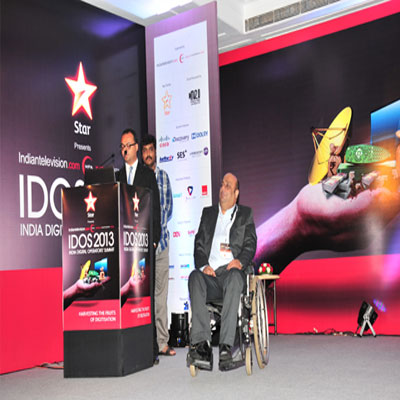
    MUMBAI: It was at indiantelevision.com & MPA’s (Media Partners Asia) India Digital Operators Summit (IDOS) that Mumbai-based cable TV heavyweight and MCOF (Maharashtra Cable Operators Federation) president Arvind Prabhoo first presented to India’s cable, DTH, regulatory and broadcast leaders the local cable TV operators’ perspective. Everyone was impressed including Telecom Regulatory Authority of India (TRAI)’s advisor N. Parameswaran, who said the regulatory body would like him to come and present at its headquarters in Delhi.

    The wheelchair bound Prabhoo did exactly that three days ago on 6 November when he presented the LMO’s viewpoint once again before the TRAI’s N Parmeshwaran, Wasi Ahmed, S K Singhal and G S Kesarwani.

    Prabhoo once again highlighted the issues that are bothering the LMOs and the role they can play in phase III and phase IV of digitisation.

    “There is a crisis in DAS I and II areas regarding LMO-MSO relationship,” says Prabhoo, adding that it was important to address the problems. Prabhoo has told TRAI that his major concern was the MSO-LMO-subscriber relationship. Subscribers belong to LMOs who collect money from them and give it to the MSOs who in turn pass it on to broadcasters. However, the MSOs believe that subscribers belong to them and not to the LMOs.

    Prabhoo also raised the issue of uneven pricing of packages in cities like Mumbai. He wants all MSOs to have similar packages so that it is convenient for a subscriber to migrate and that will even make money collection easier. At the same time, clarity on a-la-carte channels is missing even today.

    He also brought to fore the issue regarding the ownership of set top boxes (STBs). He thinks it is a big bone of contention. “On one hand, customers think they own the STBs, while the MSOs think that STBs are their property,” he remarks. “This disallows customers from migrating from one provider to another using the same STB when he shifts to a new place with a new provider and if he does, the LCO is held responsible for it. Because of this, many subscribers are shifting from cable to DTH, as it seems to be more convenient.”

    Since there’s no fixed revenue sharing deal between the MSOs and LMOs, Prabhoo came up with few solutions. He suggested that for an FTA (Free to Air) channel the sharing between MSO and LMO can be 20:80, while for pay channels it can be 75:25.

    He also suggested that the price of a STB can be reduced and a free basic broadband service be given to communicate by mail. Another suggestion was to rename the LMOs as Horizontal Connectivity Provider Agency (HCPA).

    Prabhoo also brought to TRAI’s notice the issue of entertainment tax. The 42B licenses of LMOs have not been renewed since two to three years and yet the tax is being collected from them. TRAI seemed to be unaware about the issue and has told to get in touch with the chief secretary of Maharashtra soon. They also said that as a regulator they had done everything they could.
    “There needs to be more interaction between LMO, MSO, broadcaster and TRAI if we need a proactive solution to address all our concerns,” concludes Prabhoo.