Tag: Trai

  • 100 Kolkata LCOs group to set up a new headend

    100 Kolkata LCOs group to set up a new headend

    KOLKATA: One would imagine that cable operators would be a happy lot, considering the country is on the threshold of the last two phases of digitisation. However, the truth is LMOs (last mile operators) or LCOs are unhappy with the Telecom Regulatory Authority of India (TRAI) ruling on consumer application forms (CAF) and billing, which according to them, makes multi system operators (MSOs) the owners of consumers.

    Earlier this week, indiantelevison.com reported how a group of LCOs and independent MCOs met the Parliamentary Committee on Information and Technology in New Delhi to put forth their views on the subject.

    The latest, sources reveal, is that around 100 Kolkata-based LCOs – some affiliated with Siticable, others with Manthan – have come together and invested between Rs 2 and Rs 3 crore toward setting up a headend and accompanying infrastructure at Salt Lake College More in the city.

    This group is believed to be in the process of setting up a cooperative venture and is eager to start its own services. With the LCOs’ rising concern over MSOs becoming the owners of their hard-won subscribers, the development does not come as a surprise to the industry.

    However, “MSOs are creating hurdles for these LCOs,” sources added, without divulging any details.

    Swapan Chowdhury, convener of the Kolkata Cable Operators Digitalisation Committee of the Association of Cable Operators confirmed that this new cooperative had indeed been formed and that the LCOs might name the service Bengal Brand. “It is a difficult time for LCOs in Kolkata as the MSOs are not allowing them to go ahead with their plans,” he said.

    Rajiv Sharma, lead analyst (telecom and media), HSBC Securities, opined: “The local cable operators are also thinking of becoming MSOs by coming together… Not good news for the stock prices of existing MSOs which have raised funds from the public even if LCOs fail eventually.”

    Namit Dave, cable TV analyst, stated that bunching together was probably a good option for smaller operators. “A 200 channel headend costs nearly Rs 1 crore; a smaller operator with subscribers running into a few thousands would not find the investment profitable in a small town. However, if operators were to get together, it could end up being a profitable venture,” he pointed out.

    Kolkata-based Manthan Broadband Services director Sudip Ghosh sees more cable ops coming together in east India. Says he: “Players with a subscriber base of more than 500,000 may not consolidate headends. But Kolkata can see the consolidation of players with others having a subscriber base of around 300,000-400,000.

  • TDSAT-Ad cap: 2nd amicus curiae done, channels turn now

    TDSAT-Ad cap: 2nd amicus curiae done, channels turn now

    MUMBAI: The second amicus curiae Aman Ahluwalia continued his arguments today in the TDSAT-ad cap hearing. After giving the legal perspective yesterday, today he focused on the commercial implications of the ad cap regulation.

    Ahluwalia said that the Telecom Regulatory Authority of India (TRAI) has the power to implement licensing under section 11 (1) (a) of the TRAI Act as well as enforcing it on broadcasters through section 7 (11) of the Cable TV Networks (CTN) Act. There is no need for it to choose the CTN act. The TRAI’s procedure may have been faulty but the bench should not strike down the ad cap regulation on account of this.

    The bench wondered that when a licence is issued, the terms and conditions need to be read properly, and if the ad cap regulation issued by TRAI adds anything to section 7 (11) of the CTN act, then should it be accepted. The agreement between the licensor and licensee is only for section 7 (11) and if points like clock hour and reporting to TRAI come into the picture, it is in excess of the section.

    The bench said that one cannot change, modulate or supplement the terms of the licence. If TRAI had implemented it under sections 11 and 12 of the TRAI Act that address the issue of licensing and advertisements then such problems wouldn’t have come up.

    The amicus curiae read out the final draft report of the convergence bill which gives the definition of ‘broadcasting services,’ as it doesn’t have an exact one. He said that content, distribution and technical components all come under the TRAI act and content and distribution together mean carriage. By reading out reports such as the Nariman report, he chose to interpret broadcasting services to include content.

    Ahluwalia then proceeded to the commercial aspects. He told the bench that after reading the code in the UK, he saw that the ad cap may work for GECs while the news channels that have less viewership will be most affected by it. The only way revenue can be raised is either by digitisation when subscription revenue will go up, or by raising advertising rates. However, if subscription rates are jacked up, viewers may not pay, and resort to cord cutting, resulting in lower viewership, and comitantly lower ad revenues as they depend entirely on viewership.

    To support his statement, he also produced financial reports of Zee TV and the Sun Network which showed that their ad revenues were high as compared to news channels. Sponsored shows could be a way out for news channels to generated additional revenues but this could turn out to be dangerous as news could become coloured. And thus he suggested that genres should be dealt with differently.

    According to him, English news channels will be the most affected because advertisers will start turning the screws on them as viewership will quite likely drop off the cliff. The scenario could improve when DAS is implemented completely all over the country as by then subscription and ad revenues each will contribute equally to a company’s top line.

    Reading from an Ofcom (independent regulator and competition authority for the UK communications industries) report, he emphasized that TRAI’s ad cap regulation needs to be more precise in terms of the number of ads per half an hour, duration of the promos etc. Till DAS isn’t complete, it should not be implemented as, under Article 19 of the Constitution, broadcasters have the right to disseminate information and viewers have the right to receive plurality of information giving them the power to choose.

    If the regulation comes into effect now, many smaller news channels may shut down and the existing ones will generate less revenue and hence news could end up being coloured as only a limited number will be left to provide news.

    After Ahluwalia concluded, the News Broadcasters Association (NBA) counsel presented the rejoinder. He argued that TRAI’s analysis of the ad cap violations was incorrect.

    His second argument was that TRAI has the power to implement the terms and conditions between the licencee and licensor under section 4 A of the Telegraph Act that talks about teleport licences. It cannot implement it on the basis of the uplinking and downlinking policies.

    Teleport licences do not mention the CTN act at all and when TRAI is enforcing it on the basis of licensing then its line of reasoning needs to be read in the context of teleport licensing.

    The NBA counsel stated that TRAI cannot act against broadcasters under the uplinking/downlinking policy since it falls under the ambit of the Ministry of Information and Broadcasting.

    During its arguments, TRAI mentioned that broadcasters had suppressed documents related to licensing. The NBA counsel clarified that the data was about OB vans and teleports, which was available in the public domain.

    He added that, according to Ofcom, UK channels were allowed ad commercials of 9-12 minutes averaging and not per clock hour. Also, if TRAI were to enforce the ad cap, it should be under the teleport licence under section 4 A of the Telegraph Act.

    The NBA will continue its rejoinder tomorrow as well.

  • Industry speaks on cable monopoly

    Industry speaks on cable monopoly

    MUMBAI: The Telecom Regulatory Authority of India (TRAI) is now looking at ensuring a level playing field for both the multi system operators (MSOs) and the local cable operators (LCOs). The regulator on 26 November came out with a recommendation paper which put a cap of 50 per cent on MSOs stake in any state. The recommendation paper aims at curbing the monopoly of MSOs.

    “Currently there are no restrictions on the area of operation and accumulation of interest in terms of market share in a city, district, state or country by MSOs. It has been observed in some states that a single entity has, over a period of time, acquired ‘control’ of several MSOs and LCOs, virtually monopolising cable TV distribution in that market. Cases of market dominance by MSOs have been reported at various forums. Such monopolies/market dominance in the TV channel distribution market are not in the best interest of consumers and may have serious implications in terms of competition, pricing, quality of service and the efficient growth of the TV channel distribution market,” states the recommendation paper.

    The regulator has now recommended that market dominance should be determined based on market share in terms of the number of active subscribers of MSOs in the relevant market. To evaluate the level of competition or market concentration in a relevant market, the Herfindahl–Hirschman Index (HHI) should be used. The TRAI has also recommended that the threshold value for any individual/ ‘group’ entity contribution to the market, HHI should be not more than 2500.

    ABS 7 Star CMD Atul Saraf

    “We welcome the recommendation paper. If one has to see, there is monopoly of one or two players in few states like Punjab, UP etc. I feel 50 per cent is also huge; it should be reduced to 25 per cent to give a level playing field. The recommendation paper if implemented will give quality service to customers,” says ABS 7 Star CMD Atul Saraf.  

    According to Hathway Cable & Datacom MD and CEO Jagdish Kumar G. Pillai, the MSO, by definition, does not have a market share of more than 50 per cent. “We are not impacted by this. And then it is just a recommendation paper. What will be interesting is how the regulator will ascertain the percentage of one’s operation till the country is fully digitised. It is impossible to know one’s percentage share in the analogue phase,” says Pillai.

    He adds, “It will impact some MSOs that are dominant players in few states.”

    Hathway Cable & Datacom MD and CEO Jagdish Kumar G. Pillai

    The recommendation paper states that MSOs that currently have more than 50 per cent stake in any state need not reduce their share, but cannot get into any further mergers and acquisition (M&A). “By this, the regulator has ensured that the MSOs are also not affected,” informs Pillai.

    Through the recommendation paper, TRAI wants to ensure that there is no dominance of any player and that there is a level playing field for the LCOs, MSOs and the broadcaster.  

    The TRAI is laying down the rules for the future. “One never knows about the future in terms of technology and also the methods used by the MSOs to operate. The regulator has to think not for a couple of years, but 10-20 years down the line. The recommendation paper ensures that the LMOs and the MSOs on pan-India basis can co-exist and function rationally,” opines Maharashtra Cable Operators Federation president Arvind Prabhoo.

    Maharashtra Cable Operators Federation president Arvind Prabhoo

    The 50 per cent cap will ensure excellent quality service, healthy competition and also keep costs in check. “The 50 per cent stake is still high, the regulator should keep the cap at 30-40 per cent,” he says. 

    According to Prabhoo, it is a progressive move by TRAI. “The authority is ensuring that there is no monopoly – vertical or horizontal and at the same time, is also ensuring that the LMOs have a choice. The LMOs welcome the move,” he states.

    Ortel Communications president and CEO Bibhu Prasad Rath says, “As I understand, the authority, through this recommendation, is trying to restrict the building up of the market share by any individual /group entity through M&A/control of an entity over many MSOs and LCOs. This does not apply to us because of our differentiated business model being independent and expanding directly through last mile connectivity without going through any M&A or control of other MSO/LCOs.”

    Rath thinks that a 50 per cent market share in a state for any MSO will be fair from a competition perspective. “So we do not see much problem in this. However, we believe that the market share should always be calculated by combining cable TV and DTH together as both aim to serve the same set of customers. The regulator has dismissed this argument which we think is unfair,” exults Rath.

    Ortel Communications president and CEO Bibhu Prasad Rath

    Rath also opines that any such regulation can be implemented smoothly when digitisation is fully put into practice. “In an analogue era, it is not practical to implement this. We hope the MIB will take care of these issues before notifying the same,” he states.

    GTPL COO Shaji Mathews says that the monopoly guidelines have their origins from the analogue era when broadcasters had complained to the TRAI. Says he: “It was an issue which was faced by the broadcasters due to dearth of space on cable networks then; it is being addressed at a time when the country is moving towards digitization.”

    Mathews feel that the recommendation paper doesn’t address two key points — one, when the cable networks join hands to fight against the broadcasters and two, when the broadcaster joins hands with a particular cable network to help them monopolise. “Both these issues which are the root cause to monopoly have not been addressed in the recommendation paper,” says Mathews.

    Mathews also points out that though the recommendation discourages monopoly, it encourages those cable operators who are related to broadcasters to grow their base in areas where they until now had no base. “For the viewer to get good service and for the cable operators to exist and also run a profitable business, there needs to be a transparent and non-discriminatory system. The regulator needs to bring laws for content players,” concludes Mathews.

    TRAI recommendations on monopoly or market dominance in cable TV services
  • TDSAT-Ad cap: TRAI done; amicus curiae takes over

    TDSAT-Ad cap: TRAI done; amicus curiae takes over

    MUMBAI: The Telecom Regulatory Authority of India (TRAI) finally wound up its arguments on 25 November on broadcasting advertising cap regulations. Speaking for the third consecutive day, TRAI counsel Rakesh Dwivedi elaborated on Article 14 of the Constitution that talks about the fundamental right to equality.

    His point was that all channels are at a par. Although free-to-air (FTA) channels don’t get subscription revenues like others, they are benefited in some other way and thus they should also be treated as those that receive payments. Dwivedi also submitted data alleging that channels had grossly (highly) violated the ad regulation.

    With that the TRAI concluded its side of arguments and the first Amicus Curiae took over. Madhavi Divan started with the history of television and brought up many points like how TV was licensed, a few judgements, the Cable TV Networks Act, the TRAI act, the convergence bill that never saw the light of day as well as the fact that there was a bill to establish an independent authority. She argued that broadcasting services fall under the TRAI Act because originally they were planning to bring it under an independent act, which never happened.

    She also stated that duration of advertisements does not come under content. She read out a few important points from a book that gave insight in to the setting up of TRAI, how cable operators came into existence and other details about the industry. The bench wanted to know from her who is the enforcer of violation of the duration of advertisements. Divan said she would be attending to that tomorrow.

    Once she concludes her arguments in a day or two, the second amicus – Aman Ahluwalia would speak on the subject.

    The ad cap issue hearing appears to be entering its last round. It is just a matter of time – some say within two to three weeks that TDSAT will be ready to announce its verdict.

  • LCOs, independent MSOs unhappy with digitisation

    LCOs, independent MSOs unhappy with digitisation

    MUMBAI: Back in 2012, when India kicked-off the process of digitisation, local cable operators (LCOs) were an unhappy lot; approaching state high courts for respite from what they perceived as a threat to their business.


    Today, one would imagine cable ops to be happy, considering the first two phases of DAS are almost complete and India is on the threshold of the final phases (III and IV) of the big switch (analogue to digital feed).


    However, the truth is: cable ops are not happy with the Telecom Regulatory Authority of India (TRAI) ruling on consumer application forms (CAF) and billing, which according to LCOs, makes multi system operators (MSOs) owners of consumers. In this connection, a group of LCOs and independent MSOs met the Parliamentary Committee on Information and Technology in New Delhi and put forth their views.


    ABS 7 Star CMD Atul Saraf told the committee: “The ownership of the consumers should be with the LCOs and not with the MSOs. The TRAI and the Information and Broadcasting Ministry (I&B Ministry) should amend the DAS rules keeping in mind the interest of all stake holders.”
    Almost 90 per cent of the STBs are imported from China, we propose that 70 per cent of the STBs should be Indian, says Atul Saraf


    Saraf pointed out that though there were 60,000 LCOs and 8,000 MSOs across the country, the task force formed for the process did not include a single LCO or MSO. “A new task force should be formed with all stake holders and not a couple of MSOs and broadcasters who are in vertical monopoly,” he remarked.


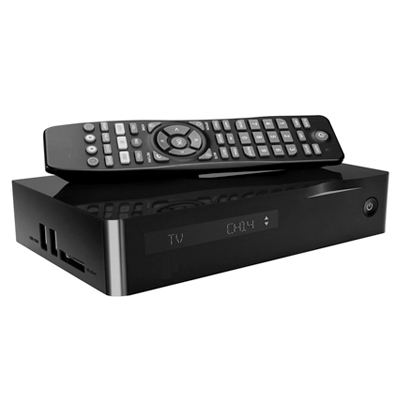
    Drawing attention to the low quality of the Chinese set top boxes (STBs) being used, he said cable ops who had already spent close to USD 4 billion in the first two phases would be forced to spend another USD 4-5 billion in the last two phases of DAS. “Currently, most of the STBs being seeded are Chinese. The boxes which are of low quality may have to be replaced in the next couple of years, which means more cost for the operators,” Saraf said, cautioning against implementing phases III and IV before the completion of the first two phases.


    “There should be a Broadcast Act to monitor broadcasters. Also, only after both the consumers and cable operators reap the benefits of DAS phase I and II, phase III and IV should be implemented,” he said.

    Increasing import duty on STBs will discourage the MSOs from importing STBs from China, points Arvind Prabhoo


    On behalf of the cable op community, Saraf demanded: “We want the committee to question the government as to why these loopholes were not looked at before importing such STBs,” pointing toward the growing need for indigenous box manufacturing. “Currently, almost 90 per cent of the STBs are imported from China; we propose that 70 per cent of the STBs should be Indian,” said he.


    He proposed that while the current import duty on STBs is 10 per cent, it should be raised to 50 per cent. “Wasn’t digitisation meant to uplift Indian STB manufacturers and also create more jobs for them? What I fail to understand is how the TRAI and I&B Ministry did not see these loopholes before implementing digitisation,” Saraf questioned.


    Seconding Saraf on the hike in import duty as well as indigenous manufacture of STBs was Maharashtra Cable Operators Federation president Arvind Prabhoo. “Of course, importance should be given to the national STB manufacturers. If the import duty is increased, it will surely discourage the MSOs from importing STBs from China and also encourage Indian manufacturers. That digitisation should have helped generate revenue and employment for Indians, are issues the government should have thought about,” he said.
    We plan to go and meet the members of parliament once the winter session commences,says Pramod Pandya


    He opined that the government had been misled at some point. “I think that a certain section of the industry presented a wrong picture to the government. But, I am sure they will work on it now.”


    Gujarat Cable Operators Association president Pramod Pandya wanted to know if any consumer survey had been conducted before implementing digitisation. “I do not understand the need to force the implementation of DAS, if the country doesn’t have infrastructure to support it,” he thundered, pointing out that cable ops are hopeful the Broadcast Bill will be proposed during the winter session of the Parliament. “We plan to go and meet the members of parliament once the winter session commences,” he rounded off.

  • TDSAT & Ad cap: TRAI almost done with its arguments

    TDSAT & Ad cap: TRAI almost done with its arguments

    MUMBAI: The third day of the arguments presented by the Telecom Regulatory Authority of India (TRAI) saw several crucial points being touched upon and the TDSAT also noting down points that could be pondered upon for rumination.

    The TRAI counsel Rakesh Dwivedi pointed out that if one reads section 7 (11) of the Cable TV Networks (CTN) Act then it must be read with the ad cap regulation because the regulator was using it only to enforce this section.

    Section 7 (11) states that the authority has the power to ‘seize equipment used for operating the cable television network if it is found to be breaching its other sections’.

    According to the TRAI, programmes and advertisements are different and the regulator is trying to prevent intermixing of these two and ensuring an increase in quality of service.

    The regulator also gave its version regarding Article 19 (a) of the Constitution saying that airwaves and frequencies are a public property of the government and so there is no fundamental right that can apply to it. Electronic media and press are different and cannot be treated equally. Broadcasters are companies and not citizens so fundamental rights don’t apply to them, Dwivedi argued.

    The point about misuse of clock hour was once again raised by Justice Aftab Alam to which the TRAI reverted by saying that the clock hour regulation instituted by the TRAI and the CTN Act are the same thing and they cannot be interpreted in any other way. Broadcasters are thinking of a bankable hour, that can be carried over within 24 hours but the TRAI says that a clock hour is fixed.

    The bench questioned the TRAI that if it could have enforced the ad cap law under the CTN Act then it need not have made a separate regulation or a direction or use the TRAI act for it.

    To this, counsel said that the CTN Act only applies to cable operators at this stage. And just because they have two powers that are coinciding they cannot take away one power. The point where broadcasters come into the picture of this Act, is for the advertising and programming code, which they have to adhere to by virtue of them having to apply for an uplinking and downlinking licence.

    The TRAI counsel also requested that merely because it had framed a regulation or passed a direction the bench may not nullify it because it has passed it under the TRAI act and not the CTN act, although it has powers under both. He also requested that if the bench were to find anything wrong with the ad cap regulation, they may modify it. However, Alam said that it cannot be done since it was a delegated regulation. To this TRAI asked the bench to consider it as a direction and then modify it keeping in mind the best interest of the viewers.

    One of the arguments, that the counsel raised, relates to Article 14 of the Indian Constitution that speaks about the fundamental right to equality. He stated that it would be in fair spirit if cable operators and broadcasters are not equated with each other at this juncture. The TRAI counsel presented data which clearly showed that broadcasters were airing TV commercials for an unbearable duration every day in between programmes and hence it had decided to apply the ad cap to them first. The limits on TV commercial time will be imposed on cable operators later by the TRAI, the counsel revealed. And the fact that cable ops will be made to comply later does not mean that broadcasters should be excluded from the ad cap now.

    The counsel said he would be addressing the issue of clubbing channel genres together on Monday.

    The bench asked the TRAI why it wasn’t willing to wait till digitization was completed to impose the ad cap regulation. The TRAI argued that by September 2014, nearly 50 per cent of the country will be digitized. Hence it was a good enough reason to bring in ad time limits rules now so that TV air time could be slowly modulated over the period. The TRAI counsel agreed the regulation may not be perfect in its current form, but that does not give the TDSAT a reason to strike it down.

    Regarding FTA channels, Dwivedi said that the broadcasters had not given the TRAI any financial or commercials analysis of the minute by minute usage of ad time and data to support that ad revenues will indeed fall when the ad cap comes into effect. Hence, the regulator had made a general reccee of the channels and deduced what needed to be done and only then drawn up the ad cap regulation. It also stated that FTA channels don’t have too many ads so TRAI did not know why they were objecting to it.

    At the end of the proceedings, an important observation was made by the TDSAT that if the ad cap regulation is struck down, no law can be contended except section 7 (11) of the CTN Act, because broadcasters have accepted this act. Articles 14 and 19 (1) (a) of the Constitution are against the imposition of the ad cap regulation and then the only thing that remains is the interpretation of the 7 (11) section of the CTN Act.

    The TRAI will continue with its arguments on Monday and the broadcasters are scheduled to speak after that.

  • TRAI gives DTH players more time

    TRAI gives DTH players more time

    MUMBAI: The DTH players now have time until 5 December to furnish their views on the supplementary consultation paper on ‘Issues related to new DTH licences.’ The earlier deadline set by the Telecom Regulatory Authority of India (TRAI) for submitting views and comments was 25 November.


    It was on 14 November that the consultation paper was released by the TRAI.  The date  extension  has been given in keeping with the request of the stakeholders.  The regulator though has made it clear that no further extensions will be entertained.


    It is to be noted that the supplementary consultation paper was released as a follow up to the consultation paper it had issued on 1 October on issue/extension of DTH licences at the behest of the Ministry of Information and Broadcasting (I&B).


    The points raised in the supplementary consultation paper were:   Cross-holdings and control between a DTH licencee, broadcasting entities and TV channel distribution entities; Interoperability of DTH STBs; Licence fee and Migration fee.


    Stakeholders can send the comments in electronic form to TRAI advisor Wasi Ahmad.

  • TDSAT & Ad cap: TRAI continues arguments

    TDSAT & Ad cap: TRAI continues arguments

    MUMBAI: Continuing to present its side to the Telecom Disputes Settlement Appellate Tribunal (TDSAT), the Telecom Regulatory Authority of India (TRAI) put forth its arguments to the bench consisting of Justice Aftab Alam and member Kuldip Singh.

    It started off continuing on yesterday’s argument trail saying that the law does not state that if the laying requirements are not fulfilled then it becomes void. That is, TRAI cannot execute its regulation on channels. That broadcasters are covered by both the Cable TV Networks Act and the TRAI act is a parliamentary mandate and there is nothing illegal in what it is doing. There are several precedents where a subject matter could be covered by more than one statute,  TRAI counsel  Rakesh Dwivedi stated.
        

    TRAI also claimed that it has a clear parliamentary mandate exercised through the central government to regulate advertisements. It contested the broadcasters’ arguments that TRAI has just a recommendatory role, by highlighting that it has an additional function under section 11 (1) (a) of the TRAI  Act and that does not mean its plenary functions under section (11) (1) (b) are taken away. Therefore, apart from its recommendatory function under (a), its powers also remain under (b). Both the sub clauses complement each other and there is no clash, the counsel stated.

    Reiterating that it has the authority, it said that what it is aiming to do is in perfect accordance with the powers the ministry and it has under section 7 (11) of the Cable TV Act. Likewise, the counsel, said it is not as if the government is seeking to have a higher allowance for advertising air time and is in disagreement with the limit of 12 minutes that the TRAI is seeking to impose.

    To support its argument, the counsel also read out various preceding judgments. According to the TRAI, broadcasters are licensees under the Telegraph Act and so the regulator has full power to ensure compliance within the licence term.
    Singh asked if TRAI can direct Google on the duration and number of ads it can run. To this, the TRAI counsel replied by saying: ‘I am the regulator and I will decide who, when and how much to regulate.

    Coming to the point raised yesterday about a statement TRAI had made in 2004 that “there should not be any regulation at present on advertisement on both FTA and Pay channels” it said that much water had flown under the bridge since it made its statement and the situation was different today. So, it can deem it appropriate to regulate since an expert opinion at one point of time does not mean that it will stay forever, the counsel stated.

  • TRAI presents its ad cap arguments

    TRAI presents its ad cap arguments

    MUMBAI: After nearly a week long argument from the News Broadcasters Association (NBA) and music channels – B4U, 9XM, Mastiii and M Tunes — it was time for regional players and the big daddy – the Telecom Regulatory Authority of India (TRAI) to present their side of the story on the ad cap.

    Among those who presented their case today were Polimer Media and south India biggie Sun TV. The channels brought to the fore a point from February 2011 when TRAI had confirmed that “there should not be any regulation at present on advertisement on both FTA and Pay channels.”

    It had taken this position in Petition No. 34(C) of 2011 in the TDSAT filed by a society called Utsarg against TRAI and several other broadcasters and content aggregators seeking a cap on television advertising time on the ground that these advertisements interfered with viewership of television programmes. The channels questioned the reversal in TRAI’s  stance today.

    Now, it was the turn of the TRAI to send its lawyer to make its deposition.  TRAI argued that it was right in taking recourse to  both the Acts – the Cable Networks Regulation Act 1995 as well as The Indian Telegraph Act 1885 and the TRAI Act – and it was empowered under both as broadcasters are licensees under the latter. To this, the bench comprising of Justice Aftab Alam and member Kuldip Singh said that if it already has the authority under the Cable TV Act then it should not have acted on the TRAI Act.
        

    However, TRAI argued that the Cable TV Act is applicable only to cable operators and the bench in turn responded that a broadcaster does not come under it then. TRAI claimed that they were merely interpreting section 7 (11) of the Cable TV Act of 1995 which says that the authority has the power to ‘seize equipment used for operating the cable television network’ if it is found to be breaching its other sections.

    On the laying of the ad cap regulation in Parliament, TRAI’s counsel said that it had submitted it to the relevant ministry. To this, the bench responded that the law decrees that it would become applicable only after it is accepted or rejected or modified in the house. All the actions TRAI takes won’t apply with retrospective effect. Hence if TRAI  prosecutes a broadcaster before laying in parliament would not that be a violation of fundamental rights was the question?  The argument was then that in such a situation it is beyond the jurisdiction of the TDSAT and comes under the ambit of the Supreme Court.

    One of the points raised by the petitioner channels was the possible misuse of the 12 minute ad cap regulation. It said that a broadcaster could have uneven advertising slots such as one minute of advertisement in the first 30 minutes while the next half an hour could have 11 minutes. Similarly the concept of clock hour too had its flaws. Hypothetically, a broadcaster could air 11 minutes of ads from7:49 pm to 8 pm and then another 11 minutes of commercials between 8:00 pm to 8:11 pm. That would mean TV viewers would be subjected to 22 minutes of commercials in an hour of television time, thus putting paid to TRAI’s mandate to maintain quality of service. To this, the TRAI claimed that all laws can be misused but then it doesn’t stop them from being made.

    TRAI will continue its arguments tomorrow.

  • What the music channels said on the ad cap issue

    What the music channels said on the ad cap issue

    MUMBAI: After the News Broadcasters Association (NBA) presented its side of the story, it was the turn of the music channels to present their case in the Telecom Disputes Settlement Appellate Tribunal (TDSAT) regarding the troublesome 12 minute ad cap regulation that is being enforced by the Telecom Regulatory Authority of India (TRAI).
        

    The hearing that went on for two days (Monday and Tuesday) had the music channels counsel speaking on behalf of the four music channels – 9XM, B4U, M Tunes and Mastiii. The main point raised was violation of Article 14 of the constitution of India by the TRAI. The Article states: “The State shall not deny to any person equality before the law or the equal protection of the laws within the territory of India Prohibition of discrimination on grounds of religion, race, caste, sex or place of birth”.
     

    According to counsel, the TRAI is violating Article 14 by putting all the channels in the same basket. There are different types of broadcasters delivering both free to air and pay channels in the genres of news, sports, music etc. It is inappropriate to be treating ‘unequals as equals’ by classifying all channels in the same category, counsel emphasized. To support his argument, he said that FTA channels don’t get subscription revenue and work on purely advertising while pay channels have the benefit of both.
     

    Apart from this, other issues raised during the hearing were similar to the ones the NBA counsel had raised such as the jurisdiction of the TRAI to come out with such a regulation, unregulated and high carriage fees and high cost of content production.
     

    There is a long list of channels that will now present their cases in front of the TDSAT bench of Justice Aftab Ahmed and member Kuldip Singh including Reliance Big Broadcasting, Sun TV Network, Raj TV, E24 Glamour, Eenadu Television and Polimer Media.
     

    After this, TRAI will defend itself. The hearing is set to continue today.
     

    This is surely one case that will take much time to resolve.