Tag: Trai

  • Tewari justifies rules for regulation of television audience rating agencies

    Tewari justifies rules for regulation of television audience rating agencies

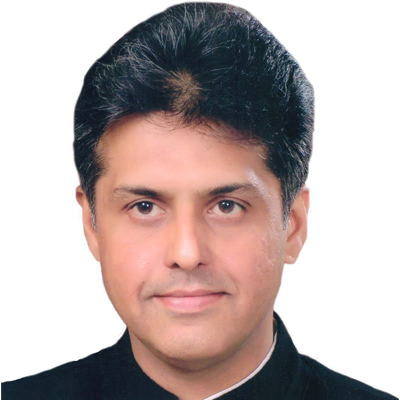
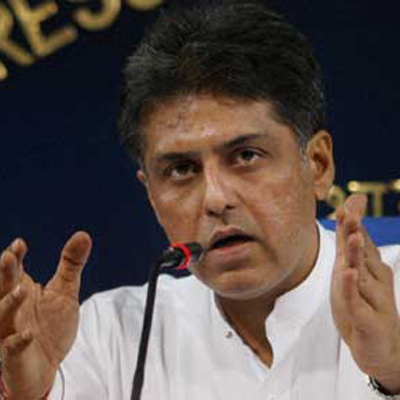
    NEW DELHI: Information and Broadcasting (I&B) Minister Manish Tewari today addressed the attendees of the fifth CEOs round table conference organised by the Confederation of Indian Industries today. He said that the television rating points rules are an attempt to make the process transparent, credible and accountable. At the same time, the endeavour was to address aberrations in the existing rating system.


    Tewari added that this initiative was based on the past recommendations of the Parliamentary Standing Committee for Information Technology, the Telecom Regulatory Authority of India (TRAI) and the Amit Mitra Committee.


    The Government had also been approached in the past by the industry stakeholders to rectify the existing flaws. The long term objective was an attempt to usher a system with defined rules within an existing framework.


    Meanwhile, he said the digitisation process during Phase III and IV would have to focus on the interest of the consumers in order to ensure that they were partners in the process rather than adversaries.


    For this purpose, the industry would have to run a focussed consumer awareness campaign, whereby the consumer would have to be sensitized about the benefits accruing from this process.
     

    Tewari said the campaign would have to focus on improved quality of viewing and related qualitative benefits accruing to the consumer as a result of the implementation process. The lessons of the implementation during Phase I and Phase II would also have to be taken into account while outlining the implementation roadmap for the remaining phases.


    For digitization to succeed, the industry would have to make efforts to ensure that the consumer was an integral component in the digitisation value chain. At the same time, the comprehensive approach would also ensure the emergence of viable business model for the industry.

    On the issue of monopolies in the cable TV sector, Tewari said that regulator had already made its recommendation and the issues involved were being examined by the Inter Ministerial Committee (IMC).


    The Minister also said that the regulatory framework ought to be stable and transparent for all stakeholders for the broadcasting sector to grow. This would ensure orderly growth for the sector in the long run
  • 22nd Convergence India 2014 expo ends today

    22nd Convergence India 2014 expo ends today

    MUMBAI: Convergence India 2014 expo, South Asia’s largest ICT, media, entertainment and applications industry expo, was inaugurated by Hon’ble Member of Parliament and Former Union Minister, Shri Syed Shahnawaz Hussain at Pragati Maidan, New Delhi. Speaking on the occasion, Shri Syed Shahnawaz Hussain had said, “I am pleased to be present at this important platform that recognizes the potential of the evolving telecommunications, media and entertainment industry and its contribution in boosting the economy, and overall growth of the nation”.
     

    Following this, Dr. Rahul Khullar, Chairman, TRAI set the agenda for the three day expo by opening the floor for dialogue on “Connecting India”, the theme for the 22nd edition of Convergence India 2014. The inaugural ceremony also saw industry leaders such as N Ravi Shankar (Special Secretary & Administrator, USOF, DoT), Anupam Shrivastava ( Director (CM) & CMD (Designate), BSNL), Umang Das, Chief Mentor, Viom Networks Ltd., Rajan S Mathews, ( Director General, Cellular Operators Association of India ), Pankaj Mohindroo (National President, Indian Cellular Association) and Rajiv Bawa (Country Head, Telenor).
     

    The 1stTelecom summit 2014 on “Home Grown Technologies and Skills’ was inaugurated on the day 2 of the 22nd Convergence India, 2014 expo. The summit was jointly organized by Telecom Centers of Excellence (TCOE), Telecom Sector Skill Council (TSSC)and Exhibitions India Group and was supported by Government of India (DoT &DeitY), service providers, manufacturers, training partners, industry associations and academia.
     

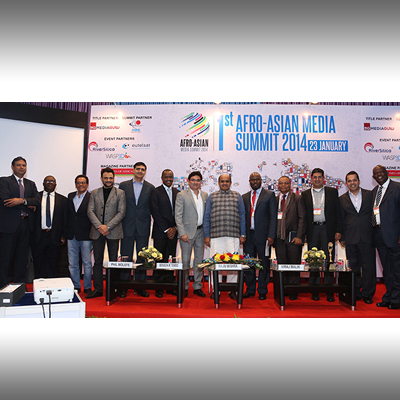
    The day 3 of 22nd Convergence India 2014 witnessed the first of its kind Afro-Asian Media Summit which was chaired by Mr. Phil Molefe, Vetran South African Broadcaster. In his address, he said, “Geographical boundaries have fallen away and we are now one big media community driven by the power of technology. We have to be committed, skilled and innovative to capitalize the abounding opportunities”.
     

    This dynamic initiative will create opportunities of partnerships, investments, support and many more collaborations. With this platform in place, there can be an exchange of ideas, expertise between the two nations.
     

    Mr. Albertus Aochamub, President SABA, said, “This is a partnership of equals. Both India and Africa have common history, struggles and challenges. India is a hub of skilled personnel and with the help of media, technology and other ICT tools, both the countries can learn from each other.”

    Mr. Rahul Nehra, Co-Founder Afro Asia-Media Summit, announced the launch of Afro-Asian Media Awards 2015. He said, “We are taking the first step in driving excellence through the awards. We need to felicitate people of our own continents for the work they do”.
     

    H.E. Dr. Perks Ligoya, High Commissioner of Malawi, said “I feel honored to be in the First Afro-Asian Media Summit. This event comes at a very good time”. He also commented on how through e-learning, e-health, e-money, e-commerce, Africa and India can benefit from each other.

     
    In addition, 22nd Convergence India 2014 also witnessed a seminar on FTTH Council Asia-Pacific, also strategic partner of Convergence India this year. The theme for the seminar was ‘Fiber for Convergence’ and offered great opportunities to the participants to network & collaborate while providing consistent information on FTTH from industry experts.

     
     Some of the prominent speakers were N Ravi Shankar, CMD, Special Secretary & Administrator, USOF, DoT, Anil Pande, Director, Dura-Line, Anuj Jain, PWC and Vipin Tyagi, C-DOT.

     
    Prem Behl, Chairman, Exhibitions India Group said, “With this 22nd Convergence India 2014, the roadmap for telecom, media and entertainment industry has been outlined and we will continue to contribute towards the changes and development of these sectors as the journey continues.”

  • Kolkata MSOs won’t change package price till June 2014

    Kolkata MSOs won’t change package price till June 2014

    KOLKATA: On 6 December last year, the Telecom Regulatory Authority of India (TRAI) met the multi-system operators (MSOs) in Kolkata to extend the deadline for initiating gross (consumer) billing from 10 December to 15 December.


    Now, the MSOs have assured cable TV subscribers that they will try and keep the package price unchanged till June this year, although they are contemplating a price rise post June.


    The MSOs have also requested subscribers to collect bills from local cable operators (LCOs) before dishing out the subscription fee for January. This is to bring in transparency in the billing process for the Kolkata Municipal Area (KMA).   


    It is further learnt that the MSOs are meeting regularly to discuss smooth rollout of gross billing in the KMA area, especially after having been asked by the West Bengal as well as central government authorities to expedite the billing process.


    Said Manthan Broadband Services director Sudip Ghosh: “We will continue with the package and we all are trying to keep the price of package untouched till June. The MSOs will try to absorb the cost themselves.


    According to Siticable Kolkata director Suresh Sethia, the entire process would take some time. “Customers are happy. Operators too want the billing to be in place. Also, we have put up advertisements in newspapers for consumer awareness regarding billing apart from local channels,” he said.


    As per TRAI regulations, subscribers get a period of 15 days from the date of the bill to make the payment.


    “In case the subscriber fails to make the payment after the expiry of the due date of payment, we will charge interest on the outstanding amount,” Sethia informed.


    Director of Den, Sanjoy Basu, opined that the new facility introduced as per the TRAI regulations would usher greater transparency in billing.


    With nearly 30 lakh cable homes, gross billing is definitely expected to regularise the hitherto ad-hoc system of billing.

  • MIB: Now on to DAS phase III & IV

    MIB: Now on to DAS phase III & IV

    MUMBAI: Within days of the Telecom Regulatory Authority of India (TRAI) giving out its fact sheet on how digital addressable system (DAS) phase I and II have progressed, the Ministry of Information and Broadcasting (MIB) directed all the stakeholders also known as  ‘the task force of digitisation’ to assess its progress and chart out a road map for the coming year.


    The meeting saw minister Manish Tewari, secretary Bimal Julka, additional secretary Supriya Sahu, leading MSOs such as Den CEO S N Sharma, The One Alliance president Rajesh Kaul, LCOs, News Broadcasting Association (NBA) secretary Annie Joseph, Indian Broadcasting Foundation (IBF) secretary Shailesh Shah and Tata Sky CEO Harit Nagpal. After speaking to everyone about the issues faced in DAS phases I and II and Sahu’s presentation on the value that digitisation was creating in the country, Tewari gave the go ahead to implement the next two phases.


    However this time it won’t be with two deadlines but rather a one stretch implementation across the remaining parts of the country with just one deadline of 31 December 2014. Although the ministry was of the opinion that two deadlines should exist, the TRAI had voiced its opinion in 2011 that phase III and IV could be achieved simultaneously.


    All the stakeholders brought out the issues they had faced in the first two phases to which the minister warned them to sort out their own problems internally or this would lead to a postponement of complete national digitisation – which would not bode well for the industry.  He also told everyone to keep working in coordination even now – and iron out any wrinkles or resolve all problems so that digitisation can progress further.


    Tewari said that the upcoming elections may slow down the process but digitisation is here for good and there’s no stopping it now.  The IBF and NBA have been asked to once again air promos highlighting the importance of digitisation.


    Now that the green signal has been given, all stakeholders can now attack the rest of the country without having any boundaries. But this is the toughest part as the issues they will face in the interiors will be much higher  and more difficult to resolve than metros and towns. Phase I and II saw nearly 25 million set top boxes being seeded while phase III and IV will see about 75 million more boxes being put in place.


    The minister has also assured support saying that the issues in the previous phases will be addressed as they move towards the next ones. 

  • BARC signs deal with Médiamétrie today

    BARC signs deal with Médiamétrie today

    MUMBAI: It was just last week that the  Ministry of Information and Broadcasting (MIB) notified the TV ratings agency registration regulations. And the industry-backed Broadcast Audience Research Council (BARC) reps were summoned to New Delhi to give the ministry an update on how much progress has been made on the new proposed TV ratings system for India. They did. Today, BARC also gave the press an insight into how far down the road it has gone.


    Indiantelevision.com was the first to report that  BARC had chosen  French audience measurement company Médiamétrie as its ratings partner. No cofirmations came from BARC. But today its chairman Punit Goenka  announced that Médiamétrie is indeed BARC’s official technology partner and will also provide licences to BARC to use its TV metering system.

    “Médiamétrie has an in-house research team that helps it to understand the needs of the industry just as how BARC realises what the industry needs. I have heard people ask that BARC is just barking but when will it bite? But now I say we are here to bite!” Goenka remarked candidly while signing the deal at Mumbai’s ITC Grand Central hotel. Médiamétrie will assist the council in procuring its own metering hardware.


    The French audience measurement system will be providing the audio watermarking technology to BARC to monitor TV consumption through its 20,000 strong panel. “Médiamétrie wrote to BARC months back. It uses watermarking technology so it is very accurate and can measure data when it is simulcast. Meters are easy to make so we spoke to agencies and advertisers in France to do our background study on Médiamétrie. It is a landmark day for us,” said BARC tech committee chairman Shashi Sinha.


    Sinha also stated that the new ratings system should be up and running by 1 October, 2014. “Around 25 vendors approached us out of which we shortlisted four to five. We have got the best of vendors, technology and price of meters. The most important thing for us is transparency,” he said. It will soon be announcing media partners as well.


    BARC has been scouting for a technology partner since several months now and finally it has concluded the deal with the French company. BARC CEO Partho Das Gupta said at the conference: “Since the past few months we have been researching the tech we should use and have finally selected the right one.”


    Present at the conference was also Médiamétrie senior VP Benoit Cassaigne who was excited to be a part of the deal. “We are among the top five companies in the world and the leading research company in France,” he said.


    Goenka emphasised that since BARC is a non-profit body, broadcasters will comply with it. “We are not here to make profits, we are here to help the industry,” he said.

    However, no one was willing to talk about the future of TAM. “We hope there is no ratings blackout in the coming months, but if there is then it can’t be helped. We are working towards getting a better system,” he added.


    Star India COO Sanjay Gupta says that TAM and government need to sit and decide now. “Advertisers are obviously worried as to what will happen if there is no rating system in place. Maybe they will look at the past ratings and set prices,” he said.


    The contract with Médiamétrie has been signed for a 1+5 year term. The Council says it is totally  open to regular external audits. The funding to put up the new system in place has been divided as follows: 60 per cent Indian Broadcasting Foundation (IBF), 20 per cent ISA and 20 per cent Indian Advertisers Agencies Association of India (AAAI).


  • HC restricts TRAI from taking coercive action against Kalaignar TV

    HC restricts TRAI from taking coercive action against Kalaignar TV

    MUMBAI: Most of 2013 kept the industry preoccupied  with the 12 minute ad cap saga. After the Supreme Court passed a judgment that barred the Telecom Disputes Settlement Appellate Tribunal (TDSAT) from looking at appeals against the Telecom Regulatory Authority of India (TRAI) regulations, the appeals were then moved to the Delhi High Court.


    And the latter passed an interim order that forbade the TRAI from taking any coercive action against channels  that had appealed in the HC,  even if they did not adhere to the 12 minute per hour limit.


    Now, the Tamil GEC run by political party, DMK, Kalaignar TV has got a favourable order from the HC after it also appealed against the TRAI regulation. The HC has asked the regulator not to take any coercive action against the channel and has asked the latter to submit to it weekly ad duration data.


    In December, many channels had moved the court who were then given a hearing date of 13 March 2014. Kalaignar TV’s writ petition will also be heard along with the others on the same date. The channel was also a part of the list of appeals that had come up before the TDSAT but were told to move it to the Delhi HC after the SC judgement.  


    TRAI had passed a quality of service regulation for limiting advertising air time to 12 minutes per hour in mid-2013.

  • TRAI gives final deadlines for filling subscriber details in DAS Phase II cities

    TRAI gives final deadlines for filling subscriber details in DAS Phase II cities

    MUMBAI: The Telecom Regulatory Authority of India (TRAI) may have once again extended the rope for stakeholders of digitisation but with a warning that they would get no further extension. In a recently issued notice, fresh and “final” deadlines have been given out for entering the subscriber details in the subscriber management system (SMS) in DAS phase II cities.


    The regulator has already given two extensions of the deadlines earlier for collecting customer application forms (CAF) and entry of these details in the SMS. However, this comes as a warning from the regulator. It says that 23 cities (Rajkot, Surat, Vadodara, Faridabad, Mysore, Aurangabad, Nasik, Pimpri-Chinchwad, Pune, Sholapur, Amritsar, Ludhiana, Jaipur, Jodhpur, Agra, Allahabad, Ghaziabad, Kanpur, Lucknow, Meerut, Varanasi, Chandigarh and Howrah) have completed 90 per cent of the task and the MSOs in these cities have been ordered to cut off signals from 27 January to subscribers who haven’t given their CAFs.


    7 February is the last date for Bhopal, Indore and Jabalpur in Madhya Pradesh; while Vishakhapatnam and Srinagar have time till 28 February. However, state of Tamil Nadu and Hyderabad city have not been given any date due to litigation processes that are pending regarding DAS.


    Eight other cities (Patna, Ahmedabad, Ranchi, Bengaluru, Kalyan-Dombivali, Nagpur, Navi Mumbai and Thane) have been given 31 January as the last date. Subscribers have been requested to cooperate with the process and submit their CAFs, failing which MSOs will have to cut off signals to their TVs or will be in breach of law.


    MSOs will have to provide bills with exact breakup of charges and subscribers will have to insist for a bill and receipt or see blackout on their screens.


    Click here to read the full notice

  • India’s Doordarshan selects Harris Broadcast for nationwide digital transition

    India’s Doordarshan selects Harris Broadcast for nationwide digital transition

    NEW DELHI: Harris Broadcast, a market share leader of content management and network infrastructure solutions serving the global broadcast, communication service provider, government and enterprise markets, today announced it has been selected by national broadcaster Doordarshan to deploy a new DVB-T2 transmission infrastructure across the country.


    The government of India is pushing ahead with plans to complete the move from analogue to digital television transmission by 2017. As the leading public service broadcaster in India, Doordarshan has an obligation to cover the whole country and to reflect the diversity of Indian society, including content in the more than 40 languages. At the same time, it is promoting a boost in quality and viewer engagement by rolling out high definition channels, as well as delivering its multi-lingual content across multiple platforms including mobile devices in the future.


    “This is not only a large-scale project for Doordarshan, but it is also one of the most high profile and important projects the broadcaster has undertaken,” said Joe Khodeir, senior vice president Asia at Harris Broadcast. “Our DVB-T2 solution maximises spectrum capacity, allowing Doordarshan to roll out multiple channels serving different communities as well as offer multiple HD channels. For a project of this scope and significance, Doordarshan looked for a partner with a strong local service commitment and presence along with best-in-class technologies that delivered the lowest lifecycle costs.  Our Maxiva™ ULX architecture provides the best power efficiency in the market, which was a critical consideration for Doordarshan when energy consumption is such a large part of the operating cost.”


    The first of two transmission contracts awarded to Harris Broadcast adds HD channels to digital multiplexes in four major metropolitan areas. Each facility will be served with a new 6kW Harris Broadcast Maxiva ULX DVB-T2 transmitter. The second contract is for 19 Maxiva ULX transmitters, which will be used to roll out digital transmission to the regions of India. In the first instance, these will carry standard definition channels in their multiplexes, but the flexibility of the transmitter and infrastructure design allows for an easy upgrade to HD when the time comes.


    The Maxiva ULX is a liquid-cooled, solid-state transmitter built on a modular architecture for maximum flexibility in inputs, transmission standards and power outputs. By incorporating Harris Broadcast PowerSmart® technology, the Maxiva ULX uses the minimum energy for the radiated power, produces less heat and occupies the smallest footprint in the industry. Together, this provides simplified installation, easier maintenance and reduced total cost of ownership over the lifetime of the transmitter.

  • TV ratings: Ownership & FDI questions

    TV ratings: Ownership & FDI questions

    MUMBAI: To have foreign direct investment (FDI) in TV ratings or not, that is the question. And the recently-cleared TV ratings guidelines by the Cabinet Committee of Economic Affairs (CCEA) have brought this to the fore by their silence on this score. While announcing that the CCEA had given the go ahead to the ministry of  information and broadcasting (MIB) last week to the Telecom Regulatory Authority of India (TRAI)-recommended  guidelines for a regulatory framework for TV ratings in India,  minister Manish Tewari had this to say.


    “In so far as FDI is concerned we would make a separate reference to TRAI with regard to the quantum and need of FDI that should be permitted in ratings agencies. After the TRAI recommendations, the question of allowing FDI would be looked at. So as we speak, no FDI will be permitted in TV ratings agencies till we don’t have a recommendation on it.”


    Although the 2013 recommendations do not have any mention of FDI, it is noteworthy to point out that TRAI’s 2008 consultation paper on TV ratings does. The paper says that stakeholders feel that FDI should be restricted to 20 per cent in a TV ratings agency.  It also goes on to suggest that since no security issues were involved and little or no competition was prevailing (only two agencies existed at that time – TAM and aMap  and no regulation existed), that it would be okay of no if no FDI limit was imposed.  “Generally FDI encourages world class technology and international best practices,” TRAI had stated in the paper.


    So even as the TRAI was of the opinion that FDI was all right in 2008, in 2013 it gave the issue an ignore. Currently FDI limits for broadcasters are 100 per cent  for non-news and current affairs channels, for news channels 26 per cent, for cable TV 74 per cent, for DTH 49 per cent, for print 26 per cent for general news etc.


    Tewari stated that the question of FDI would be looked at after the TV ratings guidelines are notified by the ministry. Could the earlier recommendation of 20 per cent work as a guideline today? Or is the government going to be averse to FDI totally?


    Let us take a look at the other major guideline of cross holding in the TV ratings provider. The guideline states very clearly:  ‘No single company/legal entity either directly or through its associates or interconnect undertakings shall have substantial equity holding that is, 10 per cent or more of paid up equity in both rating agencies and broadcasters/advertisers/advertising agencies.’


    If one looks at the holding pattern of Mediametrie – the French ratings agency – which is soon to be announced as the Broadcast Audience Research Council’s (BARC’s) ratings partner,  France Televisions holds 22.89 per cent equity in it, TF1  10.8 per cent, Radio France 13.5 per cent and Union des Annonceurs 11.77 per cent.


    France Televisions in turn owns 49 per cent of TV5 Monde while AEF (formerly called France Monde) that runs France 24 owns 12.6 per cent of France Televisions. Quite a convoluted holding structure, but clearly one where broadcasters could be owning more than 10 per cent equity in the TV ratings provider.


    However, BARC officials are quick to clarify that it is BARC which will be providing the ratings and not Mediametrie. The latter is only a technology supplier and ratings are being outsourced to it. It owns no equity in the ratings company which is BARC. Hence, the question of more than 10 per cent equity ownership by broadcasters in Mediametrie is irrelevant and there will be no violation of TRAI’s guidelines, they emphasise.


    BARC, on its part is a non-profit organisation under section 25 of the Companies Act, with nominated representatives from the Indian Broadcasting Foundation, Indian Society of Advertisers, and Advertising Agencies Association of India. In a response to TRAI’s consultation paper, BARC had stated that even though the three may have conflicting interests in the ratings process, its articles of incorporation clearly state that “each has an equal voice in the design, and monitoring of the rating system, and in the administration of BARC, irrespective of the funding pattern.”


    TAM, on the other hand, has woes on both fronts as it not only does not comply with the FDI guidelines it also is has issues on the cross holding guideline as it is owned jointly by the WPP group and AC Nielsen. It is even listed on the WPP site as one of its companies.


    The key question that everyone is asking at the time of writing is whether TAM Media will move court against the guidelines, as they have come into force so many years after it has been operating in India with the equity and cross holding structures that it has. Or will it give up the fight and pack up just like Coca-Cola did in the seventies, when the government ordered it to reduce the FDI in it to 40 per cent.

  • Videocon Industries plans new STB capacity by end-2014

    Videocon Industries plans new STB capacity by end-2014

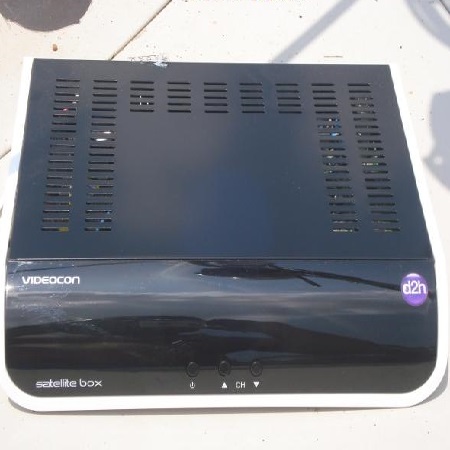
    MUMBAI: The Indian government last year raised the import duties of set top boxes (STBs) from five per cent to 10 per cent in a bid to encourage Indian entrepreneurs to start making them indigenously. To no avail, Indian MSOs, DTH players, continued importing the boxes from China, Korea and Taiwan to meet the government mandate of digitising India’s cable TV sector.

    At least one player yesterday announced that it had taken up the gauntlet: electronics major Videocon Industries. Director Anirudh Dhoot told Press Trust of India that his company is planning to set up a one million STB manufacturing plant by end-2014. Dhoot told PTI that the plant is likely to be set up in either Punjab or Madhya Pradesh. 


    The Videocon group also runs Videocon d2h – one of the fastest growing DTH players in India. 


    The digitisation of cable TV in phase III and phase IV towns is expected to require around 80 million STBs; of which 60 million will likely be rolled out this year itself, totting up to a business potential of an estimated  Rs 7,500 crore at factory prices. The second and third phases of digitisation are scheduled to be completed by end 2014, but everyone in the industry expects a delay of about three to six months. If Videocon manages to get its plant to start churning out STBs by end this year, it could meet some of that demand. 


    The Indian cable TV industry has deployed around 22 million STBs during the first and second phase of digitisation; even as DTH players have deployed around 45-50 million STBs collectively over the years since DTH launched in India.


    Most of these were imports. Videocon, on its part, upped the capacity at its existing STB plant from 700,000 per annum to one million during the festival season last year. Now it plans to set up a new plant. Other players who are involved in the manufacture of STBs domestically include: Noida-based Dixon Technologies and Kortek Electronics.