Tag: Trai

  • TRAI’s lifeline for content aggregators

    TRAI’s lifeline for content aggregators

    The Telecom Regulatory Authority of India’s  latest notification of regulations for content aggregators has attempted to curb their muscling power, even as it has allowed them to continue as agents carrying out the same function.


    TRAI on Monday notified amendments to its regulations barring content aggregators from bundling of channels belonging to different broadcaster groups and mandated broadcasters to themselves sign Reference Interconnect Offers (RIOs) with Distribution Platform Operators (DPOs). The broadcasters have, however, been allowed to appoint authorised agents to market their bouquets, which could be the existing aggregators.


    The amended regulations change the status of content aggregators from entities that aggregated television channels and marketed them in bundled packages to television distribution platforms to that of agents of broadcasters.


    But the role of content aggregators may not change radically. Content aggregators as agents of broadcasters might still be able to perpetuate their dominance, though in a slightly diluted form.


    The concerns flagged by TRAI vis-?-vis the business of content aggregation were:


    a. Top three content aggregators – MediaPro Enterprise India, IndiaCast UTV Media Distribution, MSM Discovery – controlled 58.6% of the total pay TV market.

    b. Content aggregators forced all-channel bouquets on the DPOs, validated by the fact that even though the largest bouquets offered by the aggregators in their RIOs are in the range of 13 to 20 channels, the agreements entered into are for a package of channels consisting of almost all the channels they are authorised to distribute.

    c. Content aggregators grossly discriminated against independent DPOs, charging 62 per cent to 85% more than DPOs which are established by broadcasting groups.


    The outcome of the amendments to the TRAI regulations could be the following:


    a. End of the era of clout wherein aggregators used to bundle channels of various broadcaster groups into  package cluster and thrust them down the DPOs throats.

    b. Making it obligatory for broadcasters to publish RIOs will result in relative transparency of pricing of channels.

    c. The margin of discrimination against independent DPOs may substantially get narrowed.

    d. The existence of content aggregators gets erased from the regulatory point of view. The regulations make the broadcasters responsible for the actions of content aggregators, now described as authorised agents of broadcasters.


    The issues the amendments have not addressed:


    a. By allowing channels from broadcasters within a corporate group to be packaged, the TRAI has allowed weak channels to piggyback on highly dominant  and popular channels. This could lead to problem and conflict in future when these networks swell as they add more and channels.

    b. Agents have been allowed to sell channels of different broadcaster groups though as separate bouquets. This does not completely eliminate the bargaining power of agents. They can bargain with DPOs for weak bouquets in exchange for a supposedly more favourable deal on dominant bouquets.

    c. Though TRAI made a mention of the undue advantage enjoyed by content aggregators owned by broadcasters, it stopped short of clamping down on the cross-holding norms for them, meaning it has continued to allow different broadcast networks to own a distribution agent.

    d. Independent DPOs will still be discriminated against, though the scale of bias against them is expected to significantly narrow.


    The amended regulations may have shaken up content aggregators. For the past six months, executives working in these companies were filled with trepidation that they would be forced to shut down their operations. But by allowing them to continue as agents, the TRAI has offered them a lifeline.
  • We have done a terrible job in broadband penetration: Rahul Khullar

    We have done a terrible job in broadband penetration: Rahul Khullar

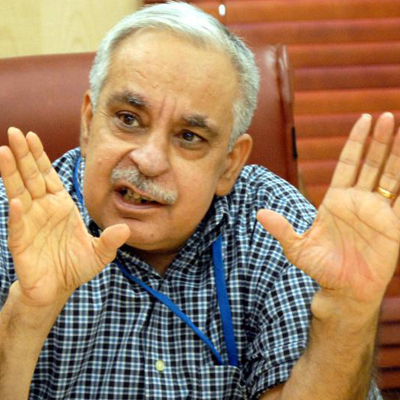
    MUMBAI: The chairman of the Telecom Regulatory Authority of India (TRAI) Rahul Khullar is known for being vocal. While earlier he has voiced his opinion on various things including bringing transparency in the way telcos function, delivering his keynote address at the India Digital Summit of the Internet and Mobile Association of India (IAMAI) in the capital, he candidly admitted that the rollout of National Optic Fibre Network (NOFN) was not-so successful. He said, “We have done a terrible job in broadband. We are nowhere near to meeting target of NOFN and unless it is done, internet penetration cannot happen at the desired pace.”


    Referring to the fact that 80 per cent of new internet users are coming through 2G network, Khullar said, “Access and speed will determine penetration of smart-phones and internet. Unless there is reasonable pricing of spectrum and making spectrum available, we will not succeed.” He opined that the next government has to take immediate action on spectrum availability to have successful internet penetration in India.


    IAMAI chairman and Google India managing director Rajan Anandan, talking at the inaugural ceremony said: “India is adding four million active internet users every month. At this rate we will overtake the United States by end of this year to become the second largest internet market.”


    According to Anandan, India’s e-Commerce industry will be around US $100 billion in the next decade. However, investments of upward of US $3 billion will be required to reach that stage. “And that can only happen if FDI in e-Commerce is allowed,” said Anandan.


    “Given the dire strait of our finances, e-Commerce industry should embrace itself for taxation,” remarked Khullar, who also raised the issue of data protection, privacy and internet governance and said that industry members should come forward along-with civil society in creation of internet governance laws.

  • TRAI says 44% of DTH subscribers inactive

    TRAI says 44% of DTH subscribers inactive

    MUMBAI: Direct-to-home television service providers appear to be having a tough time retaining their subscribers. A large portion of their registered subscribers are inactive.


    Of the total registered subscriber base of 60.71 million of the six DTH companies as on 30 September, 2013, the number of active subscribers was just 34.26 million (or 56 per cent), according to the Telecom Regulatory Authority of India’s quarterly report titled ‘The Indian Telecom Services Performance Indicators’.


    The DTH subscriber base as on 30 September 2013 was three per cent more than a quarter ago.


    The report said the number of internet subscribers (excluding internet access by mobile devices) has increased 1.38 per cent  from 21.89 million at the end of June 2013 to 22.19 million at the end of September 2013.


    The number of broadband subscribers has also risen. The figure went up from 15.20 million in June to 15.35 million in September, thus registering a quarterly growth of 0.99 per cent and year-on-year (y-o-y) growth of 4.52 per cent. That apart, the number of narrowband subscribers (except internet access by mobile devices) increased from 6.69 million to 6.84 million, registering a quarterly growth of 2.25 per cent from a quarter ago.


    The report also mentions that the number of private satellite TV channels as permitted by the Information and Broadcasting Ministry is 784, of which 187 are pay channels. The maximum number of TV channels (Pay, FTA and Local) being carried by any of the reported Multi System Operators (MSOs) is 218 whereas in the conventional analogue form, maximum number of channels being carried by any of the reported MSOs is 100 channels.


    As per the report, the number of telephone subscribers has decreased from 903.09 million at the end of June 2013 to 899.86 million at the end of September 2013, thus registering a negative growth of 0.36 per cent over the previous quarter. “This reflects y-o-y negative growth of 4.03 per cent over the same quarter last year,” states the TRAI report.


    The report also highlights a net decline of 2.78 million telephone subscribers during the quarter. “The total wireless (GSM + CDMA) subscriber base has decreased from 873.36 million to 870.58 million, registering a negative growth rate of 0.32 per cent over the previous quarter. The y-o-y negative growth rate of wireless subscribers for September is 3.97 per cent,” says the report.


     The number of subscribers who accessed internet using a mobile device is 188.20 million during the quarter ending September 2013.

  • Arasu has a provisional MSO licence to operate: Manish Tewari

    Arasu has a provisional MSO licence to operate: Manish Tewari

    NEW DELHI: The Tamil Nadu Arasu Cable TV Corporation, a multi-system operator (MSO) run by the TN government – has been claiming that the government has not given it an operational licence, thereby restricting it from transmitting digital signals to its subscribers. The MSO even filed a case in the Madras High Court in December, 2013 and got a stay over Telecom Regulatory Authority of India’s (TRAI) earlier order which stated that MSOs transmitting analogue signals in Chennai would be prosecuted.


    While the case is yet to get its second date of hearing, the Information and Broadcasting (I&B) minister Manish Tewari, in a response to a question in the Parliament, said that on 26 November, 2007 Arasu had applied for grant of MSO registration in conditional access system (CAS) notified area of Chennai. The Ministry had granted provisional permission on 2 April, 2008. It was on the condition that after TRAI recommendations are considered, the Ministry will decide whether state governments/PSUs and other entities can enter into broadcasting activities including MSO/Cable operations.


    Along with Arasu, four other MSOs in Chennai were also given CAS licences in 2006 including IMCL, Hathway Cable and Datacom, Kal Cable and JAK communications.


    In response to a question about licences given to private players in other southern states, Tewari said that CAS was implemented in the notified areas of Delhi, Mumbai and Kolkata on 31.12.2006; while in Chennai, it was implemented since 2003 under notifications of 14 January, 2003 and 31 July, 2006. Since CAS was implemented only in Chennai, no CAS permission was granted to MSOs in other southern states.


    The entire episode has in a way turned everything around. The case is pending in court till the time TRAI submits its response. So while TRAI – which is completely against the idea of govt. owned MSOs and awaits Ministry’s response to its recommendations – awaits the responses, it could mean that Arasu is free to operate. Moreover, it can even give digital signals or seed STBs as TRAI can’t take any action against it, given that the MSO has a temporary licence.


    The picture will be clear only after the Ministry brings out its regulation and the case in the Madras High Court proceeds.

  • TRAI: Phase I and II CAF collection nearing completion

    TRAI: Phase I and II CAF collection nearing completion

    MUMBAI: When the entire process of digitisation started in the country, nobody would have thought it would be such a tough nut to crack and there would be a slippage of so many deadlines. Recently, the Telecom Regulatory Authority of India (TRAI) warned the multi-system operators (MSOs) and subscribers in the digital addressable system (DAS) Phase I and II towns that enough was enough and that they had better get going on finishing the task of submitting the Customer Application Forms (CAFs) with two deadlines – on 27 January for 23 cities and on 31 January for eight cities – once again proving elusive.

    The caning seems to have worked well as everything is getting back on track now. A TRAI official informs that the work in the Phase I and II of Digital Addressable System (DAS) is near completion. Cities with 27 January as the deadline – Rajkot, Surat, Vadodara, Faridabad, Mysore, Aurangabad, Nasik, Pimpri-Chinchwad, Pune, Sholapur, Amritsar, Ludhiana, Jaipur, Jodhpur, Agra, Allahabad, Ghaziabad, Kanpur, Lucknow, Meerut, Varanasi, Chandigarh and Howrah – have almost been  100 per cent  penetrated with active set top boxes (STBs). Almost 85 per cent work has been done (as of 29 January) in areas with 31 January as the deadline that includes cities such as Patna, Ahmedabad, Ranchi, Bengaluru, Kalyan-Dombivali, Nagpur, Navi Mumbai and Thane.

    MSOs have been given two to three additional days post the deadline to submit their compliance reports to TRAI.


    “We are in touch with the MSOs on a daily basis and nearly 99.7 per cent has been completed as per the deadlines. If subscribers have failed to fill the forms, MSOs have cut off connections, saving TRAI’s time and also saving themselves from any action against them,” informs a TRAI official.

    However, Maharashtra Cable Operators Federation (MCOF) president Arvind Prabhoo says that only 70 to 75 per cent work has been completed in the second deadline areas, while in Navi Mumbai hardly 30- 40 per cent work is done.

    A cable operator from Airoli says, “We had got CAF forms in the beginning till about June last year. After that it stopped coming to us.”


    But Siti Cable COO Anil Malhotra says that almost 90 per cent work has been completed and the subscribers who fail to fill the forms by tonight will have to face a TV blackout. “Scrolls have already been running to make them aware about it and thus we are sure that we will reach 100 per cent compliance soon,” he remarks.


    Hathway Cable and Datacom CEO Jagdish Kumar claims that in these areas Hathway has reached near about 100 per cent. “By 27 December, almost 90 per cent work was done, while the rest had to face a disconnection. Few customers came back to fill the forms and others switched to DTH,” he says. In the next eight cities, about 80 per cent of forms have been collected and fed into the system.


    Another leading MSO, Den Networks is also claiming to have achieved 100 per cent compliance for the two dates. Says Den Networks CEO S N Sharma, “In these cities we have complied fully and sent the report to TRAI. We have data of all subscribers and for those who haven’t sent them, their cable connections have been cut off.”


    A bright day for digitisation doesn’t look far if the above numbers are to be believed. While few exceptions are always there, most of the stakeholders are taking it seriously. And if the MSOs continue at the same pace and work towards achieving the goal diligently, by February, the work for phase III and IV will kick off.

  • Cabinet decides spectrum acquired will be charged at 5% of AGR

    Cabinet decides spectrum acquired will be charged at 5% of AGR

    NEW DELHI: The Union Government has approved that spectrum acquired in the current auction will be charged at five per cent of the AGR.


     In cases of combination of existing spectrum in this band and spectrum acquired through the auction, the weighted average will apply to the entire spectrum held by the operator in 900 MHz and 1800 MHz band.


    The Cabinet also said the licensees who do not acquire spectrum in this auction shall continue to pay spectrum usage charge (SUC) according to the existing slab rate.


    As 800 MHz spectrum is not being auctioned in the forthcoming auction and the recommendation of the Telecom Regulatory Authority of India (TRAI) has been sought for the reserve price, the decision in respect of Code Division Multiple Access (CDMA) spectrum will be taken at an appropriate time.


    In respect of Broadband Wireless Access (BWA) spectrum acquired through auction in 2010, SUC will continue to be charged, as per present practice, and the operator would be required to report the revenue earned from BWA spectrum separately.


    The Cabinet noted that as a matter of policy, it is desirable to move to a flat rate SUC and adoption of a weighted average would provide a path for such transition.


    A spokesperson said the decisions are expected to improve the bidding sentiment in the forthcoming auction.

  • JAINHITS DPs successfully hosts LCO meet for AP

    JAINHITS DPs successfully hosts LCO meet for AP

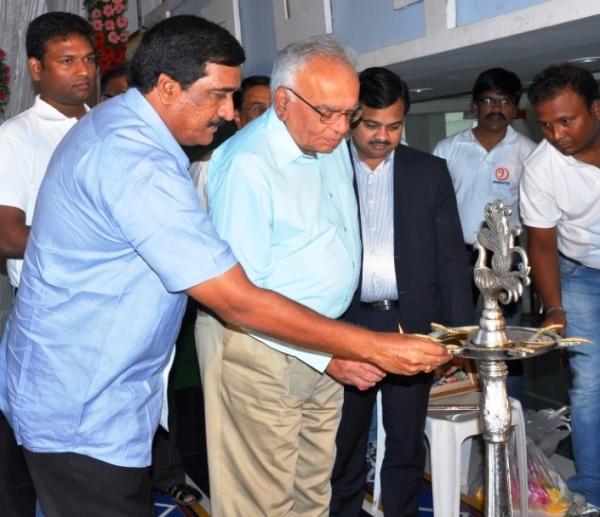
    VIJAYWADA:  JAINHITS, India’s only HITS Platform based service in an effort to digitize all analogue cable networks in the country, conducted a massive LCO (Local Cable Operators) meet in association with the state DP (Distribution Partners) for the Andhra Pradesh region. The meet saw close to 650 LCOs from across the state. The objective was to inform the gathering about the immediate cable digitization solutions that JAINHITS can provide across every corner of India.


    Present on the occasion, Mr. Pradip Baijal, Ex Chief, TRAI (Telecom Regulatory Authority of India) said, “JAINHITS has obtained content coupled with all the regulatory approvals to supply cable TV and broadband, and has downloaded its signal. The time has come for the latest technology of HITS to take the signal directly to the LCOs, and then to subscribers, and to also supply broadband to subscribers through the LCOs.”


    According to the TRAI’s policy, it is expected that the services of several lakh cable subscribers are likely to be disrupted due to non-receipt of their Digital Addressable System (DAS) license from the Centre. Thus, JAINHITS – India’s first DTN service based on the next generation technology of HITS (Headend-In-The-Sky) can play a crucial role with its triple play service offering: Video, Voice and Data that can help digitize all analogue cable networks.


    JAINHITS is not only offering digital cable services, but also providing high speed broadband and multi-screen service which allows the subscribers to view their favorite content on their TV sets, smart phones or tablet PCs – anywhere, anytime; apart from that there are interactive services such as healthcare, education and financial inclusion. HITS is the only platform in the country, offering complete empowerment  and ownership to even the smallest LCO by making him a Leader & Cable Owner and an Independent Service Operator (ISO), by introducing innovative Products, Services, Schemes & Offerings etc. which will make the Digitization Process within the reach of their economic availability.
     

    All the DPs for the state of AP were present at the meet namely; V. Balaji, Master Care Electronics Pvt. Ltd. (Vijayawada), P. Prasada Raju, One Implex Business Solutions Pvt. Ltd. (Hyderabad), Srinivasa Rao, Priyadarshini Communications (Kurnool), Prasada Raju, Priima Infomatics Pvt. Ltd. (Warangal), S. M Reddy, Sm Channel Marketing and B. Suresh, Sri HiSpeed Network (Tirupati). Giving the local flavor, the DPs present there elaborated on the relevance of the services for the AP market. In heavy monsoon period unlike the competition, JAINHITS technology, offers uninterrupted broadcast services for its subscribers in the region.


    The key proposition of the HITS platform is its cost-effective investment for cable operators which stands at a minimum of only Rs 25,000 per month. With this, they expect to do business with 400 plus partners and install over 1000 Mini Downlink Headend’s across 640 districts of India by the end of 2014.


    About JAINHITS:

    JAINHITS is a satellite communications company with no ground presence & has MSO, ISP and HITS license. Its product portfolio includes Mini Downlink Headend and CMTS for Cable Operators with some add on accessories like Nodes, Amplifiers and Wi-Fi Hot Spots which will help them increase their ARPUs. JAINHITS is offering more than 250 Digital TV Channels through the Standard and High Definition Set Top Boxes (MPEG-4) with the Bureau of Indian Standard (BIS) standards, Broadband through Wired and Wireless Modems, Value Added Services like Video On Demand (VoD) and Innovative Products like Cloud Broadband, Gaming Console etc. JAINHITS plans to soon provide online Education and Healthcare to its consumers through its network of ISO’s.


    Only JAINHITS delivers signals directly to LCO / MSO Networks across India with a plug and play solution. With an aim to make cable operator businesses independent and growth oriented, it helps LCOs go Digital over night and ensure full compliance across legal, regulatory, and content requirements at the lowest comparative investments.

  • TRAI awaits call from Madras High Court for Arasu hearing

    TRAI awaits call from Madras High Court for Arasu hearing

    MUMBAI: More than four weeks have passed since the Madras High Court gave the interim order restraining the Telecom Regulatory Authority of India (TRAI) from taking any coercive steps against the Tamil Nadu state government-owned MSO Arasu Cable TV Corp for giving analogue signals in Chennai.


    However, there has been no follow up by the Madras HC on what it intends to do following the stay. 


    Anticipating a date soon, TRAI lawyers are already up on their toes and are compiling their response so that it can be submitted to the court. “We are still waiting for a date of the hearing. We haven’t heard anything from the court,” says a senior TRAI official.


    The case filed against two parties – the Ministry of Information and Broadcasting (MIB) and the TRAI will hopefully be  heard soon where the respondents from both the parties will get a chance to present their individual viewpoints. 


    The entire issue cropped up because Arasu has not been granted a digital addressable system (DAS) licence to run its business in the state even after continuous efforts to secure it. The MSO is still giving out analogue signals, thus keeping Chennai as the only city from Phase I to not go the whole hog on digitisation. 


    In its order which it passed late December 2013, the court states that the Inter-ministerial Committee (IMC) formed to decide the fate of Arasu has to move quickly on it. The order also mentions that Arasu abided by the rules and applied for a licence even after the Cable TV Networks (Regulation) Act, 1995 was amended in 2012.


    “It is not known to this Court as to why the first respondent (MIB) has not taken any decision so far on the application of the petitioner,” states the order. 


    The TRAI view on this is quite clear. Says a senior official at the regulator: “The decision on granting the licence lies with the MIB. In our recommendation we said that state governments should not be given the licence. The IMC is working on it but we haven’t yet got any response from them.” 


    The HC also states that since Arasu had followed the rules for applying for a licence, the MIB is not justified in keeping the matter pending and not arriving at a conclusion. It has also directed the Ministry to come out with a decision at the earliest.


    If MIB follows the TRAI’s cue and bars Arasu from securing a licence, the regulator  can take action against the MSO, according to the official. “If the MIB disqualifies Arasu from getting a licence, it cannot operate and if they do, they will be in violation of the law,” he says.


    As of now, nothing can be done against Arasu due to the interim order given by the Madras HC. But which direction this case moves is extremely crucial as the country is soon entering phase III and IV of digitisation. And it will decide whether the city of Chennai remains an analogue island in a sea of digitised India. 

  • First Indian Digital TV Honours on 28 Jan

    First Indian Digital TV Honours on 28 Jan

    MUMBAI: 2013 was a watershed year for the cable TV and DTH industry, what with the the entire TV industry – cable TV operators, MSOs, DTH players –  working on going into overdrive, pushing the government’s digital addressable system (DAS – digitisation) mandate. There were big developments and even bigger initiatives, and it is with a view to recognising and rewarding such endeavours as well as the individuals and organisations behind them that Indiantelevision.com has instituted a first-of-its-kind initiative called ‘The Indian Digital TV Honours’, to be held on Tuesday 28 January at The Lalit, New Delhi.


    The list of best practices and worthy winners has been compiled by an advisory board comprising senior executives, industry veterans and the indiantelevision.com editorial team led by founder, CEO and editor-in-chief Anil Wanvari.


    According to Media Partners Asia executive director and co-founder and member of the advisory board Vivek Couto, The Indian Digital TV Honours is a laudable effort as it will go a long way in encouraging individuals to accelerate the development of the industry.  “That’s because it seeks to recognize the achievement, innovation and vision of the stakeholders,” he says.”


    Media observer and consultant and member of the advisory board Sanjeev Hiremath adds: “It is an encouraging initiative by Indiantelevision.com. It is a way to both support and encourage the implementation of DAS. I am glad that a platform like this has been set up by the Indiantelevision team.”


    BCCL president corporate development (and member of the advisory board) Sunil Lulla believes there was a need to acknowledge the manner in which television distribution is changing. “I am glad that there is another first from Indiantelevision.com. Acknowledgement is needed. Though the switch from analog to digital will take time, encouragement is needed.”


    Chrome Data Analytics and Media founder and MD Pankaj Krishna joins his peers in lauding the effort. “I am sure pretty soon, others will follow it too. One must remember that digitisation is very critical to us now and with the change in wind, the transition from analog to digital is going to become crucial. In short, it is like the change from Kodak film roll which we used 10 years ago to a digicam, which has become a part of our lives now.”


    So how did the advisory board select the winners? Says Wanvari: “We had detailed discussions with various stakeholders in the industry, to come up with a filtered list of top achievements to which the advisory members also contributed.”


    Adds Lulla: “A list was given to us comprising names of people and companies that have made a difference to digitisation from various points of view like preparedness, initiatives taken, consumers, success etc. So, I looked at these from various perspectives like who made it simple for consumers, who followed the regulations, which company or person drove the change and so on…”


    What were the criteria for selection? Couto anwers: “The criteria were simple. Any stakeholder or regulator who has ushered in development through investment, leadership or a combination of both to accelerate quality content and infrastructure for consumers will feature in the list.”


    The entire selection process took almost a month for the advisory board. Hiremath, who identified categories to honour key initiatives, says: “This is going to be an exciting and interesting event.”


    According to Hiremath and Couto, while the first edition will honour well-known names from the industry, the awards will only get bigger and better with time.


    “We will see OTT players, software developers, app developers and many others entering the ecosystem in the future,” Couto rounds off.
     

    The Event is: 

    Powered by Partner:  Den

    Associate Partners: Hathway, Surewaves, Videocon D2H

    Support Partner: SES, The One Alliance

    Media Partner: India News

    Thanks to HBO Defined and HBO Hits for the support

    Online Media Partners: Radioandmusic.com, Tellychakkar.com

    Event Executed By: ITV2.0 Productions

    An Initiative By: Indiantelevision.com

  • MSOs ask LCOs to collect CAFs from remaining cable homes in Kolkata

    MSOs ask LCOs to collect CAFs from remaining cable homes in Kolkata

    KOLKATA: That the Telecom Regulatory Authority of India (TRAI) has asked MSOs in Kolkata to start gross (consumer) billing from 15 December, 2013, indiantelevision.com had already reported. Word just in is that MSOs in the Kolkata Municipal Area (KMA) have requested local cable operators (LCOs) to expedite the process of collecting Consumer Application Forms (CAF) and channel package details from the remaining five per cent of nearly 30 lakh cable TV homes in the city.


    “We are asking the LCOs to cooperate and collect the remaining five per cent CAF so that we can start generating accurate bills against their names,” said SitiCable Network director Suresh Sethia, adding that the region had already collected 95-97 per cent CAF. 


    Manthan Broadband Services director Sudip Ghosh informed that apart from taking details from consumers in the prescribed handwritten format, “MSOs have also created a system in their servers, where LCOs could send CAF details to further advance the process of DAS.”


    Meanwhile, an official from GTPL-KCBPL said the company had got CAF and SAF details of only over five lakh customers out of the seven lakh active set top boxes (STBs). “Unless we get the CAF and SAF details, we cannot generate bills in the names of the customers,” he remarked. “But we will try to complete the process for the remaining 2 lakh customers and give bills to them in the next one or two months,” he added after a pause.


    According to few industry sources, while players like SitiCable and Manthan have said they have achieved 100 per cent CAF rate, it is possible they haven’t accounted for situations where certain households have two set top boxes and the consumers haven’t gone through the CAF process or homes that have been closed after the residents left the city and so on. Still, other sources questioned how MSOs can start the billing process when they haven’t yet started the package.