Tag: Trai

  • Vodafone Idea lost 0.83 million wireless subscribers in Aug: Trai

    Vodafone Idea lost 0.83 million wireless subscribers in Aug: Trai

    Mumbai: Vodafone Idea lost 0.83 million wireless subscribers in August, according to Telecom Regulatory Authority of India (Trai) subscription data. Reliance Jio and Bharti Airtel have added 0.64 million and 0.13 million wireless subscribers, respectively.

    Total wireless subscribers decreased from 1,186.84 million to 1,186.72 million seeing a net subscriber decline of 1.1 million. Wireless subscriptions in urban areas increased from 650.10 million to 650.39 million, however, wireless subscriptions in rural areas decreased from 536.74 million to 536.33 million, revealed the data.

    Out of 1,186.72 million wireless subscribers, 991.71 million were active. Reliance Jio reported 350.63 million active wireless subscribers, Bharti Airtel stood at 346.84 million, and Vodafone Idea at 236.49 million.

    The number of telephone subscribers increased from 1,209.45 million to 1,209.58 million. Urban telephone subscriptions increased from 670.75 million to 671.31 million, however, the rural subscription decreased from 538.70 million to 538.28 million.

    Trai received information from 499 operators in August versus 455 operators in July and reported that the total broadband subscribers increased from 808.60 million to 813.47 million. Mobile device users grew from 783.39 million to 787.94 million, wired subscribers grew marginally from 24.01 million to 24.09 million and fixed wireless subscribers grew marginally from 1.19 million to 1.24 million.

    The top five service providers constituted 98.75 per cent market share of the total broadband subscribers. These were Reliance Jio Infocomm Ltd (447.57 million), Bharti Airtel (205.96 million), Vodafone Idea (123.53 million), BSNL (24.28 million), and Atria Convergence (1.95 million).

    The top five wireless broadband service providers were Reliance Jio Infocomm Ltd (443.86 million), Bharti Airtel (202.27 million), Vodafone Idea (123.52 million), BSNL (18.19 million), and Tikona Infinet Ltd (0.30 million).

    The top five wired broadband service providers were BSNL (5.49 million), Reliance Jio Infocomm Ltd (3.71 million), Bharti Airtel (3.69 million), Atria Convergence Technologies (1.95 million), and Hathway Cable & Datacom (1.08 million).

    The total wireline subscribers increased from 22.61 million to 22.86 million, a net subscriber increase of 0.25 million. Reliance Jio and Bharti Airtel led the growth by adding 0.25 million and 0.10 million subscribers, respectively. Vodafone Idea added 7870 subscribers whereas BSNL, MTNL, Tata Telecommunications, Reliance Communications, and Quadrant lost subscribers.  

  • TV18 Broadcast publishes new RIO adhering to NTO 2.0

    TV18 Broadcast publishes new RIO adhering to NTO 2.0

    Mumbai: TV18 Broadcast Ltd has published its reference interconnection (RIO) offer issued under telecommunications (broadcasting and cable) services interconnection (addressable systems) regulations, 2017 for all distribution platforms. The new RIO will be effective from 1 December. 

    The tariffs for a-la-carte channels and bouquets published in the RIO adhere to the Telecom Regulatory Authority of India (Trai) new tariff order (NTO) 2.0.

    Viacom18 network channels including their flagship Hindi GEC Colors, Kannada GEC Colors Kannada both SD and HD will be priced greater than Rs 12. As per NTO 2.0, Trai has mandated that a channel’s MRP must not exceed Rs 12 for it to be included in any bouquet. The aforementioned channels will not be part of any of the 39 bouquets offered by the broadcaster.

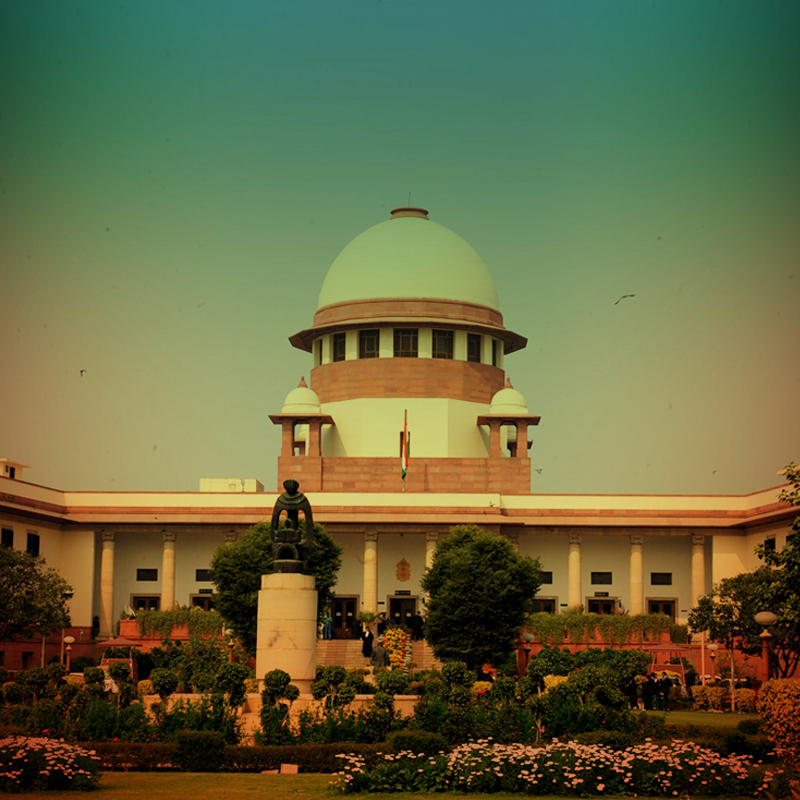
    The implementation of the new tariff order 2.0 has been halted as broadcasters under the aegis of the Indian Broadcasting Foundation (IBF) have challenged the Trai order in the Supreme Court. The final hearing on the matter is scheduled for 30 November.

  • SPNI publishes new RIO effective from 1 December

    SPNI publishes new RIO effective from 1 December

    Mumbai: Sony Pictures Networks India (SPNI) has published its new reference interconnection offer (RIO) issued under telecommunications (broadcasting and cable) services interconnection (addressable systems) regulations, 2017 for all distribution platforms.

    The RIO is subject to the final outcome of the special leave petition filed by the company before the Supreme Court. The new channel rate card will be effective from 1 December.

    According to the rate card, SPNI channels including Hindi GECs Sony Sab, SET, English sports channels Sony Ten 1, Sony Ten 2, and HD channels SET HD, Hindi movie channel Max HD, Sab HD, sports channels Ten 1 HD, Ten 2 HD, Ten 3 HD, Six HD, and Telugu and Tamil sports channel Ten 4 HD have an MRP greater than Rs 12.

    As per the new tariff regime 2.0 order, the Telecom Regulatory Authority of India (Trai) has mandated that a channel’s MRP must not exceed Rs 12 for it to be included in any bouquet. The aforementioned channels will not be part of any of the 12 bouquets offered by SPNI.

    The implementation of the new tariff order 2.0 has been halted as broadcasters under the aegis of the Indian Broadcasting Foundation (IBF) have challenged the Trai order in the Supreme Court. The final hearing on the matter is scheduled for 30 November.

  • Trai may relax criteria to set up satellite earth station gateways

    Trai may relax criteria to set up satellite earth station gateways

    Mumbai: The Telecom Regulatory Authority of India (Trai) is expected to release a consultation paper on licensing and framework of satellite earth station gateways, said Trai chairman PD Vaghela, according to a report by PTI.

    The regulator is also planning a consultation paper on developing a comprehensive, single window, online common portal, having inter-departmental linkages for transfer of application and information for parallel processing.  

    Vaghela was addressing a virtual event organised by the newly formed Indian Space Association on Monday.  

    Currently, only service licences are permitted to set up earth stations and Trai believes that there is a need to allow multiple stakeholders to set up earth stations which will attract investment and increase satellite capacities.

    According to the report by PTI, Vaghela emphasised the need for the convergence of laws and governance to address the rapid technological convergence happening in the communications and space sector. Trai will form inter-departmental linkages between the telecom department, ministry of information and broadcasting, and department of space, to create a common online portal that will be engaged in granting approval, permission, allocation, renewal, cancellation, and revocation as well as facilitate transfer of application and information for parallel processing

  • SC posts the final hearing on NTO 2.0 to 30 November

    SC posts the final hearing on NTO 2.0 to 30 November

    New Delhi: The Supreme Court has posted the final hearing on a bunch of petitions filed against the Bombay HC order regarding the implementation of the New Tariff Order (NTO) 2.0 to 30 November. In the meantime, the court has also asked the Counsel of all parties to file their written submissions before 12 November.

    When the matter was last taken up for hearing on Friday, senior advocate Mukul Rohtagi appearing on behalf of the Indian Broadcasting and Digital Foundation (IBDF) put forward brief arguments based on the rejoinder filed previously by the Indian Broadcasting and Digital Foundation (IBDF). However, due to paucity of time, the arguments could not be concluded.

    The Indian Broadcasting Foundation, an umbrella organisation of private TV broadcasters and a couple of other private channels had moved the SC in July against the Bombay high court judgment which had upheld the constitutionality of the NTO 2.0. According to the broadcasters, the new tariff order “impinges” on the broadcasters’ fundamental right of freedom of speech and expression under Article 19(1)(a) of the Constitution

    The NTO 2.0 passed by the Telecom Regulatory Authority of India (Trai) in January 2020 sought to cap the pay channel price at Rs 12 from the existing Rs 19. The move was vehemently opposed by the broadcasters, who challenged the order as “arbitrary and in violation of their fundamental right”, who moved the Bombay HC against its implementation.

    However, on 30 June, the Bombay HC had upheld the constitutional validity of NTO 2.0, but partly struck down the second provision of the twin conditions as “arbitrary”. As per the second provision, the a-la-carte rates of each pay channel (MRP), forming part of a bouquet, shall in no case exceed three times the average rate of a pay channel of the bouquet of which such pay channel is a part.

  • Reliance Jio added 6.5 million mobile subscribers in July: Trai

    Reliance Jio added 6.5 million mobile subscribers in July: Trai

    Mumbai: Reliance Jio added 6.5 million mobile subscribers in July, according to the latest data shared by the Telecom Regulatory Authority of India (Trai). Airtel added 1.9 million mobile subscribers and Vodafone Idea lost 1.4 million subscribers, the telecom regulator said.

    BSNL lost 1.01 million subscribers as well. MTNL and Reliance Communication lost a few thousand subscribers. Net mobile subscribers grew by 6 million.

    Total wireless subscribers grew from 1180.83 million to 1186.84 million at a monthly growth rate of 0.51 per cent. Wireless subscriptions in urban areas increased from 646.29 million to 650.10 million. In rural areas, it increased from 534.54 million to 536.74 million.

    Out of total wireless subscribers, 989.34 were active mobile subscribers. Reliance Jio had 346.49 million active subscribers, Bharti Airtel had 346.07 and Vodafone Idea had 238.39.

    Total telephone subscribers increased from 1202.57 million to 1209.45 million at the end of July. Urban telephone subscriptions increased from 666.10 million to 670.75 million. Rural subscriptions increased from 536.47 million to 538.70 million.

    As per information received by 455 operators in July 2021 in comparison to 440 operators in June 2021, total broadband subscribers increased from 792.78 million to 808.68 million at a monthly growth rate of 2 per cent. Wired subscribers increased from 23.52 million to 24.01 million, mobile device users increased from 768.61 million to 783.39 million and fixed wireless subscribers increased from 0.65 million to 1.19 million.

    The top five service providers constituted 98.77 per cent market share of the total broadband subscribers at the end of July. These service providers were Reliance Jio Infocomm Ltd (446.69 million), Bharti Airtel (201.77 million), Vodafone Idea (123.97 million), BSNL (24.26 million), and Atria Convergence (1.93 million).

    The top five wired broadband service providers were BSNL (5.83 million), Bharti Airtel (3.54 million), Reliance Jio Infocomm Ltd (3.47 million), Atria Convergence Technologies (1.93 million), and Hathway Cable & Datacom (1.07 million).

    The top five wireless broadband service providers were Reliance Jio Infocomm (443.61 million), Bharti Airtel (198.23 million), Vodafone Idea (123.97 million), BSNL (17.89 million), and Tikona Infinet Ltd (0.31 million).  

    Wireline subscribers increased from 21.74 million to 22.61 million with a monthly growth rate of 4.04 per cent. The share of urban and rural subscribers stood at 91.32 per cent and 8.68 per cent. BSNL and MTNL held 47.93 per cent of the wireline market. Net wireline subscribers increased by 8.7 million. BSNL added 5.06 million, Reliance Jio added 0.25 million and Bharti Airtel added 0.12 million subscribers, respectively.

  • TRAI designates Telecom Engineering Centre as testing agency for CAS

    TRAI designates Telecom Engineering Centre as testing agency for CAS

    New Delhi : The Telecom Regulatory Authority of India (TRAI) has designated Telecom Engineering Centre, Department of Telecommunications as a testing and certification agency for Conditional Access Systems (CAS) and Subscriber Management Systems (SMS) of broadcast and Cable TV services.

    TEC will carry out the overall administration, execution and co-ordination of testing of CAS and SMS according to the Interconnection Regulators, 2017. It will also notify and maintain Test Schedules and Test Procedures (TSTP) as well as empanel and declare the final list of accredited testing laboratories that fulfill the requirements for carrying out the testing.

    The Centre will also provide certification for all products tested and certified by the accredited testing laboratories, and maintain the version and deployment details of CAS and SMS deployed in India, said the regulatory body.

    The decision was taken following several complaints from broadcasters and distribution platform operators regarding unauthorised distribution of their signals, much of which occurs due to the deployment of CAS or SMS that do not comply with security protocols.

    Sub-standard CAS and SMS also render the distribution network vulnerable to hacking and content piracy.

  • MCOF demands TRAI resolve pending grievances by 2 October

    MCOF demands TRAI resolve pending grievances by 2 October

    Mumbai: The Maharashtra Cable Operators’ Foundation (MCOF) has written to the chairman of the Telecom Regulatory Authority of India (TRAI) and minister of information and broadcasting (I&B) Anurag Thakur to resolve pending grievances of local cable operators (LCOs) before 2 October.

    According to the association, the inaction of TRAI has resulted in a loss of Rs 600 crore per year for LCOs. “The LCO fraternity will take steps to protect itself no matter the consequences on the rest of the value chain,” the letter reads.

    The LCOs had sought TRAI intervention in the matter of unilateral imposition of inter-connect agreement by multi-system operators. It alleged that MSOs leveraged their portals to impose prepaid terms on LCOs while offering post-paid services to subscribers, and called for redefining the shareable revenues between broadcasters and cable operators, and asked TRAI to clear ambiguity in set-top-box ownership.

    “Our subscribers and we are wondering as to why TRAI has not taken any step to implement the NTO 2.0 after the SC verdict refusing interim relief to broadcasters’ pleadings,” said MCOF. “The broadcasters and MSOs continue to milk the disempowered customers through packaging tricks and also deny a level playing field for standalone broadcasters. On a conservative basis, the forced excess payment towards content that subscribers do not want is Rs 50 per month.”

    Model interconnection agreement (MIA) and standard interconnection agreement (SIA) are signed between MSOs and LCOs for the retransmission of TV signals. MIA ensures that there is a mutual agreement in the terms set between LCOs and MSOs in line with the regulatory framework, to avoid disputes and ensure a level playing field. SIA provides for standard terms and conditions prescribed by regulation that may be adopted by MSOs and LCOs if they fail to mutually agree on an MIA.

    During NTO 2.0 litigation, LCOs claimed that TRAI has incorrectly portrayed them as a conduit between MSOs and subscribers undermining the role they have played as last-mile owners bringing connectivity to lakhs of homes. LCOs fear that subscriber ownership may be transferred to the MSOs and will lead to broadcasters and MSOs benefitting disproportionately at the cost of LCOs.

    LCOs have adopted a prepaid billing model for cable TV subscriptions to bring transparency and plug leakage of revenues. However, LCOs claim that while MSOs impose prepaid terms on the LCOs, they continue to offer post-paid services to TV subscribers by leveraging their portals. This has impacted their revenue collection.

    “The payout of pay-TV channels to cable operators for retransmission of TV signals is much lower than the amount billed to the customer,” said MCOF. “This fact is visible at a glance at the P&L statement of MSOs who disclose Netted Content Costs,”, said the letter.

    LCOs have asked TRAI to clear ambiguity on set-top-box ownership resulting in unilateral pricing without invoicing or service level agreement (SLA) to the subscribers.

    The LCOs service 10 crore homes and employ five lakh semi-skilled personnel. The letter states that the sector is at a make-or-break point with thousands of crores invested in fibre infrastructure at risk of disuse and economical infotainment to 40 crore viewers. It said that LCOs’ long list of grievances has been brushed aside by TRAI without any justification.  

  • DTH operators write to TRAI over broadcasters offering pay channels on DD Free Dish

    DTH operators write to TRAI over broadcasters offering pay channels on DD Free Dish

    Mumbai: Direct-to-home (DTH) service providers including Tata Sky and Airtel Digital TV have written to the Telecom Regulatory Authority of India (TRAI) asking the telecom regulator to address the issue of broadcasters making their pay channels available on Prasar Bharati’s FTA platform DD Free Dish.

    According to the DTH players, this goes against the current tariff regime which mandates the designation of channels as either pay or FTA and prohibits their bundling together. Tata Sky and DTH players want that such designation remains constant across distribution platforms, a matter they had requested the TRAI to look into earlier as well, but to no avail.

    It is being alleged that despite the above mandates and guidelines, broadcasters such as Zee, Sony, Star, Viacom18 and others continue to exploit loopholes to make their second-tier channels like Zee Anmol, Sony Pal, Star Utsav and Colors Rishtey available for free on DD Free Dish in order to increase their reach beyond the pay universe and get more advertising dollars. However, the same channels are present on private distribution platforms as pay channels, in accordance with their MRP filing with TRAI.

    DTH operators say that the practice is highly discriminatory as not only are the private DPOs paying the broadcasters to distribute these channels, but also charging subscribers for the same. On the other hand, DD Free Dish receives a license fee for making them freely available to viewers.  

    Reviving their demand, the DTH players have requested the TRAI to level the playing field for the public service broadcaster and themselves in this regard.

    Tata Sky CEO Harit Nagpal says that he is not against these channels being free nor is he asking the broadcasters to pull them off DD Free Dish, but asking for a level-playing field and parity. “We are just demanding that if these channels are available as free on DD Free Dish, it should also be the case on my platform. There are about 20 FTA channels on DD Free Dish that are being offered to my viewers at a price anywhere between ten paise – three rupees, which is highly discriminatory,” he says.

    Responding to the TRAI’s contention of DD Free Dish not being covered under NTO, he says that the regulator misses the point here. “This is not about DD Free Dish, but the channels,” states Nagpal.

    A senior official from a leading cable operator remarks, “I am not sure but the broadcasters may be taking advantage of a legal loophole where TRAI cannot regulate DD Free Dish which comes under Prasar Bharati. A channel that is allotted a slot on DD Free Dish may immediately gain 50 GRPs while FTA channels not on the free DTH players are struggling at seven GRPs. That’s the advantage of DD Free Dish.  Broadcasters slowly want to move pay-TV subscribers away from the value chain. In urban markets, they are going direct-to-customer by distributing their channels on their OTT platforms and in rural markets, they are opting for DD Free Dish. This practice boosts both advertising and subscription revenues for broadcasters.”

    Calling the unfair practice a “double whammy” for DPOs, he reveals that TV broadcasters are ready to pay Rs 8-16 crore in advance to be allotted a slot on DD Free Dish. “They are paying an enormous carriage fee and not charging a subscription fee for their pay channels on DD Free Dish whereas on cable and DTH operators they are paying much lower carriage fees and are charging a subscription fee. It’s a complete double negative.”

    It is important to note here that as per the new tariff order, 1.0 carriage fees on DTH and cable operators are capped at four lakh per month. According to TRAI performance indicator report Jan-March, DTH subscribers declined by 1.4 million at the end of March. 

    The unnatural growth in the number of pay channels on DD Free Dish has unbalanced the equation for cable and DTH operators. “Reports say that 40-50 per cent of the urban markets are already on OTT platforms. The rural market is still growing where broadcasters are trying to cut out ‘middle men’ like cable and DTH operators. This will slowly lead to the decline of the industry in five to ten years,” he reckons.

    Like Nagpal, he also demands that either the broadcasters should pull their pay channels from DD Free Dish or they should make those channels FTA for all DPOs. If there is parity on all platforms, no one will complain. 

  • Twin conditions ensure broadcasters do not engage in ‘perverse’ pricing: TRAI

    Twin conditions ensure broadcasters do not engage in ‘perverse’ pricing: TRAI

    Mumbai: The twin conditions introduced in the New Tariff Order (NTO) 2.0 seek to ensure that broadcasters do not engage in “perverse pricing”; that consumers do not get a raw deal; and that choices offered by and to all market participants remain real. Both conditions are important in their own ways, observed Telecom Regulatory Authority of India (TRAI).

    The regulator made these statements in its counter-affidavit submitted to the Supreme Court quashing the writ petitions by the Indian Broadcasting Foundation (IBF) and other broadcasters to halt the implementation of NTO 2.0.

    The twin conditions introduced in the NTO 2.0 seek to discourage unfair bundling, stated TRAI. The first condition prescribes that the aggregate a-la-carte (MRP) prices of channels in a bouquet must not be more than 1.5 times the bouquet price, hereafter referred to as the “Aggregate Test”. So, if a bouquet has five channels A, B, C, D, and E (with their individual a-la-carte) and a bouquet price of X, the total/aggregate of A+B+C+D+E should not be more than 1.5 times X.

    The second condition, which alone has been struck down by the Bombay high court judgement, states that the MRP of any individual channel in a bouquet, i.e., its a-la-carte price, should not exceed three times the average MRP of a pay channel in that bouquet, hereafter referred to as the “Average Test”.

    TRAI alleges that broadcasters want to maximize their advertising revenue and hence are bundling their popular channels along with less popular channels to claim higher subscription and advertising revenues. The high-demand channels that do not need to be pushed, henceforth called driver channels, are bundled with those channels in which consumers otherwise have no interest.

    “In a large number of cases bouquet prices are the same as the a-la-carte price of the driver/popular channel. In many cases, the bouquet price artificially has reached such perversity that the bouquet price is cheaper than the driver channel in it,” observed TRAI.

    This perverse pricing compels the consumer to pick a bouquet over a-la-carte channel not by choice but out of compulsion, it alleged. 

    In a prior hearing, SC expressed three concerns with NTO 2.0 order: a) Whether the “Average Test” in the twin conditions formed a part of the pre-consultation process b) Are broadcasters and DPOs being treated equally c) Is “Average Test” severable from “Aggregate Test”.

    Referring to a) TRAI responded, “Both twin conditions were fully deliberated on prior to making of the 2020 framework. There is ample correspondence between TRAI and the broadcasters concerning the implementation of the twin conditions. Even the Telecom Disputes Settlement and Appellate Tribunal (TDSAT) has found broadcasters to be in violation of such twin conditions prescribed by TRAI in the past, and held that all reference interconnect offers had to be in consonance with those conditions.”

    TRAI denied discriminating between broadcasters and DPOs stating that there are exhaustive notes on the subject matter that point to the contrary.

    Referring to c) TRAI responded, “The 2020 framework seeks to address two major issues arising out of the formation of the bouquet by broadcasters. The first concerned heavy discounting of bouquet prices, and the second related to ‘pushing’ of unwanted channels to consumers.”

    “TRAI is duty-bound to resolve both issues, in order to safeguard the interest of all service providers and consumers,” it said. 

    The next hearing will be held on Tuesday 7 September.