Tag: Trai

  • IDOS 2014: India’s broadcast, DTH & cable television industry’s captain congregate

    IDOS 2014: India’s broadcast, DTH & cable television industry’s captain congregate

    MUMBAI: Heads of India’s pay TV, distribution and broadcast sector are headed for Goa between 25 and 27 September 2014 for the industry’s annual confab – The India Digital Operators Summit (IDOS) – 2014. In its third edition, IDOS 2014’s theme is ‘Digitisation: The Next Big Push.’ 

     
    Organised by IndianTelevision.com and Media Partners Asia (MPA), it unites stakeholders across the value chain to drive meaningful dialogue and facilitate practical solutions to drive the content and distribution markets forward.


    The three day summit will kickstart with HBO hosting the most awaited party of the season on 25 September at The Leela in south Goa. 


    The highlight for the three day conference is TRAI chairman Rahul Khullar who will address the gathering on ‘Policy, practices and the way forward – The Next Five Years for Indian Television.’

    Day two of the summit will commence with a keynote on the ‘State of the TV Nation’ by Indiantelevision.com founder, CEO and editor in chief Anil Wanvari and MPA executive director Vivek Couto. 


    A panel comprising leading investment analysts and investors will next discuss the key drivers of industry economics and value creation and if digitisation extension dates will cause concerns for investors and ROI.


    ‘Unity and The Way Forward for the Next Five Years’ will be another topic for discussion at the upcoming summit. During the session, industry leaders will be seen discussing on how there is a need to converge upon and the urgency of proper execution in the coming months. The other sessions will see brainstorming on ‘Specialized content and channels in the digital ecosystem’, ‘Broadband and the digital economy – A focus on ground deployments’, ‘In focus: The growth of alternative video platforms’ and ‘Technology shifts in Indian Pay-TV’ among others.


    Amongst the headline names who are slated to attend and speak include: Star India CEO Uday Shankar, Zee TV CEO Punit Goenka, TRAI principal advisor N Parmeswaran, FoodFood promoter Sanjiv Kapoor, Dish TV CEO RC Venkateish, Videocon d2H CEO Anil Khera, Hathway Cable & Datacom MD and CEO Jagdish Kumar, Siti Cable CEO VD Wadhwa, DEN Networks CEO SN Sharma, Mybox CEO Amit Kharbanda, Scripps Networks Asia Pacific head Derek Chang,  Ortel CEO BP Rath, among others. 


    Says Indiantelevision.com founder, CEO, and editor in chief Anil Wanvari: “For decades, it has been seen as a land of promise. But India’s $7.5 billion television industry has somehow or the other belied that potential. Forced by the government to digitise, India’s TV distribution ecosystem has been struggling to get its act together. While set top boxes (STBs) have been rolled out, transparent customer billing, pricing deals between content owners and distributors, and conditional access have yet to occur seamlessly. This has left industry precisely at the same spot it was at before digitisation was mandated.”


    Adds Media Partners Asia executive director Vivek Couto:  “Revenue leakages continue, and industry discord has only heightened, amongst broadcasters, cable and DTH satellite operators. Clearly, key changes are required with the Government recently calling for an extension to the digitisation deadline to December 2015 for phase III and December 2016 for phase IV. It is in this perspective we expect IDOS to play a key role in getting likeminded  professionals from industry to come together to analyse the just completed phase I and phase II of digitisation and brainstorm for a better phase III and phase IV.”


    The title partner for the event executed by ITV 2.0 Productions is Star India. The summit partners are BBC World News, Cisco, Discovery Channel, HBO Defined HBO Hits, SES, Surewaves and Videocon D2H. The associate partners are Akamai, Asiasat, CSG International, DEN, Hathway and Scripps Network. Broadband India Forum is the support partner, while 24 Frames Digital is the webcast partner. The media partners for the event are Avishkar, Cable Quest, Radioandmusic.com, Satellite @ Internet India and Tellychakkar.com


    IDOS is to be held at the Hotel Leela in south Goa between 25-27 September 2014.
  • “DoT should regulate carriage and I&B can look at content”: Rahul Khullar

    “DoT should regulate carriage and I&B can look at content”: Rahul Khullar

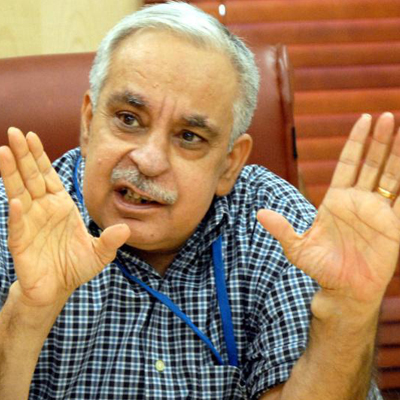
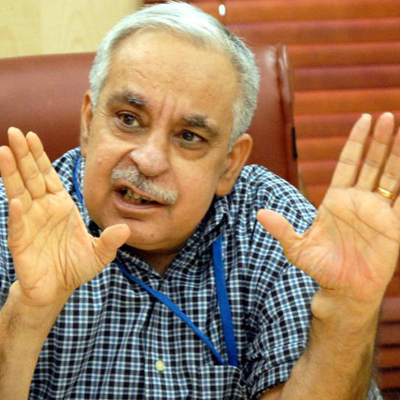
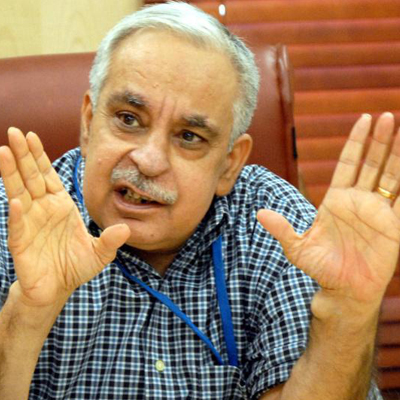
    NEW DELHI: The Telecom Regulatory Authority of India (TRAI) chairman Rahul Khullar has once again spoken loud and clear. The 62-year-old Khullar has proposed that while the Department of Telecom should exclusively focus its attention on carriage and carriage related issues while the Information and Broadcasting Ministry (I&B), considering its history, should be only regulating content.


    “And I think that is the way we need to go,” he said while addressing the gathering at the recently concluded CII Big Summit 2014.


    He also came down heavily on the politicians and political parties. He said, “The Supreme Court through its ruling has clearly stated that airwaves are not the monopoly of the state.”


    So, while Prasar Bharati must exist and it must be independent; politicians, governments, state governments and their organs have “absolutely no business whatsoever to be in broadcasting space,” he announced and suggested that the government must announce this as an integral part of the National Media Policy.


    Khullar also gave his perspective on the other components of the National Media Policy. “Firstly, there must be a clear articulation that we want a free media, unhampered and unrestricted by the government in any way possible,” he said while also suggesting that the media itself must be subject to safeguards. “It could come from other forms of independent regulators. You cannot have an institution which has rights but no duties,” he added.  


    Secondly, there must be commitment in National Media Policy to uphold plurality of views and opinion. “And this must be a commitment,” he said.


    Thirdly, time has come that we start talking about infrastructure. “If this National Media Policy is actually going to work, are we or are we not going to be in a digitised world? We cannot be flipping and flopping the dates as we send out wrong signals to the rest of the world about your credible commitment towards any policy,” he stated.


    Khullar also pointed out the issues with spectrum availability. “It is a nightmare to deal with ISRO. The organisation neither gives you a transponder nor does it allow you to get a transponder of your own,” he informed.  

  • Kolkata LCOs appeal to TRAI’s Khullar to air local TV channels

    Kolkata LCOs appeal to TRAI’s Khullar to air local TV channels

    KOLKATA: The Telecom Regulatory Authority of India (TRAI) chairman Rahul Khullar met 150 local cable operators in the city where they told him their grievances.


    The cable operators raised the issue of the regulations of the local video channels floated by the body or in other words popularly known as platform services (PS).


    “We have appealed to TRAI to allow us to run our local channels as we did during the analogue times,” said Cable Operators’ Sangram Committee secretary Apurba Bhattacharya and added, “The cable TV operators have no intention to violate the rules and regulations set up by the most competent authority concerning local channel.”


    “Technology is evolving rapidly and hence, transmission of local content cannot be restricted by selection of type of content. It is advisable that the authority may come out with a guideline with restricted content given the current conditions,” said Cable & Broadband Operators’ Welfare Association general secretary Swapan Chowdhury.


    Khullar answering to some of the LCOs query said that the regulator would like to monitor all the content aired on the local channels. “The LCOs will not be able to telecast news and related events,” he said.


    The chairman also assured that he will keep the view of LCOs in mind while formulating directives on PS. Other LCOs present at the venue said that the local video channel is the foundation pillar of cable television network.


    The TRAI had, a few months ago, come up with a consultation paper to regulate platform services in which it said that due to digitisation, LCOs wont’ be able to transmit a local channel and will have to take it from an MSO.

  • TRAI extends date for stakeholders’ views on AGR and on licensing of NSOs and SDOs

    TRAI extends date for stakeholders’ views on AGR and on licensing of NSOs and SDOs

    NEW DELHI: The Telecom Regulatory Authority of India (TRAI) has extended till 7 October the date for written submissions on a pre-consultation paper on ‘delinking of license for networks from delivery of services by way of virtual network operators’.


    In this paper, stakeholders have been asked by the TRAI to give their views on their definition of adjusted gross revenue.


    The paper is on what the model of agreement is between network service operator (NSO) license and service delivery (SDO) operator license created under the draft National Telecom Policy 2011 will be.


    It has asked if this would be left to the market or regulated like mandating NSOs to provide services to SDO licensees and mandating charges etc.


    In its policy, the Department of Telecom (DoT) had said that NSOs would be licensed to set up and maintain converged networks capable of delivering various types of services such as voice, data, video, broadcast, IPTV, VAS etc in a non-exclusive and non-discriminatory manner.


    SDOs would be licensed to deliver the services such as teleservices (voice, data, video), internet/broadband, broadcast services, IPTV, VAS and content delivery services etc.


    In its latest reference to TRAI, the DoT has envisaged the entry of virtual network operators (VNOs) for delivery of services by delinking them from licensing of networks.


    VNOs are SDO licensees who do not own the underlying network(s) but rely on the network and support of the infrastructure providers, telecommunications operators (who are owner(s) of towers, radio access networks, spectrum etc) for providing telecom services to end users/customers. As these operators do not have their own networks, they are termed as VNOs. They can provide any telecom service being provided by network providers viz teleservices (voice, data, video), internet/broadband, IPTV, VAS, content delivery services etc. The most popular among VNOs are mobile virtual network operators (MVNOs).


    India is a diverse country, large in size and had very poor telecom networks when the Government decided to open the sector to private participation. Therefore, in order to ensure development and proliferation of telecom infrastructure across the length and breadth of the country, the Government took a conscious decision that all TSPs would have their own network for providing services to their customers. To meet this end, each TSP was mandated to comply with certain roll-out obligations and even sharing of infrastructure was not permitted initially. To encourage tower sharing amongst operators, the Government initiated a project ‘Mobile Operator Shared Tower (MOST)’ in March 2006, and later on, in April 2008 sharing of active infrastructure, except spectrum, was also permitted.


    At present, most access providers are integrated operators who have their own infrastructure for both access and long distance services. Having already established their networks, the issue to deliberate upon is whether delinking the network from service delivery will have any effect on the working of these TSPs. The new licence regime has come into existence only about a year back.


    In the proposed licencing framework, based on the VNO model, one issue could be whether the existing TSPs, will have to obtain an NSO licence or both NSO and SDO licences on migration to the new licensing regime.


    A linked issue for deliberation will be about the necessity of changing the licensing regime at all, at such a short interval since unified licencing (UL) was introduced.


    At present, there are 7-13 licensees in various service areas. Therefore, another issue for deliberation could be about the need for introduction of more competition in the form of VNOs.


    Apart from access services, for other services like V-SAT, PMRTS/CMRTS, GMPCS, it needs to be deliberated whether any business case/revenue potential exists for a standalone virtual operator for these services.


    In India, the TSPs have infrastructure, including spectrum, which is just about sufficient to cater to their own requirements. Would they really be able to spare their infrastructure for new SDOs, TRAI wants to know.


    It can also be deliberated whether the reference of DoT envisaged an entirely new licensing regime or could be considered to mean that a chapter may be added to the existing UL for facilitating licenses to the VNO.

  • Government notifies new dates of phase III and phase IV of DAS

    Government notifies new dates of phase III and phase IV of DAS

    NEW DELHI: The Government has finally issued the notification postponing the dates of phase III and phase IV of implementation of digital addressable system (DAS) to December 2015 and December 2016 respectively.


    Indiantelevision.com was the first to break the news about the postponement of the dates for DAS phase III and IV. Speaking to indiantelevision.com I&B secretary Bimal Julka had confirmed that ‘the government had decided to delay the digitisation deadline by a full year in order to give all those involved enough opportunity to overcome all the unseen hurdles that had come up after the UPA government mandated  DAS and the various analogue sunset dates.’


    The notification says that the change has been done ‘on being satisfied to do so in public interest’.


    The DAS notification has been issued by way of amendment to the notification issued on 11 November 2011 which had made it “obligatory for every cable operator to transmit or re-transmit programmes of any channel in encrypted form through digital addressable system.”


    Although the Government had announced its decision to postpone DAS in phase III and phase IV to encourage greater indigenisation of set top boxes, no action could be taken until issuance of the notification.


    Until now, the deadline for phase III was September 2014 and for phase IV December 2014.


    In the first two phases of digitisation, which included cable TV households in the four metros and other major cities, most of the STBs that were installed had been imported from other countries.


    After he took over as Information and Broadcasting Minister, one of the major areas of focus of Prakash Javadekar has been indigenisation of STBs and Ministry sources said the new dates are in keeping with inputs supplied to the Minister in this connection.


    The ministry has made efforts to get STBs declared as Telecommunication Network Equipment which will enable domestic manufacturers to get exempted from certain taxes, an official said.


    Nearly 110 million STBs are required to be installed in cable TV households in the remaining two phases of digitisation and the extended deadline will ensure that the domestic manufacturers prepare themselves and meet this demand, officials said.

  • Govt sending wrong signals to foreign investors by delaying digitisation: Rahul Khullar

    Govt sending wrong signals to foreign investors by delaying digitisation: Rahul Khullar

    MUMBAI: Recently, a letter written by Telecom Regulatory Authority of India (TRAI) chairman Rahul Khullar pointed out that the government was committing a mistake by extending the deadline for digitisation. Khullar has many more points to present on the regulator and the industry.


    In a conversation with Bloomberg, he said that his views on digitisation were very clear. “It is a very bad decision to defer it. It is bad for digital India, broadband delivery and not in public interest,” he said.


    While the government says that its main aim is to push indigenous production of seven crore set top boxes (STBs) in two years, Khullar feels that this is a ‘pipe dream.’


    Khullar said that last year several investors met him and conveyed that it was a miracle that they managed to get two crore boxes digitised. They also asked that by when will digitisation be completed because they are desperately interested in investments in cable. “By delaying digitisation, you are sending a signal to foreign investors that India isn’t ready for investment yet. This does great harm to public credibility,” he said.


    Meanwhile, rumours are afloat that the government is mulling creation of a ‘super regulator’ that will oversee the communications sector. Khullar believes that it is necessary to keep content and carriage separate. “If your aim is to strengthen TRAI then you don’t need a super regulator, just empower the existing one. But if it is to regulate carriage and content, this is an experiment that hasn’t succeeded in the world,” he said.


    According to him, issues concerning content immediately ‘stir up a hornet’s nest’ that usually involves freedom of speech. “My own sense would be to keep carriage and content separate and ensure that the content regulator has nothing to do with the government. Then you have some sort of fighting chance of regulatory survival,” he said.


    Broadband is a growing medium of revenue that is catching the attention of all in media space. The TRAI is due to come out with a paper on ‘policy issues relating to broadband’ in the next 10 days. “Broadband and convergence is still five to 10 years away. If we are to deliver broadband we need to know how to do it in the cheapest way, who should be involved, what to be done in terms of application and software development,” he highlighted. It will focus on building infrastructure and delivering content.

  • I&B Ministry explains to PMO its reasons for postponing digitisation dates

    I&B Ministry explains to PMO its reasons for postponing digitisation dates

    NEW DELHI: The Information and Broadcasting Ministry feels that digitisation is a tool to empower the people and not create difficulties, and therefore does not agree that it will create any setback to the Digital India Plan.


    Ministry sources told indiantelevision.com that this had been conveyed by the Ministry to the Prime Minister’s Office (PMO) in response to the communication to PMO by Telecom Regulatory Authority of India chairman Rahul Khullar.


    The sources also pointed out that the pace of digitisation had slowed down over the past year due to lack of adequate publicity and paucity of fund allocation. 


    The Ministry said cable TV digitisation was only a small though major part of Digital India.


    The main purpose was not to delay digitisation of cable television networks but to encourage greater indigenisation of both set top boxes and other equipment, the sources informed.


    The dates proposed by the Ministry were only the outer limit and every effort would be made to ensure digitisation of cable TV is achieved before that. It was also pointed out that the consumer’s capacity to pay was of great importance in the last two phases which were reaching out to semi-urban or rural areas.


    It was also emphasised that TRAI was being consulted on the proposal about the new dates and the views of the regulator would be taken into account.


    Khullar in his note to the PMO has said staggering implementation of the cable TV digitisation plan will be a major setback to the Digital India plan.


    He said, “For the last six months, we have been working on phase-III and phase-IV. If implementation is now staggered, it will be a body blow to the project, primarily because momentum will be lost and it is truly very difficult to enforce compliance countrywide.”


    Under the current plan, the third phase of the cable TV digitisation plan is expected to end on 30 September, and phase IV by 31 December this year, while the Ministry feels the new dates should be December 2015 and December 2016 respectively.


    “Should this happen, it will be a major setback to digitisation in the country. Further, a huge effort was made by TRAI to enforce compliance. We encountered significant difficulties in ensuring that phase I and phase II were effectively completed,” the TRAI chief wrote.


    There are 100 million homes with cable TV connection of which 20 million are digital. In addition, there are 56 million DTH homes. This is more than the fixed line telephony subscriber base. Digitisation would enable cable TV networks to be used for two-way communications, a pre-requisite for internet services.


    TRAI said that digitisation offers much cheaper means of providing broadband to consumers compared to the National Optical Fibre Network project, which aims to roll out fibre cables across the country as broadband is the main supplier of TV signals in all developed countries. 

  • Not much growth in broadband in July: TRAI

    Not much growth in broadband in July: TRAI

    NEW DELHI: Broadband subscribers grew by a mere 2.87 per cent in the month of July to 70.81 million in the country.


    The Telecom Regulatory Authority of India (TRAI) said the number of subscribers at the end of June were 68.83 million.


    For the second month in a row, the largest growth was seen in mobile device users (Phones + Dongles) with a growth of 3.56 per cent. The change in wired subscribers was a mere 0.45 per cent and the growth in fixed wireless (Wi-Fi, Wi-Max, Point-to-Point Radio & VSAT) was 1.54 per cent.


    The top five broadband service providers constitute 85.12 per cent market share of total broadband subscribers at the end of July. They are BSNL (18.14 million), Bharti (15.61 million), Vodafone (11.23 million), Idea Cellular (9.06 million) and Reliance Communications Group (6.23 million).


    The top five Wired Broadband Service providers are BSNL (9.98 million), Bharti (1.40 million), MTNL (1.13 million), Beam Telecom (0.40 million) and YOU Broadband (0.40 million).


    The top five Wireless Broadband Service providers are Bharti (14.21 million), Vodafone (11.23 million), Idea Cellular Ltd (9.06 million), BSNL (8.16 million) and Reliance Communications Group (6.12 million).


    Wireless subscribers with less than 1MB data usage in a month are not considered as internet/broadband subscribers by Reliance Communication Group and Idea Cellular.

  • LCOs in Kolkata to submit interconnection agreement to MSOs soon

    LCOs in Kolkata to submit interconnection agreement to MSOs soon

    KOLKATA: Local cable operators (LCOs), operating in the Kolkata Municipal Area with more than 33 lakh cable television homes, plan to submit a draft of the interconnection agreement to the multi system operators (MSOs) without any further delay. The agreement has been drafted after extensive discussion between both the MSO and the LCO.


    Sources said that MSOs like Siticable and Manthan among others have executed the interconnection agreement with their affiliated LCOs, while there are a few who have yet not worked out the details of the agreement.


    “The LCOs have decided to submit a draft interconnection agreement to their MSOs, since they do not want to be blamed for non-signing of the agreement by the MSOs,” said Sangram Committee secretary Apurba Bhattacharya.


    In a meeting held recently, Sangram Committee addressed issues pertaining to the interconnection agreement; notice of the Telecom Regulatory Authority of India (TRAI) on the amendment to be introduced shortly; the MIB notice to the MSOs and lastly the local issues of LCOs.


    The move comes after TRAI had instructed the MSOs and LCOs to mutually draft an interconnection agreement for better operation. The Authority had also said that if the two parties failed to mutually draft the agreement, it would come up with one, which will then have to be signed by both.   

  • Star and Zee not conspiring to drive Hathway out of business: Star India counsel Rakesh Dwivedi

    Star and Zee not conspiring to drive Hathway out of business: Star India counsel Rakesh Dwivedi

    NEW DELHI: Admitting that Star India and Zee Turner had created MediaPro, Star counsel Rakesh Dwivedi said that the arrangement had been dismantled and “MediaPro is dead in the sense that it is no longer an authorised agent of Star India.”


    Arguing before the Telecom Disputes Settlement and Appellate Tribunal in the cases linked to Taj TV signals for Turner and Zee TV and Star India signals to Hathway and other multi-system operators, Dwivedi said that Star had no stake in Den Networks or Zee and had no problems with Siticable.


    Referring to the Regulations which refer to being non-discriminatory and reasonable, he said the petitioners (Hathway and the other MSOs) had not been able to show how Star India was discriminatory.


    In any case, he said Star India was treating all MSOs at par, adding that there was no challenge to the reasonableness of the Reference Interconnect Offer agreement. He said it was also incorrect to say that the RIO was not in consonance with market rates.


    He also pointed out that on the one hand Star India had been accused of only offering packages and not giving the channels on a la carte, the petitioners themselves then bundled some channels into various packages.


    He quoted both the Regulations of the Telecom Regulatory Authority of India and the Competition Commission of India to show that MSOs hold a more dominant position in the cable industry.  


    Dwivedi also said that the previous agreement with MediaPro cannot form the basis of the agreement with Hathway or other MSOs as “they proceed on different methodologies.”


    He again denied the charge that Star and Zee were conspiring with other MSOs to drive the petitioner MSOs out of business.