Tag: Trai

  • Broadband subscribers show growth of 4.5 per cent between Sept and Oct

    Broadband subscribers show growth of 4.5 per cent between Sept and Oct

    NEW DELHI: As in the past few months, the largest growth in broadband during October this year was among mobile devices users (phones and dongles), registering a growth of 5.75 per cent growth.

    The number of broadband subscribers between September and October has increased from 75.73 million to 79.21 million, thus registering an overall growth of 4.59 per cent.

     There was no change between September and October in fixed wireless subscribers (Wi-Fi, Wi-Max, Point-to-point radio and VSAT) with the figures remaining at 4,20,000.

     Wired subscriptions showed a minimal growth going up from 15.13 million to 15.15 million, registering a monthly growth rate of 0.16 per cent.

     The Telecom Regulatory Authority of India (TRAI) which based the figures on reports from service providers said Wireless subscribers with less than 1MB data usage in a month have not been considered as internet/broadband subscribers by Reliance Communication Group and Idea Cellular.

     As on 31 October, the top five Wired Broadband Service providers were BSNL (9.97 million), Bharti Airtel (1.40 million), MTNL (1.13 million), Beam Telecom (0.43 million) and YOU Broadband (0.41 million).

     The top five Wireless Broadband Service providers were Bharti Airtel (15.91 million), Vodafone (14.15 million), Idea Cellular (11.47 million), BSNL (9.16 million) and Reliance Communications Group (6.48 million).


  • TRAI to levy financial disincentives for violating QoS norms for DAS

    TRAI to levy financial disincentives for violating QoS norms for DAS

    NEW DELHI: The Telecom Authority of India (TRAI) plans to levy financial incentives on non-compliant multi-system operators and local cable operators by amending the Standards of Quality of Service (Digital Addressable Cable TV Systems) Regulations.

    Information and Broadcasting Ministry sources told indiantelevision.com that the aim was to ensure transparent business practices and promote efficiency in order to help the consumer.

     TRAI had released a consultation paper in August for amending the QoS Regulations of 2012, and the replies received by stakeholders and consumers is currently under examination.

     The sources said that the government’s decision to digitise the cable TV network is an enabler to protect the interests of the consumers and for the government to realise designated revenue from the sector.   

     The QoS Regulations lay down quality of norms to be adhered to by the service providers, which include the norms for billing of subscribers of DAS Cable TV systems, issue of receipt for every payment made by a subscriber etc.


  • Petition challenging TRAI tariff on DAS to be heard on 8 December

    Petition challenging TRAI tariff on DAS to be heard on 8 December

    NEW DELHI: The Telecom Disputes Settlement and Appellate Tribunal (TDSAT) will hear the petition by the Indian Broadcasting Foundation (IBF) challenging the DAS tariff order issued in July by the Telecom Regulatory Authority of India (TRAI) relating to commercial subscribers on 8 December.

    The matter was to be heard in the Tribunal on 5 December but was pushed for next week because the bench was busy dealing with another part-heard case.

     In the last hearing in October, Counsel Abhishek Malhotra, who represents the IBF, had wanted time to file a rejoinder to the reply filed by TRAI following a notice in this regard in September.

     In the tariff order, TRAI had said commercial establishments, who do not specifically charge its clients/guests on account of providing/showing television programmes and offer such services as part of amenities, are to be treated like ordinary subscribers wherein the charges would be on per television basis.

     In cases where commercial subscribers specifically charge its clients/guests on account of providing/showing television programmes, the tariff would be as mutually agreed between the broadcaster and the commercial subscriber.

     TRAI had also said that the commercial subscriber was to obtain television service only from a distribution platform operator (MSO/DTH Operator/IPTV operator/HITS operator).

     The tariff order amendment has been brought out as per the directions of the Supreme Court. It is expected that with the coming into force of these changes in the regulatory framework, the distribution of TV services to the commercial subscribers would be streamlined and the services would be available to them at competitive rates.


  • TRAI asks if LCOs, MSOs be permitted to share infrastructure with VNOs

    TRAI asks if LCOs, MSOs be permitted to share infrastructure with VNOs

    NEW DELHI: The Telecom Regulatory Authority of India (TRAI) wants to know if there is any need to introduce more competition in service delivery by the way of introduction of Virtual Network Operators (VNO) and whether this will pose any threat to Network Service Operators (NSO).
     
    In a Consultation Paper on “Delinking of  the license for networks from delivery  of services by way  of Virtual Network Operators,” TRAI has also asked how Mergers & Acquisitions should be dealt with in the VNO/NSO licensing model and should the recently announced M&A guidelines issued by the Government for existing players be extended to cover VNOs.

    It has asked the stakeholders to send in their responses by 5 January and counter-comments by 12 January. The Department of Telecommunications had on 7 July 2014 sought the  Authority’s recommendations for delinking of licensing of networks from delivery of services by way of virtual network operators etc. including associated  issues   such as Adjusted Gross Revenue, terms of sharing of passive and active infrastructure under unified licensing regime.
     
    TRAI had earlier released a pre-consultation paper on “Delinking of the license for  networks from delivery of  services by  way of  Virtual Network Operators” on 3 September 2014 highlighting some of the issues associated with the proposed licensing framework by the DoT and had solicited inputs and comments of the  stakeholders on these issues or any other issues involved in the proposed  framework.
     
    The paper issued today raises specific issues for consideration by stakeholders. A consultation paper on ‘Definition of revenue base (AGR) for the reckoning of license fee and spectrum usage charges’ has been already issued on 31 July 2014.

    Therefore, this consultation paper is   limited to the issues related to delinking of licenses for networks from the delivery of services by way of virtual network operators.
     
    TRAI also wonders if a business case exists for introduction of VNOs in all segments of Voice, Data and Videos and whether VNOs should be introduced in all or some of the services notified in the Unified licence.

    It also wants to know if there is sufficient infrastructure (active and passive including access spectrum) available with a TSP to meet its own requirements. If any TSP is able to share its infrastructure with VNOs, the regulator wants to know what the broad terms and conditions for sharing the infrastructure should be.

    Can VNOs be allowed to create their own infrastructure to reach out to niche markets, the Regulator asks, or can local Cable Operators (LCOs) or Multi System Operators (MSOs) with cable networks be permitted to share infrastructure with VNOs to provide last mile connectivity.

    The regulator wants to know if a VNO be issued a license at the National Level or for LSAs as in the case of UL or should it be based on the host NSO license areas and the duration of the licence.

    It also has questions about any cross-holding restriction between a NSO and VNOs and the financial obligations of VNOs in the form of a) Equity & Networth b)Entry Fee c)PBG and d)FBG etc.


  • TRAI is working on amending QoS regulation: N Parameswaran

    TRAI is working on amending QoS regulation: N Parameswaran

    MUMBAI: It has been nearly three months since the Telecom Regulatory Authority of India (TRAI) came up with its consultation paper on levying financial disincentives on multi system operators (MSOs) and local cable operators (LCOs) who are delaying the process of billing in the digital addressable system (DAS) areas of the country.

    Although it has been long since the deadlines for commencement of billing in DAS areas got over, there is no clue on how the whip will be cracked on those who haven’t gone beyond installing set top boxes in phase I and II.

    TRAI principal advisor N Parameswaran says, “We are in the process of working on the amendment to the Quality of Service (QoS) regulation. The comments have come and we are yet to take a final decision on the same.”

    Meanwhile, the MSOs that indiantelevision.com spoke to have said that billing has happened only in few areas of New Delhi and Kolkata while the remaining cities in DAS phase III and IV don’t even have proper consumer application forms (CAFs).

    TRAI earlier had said that it is seeking to implement financial penalties on those MSOs and LCOs who defy the law. Comments had been asked from stakeholders on the same. The regulator had also said that for non-compliance of issuing bills, a disincentive of not exceeding Rs 20 per subscriber will be levied on the MSO and/or its linked cable operator and for the second time, penalty would be Rs 50. “For non-compliance of regulations, Rs 100 will be levied on each MSO for each contravention. If the MSO and LCO have entered into an agreement, both of them will be penalised for faults while in the case of no deal being signed, only the MSO is liable to pay,” TRAI had said.

    As per the consultation paper, the amendment, when approved, will come into effect 30 days from the date of publication.


  • Broadcasters want tariff to be left to market forces

    Broadcasters want tariff to be left to market forces

    MUMBAI: The Telecom Regulatory Authority of India’s (TRAI) latest tariff order that will come into effect from 1 January 2015 has already got a few stakeholders’ views on it. To be called the Telecommunication (Broadcasting and cable) services (seventh) (non-addressable systems) Tariff Order, 2014 (draft), it will be applicable to broadcasting and cable services provided to cable subscribers throughout India through non addressable systems.


    Tariff


    The main point that the stakeholders who have given their comments agree on is not having any regulation on wholesale tariff and there should be complete forbearance from the Authority. “The presence of a  plethora  of players in the market  clearly  indicates  that there exists enough competition  in  the  market  and  no  monopolistic  practices  or  unfair  trade practices can be practiced in such a scenario,” is the view of agent The One Alliance (A MSM and Discovery JV, which has now parted ways).


    NDTV and Star India also have similar views on tariff. “Given TRAI’s own finding that TV channels fulfill only ‘esteem needs’ of consumers and are as such non-essential, there is all the more no reason whatsoever for regulating channel prices,” is Star’s opinion. The same is shared by The One Alliance.


    If in case TRAI decides that complete forbearance cannot be allowed, then Star India says that it can consider regulating prices at retail level only. The One Alliance on the other hand feels that TRAI needs to keep its nose out of even retail tariff since it will affect the consumer and the entire distribution chain. “The MSOs under the guise of regulated retail pricing would either further renegotiate with the broadcasters or fill their bandwidth with lesser priced channels,” it says.


    According to The One Alliance, in case the TRAI feels that it should control wholesale rate then only it has to consider inflation rate while if it leaves to market forces, it won’t have to do the same.


    The agent also feels that pricing on the basis of genre is illogical since the Ministry of Information and Broadcasting (MIB) recognises only two categories: News and Current Affairs and Non News and Current Affairs while TRAI seeks to differentiate the non-news category into many genres. “Movie channels like Max and Star Gold also show live sports which is another genre with a different price cap,” it states.


    On the issue of HD and 3D channels, The One Alliance feels that since these are niche channels and require high technology, it should not be subjected to any tariff restrictions whereas Star India feels that they should be kept out since they anyway cannot be transmitted in an analogue regime.


    While TRAI says that broadcasters must give all channels in bouquets as well as a-la-carte, Star India says that there shouldn’t be any mandate that channels have to compulsorily be given on a-la-carte. At the same time, the obligation that old bouquets must be offered as per 2007, needs to go away specially after the coming into force of the deaggregation paper.


    Carriage


    Carriage fee is the biggest burden on broadcasters which everyone has askedthe regulator to include in its order. The News Broadcasters Association (NBA) and Times Television Network have just asked for carriage fees to be included as a crucial element.


    The One Alliance on the other hand states that the authority has ‘blatantly ignored’ the issue of carriage fee even after its own view in a 21 July 2010 report which states, “The Authority is of the view that all carriage and placement fee transactions should be a part of inter connection agreements between the broadcasters and MSO/LCOs in the case of pay channels, or separately formalised as carriage and placement fee agreements in the case of FTA channels, and these should be filed with the TRAI. Such filings of carriage and placement fees will enable the authority to monitor carriage and placement fee transactions regularly and regulate the same through interventions where considered necessary.”


    NDTV says that if there is a price control on how much broadcasters can charge MSOs for content, MSOs should also be told how much they can charge broadcasters for carriage and placement. “The charges paid by MCCS have increased by 300 per cent over the years. It is estimated that the carriage and placement fee paid by broadcasters is between Rs 1200 crore to Rs 1500 crore,” reads NDTV’s reply.


    Declaration and reporting


    The fact that MSOs and LCOs have not been asked to provide any reporting requirement is a question raised by them. Broadcasters urge TRAI to ensure that MSOs and LCOs do not under-declare their subscribers.


    “We strongly believe and submit that the inter-connect regulations must allow for Broadcasters to conduct surprise audits and surveys with their respective technical teams to prevent under-reporting of subscriber base,” states The One Alliance.


    Star India opines that strict financial disincentives should be prescribed for illegal transmission, area transgression, under declaration, piracy or any other illegality or non compliance. “Operators who have been found to be violating rules should not be given the protection of the Must Provide or regulated Tariffs.”


    Both The One Alliance and Star India feel that details on advertising need not be declared as they don’t have any relation to tariff or other issues.


    While TRAI says that a new channel launch needs 30 day prior intimation, The One Alliance feels that a seven day notice is sufficient.
  • TRAI issues draft tariff order for non addressable cable TV systems

    TRAI issues draft tariff order for non addressable cable TV systems


    MUMBAI: The Telecom Regulatory Authority of India (TRAI) has come out with its draft tariff order for non addressable cable TV system and is asking for comments on the same from stakeholders.


    This comes after the Supreme Court’s order in September wherein it had asked stakeholders to submit views by 30 September, which the TRAI has now extended by 15 December, which it says will be final.


    To be called Telecommunication (Broadcasting and cable) services (seventh) (non-addressable systems) Tariff Order, 2014 (draft) it will come into effect from 1 January 2015 and will be applicable to broadcasting and cable services provided to cable subscribers throughout India through non addressable systems. The Telecommunication (Broadcasting and Cable) Services (Fourth) (Addressable Systems) Tariff Order, 2010 (1 of 2010) shall apply to only DAS areas.


    For wholesale tariff, broadcasters have to specify their channels rates both a-la-carte as well as bouquets provided that the a-la-carte and bouquet rates for  pay and free to air (FTA) channels shall not firstly exceed its current rate before the order comes into force.


    In a bouquet the sum of the a-la-carte rates of all channels shall not exceed 1.5 the rate of the entire bouquet. The a-la-carte rate of one channel will not exceed thrice the average rate of a pay channel. The bouquet composition as on 1 December 2007 shall not change.


    If a bouquet is to be modified post this order coming into existence, this is how it will be calculated: The rate of the modified bouquet = [rate of the existing bouquet] x [sum of a-la-carte rate of pay channels comprising the modified bouquet/sum of a-la-carte rate of all the pay channels comprising the existing bouquet].


    Rates of channels or bouquets can only be increased by a TRAI order while it can be reduced without the same. For conversion of channels from pay to FTA or discontinuation, the bouquet prices need to be modified accordingly. New channel launches will be priced similar to other channels in its genre and language. For new launches or conversions, a-la-carte as well as bouquet rates shall be declared 30 days in advance.


    The charges that a local cable operator (LCO) shall pay to a multi system operator (MSO) will have to be mutually decided. The LCOs have been told to issue bills to subscribers with a breakup of the number of channels, the charges levied (excluding taxes), nature and rates of taxes levied and amount thereof and then issue a receipt for the same.


    The draft tariff order is proposed for the cable TV services offered through non addressable (analogue) cable TV systems. The operators who implement DAS before the notified cut off dates for phase III and IV will be governed by the DAS regulatory regime.


    The Telecommunication (Broadcasting and Cable) Services (Second) Tariff Order 2004 (6 of 2004) has been repealed with this new one that will be called the Telecommunication (Broadcasting and cable) services (seventh) (non-addressable systems) Tariff Order, 2014 (draft).


    The Supreme Court in its order has disposed off the appeals, while leaving all the questions of law open. It also ordered that status quo will continue till 31 December 2014. The order further stated that TRAI will attempt to notify the fresh tariff order immediately after 31 December 2014. Since the last consultation paper had been given out in 2010, TRAI felt that stakeholders need to relook entirely.


    On 10 February 2014 five amendments, to the tariff orders and regulations were notified by TRAI. These amendments were made to bring in clarity in the roles and responsibilities of the broadcasters and their authorised agents. On 31 March 2014, eleventh amendment to the tariff order applicable for non-addressable cable TV systems was notified by TRAI to allow inflationary adjustment at, both, retail and wholesale levels.


    Click here to read the consultation on draft tariff order


    Click here to read the press release


    Click here to read the report submitted to Supreme Court

  • TRAI gives recommendation for reserve price per MHz in 800 MHz band

    TRAI gives recommendation for reserve price per MHz in 800 MHz band

    NEW DELHI: The Telecom Regulatory Authority of India (TRAI) has recommended fresh reserve prices per MHz for auction of 800 MHz spectrum in the light of current data trends and other relevant factors since the valuation exercise was carried out in February 2014.

    Accordingly, the recommended reserve price per MHz in the metros of Delhi, Mumbai and Kolkata is Rs 494 crore, Rs 352 crore, and Rs 117 crore, respectively.

    The reserve price for the north-east is Rs 11 crore and for Jammu and Kashmir it is Rs 28 crore per MHz.

    The authority has once again reiterated its recommendation that the entire available spectrum with the DoT in the 800 MHz band should be put to auction.

    As the PSUs (MTNL/BSNL) are not using the spectrum in the 800 MHz band, the authority has reiterated its recommendations that the DoT should take back from MTNL its entire spectrum holding in the 800MHz band. The BSNL should be allowed to retain only one CDMA carrier in all the LSAs except in Jammu and Kashmir, Assam and North-East LSAs, where it can retain both the carriers. The DoT should take back other carriers assigned to BSNL in the 800 MHz band.”

    The chances of participation by a prospective new bidder will be more if it is offered contiguous 5 MHz of spectrum. It would make it feasible to deploy any technology. Therefore, the authority has reiterated its recommendations that “at least one chunk  of contiguous  5 MHz spectrum (i.e. 4  carriers)  should  be  carved  out  before  the  auction.  New ‘entrants must be assigned the earmarked  contiguous  carriers.”


  • Minimal growth in September in broadband usage: TRAI

    Minimal growth in September in broadband usage: TRAI

    NEW DELHI: Even as there was growth of just 1.92 per cent in broadband between the end of August and the end of September, there was a decline of 4.31 per cent in the fixed wireless subscribers (Wi-Fi, Wi-Max, Point-to-Point Radio & VSAT).

     
    According to reports received by the Telecom Regulatory Authority of India (TRAI) from the service providers, the number of broadband subscribers increased from 74.31 million at the end of August to 75.73 million at the end of September.

     
    There was marginal increase in mobile devices users (Phones and dongles) of 2.32 per cent from 58.82 million to 60.19 per cent, and a minimal growth in wired subscribers of just 0.53 per cent from 15.05 million to 15.13 million.

     
    The top five wired broadband service providers by September-end were BSNL (9.98 million), Bharti Airtel (1.40 million), MTNL (1.13 million), Beam Telecom (0.42 million) and YOU Broadband (0.41 million).

     
    The top five wireless broadband service providers were Bharti Airtel (15.44 million), Vodafone (13.55 million), Idea Cellular (10.52 million), BSNL (7.94 million) and Reliance Communications Group (6.40 million).


  • Govt. keen on early expansion of phase III of FM radio

    Govt. keen on early expansion of phase III of FM radio

    NEW DELHI: Even as the government wants to commence the expansion of phase III of FM radio to bring in additional revenue, there appears to be a re-think on the question permitting these channels to carry All India Radio news bulletins.
     

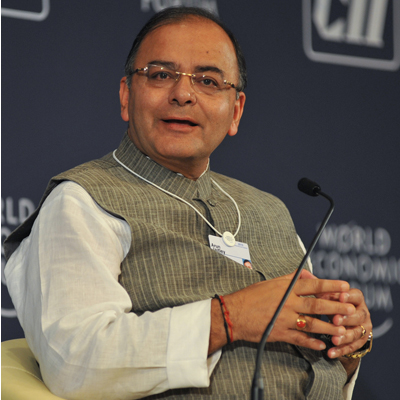
    While confirming that he was keen to start the process as soon as possible in the current financial year, Information and Broadcasting Minister Arun Jaitley said about the proposal to allow broadcast of news on private FM radio stations: “Let me consider this at length.”
     

    His response was in a similar manner when asked about permitting All India Radio news bulletins on private FM stations.

     
    The Minister said his Ministry and the Telecom Regulatory Authority of India (TRAI) are considering aspects related to this process. He said. “Some aspects are being considered between the I&B Ministry and the regulator. And I would like to see that happen quite early. If I could have my way, it should be in this financial year because I now speak in both capacities.
    31 March, and some more revenue to the government has some relevance to me,” said Jaitley,

     
    More than 800 new FM radio channels are proposed to be allowed to come up in nearly 294 cities across the country under phase III.

     
    While the previous government had cleared the carriage of AIR news bulletins on private FM channels and even given the option to the existing 245 FM channels to opt for phase III, it had halted the process of auction in view of the elections.

     
    Jaitley’s predecessor Prakash Javadekar had not only promised early e-auctions, but said that the government would consider what can be broadcast by the private FM channels on their own other than AIR news bulletins.