Tag: Trai

  • Trai consults industry to address limitations in satellite gateway operations

    Trai consults industry to address limitations in satellite gateway operations

    Mumbai: The Telecom Regulatory Authority of India (Trai) on Monday released a consultation paper on licensing framework for establishing satellite earth station gateway. The telecom regulator is seeking inputs from stakeholders on the issues raised in the consultation paper by 13 December and counter comments by 27 December.

    The Department of Telecommunications (DoT) has asked Trai to address the limitations with respect to satellite gateway operations as there are no provisions regarding the use of gateway by service providers established by a satellite constellation operator. As per the current licensing regime in India, establishing a satellite earth station is linked with the service license, and there are no specific license/provisions for establishing earth station by satellite operators for providing satellite-based resources to the service licensee.

    The need has arisen to have a specific authorisation for establishing the satellite earth station gateway by a satellite operator or any entity having a tie-up with satellite the operator, noted Trai.

    Trai will examine all factors holistically and recommendations for a framework for satellite gateway(s) operations may be suggested including the entry fee, license fee, bank guarantee, NOCC charges, and any other issues which may be relevant for MEO/LEO/HTS systems.

    Trai has sought industry stakeholders’ responses to the following questions.

    1.     Whether there is a need for having a specific license for establishing satellite earth station gateway in India for the purpose of providing satellite-based resources to service licensees?

    2.     If yes, what kind of license/permission should be envisaged and the scope of the framework both technical and operational?

    3.     Whether such license should be made available to satellite operator or its subsidiary or any such entity having tie-up with satellite operator?

    4.     What mechanism/framework should be put in place to regulate the access to satellite transponder capacity and satellite-based resources of a satellite operator/earth station licensee by the service licensees to get the resources in a time-bound, fair, transparent, and non-discriminatory manner?

    5.     Whether Earth station licensee should be permitted to install baseband equipment also for providing satellite bandwidth to the service licensees as per need?

    6.     What amendments will be required to be made in the existing terms and conditions of the relevant service authorisations of Unified License, DTH License/Teleport permission to enable the service licensee to connect to the satellite earth station gateway established by earth station licensee/service licensee, for obtaining and using the satellite transponder bandwidth and satellite-based resources?

    7.     Whether the sharing of earth Station among the licensees (between proposed Earth station licensee and service licensee; and among service licensees) should be permitted?

    8.     What should be the methodology for the assignment of spectrum for establishing a satellite earth station?

    9.     What should be the charging mechanism for the spectrum assigned to the satellite earth Station licensee?

    10.  Comments on any related matter not covered in the consultation paper.

  • Trai extends deadline for NTO 2.0 implementation to 1 April 2022

    Trai extends deadline for NTO 2.0 implementation to 1 April 2022

    Mumbai: The Telecom Regulatory Authority of India (Trai) has extended the deadline for implementation of the new tariff order (NTO) 2.0 to 1 April 2022. The previous deadline was 1 December.

    Broadcasters will have to publish new reference interconnection offers (RIOs) to Trai by 31 December and simultaneously publish the required information about channel and bouquet offerings and their MRPs on their websites. The broadcasters who have already submitted their RIOs in compliance with NTO 2.0 can revise their RIOs by 31 December.

    The deadline was extended as Trai received representations from many service providers and their associations such as broadcasters, DTH operators, MSOs and DPOs, according to a report by ET. The authority, after considering the concerns expressed by various stakeholders and especially with respect to time frame for migration of subscribers and taking their choice, is of the view that paucity of time should not come in the way of implementation of the new regulatory framework 2020 in seeking informed choices of more than 150 million pay TV consumers.

    DPOs will have to obtain an option for subscription of new bouquets or channels from the subscribers in compliance with the provisions of NTO 2.0 from 1 February 2022 to 31 March 2022.

    DPOs will have to report the distributor retail price (DRP) of pay channels, composition of bouquet of pay channels/free-to-air channels and DRPs of bouquets of pay channels by 31 January 2022 besides simultaneously publishing the information on their websites.

    In June, the Bombay high court in its judgement upheld the NTO 2.0 order by Trai barring the second proviso of the twin conditions. The provision states that a-la-carte rates of pay channels shall not exceed more than three times the average rate of a pay channel of the bouquet of which such pay channel is part. TV broadcasters under the aegis of Indian Broadcasting Digital Foundation (IBDF) had moved to Bombay HC in January challenging the Trai order.

    After the Bombay HC pronounced its judgement, broadcasters escalated the matter to the Supreme Court. The final SC hearing is scheduled on 30 November. Meanwhile, Trai directed broadcasters to comply with the Bombay HC judgement and publish new prices of their pay channels and bouquets that comply with the tariff order.

    Leading broadcasters including Zee Entertainment Enterprises, Star and Disney India, Sony Pictures Networks India, Network18 Broadcast, Sun TV Network, Discovery Communications and WarnerMedia have published their RIOs effective from 1 December. As per NTO 2.0 provisions, Trai mandated a price cap of Rs 12 on pay channels to be included in a bouquet. To comply with this provision, major broadcasters pulled their popular channels from bouquets but also hiked the prices of these channels.  

  • Govt committee seeks to set up a specialised regulator for media ratings in India

    Govt committee seeks to set up a specialised regulator for media ratings in India

    Mumbai: The committee on TRP ratings formed by the government has pushed for the formation of multiple rating agencies in competition to Barc India, and recommended creating a specialised regulator to oversee all of them.

    The 39-page report submitted by the committee early this year has recently been shared with Broadcast Audience Research Council (Barc) India and other broadcasters to take the discussions forward. The committee led by Prasar Bharti CEO Shashi Shekhar Vempati was constituted last year in the aftermath of the TRP scam in Mumbai.

    According to the report, the regulation of multiple rating agencies should be a specialised function that requires a suitable regulator and cited Securities and Exchange Board of India (SEBI) in regulating credit rating agencies and Media Ratings Council in the United States as successful examples. As per the committee, the regulator can look at end-to-end regulation of audience measurement in India and also provide for an Appellate Authority to redress grievances and mediate disputes between stakeholders and rating agencies with appropriate powers.

    The committee to review the ‘Guidelines on TV Rating Agencies in India’ had made a total of 20 recommendations to the ministry of information and broadcasting (i&b) that includes both immediate and long-term measures that need to be taken to restore faith in the integrity of TV rating system in view of emerging technology trends and market dynamics.

    Most of the recommendations made by the committee in their report accessed by Indiantelevision.com are aimed at strengthening corporate governance at Barc India at the board level. The recommendations have also laid down specific measures to bring independent oversight of Barc India, mandate the use of return-path data, increase the competitiveness in the TV rating space, and put in place a specialised regulatory mechanism for media rating agencies in India.

    It felt that industry stakeholders must come to a consensus over acceptable business practices to ensure faith in ratings. It also recommended that the government may consider temporarily suspending its license to Barc India until it and stakeholder bodies have complied with directives issued by MIB.

    After consultation with stakeholders such as Barc India, MDPL, Zappr Media, Nielsen India, and Tata Sky AMS, the committee had issued several specific and sweeping recommendations on the technical aspects of TV rating measurement in India.

    It found that there was a broad consensus among industry stakeholders in favour of leveraging return data capabilities. However, apart from Barc and a few platforms, there was a lack of ubiquity in approach or consistency in investment in RPD by platforms.

    It also recommended that RPD should be made mandatory for set-top-boxes (STBs) deployed by distributed platform operators (DPOs). “The increasing convergence between STBs and smart media devices and in view of the emergence of hybrid boxes capable of both CAS compliant linear TV viewing and internet streaming-based OT, the committee sees fewer technical barriers to enable RPD capabilities within households” it noted.

    Adding further, it said, “Smartphone-based apps are capable of interacting with such hybrid boxes paving the way for additional avenues of RPD data capture and relay.”

    The collection of viewership data by DPOs is to be governed by privacy norms prescribed by the government/regulator. The sale of such data by DPOs should be governed by guidelines for TV rating systems. A joint industry working group with representation from all relevant stakeholders and independent experts may be set up to specify norms for an industry-wide RPD mandate, according to the report.   

    The report noted that crowdsourcing approaches could be economical alternatives to RPD and should be open to rating agencies to enrich panel-based measurement. However, it noted that owing to the nascent stage of innovations in cloud-based computing and artificial intelligence and the small pool of talent and expertise with an understanding of TV ratings and media audience measurement domain in India, any integration of crowdsourced data is best left to the discretion of stakeholders.

    Another interesting recommendation by the committee for the imperative is to adopt an open data ecosystem. It drew on the experience of similar data efforts in domains such as digital payments (UPI, India stack) and account aggregator system for credit rating (Sahamati), noting that algorithms and raw datasets should be made available to academics and independent researchers to analyse, validate and enrich.

    The committee observed the global shift towards hybrid audience measurement spanning multiple channels (TV+digital) and the rapid technology innovation hastening this shift. It stated that guidelines prescribed by MIB should not be a barrier to the emergence of more efficient business models that are in pace with global trends and local market dynamics.

    Led by Prasar Bharati CEO Shashi Shekhar Vempati, the four-member team also included – IIT Kanpur, professor of statistics, department of mathematics and statistics, Dr Shalabh; C-DOT executive director Dr Rajkumar Upadhyay; Decision Sciences Centre for Public Policy professor Pulak Ghosh.

    The television rating system in India had come under scanner in October 2020 when Mumbai Police claimed in a press briefing that they have probed a case of manipulation of TRPs and found some incriminating evidence. The police said the accused were allegedly bribing the households to keep a particular channel running, leading to several arrests. Three news channels, Republic TV, Fakt Marathi, and Box Cinema were named in an alleged TRP tampering scam. BARC had also temporarily suspended the publishing of weekly data for news channels, which remains in limbo till date.

  • Trai issues new consultation paper to regulate monopoly in Cable TV services

    Trai issues new consultation paper to regulate monopoly in Cable TV services

    New Delhi: The Telecom Regulatory Authority of India (Trai) has released a new consultation paper to regulate the market structure/ competition in Cable TV services across the country.

    The issue was initially raised by the ministry of information and broadcasting (MIB) in December 2012, when it sought the recommendation of the regulatory body. In its letter to Trai, the ministry highlighted how Cable TV distribution is virtually monopolised by a single entity in some states like Tamil Nadu, Punjab, Orissa, Kerala, Uttar Pradesh, and Andhra Pradesh.

    According to MIB, it has become necessary to examine whether there is a need to bring in certain reasonable restrictions on Multi-System Operators (MSOs) and Local Cable operators (LCOs), including restricting their area of operation or restricting the subscriber base to prevent monopoly. The Cable TV Act and the Cable TV Rules also do not restrict the number of MSOs/LCOs operating in any specific area.  

    After following a due consultation process, Trai issued its recommendations on 26 November 2013. However, Trai has now received a backreference from MIB mentioning therein that a considerable time has passed since the recommendations were made and that the media and entertainment (M&E) landscape has changed drastically, particularly with the advent of new digital technologies in this sector. Technological developments especially IP technology and the increasing use of packet-switched digital communications have made converged services possible.

    Therefore, some of the issues need further consideration by the authority and it may provide a fresh set of recommendations in the matter looking at the subsequent developments/expansion in the M&E sector, stated MIB.

    The regulatory body has now invited comments from the stakeholders by 22 November. Counter comments, if any, may be submitted by 6 December.

    As of September 2021, there are 1733 registered MSOs in the country and approximately 1. 55 lakh cable operators as of March 2021.

  • NTO 2.0: Discovery Communications India publishes new RIO

    NTO 2.0: Discovery Communications India publishes new RIO

    Mumbai: Discovery Communications India has published its reference interconnection offer (RIO) issued under telecommunications (broadcasting and cable) services interconnection (addressable systems) regulations, 2017 for all distribution platforms. The new RIO will be effective from 1 December onwards. 

    The tariffs for TV channels mentioned in the RIO adhere to the Telecom Regulatory Authority of India (Trai) new tariff order (NTO) 2.0.

    The channel operates nine standard definition pay-TV channels and five high definition pay-TV channels. It is also offering eight bouquets to TV subscribers.

    The implementation of the new tariff order 2.0 is on hold as broadcasters under the aegis of the Indian Broadcasting Foundation (IBF) have challenged the Trai order in the Supreme Court. The final hearing on the matter is scheduled for 30 November

  • NTO 2.0: ETV publishes new RIO effective 1 December

    NTO 2.0: ETV publishes new RIO effective 1 December

    Mumbai: Eenadu TV (ETV) has published its reference interconnection offer (RIO) issued under telecommunications (broadcasting and cable) services interconnection (addressable systems) regulations, 2017 for all distribution platforms. The new RIO will be effective from 1 December onwards. 

    The tariffs for TV channels mentioned in the RIO adhere to the Telecom Regulatory Authority of India (Trai) new tariff order (NTO) 2.0.

    The channel operates 24 channels and is offering three bouquets to viewers. Its Telugu general entertainment channel ETV Telugu and ETV HD are priced greater than Rs 12. As per new tariff regime 2.0 order, Trai has mandated that a channel’s MRP must not exceed Rs 12 for it to be included in any bouquet.

    The implementation of the new tariff order 2.0 is on hold as broadcasters under the aegis of the Indian Broadcasting Foundation (IBF) have challenged the Trai order in the Supreme Court. The final hearing on the matter is scheduled for 30 November.

  • NTO 2.0: Sun TV Network publishes new RIO

    NTO 2.0: Sun TV Network publishes new RIO

    Mumbai: Sun TV Network has filed its reference interconnection offer (RIO) issued under telecommunications (broadcasting and cable) services interconnection (addressable systems) regulations, 2017 for all distribution platforms. The new RIO will be effective from 6 December onwards. 

    The tariffs for TV channels mentioned in the RIO adhere to the Telecom Regulatory Authority of India (Trai) new tariff order (NTO) 2.0.

    The network operates 23 pay-TV standard definition channels, eight high definition pay channels, and two free to air channels. It is also offering 21 bouquets. Tamil general entertainment channel (GEC) Sun TV, Telugu GEC Gemini TV, and Kannada GEC Udaya TV tariffs are greater than Rs 12.

    As per the new tariff regime 2.0 order, Trai has mandated that a channel’s MRP must not exceed Rs 12 for it to be included in any bouquet.

    The implementation of the new tariff order 2.0 is on hold as broadcasters under the aegis of the Indian Broadcasting Foundation (IBF) have challenged the Trai order in the Supreme Court. The final hearing on the matter is scheduled for 30 November.

  • Trai vs broadcasters: Impact could be larger than expected

    Trai vs broadcasters: Impact could be larger than expected

    Mumbai: The TV industry is eagerly awaiting the outcome of the court battle between the Telecom Regulatory Authority of India (Trai) and TV broadcasters led by the Indian Broadcasting Foundation (IBF) on the new tariff order (NTO) 2.0 case that will be heard on 30 November.

    The decision taken by the Supreme Court in the final hearing will significantly alter the dynamics of the TV broadcast industry that have been in place for more than a decade. The conflict essentially from Trai’s point of view is the fight for consumer’s choice that is being taken away by broadcasters.

    There are 346 pay-TV channels available to consumers, out of which leading broadcasters own and operate 255 pay channels. It’s standard industry practice to offer their pay channels in a bouquet that has a significant discount. This way the broadcasters can cross-subsidise their channels in a way that even a weak channel has an opportunity to get viewership.

    There are driver channels whose viewership is self-driven and niche channels that have a small but dedicated viewership. Trai’s contention is that broadcasters are pushing these ‘extra’ channels on to consumers to increase their revenues from advertising which accounts for two-thirds of their overall revenues.

    A senior expert in the broadcasting industry remarked that this view of Trai does not consider the complexities of the sector and understand what the broadcast consumer wants. “India is a price-sensitive market – we want everything to be free or at the cheapest but, at the same time, the best-in-class service,” he said requesting anonymity.

    There’s always going to be content on TV that the consumer doesn’t want to watch. On linear TV if the consumer wants to watch different content, he/she may switch the channel and watch something else. That’s why it makes sense for the consumer to have the option of multiple channels available.

    With the agenda of allowing consumers to pay only for the channels that they want, Trai mandated that broadcasters announce a-la-carte tariffs of their channels. To ensure that broadcasters do not entice consumers into opting for bouquets that are heavily discounted it created provisions in the amendment order to counter the practice. It mandated that a channel must have MRP no greater than Rs 12 to be included in a bouquet. It also prescribed a linkage between the a-la-carte price and bouquet by mandating that the sum of the a-la-carte price of channels in a bouquet will not be more than 1.5 times the bouquet price.

    Whatever consequence Trai had intended, the outcome of the NTO 2.0 has been very different. While the case is being fought in the SC, on 15 October broadcasters announced their reference interconnection offers (RIOs) and new channel rates adhering to the regulator’s order. If the consumer chooses to keep the same number of channels, then his/her content costs are likely to go up when the new tariffs come into effect on 1 December. They have listed the MRP price of their popular channels greater than Rs 12 which means that none of these channels will be a part of the broadcaster’s bouquets.

    There isn’t enough data to predict the resulting consumer behaviour after the implementation of the amendment order. The only example of a-la-carte implementation is the conditional access system (CAS) in 2007. CAS is a digital mode of transmission of TV channels via set-top-box (STB) and was rolled out in select metros – Mumbai, Delhi, Kolkata, and Chennai.

    “When CAS was implemented on a small population the consumer had opted for about 5-15 pay channels,” said a senior official from a leading cable operator on condition of anonymity.

    Note that this was a period when Star India was offering about eight channels versus 76 it is offering today. “Back then you had to offer every channel a-la-carte and Trai had fixed a ceiling price for pay channels at Rs 5,” he added.

    NTO 2.0 implementation will have an impact on a much larger scale. There is a huge economic divide between TV viewing audiences in India. As the official from the cable company puts it, “On the one hand, you have a consumer who decides to be economical and only watch FTA channels. We estimate that there are 30-50 million audiences who only watch Doordarshan on DD Free Dish. On the other hand, you have consumers who are ready to pay Rs 2, 000 to get an OTT subscription including Netflix, Prime Video, Disney+ Hotstar, SonyLIV, ZEE5, and Voot and they will have access to all their TV content as well. The rest of the consumers fall in between these two extremes.”

    So, what will be the consequence of broadcasters pulling their MRP channels out of the bouquet? “Personally, I have yet to see a car (niche channels) run without an engine (driver channels)” said the cable operator spokesperson. “Till date, driver channels have taken other channels to the same viewership level.”

    According to Trai, broadcasters are exploiting the freedom afforded to them by the NTO 2.0 provisions for a-la-carte pricing and have arbitrarily hiked the prices of their channels and that the new tariffs do not reflect consumer demand. The Tamil Nadu Digital Cable TV Operators Association has gone as far as to send a legal notice to Trai demanding that it intervene and ask broadcasters to reduce channel prices. It claimed that the new tariffs may inflate consumer bills by 100-200 per cent.

    “The distributed platform operators (DPOs) have begrudged broadcasters who are not only able to launch more channels, but they also get advertisement revenue. This has led to a corporate rivalry where unfortunately Trai has lent an ear to DPOs without understanding what’s best for the consumer and the larger creative ecosystem,” said an expert from the broadcast business.

    “The success of over-the-top platforms proves that without an overzealous regulator and fragmented/unruly intermediary, the content creators are able to know the pulse of their audience and cater to their needs and tastes. Additionally, content and carriage are neatly differentiated with transparency and accountability,” he added.

    OTT platforms have a mix of blockbuster and long-tail content that they offer to consumers. Most consumers come to OTT platforms to watch their blockbuster content, and some may also enjoy their longtail content. The OTT player can continue making enormous investments in fresh content because of the steady monthly subscription fee that it charges the viewer.

    It’s clear that the implementation of the NTO 2.0 based on the tariffs announced by leading broadcasters will essentially increase content costs for the consumer. The consumer must either opt for fewer channels to keep TV bills at the same levels or pay a higher cost in subscriptions. Trai has said that it will keep an eye on the industry and ensure that consumer bills do not go up. 

  • Broadcasters exploiting NTO 2.0 provisions for a-la-carte pricing: Trai

    Broadcasters exploiting NTO 2.0 provisions for a-la-carte pricing: Trai

    Mumbai: The Telecom Regulatory Authority of India (Trai) on Friday said that some broadcasters are exploiting the freedom given for al-a-carte pricing of TV channels and warned that it will keep a strict watch on the industry and not shy away from acting in the larger interest of consumers and the industry.

    With an increase in TV channel subscription rates impending, the Trai said in a statement that the new tariffs announced by leading broadcasters reflects their intention to raise the prices of driver and popular channels, according to a report by PTI.

    These driver channels include general entertainment channels (GECs) and sports channels. The regulator refrained from naming any broadcaster but alluded that some leading broadcasters had hiked channel tariffs arbitrarily.

    The regulator claimed that the prices that some of the broadcasters have announced for their channels are unsustainable, are not demand driven or market driven prices and are against the interest of the consumer.

    This price hike has been announced in the garb of complying with the NTO 2.0, which is not true and rather an attempt to defeat the purpose of NTO that has already benefited the consumer to a large extent, stated Trai.

    Trai further said, “A sustained and misleading campaign is being run to create an impression that the impending price increase is due to the new tariff regime (NTO) 2.0. It is being publicised that any/every consumer who opts for top GECs or sports channels will end up paying an extra amount of Rs 100,” according to the PTI report.

    The purpose of the amendments to regulations for broadcasting and cable services sector was to ensure that no service provider corners undue gains and profiteers at the expense of consumers, as per Trai. It pointed out, “the channel pricing has remained under the prescribed ceiling for 15 years since 2004.”

    Under the provisions of the new framework, broadcasters may freely fix the price of their television channels with certain conditions applicable for inclusion into a bouquet. The regulations state that a channel MRP greater than Rs 12 cannot be included into a bouquet. The framework should result in reduced bills for the consumers, said the regulator.

    The implementation of NTO 2.0 will lead to an era of transparent tariffs and usher in better channel content at the most competitive prices, stated Trai. The regulator said that it is conscious of the time required to implement necessary changes to be carried out to incorporate the considered choices of 150-160 million pay TV households.

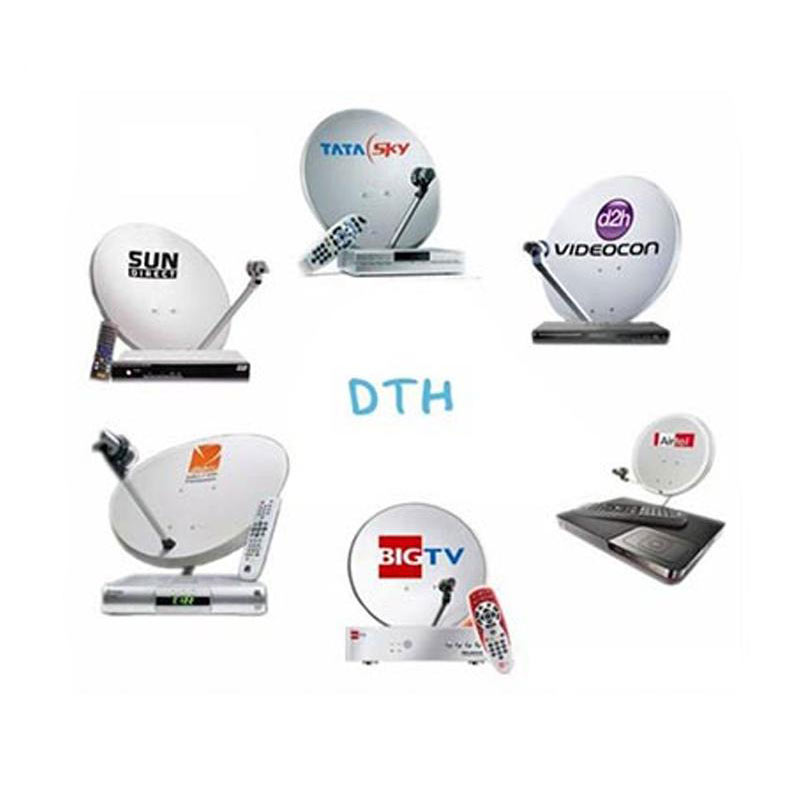
  • DTH subscribers grow in June quarter, Tata Sky maintains lead in pay TV genre: Trai

    DTH subscribers grow in June quarter, Tata Sky maintains lead in pay TV genre: Trai

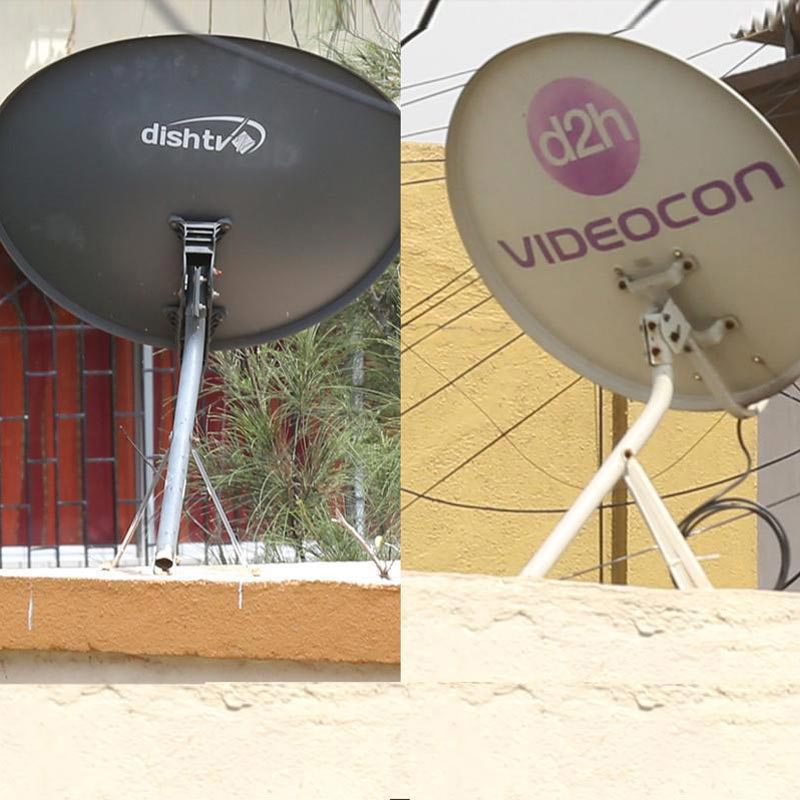
    Mumbai: The number of pay DTH subscribers has increased from 68.57 million to 68.86 million during the April-June quarter in addition to subscribers of DD Free Dish, said Telecom Regulatory Authority of India (Trai) in its latest ‘Indian Telecom Services Performance Indicators’ report.

    Tata Sky continued to maintain the lead in the pay-TV genre with a share of 33.37 per cent, followed by Bharati Telemedia with 25.76 per cent, Dish TV India with 23.45 per cent and Sun Direct TV with 17.41 per cent. 

    According to the report, Reliance Jio Infocomm was the market leader in the access provider segment with 440.59 million subscribers and 36.64 per cent market share. It added 14.34 million telephone subscribers at the end of June.

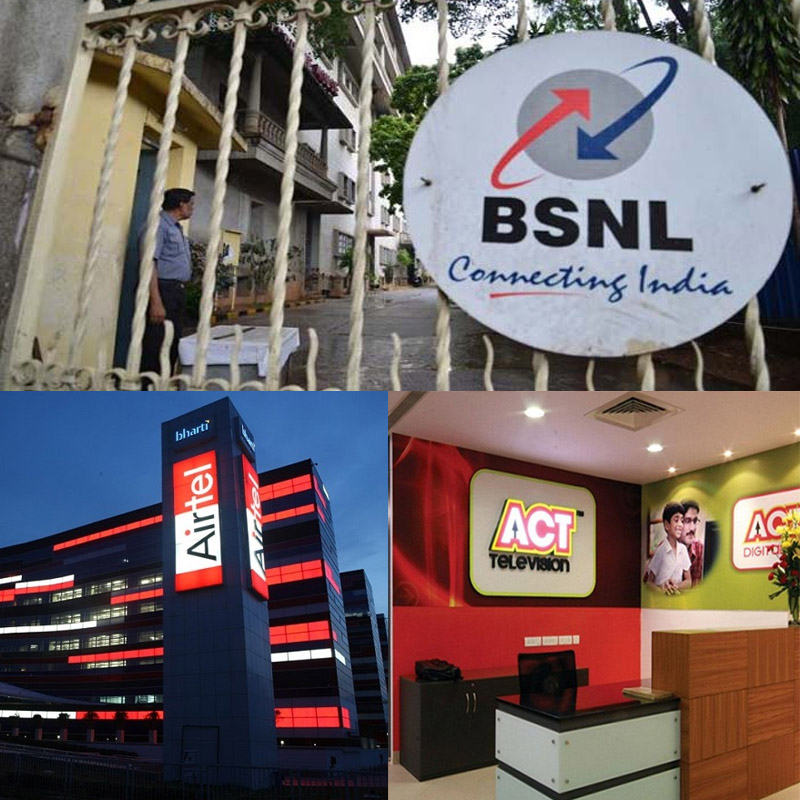
    Bharti Airtel saw a marginal decline in subscribers from 357.17 million to 357.05 million. Vodafone Idea subscriber base also declined from 284.23 million to 273.88. Similarly, BSNL, MTNL, Tata Teleservices, Reliance Communication, and Quadrant lost subscribers in the quarter.

    The internet subscriber base in India grew from 825.30 million to 833.71 million at the end of June. This internet user base comprises 23.58 million wired subscribers and 810.13 million wireless subscribers. Out of the total internet base, 97.09 per cent are using mobile devices and 95.09 per cent are using broadband services to access the internet.

    BSNL is the leader in wired internet subscribers with a 25.57 per cent market share and 6.03 million subscribers followed by Bharti Airtel with 3.37 million subscribers. Reliance Jio holds a 59.901 per cent market share in the wireless internet subscriber base with 436.69 million subscribers followed by Bharti Airtel with a 26.76 per cent share.

    The top five service areas in terms of internet subscriptions (wired+wireless) are Maharashtra (71.21 million), Andhra Pradesh including Telangana (64.38 million), U.P.(East) (63.50 million), Bihar (56.81 million), and Tamil Nadu (56.41 million).

    The broadband internet subscriber base increased from 778.09 million to 792.78 million between March-June. Narrowband internet subscriber base decreased by 13.30 per cent from 47.21 million to 40.93 million.

    The top five broadband (wired+wireless) service providers in terms of subscribers are Reliance Jio (439.91 million), Bharti Airtel (197.10 million), Vodafone Idea Ltd (121.42 million), BSNL (22.69 million), and Atria Convergence (1.91 million).

    The top five narrowband (wired+wireless) service providers in terms of subscriber base are Bharti Airtel (23.05 million), Vodafone Idea Ltd (14.72 million), BSNL (3.01 million), MTNL (0.09 million), and You Broadband (0.01 million).

    In the wired narrowband segment, You Broadband India Pvt Ltd holds 26.23 per cent market share with 0.01 million subscribers followed by Foxtel Telecommunications Pvt. Ltd. with 0.007 million subscribers. In the wireless narrowband segment, Bharti Airtel holds a 56.40 per cent market share with 23.05 million subscribers followed by Vodafone Idea Ltd with 14.72 million subscribers.

    The total number of VSAT subscribers decreased from 293,632 to 289,392. Hughes Communication Limited continues to be the market leader with 44.83 per cent share in VSAT with a subscriber base of 129,724 followed by Tatanet Services with 74,704. Hughes Communication Ltd, added the maximum number of VSAT subscribers at 2344 whereas Bharti Airtel, BSNL, and Infotel Satcom saw a decline in their VSAT subscribers during the quarter.

    The number of private satellite TV channels increased from 901 to 915. The ministry of information and broadcasting has granted 16 channels permission for uplinking only, 70 for downlinking only and 829 for both uplinking and downlinking. There are 346 pay channels out of which 252 are standard definition and 94 are high-definition channels. The remaining 569 channels are free-to-air.

    There are 1731 MSOs registered with Trai out of which only 12 MSOs and one HITS operator have a subscriber base greater than 1 million.