Tag: Trai

  • Broadband usage in India sees just over 5% growth between Jan-Feb

    Broadband usage in India sees just over 5% growth between Jan-Feb

    NEW DELHI: At a time when the government is stressing on Digital India and using social media over the Internet to the full, there was a growth of a mere 5.11 per cent in the number of broadband subscribers between January (94.49 million) and February (97.37 million).


    The number of subscribers using mobile devices (phones and dongles) went up from 78.66 million to 81.49 million, showing the largest growth of 3.59 per cent.


    In comparison, the growth of wired subscribers was 14.45 million in February as against 15.39 in January and the growth of fixed wireless subscribers (Wi-Fi, Wi-Max, Point-to- Point Radio & amp; VSAT) went up from 440,000 to just over that same figure, thus signifying an increase of just 0.63 per cent.


    The top five service providers constituted 83.53 per cent market share of total broadband subscribers at the end of February. These service providers were Bharti Airtel (20.88 million), BSNL (20.67 million), Vodafone (17.93 million), Idea Cellular Ltd (14.08 million) and Reliance Communications Group (7.78 million).


    The top five Wired Broadband Service providers were: BSNL (9.98 million), Bharti Airtel (1.43 million), MTNL (1.14 million), Atria Convergence Technologies (0.65 million) and YOU Broadband (0.44 million).


    The top five Wireless Broadband Service providers were Bharti Airtel (19.45 million), Vodafone (17.92 million), Idea Cellular (14.08 million), BSNL (10.69 million) and Reliance Communications Group (7.67 million).


    Wireless subscribers with less than 1MB and 5MB data usage in a month have not been considered as internet/broadband subscribers by Reliance Communication Group and Idea Cellular Ltd respectively. 


  • DAS phases face problems; Parliamentary Committee asks Govt. to make amends

    DAS phases face problems; Parliamentary Committee asks Govt. to make amends

    NEW DELHI: Even as there are consistent delays on the Home Ministry’s part to examine security clearances for multi system operators (MSOs) and complaints of non-availability of reliable set top boxes (STBs), a Parliamentary Standing Committee has said suitable steps should be taken proactively to address the concerns of all the stakeholders in achieving the final phases of digitization within the envisaged time frame.


    The Committee in its recent report said that about 50 per cent of the further demand of 110 million STBs required under the final phases of digitization is likely to be met by the domestic manufacturers, which is certainly an encouraging proposition.


    Noting that the Telecom Regulatory Authority of India (TRAI) had found interoperability of STBs expensive and recommended financial interoperability, the Committee wanted to know the progress in getting inexpensive STBs as it had been informed that indigenous STBs would be made available in sufficient number.


    Regulations notified by TRAI provide an exit option for a subscriber to change the operator/platform for any reason. The Committee said it had also been informed that the Department of Information Technology had issued a Request for Proposal (RFP) for the development of an indigenous Conditional Access System (CAS) to make interoperability of STBs possible and an Indian CAS is expected to be ready in about a year’s time.


    The Committee noted the process of digitisation under Phase I and Phase II was not smooth as there was strong opposition from cable operators’ associations, non-acceptance of revenue sharing arrangements between cable operators and MSOs, and between MSOs and broadcasters, delay in filling of Consumer Application Forms, monopoly of few selected STBs manufacturers and service providers and opposition from some State Governments.


    It had been informed that the Task Force for the final two phases will provide policy direction and take stock of the progress on a regular basis in order to implement the final phases in a professional manner.


    The Committee noted that out of the four metro cities planned to be digital, digitization has been near total in Delhi, Mumbai and Kolkata. Chennai is yet to undergo the digital transition due to several pending court cases. Phase II of digitization was concluded by 31 March, 2013 in 38 cities spanning 14 states and one union territory. The Phase III and IV digitization process is now planned to be completed by December 2015 and December 2016 respectively.


    The Committee noted that during Phase I and Phase II of the Cable TV digitization, the indigenous manufacturers were able to supply only 15 per cent of the total requirement of STBs and the rest were imported from various countries, mainly from China. As a result, complaints were received about the poor quality of STBs, their non-compliance to BIS standards, and absence of service/repair centres for STBs.


    In this regard, to meet the growing demand of STBs in the country, the Ministry has reportedly taken a number of steps to promote the indigenous manufacturing of STBs, which include increasing import duty on imported STBs from five to 10 per cent, declaring STBs as a part of ‘Telecommunications Networks’ by the Department of Telecommunications on 30 June, 2014 and confirmation by the Department of Revenue on 13 August, 2014 by extension of the same under Sec 8(3) (b) of the Central Sales Tax, 1956 thus fulfilling the major demand of the indigenous STBs manufacturers for the creation of a level playing field vis-?-vis importers.


    Moreover, the Department of Electronics and Information Technology had made it mandatory for the STBs to be BIS compliant for safety certification with effect from January 2014. The Information Technology Department had also entered into a contract with a domestic company to develop CAS domestically vide its order dated 24 July, 2014, which would be made available to the domestic vendors at $ 0.5 as against the current value of $2 or more.


    The Committee also noted that in order to give time to the domestic manufacturers of STBs, the Government had extended the cut-off dates of digitisation, which for Phase III has been extended from 30 September, 2014 to 31 December, 2015 and for Phase IV from 31 December, 2014 to 31 December, 2016.

  • FM advertisement revenue up by Rs 216 crore in 2013-2014: TRAI

    FM advertisement revenue up by Rs 216 crore in 2013-2014: TRAI

    MUMBAI: Radio is not just an affordable means for mass communication but is also very popular, thanks to its wide coverage, terminal portability, low set up costs and affordability.


    The medium is seeing a strong growth of advertisement revenue according to TRAI’s annual report for the year 2013-14. From Rs 1191 crore in 2012-2013 it rose to Rs 1407 crore in 2013-2014, up by Rs 216 crore. Not only this, the medium has been growing at a steady pace since 2008-09. From Rs 539 crore in 2008-09, it rose further by Rs 717 crore, Rs 1017 crore, and Rs 1078 crore for 2009-10, 2010-11 and 2011-12 respectively.


    India has definitely seen a spurt in the number of private FM radio stations. But the number has been stagnant for the year’s 2013 and 2014 with 242 private FM radio stations. In 2008 there were a total of 210 private FM radio stations. This increased to 241 in 2009 and went up by 245 in 2010 and continued till 2012. The number dropped to 242 in 2013 and has been still till 2014.  Besides the 242 private FM radio stations operational as of March 2014, there is also the public service broadcaster- All India Radio (AIR) having a network of 277 stations and 432 broadcast transmitters (148 are MW, 236 FM and 48 SW). In India FM Radio broadcasting, due to its versatility, is considered as the main medium to provide entertainment, information and education within the radio sector.


    With a view to further expand the spread of FM services to other cities particularly in Jammu and Kashmir, North Eastern states and island territories and to address certain other issues, the government on 25 July 2011 issued consolidated policy guidelines on phase III of expansion of FM radio broadcasting through private agencies. “The phase III is intended to extend FM radio’s reach to 294 cities with additional 839 FM radio stations thereby boosting the regional growth of FM radio stations. It is expected that post phase III, FM radio will cover around 85 per cent of the territory of the country,” states the report.


    The scheme to rope in private broadcasters for FM radio has significantly contributed to enhance the coverage and provide good quality of reception to radio listeners. This has also encouraged local talent and generated employment opportunities in various cities.


    The radio sector in the country witnessed another expansion with the opening up of Community Radio Stations (CRS). The annual report highlights that there is a huge    potential    in   India   for establishment of CRS given the vast landscape of this country, numerous languages, various cultures and diverse social stratification.


    Community Radio is known to serve the purpose of networking of small communities with an objective to focus on the common man’s day-to-day concerns and help them realize local aspirations. As on March 2014, out of the 194 licenses issued for the setting up of community radio stations, 161 community radio stations have become operational. 

  • TRAI issues new tariff order for DTH Customer Premises Equipment

    TRAI issues new tariff order for DTH Customer Premises Equipment

    NEW DELHI: While declaring that there will be transparent and upfront declaration of installation and activation charges by direct to home (DTH) operators, which will not exceed Rs 450, the Telecom Regulatory Authority of India (TRAI) said that the operators will have to mandatorily offer an outright purchase scheme called Standard Scheme for all types of Customer Premises Equipments (CPEs) on a standalone basis.


    In the new Telecommunication (Broadcasting and Cable) Services (Seventh) (the Direct to Home Services) Tariff Order 2015 issued today, TRAI said the aim was to prescribe a framework for commercial interoperability of CPE offered by the operators to their subscribers.


    The order says subscribers shall have the option of returning the CPE by paying a nominal collection charge of Rs 300 to the DTH operator or to return the CPE at the designated collection centre.


    DTH operators can levy no other charges by any other name other than those specified in the order on the subscribers.


    The operators have been given a time of 60 days to align their business processes for compliance with the provisions of the new Tariff Order.


    The order provides for transparent price declaration of all types of CPEs by the DTH operators to enable a subscriber to make an informed choice.


    Other than the Standard Scheme, the operators may offer additional schemes including bundled schemes and rental schemes.


    In the rental schemes, DTH operators can charge a specified one-time interest free refundable security deposit, installation and activation charges from the subscriber during enrolment followed  by specified monthly rental charges. No repair /maintenance charges are permissible from such subscribers.


    DTH operators will cater for free maintenance and repairs of CPEs for three years after installation/ activation. In case of outright purchase and hire purchase schemes, DTH operators may levy visitation charges not exceeding Rs 250 per visit after the warranty period has elapsed.


    Subscribers shall have an option of buy-back/refund for CPEs in all the offered schemes including bundled schemes with the exception of rental schemes where the subscriber will get back the security deposit.


    DTH operators may prescribe a lock-in period not exceeding six months for a subscriber to remain committed. Subscribers can surrender the CPE any time subject to levy of certain charges that have been prescribed.


    DTH operators will setup collection centers at every district headquarters to enable easy return of CPEs. Subscribers shall be provided with a toll-free telephone number for registration of request for surrender of connection.


    The operators will declare all current schemes on their websites while also publishing all charges for each scheme. Subscribers should be given details of the scheme opted by him.


    DTH services in India have been growing at a rapid pace since they were introduced in 2003. Today, there are six private operators offering DTH services to around 73 million subscribers. As these operators have launched the services at different points of time, deploying different transmission and compression standards and encryption solutions, the CPE deployed by one operator may not be compatible with the network of another operator. Therefore, if a subscriber wishes to migrate to another DTH operator or cable TV platform, he is required to invest in the CPE/STB of the other operator. It has also been observed that there is a lack of transparency in various schemes offered by the operators in the market.


    The Authority is of the view that the DTH operators in this regard can largely protect interests of consumers through the provision of commercial interoperability of CPEs and mandating transparent and upfront declaration of all charges and conditions at the time of providing service. Commercial interoperability provides for an exit option to a subscriber in case he wishes to change the operator and avail the services from another DTH operator for any reason.

  • TRAI seeks views to regulate Over-The-Top services

    TRAI seeks views to regulate Over-The-Top services

    NEW DELHI: The Telecom Regulatory Authority of India (TRAI) today asked stakeholders whether it was too early to establish a regulatory framework for over-the-top (OTT) services, since internet penetration is still evolving, and access speeds are generally low and there is limited coverage of high-speed broadband in the country.


    At the same time, TRAI sought opinion on whether a beginning should be made now with a regulatory framework that could be adapted to changes in the future in a Consultation Paper on ‘Regulatory Framework for OTT services.’ The regulator wants stakeholders to send in their comments by 25 April and counter-comments by 8 May.


    TRAI wants to know if OTT players offering communication services (voice, messaging and video call services) through applications (resident either in the country or outside) should be brought under the licensing regime.


    It has sought suggestions on whether the growth of OTT is impacting the traditional revenue stream of telecom service providers and is the increase in data revenues of the TSPs sufficient to compensate for this impact.


    The regulator wants stakeholders to state whether the OTT players should pay for use of the TSPs network over and above data charges paid by consumers, the pricing options that can be adopted and could they include prices based on bandwidth consumption.


    Do stakeholders feel that imbalances exist in the regulatory environment in the operation of OTT players? What should the framework to address these issues be, and how can the prevailing laws and regulations be applied to OTT players (who operate in the virtual world)? are some of the questions to which, TRAI wants answers.


    At the outset, TRAI has noted that TSPs offering fixed and mobile telephony are currently being overwhelmed by online content, known as OTT applications and services. The term OTT refers to applications and services, which are accessible over the internet and ride on operators’ networks offering internet access services e.g. social networks, search engines, amateur video aggregation sites etc. The best known examples of OTT are Skype, Viber, WhatsApp, Chat On, Snapchat, Instagram, Kik, Google Talk, Hike, Line, WeChat, Tango, e-commerce sites (Amazon, Flipkart etc.), Ola, Facebook messenger, BlackBerry Messenger, iMessage, online video games and movies (Netflix, Pandora). Today, users can directly access these applications online from any place, at any time, using a variety of internet connected consumers. TSPs also means Network providers, Internet Service Providers, fixed and mobile, broadband providers, data service providers, wireless net providers and access providers.


    It said the public internet that started in the 1980s has grown in scope over the last three decades. In its current form, it has the added ability to carry the entire gamut of services that are required to be delivered to a consumer of telecom services. It allows a telecom subscriber to access almost all the services required for information, education and entertainment. It has enabled an individual’s commercial transactions including retail; in that respect, it has altogether redefined the conventional marketplace. Even personalized services, such as a taxi ride can be accessed on a person’s fingertips. This growth has also brought about a fundamental shift in other spheres including telecom and TV. Earlier, networks used to be built around specific applications, say voice, internet or Pay TV. Voice, message and video content have now been reduced to mere bytes.


    It is becoming increasingly difficult for consumers to know if there is an economic difference in connecting various networks via a land phone, cell phone, or a computer. In fact, young users find it difficult to distinguish among these three networks; from their perspective, all that matters is connectivity. They visualize these not as a layered and interconnected series of discreet networks, but as an organic whole.


    The regulator therefore wants to know how the security concerns should be addressed with regard to OTT players providing communication services and what security conditions such as maintaining data records, logs etc. need to be mandated for such OTT players. Furthermore, suggestions are sought on how the OTT players offering app services ensure security, safety and privacy of the consumer.


    What forms of discrimination or traffic management practices are reasonable and consistent with a pragmatic approach, the regulator wants to know, and whether the TSPs be mandated to publish various traffic management techniques used for different OTT applications.
     

  • FICCI Frames: The roadmap for success in broadcasting

    FICCI Frames: The roadmap for success in broadcasting

    MUMBAI: In its three decades of existence, the promising broadcast narrative in India continues to be challenged on issues such as transparency, pricing, taxation, consumer choice and lack of a coherent regulatory and policy framework.


    To find a solution to these and similar questions, a panel anchored by media analyst, author and columnist Vanita Kohli Khandekar highlighted a session on the Future of Vision 2020 – laying a transformative roadmap for Indian broadcasting. The panelists stressed issues for unlocking value in Indian broadcasting on the first day of the FICCI Frames convention held on 25 March in Mumbai.


    Speakers who shared their opinion and views were I&B Ministry additional secretary JS Mathur, TRAI principal advisor SK Gupta, BBC Global News CEO Jim Egan, Siti Cable CEO VD Wadhwa, Star India COO Sanjay Gupta, Tata Sky CEO Harit Nagpal, Viacom 18 Group CEO Sudhanshu Vats and Discovery Networks Asia-Pacific south Asia and southeast Asia GM and executive VP Rahul Johri.


    According to Wadhwa, in order for the media and entertainment sector to grow, digitisation should be completed. “Digitisation must be completed and that will bring in transparency. Secondly, we need to work together to see how can we monetise the business far better.”


    It may be recalled that in phase I and II of digitisation, average revenue per user (ARPU) had witnessed a significant jump in places where people were consuming cable broadband. In response to that, Nagpal said, “We can either have monopolies or regulations but one has regulation where there are monopolies. I believe that I am digging my own grave if I am not serving my customers and as a regulator, we need to make sure that he is getting adequate infrastructure to do his job well.”


    Sharing his views on the media and entertainment sector, Star’s Gupta said that today the industry size is close to Rs 30,000 crore and the big challenge going forward will be on how to make it a Rs 300,000 crore industry. Gupta opined that the one fundamental issue that plagues the industry is that they have regulated the industry from a wrong perspective. “You need to get the capital to invest high, while creating innovation for consumers. That’s how industries have grown. However, that is the challenge for the M&E industry.”


    When on the one hand broadcasters believe that regulation is not required, on the other hand TRAI’s Gupta had a different opinion. “If regulation is not required then what is required? Is it that we are required to keep quiet on the customer front if they are not getting any choice?” he questioned.


    He went on to add that the country has 30 million DTH customers, 30 million DAS customers and 10 million addressable systems. However, the question was how many consumers have the choice of individual channels? “If I ask a consumer if he/she is watching all the channels given to them, the answer will be a big no. Therefore the price can be deregulated and total selection of the channel should be given to the consumer at the desired price. And for this to happen certain broad guidelines should be created and this should be done soon.”


    Picking up points from Sanjay and S K Gupta, Vats said that in order to drive the size of the pie, pricing is the difficult thing. “If we focus on the price of the analogue cable, in some way, we are constraining the ‘X’ to increase and my request is that if we become open to it, we will allow the ‘Y’ to increase. The moment we allow the ‘Y’ to increase, I think we will define the problem collectively better between LMOs, MSOs, broadcasters etc.”


    Vats was of the view that competition needs to be encouraged, even though there is enough competition in the media and entertainment industry. “Competition itself will ensure that we are reaching out to every possible Indian, outside India as well. It happens in every industry, why has it not happened here?”  A firm believer of  a free market, Vats is confident that it will drive the industry and take it to the next level.

  • TRAI imposes financial disincentives and penalties on MSOs

    TRAI imposes financial disincentives and penalties on MSOs

    NEW DELHI: The Telecom Regulatory Authority of India (TRAI) has notified an amendment to the existing Quality of Service Regulations (QoS) for Digital Addressable System (DAS) by imposing financial disincentives on multi-system operators, who are not complying with the provisions regarding billing and issue of receipts for payment made by the subscribers.


    A provision for financial disincentive for an amount not exceeding Rs 20 per subscriber has been made in the amended regulation. The Authority is of the view that enabling the imposition of financial disincentives will be an effective deterrent and will incentivise MSOs to issue bills and receipts to subscribers for payments made.


    The QoS Regulations also prescribes that the cable TV services shall be offered to the subscribers both on pre-paid and post-paid payment models with the options being given to subscribers.


    In the amendment regulation, an explanation clarifies that the pre-paid option offered by MSO shall be implemented through electronic pre-paid mechanisms. In order to ensure that the MSOs honour the pre-paid or post-paid option given by the subscriber in a timely manner, a financial disincentive of not exceeding Rs 100 per subscriber has been made on the MSO for each contravention.


    The Standards of Quality of Service (Digital Addressable Cable TV Systems) (Amendment) Regulations 2015 provides MSOs a time of 60 days to align their business processes for compliance with the provisions of the regulations.


    TRAI is of the view that the imposition of financial disincentives would effectively curb the non-compliance of the provisions of the regulations and would benefit consumers and the Cable TV sector.


    The QoS Regulation for DAS lays down the norms for the issue of bills to subscribers, and the issue of receipts for every payment made by subscribers.


    It was observed that the prescribed norms for billing and issue of receipts for every payment made by subscribers were not being complied with by the MSOs. Such non-compliance has resulted in numerous legitimate consumer grievances. In the absence of a bill, a subscriber cannot ascertain whether the amount demanded by the MSO for the cable TV services is correct or not. Similarly, in the absence of a receipt for the payment made, there is no means to get a grievance redressed in case of any billing related dispute with the operators.


    For consumers, such bills and receipts are essential; when it is available to consumers in other commercial markets, why not in the cable TV market?


    Because of the non delivery of such bills and receipts by the MSOs, information of actual subscription vis-?-vis billing and payment details are not being entered into the Subscriber Management System (SMS). Consequently, commercial deals and financial transactions amongst operators are not being carried in a transparent manner. It is adversely affecting smooth implementation of DAS as mandated by law.


    In absence of proper billing and accounting of receipts, there is a very real possibility of a loss of revenues accruable to the Government. It is essential that the Government gets its due tax revenues arising out of the business of the cable TV services sector.

  • I&B asks stakeholders to arrive at consensus on difficult issues for successful digitisation

    I&B asks stakeholders to arrive at consensus on difficult issues for successful digitisation

    NEW DELHI: Information and Broadcasting Ministry (I&B) additional secretary J S Mathur, who heads the Task Force for Phase III and IV of Digital Addressable Systems (DAS) for cable television has urged all stakeholders to come together and resolve issues, if targets have to be met.


    Noting in the sixth meeting held on 13 March that only seven out of 100 multi-system operators (MSOs) had given the seeding plans for Phase Ill areas.


    The data provided by them indicated that about 3.1 million set top boxes had been seeded by them with about 550,000 STBs in their stock and about 2.35 million STBs under orders of purchase. He remarked that the seeding so far was very low vis-a-vis the target.


    He said, “Each day counts towards progress in digitisation.” He also said that progress would be slow without public awareness campaign by the stakeholders.


    He said there was lack of mutual connect between broadcasters and MSOs with each stakeholder wanting to maximize self interests. There was need for coming to a consensus.


    He added that the data on subscription revenue and carriage fee from the Indian Broadcasting Foundation and News Broadcasters Association was still awaited, despite assurances.


    He emphasised that broadcasters have to contribute by mounting awareness campaign on their channels as was done by them during Phase I and Phase II and the MSOs have to contribute in this campaign. He said broadcasters should start a dialogue with MSOs immediately.


    He welcomed the initiative taken by Telecom Regulatory Authority of India (TRAI) to hold a meeting with broadcasters and MSOs to resolve the issue of interconnect agreements.


    However, the stakeholders should themselves get their act together and put in their utmost effort to ensure that such issues do not come in the way of achieving the goal of digitisation.


    He said that as pointed out by some members of the Task Force, digitisation has begun to benefit all stakeholders. Activity on the ground needs to be accomplished from now itself as it is not a matter that can be put in place overnight.


    Representative of MSOs said there were issues of content costing, due to which they were finding it difficult to plan digitisation in new areas. Seeding plans can be firmed up by MSOs only after knowing content cost. Till then, the MSOs can only give their seeding projections instead of seeding plans.


    They also stressed that revenue from Phase Ill and Phase IV areas is about 20 to 30 per cent of the total revenue from the country. So content cost in Phase Ill and Phase IV areas cannot be same as that in Phase I and Phase II areas and this has to be taken into account by all stakeholders.


    MSOs also complained that broadcasters were not entering into interconnect agreements with the MSOs for Phase Ill areas.


    Unless the input cost is known, MSOs cannot educate the consumers about the rates and there are issues of local taxation levied by some State Governments apart from local cable operators switching over to analogue when the digital signal to them is cut off by the MSO.


    Broadcasters’ representatives on the other hand said MSOs had not approached the broadcasters for entering into interconnect agreements in new areas. The broadcasters felt that this was because MSOs do not have concrete plans.


    Seeding was done by MSOs in Phase I and Phase II without first entering into interconnect agreements with broadcasters and this should not be an issue now, some of the broadcasters said.


    They claimed that channel prices had gone up due to technical upgradation from SD to HD, but there had been no increase in the advertisement rates.


    A TRAI representative said that according to a TDSAT judgment, MSO/LCO providing cable TV services were free to provide digital cable service in new areas unless it trespasses other areas. He impressed upon the broadcasters to enter into interconnect agreements with MSOs who approach them for content in Phase Ill and Phase IV areas.


    Representative of consumer forums mentioned that pricing is the main issue which the consumers are facing. He added that consumers should know the price before he switches over to digital.


    Representative  of  CEAMA  stated  that  they  approached  as  many  MSOs  as possible to clear their doubts about indigenous set top boxes. However the response from the MSOs has not been encouraging. He reiterated that they have the capacity to meet the requirements of Phase Ill and Phase IV.


    A representative of the Uttar Pradesh Government mentioned that CAF forms should be filled by the MSOs before changing to digital mode in Phase Ill and Phase IV areas. He added that the State Government was not having complete seeding data of Phase II cities.


    The representative of Jammu and Kashmir wanted consumers to be informed about the set top box price. 

  • Adcap case adjourned to 24 July; broadcasters hope govt will reverse earlier order

    Adcap case adjourned to 24 July; broadcasters hope govt will reverse earlier order

    NEW DELHI: The Delhi High Court has adjourned the petition by the News Broadcasters Association (NBA) and others challenging the advertising cap of 12 minutes per hour sought to be imposed by the government to 24 July.


    The NBA and regional broadcasters along with music channels informed the court about recent developments vis-?-vis the new government and highlighted the fact that they were awaiting the government’s response against their joint representation.


    The Court agreed to the adjournment in order to give some more time for the aggrieved broadcasters and government to represent and decide an amicable solution amongst themselves.


    The order that the Telecom Regulatory Authority of India (TRAI) will not take any action against any channel pending the petition will continue. In an earlier hearing, the Court had, at the regulator’s instance, directed that all channels keep a record of the advertisements run by them.


    TRAI sought to tell the Court that the matter had been pending for long, but the bench headed by Chief Justice G Rohini said if the matter could be resolved, then it was better to give more time.


    For the broadcasters, this is a major relief even Information and Broadcasting Minister Arun Jaitley recently voiced his views against an ad cap on broadcasters.


    The NBA had challenged the ad cap rule, contending that TRAI does not have jurisdiction to regulate commercial airtime on television channels.


    Apart from the NBA, the petition have been filed by Sarthak Entertainment, Pioneer Channel Factory, E24 Glamoru, Sun TV Network, TV Vision, B4U Broadband, 9X Media, Kalaignar, Celebrities Management, Eanadu Television and Raj Television.


    The news and regional broadcasters fear that the capping of commercial airtime will curtail their ad revenues. They also argue that the ad cap must be brought only after the benefits of cable TV digitisation start showing.


  • Govt reiterates no plans to cap number of TV channels in country

    Govt reiterates no plans to cap number of TV channels in country

    NEW DELHI: Even as the Government has no plans to put a cap on the number of satellite television broadcasting channels in the country, the Parliament was informed today that permission had been withdrawn to 27 news and current affairs channels in the past three years.


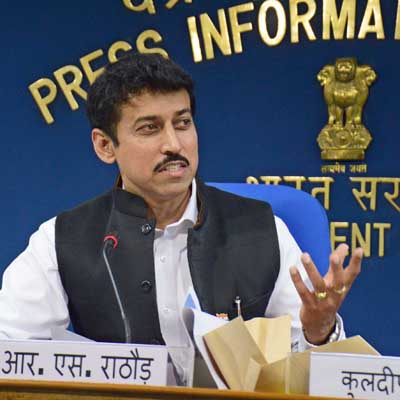
    Minister of State for Information and Broadcasting Rajyavardhan Rathore today told Parliament that the Telecom Regulatory Authority of India (TRAI) in response to a reference by the Ministry had said on 23 July, 2010 that “no cap should be placed on the number of satellite broadcasting channels to be permitted to be downlinked from viewing in India or to be uplinked from India.”


    The Minister also said that there was no proposal to amend the uplinking and downlinking guidelines to check the increase in the number of news channels in the country.


    In reply to another question, Rathore said that the Ministry had withdrawn permission of 27 news and current affairs TV channels for reasons of non-operationalization of TV channels or surrender of permission, etc.


    He said issues related to employment of media personnel, working in the TV channels (including news channels), are governed by the prevalent Labour Laws.


    The number of permitted satellite television channels by the end of December last was 826, which include 405 news and current affairs channels and 421 general entertainment channels.


    The statistics show that 697 channels (including 382 news channels) were permitted to uplink and downlink from within the country, and 36 (including seven news channels) were uplinked from India for beaming overseas and not in the country. The number of channels uplinked from overseas and downlinked into India was 93 (including 16 news channels).


    The year 2014 has thus saw the clearance to more than 30 channels.