Tag: Trai

  • Initial licence should be for 10 years as VNO is new concept: TRAI

    Initial licence should be for 10 years as VNO is new concept: TRAI

    NEW DELHI: Virtual Network Operators (VNO) in the telecom sector should be permitted for all segments of voice, data and video as well as for all services notified in the unified license (UL) for a period of ten years, extendable by ten years at a time. 


    The Telecom Regulatory Authority of India (TRAI) in its recommendations has said VNO should be introduced through proper “licensing framework” in the Indian telecom sector.


    For introduction of VNO in the sector, there should be a separate category of license namely UL (VNO). Like UL authorization, only pan-India or service area-wise authorizations may be granted under a UL (VNO) license.


    The recommendations were given after the Department of Telecommunications (DoT) through its reference of 7 July last year had sought recommendations of TRAI on the subject.


    TRAI said that VNOs are service delivery operators, who do not own the underlying core network but rely on the network and support of the infrastructure providers for providing telecom services to end users and customers. 


    VNOs can provide any or all telecom services, which are being provided by the existing telecom service providers.


    VNO should be introduced in the network based on the basis of mutually accepted  terms and conditions between NSO and the VNO. The terms and conditions of sharing the infrastructure between the NSO and VNO are left to the market to determine.


    VNOs should be permitted to set up their own   network equipment where there is no requirement of interconnection with other NSO.  However, they should not be allowed to own/install equipment where interconnection is required with another NSO.


    Local Cable Operators (LCOs) and Multi Service Operators (MSOs) can become VNO and are permitted to share infrastructure with VNOs.


    There should not be a restriction on the number of VNO licensees per service area and there should be no restriction on the number of VNOs parented by an NSO.


    Customer verification and number activation shall be the responsibility of a VNO for its own customers.


    VNOs that enter the network would do so based on arriving at a mutual agreement between an NSO and a VNO.


    The Authority recommended that VNOs should be permitted for all services notified in the UL.                                            


    TRAI recommended that the terms and conditions of sharing of infrastructure between the NSO and VNO should be left to the market i.e. on the basis of mutually accepted terms and conditions between the NSO and the VNO.       


    The Authority recommended VNOs be permitted to set up their own network equipment viz. BTS, BSC, MSC, RSU, DSLAMs, LAN switches, where there is no requirement of interconnection with other NSO(s). Therefore, they should not be allowed to own/install equipment viz. GMSCs, Soft-switches and TAX.


    Equipment permitted to be owned/installed by VNOs should conform to the technical standards prescribed by standardization bodies like TEC and ITU.


    VNOs may also be allowed to create their own service delivery platforms in respect of customer service, billing and VAS. MSOs and LCOs who want to provide broadband services through their cable network may do so by obtaining a VNO license. MSOs/LCOs may also share their cable infrastructure with VNOs, after the MSO/LCO register themselves as an IP-I service provider.


    There should be a separate category of license namely UL (VNO). This UL (VNO) will contain similar authorizations for services and service areas as provided in the existing UL.


    An operator who wishes to provide telecom services to its customers utilizing the underlying network and/or access spectrum of an existing NSO will have to obtain UL (VNO) license. 


    The Authority recommended that resale of IPLC presently under the UL shall be shifted from the existing UL to UL (VNO) licensing in order to make a clear distinction among the class of operators.


    A VNO should be a company registered under the Indian Companies Act 1956 (as amended). The entry fee for UL (VNO) with a given authorisation will be 50 per cent of the entry fee prescribed for the UL. Financial Bank Guarantee will be equal to the amount of two quarter license fee. Minimum equity and minimum networth may be kept at 40 per cent of the amount prescribed under UL. 


    The Authority recommended that under UL(VNO) the provision for restriction of 10 per cent or more equity cross holding to be applicable between (i) a VNO and another NSO (other than VNO’s parent NSO) and (ii) between a VNO and another VNO authorized to provide access services using the access  spectrum of different NSO in the same service area.                                                                         

    A VNO shall be liable to pay LF as a percentage of AGR at the same rate as that of the parent NSO.


    VNO shall also be liable to pay the SUC for the wireless service(s) it offers to the customers. The SUC rate will be same as that of the parent NSO.


    Since Quality of Service is in the exclusive domain of TRAI, the Authority will put in place comprehensive regulations on QoS parameters to be complied separately by NSOs and VNOs.
  • TRAI proposes more data pack usage for mobile users; Khullar non-committal on net neutrality

    TRAI proposes more data pack usage for mobile users; Khullar non-committal on net neutrality

    NEW DELHI: The Telecom Regulatory Authority of India (TRAI) wants telecom service providers to provide ample information about subscribed data pack usage.


    TRAI said in the draft ”Telecom Consumers Protection (Eighth Amendment) Regulations, 2015” that it proposes to mandate the service providers to provide information, through SMS or unstructured supplementary service data (USSD), to mobile users, who have subscribed to data connection other than through data packs about quantum of data used and the tariff thereof after every 5,000 kilobytes of data usage.


    The draft was released on 29 April and comments of stakeholders can be submitted till 12 May.


    TRAI has been receiving several complaints from consumers regarding non-availability of information relating to the amount of data used during a data session.


    The service providers offer concessional tariff for data, up to a certain limit, through special tariff vouchers or combo vouchers (data packs) and also through certain tariff plans. The tariff for any usage beyond the specified limit is substantially higher, and in case the customer does not know about reaching the limit for concessional tariff, it results in substantial charges levied, leading to sudden bill shock or unexpected deduction of balance amount.


    ”The consumers have also voiced their concern about activation of internet service on mobile phones without their consent and knowledge leading to sudden deduction of charges for data usage,” the statement said.


    TRAI has examined these complaints and has felt that measures need to be taken for addressing these genuine concerns of customers. In this regard, TRAI proposes to amend the Telecom Consumers Protection Regulations, 2012.


    The regulator also proposed to mandate the service providers to provide the mobile subscriber who has taken data connection through data packs or through tariff plan with discounted tariff up to certain limit, an alert through SMS or USSD, whenever the limit of data usage reaches 50 per cent, 90 per cent and 100 per cent of data limit.


    ”Also when the usage reaches 90 per cent of the limit, information about the applicable tariff beyond the data limit shall also to be communicated,” the statement added.


    It is proposed that data services should be activated or deactivated only with the explicit consent of the subscriber through toll free short code 1925, following the prescribed procedures for obtaining explicit consent of the consumer and for deactivation data.


    In fact, TRAI chairman Rahul Khullar recently said that TRAI is likely to announce new parameters for improvement of quality of service for telecom operators in a month’s time to tackle call dropping and other problems being faced by customers.


    He was speaking at the 2nd National Summit on ‘IT & Mobile Banking: Digital Transformation of Indian Banking. Enabling Financial Inclusion,’ organised by the Associated Chambers of Commerce and Industry of India.


    Regarding the ongoing debate on net neutrality, Khullar said, ”The consultation process on network neutrality is still on till that consultation is complete, I will not make any statement.”


    Khullar also said that financial inclusion could be deeply achieved by harnessing new technology, which does not cater exclusively to those who are already banked or those living in urban areas.


    ”Do not delude yourself into believing that merely because technology exists, it will be suddenly harnessed for everybody’s good. The way it has worked so far at least, it has been harnessed for the good of a very few as it’s only those having devices and are electronically savvy who are in good shape,” he added.

  • Net Neutrality: TRAI receives a million mails, Indians awaits judgment day

    Net Neutrality: TRAI receives a million mails, Indians awaits judgment day

    MUMBAI: One of the largest mass movements online in India came to an end as we crossed the 24 April, 2015 deadline day to send online responses to the Telecom Regulatory Authority of India (TRAI).


    The Net Neutrality debate began after Indian telecom operators lobbied to TRAI to change certain rules as per their convenience, which would have a direct impact on the consumer’s pocket. TRAI, in response to the telecos on 27 March, released a 118-page long consultation bulletin, which concluded by asking 20 questions. The last date to respond to that bulletin electronically was 24 April, 2015 while all the counter responses could be sent till 8 May, 2015.


    From 27 March to 24 April there have been certain incidents, which managed to ruffle quite a few big feathers. Many came on record to make a statement.


    Some of the major developments throughout the net neutrality debate tenure are as follows:


    All India Bakchod (AIB) Video


    AIB’s video conveyed the message – “Internet is not a luxury but a utility” and the video ended with a link (www.netneutrality.in), which directed people to the net neutrality home page where all of TRAI’s 20 questions were answered in detail. One could send an email with the pre-written answers by a single click or could edit the replies and send it as well. The video saw the Internet savvy youth getting into action and a complex concept like net neutrality spread through word of mouth as thousands of mails were sent to the Authority.


    Net Neutrality Website


    www.netneutrality.in: After AIB’s video, thousands of people came to the website and mailed TRAI with the pre-written responses. The website also posted all the developments that were happening around the topic, tweets of dignitaries and most importantly the number of mails that were sent. The website also shared their perception which read, “The Internet’s success in fostering innovation, access to knowledge and freedom of speech is in large part due to the principle of net neutrality — the idea that Internet service providers give their customers equal access to all lawful websites and services on the Internet, without giving priority to any website over another.”


    Internet.Org Backout


    Internet.org is a Facebook-led initiative, which aims to bring five billion people online in partnership with tech giants like Samsung and Qualcomm. In India, Facebook partnered with Reliance Communications to provide free Internet access to 33 websites as part of its Internet.org initiative, which came under controversy and raised quite a few eyebrows with free Internet activists saying that it violated the idea of net neutrality. Major participants like Flipkart, Cleartrip, NDTV and Times Network, which had earlier joined this initiative, opted out later as the Net Neutrality debate gathered momentum in India.


    NDTV co-founder Prannoy Roy tweeted, “NDTV is committed to Net Neutrality and is therefore exiting, and will not be part of Facebook’s Internet.org initiative.”


    Mark Zukerberg’s letter


    Facebook founder Mark Zukerberg wrote a note justifying the Internet.org initiative. It read, “In many countries, there are big social and economic obstacles to connectivity. The Internet isn’t affordable to everyone, and in many places awareness of its value remains low. Women and the poor are most likely to be excluded and further disempowered by lack of connectivity. This is why we created Internet.org, our effort to connect the whole world. By partnering with mobile operators and governments in different countries, Internet.org offers free access in local languages to basic Internet services in areas like jobs, health, education and messaging. Internet.org lowers the cost of accessing the Internet and raises the awareness of the Internet’s value. It helps include everyone in the world’s opportunities.”


    He further added, “We fully support Net neutrality. We want to keep the Internet open. Net neutrality ensures network operators don’t discriminate by limiting access to services you want to use. It’s an essential part of the open Internet, and we are fully committed to it. But Net neutrality is not in conflict with working to get more people connected. These two principles — Net neutrality and universal connectivity — can and must coexist.”


    TRAI chairman Rahul Khullar’s statement


    “There are passionate voices on both sides of the debate. And if that was not enough, there’s a corporate war going on between a media house and a telecom operator, which is confounding already difficult matters,” Khullar told The Indian Express. “They have a moral anchor… Equally, there are others on the opposite side. But there are many others in between that one should not ignore despite the passionate nature of the debate between the two extremes. We need a democratic debate on the issue, not shrill voices,” he added


    Sabka Internet Campaign


    The battle for net neutrality in India saw an interesting twist after the Cellular Operators Association of India (COAI) launched a campaign called Sabka Internet. The Sabka Internet initiative was launched to counter the net neutrality campaign. The campaign communicated the positives of the zero Internet venture, where one gets whatever they pay for.


    Million Mail Mission


    In a span of 12 days, a million emails were sent and the ‘million mails’ mission of Netneutrality.in was accomplished before the due date. That sums up the entire net neutrality voyage.


  • TRAI asks MSOs, b’casters to sign MoU on interconnect agreements in phase III

    TRAI asks MSOs, b’casters to sign MoU on interconnect agreements in phase III

    MUMBAI: The Telecom Regulatory Authority of India (TRAI) has given time till 30 April, 2015 to both broadcasters and multi system operators (MSOs) to enter into a memorandum of understanding (MoU) with regards to interconnect agreements in phase III of digital addressable system (DAS) areas.  


    During the seventh task force meeting for successful completion of phase III and IV of digitization, a representative from TRAI informed that in case the broadcasters and MSOs fail to reach any agreement, the Authority will intervene in the matter, as per regulations. “While broadcasters were asked to give report every fortnight, the same has not started coming,” said the TRAI representative.  


    The representative also mentioned that in the transition period both analogue as well as digital signals can be provided by the MSOs in phase III areas. “As per the regulations digital signal can be provided in areas undergoing transition without waiting for the cutoff date,” he added.


    The meeting was convened under the chairmanship of Information and Broadcasting Ministry additional secretary JS Mathur, who said, “While there has been some progress on the issue of interconnect agreements for phase III areas but there are still many areas which need to be addressed by broadcasters.”


    During the meeting, an IndusInd Media and Communication Limited (IMCL) representative said that while they had sent interconnect requests to all broadcasters, as per the TRAI directive, they had received response from only one broadcaster, while Siti Cable was still awaiting a response from all. A Siti Cable representative said, “Broadcasters are filing cases of piracy against MSOs if they start providing digital signal in the phase III areas.”


    MSOs pointed out that the situation is critical and TRAI must take immediate necessary action to resolve the issue. MSOs also want the entertainment tax, levied by State Governments, rationalised.


    Representatives of broadcasters said that they would approach TRAI for clarification on the interconnect agreements to be signed for the transition period. “No such issues of interconnect agreements were raised during phase I and phase II of digitisation and the set top boxes (STBs) were still seeded. Why are these issues being raised now?” questioned broadcasters.


    Broadcasters also raised concerns on the HITS (Headends In The Sky) platform of delivery with regard to addressability although it is mentioned that it is addressable from the day one. Broadcasters also opined that DAS regulations should apply from the date MSOs take digital signal.


    According to Mathur, consumers have the right to know what they have to pay for the digital signal and so, it is imperative that broadcasters and MSOs work out agreements between them without further loss of time. He added, “Channel package rates have to be in public domain. Broadcasters must now finalise all issues with MSOs so as to have a lead time of implementation.”


    While the universe for phase I and II was extremely limited, phase III has to cover all the urban areas of the country. This would thus require exhaustive planning along with suitable investments. “Both broadcasters and MSOs must now finalise their agreements and inform TRAI within the stipulated time period of 30 April,” said Mathur, while suggesting that TRAI should convene a meeting soon after the time period it has given for finalising the action plan for smooth and timely transition.


    Mathur also expressed dissatisfaction over the public awareness campaign for digitisation in phase III areas carried out by the stakeholders so far. He asked all stakeholders and particularly the broadcasters to start the publicity campaign forthwith.


    While the Ministry is still awaiting data on carriage fee and subscription revenue from both the Indian Broadcasting Foundation (IBF) and the News Broadcasters Association (NBA), an NBA representative assured that it will be sent before the next meeting.


    Mathur also enquired about the initiatives being taken by MSOs for using indigenously manufactured STBs. Responding to this, an MSO representatives said that the dialogue with indigenous STB manufacturers was on.


    Consumer Electronics and Appliances Manufacturers Association (CEAMA) representative informed that they had fruitful discussions with some MSOs in which they made some financing offers to MSOs for the supply of STBs.


    Representative of CEAMA further added that they were now facing a major competition from the suppliers of ASEAN countries since the government, as per the ASEAN agreement signed in 2009, has reduced the import duty on STBs imported from ASEAN countries to two per cent only against 10 per cent from other countries. He said, “MSOs may neglect local STB manufacturers and start importing from ASEAN countries, but this will be against ‘Make in India’ initiative of the Government.”


    Meanwhile a CEAMA representative requested the I&B Ministry to look into the issue, while informing that they were also in the process of writing to the Ministry of Commerce about this development. In order to know the use of indigenously manufactured STBs, Mathur directed that the information on utilisation of domestically manufactured STBs may also be sought from all MSOs along with the seeding plans.

  • TRAI sees role of local cable operators in helping broadband grow

    TRAI sees role of local cable operators in helping broadband grow

    NEW DELHI: The Telecom Regulatory Authority of India (TRAI) has called for an audit by an independent agency of all allocated spectrum, both commercial as well as spectrum allocated to various PSUs/Government organizations. Stressing the urgency, it has said this ought to be a national priority and must be undertaken within three months.


    In its recommendations on “Delivering Broadband Quickly: What do we need to do?” prepared after consultations with stakeholders, TRAI has noted that current availability of spectrum in local service areas (LSAs) is about 40 per cent of that available in comparable countries elsewhere. There is therefore ‘a crying need for assignment of additional spectrum for commercial telecom services.’ There is need to align spectrum bands with globally harmonized bands to achieve interference-free coexistence and economies of scale.


    There is a need to lay down a clear roadmap for spectrum management, which should state the requirement and availability of spectrum for each LSA as well as for the whole country. This roadmap should be made available publicly to ensure transparency.


    Wireless Planning Commission


    In a far reaching recommendation, it has said that Wireless Planning Commission (WPC) should be converted into an independent body by de-linking it from the present Department of Telecom ‘hierarchy and either converting it into a statutory body responsible to Parliament or transferring it to an existing statutory body.’ 


    ‘Even in a more limited role of assigning solely commercially available spectrum, there is a strong case for an institutional overhaul of WPC to realise goals of institutional efficiency, transparency in decision-making and full disclosure of decisions,’ it says.


    Right of Way


    There is a need for enunciating a National Right of Way Policy to ensure uniformity in costs and processes. 


    Role of Local Cable Operators (LCOs)


    In another major recommendation, it said cable television operators should be allowed to function as resellers of Internet Service Provider (ISP) license holders to enable them to take advantage of their cable network to provide broadband. Implementation of digitisation of cable services to Phase II and III cities should be done in a time-bound manner.


    Satellite Regulations


    There is need to separate Licensor, Regulator and Operator functions in the satellite space domain to conform to best international practices of free markets. The issue of coordination of additional spectrum in the 2500-2690 MHz band with the Department of Space needs to be addressed urgently, so that this band can be optimally utilised for commercial as well as strategic purposes.


    NOFN


    The ‘multi-layered structure for decision making’ for national project NOFN for laying optic fibre is ‘just not suitable for a project that needs to be executed in mission-mode’ and the structure needs immediate overhaul.


    There is need for Project implementation on Centre State Public-Private Partnership (CSPPP) mode by involving State Governments and the private sector. The award of EPC (turnkey) contracts by BBNL to private parties through international competitive bidding needs to be planned. Such contracts can be given region-wise with clear requirements for interconnection with other networks, as well as infrastructure sharing with other operators who would like to utilise this network. A commercial model around this will need to be suitably deployed.


    Telecom Towers


    Referring to towers, it said single-window, time-bound clearance should be encouraged for installation of towers to ensure the rapid development of national networks. Extensive consumer awareness and education programmes should be organised so that consumers fully understand the latest scientific information on EMF radiation and its potential impact on health.


    Referring to Right of Way, it said single-window clearance is an imperative for all Right of Way proposals at the level of the States and in the Central Government. All such clearances have to be time-bound so that Telecom Service Providers and infrastructure providers can move rapidly to project execution. Ideally, single-window clearance should be administered online with a defined turnaround time. The reasons for denial of RoW permission should be recorded in writing.


    To promote fixed line BB, the license fee on the revenues earned from fixed line broadband should be exempted for at least five years. The infrastructure of PSUs is lying unutilised and thus they should be mandated to unbundle their network and allow sharing of outside plant (OSP).


    The Government needs to encourage local and foreign companies to build ‘Data Centre Parks’ on the lines of industrial parks, SEZs etc. by providing them land, infrastructure and uninterrupted power supply at affordable rates.


    Both Central and State Governments will have to act as model users and anchor tenants through delivery of e-Government services including e-education, e-governance, m-health, m-banking and other such services. Schools are the ideal and convenient point for early initiation to broadband services. Government schools in the rural and remote areas can be provided subsidy from the USOF for broadband connectivity. The cost of CPE (desktop/laptop/tabs etc) is a major barrier to the adoption of broadband services. TSPs may be allowed to offer CPE bundled tariff schemes. Revenues from such offers ought to be exempted from the applicable license fee at least for a certain number of years (say for three years). 


    In addition, there are a large number of recommendations of the Authority on which decisions of the Government are still awaited. The Government needs to act quickly on these recommendations as we have already lost too much time. These include, inter alia, on Spectrum Trading, Spectrum Sharing, Open Sky Policy, Infrastructure Sharing, Microwave Access and Backbone Spectrum.


    The Authority had issued the Consultation Paper on “Delivering Broadband Quickly: What do we need to do?” on 24 September last year to discuss issues contributing to broadband penetration in India and to solicit stakeholders’ views on action required to be taken both by the Government and the private sector to accelerate the proliferation and use of broadband in the country. The comments and counter-comments received from the stakeholders were placed on the TRAI’s website. An Open House Discussion was held on 30 October 2014 in New Delhi with the stakeholders. 


    The Authority noted with serious concern the slow penetration and adoption of broadband in the country.  India ranks 125th in the world for fixed broadband penetration with only 1.2 per 100 inhabitants having access to fixed broadband; the global average is 9.4 per 100 inhabitants. In terms of household penetration within developing countries, India is ranked 75th with a penetration of 13 per cent. In the wireless broadband space too, India is ranked 113th with a penetration of 3.2 per 100 inhabitants. In terms of ‘ICT access, ICT use and ICT skills’, India ranks 129th out of total 166 countries. Indonesia (106), Sri Lanka (116), Sudan (122), Bhutan (123), Kenya (124) are ranked above India. India is categorised in the Least Connected Countries Group of 42 countries that fall within the low IDI group.


  • TRAI chairman wants debate to settle net neutrality not spars between companies

    TRAI chairman wants debate to settle net neutrality not spars between companies

    MUMBAI: The Telecom Regulatory Authority of India (TRAI) chairman Rahul Khullar has said that there is a need for a democratic debate on net neutrality, especially against the backdrop of a big corporate war between a media house and a telecom operator.


    “There are passionate voices on both sides of the debate. And if that was not enough, there’s a corporate war going on between a media house and a telecom operator, which is confounding already difficult matters,” Khullar told The Indian Express.


    The authority has received over 800,000 mails since it floated a consultation paper on regulatory framework for over-the-top (OTT) services and applications on 27 March. TRAI requested stakeholders to comment on its paper by 24 April and offer counter comments by 8 May. It is also likely to hold an open house discussion on the issue soon. Stand up comedy group All India Bakchod (AIB) and other net neutrality activists were the prime reason behind so many mails sent to the Authority. 


    According to Khullar, there are people who are passionately concerned about net neutrality. “They have a moral anchor… Equally, there are others on the opposite side. But there are many others in between that one should not ignore despite the passionate nature of the debate between the two extremes. We need a democratic debate on the issue, not shrill voices,” he said.


    The regulator has heard arguments on both sides. For instance, telecom service providers have pointed out the contradiction in the government’s digital inclusion agenda, which may not be achieved if they strictly adhere to the net neutrality principle, because they will be unable to raise any additional resources for rolling out networks and infrastructure. On the other hand, OTTs argue that if telecom operators are allowed to pick and chose, they might build alliances with the big OTTs at the cost of the nascent ones.

  • Telecom Ministry sets up committee to study net neutrality

    Telecom Ministry sets up committee to study net neutrality

    NEW DELHI: Even as the Telecom Regulatory Authority of India (TRAI) recently issued a Consultation Paper on over-the-top (OTT) services, the Telecom Ministry has set up a committee of its own to examine the whole issue of Internet usage in the country including the newly-highlighted debate on net neutrality.


    Telecom Ministry director (security) R Shakiya said that the committee was expected to finalise its recommendations towards the latter half of next month.


    Although there was no plan for the committee to give a hearing to stakeholders before finalising its report, he assured stakeholders present at a meet organised by ASSOCHAM that he would forward its request to the Minister in this regard.


    Meanwhile, he made it clear that OTT meant communication services like WhatsApp or WebChat and not sites related to e-governance. Similarly, internet governance is independent of net neutrality.


    He also said that Digital India was a delivery-oriented scheme and it would be erroneous to confuse it with Internet growth.


    Meanwhile, he added that India had asked the International Telegraphic Union (ITU) to conduct a study into how the traceability of the user can be brought in the present regulations.


    ASSOCHAM itself is also expected to form a paper on net neutrality.


    ASSOCHAM chairman for the National Council on Telecommunications T V Ramachandran, while holding that he was all for net neutrality and there was no reason for consumers to pay extra for services foisted on them, said telecom corporations have been discriminated against and wanted them to find ways to avoid this as far as net neutrality is concerned. 


    He cited a US Federal Communication Commission (FCC) statement, which said that these “…new service offerings, depending on how they are structured, could benefit consumers and competition.” The FCC, however, has ruled against a move that violated net neutrality principles.


    The net neutrality debate has arisen after Airtel launched a platform called Zero on which Internet companies could sign up to allow its users free-of-cost access.


    Other speakers included Pradeep Kumar Verma, who is a Scientist with the Department of Information Technology, and ASSOCHAM senior director Ajay Sharma among others.


    A representative of Asia Pacific Telecommunity (APT) wondered if TRAI, which sought views by 24 April, should interfere as net neutrality was more a matter of content than carriage and the regulator only dealt with carriage issues. He felt that the best body to deal with the issue was the Competition Commission of India (CCI).


    Meanwhile, in its paper on OTT, TRAI devoted one full chapter on net neutrality. It suggested that to ensure a thriving and neutral Internet, the issues that needed to be addressed are:


    i. The Internet must be kept open and neutral. Reachability between all endpoints connected to the Internet, without any form of restriction, must be maintained.


    ii. All data traffic should be treated on an equitable basis no matter its sender, recipient, type, or content. All forms of discriminatory traffic management, such as blocking or throttling should be prohibited.


    iii. Network service providers should refrain from any interference with internet users’ freedom to access content (including applications of their choice).


    iv. There should be restricted use of packet inspection software (including storage and re-use of associated data) to control traffic.


    v. Complete information on reasonable traffic management practices and justifications for the same must be accessible and available to the public. TSPs should be transparent and accountable to any changes in practices.


    vi. Non-neutral treatment of traffic for “voluntary” law enforcement purposes must be prohibited unless there is a legal basis for it.


    In view of this, TRAI sought to ask the stakeholders about their views on net-neutrality in the Indian context; what forms of discrimination or traffic management practices are reasonable and consistent with a pragmatic approach; what should or can be permitted; should the TSPs be mandated to publish various traffic management techniques used for different OTT applications; and how should the conducive and balanced environment be created such that TSPs are able to invest in network infrastructure and CAPs are able to innovate and grow. 


  • After Flipkart, Airtel responds to Net Neutrality controversy

    After Flipkart, Airtel responds to Net Neutrality controversy

    MUMBAI: Net neutrality activists and the Indian netizen’s valiant effort marked its first goal as after e-commerce giant Filpkart backed out from its deal with Airtel for Airtel Zero, the telecom tycoon has now issued an explanation on various controversies.


    Airtel, in its statement, said that it fully supports the concept of net neutrality. “There have been some misconceptions about our toll free data platform – Airtel Zero. It is a not a tariff proposition but is an open marketing platform that:


    * Allows any application or content provider to offer their service on a toll free basis to their customers who are on our network.


    * Such customers whether on a data pack or not will therefore be able to access these toll free services free of charge.


    * No site whether on the toll free platform or not under any circumstances is blocked, throttled or provided any form of preferential access.


    * The toll free platform is open to all content providers on a completely non discriminatory basis and operates on the same principle as 1-800 toll free voice services.”


    Airtel further said, “The statement made by Flipkart regarding its decision to not offer toll free data service to its customers is consistent with our stand that Airtel Zero is not a tariff proposition. It is merely an open platform for content providers to provide toll free data services. The platform remains open to all companies who want to offer these toll free data services to their customers on a completely non discriminatory basis.”


    As was reported earlier by Indiantelevision.com, Flipkart issued a statement saying that the company has always strongly believed in the concept of net neutrality. While it backed off from Airtel Zero, the company also said that it was committed to the larger cause of net neutrality in India.

  • Net neutrality: Flipkart pulls out of Airtel Zero after social media backlash

    Net neutrality: Flipkart pulls out of Airtel Zero after social media backlash

    MUMBAI: Over the last few days, the hot topic of debate on social media has been net neutrality. Even as Indians sent more than 300,000 emails to the Telecom Regulatory Authority of India (TRAI) in support of net neutrality to ensure equal internet access for all, e-commerce giant Flipkart, has pulled out of its deal with Airtel for its platform Airtel Zero, which allows users to access partner apps sans any data charges.


    Flipkart faced a lot of flak on social media platforms on its partnership with Airtel Zero. As a result of this, the company backed out of its deal and has also now committed itself to the larger cause of net neutrality in India. 


    In an official statement, Flipkart said, “We at Flipkart have always strongly believed in the concept of net neutrality, for we exist because of the Internet. Over the past few days, there has been a great amount of debate, both internally and externally, on the topic of zero rating, and we have a deeper understanding of the implications.”


    Based on this, the company took the following decisions:


    (1) Flipkart ended ongoing discussions with Airtel for their platform Airtel Zero.


    (2) The company committed itself to the larger cause of Net Neutrality in India and will be discussing internally the details of actions it would take to support the cause.


    (3) Flipkart will also work towards ensuring that the spirit of net neutrality is upheld and applied equally to all companies in India irrespective of the size or the service being offered and there is absolutely no discrimination whatsoever.


    As was reported earlier by Indiantelevision.com, stand-up comedy group All India Bakchod (AIB) released a video explaining the concept of net neutrality and its impact if it was denied to users. AIB’s video, which went viral, conveyed the message that Internet was a utility and not a luxury.


    To review the concept of net neutrality, the government has created a committee of six members. Indian Telecom Minister Ravi Shankar Prasad said that the team’s report on net neutrality will be presented in mid-May.

  • AIB turns activist; ignites movement on net neutrality

    AIB turns activist; ignites movement on net neutrality

    MUMBAI: Not long ago stand-up comedy group All India Bakchod (AIB) was directly or indirectly labeled as ‘anti-socials’ because of the controversial roast they uploaded on social media platform, which was eventually pulled down. The same group has now made a sincere attempt to explain the complicated concept of “Net Neutrality” to the common man. And their attempt has been successful with the video going viral and how.


    Net neutrality is something that every taxpayer deserves but no one cares for. It’s often regarded as technical jargon. However, AIB’s “Save The Internet” video has changed the perception and now a lot of people are aware of the impending catastrophe.


    What is Net Neutrality?


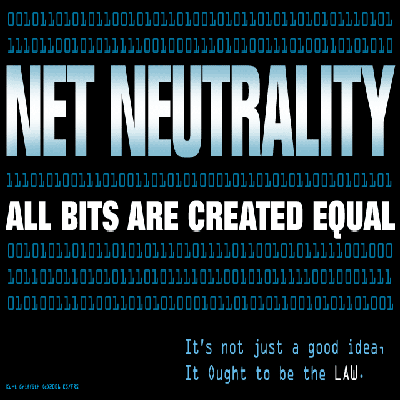
    Net Neutrality means every user will have the right to access whichever website she or he wants to. There will be no infringement from anybody and certain websites won’t be given more bandwidth than others. Amazon or The Times Of India, Flipkart or Indiantelevision.com, every website will load at the same speed and that is exactly what Net Neutrality means. And that’s the problem telecom operators have.


    Where it started from:


    Indian telecom operators lobbied to The Telecom Regulatory Authority of India (TRAI) to change certain rules as per their convenience, which would have a direct impact on the consumer’s pocket. TRAI, in response to the telecos on 27 March, released a 118-page long consultation bulletin, which concluded by asking 20 questions. The last date to respond to that bulletin electronically is 24 April, 2015 while all the counter responses can be sent till 8 May, 2015.


    What all can change?


    No, telecom companies are not restricting any particular website so you can be rest assured that another ban is not coming into play. The demand is to access certain genres that users have to pay separately for. The question then arises: What are the users paying the initial fee for?


    The scenario that can emerge from the change is; to access Flipkart, Whatsapp, Facebook or any other established OTT service, one has to separately subscribe for it. The freedom to access any website independently will be infringed upon and the internet, which is probably the only free platform where one can express their opinion, will become a claustrophobic cozy club dominated by big names.


    Who all will face the impact?


    Not only users but the change will also vigorously affect all aspiring entrepreneurs and start-ups. It is easy for established ventures like Flipkart, which is supporting telecom operators, to pay the service providers and ask them to make their app freely available. However, that will leave an impact on the start-ups who don’t have the luxury of cracking a deal with telecom operators. The irony is that when the Prime Minister is delivering speeches in France and Germany about how easy it is to do business in India and sharing aspirations of making the country a global destination for investment, Indian e-commerce startups are on the verge of demolition.


    What did AIB do?


    The stand up comedians came up with a video (Save the Internet) explaining the entire concept of net neutrality. What was lost and diluted in TRAI’s 118 page long complicated bulletin was garnished in AIB’s nine-minute video. The important points were highlighted and the refreshing yet simple explanation that AIB members’ offered in the video added to the appeal and was lapped up by young and old alike. The Net Neutrality jargon thus became a national movement.


    What did AIB’s video do?


    AIB’s video conveys this message – “Internet is not a luxury but a utility.” The video ends with a link, which directs people to the net neutrality home page where all of TRAI’s 20 have been answered in detail. One can simply click to send an email with the pre-written answers or can edit as per their wish. At the time of filing this report, AIB’s video had received 1,132,453 views and more than 100,000 emails had been sent to TRAI through the http://www.netneutrality.in/ website.


    How to join the movement?


    One can be a part of the movement by logging on savetheinternet.in and forwarding the email to the regulatory authority. One can also sign this petition at:https://www.change.org/p/rsprasad-trai-don-t-allow-differential-pricing-… and share it with your friends or write directly to TRAI at advqos@trai.gov.in about their thoughts before 24 April, 2015.


    Conclusion:


    The AIB video witnessed unabated praise across all social media platforms from the common man and celebrities alike. It brought about the necessary awareness in India and made Net Neutrality a national issue. The Internet is a very important part of the civilized world and a major source of information, entertainment and social networking. Net Neutrality is a right of every Internet subscriber and cannot be infringed at any cost. While the issue has managed to become a major talking point, one only hopes that political parties don’t politicize the issue and turn it into vote bank propaganda because Internet without Net Neutrality is like bones without flesh.