Tag: Trai

  • Delhi MSO urges TRAI to draw up comprehensive DAS tariff order pronto

    Delhi MSO urges TRAI to draw up comprehensive DAS tariff order pronto

    NEW DELHI: The Delhi based multi system operator (MSO) Home Cable Network has urged the Telecom Regulatory Authority of India (TRAI) to fix the digital addressable system (DAS) tariff as early as possible in consonance with the directive of the Telecom Disputes Settlement and Arbitration Tribunal (TDSAT) order of 28 April. 


    This had become all the more imperative in the light of the Supreme Court dismissing the appeal by Indian Broadcasting Foundation (IBF) and others challenging the TDSAT directive, it said. 


    Home Cable Network had filed the appeal in TDSAT against the TRAI tariff orders, and IBF had appealed when the Tribunal upheld the appeal.


    In a letter to TRAI chairman R S Sharma, Home Cable Network managing director Vikki Choudhary said the exercise needs to be conducted keeping in view the interest of the consumers at large and to ensure a level playing field, on non-discriminatory terms with parity in conducting this business. 


    “In view of this, we request the Industry Regulator TRAI to re-notify its letter to Pay Broadcasters dated 23 July, 2015 requesting the rates for their respective Pay TV channels with prescribed MRP as well, along with the duration of Advertisements shown on their respective Pay TV Channels,” Choudhary said. 


    He said these issues had been adversely affecting the industry for the past three years and therefore the exercise needed to be completed in a time-bound manner, so the innovations continue with doing business.


    In its order upheld by the apex court, TDSAT had said TRAI “will be well advised to have a fresh look at the various tariff orders in a holistic manner and come out with a comprehensive tariff order in supersession of all the earlier tariff orders.” 


    “While doing so, it may consider all the agreements and relevant data available with it. It may consider differentiating between content which is of a monopolistic nature as against that which is shown by other channels also. It may also consider classifying the content into premium and basic tiers,” the Tribunal had added.

  • Tariff Hike Case: SC rejects appeal challenging TDSAT order; asks TRAI to out new tariff

    Tariff Hike Case: SC rejects appeal challenging TDSAT order; asks TRAI to out new tariff

    NEW DELHI: Dismissing the appeal challenging an order of the Telecom Disputes Settlement and Appellate Tribunal (TDSAT) setting aside the amendments in two tariff orders, which had sought to put an inflation-linked hike of 27.5 per cent on addressable and non-addressable systems, the Supreme Court today asked the Telecom Regulatory Authority of India (TRAI) to come up with new tariff as early as possible.

    The Court also said that the multi-system operators (MSOs) will not insist on a refund of their payments to broadcasters but will wait for the new tariff orders.

    Thus, the apex Court held intact the 28 April order of the Tribunal holding as ‘untenable’ the Telecommunication (Broadcasting & Cable) Services (Second) Tariff (Eleventh Amendment) Order, 2014’ and ‘The Telecommunication (Broadcasting & Cable) Services (Second) Tariff (Thirteenth Amendment) Order, 2014’.

    Appellants Indian Broadcasting Foundation (IBF), Star India, Vijay Television, Viacom18 and Sun TV had sought stay on the ground of wholesale price index. They also sought to argue that there was consultation prior to issuance of the Tariff orders, which they said were not strictly Tariff orders.

    While the appellants were represented by senior advocates Kapil Sibal and Abhishek Manu Singhvi, the defendant Home Cable Network Services Pvt Ltd and Vikki Choudhary were represented by senior counsel Aman Lekhi and Vivek Sarin.

    When the appellants late last month sought early hearing, the Court asked TRAI not to give effect to its direction asking broadcasters to roll back the 27.5 per cent tariff hike for non-addressable areas until the next hearing. The regulator had on 27 July asked broadcasters to revise their wholesale tariffs, even though it had noted that the Supreme Court had declined to stay the TDSAT order.

    In its order, TDSAT had said TRAI “will be well advised to have a fresh look at the various tariff orders in a holistic manner and come out with a comprehensive tariff order in supersession of all the earlier tariff orders.”

    “While doing so, it may consider all the agreements and relevant data available with it. It may consider differentiating between content which is of a monopolistic nature as against that the like of which is shown by other channels also.”

    “It may also consider classifying the content into premium and basic tiers. It may identify the major cost components so that increase or decrease in such costs may be suitably factored while working out the inflationary hikes. Increase in costs of such components as may be available in indexes such as Wholesale Price Index (WPI), GDP deflator etc. can then be applied. While working out the tariffs, the effort should be to encourage a correct declaration of SLR. While carrying out the exercise, it may take the inputs from various stakeholders and give a reasoned order for accepting or rejecting the same. We want to be amply clear that the above are only some suggestions and TRAI being an expert body may arrive at suitable tariffs independently; it is up to it to consider the above and/or any other factors,” the Tribunal said.

    The IBF had come in as an intervener while the other interveners were direct to home (DTH) operators, MSOs, Association of Cable Operators and cable operators.

    TRAI had allowed a 15 per cent hike from 1 April, 2014. The second installment of 12.5 per cent tariff hike came into effect from 1 January, 2015.

    TRAI said the inflationary increases given by it were based on increase in the WPI. In the Explanatory Memorandum with the Second Amendment to the Principal Tariff Order, it was explained that for making adjustments for inflation WPI had been used. It was explained that Consumer Price Index (CPI) was not used as latest information for this was not available and further this related to certain specific consumption baskets. As per the Explanatory Memorandum to the impugned Tariff Order, the WPI has increased by 43.69 per cent and giving a pass through of 63 per cent, an inflation linked increase of 27.5 per cent is allowed.    

  • TRAI extends deadline for comments on commercial subscribers’ tariff issues consultation paper

    TRAI extends deadline for comments on commercial subscribers’ tariff issues consultation paper

    MUMBAI: The Telecom Regulatory Authority of India (TRAI) has extended the last date for stakeholders to comment on the consultation paper on ‘Tariff Issues related to Commercial Subscribers.’ 


    The extension has been given in keeping with the request of the stakeholders. The regulator, which had released the consultation paper on 14 July, 2015, seeking comments by 31 July and counter comments, if any, by 7 August, has now set 7 August as the deadline for comments and 14 August, for any counter comments. 


    The regulator has also decided that no request for any further extension of time for submission of comments/ counter comments will be entertained.


    The comments can be sent preferably in the electronic form to TRAI advisor (B&CS) Wasi Ahmad.


  • Day 6: FM Phase III price crosses Rs 779 crore for 82 channels in 56 cities

    Day 6: FM Phase III price crosses Rs 779 crore for 82 channels in 56 cities

    NEW DELHI: A total of 82 channels in 56 Indian cities became provisionally winning channels with cumulative provisional winning price of approximately Rs 779 crore against their aggregate reserve price of Rs 395 crore at the end of the sixth day of bidding for FM Phase III.


    Even as 24 rounds of the e-auction ended with four more rounds today (3 August), the provisional winning prices exceeded the total reserve price of the first batch by about Rs 228.68 crore or 41.56 per cent. The total reserve price of the first batch of 135 FM Channels in 69 existing cities of Phase III was Rs 550.18 crore.


    The Auction Activity Requirement of 80 per cent set at the beginning of the auction continued to remain the same on the sixth day. 


    The sixth day was hectic but there were still no bids in as many as 13 cities though the provisional winning price steadied at the Clock round Price in the other cases.


    The demand over the price in many cities fell by up to three per cent below the aggregate demand. 


    The Percentage Price Increment (in INR) applicable for the Next Clock Round was five per cent in Mumbai, Bengaluru, Ahmedabad, Amritsar, Guwahati, Rourkela, Jaipur, Kolhapur, Nagpur, Nasik, Patna, and Rajkot and eight per cent in Bhubaneswar.


    The highest Provisional winning price – the same as the Clock round price at the start of the 24th round – was in Delhi – Rs 118.35 crore, followed by Mumbai – Rs 86.08 crore with both showing sizeable increase compared to the first three days. 


    Among cities recording more than Rs 10 crore, it rose sizeably in Bengaluru – Rs 66.34 crore, Ahmedabad – Rs 36.87 crore; Pune – Rs 32.45 crore, and Chennai – Rs 33.54 crore, Jaipur – Rs 11.52 crore and marginally in Chandigarh at Rs 15.92 crore.


    Hyderabad at Rs 18 crore, Lucknow at Rs 14 crore and Cochin at Rs 10.21 crore remained static.


  • TDSAT asks TRAI to examine HITS operators’ inter-connect agreements

    TDSAT asks TRAI to examine HITS operators’ inter-connect agreements

    NEW DELHI: The Telecom Regulatory Authority of India (TRAI), has now been asked to examine whether a broadcaster’s RIO should form the basis for negotiations to enter into an interconnect agreement with the distributor of signals.


    The Telecom Disputes Settlement and Arbitration Tribunal (TDSAT), which had earlier asked TRAI to re-examine the issue of Digital Addressable System (DAS) tariffs, also wants to know if the RIO is only a fall back basis in case the negotiations between the broadcaster and the distributor for entering into interconnect agreement otherwise fails.


    Summing up the issues that came up for consideration in two cases, the Tribunal asked whether an interconnect agreement between a broadcaster and a distributor of signals on a fixed fee basis, completely dehors the broadcaster’s RIO, can be said to be in accordance with the provisions of the Regulations.


    It also asked if it is open to the broadcaster to give discounts, concessions and facilities to distributors of signals on a deal to deal basis or is the broadcaster obliged to frame a standard scheme of discounts, concessions and facilities and make it public so that it may be available to all similarly situated distributors equally.


    The Tribunal also asked the status of a Headend In The Sky (HITS) operator vis-a-vis a broadcaster for the purpose of inter-connect arrangements, and whether a HITS operator is comparable to a large MSO operating on a pan India basis.


    TDSAT chairman Justice Aftab Alam along with members Kuldip Singh and B B Srivastava were examining two cases filed by Noida Software Technology Park Ltd against Media Pro and Taj Television.


    The Tribunal wanted a clear stand from TRAI and also directed that this order should be placed on the Tribunal website in the form of a notice with copies being sent to the Indian Broadcasting Foundation (IBF), MSO Alliance and DTH Operators’ Association, as any adjudication of these questions is likely to affect the broadcasting sector as a whole fundamentally.


    The Tribunal said it would be open to any stakeholders to intervene and address the Tribunal on the issue.


    Listing the matter for further hearing on 11 August, it said any applications for intervention may be filed within one week from today (30 July). 

  • RS Sharma new TRAI chairman; challenges aplenty

    RS Sharma new TRAI chairman; challenges aplenty

    MUMBAI: The position had been lying vacant for almost three months. And his was one of the names mentioned as amongst the front runners to become the next Telecom Regulatory Authority of India (TRAI) chairman. (See: TRAI Chairmanship: An onerous responsibility fraught with delicate diplomacy & balancing acts)


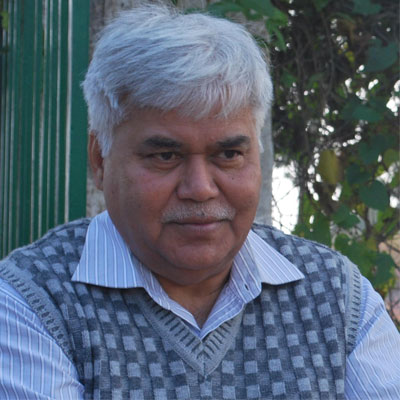
    So when the announcement came that IT secretary Ram Sewak Sharma would be stepping into the shoes of Rahul Khullar whose term ended in May, it didn’t come as much of a surprise.

    The appointment committee of the Cabinet approved his name yesterday. Sharma is an IAS 1978 batch from the Jharkhand cadre. He was heavily involved in the implementation of the Aadhar project apart from designing the road map for the government’s digital India programme. He was director-general and mission director of the Unique Identification Authority of India.

    Sharma holds quite a few scholarly degrees from academia’s best. He has a Masters degree in Mathematics from IIT Kanpur, and a Masters in Computer Science from the University of California.

    Other names, which were being considered for the post, according to Business Standard, included Power Secretary PK Sinha, Information and Broadcasting Secretary Bimal Julka, Commerce Secretary Rajeev Kher, former telecom secretary M F Farooqui, and former Reserve Bank of India deputy governor Subir Gokarn.

    Sharma will have a key role to play on the net neutrality issue and also find solutions for the poor call quality that mobile companies are offering today. This apart, he has challenges facing him on cable TV digitisation, which has been in near limbo for a while now, especially when it comes to phase III and phase IV. The I&B ministry has been unable to push the pace on its own.

  • Regional Units  set up  to implement DAS; broadcasters ask MSOs for analogue rates till Dec

    Regional Units set up to implement DAS; broadcasters ask MSOs for analogue rates till Dec

    NEW DELHI: Twelve Regional Units (RUs) are being set up for implementation of Digital Addressable System (DAS) in Phase Ill areas.


    At the ninth meeting of the DAS Task Force earlier this month, Information and Broadcasting (I&B) Ministry joint secretary (broadcasting) R Jaya said these RUs will hold workshops on digitisation where all issues shall be discussed with the District Nodal officers nominated by State Governments.


    The remark came when a representative of local cable operators (LCO) from Assam said multi-system operators (MSO) are stopping signals to LCOs without any reason and the local authorised officers do not take cognisance of any violation of the provisions of the Cable TV Act. He added that there is no redressal mechanism for violations of Cable Act at State level and the cable operators do not have the means to file cases in Telecom Disputes Settlement and Arbitration Tribunal (TDSAT).


    Additional secretary J S Mathur, who chaired the meeting on 7 July, said time was fast running out and impressed on all stakeholders to ensure progress and timely completion of digitisation by the cutoff date.


    The Telecom Regulatory Authority of India’s (TRAI) GS Kesarwani was given the task to ask broadcasters to get details of MSOs who were intending to wait till September 2015 before sending requests to broadcasters for agreements in Phase III areas.


    On the other hand, Mathur said that the endeavour on the MSOs’ part should be to start using indigenously manufactured set-top-boxes (STBs) in their network.


    Kesarwani informed of a review meeting that was held by TRAI on the progress of signing inter-connect agreements for Phase Ill areas with broadcasters and MSOs. He said that three broadcasters namely Star India, Multi Screen Media (MSM) and TV18 – informed TRAI that they had received 55 requests from MSOs so far out of which they have signed commercial deals with two MSOs, whereas deals with 11 MSOs were in advance stages of negotiation.


    Kesarwani also urged MSOs who had not received any response to their requests from broadcasters, to inform TRAI.


    Saying that the Headend-in-the-Sky (HITS) operations were also covered under DAS regulations, Kesarwani asked HITS operators to apprise TRAI if no response was received from broadcasters to their requests for interconnect agreements.


    Apprehending that there may be some gap areas or MSO deficient areas, Jaya asked Indian Broadcasting Foundation (IBF) representatives to get details of these areas from broadcasters and intimate the same to the Ministry.


    Meanwhile even as they admitted some progress, representatives of national MSOs said  that broadcasters were asking for seeding plans and other data. However, MSOs were not in a position to provide this at this stage. They said channel pricing in Phase III areas was the main hurdle in signing of interconnect agreements. Some of them said that a few broadcasters had proposed agreements on analogue rates till December 2015 and others on reference inter-connect order rates.


    Even according to the TRAI, pricing can be different for different markets, they said.


    A representative of Siticable Networks said, “According to an analysis of urban areas carried out by us, it may not be feasible for any operator to carry out digitisation in urban areas having only a few hundred TV households. Even broadcasters are insisting on analogue agreements at present.”


    According to an IBF representative, broadcasters had entered into agreements with five regional MSOs. He said, “Broadcasters have filed an appeal in the Supreme Court challenging the TDSAT judgment on the tariff orders issued by TRAI.”


    On the issue of STBs, a representative of Consumer Electronics and Appliances Manufacturers Association (CEAMA ) said that no major orders were received by the industry so far from MSOs. On the other hand, while Siticable and Hathway officials said they were in talks with indigenous STB manufacturers, officials of direct-to-home (DTH) companies said that they had procured about three million STBs from Videocon.


    The meeting was attended by around 35 persons including some senior Ministry officials and some representatives from state governments.
  • Delhi HC adjourns ad cap case to September due to lawyers’ strike

    Delhi HC adjourns ad cap case to September due to lawyers’ strike

    NEW DELHI: The Delhi High Court has adjourned the petition by the News Broadcasters Association (NBA) and others challenging the advertising cap of 12 minutes per hour to 8 September.


    The petition challenging the order of the Information and Broadcasting Ministry was put off in view of the strike by lawyers protesting the raising of the pecuniary jurisdiction of the Court from Rs 20 lakh to Rs 2 crore.


    The order that the Telecom Regulatory Authority of India (TRAI) will not take any action against any channel pending the petition will continue. In an earlier hearing, the Court had, at the regulator’s instance, directed that all channels keep a record of the advertisements run by them.


    The NBA had challenged the ad cap rule, contending that TRAI does not have jurisdiction to regulate commercial airtime on television channels.


    Apart from the NBA, the petition have been filed by Sarthak Entertainment, Pioneer Channel Factory, E24 Glamoru, Sun TV Network, TV Vision, B4U Broadband, 9X Media, Kalaignar, Celebrities Management, Eanadu Television and Raj Television.


    The news and regional broadcasters fear that the capping of commercial airtime will curtail their ad revenues. They also argue that the ad cap must be brought only after the benefits of cable TV digitisation start showing.

  • SC stays TRAI directive on wholesale tariff revision to broadcaster till August

    SC stays TRAI directive on wholesale tariff revision to broadcaster till August

    NEW DELHI: The Telecom Regulatory Authority of India (TRAI), which is currently headless, faced an embarrassing situation when the Supreme Court asked it not to give effect to its direction asking broadcasters to roll back the 27.5 per cent tariff hike for non-addressable areas until the next hearing.


    The matter has been fixed for next hearing on 4 August.


    The regulator had just yesterday asked broadcasters to revise their wholesale tariffs, even though it had noted that the Supreme Court had declined to stay the order of the Telecom Disputes Settlement and Appellate Tribunal (TDSAT) setting aside the amendments in two tariff orders, which had sought to put an inflation-linked hike of 27.5 per cent on addressable and non-addressable systems.


    Effectively, this comes as a major relief to broadcasters who will not have to revise the wholesale tariff to those that existed before the implementation of the two tariff orders, which had been struck down by TDSAT.


    The directive was given when appellants Indian Broadcasting Foundation (IBF), Star India, Vijay Television, Viacom18 and Sun TV sought early hearing of their challenge to the TDSAT order of 28 April.


    The appellants have sought stay on the ground of wholesale price index. They also sought to argue that there was consultation prior to issuance of the Telecommunication (Broadcasting & Cable) Services (Second) Tariff (Eleventh Amendment) Order, 2014’ and ‘The Telecommunication (Broadcasting & Cable) Services (Second) Tariff (Thirteenth Amendment) Order, 2014’ and these were not strictly Tariff orders.


    Holding the Tariff orders as ‘untenable’, TDSAT had said TRAI “will be well advised to have a fresh look at the various tariff orders in a holistic manner and come out with a comprehensive tariff order in supersession of all the earlier tariff orders.”


    “While doing so, it may consider all the agreements and relevant data available with it. It may consider differentiating between content which is of a monopolistic nature as against that the like of which is shown by other channels also.”

  • Broadcasters satisfied with inter-connect agreements negotiations with MSOs

    Broadcasters satisfied with inter-connect agreements negotiations with MSOs

    NEW DELHI: Broadcasters, who met officials in the Telecom Regulatory Authority of India (TRAI) have expressed satisfaction over negotiations with multi system operators (MSOs) for entering into inter-connect agreements with them.


    The meeting was in keeping with a commitment made by TRAI at the last meeting of the Task Force for implementation of Phase III of the Digital Addressable System (DAS).


    The broadcasters included Star India and TV18, who expressed satisfactory progress in their meetings with MSOs. 


    It is learnt that TRAI also met MSOs in this connection.


    This was the second meeting with broadcasters after the last Task Force meeting held on 23 June.