Tag: Trai

  • #Retrace2021: The year of regulatory challenges and no TRPs for news channels

    #Retrace2021: The year of regulatory challenges and no TRPs for news channels

    Mumbai: The year 2021 began with a rather chaotic legacy handed over by 2020. In the aftermath of the TRP Scam, TV ratings for the news genre remained suspended throughout the year. The legal tussle between Telecom Regulatory Authority of India (Trai) and broadcasters over the rollout of the New Tariff Order (NTO) 2.0 continued to dominate the headlines.

    Adding to this, was the Information Technology (Intermediary Guidelines and Digital Media Ethics Code) Rules, 2021 (IT Rules, 2021), announced in February which set the ball rolling for regulation of digital and social media. This was followed by the Cable Television Networks (Amendment) Rules, 2021 (CTNA 2021) and the proposed amendments to the Cinematograph Act, 1952, all of which sought to regulate content across media including digital, and align it with ‘public interest’.

    Also Read: SC refuses to grant interim protection to Tandav makers

    The year began with the controversy over the Amazon Prime web series ‘Tandav’ which became the tipping point for the government which was already deliberating the regulation of digital media including social. The show and its star cast was accused of hurting the religious sentiments of a particular community prompting the show’s director Ali Abbas Zafar to issue an unconditional apology on social media. The spate of FIRs and threats continued unabated despite the omission of two ‘objectionable’ sequences, and apologies from the platform and its then country head Aparna Purohit.

    Also Read: Tandav : And the future of storytelling

    While the hitherto pampered OTT-verse was bracing itself for government oversight, the pay-TV universe continued to be cannibalised by it and DD Free Dish at the top and bottom tiers. Even as distribution players worked on diversifying their offerings to embrace the imminent digital takeover and on building new ones to challenge Free Dish, they kept pushing for regulatory interventions to tackle the issue at its core. Though well within its rights to strive for survival, in the process of manoeuvring these challenges, the industry ended up creating another flashpoint between the regulators/government and itself.

    2021 closed with a trailer to the next big fight with Trai questioning the availability of linear channels on OTT and telco apps which, it said, is in violation of Clause 5.6 of Policy Guidelines for Downlinking of Television Channels dated 5 December 2011. Broadcasters, on the other hand, invoked section 37 of the Copyright Act 1957 known as Broadcast Reproduction Right (BRR) to justify their channels’ presence on their own OTT platforms and third-party aggregator apps. Also because they are not licensees under Trai Act, they do not fall under the scope of Trai Act or Interconnection Regulations or Clause 5.6 of Downlinking guidelines.

    Here, we take a look back at the regulatory events and challenges that re-defined the Indian TV industry in 2021.

    Legal tussle over NTO 2.0

    One of the biggest developments of the year was the pronouncement of the Bombay High Court order on the NTO 2.0 case on 30 June. After a legal tussle that lasted over a year, Trai had managed to get a green signal from the court on the implementation of the amended rules. While the HC upheld the constitutional validity of NTO 2.0, it termed one of the twin conditions “arbitrary”, according to which the maximum retail price of an a-la-carte channel could not be more than one-third the maximum rate of a channel in the bouquet.

    Also Read: NTO 2.0 Verdict : Who Wins What?

    Following the notification of NTO 2.0 in January 2020, several broadcasters under the umbrella of the Indian Broadcasting and Digital Foundation (IBDF) and a couple of other private channels challenged the amendment terming it “arbitrary and in violation of their fundamental right”. The NTO 2.0 prescribed linkage between a-la-carte price and bouquet via the imposition of twin conditions on bouquet pricing, and reduction in price cap from Rs 19 to Rs 12 for pay channels, thereby incentivising a-la-carte alone.

    Having recognised the adverse impact of NTO (2019) on all stakeholders including consumers, broadcasters and distributors refused to accept the judgement and challenged it further in the Supreme Court in July. After a series of adjournments, the apex court, on 30 November, posted the matter for hearing on 15 February 2022.

    Meanwhile, in November, Trai moved the deadline for implementation of NTO 2.0 from 1 December 2021 to 1 April 2022. Distribution platforms like DTH and cable will now have to seek subscriber choice till 31 March 2022, it said. The deadline for broadcasters to come up with their new reference interconnection offers (RIOs) and simultaneously publish the required information about channel and bouquet offerings, as well as their MRPs on their websites was also extended to 31 December.

    Also Read: Trai extends NTO 2.0 implementation to 1 April 2022

    Several large networks including ETV, Discovery Communications, Sun TV, Times Networks, ZeelL, SPNI, and others had come out with their new RIOs in October-November. In what looked like a refusal to back down, the broadcasters preferred to pull their popular channels out of the bouquets instead of reducing the price to Rs 12. Their move flies in the face of the regulators’ assertion and intention of preserving the interest of customers.

    Despite the short-lived benefits of incentivising à la carte and changes in NCF for broadcasters and distributors, the attempt to regulate channel pricing was soon recognised by all stakeholders as being counterproductive. Aside from having an overall negative effect on reach and viewership for broadcasters, it led to the shutting down of many niche channels which became inviable as a result of NTO implementation. The impact for distributors was felt when customers gravitated towards either OTTs or Free Dish to counter the increase in their monthly subscription bills.

    Also Read: DTH operators write to Trai over broadcasters offering pay channels on DD Free Dish

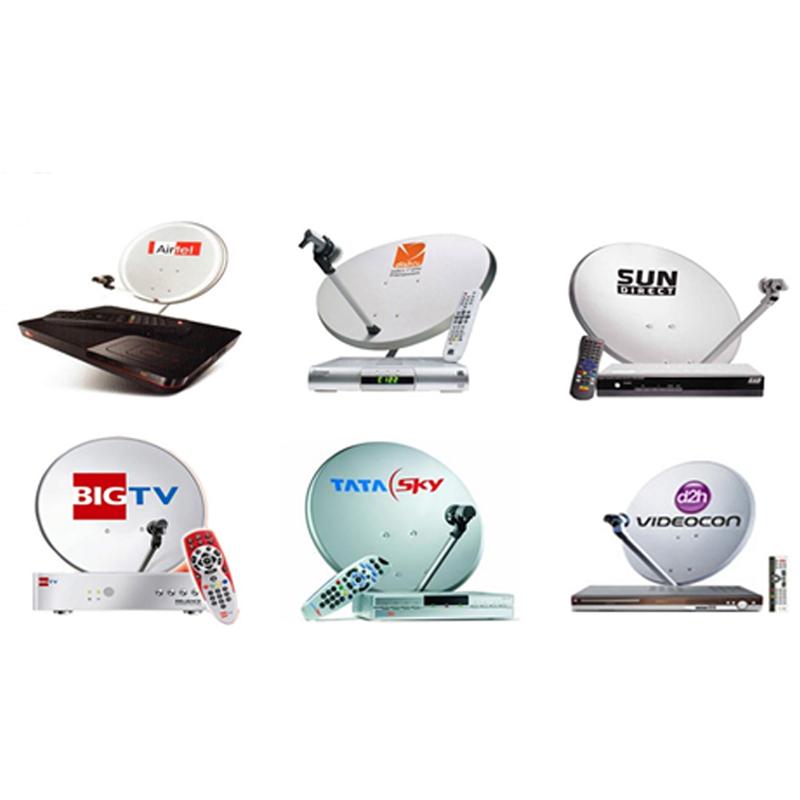
    The implementation of NTO 2.0 will further hasten this migration. Foreseeing the detrimental scenario, Direct-to-home (DTH) service providers including Tata Sky and Airtel Digital TV wrote to Trai in September asking the regulator to address the issue of broadcasters making their pay channels available on DD Free Dish. Alleging that this goes against the current tariff regime which mandates the designation of channels as either pay or FTA and prohibits their bundling together, they once again raised the demand for such designation to remain constant across distribution platforms.

    Also Read : There needs to be a level-playing field : Tata Sky CEO Harit Nagpal

    Further, in a letter dated 28 December written to Prime Minister Narendra Modi, the Delhi-based All Local Cable Operators Association alleged that the Trai and broadcasters are “forcibly pressurising” MSOs to implement the new tariff order, which will lead to cable TV operators, national MSOs and independent MSOs incurring huge losses. The NTO 2.0, if implemented, will lead to the unemployment of lakhs of families connected with the cable TV industry, it said. Several other representative organisations have also raised the issue with the government and regulators frequently.

    Also Read : Trai vs Broadcasters : Impact could be larger than expected

    IT Rules, 2021 & Cable Television Networks (Amendment) Rules, 2021:

    The introduction of the Information Technology (Intermediary Guidelines and Digital Media Ethics Code) Rules, 2021 by the ministry of electronics and information technology (MeitY) in February sought to regulate social media, digital platforms, and streaming services in the country through a three-level grievance redressal mechanism.

    The “soft-touch regulatory architecture” comprised Level I – self-regulation by broadcasters, Level II – Self-regulation by registered self-regulating bodies of the broadcasters, and Level III – oversight mechanism by the central government. Later in June, the government extended this framework to Cable TV with the Cable Television Networks (Amendment) Rules, 2021.

    Also Read: MIB amends Cable TV rules for redressal of broadcast related complaints

    Also Read: Trai issues new consultation paper to regulate monopoly in Cable TV services

    The new regulations, along with proposed amendments to the Cinematograph Act, 1952, brought together all forms of media in the country barring newspapers under the three-layer regulatory mechanism. Consequently, they also ran into troubled waters with broadcasting associations like NBA and IBDF and some independent players filing several petitions in various high courts.

    News Broadcasters Association (NBA) president Rajat Sharma wrote to the then I&B minister Prakash Javadekar requesting the exclusion of digital news platforms owned and run by traditional news media from the purview of the provisions of the new IT Rules, 2021. In July the organisation approached the Kerala HC with a writ petition contending that the oversight mechanism gives the executive “unfettered, unbridled and excessive powers to regulate the content of TV channels of news broadcasters.”

    Also Read : No exemption for mainstream media from IT rules

    The IBDF, Sun TV Network, and SJ Clement filed separate petitions challenging the constitutional validity of Part III of IT Rules 2021 and CTN Amendment Rules 2021 in the Madras high court.

    In May, IBF had renamed itself as IBDF bringing all digital/OTT platforms under its purview. It also announced plans to form a new subsidiary – an industry-led Self-Regulatory Body (SRB) called Digital Media Content Regulatory Council (DMCRC) to serve as a second-tier mechanism at the appellate level specifically for digital. The DMCRC is similar to Broadcast Content Complaint Council (BCCC) which IBF had successfully implemented for the linear broadcasting sector in 2011. 

    Also Read: Former SC judge Justice Vikranjit Singh Sen appointed chairman of IBF’s new self-regulatory body

    Overhaul of TRP ratings

    The committee on TRP ratings formed by the government in the aftermath of the 2020 TRP Scam came up with its recommendations pushing for the formation of multiple rating agencies in competition to Barc India and creating a specialised regulator to oversee all of them. The 39-page report submitted by the committee early this year was shared with Broadcast Audience Research Council (Barc) India and other broadcasters in November to take the discussions forward.

    Led by Prasar Bharati CEO Shashi Shekhar Vempati, the four-member team also included – IIT Kanpur, professor of statistics, department of mathematics and statistics, Dr Shalabh; C-DOT executive director Dr Rajkumar Upadhyay; Decision Sciences Centre for Public Policy professor Pulak Ghosh.  After consultation with stakeholders such as Barc India, MDPL, Zappr Media, Nielsen India, and Tata Sky AMS, the committee had issued several specific and sweeping recommendations on the technical aspects of TV rating measurement in India.

    Observing a broad consensus among industry stakeholders in favour of leveraging return data capabilities, it recommended that RPD should be made mandatory for set-top-boxes (STBs) deployed by distributed platform operators (DPOs). The collection of viewership data by DPOs is to be governed by privacy norms prescribed by the government/regulator. 

    Also Read : Govt committee seeks to set up specialised regulator for media ratings

    The report noted that crowdsourcing approaches could be economical alternatives to RPD and should be open to rating agencies to enrich panel-based measurement. The committee also batted for an open data ecosystem allowing academics and independent researchers access to algorithms and raw datasets to analyse, validate and enrich them.

    The television rating system in India had come under scanner in October 2020 when Mumbai Police claimed in a press briefing that they have probed a case of manipulation of TRPs and found some incriminating evidence. The police said the accused were allegedly bribing the households to keep a particular channel running, leading to several arrests. Three news channels, Republic TV, Fakt Marathi, and Box Cinema were named in an alleged TRP tampering scam. BARC had also temporarily suspended the publishing of weekly data for news channels, which remains in limbo to date.

    Also Read: MIB to implement TRP ratings recommendations soon: Anurag Thakur

    Making satellite-broadband services cheaper

    The cost of satellite-broadband services continues to remain on the higher side in the country, posing a major challenge to its wide adoption by the end-users. The issue was also taken by India’s telecom regulator which is looking for ways to drive down the rates of satellite broadband. Early this year, Trai also floated a discussion paper and sought views to make satellite communications more affordable in the country. 

    Among other issues, Trai also sought views on whether satellite service licensees should be allowed to obtain bandwidth from foreign satellites for providing IoT connectivity. Also, whether any specific or all bands should be permitted for provisioning satellite-based IoT connectivity. It also invited suggestions on whether a new licensing framework should be proposed for the provision of satellite-based connectivity for low-bit-rate applications or the existing licensing framework may be suitably amended to include the provisioning of such connectivity.

    Also Read: Trai seeks suggestions to make satellite broadband services affordable

    5G roll-out and spectrum clash:

    Earlier in the year broadcasters expressed concern over the rollout of 5G at a near-clashing frequency. Their apprehension was that the spectrum range of 3.0-3.6GHz identified for 5G does not allow for a buffer or ‘guard band’ before satellite television operates at 3.7 to 4.2 GHz. This could lead to disruption in television and radio services in the country. Even though welcoming of 5G has held great opportunity for the M&E industry in the era of convergence, broadcasters said that in the event they had to move to a higher frequency, the government should intervene with subsidies to offset the cost incurred.

  • Trai to form committee for smooth rollout of NTO 2.0

    Trai to form committee for smooth rollout of NTO 2.0

    Mumbai: The Telecom Regulatory Authority of India (Trai) has decided to form a committee with representation from leading pay TV industry associations to ensure the smooth implementation of the New Regulatory Framework 2020 and identify impediments with counter-measures for the overall growth of the broadcast sector.

    In a letter dated 22 December, accessed by Indiantelevision.com, Trai had asked the Indian Broadcasting and Digital Foundation (IBDF), the All India Digital Cable Federation (AIDCF), and the DTH association to nominate a maximum of two representatives to be part of the implementation committee.

    Early this November, the regulator had notified stakeholders that implementation of the new tariff order (NTO 2.0) would be delayed until 1 April 2022. This decision was taken after various stakeholders expressed concerns to the regulator with respect to the timeframe for migration of 150 million pay TV consumers and sufficient time for service providers to upgrade their IT systems and incorporate various channels/bouquets before offering the same to consumers.

    In the latest development, Delhi-based Cable Operators Welfare Federation (COWF) has written to Trai to be a part of the implementation committee and include two local cable operator (LCO) representatives from four zones or four representatives from the All India Federation. “LCOs deserve to be treated as frontline workers who touch base with each subscriber at least once a month. During the implementation of the regulatory framework the best way to reach the subscriber is to communicate in person, in their language, using printed handouts to evaluate options and help subscribers make a well-informed decision,” the letter reads.

    The LCOs also argue that market discovery of prices of pay-TV channels and consumption pattern evolution cannot be back-end driven, rather the front-end instructions should drive the backend. “The DPOs manage the back-end that would implement the service requests coming in from the front-end and therefore should not impose any packages and choices on subscribers,” it added.

    COWF has now also written to prime minister Narendra Modi to halt the implementation of new tariff framework, discard NTO 2.0, and consider making “cable-operator friendly amendments” in Digital Addressable Systems (DAS) law. The operators also suggest that linear TV channels no longer be distributed on OTT platforms. They lettered dated 29 November, also says that the NTO 2.0 regulation will increase unemployment and result in the downturn of lakhs of people employed by the cable TV industry.

  • Reliance Jio adds 1.76 million wireless subscribers in Oct

    Reliance Jio adds 1.76 million wireless subscribers in Oct

    Mumbai: Telecom giant Reliance Jio has added 1.76 million net wireless subscribers in October, according to Telecom Regulatory Authority of India (Trai) subscription data. Vodafone Idea lost 0.96 million subscribers followed by Bharti Airtel at 0.48 million, the data revealed.

    The total number of wireless subscribers increased from 1166.02 million to 1166.30 million. In urban areas, wireless penetration decreased from 637.89 million to 637.44 million. Wireless subscriptions in rural areas increased from 528.13 million to 528.86 million.

    Trai reported 996.47 million active wireless subscribers out of which Reliance Jio had the highest share with 358.49 million followed by Bharti Airtel at 346.11 million, Vodafone Idea at 234.33 million and BSNL at 56.93 million.

    The number of telephone subscribers increased from 1189.15 million to 1189.62 million. Urban subscription decreased from 659.09 million to 658.83 million whereas rural subscription increased from 530.06 million to 530.79 million.

    In October, Trai received information from 577 broadband operators viz-a-viz 522 in the previous month. It reported that total broadband subscribers increased from 794.88 million to 798.95 million. The number of mobile device users increased from 769.22 million to 773.09 million. Wired subscribers increased from 24.39 million to 24.55 million and fixed wireless subscribers increased from 1.28 million to 1.31 million.

    At the end of October, the top five broadband service providers stood as follows Reliance Jio Infocomm Ltd at 430.75 million subscribers, Bharti Airtel at 208.71 million subscribers, Vodafone Idea at 122.47 million subscribers, BSNL at 24.57 million subscribers and Atria Convergence at 1.97 million subscribers.

    The top five wired broadband service providers were BSNL at 4.72 million subscribers, Reliance Jio Infocomm Ltd at 4.16 million subscribers, Bharti Airtel at 3.98 million subscribers, Atria Convergence Technologies at 1.97 million subscribers and Hathway Cable & Datacom at 1.07 million subscribers.

    The top five wireless broadband service providers were Reliance Jio Infocomm Ltd at 426.60 million subscribers, Bharti Airtel at 204.73 million subscribers, Vodafone Idea at 122.47 million subscribers, BSNL at 19.85 million subscribers and Tikona Infinet Ltd. at 0.30 million subscribers.

    The number of wireline subscribers increased from 23.13 million to 23.32 million with a net increase of 0.19 million. BSNL and MTNL held 45.07 per cent of the wireline market share.

  • Trai asks broadcasters, DPOs to comply with interconnection agreements regulations

    Trai asks broadcasters, DPOs to comply with interconnection agreements regulations

    Mumbai: The Telecom Regulatory Authority of India (Trai) has asked broadcasters and distributors of TV channels to immediately implement the provisions of the Telecommunication (Broadcasting and Cable) Services Register of Interconnection Agreements and all such other matters Regulations, 2019.

    The regulator has asked broadcasters and distributors to submit the compliance report within 15 days from the date of issue of the letter on 8 December failing which actions would be taken as per provisions of the said regulations and the Trai Act, 1997.

    The regulations were supposed to come into force on 2 January 2020 but were challenged by the All India Digital Cable Federation (AIDCF) in the Kerala high court. The high court in its order dated 9 January 2020 had ordered that no coercive action will be taken by the respondents.

    The court disposed of the said writ petition, in its judgement dated 12 July, and partially set aside the provisions of the said regulations to the extent they require registration of placement/marketing agreements. Thus, all the provisions of the said regulations, except to the extent they require registration of placement/marketing agreements, are in operation.

    The regulator had developed a B&CS integrated portal system (BIPS) for the purpose of filing data/details pertaining to the said regulations. The regulations require broadcasters and DPOs to furnish, via their compliance officer, its reference interconnection offers when the same is published on their websites.

    The regulations are applicable to all commercial and technical arrangements entered into by broadcasters, distributors of television channels and local cable operators for providing broadcasting services. If broadcasters and distributors default in complying with the provisions, then Trai would take action by imposing a financial disincentive.

  • Trai seeks suggestions to enhance ease of doing business in telecom and broadcasting sector

    Trai seeks suggestions to enhance ease of doing business in telecom and broadcasting sector

    New Delhi: The Telecom Regulatory Authority of India (Trai) has released a consultation paper on “Ease of Doing Business in Telecom and Broadcasting Sector”.

    The industry stakeholders can send their comments by 5 January 2022, and counter comments can be submitted by 19 January 2022.

    The regulatory body highlighted that the telecommunication and broadcasting sectors have emerged as key drivers of economic and social development and has made the country a favorite business destination amongst investors. According to Trai, both the sectors have immense potential to move on the higher trajectory of growth, “if business environment could be made more attractive by simplifying the existing provisions of policy frameworks in various ministries and departments including the ministry of information and broadcasting, department of telecommunications, ministry of electronics and information technology involved in issuing permission, registrations, and licenses to the players of the sector.”

    It said that the larger aim behind floating this consultation paper is to identify various concerns in the existing processes and suggest measures for the reforms required in the regulatory processes, policies, practices and procedures in the telecom and broadcasting sector for creating a conducive business environment in India.

    The consultation paper also seeks comments of the stakeholders on various issues and difficulties being faced by them in commencement and operation of their businesses in telecom and broadcasting sectors in the country.

    It also seeks suggestions on measures for making the existing processes simple, business friendly and creating an ecosystem for attracting more and more investment in the sectors. It also emphasises the single window concept for submitting applications and getting approvals from different agencies without running to each agency separately for its approval.

    Suggestions are also invited on simplifying the applications which have just the required details for the conduct of business and well-documented timelines with query response systems, having seamless integration with other ministries, etc. Apart from that, the stakeholders have also been requested to provide their comments on adoption of new technologies for all the issues raised in this consultation paper.

  • Supreme Court defers NTO 2.0 hearing to 15 February 2022

    Supreme Court defers NTO 2.0 hearing to 15 February 2022

    Mumbai: The Supreme Court bench of Justices UU Lalit, S Ravindra Bhat, and Bela Trivedi has deferred hearing in the New Tariff Order (NTO) 2.0 case to 15 February 2022. The matter pertains to a bunch of petitions filed by IBDF and certain broadcasters against the Bombay high court order on the implementation of the NTO 2.0.

    In October, the apex court had refused to consider the petitioners’ request for interim relief, and posted the case for final disposal on 30 November.

    The NTO 2.0 passed in January 2020 seeks to cap the pay channel price at Rs 12 from the existing Rs 19. After a legal tussle that lasted over a year, the Telecom Regulatory Authority of India (Trai) had managed to get a green signal from the Bombay high court on its implementation on 30 June. 

    The division bench of Bombay HC had upheld the constitutional validity of NTO 2.0, but partly struck down the second provision of the twin conditions as “arbitrary.” As per the second provision, the a-la-carte rates of each pay channel (MRP), forming part of a bouquet, shall in no case exceed three times the average rate of a pay channel of the bouquet of which such pay channel is a part.

    The Indian Broadcasting and Digital Foundation (IBDF), an umbrella organisation of private TV broadcasters and a couple of other private channels had moved the SC in July against the Bombay high court judgement which had upheld the constitutionality of the NTO 2.0.

    Earlier this month, Trai moved the deadline for implementation of NTO 2.0 to 1 April 2022 from 1 December 2021. Distribution platforms like DTH and cable will have to seek subscriber choice till 31 March 2022. 

    As per Trai, broadcasters will have to publish new reference interconnection offers (RIOs) to Trai by 31 December, and simultaneously publish the required information about channel and bouquet offerings and their MRPs on their websites. Broadcasters who have already submitted their RIOs in compliance with NTO 2.0 can revise it by 31 December, it said.

    Several large networks including ETV, Discovery Communications, Sun TV, Times Networks, Zeel, SPNI, and others had come out with their new RIOs in October-November.

  • Supreme Court to hold final hearing in NTO 2.0 case today

    Supreme Court to hold final hearing in NTO 2.0 case today

    Mumbai: The Supreme Court is all set to hold the final hearing in the NTO 2.0 case on Tuesday. The matter pertains to a bunch of petitions filed against the Bombay high court order regarding the implementation of the New Tariff Order (NTO) 2.0 issued by the telecom regulator.

    After a legal tussle that lasted over a year, Telecom Regulatory Authority of India (Trai) had managed to get a green signal from the Bombay high court on 30 June on the implementation of the amended NTO 2.0. The division bench of Bombay HC had upheld the constitutional validity of NTO 2.0, but partly struck down the second provision of the twin conditions as “arbitrary”. As per the second provision, the a-la-carte rates of each pay channel (MRP), forming part of a bouquet, shall in no case exceed three times the average rate of a pay channel of the bouquet of which such pay channel is a part.

    The Indian Broadcasting and Digital Foundation (IBDF), an umbrella organisation of private TV broadcasters and a couple of other private channels had moved the SC in July against the Bombay high court judgment which had upheld the constitutionality of the NTO 2.0.

    The NTO 2.0 passed in January 2020 seeks to cap the pay channel price at Rs 12 from the existing Rs 19.

    Earlier this month, the Telecom Regulatory Authority of India (Trai) moved the deadline for implementation of NTO 2.0 to 1 April 2022 from 1 December 2021. Distribution platforms like DTH and cable will have to seek subscriber choice till 31 March 2022. 

    As per Trai, broadcasters will have to publish new reference interconnection offers (RIOs) to Trai by 31 December, and simultaneously publish the required information about channel and bouquet offerings and their MRPs on their websites. Broadcasters who have already submitted their RIOs in compliance with NTO 2.0 can revise it by 31 December, it said.

  • Right time for the LCO ecosystem to reinvent itself: Jio Platforms’ Saurabh Sancheti

    Right time for the LCO ecosystem to reinvent itself: Jio Platforms’ Saurabh Sancheti

    Mumbai: Saurabh Sancheti, the young and dynamic CFO of Jio Platfroms, and one of Fortune India’s 40 under 40 has been instrumental in scripting the success story of Reliance’s Cable business post its acquisition of two largest cable TV and broadband companies in the country – Hathway Cable & Datacom and DEN Networks for a sum of Rs 5,230 crore in October of 2018.

    At the recently concluded Apos India Summit, Sancheti discussed the transformative journey of the two acquired assets, and the challenges and opportunities for Pay TV distribution industry in the light of regulatory and technological changes.

    At the time of acquisition, and much after that as well, Reliance’s Cable business was running at an operating loss. Tasked with bringing about a disruption, Sancheti went on a brainstorming spree to figure out its strengths and problems areas. After several talks with top executives, Local Cable Operators (LCOs) as well as customers, he concluded that the one thing Cable needed was operating cash flows to be positive.

    “That is fundamental, because if you scale up a business which is losing on a unit basis, then you are only scaling up the losses,” he said. “The singular problem that I could pinpoint here was that we were not collecting whatever we billed. And if we could do that, we were home. No one disputes the bill per se; it was all about collection. That’s where I suggested moving Cable to prepaid – a rather ‘blasphemous’ idea for that time.”

    The impact was such that operating cash flows swung from a negative territory to a positive Rs 800 crore per year. Within six months most of the competition also turned to the prepaid model, bringing about a systemic change in the ecosystem.

    Since then industry players have collaborated on various initiatives and models. “The sector which was plagued with a lot of trust issues and fights has, today, come together under the umbrella of the All India Digital Cable Federation (AIDCF) which has become a de-facto platform for constructive discussions.  The AIDCF is also playing a proactive role in conveying our concerns to the government and regulatory bodies,” shared Sancheti.

    Elaborating on the regulatory challenges and their impact on the business currently as well as in the coming years, he remarked, “While a lot of changes in regulations have taken place in the past few years, the crux of it all is that the Trai is advancing in a direction which is more pro-consumer; whether it’s more consumer choice, more a-la-carte, or lesser bundling, the underlying intent is the same. This brings a lot of complexity for the business.”

    Giving a perspective in numbers, he added, “Any large e-commerce company which is handling Stock keeping units (SKUs) from multiple businesses and industries tops out a 100-150,000 SKUs. Today we are serving more than one million unique combination or SKUs to our customers at Den, Hathway, and GTPL. This is coming from an industry which until two years back (before the acquisition) was serving less than 100 SKUs. So, there has been a sea change in offerings as well as technology.”

    But even as the regulator works towards bringing the customer back in focus, there are apprehensions about the mindset and workings of the industry leadership which doesn’t seem to have been very customer-centric historically. Sancheti contended that the situation is changing, and today, not just the top leadership and MSOs, but many LCOs too have a customer friendly and progressive outlook.

    The advent of OTT and the allegedly predatory expansion of DD Free dish universe have posed major challenges to Pay TV distribution in the past couple of years. Current realities notwithstanding, Sancheti believes that there exists a huge opportunity.

    “Out of the country’s 280 million households, nearly 200 million own TV.  Of the 200 million, only about 120 million have Pay TV. So, clearly no other market has such potential as India. The problem is that this base has largely remained stagnant over the years primarily because of two factors. At the higher tier it is the advent of OTT, and at the lower, it’s DD Free Dish which has grown rapidly in last four-five years,” he added.

    There’s also a third challenge that he recognises as needing quick intervention – the dismally low earnings of Cable operators. “In the prevailing circumstances where not just competition from new technology, but even regulatory hurdles like NCF cap are working against them, an LCO takes home on an average Rs. 15000, which is just slightly above the minimum wages. Again, this is just a fraction of what they used to earn previously.”

    The good thing is that all players in the industry are now aware of these challenges, and what needs to be done. The question is ‘how’.

    Sharing his approach and vision for tackling these issues, Sancheti stated, “As an MSO we are trying to work on a low-cost rural market product and the idea is that ‘can we have a price point which can truly challenge Free Dish’. The North Star here is ‘rupee-a-day’ product. If we can have it, we can get at least 40-50 million homes into the Pay TV base.”

    One of the ways of getting to it is reinventing the entire LCO ecosystem as a ‘reseller of services’, he observed. “Our biggest strength as MSOs and LCOs is the ‘last-mile access’. As distributors we ‘own that home’ and the trust and relationship shared with it, has in many cases, been built over decades. If we can leverage it to become resellers of services like OTT and broadband, the market potential of 40-50 million can be unlocked.”

    In addition to solving the problem of LCO incomes, this ‘integrated platform play’ will help the industry to achieve the bigger objective of collectively arriving at the hypothesised challenger product to take on Free Dish.

    “Live TV on a standalone basis is not practicable anymore. So, we clearly need to act as distributors of more services. This will divide costs between businesses, thus making a lot of under-connected and unconnected homes more viable. Ultimately, all of this will tie back to our ‘rupee-a-day’ product,” elaborated Sancheti.

    Signing off on a very positive note he said, “We are standing at an inflection point where the entire LCO model is at the right stage to be reinvented. There’s no market more attractive than India. I strongly believe that it has a long-term potential of at least 170-180 million Pay TV base; it’s doable. An 80 million broadband base is also doable, all within three years.”

  • There needs to be a level playing field: Tata Sky CEO Harit Nagpal on Free Dish issue

    There needs to be a level playing field: Tata Sky CEO Harit Nagpal on Free Dish issue

    Mumbai: Harit Nagpal, the MD and CEO of India’s largest Pay TV distributor – Tata Sky is known to be a vocal man. Time and again, he has used several platforms and occasions to bring the industry’s concerns to the notice of the government and regulators. Outlining these issues once again at the APOS India Summit – the two day virtual-event that concluded recently, Nagpal stressed upon the need to iron out disparities in regulation that exist in the current ecosystem.

    With the rapid emergence of multiple distribution formats and technologies in the past few years, he strongly believes that the “time has come for everyone to step back and take a look at the regulatory inconsistencies and biases prevailing across platforms.”

    Between the three main distribution technologies of DTH, Cable and OTT, “while both DTH and cable are licensed, regulated and censored (self), DTH pays a license fee while Cable doesn’t. OTTs, on the other hand, are neither licensed, nor regulated or censored, and they don’t even pay a license fee. Just because they came in at different points in time, different rules are applied to each one of them,” said Nagpal.

    In September, Tata Sky and Airtel Digital TV had written to the Telecom Regulatory Authority of India (Trai) asking the telecom regulator to address the issue of broadcasters making their pay channels available for free on DD Free Dish.

    Also Read: https://www.indiantelevision.com/dth/dth-operator/dth-operators-write-to-trai-over-broadcasters-offering-pay-channels-on-dd-free-dish-210909

    At the summit, Nagpal reiterated that while he appreciates Free Dish as a great channel of customer acquisition, there has to be a level playing field.  “There are roughly 100 million homes in India that don’t have a TV. They will not invest in a TV set and subscription simultaneously. Hence, at any given point in time there is a large pool that owns a TV but is not paying for subscription services. A subset of this population moves into the Pay TV universe every year, opening up a huge customer acquisition opportunity for us,” he explained, adding that “the problem begins when Free Dish starts serving them at no cost, the same content that we offer for a price.”

    According to Nagpal, this is an unfair practice on the part of certain broadcasters. It goes against the current tariff regime which mandates designating of channels as either pay or FTA. “This designation should be consistent across platforms,” he insisted. “A customer in rural areas does not understand regulations, and he starts distrusting us.”

    Commenting on the overall growth this year, Nagpal said, “We are north of 17 million homes; much in the same range as what we lost to FTA and economic losses faced by rural India. We have managed to keep our heads above water.”

    Despite the many challenges, he believes that pay TV delivered via cable or satellite cannot be written off in India so quickly. “OTT requires high quality broadband getting into homes, in which case the customer has to pay for both content as well as the pipe. In the case of cable and satellite they pay for the content only. So, when we talk of the masses, Pay TV is here to stay. Out of the 100 million homes without a TV some will keep getting them every year, and those numbers are far larger than the growth of paid OTT. Pay TV and FTA will also coexist and grow.”

    Even though DTH may not be facing an existential threat from either Free Dish/FTA or OTTs, its content that has historically been ‘mass’, will have to evolve, asserted Nagpal. “The masses also want innovation which is why there are nine million HD homes today, and many with HD are now looking for something new. Innovation has, therefore, constantly been on our radar. With regard to content as well, there is a very large number of discerning viewers among those who do not have access to the pipe. They are not happy with the ‘saas-bahu’ or the content of the past. There is a niche which is likely to grow, for which content needs to be invested in by broadcasters.”

    In fact, trends show that customers are not going off Pay TV even when they can afford or avail streaming services. Sharing his observations, the Tata Sky Nagpal stated, “The premium end of our user base did not switch off their Pay TV regardless of having access to VOD services. Binge Plus was an attempt to cater to this set of audiences. Whether a consumer wants to watch OTT or Linear on phone, tablet or the TV set, my job is simply to make it convenient for them.”

    In this space again, he welcomes the advent of aggregators like Prime Channels and Google TV to grow the market and industry together.

    Concluding the discussion with his thoughts on Tata Sky and the overall broadband market, Nagpal shared, “Broadband was never intended for the mass market because we didn’t have a network of fibre in the ground across the country. Our intention is only to reach our premium customers, and hence, it will remain a niche, very high-quality broadband play for us.”

    As for satellite, he averred, “In my understanding broadband is not reaching rural areas not because it is difficult to lay a wire to that place, but the fact that it will be difficult to find enough people in a village who can pay Rs 800 per month, month-on-month. Unless it can be delivered at the rate of Rs 200-300 per month, the economics of which is unviable, it looks unlikely. But we may be surprised in the future.”

  • We’re conveying broadcasters’ concerns to the regulator: MIB Secy Apurva Chandra on NTO 2.0

    We’re conveying broadcasters’ concerns to the regulator: MIB Secy Apurva Chandra on NTO 2.0

    Mumbai: Despite the pandemic-induced slowdown, India’s media and entertainment industry can grow at least nine per cent every year to reach $70 billion by 2030, said ministry of information and broadcasting (MIB) secretary Apurva Chandra.

    The top ministry official was discussing the evolution of India’s broadcasting industry at the Apos India Summit that began virtually on Tuesday.

    Highlighting how the $25 billion industry is being recognised as a significant generator of employment, Chandra said the sector’s role in growing the nation’s soft power through dissemination of content worldwide is laudable.  The phenomenon has especially been powered in a big way by the pandemic-induced OTT boom.

    “The massive proliferation and adoption of OTT platforms have led to Indian content being translated into several languages and released internationally, thus making it available anywhere in the world at the same time. As I understand from the likes of Amazon and Netflix, there are a lot of viewers of Indian content abroad, including in countries like Mexico, Brazil and Spain,” said Chandra.

    The burgeoning of online video has however been accompanied by growing piracy concerns. While there exists in India a robust and well-entrenched Copyright Act that is administered by the department for promotion of industry and internal trade, the MIB is in the drafting stages of a ‘Cinematograph Act’. “The new legislation which will have a specific anti-piracy provision has already been introduced in the parliament,” informed Chandra.  

    Additionally the ministry has also agreed to extend in-principle support to CII’s (Confederation of Indian Industry) proposal of formulating an industry body to tackle all forms of copyright violations.

    The MIB secretary also noted the recent developments pertaining to the implementation of the New Tariff Order (NTO) 2.0, and said the ministry is in touch with the broadcasters regarding the issue.

    “The New Tariff Order (NTO) 1.0 guidelines implemented a couple of years ago gave rise to some apprehensions among broadcasters, and these seem to have been further aggravated by NTO 2.0. Prior decision on the matter has been challenged in the Supreme Court. We are also in touch with the broadcasters regularly and are conveying their concerns to the regulator (Trai),” said Chandra, adding that the ministry can act as a bridge between industry stakeholders and regulators, particularly in the context of recent regulatory changes.

    Chandra added that he welcomes the idea of the ministry having a larger role to play in the regulation of the broadcasting industry. “The MIB has received a request for inducting a part-time member from the sector into Trai, and we are open to the suggestions/nominations in this regard,” he added.

    Sharing his perspective on the scope for a unified regulatory policy/body for the M&E industry, he said that given the complexities and diversity of the sector, there needs to be a much larger debate on whether all stakeholders can come under a common policy. “It is bound to have its own challenges and concerns,” he reckoned.

    Among other initiatives, a ‘Broadcaster Seva Portal’ will soon be launched to take all application and approval procedures online. Changes in uplinking and downlinking guidelines can also be expected in the next three-four months, he said.