Tag: Trai

  • SC declines to crush TDSAT order that HITS players be treated at par with pan-India MSOs

    SC declines to crush TDSAT order that HITS players be treated at par with pan-India MSOs

    NEW DELHI: In an order that will not only have far-reaching consequences for broadcasters but may encourage others to take the headend-in-the-sky (HITS) route, the Supreme Court today rejected the challenge to the Telecom Disputes Settlement and Appellate Tribunal (TDSAT) view that HITS players should be treated at the same level as pan-India multi-system operators (MSOs). 

    The Tribunal had on 7 December last mandated that the reference interconnect order would be the starting point for negotiations between them and the distribution platforms. 

    The apex court decided the matter after hearing both sides on the issues raised.

    The appeal had been filed by the Indian Broadcasting Foundation (IBF), Star India and Taj TV after a similar appeal had earlier on 22 Januarybeen dismissed in the Delhi High Court as not maintainable on the ground that the broadcaster had an alternative remedy of appealing in the Supreme Court.

    The Tribunal had said, “It is difficult to see a HITS operator as different from a pan-India MSO and in our considered view a HITS operator, in regard to the commercial terms for an interconnect arrangement has to be taken at par with a pan-India MSO and must, therefore, receive the same treatment.” 

    The broadcasters had contended that the Tribunal through its order dated 7 December had completely taken away the freedom of contract. They also contended that the Tribunal had crossed its jurisdiction by passing an order on the TRAI regulation.

    The High Court had said that it did not feel the need to examine whether TDSAT had the jurisdiction to direct broadcasters to treat the HITS operator Noida Software Technology Park Ltd (NSTPL) at the same level as pan-India MSOs.

    That Court had heard arguments presented by Star India and NSTPL, whose petition had been accepted on 7 December by the Tribunal, which had asked Star India and Taj TV to execute fresh agreements with NSTPL. However, TDSAT had kept the operation of the judgment pending till 31 March this year.

    It had said that on past occasions as well similar suggestions were made with the hope of nudging the TRAI to take proactive steps to reduce the scope of disputes arising out of the regulations. “At the same time, the fact that regulatory intervention may be the ideal way forward cannot and should not be an excuse for this Tribunal to shirk the interpretative issues that have come before us. This is particularly so when there appears to be regulatory inertia,” TDSAT had said.

    The Tribunal had, on 18 December, impleaded Zee Turner and others in another petition by Star India against NSTPL and asked the broadcasters to produce the agreements between the broadcasters and major MSOs. It opined that some agreements have to be suspended by Star and Taj TV. 

    Though the TDSAT petition had been filed by NSTPL, it will also help Hinduja Group’s HITS platform NXT Digital, which entered into the fray last year. 

    TDSAT had directed Star and Taj, as well as the other broadcasters who had joined the proceedings as intervenors, to issue fresh RIOs in compliance with the Interconnect Regulations, as explained in the judgment within one month from the date this order becomes operational and effective. It will be then open to NSTPL to execute fresh interconnect agreements with Star and Taj, and with any other broadcasters on the basis of their respective RIOs or on negotiated terms within the limits.
  • Hathway leads in digital pay & local channels; Ortel leads in analogue: TRAI

    Hathway leads in digital pay & local channels; Ortel leads in analogue: TRAI

    NEW DELHI: The number of private satellite television channels in the country registered with the Information and Broadcasting Ministry fell by seven in the quarter ending September 2015 from 826 in quarter ending June to 819.

    However, the maximum number of pay channels carried by certain cable operators in non-conditional addressable system (CAS) rose from 214 to 233 in the same period. The maximum number of Free-to-Air (FTA) TV channels carried by certain cable operators in non-CAS areas in the period rose from 179 to 197. 

    The data is based on reports received by the Telecom Regulatory Authority of India (TRAI) from broadcasters and multi system operators (MSOs).

    In areas served by non-addressable systems, the maximum number of TV channels carried in digital form as reported by cable operator – Hathway Cable & Datacom Limited – amongst those who have reported is 458. 

    The maximum number of TV channels carried in analogue form as reported by – Ortel Communications Limited – amongst those who have reported is 100. 

    In these areas, the maximum number of FTA channels carried, as reported by Hathway Cable & Datacom amongst those who have reported is 197. 

    The maximum number of pay channels carried as reported by a cable operator (Hathway Cable & Datacom) amongst those who have reported is 233. The maximum number of local channels carried as reported by a cable operator (Hathway Cable & Datacom) amongst those who have reported is 28.

    As on 30 September, 2015, there were a total of 226 MSOs who had been granted Permanent Registration (for 10 years) by the Ministry apart from 173 MSOs who had been granted Provisional Registration (for 10 years) by the Ministry of I&B for providing Cable TV services through Digital Addressable Systems (DAS).

    There had been a total of 252 pay channels as reported by broadcasters as on 30 June. During the quarter ending September 2015, three new pay channels – Colors Infinity HD, Colors Infinity, and Zee Café HD – were launched. During the quarter, one channel – The MGM was temporarily suspended. 

    During the quarter, the transmission mode of two channels – VH1 and Comedy Central – was changed from SD to HD. The total had risen to 254 pay TV channels by September end. 

    TRAI in its quarterly report said that apart from the free DTH service of Doordarshan Freedish, there are six private DTH operators. The total number of registered subscribers and active subscribers being served by these six private DTH operators were 81.47 million and 41.05 million respectively as on 30 September, 2015. 

    The Ministry had permitted a total of 90 Teleports by September end.

  • Hathway leads in digital pay & local channels; Ortel leads in analogue: TRAI

    Hathway leads in digital pay & local channels; Ortel leads in analogue: TRAI

    NEW DELHI: The number of private satellite television channels in the country registered with the Information and Broadcasting Ministry fell by seven in the quarter ending September 2015 from 826 in quarter ending June to 819.

    However, the maximum number of pay channels carried by certain cable operators in non-conditional addressable system (CAS) rose from 214 to 233 in the same period. The maximum number of Free-to-Air (FTA) TV channels carried by certain cable operators in non-CAS areas in the period rose from 179 to 197. 

    The data is based on reports received by the Telecom Regulatory Authority of India (TRAI) from broadcasters and multi system operators (MSOs).

    In areas served by non-addressable systems, the maximum number of TV channels carried in digital form as reported by cable operator – Hathway Cable & Datacom Limited – amongst those who have reported is 458. 

    The maximum number of TV channels carried in analogue form as reported by – Ortel Communications Limited – amongst those who have reported is 100. 

    In these areas, the maximum number of FTA channels carried, as reported by Hathway Cable & Datacom amongst those who have reported is 197. 

    The maximum number of pay channels carried as reported by a cable operator (Hathway Cable & Datacom) amongst those who have reported is 233. The maximum number of local channels carried as reported by a cable operator (Hathway Cable & Datacom) amongst those who have reported is 28.

    As on 30 September, 2015, there were a total of 226 MSOs who had been granted Permanent Registration (for 10 years) by the Ministry apart from 173 MSOs who had been granted Provisional Registration (for 10 years) by the Ministry of I&B for providing Cable TV services through Digital Addressable Systems (DAS).

    There had been a total of 252 pay channels as reported by broadcasters as on 30 June. During the quarter ending September 2015, three new pay channels – Colors Infinity HD, Colors Infinity, and Zee Café HD – were launched. During the quarter, one channel – The MGM was temporarily suspended. 

    During the quarter, the transmission mode of two channels – VH1 and Comedy Central – was changed from SD to HD. The total had risen to 254 pay TV channels by September end. 

    TRAI in its quarterly report said that apart from the free DTH service of Doordarshan Freedish, there are six private DTH operators. The total number of registered subscribers and active subscribers being served by these six private DTH operators were 81.47 million and 41.05 million respectively as on 30 September, 2015. 

    The Ministry had permitted a total of 90 Teleports by September end.

  • Do not cut spectrum already allocated to TSPs if more needed for Defence or non-commercial purposes: TRAI

    Do not cut spectrum already allocated to TSPs if more needed for Defence or non-commercial purposes: TRAI

    NEW DELHI: Noting that only 1800 MHz spectrum is likely to be affected for diversion for Defence or non-commercial use, the Telecom Regulatory Authority of India (TRAI) has said no TSP should be asked to surrender any spectrum, which it already holds if a level playing field amongst TSPs has to be ensured.

    In a clarification to the Department of Telecom, TRAI reiterated that the same spectrum cap may be made applicable for all the TSPs in a particular local service area (LSA).

    Responding to a letter from the DoT, the Authority said, “Even in case of 1800 MHz also, after the harmonisation exercise with the Defence, additional spectrum will be made available for commercial usages, as Defence has been occupying more than 20 MHz of bandwidth agreed as per Memorandum of Understanding between DoT and the Ministry of Defence. Therefore, the situation, as raised by DoT, is unlikely to arise.”

    This was particularly so in view of the fact that Defence band had already been notified and it was unlikely that any spectrum that was hitherto assigned for commercial use will be assigned for non-commercial use. In the case of 1800 MHz band, frequency harmonisation is required to be taken place amongst TSPs and Defence, implying that Defence and commercial chunk of spectrum are placed in their respective allotted slots.

    In its Recommendations “Valuation and Reserve Price of Spectrum in 700 MHz, 800 MHz, 900 MHz, 1800 MHz, 2100 MHz, 2300 MHz and 2500 MHz bands” dated 27 January, 2016, the Authority has recommended that DoT should ensure that this exercise gets completed before the next auction. It is also mentioned that after completion of this exercise it is expected that additional spectrum of about 200 MHz will be made available for assignment for commercial use.

    There is no other spectrum band where any rearrangement of spectrum with Defence is immediately foreseen.

    In its letter, DoT had sought views of TRAI on modalities to operate two different spectrum caps – one declared at the time of auction and other published as soon as some spectrum is assigned for non-commercial use; and whether existing spectrum holding of operators should be protected as an exception consequent to reduction in band as well as overall cap due to assignment of spectrum for non-commercial use after the auction.

  • Do not cut spectrum already allocated to TSPs if more needed for Defence or non-commercial purposes: TRAI

    Do not cut spectrum already allocated to TSPs if more needed for Defence or non-commercial purposes: TRAI

    NEW DELHI: Noting that only 1800 MHz spectrum is likely to be affected for diversion for Defence or non-commercial use, the Telecom Regulatory Authority of India (TRAI) has said no TSP should be asked to surrender any spectrum, which it already holds if a level playing field amongst TSPs has to be ensured.

    In a clarification to the Department of Telecom, TRAI reiterated that the same spectrum cap may be made applicable for all the TSPs in a particular local service area (LSA).

    Responding to a letter from the DoT, the Authority said, “Even in case of 1800 MHz also, after the harmonisation exercise with the Defence, additional spectrum will be made available for commercial usages, as Defence has been occupying more than 20 MHz of bandwidth agreed as per Memorandum of Understanding between DoT and the Ministry of Defence. Therefore, the situation, as raised by DoT, is unlikely to arise.”

    This was particularly so in view of the fact that Defence band had already been notified and it was unlikely that any spectrum that was hitherto assigned for commercial use will be assigned for non-commercial use. In the case of 1800 MHz band, frequency harmonisation is required to be taken place amongst TSPs and Defence, implying that Defence and commercial chunk of spectrum are placed in their respective allotted slots.

    In its Recommendations “Valuation and Reserve Price of Spectrum in 700 MHz, 800 MHz, 900 MHz, 1800 MHz, 2100 MHz, 2300 MHz and 2500 MHz bands” dated 27 January, 2016, the Authority has recommended that DoT should ensure that this exercise gets completed before the next auction. It is also mentioned that after completion of this exercise it is expected that additional spectrum of about 200 MHz will be made available for assignment for commercial use.

    There is no other spectrum band where any rearrangement of spectrum with Defence is immediately foreseen.

    In its letter, DoT had sought views of TRAI on modalities to operate two different spectrum caps – one declared at the time of auction and other published as soon as some spectrum is assigned for non-commercial use; and whether existing spectrum holding of operators should be protected as an exception consequent to reduction in band as well as overall cap due to assignment of spectrum for non-commercial use after the auction.

  • Adcap violations cases against 15 TV channels put off to April

    Adcap violations cases against 15 TV channels put off to April

    NEW DELHI: Complaints against various television channels before Chief Metropolitan Magistrate relating to adcap violations by the Telecom Regulatory Authority of India (TRAI) are now slated to come up for hearing on 2 April.

    CMM (Delhi Central) Pooran Chand directed that as the matter was pending in the Delhi High Court, the interim orders would continue.

    TRAI had filed complaints before the Magistrate’s Court against IBN Lokmat News, Zee News, TV Today Network, Sun TV Network, Bennett Coleman & Co. Ltd, NDTV Lifestyle Ltd, Zee Entertainment Enterprises Odisha Television Ltd, Celebrities Management P Ltd, Eenadu Television P Ltd, Panorama Television P Ltd, MAA Television Network, Sarthak Entertainment P Ltd, and Prism TV Pvt. Ltd.

    According to information available with Indiantelevision.com, some of these cases have been pending since 2013. There have also been some instances wherein executives of various channels have been seeking exemption from personal appearance whenever the cases came up.

    In the Delhi High Court TRAI had earlier assured that no coercive action would be taken till the court’s final decision.

    However, the Delhi High Court had directed every channel, which was involved in the case before it, to maintain a register of the advertisement time consumed by them.

    The News Broadcasters Association (NBA) had challenged the adcap rule, contending that TRAI did not have jurisdiction to regulate commercial airtime on television channels. Apart from the NBA, the petitions were filed by Sarthak Entertainment, Pioneer Channel Factory, E24 Glamour, Sun TV Network, TV Vision, B4U Broadband, 9X Media, Kalaignar, Celebrities Management, Eenadu Television and Raj Television.

    Later Home Cable Network, which claims pay channels should not be permitted to carry advertisements, was impleaded. Discovery Communications has also filed for being impleaded and this application is slated to be heard on 29 March.  

  • Adcap violations cases against 15 TV channels put off to April

    Adcap violations cases against 15 TV channels put off to April

    NEW DELHI: Complaints against various television channels before Chief Metropolitan Magistrate relating to adcap violations by the Telecom Regulatory Authority of India (TRAI) are now slated to come up for hearing on 2 April.

    CMM (Delhi Central) Pooran Chand directed that as the matter was pending in the Delhi High Court, the interim orders would continue.

    TRAI had filed complaints before the Magistrate’s Court against IBN Lokmat News, Zee News, TV Today Network, Sun TV Network, Bennett Coleman & Co. Ltd, NDTV Lifestyle Ltd, Zee Entertainment Enterprises Odisha Television Ltd, Celebrities Management P Ltd, Eenadu Television P Ltd, Panorama Television P Ltd, MAA Television Network, Sarthak Entertainment P Ltd, and Prism TV Pvt. Ltd.

    According to information available with Indiantelevision.com, some of these cases have been pending since 2013. There have also been some instances wherein executives of various channels have been seeking exemption from personal appearance whenever the cases came up.

    In the Delhi High Court TRAI had earlier assured that no coercive action would be taken till the court’s final decision.

    However, the Delhi High Court had directed every channel, which was involved in the case before it, to maintain a register of the advertisement time consumed by them.

    The News Broadcasters Association (NBA) had challenged the adcap rule, contending that TRAI did not have jurisdiction to regulate commercial airtime on television channels. Apart from the NBA, the petitions were filed by Sarthak Entertainment, Pioneer Channel Factory, E24 Glamour, Sun TV Network, TV Vision, B4U Broadband, 9X Media, Kalaignar, Celebrities Management, Eenadu Television and Raj Television.

    Later Home Cable Network, which claims pay channels should not be permitted to carry advertisements, was impleaded. Discovery Communications has also filed for being impleaded and this application is slated to be heard on 29 March.  

  • Adcap case put off to 29 March; Discovery moves for  intervention, Home Cable seeks early hearing

    Adcap case put off to 29 March; Discovery moves for intervention, Home Cable seeks early hearing

    NEW DELHI: The Delhi High Court today adjourned the hearing of the adcap (advertising cap) challenge to 29 March, when it will also take up the application by Discovery Communications to intervene in the matter.

    While the matter was listed for today, it was put off to another date in view of pending cases before the court.

    In the last hearing on 27 November, the Court chaired by Chief Justice G Rohini said the matter had been pending for some time and therefore it will hear and conclude the case in the next hearing.

    On that day, the Information and Broadcasting Ministry had informed the Court that it was in talks with the News Broadcasters Association (NBA) and other stakeholders on the issue of the advertising cap of 12 minutes per hour. This was the first time that the Ministry had put in an appearance in the petition filed by the NBA and others against the Telecom Regulatory Authority of India (TRAI) and others.

    On an oral plea by intervenor Home Cable Network Pvt Ltd counsel Vivek Sarin for early hearing, the Court directed him to file a written application with the relevant contentions for early hearing, saying that the court would consider it.

    Even as Discovery Communications sought to press its plea for being impleaded as an intervenor, the Court said this would also be considered at the next hearing.

    Home Cable Network was permitted to intervene on 5 January and the Court had agreed to consider contentions on whether pay channels should be permitted to carry commercials in view of subscription fee charged by them. Sarin had told the court that the petitioners had not disclosed that broadcasters had given their consent to observe the 10+2 ad cap rule under the Cable Television Network Regulation Rules 1994 and the Act that followed a year later and also under the Uplink and Downlink Guidelines.

    He also said pay TV broadcasters should not be allowed to take ads as they charged subscription fee.

    The case, filed by 9X Media, NBA and others against TRAI and the Union Government, has so far been adjourned from time to time on the plea that the government and the broadcasters are in talks on this issue.

    Indiantelevision.com has learnt that this comes in the wake of a statement made by Minister Arun Jaitley in January last year that there should be no ad cap in the print or electronic media. However, no instructions have been issued in this regard by the Minister so far.

    The Court has already directed that the order that TRAI will not take any action against any channel pending the petition will continue. In an earlier hearing, the Court had, at the regulator’s instance, directed that all channels keep a record of the advertisements run by them.

    The NBA had challenged the ad cap rule, contending that TRAI does not have jurisdiction to regulate commercial airtime on television channels.

    Apart from the NBA, the petitions have been filed by Sarthak Entertainment, Pioneer Channel Factory, E24 Glamoru, Sun TV Network, TV Vision, B4U Broadband, 9X Media, Kalaignar, Celebrities Management, Eanadu Television and Raj Television.

    Meanwhile, according to information available with this website, the Chief Metropolitan Magistrate in Delhi is already hearing a case on this issue against 15 broadcasters. It is further learnt that officials of these channels have obtained bail and the matter is pending before the Magistrate.

  • Adcap case put off to 29 March; Discovery moves for  intervention, Home Cable seeks early hearing

    Adcap case put off to 29 March; Discovery moves for intervention, Home Cable seeks early hearing

    NEW DELHI: The Delhi High Court today adjourned the hearing of the adcap (advertising cap) challenge to 29 March, when it will also take up the application by Discovery Communications to intervene in the matter.

    While the matter was listed for today, it was put off to another date in view of pending cases before the court.

    In the last hearing on 27 November, the Court chaired by Chief Justice G Rohini said the matter had been pending for some time and therefore it will hear and conclude the case in the next hearing.

    On that day, the Information and Broadcasting Ministry had informed the Court that it was in talks with the News Broadcasters Association (NBA) and other stakeholders on the issue of the advertising cap of 12 minutes per hour. This was the first time that the Ministry had put in an appearance in the petition filed by the NBA and others against the Telecom Regulatory Authority of India (TRAI) and others.

    On an oral plea by intervenor Home Cable Network Pvt Ltd counsel Vivek Sarin for early hearing, the Court directed him to file a written application with the relevant contentions for early hearing, saying that the court would consider it.

    Even as Discovery Communications sought to press its plea for being impleaded as an intervenor, the Court said this would also be considered at the next hearing.

    Home Cable Network was permitted to intervene on 5 January and the Court had agreed to consider contentions on whether pay channels should be permitted to carry commercials in view of subscription fee charged by them. Sarin had told the court that the petitioners had not disclosed that broadcasters had given their consent to observe the 10+2 ad cap rule under the Cable Television Network Regulation Rules 1994 and the Act that followed a year later and also under the Uplink and Downlink Guidelines.

    He also said pay TV broadcasters should not be allowed to take ads as they charged subscription fee.

    The case, filed by 9X Media, NBA and others against TRAI and the Union Government, has so far been adjourned from time to time on the plea that the government and the broadcasters are in talks on this issue.

    Indiantelevision.com has learnt that this comes in the wake of a statement made by Minister Arun Jaitley in January last year that there should be no ad cap in the print or electronic media. However, no instructions have been issued in this regard by the Minister so far.

    The Court has already directed that the order that TRAI will not take any action against any channel pending the petition will continue. In an earlier hearing, the Court had, at the regulator’s instance, directed that all channels keep a record of the advertisements run by them.

    The NBA had challenged the ad cap rule, contending that TRAI does not have jurisdiction to regulate commercial airtime on television channels.

    Apart from the NBA, the petitions have been filed by Sarthak Entertainment, Pioneer Channel Factory, E24 Glamoru, Sun TV Network, TV Vision, B4U Broadband, 9X Media, Kalaignar, Celebrities Management, Eanadu Television and Raj Television.

    Meanwhile, according to information available with this website, the Chief Metropolitan Magistrate in Delhi is already hearing a case on this issue against 15 broadcasters. It is further learnt that officials of these channels have obtained bail and the matter is pending before the Magistrate.

  • Govt respects free discourse & social media via internet: Ravi Shankar Prasad

    Govt respects free discourse & social media via internet: Ravi Shankar Prasad

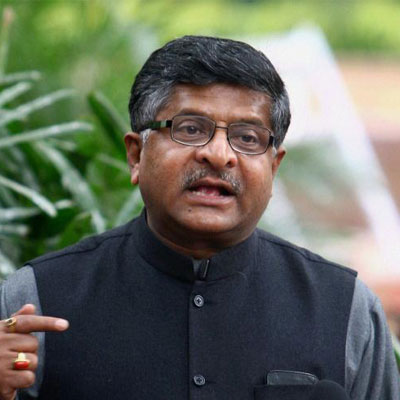
    NEW DELHI: Communications and Information Technology Minister Ravi Shankar Prasad has said the government fully respects the freedom of expression and discourse on social media and interned adding that “Our government is committed towards digital inclusion.”

    Welcoming the Telecom Regulatory Authority of India’s (TRAI) decision on discriminatory pricing, he said, “We very much appreciate this decision of TRAI whereby differential tariff in case of data services has been rejected. The view of our government from the beginning has been very clear, which I have also articulated in the Parliament, that is, internet is one of the finest creations of human mind and it should not become the monopoly of few.”

    “Differential pricing on data, whether it is Free Basics or any other mode, is plainly not acceptable,” the minister said, adding that the internet “must be available without discrimination.”

    Prasad said that the government was expanding Digital India into every “nook and corner of the country, and taking extraordinary steps to empower the people through technology, to create a knowledge economy, the very concept,” in order to bring about digital inclusion.