Tag: Trai

  • TRAI warns Pay Broadcasters against ignoring cost per subscriber in interconnect agreements

    NEW DELHI: All the broadcasters of pay channels have been asked by the Telecom Regulatory Authority of India to strictly comply with the provisions of clause 3C of Tariff Order, 2004 and clause 4 of the Tariff Order, 2010 at the time of providing signals of TV channels including in term of Cost Per Subscriber agreements.

    In its direction, TRAI said this was being done “to protect the interest of service providers and consumers” under Section 13, of the TRAI Act 1997, clause 4A of the Telecommunication (Broadcasting and Cable) Services (Second) Tariff Order 2004, and clause 10 of the Telecommunication (Broadcasting and Cable) Services (Fourth) (Addressable Systems) Tariff Order 2010.

    Following a Supreme Court interim order of 18 April 2011, the rate of a bouquet of channels of addressable systems shall not be more than 42 per cent of the rate of such bouquet as specified by the broadcaster for non-addressable systems. 

    The Authority also pointed out that the Tariff Order, 2010 defines bouquet or bouquet of channels and bouquet rate or rate of bouquet as an assortment of distinct channels offered together as a group or as a bundle. The ‘bouquet rate’ or ‘rote of bouquet’ means the rate at which a bouquet of channels is offered to the distributor of TV channels or to the subscriber, as the case may be.

    The Regulator said that on examination of the information relating to the interconnection agreements filed by the broadcasters under the Register of Interconnect Regulations 2004, the Authority noted that in many cases the agreements are signed in the name of CPS deals between the broadcasters and Distribution Platform Operators (Multi System Operators providing cable TV services through Digital Addressable Systems and DTH operators) for offering of channels of the broadcasters in different formations, assemblages and bouquets for a group or a bundle of channels.

    The Authority in a letter on 1 December 2015 requested the broadcasters of pay channels to clarify the exact nature of CPS agreements being executed with different Distribution Platform Operators and also explain how CPS agreements comply with the existing regulatory framework including the provisions of clause 3C of Tariff Order 2004.

    Most of the broadcasters, in their responses stated that all the channels of a broadcaster are given to a Distribution Platform Operator at a single rate per subscriber per month under CPS agreements. The Distribution Platform Operator pays to the broadcaster on the basis of the number of Set Top Boxes carrying any or all the channels of the broadcaster irrespective of number of channels of the broadcaster actually opted by subscribers.

    Most of the broadcasters in their response stated that CPS based agreements are purely mutually negotiated interconnection agreements and cannot be construed as bouquet of channels and hence do not fall within the realm of’ a-la-carte or bouquet offerings and; since CPS agreements do not fall within the category of a-la-carte or bouquet offerings therefore such agreements do not contravene the provisions of the clause 3C of the Tariff Order! 2004.

    After examining the response of the broadcasters in pursuance of
    the provisions contained in sub-clauses (2) and (3) of clause 3C of the Tariff Order 2004 and the definition of bouquet or bouquet of channels in the Tariff Order 2010, and concluded that this nothing but a bouquet or bouquet of channels being given as an assortment of distinct channels being offered together as a group or as a bundle in the CPS agreements.

    And whereas the provisions of the Tariff Order 2004 and Tariff Order 2010 are applicable to all type of interconnection agreements, including mutually negotiated interconnection agreements, entered between the broadcaster and the Distribution Platform Operators and the definition of bouquet or bouquet of channels in the Tariff Order 2010, the conditions specified in sub-clause (2) of clause 3C of the Tariff Order 2004 are applicable on the CPS agreements signed for an assortment of channels offered together as a group or bundle of channels.

    It stressed that sub-clause (3) of clause 3C of the Tariff Order 2004 was clear that a broadcaster may offer discounts to Distribution Platform Operators on a-la-carte rates of its channels or bouquet rates and such offer of discount in no case will directly or indirectly have effect of contravening the provisions of sub-clause (2) of clause 3C of the Tariff Order 2004.

  • Political, bureaucratic wrangles likely road-blocks for the new I&B secretary

    Political, bureaucratic wrangles likely road-blocks for the new I&B secretary

    NEW DELHI: The biggest challenges for the bureaucrats in the country can be summed up in just a few words: being unprepared, and forced to make compromises.

    Thus, a person taking charge as the head of the bureaucracy in any ministry has to put aside his or her own personal views and get down to translating the decisions of the government and the minister/ministers into action, apart from the fact that he or she may be completely new to the field. And this task becomes even more onerous when there are deadlines to be met in short periods of time.

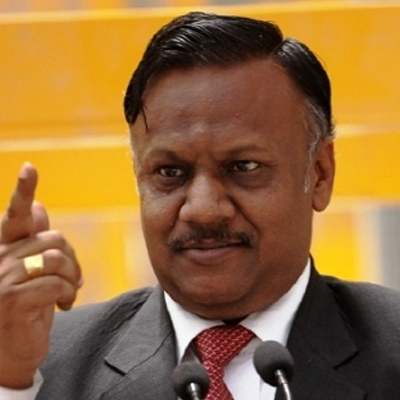
    Ajay Mittal is taking over the reins of the administrative machinery in the Information and Broadcasting ministry from Sunil Arora who had barely eight months to grapple with problems. Arora joined the Ministry on 31 August last year just as the ministry was making preparations for the Digital Addressable System Phase III and was in the midst of the Phase III auctions of FM radio.

    Mittal, is a senior Indian administrative service (IAS) officer of the 1982 batch from the Himachal Pradesh cadre. Born on 24 February 1958, Mittal is a law graduate and also has a Masters degree in rural development. His first posting was as principal secretary to the then chief minister of Himachal Pradesh and in the information and public relations wing in the state. Mittal was empanelled as secretary in December last year when he was additional chief secretary at Transport, Social Justice & Empowerment Department, Shimla.

    Now, Mittal has to deal with not only the onerous task of overseeing the implementation of the last phase in DAS which will cover all remaining urban and all rural areas of the country by December-end, but bringing the government out of the morass of legal cases which stayed the implementation of DAS Phase III in many states and have now been transferred to the Delhi high court.

    DAS Phase III

    Even though the deadlines for the last two phases of DAS were changed, the stakeholders were clearly unprepared as they all claimed shortage of compatible set top boxes – a claim which even the ministry could not deny. Expectedly, several high courts stayed implementation for varying periods  
    And although the ministry has succeeded in getting all the cases transferred to the Delhi high court, the fact remains that the ministry had itself admitted in a letter to its counsel in Chandigarh that it understood the stay to be pan-India, until the Supreme Court said nothing in the directive of the Bombay high court implied this.

    With the shortage of compatible set top boxes and little headway despite the incentives offered under the Make in India scheme, the ministry has to find ways to encourage indigenous production. Even at present, a large number of LCOs work with poor quality STBs made in China or other countries.

    Added to that is the fact that a large number of broadcasters, multi system operators, and local cable operators have still to work out their agreements – an issue further complicated by the directives of the Telecom Disputes Settlement and Arbitration Tribunal which wants the tariffs to looked at anew.
     
    In fact, many MSOs or LCOs have also not been able to get the Consumer Application Forms from their clients despite major publicity by the broadcasters.

    It is also a fact that analogue transmission continues in many parts of cities and towns that have gone digital and the government has failed to get the stay of DAS in Chennai vacated.

    The Home ministry had many months earlier made it clear that it was prepared to do away with security clearance for Indian-owned multi-system operators, the I and B Ministry has not yet got the go-ahead, with the result that MSOs are only getting provisional licences and the number of those with ten-year permanent licences remains at 231. The new secretary will have to push the Home ministry if he wants DAS to succeed.

    TRAI

    Although these are issues that the Telecom Regulatory Authority of India is dealing with, all decisions relating to the broadcasting sector can only be effective if there is proper coordination between the regulator and the ministry. This effectively means there has to be a quick response to any issues that either of the two raises to the other, if deadlines have to be met.

    Other issues pending before TRAI relating to broadcasting include the need to reconsider the foreign direct investment norms for media, shortage of spectrum, a growing demand by states seeking permissions to start their own television channels despite the TRAI having opined against it twice since 2008, and the imperative to work on the tariff issues for commercial and non-commercial set-ups following directives of the Telecom Disputes Settlement and Appellate Tribunal.

    Although broadcasting duties were handed over to TRAI just over a decade earlier, it is also clear that the ministry will have to consider whether there is need to form a broadcasting-specific body since TRAI is primarily a body set up for the telecom sector. If the Government decides to continue with TRAI handling both portfolios, the regulator will be under pressure from the I and B Ministry to strengthen its broadcasting team and also ensure greater coordination among officers in both broadcasting and telecom.    

    With convergence of technologies becoming a reality, and with issues of spectrum already bringing telecom and broadcasting together, the National Democratic Alliance Government has again begun to talk about convergence and this is bound to gather pace over the next two years.

    Spectrum

    The Defence Ministry has in principle agreed to hand over some spectrum and swap some other spectrum, and TRAI has also worked on the process of auctioning the available spectrum and given out reserve prices, the whole process is caught up in bureaucratic wrangles as it involves the Telecom ministry. If the I and B ministry wants to continue with its policy of ensuring there are no caps on the number of television, FM radio channels, or direct-to-home (DTH) Headed in the sky (HITS) platforms in the country, the issue of spectrum will need early solution.

    FM Radio Auctions

    When the last secretary Sunil Arora took over, the government was in the midst of the first stage of auctions of the FM Radio e-auction which only covered cities which already have FM but there were some vacancies. Learning from the experiences where there were no bids in 13 of the 69 cities, the government has now decided to revise the guidelines for the e-auction. The new secretary may have to find ways of either lowering the reserve price for those cities or finding other incentives before the next stage of e-auction.

    The fact that the cumulative winnings from the channels auctioned so far has exceeded the reserve price by more 100 per cent is undoubtedly a matter of great satisfaction, but some cities failing to attract bidders is an irritant.

    Ad Cap

    The Cable Television Networks (Regulation) Act 1995 was clear that the advertising cap should be twelve minutes an hour, but television channels went to court because many – particularly the news channels most of which are free to air – said they had no other source of income unlike the pay channels. But the ministry is already doing a rethink as admitted by the ministry as well as the News Broadcasters Association.

    This rethink is probably because the I and B minister had said early this last year that he was opposed to ad caps on the print or electronic media, and because the free-to-air channels (most of which are news channels) have already expressed their opposition to this. TRAI had failed to get permission to take action against television channels violating its diktat of a total of 12 minutes of commercial and promotional advertisements every hour, though all broadcasters were asked to keep records of this by the Delhi High Court.

    Spread of FM Radio vs DRM

    The Digital Radio Mondiale Consortium feels that All India Radio has done the most in terms of digitization of radio. AIR has in fact spent crores of rupees on the digitized Digital Radio Mondiale. But Prasar Bharati feels that Frequency Modulation which is an analogue technology should be promoted until the nation is ready for digital radio sets.

    The ministry can resolve this issue only if it can ensure adequate manufacture at affordable process of DRM sets under the Make in India programme. Until then, this continues to be a thorn in the already dicey relations between the public service broadcaster and the ministry. The fact remains that there are just one or two manufacturers of DRM sets and these have also been successfully demonstrated in moving cars, but they remain unaffordable.

    Community Radio

    More than a decade has elapsed since the introduction of community radio, but the number of operational stations is still very low. To boost this sector, the government introduced a new scheme last year for funding community radio and has also been giving away awards, but bureaucratic wrangles continue to hold up the smooth implementation of this scheme.

    Prasar Bharati and the Ministry

    On paper, the Prasar Bharati (Broadcasting Corporation of India) Act 1990 is clear that the pubcaster is autonomous. However, in reality this appears to the contrary.

    On the one hand, a group of ministers had decided as a measure to help the pubcaster that persons employed as on 5 October 2007 will get the salary and pension from government funds. For employees who joined after that date, Prasar Bharati was left to fend for itself.

    In any case, Prasar Bharati is listed as an autonomous company under the ministry.

    This means – and it appears so even from the manner in which questions relating to the pubcaster are answered in parliament – that there is dispute on what real autonomy is. Prasar Bharati CEO Jawhar Sircar – a former bureaucrat himself – feels the government does not give him full freedom and there is interference at every level and has said so either in speeches or in articles by him or others in the pubcaster.

    Journalists on the parliamentary beat are often flabbergasted by the fact that when it suits the government, a reply will say that the pubcaster is an autonomous body, and yet there has been the intervention of the government even in appointments in Prasar Bharati.

    While there is generally full autonomy as far as content goes, there are allegedly checks and balances placed by the government in administrative matters.

    In a new development that has in principle been accepted by the government, Prasar Bharati, which has been losing revenue and viewership, has decided to auction prime time slots – perhaps inspired by the success of the e-auctions of slots on the country’s only free-to-air direct-to-home platform DD Freedish, or the FM auctions.

    Freedish

    Even though the auctions have been extremely successful and the pubcaster not only got two or three times the reserve price per slot, but even managed to get at least two pay channels to come as FTA, it has still not been able to switch over from MPEG2 to MPEG4 to enable it to increase the number to 112 as promised over the last three to four years.

    Foreign Direct Investment

    The TRAI had given its recommendations for an increased FDI in many sectors of the media in a report in July 2013. Although there was some change by the government earlier this year, it has still not implemented the FDI report of TRAI in full.

    Security Clearance

    While the Home ministry has decided it is doing away with security clearance for MSOs, it has not taken a decision as far television channels are concerned. And while the issue relating to foreign ownership can be understood, the denial of security clearance to Sun TV and its affiliated MSOs continues to flummox everyone in the media. It is generally felt that an accused is not guilty till proved, but the Home ministry – and the I and B ministry – appear to have decided that the Maran brothers should be denied security clearance despite the fact that the cases against them have no relation to the security of the country, and are in fact an incursion n the freedom of the media. Even the Supreme Court while permitting Sun group companies to take part in the FM auction said so.

    Paid News

    It is now almost five years since the issue of paid news became the talk of the town. The Press Council of India set up a committee which even gave recommendations, and a Parliamentary Panel and the Election Commission also wanted some steps to be taken to stop this. But there has been no tangible action so far.

    Film Industry

    The film industry has been raising similar issues year after year. As far as taxation issues were concerned, it was hoped that the Goods and Services Tax when implemented will help. But the way the matter is stuck in parliament forces the industry to just wait and watch.

    Entertainment tax is another issue on which there has been no unanimity and states have different taxes. A proposal about a decade earlier for bringing cinema into the Concurrent List of the Constitution might have solved the problem, but most states opposed the idea. Perhaps the only positive move has been that service tax or cess on entertainment tax has been done away with.

    In a country producing around one thousand feature films every year apart from the large number of films from overseas, the country still suffers from an acute shortage of theatres, with the number less than 11,000. With the high rates of ticketing charged by the multiplexes, the average cinegoer is denied of the pleasure of seeing a film in a cinema hall.

    All attempts to curb video piracy appear to have failed because the film industry and the government have failed to work together to curb the menace, which means huge losses for the makers of bold films unless there are big stars to lure the audiences.

    The Film Museum has been in the planning and making for more than a decade, but it does not appear that the Museum planned for 2013 to coincide with a centenary of cinema will seek the light of day for at least a couple of more years.

    The Centre of Excellence in Animation and Visual Effects

    For almost ten years, minister after minister has promised to set up a Centre of Excellence in Animation and Visual Effects, and Hyderabad and Bangalore have even claimed that they have the right ambience for such a centre.

    But indications are coming that it will be established in the Film City in Goregaon in Mumbai, a decision that may not be digestible to studios of animation and VFX in cities like Hyderabad and Bangalore.

    Clearly, the new secretary has a difficult task ahead, moving on a road that is not without political or bureaucratic potholes that can hold up even his best intentions.
     

  • Political, bureaucratic wrangles likely road-blocks for the new I&B secretary

    Political, bureaucratic wrangles likely road-blocks for the new I&B secretary

    NEW DELHI: The biggest challenges for the bureaucrats in the country can be summed up in just a few words: being unprepared, and forced to make compromises.

    Thus, a person taking charge as the head of the bureaucracy in any ministry has to put aside his or her own personal views and get down to translating the decisions of the government and the minister/ministers into action, apart from the fact that he or she may be completely new to the field. And this task becomes even more onerous when there are deadlines to be met in short periods of time.

    Ajay Mittal is taking over the reins of the administrative machinery in the Information and Broadcasting ministry from Sunil Arora who had barely eight months to grapple with problems. Arora joined the Ministry on 31 August last year just as the ministry was making preparations for the Digital Addressable System Phase III and was in the midst of the Phase III auctions of FM radio.

    Mittal, is a senior Indian administrative service (IAS) officer of the 1982 batch from the Himachal Pradesh cadre. Born on 24 February 1958, Mittal is a law graduate and also has a Masters degree in rural development. His first posting was as principal secretary to the then chief minister of Himachal Pradesh and in the information and public relations wing in the state. Mittal was empanelled as secretary in December last year when he was additional chief secretary at Transport, Social Justice & Empowerment Department, Shimla.

    Now, Mittal has to deal with not only the onerous task of overseeing the implementation of the last phase in DAS which will cover all remaining urban and all rural areas of the country by December-end, but bringing the government out of the morass of legal cases which stayed the implementation of DAS Phase III in many states and have now been transferred to the Delhi high court.

    DAS Phase III

    Even though the deadlines for the last two phases of DAS were changed, the stakeholders were clearly unprepared as they all claimed shortage of compatible set top boxes – a claim which even the ministry could not deny. Expectedly, several high courts stayed implementation for varying periods  
    And although the ministry has succeeded in getting all the cases transferred to the Delhi high court, the fact remains that the ministry had itself admitted in a letter to its counsel in Chandigarh that it understood the stay to be pan-India, until the Supreme Court said nothing in the directive of the Bombay high court implied this.

    With the shortage of compatible set top boxes and little headway despite the incentives offered under the Make in India scheme, the ministry has to find ways to encourage indigenous production. Even at present, a large number of LCOs work with poor quality STBs made in China or other countries.

    Added to that is the fact that a large number of broadcasters, multi system operators, and local cable operators have still to work out their agreements – an issue further complicated by the directives of the Telecom Disputes Settlement and Arbitration Tribunal which wants the tariffs to looked at anew.
     
    In fact, many MSOs or LCOs have also not been able to get the Consumer Application Forms from their clients despite major publicity by the broadcasters.

    It is also a fact that analogue transmission continues in many parts of cities and towns that have gone digital and the government has failed to get the stay of DAS in Chennai vacated.

    The Home ministry had many months earlier made it clear that it was prepared to do away with security clearance for Indian-owned multi-system operators, the I and B Ministry has not yet got the go-ahead, with the result that MSOs are only getting provisional licences and the number of those with ten-year permanent licences remains at 231. The new secretary will have to push the Home ministry if he wants DAS to succeed.

    TRAI

    Although these are issues that the Telecom Regulatory Authority of India is dealing with, all decisions relating to the broadcasting sector can only be effective if there is proper coordination between the regulator and the ministry. This effectively means there has to be a quick response to any issues that either of the two raises to the other, if deadlines have to be met.

    Other issues pending before TRAI relating to broadcasting include the need to reconsider the foreign direct investment norms for media, shortage of spectrum, a growing demand by states seeking permissions to start their own television channels despite the TRAI having opined against it twice since 2008, and the imperative to work on the tariff issues for commercial and non-commercial set-ups following directives of the Telecom Disputes Settlement and Appellate Tribunal.

    Although broadcasting duties were handed over to TRAI just over a decade earlier, it is also clear that the ministry will have to consider whether there is need to form a broadcasting-specific body since TRAI is primarily a body set up for the telecom sector. If the Government decides to continue with TRAI handling both portfolios, the regulator will be under pressure from the I and B Ministry to strengthen its broadcasting team and also ensure greater coordination among officers in both broadcasting and telecom.    

    With convergence of technologies becoming a reality, and with issues of spectrum already bringing telecom and broadcasting together, the National Democratic Alliance Government has again begun to talk about convergence and this is bound to gather pace over the next two years.

    Spectrum

    The Defence Ministry has in principle agreed to hand over some spectrum and swap some other spectrum, and TRAI has also worked on the process of auctioning the available spectrum and given out reserve prices, the whole process is caught up in bureaucratic wrangles as it involves the Telecom ministry. If the I and B ministry wants to continue with its policy of ensuring there are no caps on the number of television, FM radio channels, or direct-to-home (DTH) Headed in the sky (HITS) platforms in the country, the issue of spectrum will need early solution.

    FM Radio Auctions

    When the last secretary Sunil Arora took over, the government was in the midst of the first stage of auctions of the FM Radio e-auction which only covered cities which already have FM but there were some vacancies. Learning from the experiences where there were no bids in 13 of the 69 cities, the government has now decided to revise the guidelines for the e-auction. The new secretary may have to find ways of either lowering the reserve price for those cities or finding other incentives before the next stage of e-auction.

    The fact that the cumulative winnings from the channels auctioned so far has exceeded the reserve price by more 100 per cent is undoubtedly a matter of great satisfaction, but some cities failing to attract bidders is an irritant.

    Ad Cap

    The Cable Television Networks (Regulation) Act 1995 was clear that the advertising cap should be twelve minutes an hour, but television channels went to court because many – particularly the news channels most of which are free to air – said they had no other source of income unlike the pay channels. But the ministry is already doing a rethink as admitted by the ministry as well as the News Broadcasters Association.

    This rethink is probably because the I and B minister had said early this last year that he was opposed to ad caps on the print or electronic media, and because the free-to-air channels (most of which are news channels) have already expressed their opposition to this. TRAI had failed to get permission to take action against television channels violating its diktat of a total of 12 minutes of commercial and promotional advertisements every hour, though all broadcasters were asked to keep records of this by the Delhi High Court.

    Spread of FM Radio vs DRM

    The Digital Radio Mondiale Consortium feels that All India Radio has done the most in terms of digitization of radio. AIR has in fact spent crores of rupees on the digitized Digital Radio Mondiale. But Prasar Bharati feels that Frequency Modulation which is an analogue technology should be promoted until the nation is ready for digital radio sets.

    The ministry can resolve this issue only if it can ensure adequate manufacture at affordable process of DRM sets under the Make in India programme. Until then, this continues to be a thorn in the already dicey relations between the public service broadcaster and the ministry. The fact remains that there are just one or two manufacturers of DRM sets and these have also been successfully demonstrated in moving cars, but they remain unaffordable.

    Community Radio

    More than a decade has elapsed since the introduction of community radio, but the number of operational stations is still very low. To boost this sector, the government introduced a new scheme last year for funding community radio and has also been giving away awards, but bureaucratic wrangles continue to hold up the smooth implementation of this scheme.

    Prasar Bharati and the Ministry

    On paper, the Prasar Bharati (Broadcasting Corporation of India) Act 1990 is clear that the pubcaster is autonomous. However, in reality this appears to the contrary.

    On the one hand, a group of ministers had decided as a measure to help the pubcaster that persons employed as on 5 October 2007 will get the salary and pension from government funds. For employees who joined after that date, Prasar Bharati was left to fend for itself.

    In any case, Prasar Bharati is listed as an autonomous company under the ministry.

    This means – and it appears so even from the manner in which questions relating to the pubcaster are answered in parliament – that there is dispute on what real autonomy is. Prasar Bharati CEO Jawhar Sircar – a former bureaucrat himself – feels the government does not give him full freedom and there is interference at every level and has said so either in speeches or in articles by him or others in the pubcaster.

    Journalists on the parliamentary beat are often flabbergasted by the fact that when it suits the government, a reply will say that the pubcaster is an autonomous body, and yet there has been the intervention of the government even in appointments in Prasar Bharati.

    While there is generally full autonomy as far as content goes, there are allegedly checks and balances placed by the government in administrative matters.

    In a new development that has in principle been accepted by the government, Prasar Bharati, which has been losing revenue and viewership, has decided to auction prime time slots – perhaps inspired by the success of the e-auctions of slots on the country’s only free-to-air direct-to-home platform DD Freedish, or the FM auctions.

    Freedish

    Even though the auctions have been extremely successful and the pubcaster not only got two or three times the reserve price per slot, but even managed to get at least two pay channels to come as FTA, it has still not been able to switch over from MPEG2 to MPEG4 to enable it to increase the number to 112 as promised over the last three to four years.

    Foreign Direct Investment

    The TRAI had given its recommendations for an increased FDI in many sectors of the media in a report in July 2013. Although there was some change by the government earlier this year, it has still not implemented the FDI report of TRAI in full.

    Security Clearance

    While the Home ministry has decided it is doing away with security clearance for MSOs, it has not taken a decision as far television channels are concerned. And while the issue relating to foreign ownership can be understood, the denial of security clearance to Sun TV and its affiliated MSOs continues to flummox everyone in the media. It is generally felt that an accused is not guilty till proved, but the Home ministry – and the I and B ministry – appear to have decided that the Maran brothers should be denied security clearance despite the fact that the cases against them have no relation to the security of the country, and are in fact an incursion n the freedom of the media. Even the Supreme Court while permitting Sun group companies to take part in the FM auction said so.

    Paid News

    It is now almost five years since the issue of paid news became the talk of the town. The Press Council of India set up a committee which even gave recommendations, and a Parliamentary Panel and the Election Commission also wanted some steps to be taken to stop this. But there has been no tangible action so far.

    Film Industry

    The film industry has been raising similar issues year after year. As far as taxation issues were concerned, it was hoped that the Goods and Services Tax when implemented will help. But the way the matter is stuck in parliament forces the industry to just wait and watch.

    Entertainment tax is another issue on which there has been no unanimity and states have different taxes. A proposal about a decade earlier for bringing cinema into the Concurrent List of the Constitution might have solved the problem, but most states opposed the idea. Perhaps the only positive move has been that service tax or cess on entertainment tax has been done away with.

    In a country producing around one thousand feature films every year apart from the large number of films from overseas, the country still suffers from an acute shortage of theatres, with the number less than 11,000. With the high rates of ticketing charged by the multiplexes, the average cinegoer is denied of the pleasure of seeing a film in a cinema hall.

    All attempts to curb video piracy appear to have failed because the film industry and the government have failed to work together to curb the menace, which means huge losses for the makers of bold films unless there are big stars to lure the audiences.

    The Film Museum has been in the planning and making for more than a decade, but it does not appear that the Museum planned for 2013 to coincide with a centenary of cinema will seek the light of day for at least a couple of more years.

    The Centre of Excellence in Animation and Visual Effects

    For almost ten years, minister after minister has promised to set up a Centre of Excellence in Animation and Visual Effects, and Hyderabad and Bangalore have even claimed that they have the right ambience for such a centre.

    But indications are coming that it will be established in the Film City in Goregaon in Mumbai, a decision that may not be digestible to studios of animation and VFX in cities like Hyderabad and Bangalore.

    Clearly, the new secretary has a difficult task ahead, moving on a road that is not without political or bureaucratic potholes that can hold up even his best intentions.
     

  • Reliance Jio to delay its commercial roll out till December

    Reliance Jio to delay its commercial roll out till December

    MUMBAI: The onslaught might take a little while before it revs itself for a decimating run in the Indian telecom ecosystem.’The world’s most expensive start-up entailing an initial investment of Rs.1.5 trillion – Reliance Jio’, as termed by Reliance Industries  chairman Mukesh Ambani who has a revolutionary vision of  digitising the entire country to get its people to use the internet. Reliance Jio 4G services were launched for the employees and privileged personalities in December last year (2015). At that time speculations were rife that the company would roll out its commercial services in early April, though the company did not release any official statement indicating the launch date.

    As per information available with Indiantelevision.com, Reliance’s 4G services are likely to launch in December 2016. A source close to the development informs, “They are planning the commercial roll out this December. There are many factors which are evolving and the launch will take time. Before the commercial roll-out there will be phases of soft launches in various regions to conduct a test run in each and every region.”

    Reliance Jio’s immediate target will be the premium consumers of other networks. Research says that consumers with spends of Rs 300 per month and above are most vulnerable to poaching by the Jio onslaught. The biggest player in the Indian telecom ecosystem,  Airtel has 89 per cent of its 250 million subscribers that use feature phones or smartphones only for calls and not data. Hence the ring fencing will happen for the 11 per cent of the premium consumers. “Airtel is planning to counter Jio with its own weapons,” says a veteran in the telecom industry. He further adds, “Jio will roll out combo plans where voice calls and SMS services will be offered for free or at cheap prices. It will also package 4G services with mobile devices. In the initial stages it will roll out many lucrative offers to poach consumers.”

    When contacted, the corporate communications team of Reliance Jio refused to offer any comments. “We have not declared any date and hence there is no question of postponements or delays,” the team said.

    One of the vendors that provides technical assistance to Reliance Jio asserts, “The internal declaration to roll out in December is primarily to ensure maximum reach. Availability and affordability are key factors which the company is not ready to compromise with. Moreover there will be an aggressive marketing plan to back the launch, so overall its a strategic move to wait till December.”

    Driven by strong adoption of data consumption on handheld devices, the total mobile services market revenue in India is expected to touch US$ 37 billion in 2017, registering a compounded annual growth rate (CAGR) of 5.2 per cent between 2014 and 2017, according to research firm IDC.

    According to a Telecom Regulatory of India (TRAI) press release, as of 31 January 2016,India’s mobile subscriber base has crossed the one billion mark. A study by GSMA says that smartphones are expected to account for two out of every three mobile connections globally by 2020 making India the fourth largest smartphone market.The broadband services user-base in India is expected to grow to 250 million connections by 2017, says GSMA.

    The opportunity is huge, and will benefit the ultimate user, given the poor quality of intermittent 4G data services that are being offered by the players in the market at present.

  • Reliance Jio to delay its commercial roll out till December

    Reliance Jio to delay its commercial roll out till December

    MUMBAI: The onslaught might take a little while before it revs itself for a decimating run in the Indian telecom ecosystem.’The world’s most expensive start-up entailing an initial investment of Rs.1.5 trillion – Reliance Jio’, as termed by Reliance Industries  chairman Mukesh Ambani who has a revolutionary vision of  digitising the entire country to get its people to use the internet. Reliance Jio 4G services were launched for the employees and privileged personalities in December last year (2015). At that time speculations were rife that the company would roll out its commercial services in early April, though the company did not release any official statement indicating the launch date.

    As per information available with Indiantelevision.com, Reliance’s 4G services are likely to launch in December 2016. A source close to the development informs, “They are planning the commercial roll out this December. There are many factors which are evolving and the launch will take time. Before the commercial roll-out there will be phases of soft launches in various regions to conduct a test run in each and every region.”

    Reliance Jio’s immediate target will be the premium consumers of other networks. Research says that consumers with spends of Rs 300 per month and above are most vulnerable to poaching by the Jio onslaught. The biggest player in the Indian telecom ecosystem,  Airtel has 89 per cent of its 250 million subscribers that use feature phones or smartphones only for calls and not data. Hence the ring fencing will happen for the 11 per cent of the premium consumers. “Airtel is planning to counter Jio with its own weapons,” says a veteran in the telecom industry. He further adds, “Jio will roll out combo plans where voice calls and SMS services will be offered for free or at cheap prices. It will also package 4G services with mobile devices. In the initial stages it will roll out many lucrative offers to poach consumers.”

    When contacted, the corporate communications team of Reliance Jio refused to offer any comments. “We have not declared any date and hence there is no question of postponements or delays,” the team said.

    One of the vendors that provides technical assistance to Reliance Jio asserts, “The internal declaration to roll out in December is primarily to ensure maximum reach. Availability and affordability are key factors which the company is not ready to compromise with. Moreover there will be an aggressive marketing plan to back the launch, so overall its a strategic move to wait till December.”

    Driven by strong adoption of data consumption on handheld devices, the total mobile services market revenue in India is expected to touch US$ 37 billion in 2017, registering a compounded annual growth rate (CAGR) of 5.2 per cent between 2014 and 2017, according to research firm IDC.

    According to a Telecom Regulatory of India (TRAI) press release, as of 31 January 2016,India’s mobile subscriber base has crossed the one billion mark. A study by GSMA says that smartphones are expected to account for two out of every three mobile connections globally by 2020 making India the fourth largest smartphone market.The broadband services user-base in India is expected to grow to 250 million connections by 2017, says GSMA.

    The opportunity is huge, and will benefit the ultimate user, given the poor quality of intermittent 4G data services that are being offered by the players in the market at present.

  • TRAI says it favours auctioning of entire spectrum in any LSA

    TRAI says it favours auctioning of entire spectrum in any LSA

    NEW DELHI: The Telecom Regulatory Authority of India has told the Department of Telecommunications that holding back some of the spectrum in 700 MHz (i.e. 15+15 MHz) from this auction and selling it after a gap of certain period of time from now would lead to non-utilization of this scarce natural resource for that period, though it has the potential to be reused and reallocated.

    Responding to a lengthy note by the DoT on various issues relating to auction of spectrum, the TRAI has by and large stuck to its original recommendations on most questions raised before it.

    It said any delay in award of spectrum or non-utilization of spectrum would turn into irreversible loss to the Government (in the form of levies and taxes) and to the society (in the form of better services, contribution to other related activities etc.).

    Even if it is assumed that greater revenue can be generated by auctioning a part of spectrum in 700 MHz band in future, deferring the revenue receipts now may not be of economic prudence keeping in view the impact of telecom services on the other sectors and overall GDP growth. Telecom connectivity is now the basic infrastructure in any society for networking, conveying important economic and social benefits.

    The Authority emphasised that the broadband connectivity is the first pillar of ‘Digital India’ Programme of the government, which can be fulfilled quickly if sufficient quantity of spectrum is made available. Further, National Telecom Policy-2012 envisages making available additional 300 MHz spectrum by the year 2017 and 500 MHz by the year 2020 for IMT services. If all the available spectrum is put to auction, it will result in increased availability of spectrum which will result in serving larger subscriber base, increased data speed as well as growth and overall increase in economic and other networked activities. This will result in more recurring revenue to the government in terms of license fee, spectrum usage charges, service tax, etc.

    Spectrum being a scarce resource, auction of spectrum is primarily to solve the allocative problem in an open, transparent manner and revenue maximization cannot be (and should not be) the only objective of auction where the Government is an auctioneer. The government has to a strike a balance between its fiscal targets and its responsibility to promote and encourage growth of the telecom sector.

    Presently, India is way behind in the broadband penetration and the internet speeds in the world and 700 MHz band can prove to be a vital band for proliferation of broadband in the country. In view of the above, the authority is of the opinion that entire spectrum in the 700 MHz band is required to be made available for commercial use without any delay. Accordingly, the authority reiterates its earlier recommendation that entire available spectrum (2x35MHz) in the 700 MHz band should be put to auction in the upcoming auction.

    The authority has been in favour of auctioning of all the available spectrum in entire LSA(s). However, the authority had recommended that partial spectrum available in Bihar, Rajasthan and North-East LSAs should not be put to auction till such time it becomes available in at least 75% of total number of districts of the LSA including the state capital(s). As 1.0 MHz of spectrum in 1800 MHz band is available in entire service area of Rajasthan it should be put to auction. Moreover, DoT is carrying out process of harmonisation of spectrum in this band, therefore, issue of partial spectrum may not arise.

    It said telecom service providers feel that the escalation in the number of mobile drops, especially in urban and metro areas, can also be attributed to spectrum related issues, including shortage of spectrum supply. In order to serve the telecom needs of ever increasing subscriber base, the authority has recommended to DoT, from time to time, for making additional spectrum available in existing as well as new bands for commercial use. Further, in all the spectrum auctions held since 2012, the authority has been recommending to put to auction the entire available spectrum with the DoT. I

    As stated in the recommendations dated 27 January 2016, 700 MHz band is a sought after band for LTE deployment around the world due to its efficiency and higher penetration inside buildings. Due to lower frequency, it provides wider coverage which reduces number of towers required for setting up the LTE network and thus significantly cuts down capital expenditure involved in making the network live. In 42 countries commercial networks have been deployed in this band. After the assignment of spectrum in this band in India, it is expected that there will be an accelerated deployment of device eco-system due to ‘economies of scale’ that will be delivered on account of large subscriber base.

    The authority is of the view that if a service provider is not utilizing the administratively assigned spectrum without any justification, the licensor should take back the assigned spectrum.

    The DoT may take the legal opinion on the above issue and start the process of withdrawal of the spectrum separately. As soon as this spectrum becomes available, the same should be put to auction.

    The authority is of the opinion that there is no need for any modification in the provisions of the latest NIA with respect to block size and minimum quantum of spectrum that a new entrant/existing licenses/expiry licensee is required to bid for in 900/1800 MHz band. However, due to limited availability of spectrum in some LSAs in 900/1800 bands minimum spectrum, that a bidder is required to bid for, has been amended in these LSAs.

  • TRAI says it favours auctioning of entire spectrum in any LSA

    TRAI says it favours auctioning of entire spectrum in any LSA

    NEW DELHI: The Telecom Regulatory Authority of India has told the Department of Telecommunications that holding back some of the spectrum in 700 MHz (i.e. 15+15 MHz) from this auction and selling it after a gap of certain period of time from now would lead to non-utilization of this scarce natural resource for that period, though it has the potential to be reused and reallocated.

    Responding to a lengthy note by the DoT on various issues relating to auction of spectrum, the TRAI has by and large stuck to its original recommendations on most questions raised before it.

    It said any delay in award of spectrum or non-utilization of spectrum would turn into irreversible loss to the Government (in the form of levies and taxes) and to the society (in the form of better services, contribution to other related activities etc.).

    Even if it is assumed that greater revenue can be generated by auctioning a part of spectrum in 700 MHz band in future, deferring the revenue receipts now may not be of economic prudence keeping in view the impact of telecom services on the other sectors and overall GDP growth. Telecom connectivity is now the basic infrastructure in any society for networking, conveying important economic and social benefits.

    The Authority emphasised that the broadband connectivity is the first pillar of ‘Digital India’ Programme of the government, which can be fulfilled quickly if sufficient quantity of spectrum is made available. Further, National Telecom Policy-2012 envisages making available additional 300 MHz spectrum by the year 2017 and 500 MHz by the year 2020 for IMT services. If all the available spectrum is put to auction, it will result in increased availability of spectrum which will result in serving larger subscriber base, increased data speed as well as growth and overall increase in economic and other networked activities. This will result in more recurring revenue to the government in terms of license fee, spectrum usage charges, service tax, etc.

    Spectrum being a scarce resource, auction of spectrum is primarily to solve the allocative problem in an open, transparent manner and revenue maximization cannot be (and should not be) the only objective of auction where the Government is an auctioneer. The government has to a strike a balance between its fiscal targets and its responsibility to promote and encourage growth of the telecom sector.

    Presently, India is way behind in the broadband penetration and the internet speeds in the world and 700 MHz band can prove to be a vital band for proliferation of broadband in the country. In view of the above, the authority is of the opinion that entire spectrum in the 700 MHz band is required to be made available for commercial use without any delay. Accordingly, the authority reiterates its earlier recommendation that entire available spectrum (2x35MHz) in the 700 MHz band should be put to auction in the upcoming auction.

    The authority has been in favour of auctioning of all the available spectrum in entire LSA(s). However, the authority had recommended that partial spectrum available in Bihar, Rajasthan and North-East LSAs should not be put to auction till such time it becomes available in at least 75% of total number of districts of the LSA including the state capital(s). As 1.0 MHz of spectrum in 1800 MHz band is available in entire service area of Rajasthan it should be put to auction. Moreover, DoT is carrying out process of harmonisation of spectrum in this band, therefore, issue of partial spectrum may not arise.

    It said telecom service providers feel that the escalation in the number of mobile drops, especially in urban and metro areas, can also be attributed to spectrum related issues, including shortage of spectrum supply. In order to serve the telecom needs of ever increasing subscriber base, the authority has recommended to DoT, from time to time, for making additional spectrum available in existing as well as new bands for commercial use. Further, in all the spectrum auctions held since 2012, the authority has been recommending to put to auction the entire available spectrum with the DoT. I

    As stated in the recommendations dated 27 January 2016, 700 MHz band is a sought after band for LTE deployment around the world due to its efficiency and higher penetration inside buildings. Due to lower frequency, it provides wider coverage which reduces number of towers required for setting up the LTE network and thus significantly cuts down capital expenditure involved in making the network live. In 42 countries commercial networks have been deployed in this band. After the assignment of spectrum in this band in India, it is expected that there will be an accelerated deployment of device eco-system due to ‘economies of scale’ that will be delivered on account of large subscriber base.

    The authority is of the view that if a service provider is not utilizing the administratively assigned spectrum without any justification, the licensor should take back the assigned spectrum.

    The DoT may take the legal opinion on the above issue and start the process of withdrawal of the spectrum separately. As soon as this spectrum becomes available, the same should be put to auction.

    The authority is of the opinion that there is no need for any modification in the provisions of the latest NIA with respect to block size and minimum quantum of spectrum that a new entrant/existing licenses/expiry licensee is required to bid for in 900/1800 MHz band. However, due to limited availability of spectrum in some LSAs in 900/1800 bands minimum spectrum, that a bidder is required to bid for, has been amended in these LSAs.

  • Canara Star asked by TDSAT to pay Star India Rs 18.91 lakh subject to final outcome of dispute

    Canara Star asked by TDSAT to pay Star India Rs 18.91 lakh subject to final outcome of dispute

    NEW DELHI: The Telecom Disputes Settlement and Appellate Tribunal has directed  Canara Star Communications Pvt Ltd Karnataka, to pay to Star India a sum of Rs.18.91 lakhs for both Kumta and Bhatkal up to 3 March 2016.

    Chairman  Aftab Alam and member B B Srivastava said “These payments are interim and without prejudice to the rights and contentions of either party.”

    Rejecting the plea by the multi-system operator that it was entitled to a further reduction of 15 per cent in the monthly subscription amount fixed under the expired agreements as a result of the setting aside of the Tariff Order by TRAI that allowed 15 per cent enhancement to the MSOs, the tribunal fixed the matter for further hearing on 19 April.

    The tribunal noted that there is no material to prima facie substantiate this assertion and saw no reason to allow any further reduction in the dues which the petitioner could be liable to pay to the respondent as an interim measure.

    Canara Star had originally come before the tribunal against disconnection notices by Star India as for default in payment. One of the grounds on which the disconnection notice were challenged was that another MSO had started operating in those areas and as a result the petitioner’s subscriber base had gone down substantially and the petitioner had been making request for downgradation of its subscriber base and consequently a reduction in the fixed fee payable by it as monthly subscription fee.  There appeared to be some substance in the petitioner’s grievance and on a joint request, the matter was referred to the Mediation Centre.

    The tribunal was informed that before the Mediation Centre, the parties were able to arrive at some understanding in regard to Kumta and Bhatkal areas but Canara Star was also getting signals from Star India for transmission in the DAS area of Bangalore and there too the MSO happened to be in default in payment of the subscription fees.

    Star India wanted a comprehensive settlement that should cover both analogue and digital areas covering not only Kumta and Bhatkal but Bangalore also. A comprehensive settlement, as desired by Star India could not take place and the matter came back to the tribunal.

    The subscription agreement between the parties relating to Kumta and Bhatkal came to end on 31 June 2015.  Under the subscription agreement, the petitioner was liable to pay the monthly subscription fee at the rate of Rs.2,60,081 per month for Kumta and Rs.2,10,716 per month for Bhatkal.  In February 2015 when the petition was filed before the Tribunal the dues against the petitioner amounted to Rs.32.95 lakhs for both Kumta and Bhatkal. By order of 3 February 2015, the petitioner was directed to make payment of the aforesaid amount in two installments subject to which Star India was directed not to disconnect the supply of its signals to Canara Star. Thereafter, the MSO had made some further payments of admitted dues in terms of orders passed by the tribunal from time to time and it continues to receive the signals for transmission in those areas.

    No fresh subscription agreement has so far been executed between the parties.

    According to the respondent, at the rate fixed under the expired agreement, its dues against the MSO now amount to Rs.48.94 lakhs for both Kumta and Bhatkal. Star India counsel Kunal Tandon however submitted that in course of the mediation proceedings, Star India had agreed to give the MSO a discount of Rs.1,07,305 per month for Kumta area and Rs.67,703 for Bhatkal area with effect from November 2014.  He submitted that if computations are made taking into account the discount to which the respondent had agreed and computing the monthly subscription fees after allowing the discounts, the dues would come to Rs.18.91 lakhs for both Kumta and Bhatkal upto 31.03.2016.

    However, Canara Star counsel Tushar Singh wanted further reduction of 15 per cent in the monthly subscription amount fixed under the expired agreements as a result of the setting aside of the Tariff Order by TRAI that allowed 15 per cent enhancement to the MSOs.

  • Canara Star asked by TDSAT to pay Star India Rs 18.91 lakh subject to final outcome of dispute

    Canara Star asked by TDSAT to pay Star India Rs 18.91 lakh subject to final outcome of dispute

    NEW DELHI: The Telecom Disputes Settlement and Appellate Tribunal has directed  Canara Star Communications Pvt Ltd Karnataka, to pay to Star India a sum of Rs.18.91 lakhs for both Kumta and Bhatkal up to 3 March 2016.

    Chairman  Aftab Alam and member B B Srivastava said “These payments are interim and without prejudice to the rights and contentions of either party.”

    Rejecting the plea by the multi-system operator that it was entitled to a further reduction of 15 per cent in the monthly subscription amount fixed under the expired agreements as a result of the setting aside of the Tariff Order by TRAI that allowed 15 per cent enhancement to the MSOs, the tribunal fixed the matter for further hearing on 19 April.

    The tribunal noted that there is no material to prima facie substantiate this assertion and saw no reason to allow any further reduction in the dues which the petitioner could be liable to pay to the respondent as an interim measure.

    Canara Star had originally come before the tribunal against disconnection notices by Star India as for default in payment. One of the grounds on which the disconnection notice were challenged was that another MSO had started operating in those areas and as a result the petitioner’s subscriber base had gone down substantially and the petitioner had been making request for downgradation of its subscriber base and consequently a reduction in the fixed fee payable by it as monthly subscription fee.  There appeared to be some substance in the petitioner’s grievance and on a joint request, the matter was referred to the Mediation Centre.

    The tribunal was informed that before the Mediation Centre, the parties were able to arrive at some understanding in regard to Kumta and Bhatkal areas but Canara Star was also getting signals from Star India for transmission in the DAS area of Bangalore and there too the MSO happened to be in default in payment of the subscription fees.

    Star India wanted a comprehensive settlement that should cover both analogue and digital areas covering not only Kumta and Bhatkal but Bangalore also. A comprehensive settlement, as desired by Star India could not take place and the matter came back to the tribunal.

    The subscription agreement between the parties relating to Kumta and Bhatkal came to end on 31 June 2015.  Under the subscription agreement, the petitioner was liable to pay the monthly subscription fee at the rate of Rs.2,60,081 per month for Kumta and Rs.2,10,716 per month for Bhatkal.  In February 2015 when the petition was filed before the Tribunal the dues against the petitioner amounted to Rs.32.95 lakhs for both Kumta and Bhatkal. By order of 3 February 2015, the petitioner was directed to make payment of the aforesaid amount in two installments subject to which Star India was directed not to disconnect the supply of its signals to Canara Star. Thereafter, the MSO had made some further payments of admitted dues in terms of orders passed by the tribunal from time to time and it continues to receive the signals for transmission in those areas.

    No fresh subscription agreement has so far been executed between the parties.

    According to the respondent, at the rate fixed under the expired agreement, its dues against the MSO now amount to Rs.48.94 lakhs for both Kumta and Bhatkal. Star India counsel Kunal Tandon however submitted that in course of the mediation proceedings, Star India had agreed to give the MSO a discount of Rs.1,07,305 per month for Kumta area and Rs.67,703 for Bhatkal area with effect from November 2014.  He submitted that if computations are made taking into account the discount to which the respondent had agreed and computing the monthly subscription fees after allowing the discounts, the dues would come to Rs.18.91 lakhs for both Kumta and Bhatkal upto 31.03.2016.

    However, Canara Star counsel Tushar Singh wanted further reduction of 15 per cent in the monthly subscription amount fixed under the expired agreements as a result of the setting aside of the Tariff Order by TRAI that allowed 15 per cent enhancement to the MSOs.

  • TDSAT to hear LCO cases against Siti Cable and Hathway afresh in light of new TRAI regulations

    TDSAT to hear LCO cases against Siti Cable and Hathway afresh in light of new TRAI regulations

    NEW DELHI: Local cable operators who are members of Karnataka State Digital Cable TV Operators Welfare Association and the Cable Operators Sangram Association of Kolkata have told the Telecom Disputes Settlement and Appellate Tribunal that they will not migrate to any other distributor without seeking prior permission from the tribunal.

    This assurance was given in three cases – one filed by the Karnataka Association against Siti Cable Networks, and the other two by the Kolkata body against Hathway Cable and Datacom. Counsel Nittin Bhatia made the statement on behalf of the members of these association who were involved in the petitions.

    The tribunal was informed by Siti Cable counsel Tejveer Singh Bhatia and Hathway counsel Jayant K. Mehta about the notifications issued by Telecom Regulatory Authority of India on 7 January and 15 March this year which ‘make some fundamental changes in the DAS Interconnection Regulations and have a direct bearing upon the controversies in these cases.’

    Chairman Justice Aftab Alam and member B B Srivastava listed the matter for 27 April for hearing the parties further in the light of the amendments introduced in the DAS Interconnect Regulations.

    The tribunal said that “In the meanwhile, the respondents may apprise the respective petitioners separately and also through their counsel Mr Nittin Bhatia regarding the rates and the terms and conditions including the respective rights and obligations of the parties under clause 10 of Schedule IV of the notification dated 15 March 2016, that the respondents might have executed with any other LCO operating in that area.”

    The Tribunal also made it clear that if any of the LCOs being represented through these petitions were willing to execute the agreement with the respondents on those terms, they were free to do so.