Tag: Trai

  • Trai defers NTO 2.0 implementation to 1 June

    Trai defers NTO 2.0 implementation to 1 June

    Mumbai: The Telecom Regulatory Authority of India (Trai) on Thursday extended the deadline for implementation of new tariff order (NTO) 2.0 to 1 June. The previous deadline was 1 April.

    As per the plan, Trai has allowed broadcasters to revise their reference interconnect offers (RIO) by 28 February and publish the same on their websites. It has also asked distributed platform operators (DPOs) to report the distributor retail price and composition of the bouquet of pay channels by 31 March in compliance with the new regulatory framework. Those who have already submitted can revise their RIOs by 31 March.

    “Keeping in view the current pandemic situation across the country and requests received from stakeholders for extension of time for implementation of new regulatory framework 2020, it has been decided to extend the time limit for implementation of new regulatory framework 2020,” said Trai in the statement.  

    Several stakeholders have informed Trai that due to the present Covid situation most of their staff who were affected were unable to attend office due to guidelines by state governments. Cable operators’ staff were finding it difficult to reach Covid affected subscribers/areas for collection of choices.

    Further, Trai has asked all distributors of TV channels to ensure that with effect from 1 June services to the subscribers are provided as per the bouquets or channels opted by the subscribers.

  • Trai directs DPOs to comply with provisions of interconnection regulations

    Trai directs DPOs to comply with provisions of interconnection regulations

    Mumbai: The Telecom Regulatory Authority of India (Trai) has directed all distribution platform operators (DPOs) to ensure compliance with the provisions of the interconnection regulations pertaining to the listing and display of TV channels on the electronic programme guide (EPG).

    The telecom regulator has also asked DPOs to furnish a compliance report within fifteen days from the date of issue of the direction.

    After analysing the data received from multi-system operators (MSOs), Trai observed that some MSOs have failed to comply with the provisions under interconnection regulations relating to the listing of channels in EPG and display of channels in EPG.

    In a letter dated 17 September 2020, Trai had advised all MSOs to ensure compliance with the provisions of the interconnection regulations related to assigning a unique channel number for each TV channel available on the distribution network and indicating genre of TV channels as declared by broadcaster in the interconnection agreement and to submit to the authority data with respect to the same.

    As per the regulations, “every broadcaster shall declare the genre of its channels and such genre shall be either ‘Devotional’ or ‘General Entertainment’ or ‘Infotainment’ or ‘Kids’ or ‘Movies’ or ‘Music’ or ‘News and Current Affairs’ or ‘Sports’ or ‘Miscellaneous.”

    “It shall be mandatory for the distributor to place all the television channels available on its platform in the electronic programme guide, in such a manner that all the television channels of a particular language in a genre are displayed together consecutively and one television channel shall appear at one place only.”

    “Every distributor of television channels shall assign a unique channel number for each television channel available on the distribution network.”

  • Trai to come up with recommendations to facilitate 5G rollout

    Trai to come up with recommendations to facilitate 5G rollout

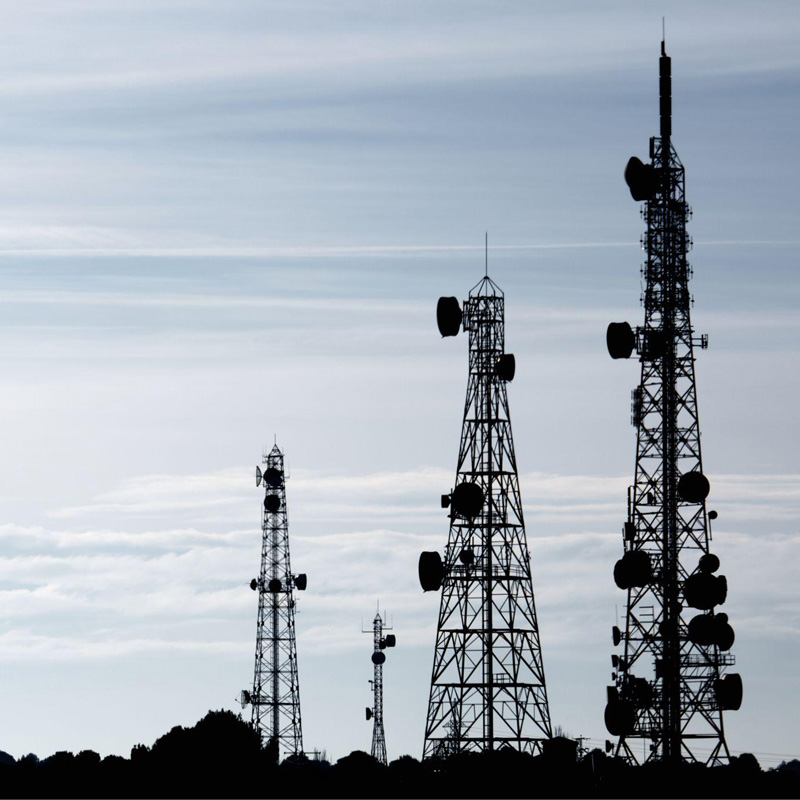
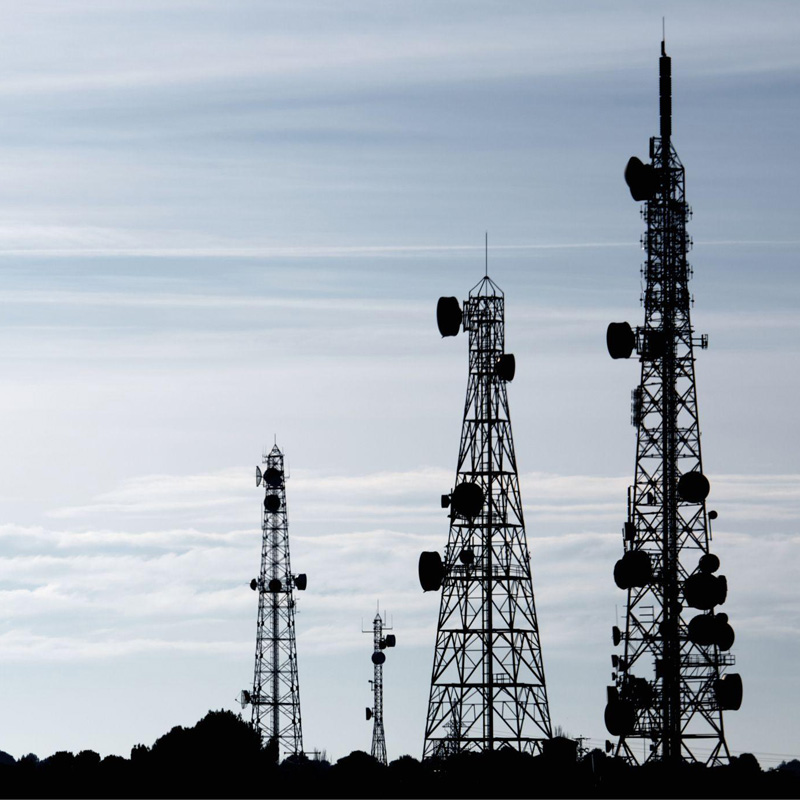
    Mumbai: The Telecom Regulatory Authority of India (Trai) will soon come up with recommendations to facilitate telecom connectivity and for easing out network rollout issues being faced by telecom companies, especially with regard to 5G.  

    During a virtual event organised by Digital Infrastructure Providers Association (DIPA), Trai chairman PD Vaghela said that it will be difficult to get 5G coverage inside buildings as signals will be transmitted on high frequencies which cover very small distances.

    “Holistic approach will be required to ensure availability of digital infrastructure in building complexes, that also in a non-discriminate manner. There is a huge problem in getting access to the buildings by the infrastructure providers, telecom service providers and other players. We have already prepared a consultation paper and very soon we will come out with a recommendation. This will require a change in by-laws and working with the states very closely,” stated Vaghela.

    Minister of state for telecom Devusinh Chauhan added that digital connectivity empowers people on the ground, and the government is committed to supporting telecom infrastructure companies in this context. “Realising the importance of connectivity, states will also give precedence to connectivity over revenues in the near future,” he further said.

    Telecom secretary K Rajaraman said that the recently announced telecom reforms are a step towards bringing the cost of operations of telecom services in the country further down.

    The telecom department said that it is working towards resolving network rollout issues being faced by telecom companies, as well as enhancing the ease of doing business in the sector.

  • Broadcasters huddle up, as 5G roll-out plan gathers pace

    Broadcasters huddle up, as 5G roll-out plan gathers pace

    Mumbai: Just as the industry was gearing up to welcome 2022, the Telecom Regulatory Authority of India (Trai) set the ball rolling on the 5G roll-out in India. The next wave of disruption in the telecom sector is set to hit 13 cities in the first phase: Gurugram, Bengaluru, Kolkata, Mumbai, Chandigarh, Delhi, Jamnagar, Ahmedabad, Chennai, Hyderabad, Lucknow, Pune, and Gandhi Nagar.

    The auctions are likely to be held in mid-2022 following the Telcom department’s request for a recommendation on modalities such as reserve price, band plan, block size, and the quantum of spectrum. But amid all this, the broadcasters’ concerns continue to escalate, with apprehensions regarding a potential spectrum clash with 5G.

    5G Vs Broadcasters

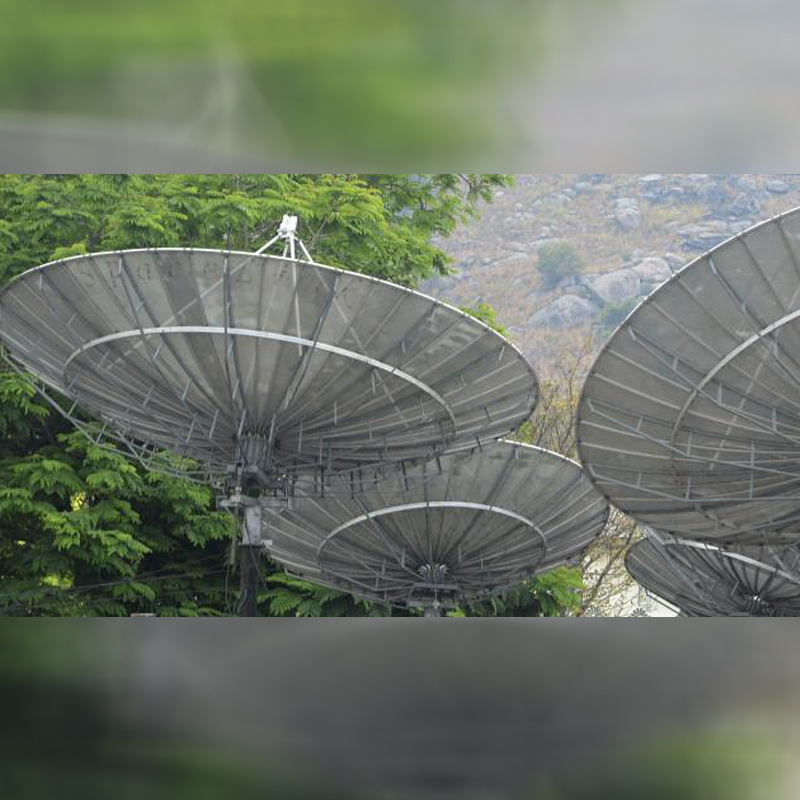
    Airwaves in several bands including 526-698 MHz, 700 MHz, 800MHz, 900 MHz, 1800 MHz, 2100 MHz, 2300 MHz, 2500 MHz, 3300-3670 MHz, and 24.25-28.5 GHz have been identified for 5G auctions in India, whereas downlinks by all broadcasters intended for reception by MSOs are in the band of 3700-4200 MHz as prescribed by the International Telecommunication Union (ITU), and are also governed by the downlink policy by the government. Over 600 licensed satellite channels in India operate in this band.

    Ever since the 5G trials started in India in June 2021, broadcasters who claim to have faced interference on downlink frequencies during that period have been raising the issue with the MIB, DoT, and WPC (Wireless Planning and Coordination Wing of DoT), and the Trai. There are concerns regarding potential interference due to the larger C band allocation to 5G and the limited guard band of 30 MHz between the two services.

    The current upper limit of the National Frequency Allocation Plan 2018 is 3600 MHz. “A guard band of 100 MHz is ideal,” broadcasters say. They further contend that the proposed revision of NFAP-18 to include new bands for 5G use by DOT’s arm WPC may even stretch beyond 3670 MHz to 3800 MHz. This could lead to serious disruption of satellite services for media and broadcast in the 3700-4000 MHz band.

    Prasar Bharati joins the chorus against 5G

    Joining the chorus, Prasar Bharati recently raised objections to the auctioning of the 526-582 MHz frequency band that is being used by Doordarshan for providing terrestrial TV broadcasting. According to media reports, the public broadcaster argued that airwaves in this frequency range are required for expansion and modernisation of its services. Prasar Bharati has told Trai that “availability of spectrum is very crucial for planning DD TV Transmitters. Thus, the decision to use frequency band 470-698 for IMT purpose can be taken only after finalisation of terrestrial TV services by Doordarshan or other private broadcasters.”

    “Many analogue, digital-ready and digital terrestrial TV transmitters are operating in the band. Also, digital-ready transmitters are under installation in the Union Territory of Jammu & Kashmir for which the wireless planning & coordination wing (WPC) has provided for in this band only,” it added.

    Another hurdle on the way: Field trials

    Private broadcasters have also expressed displeasure about field trials of 5G services without notifying the framework – specifically the study of emission and interference on already existing C Band satellite service, non-involvement of incumbent users of the C-band who have been using the satellites for over 30 years in the trials, lack of study on the use of band pass filters at cable headends as well as no consideration of their funding, non-determination of emission safeguards and monitoring architecture for 5G emitting towers, and absence of potential options which can be implemented immediately.  

    As a solution, they have suggested the use of alternative bands for 5G – an option unavailable for C&S services. Based on trial information available with the regulator and DoT, they have further urged the authorised bodies to recommend and publish the specifications for appropriate Band Pass Filters to be used by MSOs, IPTV, and HITs operators per downlink chain for receiving satellite TV signals.

    In order to compensate for the lower availability of C-band transponder capacity, the regulators have been requested to allow broadcasters to use foreign satellites without seeking any clarification from them. Fast track approval for newer compression technologies such as HEVC or H.265 that use lower transponder capacity in comparison to present MPEG4 bandwidth recommendation without any reduction in the quality of the television channels has also been sought. The minimum bandwidth recommended for approval by all regulatory bodies for HEVC is 4Mbps per HD channel and 1.5Mbps per SD channel.

    The television broadcasting and distribution industries in India are facing major disruption under the new tariff regime. Even though they welcome the launch of 5G, which holds great opportunity for the M&E sector in the era of convergence, the smaller players have argued for government intervention in the form of subsidies if they have to move to a higher or alternative frequency.

  • I&B ministry forms Joint Working Group for audience measurement sampling

    I&B ministry forms Joint Working Group for audience measurement sampling

    Mumbai: The ministry of information and broadcasting (MIB) has formed a Joint Working Group to formulate a mandate for exploring data capturing capabilities in Set Top Boxes (STBs) for audience measurement sampling.

    With Prasar Bharti CEO Shashi Shekhar Vempati as the chairman and DTH association president Harit Nagpal as a member, the joint working group will have one representative each from MeitY, BIS, Barc India, and AIDCF. It will submit its report to the I&B ministry within the next four months.

    The current guidelines for the TV Rating Agencies prescribe the use of panel homes, drawn by establishment survey and representative of the TV viewing population, for carrying out the Audience measurement. However, the latest recommendations from the Telecom Regulatory Authority of India (Trai) and TRP committee headed by Prasar Bharati CEO suggested combining traditional sample-based statistical approaches with big data approaches like Return Path Data in STBS.

    The new working group has been entrusted to study different aspects of the data capturing including Return Path Data (RPD) in the context of the audience measurement, international practices, and security of the viewership data. “It will also study successful global best practices in RPD, like that of Canada, the models undertaken by Barc India and other independent experiments by DTH operators and other relevant stakeholders,” said the ministry on Wednesday.

    The Group will specify minimum standards for RPD capable STBS, SOPs for certification and audit of the same, and specify common protocols, data standards, and modifications to current rating methodology so that data from RpD capable STBS could be integrated into the current TV ratings system.

    Additionally, it will specify minimum standards for any smartphone-based Apps to augment the above proposed RPD system for integration into the current TV ratings.

    -Specify SOPs for certification and audit of the same.

    -Evolve a consensus for how such different data sets including RpD/ smartphone-based data collection will be priced/ costs shared within the framework of the TV ratings system.

    -Specify consent-based privacy framework to govern all such data collection and use within TV ratings.

    -Establish timelines for rollout of above with a clear roadmap to guide all stakeholders while laying out points of responsibility for the same. 

  • DTH operators lost 0.97 million subscribers at the end of September 2021: Trai

    DTH operators lost 0.97 million subscribers at the end of September 2021: Trai

    Mumbai: The number of active subscribers with pay DTH operators decreased from 69.86 million at the end of June to 68.89 million by the end of September, according to the latest Telecom Regulatory Authority of India (Trai) data. This is in addition to the subscribers of DTH Free Dish.

    The top four DTH players are Tata Sky with 33.34 per cent, followed by Bharti Telemedia at 26.11 per cent, Dish TV India at 22.65 per cent and Sun Direct at 17.91 per cent. Bharti Telemedia and Sun Direct’s share increased whereas Tata Sky and Dish TV India’s share decreased over the previous quarter.

    The total number of private satellite TV channels decreased from 915 in the previous quarter to 906 channels for uplinking only, downlinking only and both uplinking and downlinking. The number of pay TV channels increased from 346 to 348 which include 252 SD and 96 HD satellite pay TV channels.

    There are 1745 multi-system operators registered with the I&B ministry out of which 12 MSOs and one Hits (headend-in-the-sky) operator have a subscriber base greater than one million.

    The number of internet subscribers increased from 833.71 million to 834.29 million out of which 794.88 million were broadband subscribers and 39.41 million were narrowband subscribers. Wired internet subscribers increased from 23.58 million to 24.47 million. Out of total internet subscribers, 96.91 per cent are using mobile devices to access the internet.

    The total number of VSAT subscribers increased from 289,392 to 289,557 quarter on quarter. Hughes Communications continues to be the market leader with 45.84 per cent share in VSAT with a subscriber base of 132,727 followed by Nelco at 75,535. Hughes added the maximum number of VSAT subscribers (3003) during the quarter. Bharti Airtel, BSNL and Infotel Satcom have registered a decline in their VSAT subscribers during the quarter. It should be noted that Hughes Communications and Bharti Airtel have combined the VSAT businesses of both companies in a new joint venture announced recently.

    The average revenue per user of wireless subscribers in September stood at Rs 108.16 with revenue from data usage at Rs 97.36.

  • NTO 2.0: Sony revises tariffs in new RIO effective 1 April

    NTO 2.0: Sony revises tariffs in new RIO effective 1 April

    Mumbai: Sony Pictures Networks India (SPNI) has published its new reference interconnect offer in compliance with the Telecom Regulatory Authority of India (Trai) new tariff order (NTO) 2.0 effective from 1 April.

    The broadcaster owns and operates 16 channels and has revised tariffs for its Hindi GECs, sports, Hindi movie, kids and infotainment channels. 

    Previously priced at Rs 19, SPNI has revised the MRP of its Hindi GECs Sony SAB (Rs 23) and Sony Entertainment Television (Rs 24), and sports channels Sony Six (Rs 20), Sony Ten 1 (Rs 20), Sony Ten 2 (Rs 20), Sony Ten 3 (Rs 12) and Sony Ten 4 (Rs 12). Earlier priced at Rs 2, it has hiked the tariffs for its kids’ channel Sony Yay! and infotainment channel Sony BBC Earth to Rs 3. It has also slashed the pricing of its Hindi movie channel Set Max from Rs 15 to Rs 12.  

    As per NTO 2.0 regulations, Trai mandated that a channels’ MRP must not exceed Rs 12 for it to be included in any bouquet.

  • NTO 2.0: Indiacast publishes new RIO effective from 1 April

    NTO 2.0: Indiacast publishes new RIO effective from 1 April

    Mumbai: Indiacast, the distribution company jointly owned by TV18 and Viacom18, has published its new reference interconnect offer (RIO) in compliance with the Telecom Regulatory Authority of India’s (Trai) new tariff order (NTO) 2.0 effective from 1 April.

    The revised RIO contains the a-la-carte and bouquet prices of 59 channels owned and operated by Network18, TV18, and Viacom18. The RIO contains the MRP of the new sports channels launched by Viacom18 tentatively named Sports18 and Sports18 HD and priced at Rs 12.

    As per clause 23 (a) of the RIO, “The availability of Sports18 and Sports18 HD channels (Sports18 channels), as well as bouquets comprising of Sports18 channels, are dependent on introduction of Sports18 channels.”

    “In case TV18 decides not to introduce and/or there are any changes in the introduction date of Sports18 channels, then intimation of the same will be sent by TV18 to affiliate in writing,” it added.

    “In case of any change in introduction date of Sports18 channels, then the availability of Sports18 channels as well as bouquets comprising of Sports18 channels shall be effective the last intimated date of introduction of Sports18 channels.”

    “Further, until the introduction of Sports18 channels, the validity of the remainder provisions of this agreement shall not be affected and any stipulations so far as they are related to Sports18 channels will come into force only from the date of introduction of the Sports18 channels.”  

    Viacom18 channels, including their flagship GECs – Colors (Rs 21), Colors HD (Rs 23); their regional language channels – Colors Kannada (Rs 21), Colors Kannada HD (Rs 23), and Colors Marathi HD (Rs 17) will not be included in any bouquet. As per NTO 2.0, Trai mandated that a channels’ MRP must not exceed Rs 12 for it to be included in any bouquet. The broadcaster has also intimated affiliates its free-to-air channel Colors Cineplex Bollywood will be converted into a pay channel effective from 1 April and will be priced at Rs 0.10.

  • Trai asks Cable TV operators to withdraw legal notice

    Trai asks Cable TV operators to withdraw legal notice

    Mumbai: The Telecom Regulatory Authority of India (Trai) on Tuesday wrote to the Tamil Nadu Digital Cable TV Operators Association to withdraw its legal notice filed through Utkrishtha Law Agency seeking directions for pay channels not to inflate the prices of Cable TV channels.

    In a letter dated 4 January, the regulatory body said it had already issued a letter to broadcasters, and distribution platform operators in November 2021 and asked them to report to the authority any change in name, nature, language, MRP per month of channels, the composition of the bouquets of channels as per the New Regulatory Framework 2020 by 31 December 2021. It had also asked them to simultaneously publish such information on their websites.

    The plan was to provide enough time for the migration of consumers to the New Regulatory Framework, 2020 to avoid any inconvenience to consumers. The broadcasters who had already submitted their Reference Interconnect Offers (RIOs) in compliance of the New Regulatory Framework, 2020 were also asked to revise their RIOs by 31 December 2021. Further, it informed the Association that there was no permission granted by MIB for OTT platforms at present, therefore, tariff orders issued by Trai are not applicable to OTT platforms.

    “In light of this, broadcasters including Star India has intimated about deferment of all changes made in the RIO filed on 15 October 2021. Therefore, you are advised to withdraw the legal notice against Trai,” it wrote.

    The Association had filed the legal notice last year, after several TV channels revised their prices, in compliance with Trai’s amended tariff order. The regulatory body had later extended the timeline for implementation of the new order to 1 April, 2022.

  • I&B ministry lays down guidelines for infrastructure sharing by MSOs

    I&B ministry lays down guidelines for infrastructure sharing by MSOs

    Mumbai: The ministry of information and broadcasting (I&B) has given its go-ahead to the multi-system operators (MSOs) to share infrastructure with other MSOs on a voluntary basis. As per the guidelines released by the ministry, the responsibility for compliance with guidelines and other regulations will lie with each MSO independently.

    According to the guidelines, each MSO will have to ensure encryption of signals and addressability of subscribers in all circumstances, and provide access of all the systems and the networks, used to provide broadcasting distribution network services, to the concerned broadcasters for audit as per the regulations and the authorised officers of the government and their representatives whenever demanded.

    The sharing of head-end used for cable TV services & transport streams transmitting signals of TV channels, among MSOs is permitted on a voluntary basis, said the ministry.

    Any MSO willing to share its transport stream of TV channels with another MSO should ensure that the latter has valid written interconnection agreements with concerned broadcasters for distribution of pay TV channels to the subscribers. They may share the common hardware for their SMS applications. But, the details of such arrangements should be reported to the MIB, the Trai, and the concerned broadcasters, 30 days in advance.

    As per the guidelines:

    ·Each MSO shall be accountable for ensuring the integrity and security of the CAS and the SMS data pertaining to such distributor.

    ·Each MSO shall maintain the backup of transaction logs and data of the CAS and the SMS, on a near real-time basis, for at least the past two years, at any point in time, on a secondary storage device.

    ·Each MSO shall undertake to provide access of the CAS and the SMS, used to provide broadcasting distribution network services, to the concerned broadcasters for the purpose of audit as per the regulations and the authorised officers of the government and their representatives whenever demanded.

    ·Each MSO sharing its infrastructure and transport streams of TV channels with other MSO, should set up systems and processes which ensure that the broadcasters are able to exercise their right of disconnection of signals in case of default of payment or due to any other reason, in terms of the interconnection agreement entered into between the broadcaster and the distributor and the relevant regulations in place.

    Under the new guidelines, the new applicant and existing licensee will jointly submit a detailed proposal for infrastructure sharing giving details of the infrastructure proposed to be shared and in the manner, infrastructure is proposed to be shared as well as roles and responsibilities of each to MIB. “The adherence and compliance to all the provisions of the rules and guidelines issued by MIB for grant of license to the MSO operator will be the responsibility of the existing operator and the new applicant proposing to share the infrastructure to the extent as may be required / applicable individually,” it added.