Tag: TRAI Tariff Order

  • NTO ambiguity resulting in ad rev drop for small broadcasters, niche channels

    NTO ambiguity resulting in ad rev drop for small broadcasters, niche channels

    MUMBAI: Just when it felt like the dust on the NTO had settled, Telecom Regulatory Authority of India (TRAI) came out with yet another consultation paper reviewing the order, seeking more fundamental changes in channel pricing and bouquet formation. As clarified by TRAI chairman RS Sharma, while the regulatory body does not plan to revise the pricing framework, it is surely looking at fine-tuning the existing parameters as consumers are facing certain issues because of the current set of rules.

    This has once again left a big question mark on the fate of broadcasters and might have a bigger impact on advertising revenues as well.

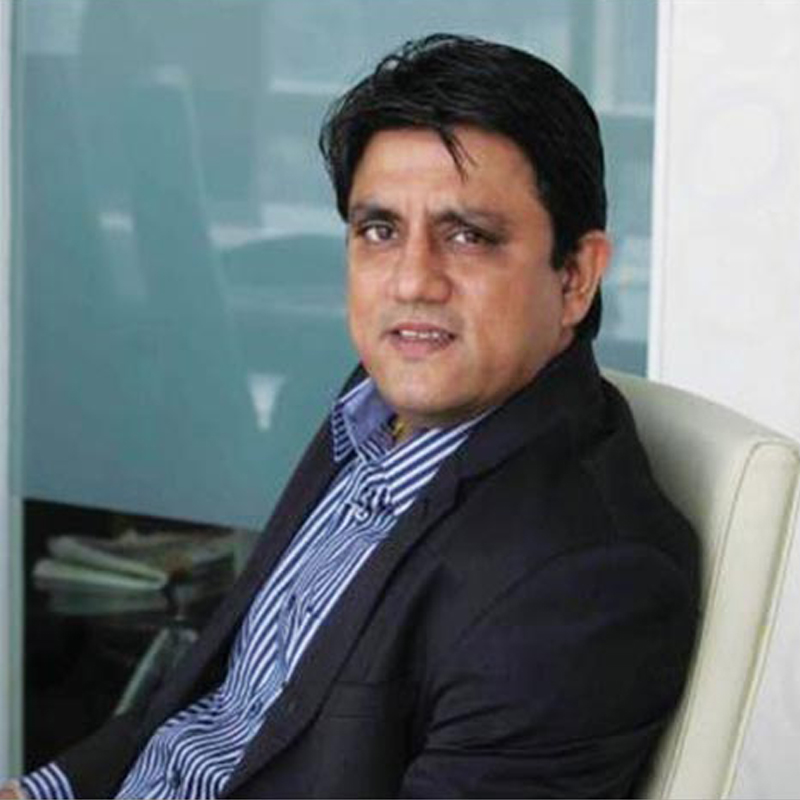
    Y&A Collective co-founder S Yesudas told Indiantelevision.com that this uncertainty over the tariff order and channel pricing will impact nice channels the most, resulting into a dip in their revenue.

    He said, “The biggest sufferers will be niche channels, particularly those which are mid and bottom-rung. Even as the power to choose rests with consumers and the general mindset of sensitivity for the paid-for options resulting in those always taking precedence, the snacking-in viewership will reduce.  Between the two time periods, pre-new tariff order to July 19, there’s apparently already a drop of approximately 7 per cent of the total TV impressions. This will consequently mean revenue reduction.”

    HyperCollective founder and CCO KV Sridhar (Pops) also agreed that the past few months have seen a dip in the revenues for broadcasters, barring a few big ones, because of many reasons like the economic slowdown and growth of digital bouquets, along with the NTO.

    “The NTO is putting a lot of pressure on the broadcasters and some easing out is required, maybe not so suddenly but definitely. The bigger groups like Star and Sony can survive in the turmoil, but it is difficult for smaller groups, especially independent channels and some regional channels,” he said.

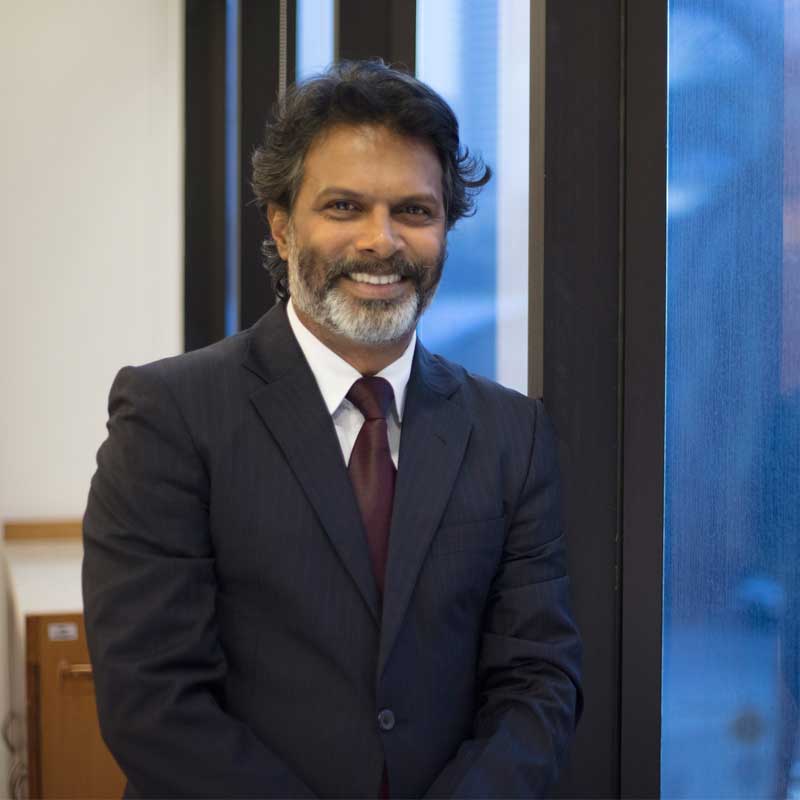
    TheSmallBigIdea CEO & co-founder Harikrishnan Pillai shared that this ambiguity over the tariff might result in advertisers taking their money to digital platforms than spending on television.

    He said, “One needs to reckon that any industry with fluttering policy fuels questions on its stability. While TV broadcasting is the most robust of all mediums, the effect of such policy-based tremors cannot be ignored. Especially by smaller TV channels, which already are fighting for eyeballs. It is likely that they might be ignored by the advertiser for other lucrative digital options. Investment into fresh content might take a back seat, which might further make it difficult for certain channels to attract advertisers on the back of new shows."

    Sridhar also noted that the loyalty of the consumer is with the content and not the channel. If they can access the same content on OTT platforms or other media, they will not want to spend on purchasing the channels.

    He further elaborated, “Advertisers are interested in viewership only. Also, they would play their ads during the content that is relevant to them. They are not going to place an ad on your channel even if you offer cheaper slots, or guarantee greater reach. Every advertiser is looking for relevant content now. If the content is not good, your channel will drop. OTT, therefore, is a big hindrance for the broadcasters in getting revenue.”

    While the tariff order seems to be generating problems for the broadcasters, Yesudas feels that it will be beneficial for the marketers and advertisers. He said, “Marketing and adverting industry will only stand to gain from this as there will be further consolidation of the viewership pie.  While the top-rung channels will find a place in almost all media plans (with reduced  cost per contact) the mid-and bottom-rung channels which no longer can only stay focused on transactional and passive advertising time selling will also embrace true innovation in helping clients solve certain marketing challenges within a segment of consumers, they can influence.”

  • Industry gives mixed views on BARC India’s decision to separate pay and FTA viewership

    Industry gives mixed views on BARC India’s decision to separate pay and FTA viewership

    MUMBAI: BARC India’s decision to split its reportage of pay and FTA viewership has received mixed reviews from the industry. While some believe that this will be beneficial to both broadcasters and advertisers in channelising their resources, others believe that it has no meaningful objective.

    Welcoming the move by BARC India, Times Network president – strategy Vivek Srivastava said, “It aids both broadcaster and advertisers to better channelise their resources. Advertisers need audiences who can spend and there is no point paying for audiences who are on the free platform and don't have the propensity to consume. Advertisers wanting premium audiences, typically news and English, can now better optimise the price they pay to different platforms and not waste marketing monies on non-premium audience from free platforms. Consequently, broadcasters will also stop over-relying on one platform just to get numbers and premium content will get its due.”

    From week 27 of 2019, BARC India decided to report viewership from free and pay platform separately. The new variables are offered over and above the current urban and rural cuts that are reported by BARC India. It is made available to all the subscribers for planning and analysis through its proprietary BARC Media Workstation Software and is also published on the website for select genres.

    News Nation Network president – sales & marketing Abhay Ojha is of the view that the decision could be of benefit to all stakeholders. He said, “From a broadcaster’s perspective, we can better optimise our organisational resources towards strategising GRP requirements as per the revenue strategy of the network. Alternatively, a planner in an agency can further zero in on the quality of GRP required, depending upon their brand’s core competence and DPOs will get better clarity on ROI of paid and FTA channels. Therefore, holistically it’s a welcome move.”

    On the other hand, Ojha noted that for Hindi news channels, it hardly mattered which platform was giving viewership, because national Hindi news channels are most widely distributed and are very dynamic, depending on everyday events. He further pointed out, “Most of the news channels are now being taken for frequency builders rather than reach builders, therefore the pie of revenue is mostly leftover after consumption on GEC, movies, niche, vernacular channels, etc.”

    While announcing its move, BARC India CEO Partho Dasgupta had said, “There has been a strong demand from the market for separate reporting of viewership from homes with pay and free connection. We have taken the market feedback in consideration with the changes that have come about in the ecosystem post the implementation of the TRAI tariff order. We believe this move is a step in the right direction to empower the industry in understanding the distinct consumption patterns of this segment and plan more effectively.”

    BARC believes that reporting viewership from pay and free platform separately would enable focussed targeting. Advertisers can plan more effectively by placing insertions on the channels available on their platforms in the respective regions. It will also enable the broadcasters to make more informed decisions related to content and distribution.

    A broadcaster on the condition of anonymity said, “DD Free Dish has a presence across markets both in urban and rural and across demographics. Segregation of free and pay by a single platform will suit a few networks. It has no meaningful objective that will help the advertiser or broadcaster.”

    Dentsu Network, SVP Mayank Bhatnagar said, “From a media planner’s view my audiences are watching a certain set of channels whether they are in pay or FTA platform. This will help us to look at data in a slightly different manner and we will get one more cut now because earlier there was only urban and rural now there are pay and FTA platforms also. It will impact the media planner’s life because they will continue to chase TG which is targeted. From a broadcaster’s point of view, it will give one more dimension in the data cuts to see how they are performing.”

    He further said, “Lot of advertisers are looking at FTA channels and they are performing well. So if I have to do a relative comparison only on the pay platform, it will be easier for me to check which are performing well there and I can do a related shift. But otherwise, it’s not going to make any major changes.”

    With time, the industry will be able to make better estimations as to the effectiveness of this move.

  • ZEEL’s Siju Prabhakaran on TRAI tariff order impact, regional growth and rural viewership

    ZEEL’s Siju Prabhakaran on TRAI tariff order impact, regional growth and rural viewership

    MUMBAI: The situation created by the new TRAI tariff order (NTO) has become a reality check for the whole television industry. Big networks could earlier ensure that several channels are clubbed together by the DPO but now with power in the hands of the consumer, each channel has to fight hard for every TV set. Indiantelevision.com caught up with Zee Entertainment Enterprises Ltd (ZEEL) south cluster head and Zee Tamil business head Siju Prabhakaran, discussing the impact of the regime on its regional cluster’s viewership and advertising pattern, the scope of regional TV viewing against mushrooming OTT platforms and others.

    He is of the opinion that unique content will always get your channel to be picked. Breaking the myth that rural audiences aren’t engaged, Prabhakaran says that, in fact, rural viewers are more loyal than urban viewers.

    Edited Excerpts: 

    Could you elaborate a bit about the performance of the south cluster channels? Has the viewership increased or decreased?

    We, as a network, have a healthy growth this year. We have our strong number 2 channel in Tamil which is Zee Tamil. We have also seen a huge growth in fiction. Even in Karnataka, Zee Kannada is the number 1 channel this year. That is a big shift from last year where we were in second place and this has come on the back of great fiction and non-fiction content where we have always been very strong. Part of the growth of the cluster has also been possible because of the launch of Zee Keralam.

    How has been the impact on the viewership pattern due to the implementation of the new TRAI tariff order?

    As per BARC’s rules, we are not in a position to quote number. Having said that, we do have an advantage from the TRAI tariff order that the consumers select the channel that they want and they pay for only those channels. The making is in their hands, so the brands and channels which have been built on the back of great content, always get picked. We do see Zee channels being picked.

    What do you think is the impact of the TRAI tariff order on the whole regional space?

    We know for a fact that India is a country of many languages and if you give good content in their own language, they would rather prefer that. To that extent, regional content is growing across India and in the southern regional space there has been a great penetration of TV. This growth will have an impact on advertising and subscription because viewers are willing to watch and pay for it. But the other aspect is that we need to improve the advertising rates in the regional space.

    Several consumers had complained of a blackout due to the implementation of NTO. Did that affect you in any form?

    There were obviously timelines set and there were many extensions that happened but the whole transition for the regional segment has been very smooth. There wasn’t any blackout as such, there must have been a few issues here and there but consumers have been asking for the in-demand channels.

    Will this new regime also affect your content strategy? Especially since bills are rising and consumers could be forced to unsubscribe some channels.

    While the regime has come now, consumer focus was always there because in this business consumers’ love for content is what we want. Yes, it is more responsibility on content providers and broadcasters and for that we are continuously keeping an ear to the ground to understand consumer preferences and changes so that we can make our content strategy on the basis of that.

    It was reported that the Adex on Hindi GECs reduced to 9 per cent in FY18 as compared to an increase of 5.4 per cent in regional channels. What, according to you, is the reason?

    There are two aspects to it. First is the huge quantity of content that is now being offered in regional versus previously where English or Hindi was the focus. Second is the quality of content. The formats, the best of storytelling and films are available in regional markets and the scale is only improving. The quality of making is also equal to some national market shows. Even OTT platforms are making good regional content today.

    As you said, OTT platforms are constantly investing in regional content. Does that add more pressure on regional TV? How is regional TV competing with OTT?

    If you look at the viewership data, the time spent on TV is growing. TV as a medium is only growing. But having said that, OTT is giving a lot of original content and content that is available on TV. So the good way to look at it is that both will grow at a different level. Maybe since it’s a new space and it will grow at a much faster pace, but TV is a more stabilised medium.

    In rural areas, do you think consumers will be willing to pay for the regional channels? How are you attracting these rural audiences?

    Yes! In every region, there is always an upper hand rural market and conventional understanding is that rural areas are more rooted in language culture. If we are giving content that resonates with the rural audience, they are more loyal than urban audiences.

    With IPL ongoing and with elections around the corner, do you think that the viewership pattern for the regional segment is going to be affected? Any plans to alter your programming line-up?

    IPL has been going on for more than 10 years now so broadcasters know their timings too. Elections are also a periodic phenomenon that comes after 4-5 years. One needs to understand that most of the channels are habit driven channels and they are the part and parcel of daily entertainment. We do have launches planned across our channels. So these things don’t matter as such.

  • TRAI tariff order shakes up pay and FTA channel uptake

    TRAI tariff order shakes up pay and FTA channel uptake

    MUMBAI: Six weeks into the new tariff order (NTO) and the television landscape is changing, says Chrome data analytics and media report. It says that 96.5 per cent of the consumers in India are aware of the NTO, with 83.6 per cent coming to know about it via television.

    The report also highlighted the packages that the consumers have chosen. It mentioned that 50 per cent has gone with the DPO-defined packages, packages defined by operators, leaving the balance 50 per cent split into two components– 25 per cent with packages from broadcasters and the rest from a la carte package. 26 per cent has exercised both, which is a combination of a DPO package along with some kinds of a la carte, 2 per cent don't remember what they exercised. The report signalled that the consumers felt that they were earlier paying for content that they were not willingly subscribing to. So that leaves the tariff order in the right spirit of transparency where consumers are getting an idea of what each channel and each bouquet costs and they feel empowered to pick what they want.

    Specifying about the reach or Chrome connectivity (OTS faired over the last six weeks), while broadly dissected into pay that observed a downfall and FTA which witnessing a hike. On one hand, pay channels with an average national connectivity of 75 per cent went down to an average of 51 per cent. FTA on the other hand, gained from 21 per cent to 26 which is a 23 per cent gain. 

    The report added that the operators right now are competing for consumers by providing the maximum number of channels within the fixed one hundred and thirty rupees. DTH –Tata Sky, Dish, Airtel – Average of 250 channels in the network capacity fee.

    Networks offering maximum channels within their Base pack

    HEAD END

    TOTAL FTA RUNNING

    TOTAL PAY RUNNING

    VISION POINT DIGITAL

    277

    23

    GAJANAN CABLE/NXT DIGITAL

    274

    180

    NXT DIGITAL

    264

    37

    AFTAB CABLE VISION

    230

    4

    JAK COMMUNICATION

    219

    48

    ATHULYA INFO MEDIA PVT. LTD.

    216

    14

    NXT DIGITAL

    190

    37

    CHIKHALI CABLE NETWORK

    186

    74

    KBC DIGITAL

    185

    110

    CRYSTAL CABLE

    185

    46

    PUNE CABLE SYSTEM

    185

    42

    VK DIGITAL NETWORK

    179

    71

    NXT DIGITAL

    177

    38

    MCBS DIGITAL

    176

    100

    ACT DIGITAL

    175

    32

    SITI DIGITAL

    174

    125

    KABLE FIRST DIGITAL

    173

    235

    GRAND GUMBER

    172

    8

    TATA SKY

    262

    135

    DISH TV

    202

    145

    AIRTEL DTH

    195

    125

    Source: Chrome LIVE, ALL India (Urban), WK 10, 2019

    State wise Package offtake status

    MARKET

    100 FTA CHANNELS RUNNING ON NETWORKS

    MORE THAN 100 FTA CHANNELS RUNNING ON NETWORKS

    LESS THAN 100 FTA CHANNELS RUNNING ON NETWORKS

    BIHAR

    17%

    67%

    17%

    GUJ, D&D & DNH

    9%

    55%

    36%

    KERALA

    3%

    72%

    25%

    MADHYA PRADESH

    5%

    31%

    64%

    MAH & GOA

    3%

    44%

    53%

    UP & UTTARAKHAND

    2%

    25%

    74%

    All INDIA

    2%

    46%

    52%


    MARKET

    100 FTA CHANNELS RUNNING ON NETWORKS

    MORE THAN 100 FTA CHANNELS RUNNING ON NETWORKS

    LESS THAN 100 FTA CHANNELS RUNNING ON NETWORKS

    AP & TELANGANA

    0%

    38%

    62%

    CHHATTISGARH

    0%

    60%

    40%

    DELHI

    0%

    42%

    58%

    HHPJ&K

    0%

    20%

    80%

    JHARKHAND

    0%

    17%

    83%

    KARNATAKA

    0%

    50%

    50%

    KOLKATA

    0%

    83%

    17%

    ODISHA

    0%

    53%

    47%

    PUN & CHA

    0%

    100%

    0%

    RAJASTHAN

    0%

    50%

    50%

    TN & PONDICHERRY

    0%

    100%

    0%

    WEST BENGAL

    0%

    89%

    11%

    Source: Chrome LIVE, ALL India (Urban), WK 10, 2019

    According to Chrome DM, in the long term, there is a price-quantity relationship which is already happening with operators putting in maximum number of channels to get maximum subscribers. On the broadcasting level, companies are graduating from pure distribution, lobbying driven business to consumer marketing organisations.

  • BARC responds after TRAI directive on ratings, TV viewership

    BARC responds after TRAI directive on ratings, TV viewership

    MUMBAI: After noticing that BARC India had stopped publishing TV viewership data on its website after the implementation of the new tariff order, the Telecom Regulatory Authority of India (TRAI), in a sternly worded letter, warned it to publish data for week ending 8 February by 25 February or else face consequences under the TRAI Act.

    BARC India has now released its statement on the same. It says, “To set the record straight, BARC India has not stopped publishing its viewership data. Every week, at 11 am sharp, all our subscribers have been getting all India weekly data without a hitch for the last 175 weeks, including the last 2 weeks that correspond to the NTO transition.

    “However, we have published data of last 2 weeks with the caveat that there are changes taking place on ground due to NTO rollout due to which viewership numbers will be volatile during the transition period. The India Society of Advertisers (ISA) too has advised its members that our data should not be used for media planning and buying in the transition period.

    “We also publish a limited amount of data on our website – intended only for larger benefit and information of trade and media. We temporarily held back release of this select headline data on our website. We did this purely to avoid misrepresentation of such data (Top 5 channels/programs etc) without looking at the larger context of NTO rollout and resulting volatility which could be misleading, lead to confusion and be counter-productive.

    “Our position is also aligned to Ministry of Information and Broadcasting Guidelines that govern us. The guidelines clearly say that “…data generated by the rating agency be made available, on paid basis, to all interested stakeholders…”. And “Sharing of the data/reports with a third party or in public domain be allowed subject to the fair usage policy of the rating agency. Such fair usage policy shall be provided on the website of the rating agency.”

    “TRAI has advised us that we should also consider resuming the display of top channels and programs data on our website. We are taking a considered view on that post consultation with our stakeholders.”

  • GEC, regional channels’ viewership to dip further this year due to IPL, Elections

    GEC, regional channels’ viewership to dip further this year due to IPL, Elections

    MUMBAI: This summer, India is set to witness two major events, the Indian Premier League (IPL) and the much awaited General Elections, clash for votes and viewership. For the broadcast industry, those with general entertainment channels (GECs) are likely to see even further dip in eyeballs because of this.

    With Star India introducing several regional feeds for its first edition of IPL last year, the regional channels also saw a slight change. As per reports, viewership share of regional language telecast was reported to be 23 per cent followed by English with 22 per cent and Hindi dominating with 55 per cent.

    IPL telecast has also shown significant impact on viewing habits for other genres. While mapping viewership of various genres during IPL and non-IPL weeks, it was found that the share of the GEC genre declined marginally in all 3 years under review (2016-18), as viewers tuned in to IPL matches during primetime.

    According to Viacom18 Hindi mass entertainment and kids TV network head Nina Elavia Jaipuria, these events, no doubt, work well with audiences but that doesn’t mean that people stop watching GECs. She said, “What happens in any country when there is large mass viewership, there is one television, and the viewership time gets divided. But like I told you that the power of content is so much that there is no viewer who is going to stay without television for two months and without their characters. It’s the eleventh IPL and Hindi GECs have always done well. It is not that people stop watching GECs. So to my mind, there will be some division of time and little more time given to different genres of channels. But people will not stop watching their favourite shows and characters.” She is confident that Viacom18 has a very strong line up and there’s no reason that it will be losing viewership on the channels.

    Zee TV business head Aparna Bhosle claimed that Zee saw growth during IPL last year. She added that when the content offering is strong, viewership invariably grows. Media planners spoke to Indiantelevision.com and said that the loss of viewership will be little more than the previous year. On the contrary, while reports suggested that regional channels are expected to grow double digits, this year regional broadcasters felt that there could be a decrease.

    Fakt Marathi Enterr10 MD Shirish Pattanshetty said that it wouldn’t be the case with Hindi GECs as against regional channels. “Trend shows that regional could see 8 to 12 per cent decline,” he said.

    According to Dishum Broadcasting COO Partha Dey, the viewership on news and sports genre will definitely be high but rooted entertainment and spike programming on regional channels will cushion much of the impact.

    Talking about the growth of viewership on television, the impressions for IPL 2018 witnessed a growth of 41 per cent over the 2016 season and 16 per cent over the 2017 season. Even the average time spent went from 28 minutes in 2016 to 34 minutes in 2018. 

    Stratagem Media founder-director Sundeep Nagpal said that the loss of viewership can be expected to be a little more pronounced this year. Moreover, Carat Media SVP Mayank Bhatnagar explained that IPL viewership has been growing year-on-year. He added, “In 2018, GEC and movies genres’ viewership drop was 3-5 per cent. This year, there are back-to-back cricket events with IPL first and then the World Cup. So it’s imperative to have counter strategies to mitigate the risk.”

    As far as ad rates are concerned Pattanshetty said that overall it is likely to increase due to the mega events and regional especially may see double-digit growth.

    With the new TRAI tariff regime also set, there is likely to be fluctuations in the viewership pattern as well. The industry is giving time for viewership patterns to stabilise and is likely to see it happen before these events take place. 

  • Guest Column: The way forward for DPOs, broadcasters in the new TRAI tariff regime

    Guest Column: The way forward for DPOs, broadcasters in the new TRAI tariff regime

    During the early 2000s, cable television began to spread rapidly across India and the cable distribution business rapidly shifted from the early muddled phase towards a more corporate structure which put emphasis on the rationalisation of business practices, billing system transparency and technical know-how.

    The number of cable television subscribers in India grew from 4 lakh in the early nineties to more than 91 million by the end of 2009, the number of satellite television channels grew from a handful in 1992 to around 550 channels in 2010 and there was a significant increase in the number of distribution platform operators. However, the landscape of the cable industry completely transformed when the ordinance to digitise analogue cable systems was passed. The ordinance mandated the digitalisation and it got completed over a period of 6 years from 2011 to 2017 in four phases. Phase I covered the four metro cities of Delhi, Kolkata, Mumbai and Chennai, followed by 38 cities in phase II, all remaining urban areas and rest of India were covered in phase III and phase IV.

    The benefits of digitalisation for consumers as compared to analogue are multi-fold including refined quality of transmission, better sound clarity, and the choice to pay for select channels. Post digitalisation, we have witnessed significant consolidation/merger/closure of DPOs in the market with the number of distribution platforms reduced to 1200 from around 6000.

    The introduction of the New Tariff Order from 1 Feb 2019 focuses on “Consumer Choices” and will completely change the manner of channel selection, pricing and reach which is likely to disrupt existing revenue models of both broadcasters and DPOs.

    New regime and its impact

    Prior to the implementation of the new tariff order, the DPOs and the broadcasters were mostly operating on a fixed fee model. However, the new regime is likely to have a significant impact on the channel reach, channel share, ratings of non-driver channels and the overall revenue. The key to address these challenges for securing the correct revenue share amongst other things would entail consumer education, constant monitoring of consumer preferences and realignment of the bouquet packaging strategies taking into account consumer preferences.

    Under the new regime, consumers will have the option of paying only for channels they want to watch and can drop other channels from their list and hence, the subscriber base will now solely depend on the communication between the DPOs and the end consumer, and in the event of any communication gap, the last mile consumer will not subscribe to the channels and these may result in significant erosion of subscriber base impacting the revenue of DPOs and the broadcasters.

    Also, broadcasters and DPOs will have to upgrade or completely revamp their internal credit risk management and operating systems used for billing, settlements and disputes to capture complex and multiple combinations of channels that a consumer would choose from.

    Under the MRP regime, the revenues of MSO & broadcasters will be solely dependent on the subscriber numbers reported by LCO to MSO and IPTV, DTH and MSO to broadcasters. As subscriber reporting requirements have changed from reporting opening & closing of the month to opening & closing for all the weeks of the month, it requires significant system and process upgrades at DPOs’ end. Till such time, revenues of MSOs and Broadcasters remain in jeopardy. It would be imperative to closely monitor the situation from March 2019 onwards when DPOs are expected to submit their first subscriber report.

    Way forward

    The best solution for broadcasters and the DPOs to earn their fair share of revenues would be to continuously monitor the ground, track channel reach & availability and adapt to changing consumer preferences on a real-time basis. Such requirements can be effectively managed by mapping every DPOs headend catering to each and every last mile consumer, getting complete ground information on packages and channels being offered to consumers through field surveys and regular transport stream (TS) recording cum analysis at consumer points which will help to determine the placement of the channels and their encryption status !

    *DPOs include IPTV, DTH, MSO and LCOs.

    (The author is managing director in Risk Assurance Practice of PwC, India. The views expressed here are his own and Indiantelevision.com may not subscribe to them) 

  • Delhi HC directs TRAI to explain changes in tariff order implementation

    Delhi HC directs TRAI to explain changes in tariff order implementation

    MUMBAI: Chief Justice of Delhi High Court Rajendra Menon on Wednesday questioned the Telecom Regulatory Authority of India (TRAI) for altering the implementation process of its new tariff regime without informing the court. The chairperson of the sector regulator has now been directed to file an affidavit within a week explaining these changes.

    Though some felt it’s a procedural matter, sources in the government opined situation is not as bad for the regulator as a section of the industry would like to make it out. Refusing to be identified or named, a source in the government said there were some hiccups in the transition process as it’s a mammoth process involving millions of households, but TRAI’s reply to the court, as directed, would address the issues adequately.

    The TRAI on Tuesday had extended the deadline for consumers to select television channels under its new tariff regime till 31 March 2019. The subscribers that don’t opt for new channels would be moved to ‘Best Fit Plans’, which would be developed as per usage pattern, language and channel popularity, the sector regulator said in its press note. The regulator’s main premise was that consumers should not be inconvenienced, especially those in far-flung areas and without modern techs as running internet, with the changes being sought to be implemented.

    On Wednesday, Gopal Jain, arguing on behalf of Discovery India Communication, questioned the basis (and permission) on which the regulator filed its voluminous affidavit (running into 500 pages) on 6 February 2019 after the last hearing in the matter.

    Jain also brought to the court’s notice Tuesday’s TRAI press note, which, he said could have a bearing on the case.

    Jain also highlighted the difference between the over 500 pages that were annexed to the TRAI affidavit, which talked about consumer choice, and the press note (on Tuesday) that seems to shift choice in the hands of the DPOs, a proposition that is antithetical in nature.

    In the absence of a senior counsel, TRAI sought time from the court after the chief justice asked for an explanation on the same.

    While the case was adjourned to 21 February, the court wants the TRAI chairperson to file an affidavit stating on what basis (and whose permission) the initial affidavit was filed.

    What the court also wants the TRAI to explain is the correlation between the affidavit which talks only about consumer choice and the press note which gives the choice in the hands of the DPOs.

  • Viacom18 continues period drama experimentation with ‘Jhansi ki Rani’

    Viacom18 continues period drama experimentation with ‘Jhansi ki Rani’

    MUMBAI: Viacom18 is not one to stay down after one fall. Recently, the network released a periodical historical drama Dastaan-E-Mohobbat on Colors but when it failed to grab eyeballs, it has swiftly decided to replace it with another in the same genre – Jhansi Ki Rani produced by Contiloe Pictures.

    Viacom18 Hindi mass entertainment and kids TV network head Nina Elavia Jaipuria said, “The show Dastaan-E-Mohobbat didn’t click very well. Since we are in the business of entertainment, there comes a time when viewers embrace us and sometimes they don’t. Therefore, we learnt from our past and moved on to new things because entertainment is all about finding the right viewers and finding the right content for them. So, unfortunately, it didn’t do really well for us and it’s off-air right now.”

    The new tariff regime was also likely to impact broadcasters. Jaipuria said that it puts the control of choice squarely in the hands of the viewer. She added that the second benefit of this regime is that it brings in the much-needed transparency into the system, with under-reporting promising to become a thing of the past. “As business becomes more streamlined and transparent, I feel the process of content creation, curation and distribution will significantly improve. Interestingly, the future for the broadcasters will now undergo a subtle yet tectonic shift – from networks bundling and pushing channels to consumers, it will become consumers pulling in channels that they want to watch. This, I believe, in the mid-long term will lead to content quality dialling up even further,” she added.

    Most broadcasters bundled their long-tail channels with their best ones to increase uptake. While it is likely that these channels will suffer, Jaipuria doesn’t think so. According to her, niche channels will not be affected. “While Nick is number one and Sonic is not, that doesn’t mean Sonic can’t make it. Sonic has Shiva. Kids who love Shiva will anyway watch it. I think it is not about the platform but it is about the loyalty and the shows you have today.”

    Meanwhile, two big national events are coming up – IPL and Elections, which may hamper viewership of Hindi GECs. Jaipuria said, “What happens in any country when there is large mass viewership, there is one television household and the viewership time gets divided. But like I told you that the power of content is so much that there is no viewer who is going to stay without television for 2 months and without their characters. It’s the eleventh IPL and Hindi GECs have always done well. It is not that people stop watching GECs. So to my mind, there will be a little division of time and little more time given to different genres of channels. But people will not stop watching their favourite shows and characters.” She is confident that Viacom18 has a very strong line up and there’s no reason that it will be losing viewership on the channels.

  • Madras HC dismisses PIL against TRAI tariff order

    Madras HC dismisses PIL against TRAI tariff order

    MUMBAI: After the Supreme Court verdict that went in favour of the Telecom Regulatory Authority of India’s tariff scheme, the Madras High Court has dismissed a petition challenging this 2017 order.

    A news item by the Press Trust of India said that the bench consisting of justices S Manikumar and Subramonium Prasad also upheld the deadline of 31 January which was an extension by TRAI to the broadcast industry to finalise necessary arrangements for implementing the new tariff regime from 1 February.

    Dismissing the PIL, the HC quoted part of the Supreme Court judgment by stating that TRAI could not only regulate operations but also lay down terms and conditions for providing services. The report mentioned the HC as stating: “It cannot be said that TRAI has been acting hastily or implementing its directions in a hurried manner, without taking into account the interest of all the participants.”

    The Supreme Court’s verdict came on 30 October and from 1 February the new tariff scheme where consumers will get to decide their channels is to commence.