Tag: Trai

  • TRAI gives logo designers more time to make their mark

    TRAI gives logo designers more time to make their mark

    MUMBAI: Looks like creativity just got an extension. The Telecom Regulatory Authority of India (TRAI) has decided to give designers a little more breathing room for its logo design competition for India’s digital connectivity rating framework.

    Originally slated to close on 5 November 2025, the submission deadline has now been extended by 10 days, with entries accepted until 15 November 2025.

    The competition, announced on 16 October 2025, invites designers from across India to create the official logo for the new national rating framework that aims to measure and promote digital connectivity standards across the country.

    The extension follows multiple requests from participants seeking additional time to refine their designs, a sign that the competition has sparked keen interest among India’s creative community.

    So, for those still sketching, shaping, and shading their ideas, there’s a little extra time to draw inspiration, and perhaps draw the winning design that could become the face of India’s digital future.
     

  • India’s TV distributors scramble to meet year-end audit deadline

    India’s TV distributors scramble to meet year-end audit deadline

    NEW DELHI: India’s television distribution platforms will have to race against the clock. The Telecom Regulatory Authority of India (TRAI) has fired a warning shot at cable, DTH and IPTV operators who haven’t completed their mandatory annual audits for 2025—and the deadline is looming.

    In a notice dated 31 October, joint adviser Sapna Sharma laid down the law: get audited by 31 December or face financial penalties. The warning follows a regulatory review that found many distribution platform operators have simply skipped their legally required system audits this year.

    The interconnection regulations, first notified in March 2017 and amended six times since, are crystal clear. Every TV distributor must audit their systems once per calendar year using an empanelled auditor or the state-run Broadcast Engineering Consultants India Ltd. Miss that deadline and the financial disincentives kick in automatically.

    The regulator’s patience appears to be wearing thin. Multi-system operators, IPTV platforms, direct-to-home services and headend-in-the-sky operators have just two months to sort themselves out. The audit process isn’t quick either—it must include a final report from the auditor, meaning operators who dawdle now risk running out of time altogether.

    The message from TRAI is unambiguous: comply or pay up. With 2025 ticking away, India’s TV distributors have nowhere left to hide.

  • TRAI reverses course on radio migration fees

    TRAI reverses course on radio migration fees

    DELHI: India’s telecoms regulator has U-turned on how private radio broadcasters should pay to shift to digital, ditching a convoluted averaging mechanism in favour of simpler reserve prices.

    The Telecom Regulatory Authority of India (TRA) issued a corrigendum on 27 October revising recommendations it sent to the ministry of information and broadcasting just three weeks earlier. The original policy, dated 3 October, had proposed that when cities failed to attract bids for new digital frequencies, migration fees for existing broadcasters should be calculated by averaging prices from similar-sized cities—but only if at least two cities in that category had received successful bids.

    The authority has now binned that approach. Upon review, regulators spotted that the averaging formula “could lead to certain aberrations in the migration amount vis-à-vis reserve price” in cities drawing no bids. Since reserve prices emerge from a formal valuation model and represent the minimum auction amount anyway, they make a more sensible baseline.

    The ministry had sought the regulator’s advice in April 2024 on framing a digital broadcast policy for private radio operators. Under the revised scheme, existing broadcasters wanting to simulcast in digital mode will pay an amount equal to the reserve price for new frequencies, minus the proportionate one-time entry fee already paid for their remaining licence period.

    The climbdown suggests India’s radio digitisation may prove trickier than expected—particularly if multiple cities fail to attract fresh bidders, leaving regulators scrambling for fair pricing formulas that don’t distort the market

  • TRAI extends deadline for comments on draft broadcasting interconnection rules

    TRAI extends deadline for comments on draft broadcasting interconnection rules

    NEW DELHI: The Telecom Regulatory Authority of India (TRAI) has extended the deadline for stakeholder comments on its draft Telecommunication (Broadcasting and Cable) Services Interconnection (Addressable Systems) (Seventh Amendment) Regulations, 2025 to 14 October 2025.

    The draft, issued on 22 September 2025, was initially open for feedback until 6 October. Following requests from several stakeholders seeking more time to respond, the regulator granted a short extension but made it clear that no further requests would be entertained.

    Comments can be submitted electronically to advbcs-2@trai.gov.in and jtadv-bcs@trai.gov.in. For queries or clarifications, stakeholders may contact Deepali Sharma, advisor (B&CS), or Sapna Sharma, joint advisor (B&CS), at +91-11-20907774 or +91-11-26701418.

  • TRAI chief Lahoti charts bright future as India’s media waves hit full stream

    TRAI chief Lahoti charts bright future as India’s media waves hit full stream

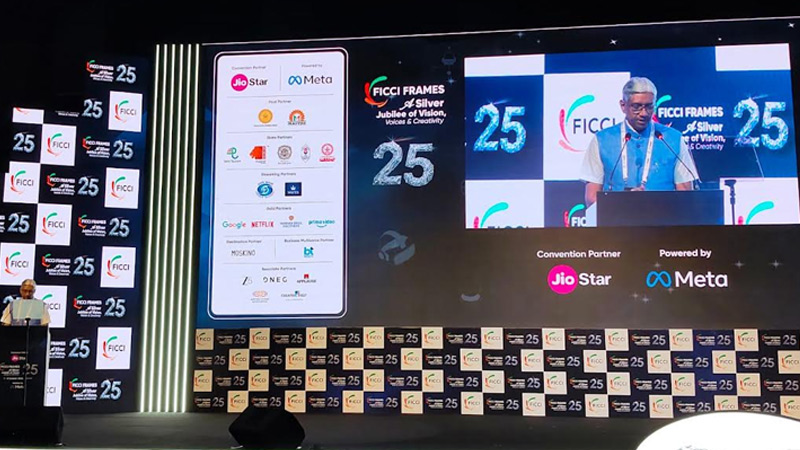
    MUMBAI: When it comes to India’s media and entertainment sector, the waves are getting bigger and TRAI Chairman Anil Kumar Lahoti is steering them with both vision and precision. Addressing the 25th Ficci Frames 2025, Lahoti delved into the vibrant evolution of broadcasting, distribution, and regulation in India.

    Lahoti highlighted that the media and entertainment (M&E) sector contributed Rs 2.5 trillion to the Indian economy in 2024 and is projected to grow at a CAGR of 7 per cent, crossing Rs 3 trillion by 2027. Within this, television and broadcasting alone generated nearly Rs 680 billion last year. He reflected on how the past 25 years have seen phenomenal transformation from analogue to digital transmission, standard definition to high definition, and now 4K video. Advances in audio quality and the proliferation of smart TVs have multiplied consumer choice, making content more accessible than ever.

    Yet while home screens have expanded to 40–50 inches and beyond, smartphones and 4G/5G broadband are opening new frontiers. OTT users now exceed 600 million, around 41 per cent of India’s population, yet linear TV remains central, with roughly 190 million TV households, 160 million linear subscriptions, and over 100 million households yet to enter the ecosystem many of whom will start with linear TV.

    The broadcast ecosystem is vast: 300 plus broadcasters, 900 plus TV channels, 388 private FM radio stations, and numerous national and international streaming platforms. Distribution involves 800 plus MSOs, 4 DTH operators, 1 HIDS operator, and a rapidly growing IPTV network, alongside 80,000 plus local cable operators. Public broadcasters Doordarshan and All India Radio operate 35 TV channels and 591 radio stations, respectively. While TRAI regulates linear TV and radio, digital content over the internet falls under the IT Intermediary Guidelines and Digital Media Ethics Code Rules 2021.

    Lahoti emphasised the complexities of linear TV’s multi-player ecosystem. “Our challenge is to ensure fair, non-discriminatory deals for all players, large or small, across geographies, while balancing innovation and regulation,” he said. TRAI has been proactive, recommending policy reforms, simplified licensing under the Telecommunication Act 2023, and a regulatory framework for ground-based broadcasters, enabling transmission through non-satellite means, a significant shift from the existing satellite-only mandate.

    Financial stress in FM radio has also been addressed, with TRAI recommending the rollout of digital radio services in 13 A-plus and A-category cities. Lahoti noted that rapid technological advancement from wired and wireless broadband to AI and cloud computing is reshaping content creation, distribution, and consumption. With India’s linguistic diversity 22 major languages and hundreds of dialects the opportunities for content creators are immense.

    He also referenced the prime minister’s recent Waves Summit speech, highlighting the Orange Economy, powered by creativity, culture, and content. “Dream big, tell India’s untold stories, and invest not just in platforms but in people,” Lahoti quoted. The message was clear: the screen may be getting smaller, but the content’s impact is enormous.

    As India’s M&E sector continues its remarkable growth, Lahoti stressed collaboration among stakeholders as essential to realising this vision. TRAI, he said, is committed to enabling orderly growth, simplifying compliance, and fostering innovation, ensuring a competitive and inclusive broadcasting ecosystem.

    Wrapping up, he wished Ficci Frames continued success, expressing hope that the debates and discussions at the forum will guide the industry toward a brighter, smarter, and more connected media landscape.

    In a sector worth Rs 2.5 trillion today and poised for Rs 3 trillion tomorrow, with 600 million OTT users, 190 million TV households, and a dynamic mix of technology and creativity, India’s media waves are indeed at full stream and TRAI is firmly at the helm.
     

  • What TRAI’s digital audio rollout recommendations mean for the radio folks?

    What TRAI’s digital audio rollout recommendations mean for the radio folks?

    NEW DELHI: India’s telecom regulator has thrown struggling FM broadcasters a lifeline, recommending a graduated payment structure for digital radio spectrum that defers most costs for a decade while the receiver ecosystem develops.

    The Telecom Regulatory Authority of India (TRAI) proposes auctioning two digital frequencies in each of 13 major cities—including Mumbai, Delhi, Chennai and Bengaluru—at reserve prices ranging from Rs 20.52 crore to Rs 194.08 crore. Crucially, successful bidders choosing instalment payments would pay nothing for digital spectrum components during the first five years, when device adoption will be negligible.

    The phased approach reflects harsh commercial realities. Private FM radio advertising revenues have flatlined at Rs 1,819 crore in 2024-25, barely recovering to 2015-16 levels despite more operational channels. The sector faces mounting competition from music streaming platforms and shifting listener habits.

    “The business model of radio broadcasters is primarily driven by advertising revenues, which is closely linked to listener reach,” TRAI notes in recommendations released on 3 October 2025. “Without affordable receivers, broadcasters may have little incentive to adopt digital radio.”

    Under the staggered payment plan, analogue spectrum costs would be recovered in equal instalments over 15 years. But digital spectrum fees—representing one-third of total valuation—would be waived entirely for five years, then recovered at one-third rates from years six to ten, and two-thirds rates from years 11 to 15. All payments would protect net present value using State Bank of India’s marginal cost of lending rate, currently 8.75 per cent.

    The delay acknowledges brutal adoption timelines. TRAI estimates two years for service rollout, three more for widespread device availability, and another five to reach break-even—consuming two-thirds of the 15-year authorisation period before meaningful returns materialise.

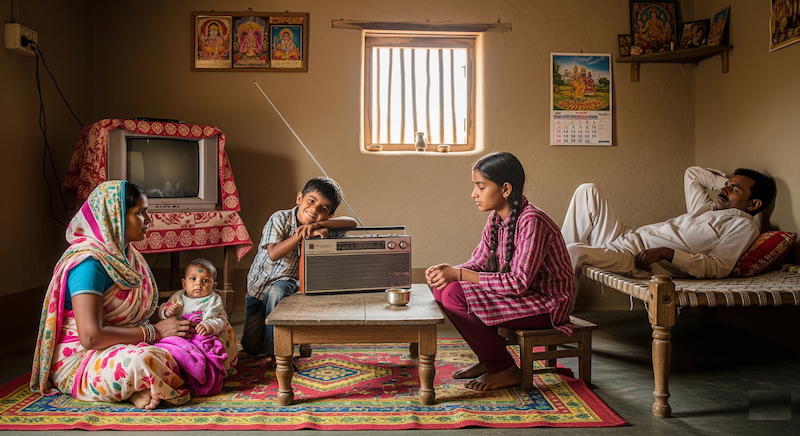
    Digital radio allows multiple channels on single frequencies through simulcast transmission—one analogue channel plus three digital channels and one data channel per frequency. But the technology requires new receivers. Mobile handset manufacturers have shown little interest in integration, despite government advisories. Vehicle infotainment systems may take 15 years to reach full penetration given replacement cycles.

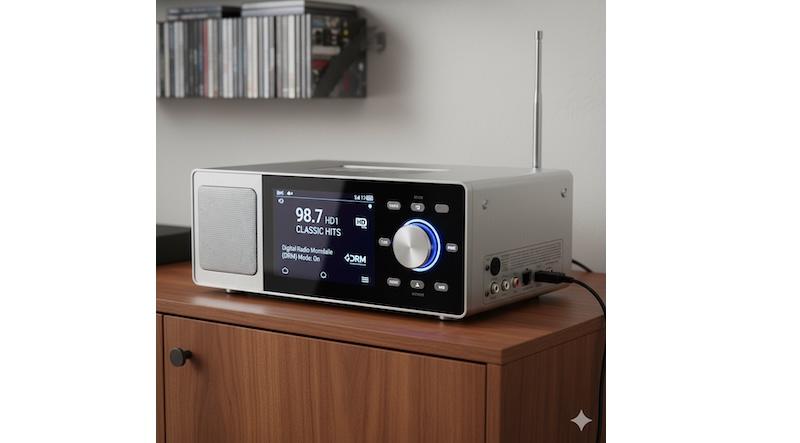
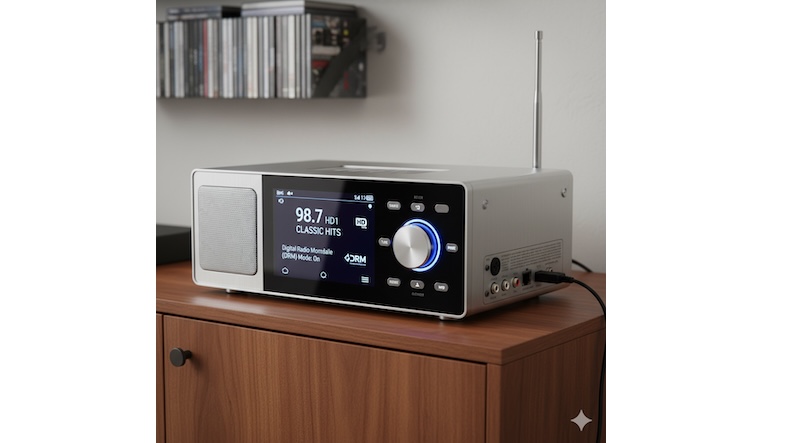
    The regulator stops short of mandating a specific technology, recommending government choose between HD Radio and Digital Radio Mondiale (DRM) after consulting industry. “Selection of technology among the two technologies suitable in VHF Band-II for deployment in India…may be done in consultation with the industry, including radio broadcasters and radio receiver manufacturers,” TRAI states.

    Both technologies are recognised by the International Telecommunication Union. HD Radio, used in North America, requires 400 kHz bandwidth. DRM needs just 300 kHz and is open-source, avoiding royalty fees. The authority warns against allowing multiple standards, citing interoperability nightmares and market fragmentation.

    Existing FM broadcasters could voluntarily migrate to simulcast by paying the difference between auction prices and their proportionate remaining licence fees. A six-month window would follow auctions for migration decisions.

    The recommendations tackle infrastructure bottlenecks head-on. Common transmission infrastructure in existing cities cannot accommodate new digital channels. TRAI proposes either broadcaster consortiums or assignment to Broadcast Engineering Consultants India Ltd  should create new facilities within three months. Mandatory co-location with government infrastructure would be scrapped.

    Prasar Bharati, the public broadcaster, should offer land, tower and transmission infrastructure at concessional rates whilst recovering operational expenses, TRAI adds.

    Annual authorisation fees would be set at four per cent of adjusted gross revenue for most cities, dropping to two per cent for three years in northeastern states, Jammu and Kashmir and island territories. The regulator proposes a new category of radio broadcasting infrastructure providers authorised to build and lease facilities commercially.

    Controversially, TRAI recommends allowing terrestrial radio streaming without user controls like download or playback. This extends reach globally whilst the authority dismisses potential copyright concerns as beyond its remit, noting broadcasters “shall be subject to Copyright Act, 1957.”

    The measured rollout—just two frequencies per city initially—contrasts sharply with July 2025’s disastrous auction, where only 63 of 730 channels found buyers across 234 cities. That debacle underscores sector weakness and justifies cautious expansion.

    Whether broadcasters bite remains uncertain. The staggered payment plan reduces upfront barriers, but fundamental economics remain challenging. Streaming platforms offer unlimited choice and user control. Digital radio offers better audio quality and emergency alert capabilities, but competes for ears in an increasingly crowded audio landscape.

    TRAI’s recommendations now await government action. Implementation timelines are unclear, but the regulator urges swift technology selection before financial bidding begins. The decade-long journey to digital radio viability starts with that choice.

  • India cuts FM radio reserve prices to revive stagnant sector

    India cuts FM radio reserve prices to revive stagnant sector

    NEW DELHI: India’s telecom regulator has recommended sharp cuts in reserve prices for FM radio channel auctions, acknowledging the sector’s struggle against streaming services and stagnant revenues that have barely recovered from pre-pandemic levels.

    The Telecom Regulatory Authority of India (TRAI) on 23 September  proposed reserve prices 30 per cent below previous valuations for three cities seeking radio licenses. Bilaspur in Chhattisgarh would see its reserve price set at Rs 83 lakh, down from a calculated valuation of Rs 1.18 crore. Rourkela in Odisha faces a reserve floor of Rs 1.20 crore against a Rs 1.71 crore valuation, whilst Rudrapur in Uttarakhand gets a Rs 97 lakh reserve price from a Rs 1.39 crore assessment.

    The cuts reflect harsh realities facing India’s private FM radio industry. Total advertising revenues peaked at Rs 2,382 crore in 2018-19 but crashed to Rs 941 crore during the pandemic’s first year. Recovery has been sluggish, reaching just Rs 1,819 crore in 2024-25—barely matching 2019-20 levels despite more channels operating.

    “The sector is facing increased competition from digital audio platforms,” TRAI noted, warning of “substitutability effects” as younger listeners migrate to on-demand streaming services that offer playlist curation and skip functions unavailable on traditional FM.

    The regulator’s move follows disappointing recent auctions. In July 2025, only 63 of 730 available channels across 234 cities found buyers, highlighting weak industry demand despite government efforts to expand FM coverage.

    TRAI also introduced a new “category E” classification for 18 small cities in hilly regions of Himachal Pradesh, Uttarakhand and Jammu & Kashmir, setting their reserve prices at just Rs 3.75 lakh each. These locations would operate with lower transmission power than existing categories, reflecting challenging terrain and smaller populations.

    The recommendations include several industry-friendly measures: allowing FM broadcasters to stream content online simultaneously, permitting news and current affairs programming for up to 10 minutes per hour, and offering instalment payment options similar to telecom spectrum auctions.

    Most significantly, TRAI urged the government to delink annual licence fees from non-refundable entry fees for all operators—not just new entrants. Current rules tie existing broadcasters’ annual costs to auction prices set by later bidders, creating unpredictable expense burdens that “impinge on the business model for FM operators.”

    The authority also recommended allowing voluntary infrastructure sharing and reducing mandatory co-location requirements with state broadcaster Prasar Bharati, whose rental charges some operators claim could be recovered through independent infrastructure within 2.5 years.

    India currently operates 388 private FM radio channels across 113 cities. The sector employs thousands and serves as a crucial local information source, particularly during emergencies. However, its financial sustainability increasingly depends on adapting to digital competition whilst maintaining terrestrial broadcasting’s unique community connection advantages.

  • TRAI  gives smaller cable operators a break on mandatory audits

    TRAI gives smaller cable operators a break on mandatory audits

    NEW DELHI: India’s telecom regulator has proposed easing compliance burdens on smaller cable television operators whilst tightening audit procedures for the rest of the industry under draft amendments released on 22  September. 

    The Telecom Regulatory Authority of India (TRAI) plans to make annual system audits optional for distribution platform operators (DPOs) serving fewer than 30,000 active subscribers. The move follows complaints from smaller operators about the disproportionate cost of mandatory audits, which can consume a significant share of their revenues.

    The proposed draft Telecommunications  (Broadcasting And Cable) Services Interconnection  (Addressable Systems) (Seventh Amendment ) Regulations, 2025 state  that larger operators would still face stricter requirements. They must complete audits for the preceding financial year and share reports with broadcasters by 30 September each year, replacing the current calendar year framework.

    The draft also introduces new provisions for infrastructure sharing between operators. Where multiple DPOs share encoding equipment, the infrastructure provider would insert watermark logos at the encoder level whilst individual operators add their logos through set-top boxes. However, TRAI proposes limiting screen clutter by allowing only two logos—the broadcaster’s and the last-mile distributor’s—to appear simultaneously.

    The regulator has addressed longstanding industry disputes over audit challenges. Under new procedures, broadcasters questioning audit reports must cite specific discrepancies with evidence within 30 days. If unsatisfied with auditor responses, they can request special audits but must bear the costs.

    “The audit of systems is necessary to ensure that the systems deployed by a DPO are addressable as per regulatory requirements,” TRAI stated in its explanatory memorandum. “Proper and accurate subscription reports are very important as the settlement of charges between service providers is based on such reports.”
    The draft regulations also mandate that auditors provide independence certificates confirming they have no conflicts of interest with the entities being audited.

    Industry stakeholders have until 6 October to submit comments on the proposals. The amendments are scheduled to take effect from 1st April 2026.

    The move reflects TRAI’s broader effort to reduce regulatory burden on smaller operators whilst maintaining oversight of the Rs 70,000 crore broadcasting and cable services sector. The authority previously made certain compliance requirements optional for operators with fewer than 30,000 subscribers in quality-of-service regulations issued in July 2024.

    However, some industry players have criticised the proposals. Broadcaster associations argue that exempting smaller operators from mandatory audits could increase under-reporting of subscriber numbers, whilst some cable operators contend that even the revised procedures remain too burdensome.

    The draft comes as India’s television distribution industry grapples with declining subscriber bases and increased competition from digital platforms. Many smaller operators have struggled with compliance costs, particularly annual audit fees that can range from Rs 50,000 to several lakhs depending on system complexity.
    TRAI’s proposals also address technical requirements for infrastructure sharing arrangements, mandating separate data instances for each operator using shared subscriber management and conditional access systems to prevent cross-contamination of subscriber data.

    The regulator emphasised that the 30,000-subscriber threshold for audit exemptions would be reviewed periodically based on market conditions.

  • TRAI orders monthly, quarterly compliance reports from TV distributors

    TRAI orders monthly, quarterly compliance reports from TV distributors

    NEW DELHI: India’s broadcast regulator has ordered all distribution platform operators (DPOs) — including DTH, cable (MSOs), headend in the sky (Hits)  and IPTV players — to file performance monitoring reports every month and quarter, in a bid to sharpen oversight of the sector.

    The Telecom Regulatory Authority of India (TRAI), acting under section 12 of its 1997 Act, said the move was aimed at ensuring compliance, protecting consumer interests and fostering orderly growth of the TV distribution industry.

    Until now, only DTH firms were required to furnish quarterly reports, a rule dating back to 2008 and expanded in 2019 to cover MSOs and Hits)  operators. The new order updates formats to reflect changes in tariff, interconnection and quality-of-service rules.

    From now, operators must file monthly reports within ten days of month-end, and quarterly reports within 15 days of each quarter’s close. Smaller DPOs with fewer than 30,000 subscribers may skip the quarterly filing.
    The order marks another tightening of regulatory screws on a sector under pressure from both rising consumer expectations and surging competition from streaming platforms.

  • TRAI warns public against scam calls misusing its name and authority

    TRAI warns public against scam calls misusing its name and authority

    MUMBAI: Dial M for Misuse: TRAI sounds alarm over scamsters impersonating its name. If you’ve recently received a call threatening “digital arrest” over telecom violations, don’t panic just hang up. The Telecom Regulatory Authority of India (TRAI) has issued a stern advisory warning the public against a spate of frauds misusing its name to scare, swindle, and scam.

    From SIM deactivation threats to bogus mobile tower offers, the fraudsters’ bag of tricks is as diverse as it is devious. The latest wave includes impersonators posing as TRAI or law enforcement officials, accusing victims of alleged telecom or financial offences. Victims are shown forged legal notices or fake identity documents and are often pressured into transferring money under the pretext of bail or verification fees.

    TRAI has clarified that it does not send messages threatening mobile number disconnection, nor does it authorise any third-party to do so. It certainly does not carry out investigations or collect payments through phone calls, Whatsapp, or video conferencing.

    Among the common scams flagged:

    . Digital Arrest: Calls threatening legal action or arrest unless payment is made

      SIM Deactivation: Fake alerts over KYC issues asking for urgent user verification

      Tower Installation Scams: Offers promising high rent for tower installation in exchange for upfront fees, falsely backed by forged TRAI approvals

      . Fake Letters and Emails: Scammers use doctored TRAI letterheads or logos to push fraudulent investment or compliance schemes

    TRAI has reiterated its role as an independent regulator, created under the TRAI Act of 1997, with no involvement in individual consumer disputes or investigations. It neither seeks Aadhaar, OTPs, nor banking credentials—and certainly doesn’t threaten arrests.

    The regulator has urged citizens, especially senior citizens and digitally less-savvy users, to stay alert. In case of suspicious communication:

      .  Disconnect immediately

       .  Never share personal or financial information

       .  Do not transfer money

       . Verify via official government websites or helplines

       . Report incidents at www.cybercrime.gov.in or call 1930

        Use the Chakshu feature on the Sanchar Saathi portal or the TRAI DND app to flag scam calls

    As digital scams become more sophisticated, TRAI’s message is clear: stay sceptical, stay safe.