Tag: Toppr

  • Seekho raises Rs 3.75 crore in seed round led by We Founder Circle

    Seekho raises Rs 3.75 crore in seed round led by We Founder Circle

    Mumbai:  Investment platform We Founder Circle (WFC), led by a global community of founders and strategic angels, has led a seed round worth Rs 3.75 crore in an edutainment startup, Seekho. Many strategic angels have banded together to propel the start-up to new heights.

    Seekho said that it aims to define an entirely new category of edutainment content by combining educational content with entertaining byte-sized videos, building a “Netflix for Learning.” Seekho plans to use the investment to expand into new languages and expand their already diverse premium content library.

    The current round witnessed participation from We Founder Circle and SucSEED Innovation Fund, along with Toppr co-founder Hemanth Goteti and other executives.

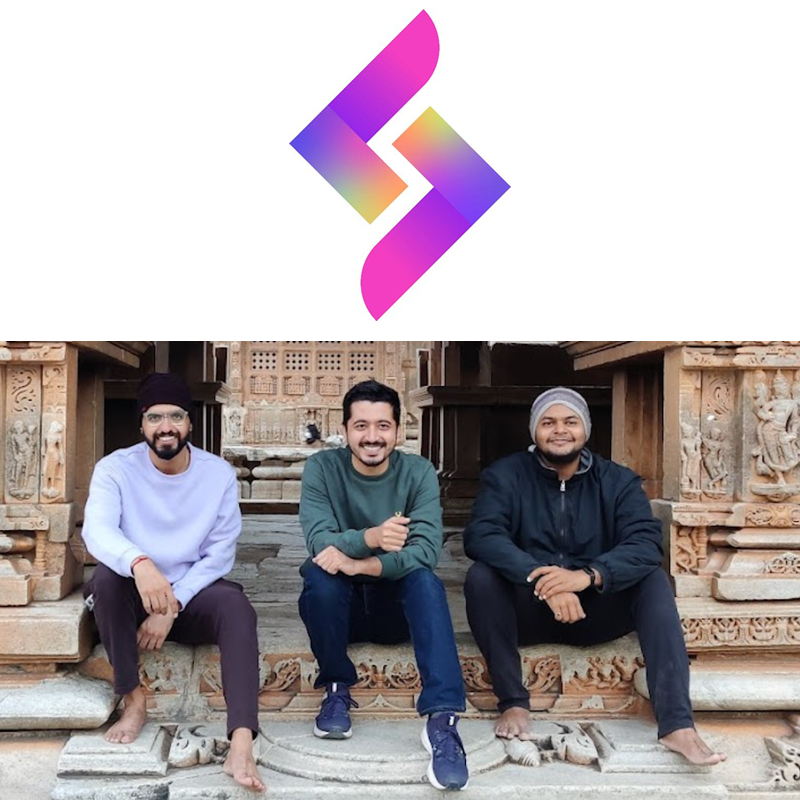
    IITK alumni Rohit Choudhary, Keertay Agarwal, and Yash Banwani founded the company in 2020. The startup is already backed by PointOne Capital, 3one4 Capital, First Cheque, Callapina Capital and entrepreneurs including Anupam Mittal (People Group), Gaurav Munjal (Unacademy), Ramakant Sharma (Livspace), Zishaan Hayath (Toppr), Dinesh Goel (Aasaanjobs), Alok Mittal (IAN), Miten Sampat (CRED), Aakrit Vaish (Haptik), Harsh Shah (Fynd) and Harpreet Singh (Cocubes).

    We Founder Circle co-founder Gaurav VK Singhvi said, “At We Founder Circle, we are pleased to have invested in Seekho since they have demonstrated the will and smart ideas required to run a start-up. The start-up has the potential to revolutionise the education system and benefit society in a great way. We pledge our mentorship and support to Seekho, and we intend to cover all aspects of their development, including business strategy, product development, community building, and connecting with potential business mentors.”

    Seekho founder and CEO Rohit Choudhary added, “At Seekho, we are thrilled to have WFC and SucSEED as strategic investment partners, especially at this time when we are seeing really promising early results from the launch of Seekho PLUS subscriptions. With such strategic angels on board, we intend to scale up quickly and reach one lakh paying subscribers in the next six months.”

  • EdTech sees exponential growth during pandemic

    EdTech sees exponential growth during pandemic

    Mumbai: Education has been one of the severely-hit sectors during the lockdown as the entire education system had to go online overnight. But on the other hand, the Covid-19 pandemic also led the education sector to an unplanned demonstration of e-learning methods, which was not possible otherwise. Interestingly, remote learning, which started as a substitute for offline classes for some time, emerged as a complementary and supplementary mechanism.

    The latest ZEE5 Intelligence Monitor Report gave evidence of the speed and scale of business activities in online education. Conducted on a cross-section of ZEE5 viewers in over 146 cities and towns across rural and urban India, the primary survey included parents who were also regular ZEE5 viewers from tier I, II, and III cities.

    ZEE Entertainment Enterprises chief operations officer Rajiv Bakshi said, “Innovation lies at the epicenter of our business. Coupled with our consumer-centric approach, we endeavored to introduce a property that will educate and empower our audiences as well as partners. ZEE5 Intelligence Monitor knowledge series offers the tenets, roadblocks, and insights of the sectors that have witnessed a massive change in the last two years.”

    The ed-tech report is the first in the series and highlights the disruption witnessed in the Indian education sector, fuelled by tech solutions, convenience and a new-age mindset. “We are confident that the report would benefit brand custodians and product leaders and provide new information and insights for them to make advertising and business decisions,” said Bakshi.

    The report aimed to gauge the changes in consumption patterns and consumer attitudes towards e-learning in India.  This survey by ZEE5 unearthed some interesting insights about online education. Let’s take a look!

    E-Learning Grows As A Nationwide Trend

    As the schools shifted to remote learning, 46 per cent of the survey respondents considered e-learning applications for their children during the pandemic. While 50 per cent of the parents in metro cities embraced e-learning for their children, the corresponding figure for non-metro parents stood at 40 per cent. The figures indicate that e-learning has accelerated nationwide.

    Same Quality of Education For All

    One significant benefit of e-learning apps is that they ensure a similar quality of education for all, which is impossible to imagine in offline classrooms. “E-learning platforms offer the same quality of education across the country, from tier I cities to tier II and tier III locations to the farthest corners of India,” said Toppr founder and CEO Zeeshan Hayath.

    Parents Adopt E-Learning Methods for Kids

    Millennials who were among the early adopters of computers and the internet have also emerged as the first group of parents to adopt e-learning applications. The ZEE5 report highlights that 55 per cent of millennial parents adopted e-learning platforms for their children. As millennial parents include people born during the 1990s, they have grown to see significant disruptions in technology. Hence they were quick to adapt to the e-learning applications.

    Parents See E-learning Cost As An Investment In Child’s Future

    The parents are quick to adopt e-learning and are also open to spending on the platform. As per the report, 63 per cent of parents don’t consider the cost of e-learning as a limiting factor; instead, they see it as an investment in their child’s future. According to ZEE Entertainment Enterprises’ chief operations officer, revenue, Rajiv Bakshi, parents’ willingness to adapt and invest in the new e-learning mechanism is a testimony to the efficacy and value of ed-tech.

    Internet Connectivity Still Remains A Big Barrier

    The applications offering e-learning services interact and participate in activities via computer; thus, robust internet connectivity becomes critical to this new learning mechanism. But even after winning the trust of the majority of parents, ed-tech platforms cannot effectively reach many due to the unstable internet connectivity across the country. With all family members working from home and students studying remotely, internet connectivity is insufficient. Even while mobile phones are available across the nation, the bandwidth it offers doesn’t support e-learning platforms.

    At least 40 per cent of parents feel that internet connectivity is a barrier to effective e-learning. They find internet connectivity even a more significant challenge than the cost of e-learning applications.

    Moving Towards A Hybrid Future Of Learning

    While the lockdown has disturbed human lives like never before, it has forced us towards the things that we couldn’t even think of otherwise- for example- an MNC operating entirely from home or an education system performing remotely. While we all wish to get rid of the pandemic soon, the behavioral changes it has brought will stay with us for life. As far as the education system is concerned, the ZEE5 Intelligence Monitor Report clearly illustrates that e-learning has become very effective.

    E-learning empowers individual learners and has the potential to improve access to education at a broader level when used in conjunction with the traditional class-based model, commented Bakshi on the findings of the ZEE5 survey.

    The e-learning industry trends suggest that teachers and learners have become comfortable with e-learning, they even like this system over the traditional classroom setting. And while the e-learning applications are becoming more immersive, parents also like the fact that they can monitor their children’s academic progress throughout. However, the school environment and physical interaction are crucial for children’s overall growth. We can expect the learning system to move towards a hybrid model where e-learning platforms support classroom learning. 

  • Toppr encourages students to understand, reason, & question for better learning

    Toppr encourages students to understand, reason, & question for better learning

    NEW DELHI: Toppr, a leading player in the edtech space, has rolled out its latest ad campaign, “Better Learning. Better Results.” It puts a strong emphasis on Toppr's complete learning methodology, comprising three key sections: live classes, adaptive practice, and ask doubts, solely aimed at encouraging students to understand, reason and question for better learning outcomes.

    The brand is looking to target the parents who have the final say in subscription of the product. The idea is to get more students and parents to sample the product and increase the subscriptions of the product. The brand is taking on the likes of Byju's, Extramarks, and several others who are aggressively spending across IPL in order to gain a substantial pie of the market. 

    As part of the campaign, Toppr has launched three TVCs of 20 seconds each in Hindi and other languages in collaboration with Lowe Lintas, a leading Indian advertising marketing communications company. These ads highlight how switching from offline coaching to Toppr's online learning platform results in a positive change in the student's results with a better understanding of the subject and ability to answer the questions correctly.

    One of the ad showcases a student and her mother visited by a neighbour. The latter check his report card and questions that what has changed all of a sudden as he was unable to score well in his studies until last year. The mother replies that she has taken him from coaching and put into 'Soching'.

    Toppr CEO & founder Zishaan Hayath said, "Coaching classes are inaccessible to millions of students and by design, they can’t personalise learning for every student. While a handful of better performing students get to learn from better teachers, others don't have access to the same resources, even though they are enrolled in the same coaching class. Toppr eliminates all such discrepancies and personalises learning for every single student. We encourage students to understand, reason and question for better learning. And when students start “soching”, better results become the outcome of a better learning process. We are excited to see what conversations our new TV campaign will drive for our students."

    Lowe Lintas ECD Tasneem Ali said, "Toppr’s three key features, live classes, adaptive practice and ask doubts Anytime help kids to first ace learning. Because only then can exams be aced. This being our guiding philosophy from the very first start, we felt it was time to carry it forward in our advertising. Thus, we came up with the creative expression of Soching Class, to not only bring alive our emphasis on thinking-based learning, but also to encourage parents to shift their kids from one class to another. From a coaching class to a soching class."

    As students switch to online platforms for various learning needs during the lockdown phase, Toppr believes that it is the right time to spread awareness around its offerings among parents, who are considered the most significant decision-makers for their child's learning needs. Moreover, the company has purposely used real-life characters instead of celebrities in their TVCs to make the content more relatable to students and parents, so that they can further spread this among their network, and drive more engagement.

    A report by RedSeer and Omidyar Network India says the coronavirus pandemic has proved to be one of the biggest game-changers for India’s edtech sector. Online education offerings for classes 1 to 12 are projected to increase 6.3 times by 2022, creating a $1.7 billion market.