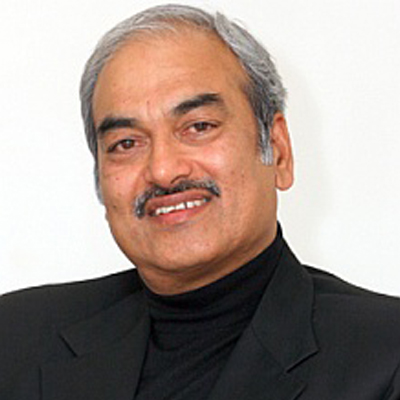
Tag: Tony D’Silva

  • Hinduja’s HITS platform NXT Digital to launch in August

    Hinduja’s HITS platform NXT Digital to launch in August

    MUMBAI: The Hinduja Group has christened its headend in the sky (HITS) service platform as NXT Digital. The service is slated to launch in August 2015.


    Speaking to Indiantelevision.com, Hinduja Ventures’ investment arm Grant Investrade managing director Tony D’silva said, “We had applied for the HITS licence in November 2012 and finally after a wait of three years, we have got the Grant of Permission Agreement (GOPA) license on 14 July, 2015.”


    At the time of its launch, NXT Digital will concentrate on the phase III and IV digitisation markets, which currently have more than 110 million analogue TV households.


    The platform has already started rolling out set top boxes (STBs). “We have already got order for 2.5 million STBs,” informed D’silva adding that deals with two broadcast networks has also been signed. 


    NXT Digital will launch with 150-200 channels in August and aims to take it up to 500 plus MPEG-4 encrypted services including HD channels with the ability to insert local channels as per requirement by October-November 2015. Not just this, the platform will also introduce value added service (VAS) like Darshan, TV Everywhere, Games and Learning by December, this year.


    “We believe the platform will strongly support the laudable national mission to roll out Digital Addressable Systems (DAS) of broadcasting all over India,” said D’silva. 


    NXT Digital, according to D’silva, will not just help last mile operators (LMOs) and multi system operators (MSOs) in going digital as per government mandated standards and within set deadlines, but will also help them remain independent and retain the ownership of their network. 


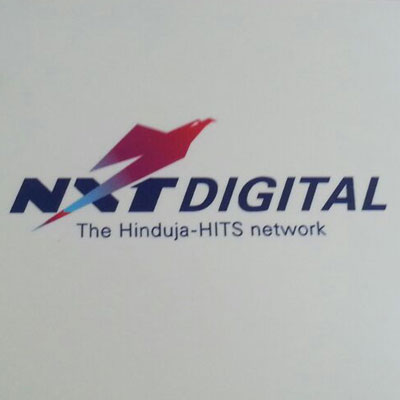
    NXT Digital brand name and logo


    According to D’silva, NXT Digital is a futuristic product, which caters to the next generation. Designed by Chlorophyll, the eagle in the logo symbolizes the empowered LMO/MSO who, with the new HITS platform, can soar into the skies with complete freedom and ownership, to achieve greater growth. The soaring eagle is also indicative of the reach of NXT Digital.


    D’Silva said, “While HITS is the pipeline of content delivery, our offering will not be limited to encrypted television channels through digitally addressable systems. Instead, we will offer a rich bouquet of every kind of additional digital service such as VAS, OTT and others that will keep getting added. Hence, we decided to go with the name NXT Digital, and both, the name and the logo represent the next level in the digital technology we will offer.”


    Research and outcome 


    In order to understand the market and the needs of the LMOs, the company  undertook an in-depth research to find out the requirements of the distribution fraternity in December 2014. A research was conducted with 2000 LMOs, MSOs and their representatives across 120 cities in phase III and IV markets. 


    The research threw up six major requirements of the LMOs and MSOs. These were as follows: 


    1) Retain ownership of their network


    2) Drive broadcaster deals


    3) Package and price their offerings according to the needs of their market


    4) To be able to acquire STBs according to their convenience


    5) The ability to insert local channels for their end-subscribers


    6) Have a sophisticated digital service that could help them compete with other digital platforms like DTH to ensure their digital offerings were future-ready so that their subscriber-bases would only grow.


    “In other words, they wanted to remain independent, own their network, and go digital as per government norms and within the deadlines,” D’Silva said.


    The HITS platform will offer the choice of two different service models: a white label service model and a full service model.


    “By signing up for a NXT Digital service, a network owner in a Phase III market can be saved the burden of having to make huge investments in the technology and highly skilled manpower required to convert his analog households to digital,” he informed.


    The entire infrastructure and backend, including a call centre for customer service, will be taken care by NXT Digital. “The network owner can concentrate on growing his business through managing his network, local channels deployment, broadcaster deals and more,” D’silva said. 


    Technology partners 


    The technology programme manager for NXT Digital is Castle Media and its team, led by Vynsley Fernandes, who has set up several world class operations in broadcasting and digital networks in India and overseas.


    GIL has partnered with Thaicom-7 for satellite, C-Band transponders, Nagravision DLK for CAS-embedded platform; OpenTV1 for middleware; Hansen Technologies for subscription management system and billing solutions and Changhong, Telesystems and others for STBs.


    Manpower and offices


    NXT Digital currently has close to 200 people working in different parts of the country. These people have been picked from the broadcast, cable and telecom sectors. 


    The company has four regional offices in Mumbai, Delhi, Kolkata and Bengaluru and 16 state offices. 


    Pricing and revenue share


    The STBs have been made available to LMOs on cash and carry model. While the SD STB is priced at Rs 1400, the HD box will cost Rs 1800. 


    NXT Digital will charge the LMO a flat fee of Rs 20 per subscriber.


    In case the consumer pays directly to the platform for any la carte channels, using the online mode of payment, NXT Digital will have a revenue share with the LMOs.   


    The HITS platform will work on a prepaid model. “While there will be an option for postpaid, but we will concentrate on the prepaid model. Not just this, unless the consumer application form (CAF) is in place, the customer will not be activated,” informed D’silva.


    Awareness drive


    GIL has readied a pan-Indian awareness drive across markets, showcasing its services portfolio, technology capabilities and quality of services. The company will conduct roadshows in 39 cities in order to train the LMOs.


    The campaign will be spread across all media consumed including but not limited to radio, local-media and OOH.

  • Digitisation extension 2015: MSOs, LMOs smile; broadcasters sigh

    Digitisation extension 2015: MSOs, LMOs smile; broadcasters sigh

    MUMBAI: It was a decision that most had been anticipating would be taken. But when it did come, it came as a bolt from the blue. Four months before cable TV digitisation had to be completed pan India, the government – through information and broadcasting (I&B) secretary Bimal Julka – announced to industry via indiantelevision.com that a decision had been taken to extend it to December 2015.


    (While this is what Julka has told us, certain sections in the industry have suggested that end-2015 is the analogue sunset date for phase III towns and villages; the date for phase IV regions may end up being December 2016.)


    Earlier this year, the previous UPA government’s Information and Broadcasting (I&B) Minister Manish Tewari had held a task force meet with all the stakeholders to state that digitisation was to go on as planned with phases III and IV being merged. The deadline was December 2014 to implement digitisation in digital addressable system (DAS) phase III and IV while simultaneously implementing billing in phase I and II, which was to have been done much earlier.


    However, the new advancement of the deadline by the current BJP government, comes across as a breather to the beleaguered and unprepared  cable TV industry that claims to be facing a shortage of funds to execute the seeding of 75 million boxes.


    The MSO and LCO fraternity is heaving a sigh of relief following the extension. Says Den Networks CEO SN Sharma: “After long, the government’s commitment is visible and there is clarity of date. For phase I and II we had built the tempo and campaign well in time and now with this announcement, things for phase III and IV will also fall in place. The government is also keen to push indigenous production of set top boxes which will bring out a 15 per cent reduction in prices. These next two phases constitute about 70 per cent of the cable TV base. We are now waiting for STB producers to tell us they can deliver the demand.”


    The new I&B Minister Prakash Javadekar has time and again reiterated the government’s intention to give a fillip to indigenously produced STBs.


    LCOs seem to be a happy lot. Says Maharashtra Cable Operators Foundation (MCOF) president Arvind Prabhoo, “This gives time for the last mile operator (LMO) to plan for a year and execute it as mandated by the Telecom Regulatory Authority of India. Our association will educate LMOs about the benefits of digitisation. We will be able to rope in more investors and manufacturers to come up with schemes for executing voluntary digitisation.”


    Digitisation in DAS I and II areas has also not yet been implemented in the way as had been envisaged. Billing and conditional access systems (CAS) have yet to take off in several DAS I and II towns.


    IMCL managing director and group CEO Tony D’silva feels that the extension does not make much of a difference if the government’s resolve is not strong enough. “Just by postponing or sticking to a date does not change the speed of digitisation. It has to be a much more detailed and flushed out action plan on how the MSO, LCO, broadcaster and the government will be brought together. It is great that they have clarified their position, now there needs to be an actionable plan by putting together a core committee,” he opines.


    However, the most unhappy of the lot are the broadcasters because it delays their dreams of getting higher subscription revenues from MSO, cable ops, and the subscriber by a year. Most feel that the one year delay will lead to everyone in the ecosystem slackening the pace, with delays hitting the process and spread of digitisation once again.


    Colors CEO Raj Nayak is of a similar opinion. Says he, “We were really looking forward to phase III and IV to be completed by December as after much delay and deliberation the sunset date was arrived at. Our business plans were geared accordingly. I am sure there must have been a good reason to postpone and a three month extension would have been understood, but postponement by one whole year is slightly disappointing.


    “Having said this we are glad that the digitisation process is on track and looking at it through a positive lens I am sure this would give the industry an opportunity to learn from the mistakes of phase I and II and hopefully put better systems and processes in place so that the respective stakeholders including the broadcasters get our fair share.”


    News broadcasters are most pained by the excessive carriage fees that are being demanded of them, even as revenues continue to sag. News Broadcasters Association president and NDTV executive vice chairperson KVL Narayan Rao is disappointed with the extension. “Complete digitisation will bring transparency to TV broadcast distribution while delays will only affect that goal,” he states.


    Various reports predict different dates of completion of digitisation in India. Amongst the most recent ones brought out by Singapore-based Media Partners Asia (Indiantelevision.com’s partner for the annual pay TV gathering India Digital Operators Summit)  has stated that by 2017 only 70 per cent of the pay TV market in India will be digitised. 


    We, at indiantelevision.com, believe there are several other measures that could be put in place by the government (read I&B ministry), the regulator, and the industry:


    *For starters, changing the mindset of the cable TV ecosystem that digitisation and true pay TV is useful to all those in it, and not harmful, needs to be communicated effectively.


    *Second, the government could set up a digitisation transition fund, which helps educate, train and provide seed capital to and rewards cable TV operators who walk that path.


    * Third, it puts in place policing and penalising measures to cane those who don’t.


    *Fourth, they need to ensure that valid and correct subscriber information is collected by every cable TV operator or MSO and recorded in their SMS and possibly made available to the authorities.


    * Fifth, once this is done, ensure that a legitimate bill is issued to every subscriber.


    * Sixth, the ministry, the TRAI and the government could announce future-proof (at least for a three to four year period) technical specifications and standards for set top boxes, so that garbage zapper boxes are not dumped on India and on an unknowing and unsuspecting home viewer.


    * Seventh, leave pricing to the market place, rather than mandating 10-15 per cent price increases. Sure broadcasters want to increase subscription revenues, but they would not be so foolish so as to price their channels so high that they drive away consumers, and in the process their collections. Some might choose to have stiff price tags, but their business plans, obviously, will have factored that in, to have a smaller niche subscriber base. Does the government mandate how much a pair of Armani jeans can be priced at?


    * Let cable TV operators be drawn in to deliver broadband – provide them technology, assistance, funding – so that they can be one of the constituents who will help fulfil the Modi government’s grand plan to digitise the country.

    While there are many other measures that could be drawn up and while some may not approve of what we have prescribed, we have decided to stick our necks out and made some suggestions. We would love to hear different perspectives from our readers. Please feel free to let us and others in the industry know by posting your comments below.

  • Hinduja group pays HITS licence fee

    Hinduja group pays HITS licence fee

    MUMBAI: Grant Investrade, which is a 100 per cent subsidiary of Hinduja Ventures, today paid the Rs 10 crore licence fee to the Ministry of Information and Broadcasting (MIB). The group is now awaiting the MIB’s letter of intent to apply for the WPC clearance. 

     
    With this, the $100 million HITS Hinduja project will start rolling out. “We made the payment today. We are eagerly waiting for the letter of intent by the MIB to proceed with the next step,” informs IMCL MD & group CEO Tony D’silva exclusively to indiantelevision.com.


    Following this, the company will also make the Rs 40 crore bank guarantee deposit. “We will now move towards signing agreements with the satellite provider and finalising site location,” adds D’silva.


    The next 10 days are going to be very busy for D’silva, who is at the helm of the HITS project. The company will start with the promotional activities, discussions with the last mile owners, creation of organisational structure, appointment of distributors and discussions with vendors in the next one week or so.


    “The HITS project will be up and running in the next six months,” he informs.


    While the HITS licence was obtained on 6 March, what took the company so long to pay the licence fee? Answers D’silva, “When we got the permission, immediately the elections dates were announced, so we lost time on that. Also we weren’t clear whether the government was committed to phase III and IV. Now since we have enough clarity, we decided to go ahead with the first step of paying the licence fee.”


    Through HITS, the company is looking at capturing 15-20 per cent of the 120 million households in phase III and phase IV markets. While the technology team is already in place, the others will be appointed soon.


    D’silva hopes to be able to create better packages for the HITS platform. “Broadcasters should consider re-pricing their channels. The packaging and bundling of channels needs to be different for phase III and IV. With phase I and II contributing to 75 per cent or more of their existing revenues that is from 30 million homes, phase III and IV which has close to 100 million homes, the broadcasters should reduce their rates to one-third of the existing rates,” he opines.


    Apart from HITS, the group’s IndusInd Media and Communications Limited (IMCL) will also see a major boost in terms of the number of channels the MSO currently provides. “We will be increasing the number of channel offering from the current 350 to 500. This will help us become more competitive on ground,” he says.


    IMCL in the next one or one and a half months will also launch a prepaid model for its subscribers. “We are talking to other MSOs in Mumbai and the Maharashtra Cable Operators Federation (MCOF) for this. I am hoping that all the other MSOs across the country will also join us for the prepaid model,” says D’silva.


    The HITS model will have a complete different vertical which will cater to all the content and video on demand (VOD) services requirements. “The services will be made available to all the LMOs along with IMCL,” concludes D’silva.

  • “IndusInd to soon start pre-paid cable TV services”:  Tony D’silva

    “IndusInd to soon start pre-paid cable TV services”: Tony D’silva

    Almost a-year-and-a-half ago Hinduja Ventures Limited (HVL) brought Tony D’silva – a man with more than four decades of experience across sectors such as media, FMCG and pharma – on board as the president of the company to spearhead its Headend in the Sky (HITS) business.


    Now, D’Silva has been given responsibility as MD & group CEO of IndusInd Media &  Communications Ltd (IMCL)  with long time  MD &  CEO of HVL’s flagship cable company Ravi Mansukhani stepping down earlier this week. As he takes on a bigger role, he is looking at betterment of the company with introduction of newer services. He sounds quite optimistic while suggesting prepaid model for billing and doesn’t hesitate in saying that he wants to give the local cable operators (LCOs), the rightful ownership of their subscribers.


    In an exclusive interview with Indiantelevision.com’s Seema Singh, D’Silva talks about his plans for InCable and HITS.


    Excerpts:


    What does becoming the MD and CEO of IMCL and CEO of Hinduja Group-media mean to you? How is this development going to change Hinduja Group’s media businesses and your life professionally? What are your immediate challenges?


    I have mixed feelings because the challenges are very steep. The future is exciting but there are grey areas to be covered before we achieve the state of growth with digitisation and monetisation. While I am looking forward to the challenges, I am wary of the fact that many hurdles need to be crossed. Bringing along processes is difficult and ultimately to monetise this business, the only way is to go prepaid.


    The industry must refocus itself to become customer friendly and start customer care services. Everybody in the digitised world is looking at increased revenues. The only way to make more money is by starting packaging, bundling and including small packages with regional and sports channels. The customers need to be segmented. Those who can afford to pay more can take higher priced packages, while those who can’t can opt for the basic pack. Unfortunately, there is a mental block in the mind of the consumers towards cable TV. They are not ready to shell out much for cable TV experience, but there is no such block to pay for broadband or triple play or video on demand (VOD).


    That’s where the entire industry should move. They should look at offering more value added services (VAS) and TV Everywhere services. This is what needs to be monetised. My focus will be on bringing the infrastructure to meet these requirements, putting procedures and making the whole business transparent so that every stakeholder in the value chain gets a share of the revenue.


    As the Group CEO – media and MD & CEO of IMCL, you will be responsible for restructuring the entire media business and value creation, how are you planning to do that? 


    We have two-three different businesses. My role is to monetise all these businesses so that the value of the group’s media businesses can grow. While phase I and II of digitisation was all about packaging, bundling etc, phase III and IV is all about HITS. I am very clear that ultimately it is the local cable operator who should own the network. Even in the HITS business, Grant Investrade Ltd (GIL) will be the white label which will be a pure technology service provider, with VOD and VAS.


    My aim is also to push the broadband segment which is lagging so far. We have a vast infrastructure for broadband which hasn’t been utilised. It is one area we will start developing now. We are not using that broadband, we are renting it out and they are monetising it. Now, we will restructure that segment as well.


    I will look at restricting the business to area specific responsibility. Our focus will be on customer care, which involves interface with customers through call centres and backend support. We will also focus on the LCO: MSO relationship as cable operators are another crucial part of our business model. The third is the broadband and new services.


    I would also want to make all our centres, profit centres.


    As far as HITS is concerned, it is a separate business with a different team and focus.


    Recently, Grant Investrade Ltd announced an investment of Rs 300 crore in the cable distribution business. How do you plan to utilise that investment? Will your approach for the growth of the company be different from your predecessor? How will you ensure HITS turns out to be profitable?


    The previous management did a great job. There is no other way than HITS to deal with phase III and IV. With HITS, the average cost of delivering data that comes to be Rs 18 per customer through optical fibre will go down to Rs 8.


    The HD box is the future and we will give HD boxes in the price of SD boxes. The operator in the HITS business is competing with DTH. The LCOs have the money but they face difficulty in buying bulk boxes. Thus, we are giving them the option of cash and carry. The operator has the option of buying boxes as per his need.


    My profit is by profit of numbers. As my subscribers increase, my cost will come down. Initially, I may incur losses but then it’s a volume game for me. If we are serious about digitisation, the government should have first cleared our HITS project. We are saying the LCOs can own the consumers and can do the packaging. We will help them seed boxes. It is different than JAINHITS. We have three to four different boxes and they get an option to choose.


    How much has been invested in HITS? Is more investment needed? When do you see the licence being cleared by the Information and Broadcasting Ministry?


    We have been waiting since 14 months to get the licence. We have already spent close to $10 million in the technology which is handled by Castle Media and people. Another $100 million will be invested in HITS project. This investment will happen once we get the licence.


    We are suffering because of the wait. When we started the project, the dollar rate was close to Rs 43, now it is Rs 63. Who will take the responsibility to pay for the escalation?


    There is a turf war going on between the LMOs and MSOs? Are you looking at resolving these issues?


    We are losing the focus in this fight, which is the customer. Industry is beginning to realise that just having subscriber numbers is not enough. We may not be the largest MSO in the country, neither am I aiming for that. My mission is to make InCable the most respected MSO in India. And that’s what the business model should be.


    By when will the VAS and VOD services come in to effect? Will HITS benefit IMCL? Do you think the customer in phase III and phase IV will readily pay for these services?


    A lot of this is application and we have a full fledged plan. Hopefully, when we launch HITS we will launch it with these services. These services will also be provided on InCable. IMCL will be HITS’ customer. The values and charges will be the same for IMCL as for other LCOs.


    The content requirement differs in phase III and phase IV and so HITS becomes an important platform. We will provide different packages based on the requirement. In fact we are encouraging LMOs and MSOs to strike their own deal with broadcasters.


    The customers in phase III and IV has money as well. We are targeting 20-25 per cent of the phase III and IV market through HITS. And that market is available.


    Phase III and IV need 90 million STBs. How many of these will be seeded by IMCL? Is DTH a competition for phase I and phase II? Will you set up new headends for phase III and IV?


    We will not seed STBs if our licence is not cleared.


    It is true that in phase I and II cities, the MSOs have to up their antennas and come up with VAS services. 70 per cent of the boxes are SD boxes when the market world over is moving to HD. Are we expected to replace all the boxes later? That will be an expensive proposition. Most part of DTH and mobile is pre paid, so we should move towards that. This will promote transparency. We should be launching prepaid in couple of months. HITS will be a complete prepaid model.


    No new headends will be set up in phase III and IV.


    In how much time can we expect changes at IMCL?


    I have given myself two months to at least start changing the process, procedures and start customer friendly actions by upscaling our call centres like those of DTH players.


    By when will the ARPUs for MSOs go up? What would the increase be? Do you see it rising to Rs 500 in the next one year?


    The customer will pay if you give him the services he wants. He has no restriction on the amount of money he pays for his mobile phone services. So there is no restriction on the money he pays. But don’t expect the ARPUs to go up if you do not upscale your services.


    With gross billing, will there be more transparency in the system? Are you ready to share the carriage fee with LCOs?


    I have serious concerns with gross billing. Who is responsible for service tax and entertainment tax? I do not have a problem if it is a prepaid model. The authorities have to realise that relevant issues need to be addressed before gross billing begins.

    As of today, the carriage fee has supported the business model for the MSOs. We get the money from there. If the model changes, we will be happy to share the carriage fee.


    Can we expect the launch of local cable TV channels from your end? Any numbers you are looking at?


    We already have local cable TV channels. But now, as per regulation, these channels need to be encrypted. In InCable, we are revamping the system and encrypting the local channels. We have a separate company that deals with these channels.

    In HITS, the local cable TV channels will be handled by the LCOs.


    How do you plan to strengthen your broadband service? Any expansion plans in newer regions? Is there a plan to launch Docsis 3.0 broadband? What will differentiate you?


    Broadband is one of the key to monetising. We have broadband, but not well utilised. We will use DOCSIS 3.0 and promote it now. We need to focus on the requirements.


  • ‘Pricing and creation of bouquets is our big differentiator’ Tony D’silva – Sun Direct COO

    ‘Pricing and creation of bouquets is our big differentiator’ Tony D’silva – Sun Direct COO

    Kalanithi Maran is building his DTH empire on one key proposition: pricing. Mopping up two million subscribers in his home turf, Maran expects to taste success in the northern pockets of the country with the very same recipe.

    Armed recently with Hindi content and sports channels, Sun Direct has launched in Mumbai and will be quickly moving to other markets as a pan India direct-to-home service. The target: six million subscribers by FY’10.

    Sun Direct plans to invest Rs 35 billion in the venture over two years, out of which Rs 20 billion will have been consumed by the end of this fiscal. A large chunk of this will be towards providing set-top boxes (STBs) free.

    Malaysia-based Astro has taken a 20 per cent stake in the company for Rs 5.90 billion. Sun Direct is a zero-debt company and there are no plans to raise further money through dilution of equity.

    Sun Direct’s ARPU (average revenue per user) is the lowest among all the DTH operators, ranging between Rs 85-90. But the costs are tightly controlled and the company hopes to break even in six years.

    In an interview with Indiantelevision.com’s Sibabrata Das, Sun Direct COO Tony D’Silva speaks about the company’s ambitious growth plans.

    Excerpts:

    How much is Sun Direct investing in the DTH venture?
    We have an investment plan of Rs 35 billion over two years. We would have consumed Rs 20 billion by the end of this fiscal. We are pumping in the balance Rs 15 billion by FY’10.

    How much has Astro put in so far?
    Astro had made a commitment of putting in Rs 5.90 billion for a 20 per cent stake in Sun Direct. The full amount has already come in. The promoters have invested the rest of the amount. We are a zero debt company.

    Is there a plan to raise further money through equity?
    We have no such plan. We are considering whether it would make sense for us to raise debt and sit in excess liquidity at a time when the money market is tight. No decision has been taken in this regard. The promoters are ready to pump in whatever it takes to grow the business.

    Since Sun Direct is offering STBs free, wouldn’t the company have to absorb huge losses?
    The loss for this fiscal would be in the region of Rs 4.50 billion. This is very much a part of our business plan. For anybody who wants to build scale, the only way forward is to acquire customers with high subsidy offers. We have already mopped up two million subscribers and are looking at ending FY’09 with a base of three million. High volumes will help us reach break even as our costs are not as high as the others.

    Even when Sun Direct’s ARPU is the lowest among all the DTH operators?
    We have grown in the southern region and our current ARPUs are at Rs 85-90. We don’t see them going up significantly even after our launch in Mumbai and the rest of India. In the volumes game, the margins will improve once you reach a particular threshhold of numbers. Our infrastructure cost is also less than the other DTH operators. We will break even in six years.

    Astro has put in Rs 5.90 billion. We are a zero debt company and expect to break even in six years

    Is your content cost also lower than many of the other DTH operators?
    Our content cost is 45-50 per cent, one of the lowest in the industry. We have not done MG (minimum guarantee) deals with broadcasters. Our main strategy is a la carte pricing.

    What is your customer acquisition cost?
    When we made our initial purchases, the STBs were costing us $55. But the economic meltdown is driving down the prices and our STBs currently cost $45.

    The advertising budget for this fiscal is Rs 1.5 billion. We aim to spend a similar amount in the next fiscal unless the market dynamics changes drastically.

    Our customer acquisition cost is Rs 4500. But with our pricing strategy, we expect to garner six million subscribers by FY’10.

    The pricing strategy can attract wrong customers. Isn’t it a dangerous model to have if your churn rate is high while the customer acquisition cost is steep?
    We have a five per cent churn rate. We realise that it is important to have a lower churn.

    What is the strategy Sun Direct has adopted to repeat its success model outside its home turf?
    While 99 per cent of our current two million subscriber base comes from the south, we have an aggressive pricing policy which will help us garner subscribers from the other pockets of the country. Our regional package, “My Pack,” will create hype in the market and drive our growth everywhere. Our bouquet of packages are value for money as we have custom designed packages for every state and region. We spent considerable amount of time since our launch last December.

    We have also introduced a Hindi package. The ‘Shine Pack’ is available at Rs 499 and Rs 999 for five and 10 months respectively.

    We have the highest number of add-on packages, ranging from Rs 6 to Rs 195. And the sports channels are available on a la carte rates.

    Doesn’t it make sense to offer sports channels in packages?
    The rates are too high for us to offer the sports channels in basic tiers or in bundles. We recently added the three ESPN Star Sports channels into our offerings. They are available on a la carte rates – ESPN and Star Sports are priced at Rs 38 each per month while Star Cricket costs Rs 32. Ten Sports is priced at Rs 20 while Zee Sports costs Rs 15. We are in negotiations with Neo.

    Why was your launch in Mumbai delayed?
    Adding Hindi and sports channels in the bouquet took time and the launch in Mumbai was delayed by a shortage of supply in STBs. There has been heavy snowfall in China and Beijing Olympics also delayed the supply of boxes. So during the festival season of Diwali, we did not have STBs to sell. Now the supply is comfortable and we are in a position to launch in other parts of the country.

    Have you added more STB manufacturers into your list of vendors?
    Our STB suppliers are China-based Coship and Korean firm Homecast. We have just added Samsung into our list.

    Have you launched high-end STBs?
    We have, but only in the southern market. They are priced at Rs 10,000 and are made by Homecast. Only a couple of hundreds have moved and we are just testing the waters.
    Are you lining up premium content?
    We feel the market is too early for premium and interactive content. Our first task is to be successful as a pan India operator. The creation of bouquets and pricing has to be a big differrentiator.
    Some DTH service providers are advertising their Hindi movie offerings. Is Sun Direct going to create such content to grab viewers outside the south?
    We don’t have any such plan at this stage. We are examining whether we should do that or go for HD. We have space for 5 HD channels. This will be for the top-end of the market and give us higher ARPUs.
    Has Sun Direct approached Isro for more Ku-band transponders?
    We have asked Isro for two more transponders. We offer 200 channels including 23 radio channels and video-on-demand. We are fortunate that we are co-located on the same satellite used by DD Direct Plus and so can get their channels without consuming our own bandwidth.
  • ‘Pricing and creation of bouquets is our big differentiator’ : Tony D’silva – Sun Direct COO

    ‘Pricing and creation of bouquets is our big differentiator’ : Tony D’silva – Sun Direct COO

    Kalanithi Maran is building his DTH empire on one key proposition: pricing. Mopping up two million subscribers in his home turf, Maran expects to taste success in the northern pockets of the country with the very same recipe.

    Armed recently with Hindi content and sports channels, Sun Direct has launched in Mumbai and will be quickly moving to other markets as a pan India direct-to-home service. The target: six million subscribers by FY’10.

    Sun Direct plans to invest Rs 35 billion in the venture over two years, out of which Rs 20 billion will have been consumed by the end of this fiscal. A large chunk of this will be towards providing set-top boxes (STBs) free.

    Malaysia-based Astro has taken a 20 per cent stake in the company for Rs 5.90 billion. Sun Direct is a zero-debt company and there are no plans to raise further money through dilution of equity.

    Sun Direct’s ARPU (average revenue per user) is the lowest among all the DTH operators, ranging between Rs 85-90. But the costs are tightly controlled and the company hopes to break even in six years.

    In an interview with Indiantelevision.com’s Sibabrata Das, Sun Direct COO Tony D’Silva speaks about the company’s ambitious growth plans.

    Excerpts:

    How much is Sun Direct investing in the DTH venture?
    We have an investment plan of Rs 35 billion over two years. We would have consumed Rs 20 billion by the end of this fiscal. We are pumping in the balance Rs 15 billion by FY’10.

    How much has Astro put in so far?
    Astro had made a commitment of putting in Rs 5.90 billion for a 20 per cent stake in Sun Direct. The full amount has already come in. The promoters have invested the rest of the amount. We are a zero debt company.

    Is there a plan to raise further money through equity?
    We have no such plan. We are considering whether it would make sense for us to raise debt and sit in excess liquidity at a time when the money market is tight. No decision has been taken in this regard. The promoters are ready to pump in whatever it takes to grow the business.

    Since Sun Direct is offering STBs free, wouldn’t the company have to absorb huge losses?
    The loss for this fiscal would be in the region of Rs 4.50 billion. This is very much a part of our business plan. For anybody who wants to build scale, the only way forward is to acquire customers with high subsidy offers. We have already mopped up two million subscribers and are looking at ending FY’09 with a base of three million. High volumes will help us reach break even as our costs are not as high as the others.

    Even when Sun Direct’s ARPU is the lowest among all the DTH operators?
    We have grown in the southern region and our current ARPUs are at Rs 85-90. We don’t see them going up significantly even after our launch in Mumbai and the rest of India. In the volumes game, the margins will improve once you reach a particular threshhold of numbers. Our infrastructure cost is also less than the other DTH operators. We will break even in six years.

    Astro has put in Rs 5.90 billion. We are a zero debt company and expect to break even in six years

    Is your content cost also lower than many of the other DTH operators?
    Our content cost is 45-50 per cent, one of the lowest in the industry. We have not done MG (minimum guarantee) deals with broadcasters. Our main strategy is a la carte pricing.

    What is your customer acquisition cost?
    When we made our initial purchases, the STBs were costing us $55. But the economic meltdown is driving down the prices and our STBs currently cost $45.

    The advertising budget for this fiscal is Rs 1.5 billion. We aim to spend a similar amount in the next fiscal unless the market dynamics changes drastically.

    Our customer acquisition cost is Rs 4500. But with our pricing strategy, we expect to garner six million subscribers by FY’10.

    The pricing strategy can attract wrong customers. Isn’t it a dangerous model to have if your churn rate is high while the customer acquisition cost is steep?
    We have a five per cent churn rate. We realise that it is important to have a lower churn.

    What is the strategy Sun Direct has adopted to repeat its success model outside its home turf?
    While 99 per cent of our current two million subscriber base comes from the south, we have an aggressive pricing policy which will help us garner subscribers from the other pockets of the country. Our regional package, “My Pack,” will create hype in the market and drive our growth everywhere. Our bouquet of packages are value for money as we have custom designed packages for every state and region. We spent considerable amount of time since our launch last December.

    We have also introduced a Hindi package. The ‘Shine Pack’ is available at Rs 499 and Rs 999 for five and 10 months respectively.

    We have the highest number of add-on packages, ranging from Rs 6 to Rs 195. And the sports channels are available on a la carte rates.

    Doesn’t it make sense to offer sports channels in packages?
    The rates are too high for us to offer the sports channels in basic tiers or in bundles. We recently added the three ESPN Star Sports channels into our offerings. They are available on a la carte rates – ESPN and Star Sports are priced at Rs 38 each per month while Star Cricket costs Rs 32. Ten Sports is priced at Rs 20 while Zee Sports costs Rs 15. We are in negotiations with Neo.

    Why was your launch in Mumbai delayed?
    Adding Hindi and sports channels in the bouquet took time and the launch in Mumbai was delayed by a shortage of supply in STBs. There has been heavy snowfall in China and Beijing Olympics also delayed the supply of boxes. So during the festival season of Diwali, we did not have STBs to sell. Now the supply is comfortable and we are in a position to launch in other parts of the country.

    Have you added more STB manufacturers into your list of vendors?
    Our STB suppliers are China-based Coship and Korean firm Homecast. We have just added Samsung into our list.

     
    Have you launched high-end STBs?
    We have, but only in the southern market. They are priced at Rs 10,000 and are made by Homecast. Only a couple of hundreds have moved and we are just testing the waters.
     
    Are you lining up premium content?
    We feel the market is too early for premium and interactive content. Our first task is to be successful as a pan India operator. The creation of bouquets and pricing has to be a big differrentiator.
     
    Some DTH service providers are advertising their Hindi movie offerings. Is Sun Direct going to create such content to grab viewers outside the south?
    We don’t have any such plan at this stage. We are examining whether we should do that or go for HD. We have space for 5 HD channels. This will be for the top-end of the market and give us higher ARPUs.
     
    Has Sun Direct approached Isro for more Ku-band transponders?
    We have asked Isro for two more transponders. We offer 200 channels including 23 radio channels and video-on-demand. We are fortunate that we are co-located on the same satellite used by DD Direct Plus and so can get their channels without consuming our own bandwidth.