Tag: Tony D’Silva

  • Distribution vet Tony D’silva departs from IMCL

    Distribution vet Tony D’silva departs from IMCL

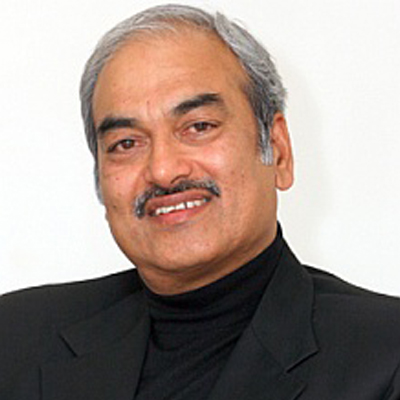
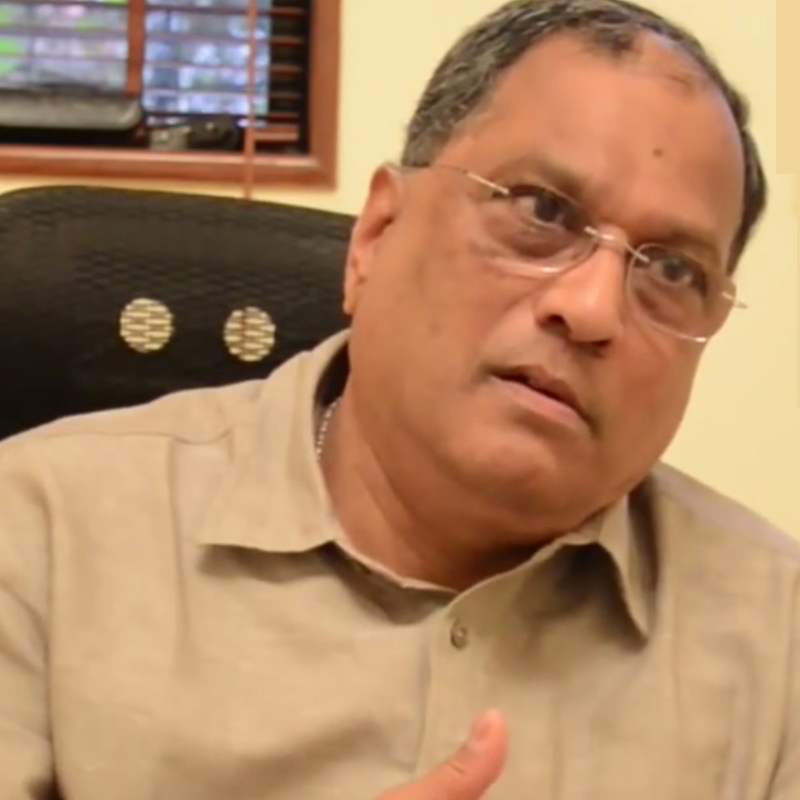
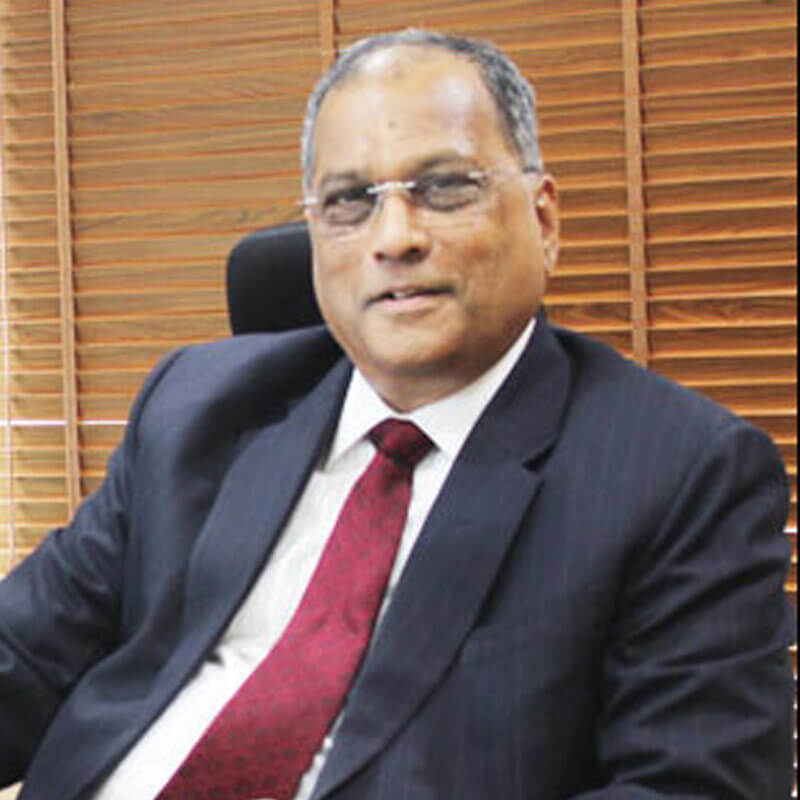
    MUMBAI: Tomorrow, Tony D’silva will serve his last day as the MD and CEO of IMCL, a wholly-owned subsidiary of Hinduja Ventures.

    “I have decided not to renew my contract (with IMCL) as I wanted to take a break,” D’Silva told Indiantelevision.com. He denied knowledge of his replacement. “They may announce it tomorrow, or whenever,” he said.

    During his stint at IMCL, he helped roll out the Hinduja-promoted headend in the sky (HITS) project NXT Digital, a process which took the group sometime, courtesy regulatory cholestrol. He also rolled out pre-paid subscriptions for the both NXT Digital and the cable network INCable which resulted in a consistent revenue stream for the latter. However, the haphazard management of the DAS III and DAS IV process by the government resulted in idelays. This meant that NXT Digital could not get fair digital content deals with some broadcasters. And this impacted its business planning.

    Looking back at the broadcast industry in India, the cable veteran of 20 years said that he witnessed exciting times in the industry. “There were tremendous challenges as well — some were natural and others created,” he remarked.

    The cable and broadcast industry was at cusp of a paradigm change, he said. “With new regulations, changes are taking place at least in spirit — if not (practically, or) legally. I hope it changed the course of the industry’s progress,” he said.

    With the positive changes — from push to a pull economy, each constituent and stakeholder of the distribution value chain, he said, must be able to sustain on its own. He said he hoped the industry’s fortunes would turn around sooner than later. He would not hazard a guess on the possible changes the budget may bring in.

    About the recent development that one MSO licence would permit pan-India service, he said the regulation, rather amendment, had come rather late in the day. “Simply, allowing the MSOs to function across India would not help immediately. From where would they get head-ends or how soon can they lay their fibre connectivity in newer area?” he questioned with a puzzled tone in his voice.

    “Until and unless, infrastructure sharing is allowed (and practically operational), there is no point in relaxation of rules which allow a cable operator to operate pan-India with a single licence,” he quipped.

    After his break, D’Silva said that he might start a business independently. On prodding about the sector he would be haring into, he shared that he only knew the broadcast industry, with a smile. .

  • Distribution vet Tony D’silva departs from IMCL

    Distribution vet Tony D’silva departs from IMCL

    MUMBAI: Tomorrow, Tony D’silva will serve his last day as the MD and CEO of IMCL, a wholly-owned subsidiary of Hinduja Ventures.

    “I have decided not to renew my contract (with IMCL) as I wanted to take a break,” D’Silva told Indiantelevision.com. He denied knowledge of his replacement. “They may announce it tomorrow, or whenever,” he said.

    During his stint at IMCL, he helped roll out the Hinduja-promoted headend in the sky (HITS) project NXT Digital, a process which took the group sometime, courtesy regulatory cholestrol. He also rolled out pre-paid subscriptions for the both NXT Digital and the cable network INCable which resulted in a consistent revenue stream for the latter. However, the haphazard management of the DAS III and DAS IV process by the government resulted in idelays. This meant that NXT Digital could not get fair digital content deals with some broadcasters. And this impacted its business planning.

    Looking back at the broadcast industry in India, the cable veteran of 20 years said that he witnessed exciting times in the industry. “There were tremendous challenges as well — some were natural and others created,” he remarked.

    The cable and broadcast industry was at cusp of a paradigm change, he said. “With new regulations, changes are taking place at least in spirit — if not (practically, or) legally. I hope it changed the course of the industry’s progress,” he said.

    With the positive changes — from push to a pull economy, each constituent and stakeholder of the distribution value chain, he said, must be able to sustain on its own. He said he hoped the industry’s fortunes would turn around sooner than later. He would not hazard a guess on the possible changes the budget may bring in.

    About the recent development that one MSO licence would permit pan-India service, he said the regulation, rather amendment, had come rather late in the day. “Simply, allowing the MSOs to function across India would not help immediately. From where would they get head-ends or how soon can they lay their fibre connectivity in newer area?” he questioned with a puzzled tone in his voice.

    “Until and unless, infrastructure sharing is allowed (and practically operational), there is no point in relaxation of rules which allow a cable operator to operate pan-India with a single licence,” he quipped.

    After his break, D’Silva said that he might start a business independently. On prodding about the sector he would be haring into, he shared that he only knew the broadcast industry, with a smile. .

  • NXT Digital-InCable merger gets shareholder nod; D’Silva bemoans lack of ecosystem support

    NXT Digital-InCable merger gets shareholder nod; D’Silva bemoans lack of ecosystem support

    MUMBAI: Hinduja Ventures Ltd’s (HVL’s) proposal to demerge its NXT Digital headend in the sky (HITS) business from its subsidiary Grant Investrade Ltd (GIL) and merge it into its cable TV MSO offshoot Indusind Media & Communications Ltd (IMCL) got the thumbs up from its shareholders at its AGM yesterday.

    The cable veteran and IMCL MD & CEO Tony D’Silva says that IMCL is now on the road to fully digest NXT Digital. “We are following the legal process and have already applied to the Bombay High Court and we have also informed the Ministry of Information and Broadcasting.”

    What drove the reorganisation? D’Silva explains: “When we launched NXT Digital, it was incorporated under GIL as an independent company. At that time, we thought it’s better to apply for a licence under GIL and we got the licence. We also thought that it’s better we keep GIL as the company away from IMCL so that no operator will feel that this is a backdoor entry to take over IMCL. But now the time has passed. GIL is an established company and so the NXT Digital move.”

    HVL whole time director Ashok Mansukhani adds that work is already on to integrate both NXT Digital and InCable. Says he: “We are starting with the backend. We are already synergising both the services. We have one of the best subscriber management systems (SMS) in HITS – ICC from Hansen Technologies. InCable is using Magnaquest for its SMS it is also migrating towards ICC. They will be kept separate but there will be one front end irrespective of who the operator is. “

    D’Silva says that more than 700 cable operator premise equipment (COPEs) have been installed so far. “An estimated three million cable TV subscribers are watching television through our HITS platform,” he reveals. “The philosophy of NXTDigital is very clearly to encourage the cable operator to grow and develop his/her business and also that we are a pure service provider. We don’t want to own any network and that message has gone to all the operators across the country.”

    NXT Digital is offering four different packages to MSOs and LCOs who opt for its service. The Gold Cope cost about Rs 13.5 lakh and gives a bouquet of 550 channels, the Silver costs Rs 10 lakh (450 channels) and the Bronze Rs nine lakh (350 channels). A new Eco package has been introduced for Phase IV areas with its price point being Rs 4 lakh (250 channels).

    D’Silva points out that almost 60 per cent of the installations are of the Gold Cope Unit in Phase III areas. “Even smaller markets are wanting HD channels,” he says.

    But even so the management at NXT Digital is pretty frustrated, and are especially concerned about the future of cable TV digitization. Says Mansukhani: “The final date of digitization is the bottleneck for us. Some 50 cases are pending in the high court. On Monday some cases will be hear. On 26 September there will be five cases in front of a chief justice and on 5 October 35 cases will be heard by a single bench. The chief justice has received these cases and whether they were issued in the constitutional law and interpretation of legislation – that decision will be taken on Monday.”

    The nuking of the sunset date for digitization in phase III areas by the various court cases has blown up the progress of NXT Digital. “We had earlier agreed between the IBF, MSOs, TRAI and MIB jointly that till 31 December 2015 the sunset date for Phase III broadcasters would not charge the digital rate to facilitate to process of digitisation,” says D’Silva. “That agreement is valid even today. But broadcasters are charging cable operators analogue rates in Phase III areas and they are slapping us with digital tariffs for the same regions. How is this fair? NXT Digital does not own any network…we are providing services. The same principle should apply to phase IV also where 60 million homes need to be digitized.”

    D’Silva exhorts broadcasters and the industry to give it its total support on HITS as it is a step forward in infrastructure sharing (which is a subject of a consultation paper that the Telecom Regulatory Authority of India put up recently).

    “This must be allowed. How will a big MSO in a small area function when the switchoff happens? He has to come to me. The fact is banks are sharing infrastructure in ATMs. Telcos are doing so too. Why spend money on overbuilding infrastructure,” he asks. “Excepting one broadcaster, all of them are permitting us to provide passive services to MSOs who have a DAS licence and have content agreements with them with the proviso that they pay directly to the broadcaster subject to the SMS report filed by our HITS platform. This one broadcast network is hell bent on undermining our effort to provide television to far flung subscribers in the interiors.”

    He further adds” “Then, the subscriber in Phase IV is paying Rs 60-80 for his channels. With a digitized package it could go up to Rs 160 or so. Even otherwise he may have to pay Rs 40 for just a handful of encrypted channels. The beneficiaries are only the broadcasters and they don’t have any digital model for rural India. The BARC ratings shows more and more free to air channel are popular in rural India. Who is going to pay for pay channels?”

    Asks Mansukhani: “Are we going to have a digital divide in our country? Digitisation will only be limited to metropolitan India and benefits will not flow to rural India. And going by the current goings-on there is a great danger of that happening.”

  • NXT Digital-InCable merger gets shareholder nod; D’Silva bemoans lack of ecosystem support

    NXT Digital-InCable merger gets shareholder nod; D’Silva bemoans lack of ecosystem support

    MUMBAI: Hinduja Ventures Ltd’s (HVL’s) proposal to demerge its NXT Digital headend in the sky (HITS) business from its subsidiary Grant Investrade Ltd (GIL) and merge it into its cable TV MSO offshoot Indusind Media & Communications Ltd (IMCL) got the thumbs up from its shareholders at its AGM yesterday.

    The cable veteran and IMCL MD & CEO Tony D’Silva says that IMCL is now on the road to fully digest NXT Digital. “We are following the legal process and have already applied to the Bombay High Court and we have also informed the Ministry of Information and Broadcasting.”

    What drove the reorganisation? D’Silva explains: “When we launched NXT Digital, it was incorporated under GIL as an independent company. At that time, we thought it’s better to apply for a licence under GIL and we got the licence. We also thought that it’s better we keep GIL as the company away from IMCL so that no operator will feel that this is a backdoor entry to take over IMCL. But now the time has passed. GIL is an established company and so the NXT Digital move.”

    HVL whole time director Ashok Mansukhani adds that work is already on to integrate both NXT Digital and InCable. Says he: “We are starting with the backend. We are already synergising both the services. We have one of the best subscriber management systems (SMS) in HITS – ICC from Hansen Technologies. InCable is using Magnaquest for its SMS it is also migrating towards ICC. They will be kept separate but there will be one front end irrespective of who the operator is. “

    D’Silva says that more than 700 cable operator premise equipment (COPEs) have been installed so far. “An estimated three million cable TV subscribers are watching television through our HITS platform,” he reveals. “The philosophy of NXTDigital is very clearly to encourage the cable operator to grow and develop his/her business and also that we are a pure service provider. We don’t want to own any network and that message has gone to all the operators across the country.”

    NXT Digital is offering four different packages to MSOs and LCOs who opt for its service. The Gold Cope cost about Rs 13.5 lakh and gives a bouquet of 550 channels, the Silver costs Rs 10 lakh (450 channels) and the Bronze Rs nine lakh (350 channels). A new Eco package has been introduced for Phase IV areas with its price point being Rs 4 lakh (250 channels).

    D’Silva points out that almost 60 per cent of the installations are of the Gold Cope Unit in Phase III areas. “Even smaller markets are wanting HD channels,” he says.

    But even so the management at NXT Digital is pretty frustrated, and are especially concerned about the future of cable TV digitization. Says Mansukhani: “The final date of digitization is the bottleneck for us. Some 50 cases are pending in the high court. On Monday some cases will be hear. On 26 September there will be five cases in front of a chief justice and on 5 October 35 cases will be heard by a single bench. The chief justice has received these cases and whether they were issued in the constitutional law and interpretation of legislation – that decision will be taken on Monday.”

    The nuking of the sunset date for digitization in phase III areas by the various court cases has blown up the progress of NXT Digital. “We had earlier agreed between the IBF, MSOs, TRAI and MIB jointly that till 31 December 2015 the sunset date for Phase III broadcasters would not charge the digital rate to facilitate to process of digitisation,” says D’Silva. “That agreement is valid even today. But broadcasters are charging cable operators analogue rates in Phase III areas and they are slapping us with digital tariffs for the same regions. How is this fair? NXT Digital does not own any network…we are providing services. The same principle should apply to phase IV also where 60 million homes need to be digitized.”

    D’Silva exhorts broadcasters and the industry to give it its total support on HITS as it is a step forward in infrastructure sharing (which is a subject of a consultation paper that the Telecom Regulatory Authority of India put up recently).

    “This must be allowed. How will a big MSO in a small area function when the switchoff happens? He has to come to me. The fact is banks are sharing infrastructure in ATMs. Telcos are doing so too. Why spend money on overbuilding infrastructure,” he asks. “Excepting one broadcaster, all of them are permitting us to provide passive services to MSOs who have a DAS licence and have content agreements with them with the proviso that they pay directly to the broadcaster subject to the SMS report filed by our HITS platform. This one broadcast network is hell bent on undermining our effort to provide television to far flung subscribers in the interiors.”

    He further adds” “Then, the subscriber in Phase IV is paying Rs 60-80 for his channels. With a digitized package it could go up to Rs 160 or so. Even otherwise he may have to pay Rs 40 for just a handful of encrypted channels. The beneficiaries are only the broadcasters and they don’t have any digital model for rural India. The BARC ratings shows more and more free to air channel are popular in rural India. Who is going to pay for pay channels?”

    Asks Mansukhani: “Are we going to have a digital divide in our country? Digitisation will only be limited to metropolitan India and benefits will not flow to rural India. And going by the current goings-on there is a great danger of that happening.”

  • What’s troubling HITS man Tony D’Silva?

    What’s troubling HITS man Tony D’Silva?

    MUMBAI: When the Hindujas announced their intentions to set up their Headend in the sky (HITS) platform to service cable dark phase III and phase IV– years ago, the project’s head – cable TV veteran Tony D’Silva – was highly excited. HITS would allow the company – Grant Investrade Ltd (GIL) – to beam out the 800 or so Indian TV channels to homes in towns and villages where setting up new or upgrading to expensive digital head ends was not viable or feasible.

    There were regulatory hurdles initially but the venture finally got off the ground last year much in advance of the DAS Phase III deadline of 31 December 2015. Tony went around marketing the project with great gusto, reaching out to cable ops in the hinterlands, got the Hindujas, the owners, to invest.

    There was interest from cable operators in almost all the areas that the product was demonstrated. The project looked very much viable as it gave cable operators a steady source of income without having to invest much in hardware and just servicing their existing subscribers.

    Then came the spate of cases in the courts of various states, and Phase III came to a grinding halt (it is now pending the decision from the Delhi high court which is expected in the next week). Analogue signals were not switched off in many parts of the country and Tony was in a bit of a fix. As are many other chieftains in MSOs like DEN and Hathway, which have reported very bloodied and battered results in Q1 2017.

    And Tony is a troubled man. Not just for that reason. He says he expects the court to rule justly in favour of digitization of the cable TV sector. However, he is not clear how many more court cases will be filed to stymie Phase III and Phase IV.

    Tony’s woes are mainly because he has been unable to strike viable content deals with some broadcasters.

    “It’s very unfair,” he states. “Some of the major broadcasters are asking the digital package price from me, but they continue to be okay with analogue pricing from cable operators in the very same phase III areas. How will I be able to offer them a digital package price to them when they are getting the same channels at analogue rates? Why will cable operators accept my superior quality digital offering? Why will an MSO and LCO agree to pay for digital services when they are also paying for analogue- that is double the price. These are questions broadcasters need to understand.”

    Another point that Tony would like to make is that broadcasters had refrained from charging any special digital rates in phase I and II areas until the cutoff dates. “We are a pure digital platform; but we are looking at serving in the now-analogue areas more,” he says.

    Tony would like to make an appeal to broadcasters and the regulator to stop charging digital package rates from him and analogue package rates from cable ops. “We are the new kid on the block and we are really aiding the spread of cable TV digitization in very difficult to reach areas of the country. I would beseech the community to give us a fair content deal at analogue rates until the analogue switch off commences. We are very open to pay digital rates once digital is switched on.”

    He goes on to point out that HITS is definitely going to help the pay TV broadcast sector get revenues in their coffers which are hitherto difficult-to-access as digitization gains in strength. “But allow us to run a feasible business first,” he says.

    Hopefully, broadcasters and the regulators will see reason in his plea.

    Meanwhile, the HITs platform is continuing with its game plan of merging GIL with IMCL – the hitherto cable TV MSO arm of the group. The company has informed the ministry of information & broadcasting about its merger intentions and has also approached the High court about the same.

    Then, over the past year or so, IMCL or Incable, has shut down or exited or bought joint ventures MSO headends where they had very little control over the operations. “We are down to about two and a half million paying cable TV customers and most of them are on a wholesale pre-paid model, so we are doing fine there,” says Tony. “The next few months are going to be very crucial. I am hopeful of things getting better,” he adds with a note of optimism.

  • What’s troubling HITS man Tony D’Silva?

    What’s troubling HITS man Tony D’Silva?

    MUMBAI: When the Hindujas announced their intentions to set up their Headend in the sky (HITS) platform to service cable dark phase III and phase IV– years ago, the project’s head – cable TV veteran Tony D’Silva – was highly excited. HITS would allow the company – Grant Investrade Ltd (GIL) – to beam out the 800 or so Indian TV channels to homes in towns and villages where setting up new or upgrading to expensive digital head ends was not viable or feasible.

    There were regulatory hurdles initially but the venture finally got off the ground last year much in advance of the DAS Phase III deadline of 31 December 2015. Tony went around marketing the project with great gusto, reaching out to cable ops in the hinterlands, got the Hindujas, the owners, to invest.

    There was interest from cable operators in almost all the areas that the product was demonstrated. The project looked very much viable as it gave cable operators a steady source of income without having to invest much in hardware and just servicing their existing subscribers.

    Then came the spate of cases in the courts of various states, and Phase III came to a grinding halt (it is now pending the decision from the Delhi high court which is expected in the next week). Analogue signals were not switched off in many parts of the country and Tony was in a bit of a fix. As are many other chieftains in MSOs like DEN and Hathway, which have reported very bloodied and battered results in Q1 2017.

    And Tony is a troubled man. Not just for that reason. He says he expects the court to rule justly in favour of digitization of the cable TV sector. However, he is not clear how many more court cases will be filed to stymie Phase III and Phase IV.

    Tony’s woes are mainly because he has been unable to strike viable content deals with some broadcasters.

    “It’s very unfair,” he states. “Some of the major broadcasters are asking the digital package price from me, but they continue to be okay with analogue pricing from cable operators in the very same phase III areas. How will I be able to offer them a digital package price to them when they are getting the same channels at analogue rates? Why will cable operators accept my superior quality digital offering? Why will an MSO and LCO agree to pay for digital services when they are also paying for analogue- that is double the price. These are questions broadcasters need to understand.”

    Another point that Tony would like to make is that broadcasters had refrained from charging any special digital rates in phase I and II areas until the cutoff dates. “We are a pure digital platform; but we are looking at serving in the now-analogue areas more,” he says.

    Tony would like to make an appeal to broadcasters and the regulator to stop charging digital package rates from him and analogue package rates from cable ops. “We are the new kid on the block and we are really aiding the spread of cable TV digitization in very difficult to reach areas of the country. I would beseech the community to give us a fair content deal at analogue rates until the analogue switch off commences. We are very open to pay digital rates once digital is switched on.”

    He goes on to point out that HITS is definitely going to help the pay TV broadcast sector get revenues in their coffers which are hitherto difficult-to-access as digitization gains in strength. “But allow us to run a feasible business first,” he says.

    Hopefully, broadcasters and the regulators will see reason in his plea.

    Meanwhile, the HITs platform is continuing with its game plan of merging GIL with IMCL – the hitherto cable TV MSO arm of the group. The company has informed the ministry of information & broadcasting about its merger intentions and has also approached the High court about the same.

    Then, over the past year or so, IMCL or Incable, has shut down or exited or bought joint ventures MSO headends where they had very little control over the operations. “We are down to about two and a half million paying cable TV customers and most of them are on a wholesale pre-paid model, so we are doing fine there,” says Tony. “The next few months are going to be very crucial. I am hopeful of things getting better,” he adds with a note of optimism.

  • “Our strategy is clear, we are ready to associate with everybody but we won’t compromise with our transparency:” Tony D’Silva

    “Our strategy is clear, we are ready to associate with everybody but we won’t compromise with our transparency:” Tony D’Silva

    For Hinduja’s Headend In The Sky (HITS) platform – NXT Digital, which was launched earlier this year, the journey so far has been about tussling it out. From procuring the requisite license from the Ministry of Information & Broadcasting (MIB) to getting broadcasters on board, for NXT Digital, it was no mean feat. Focusing on phase III and IV areas of Digital Addressable System (DAS), the venture has made it very clear that they mean business and are here for the long haul.

    Led by Grant Investrade managing director Tony D’Silva, the venture is investing heavily in order to achieve the goals that have been set. With an aim to spread its network pan India, NXT Digital has deployed teams on ground to reach out to operators. Speaking to Indiantelevision.com’s Anirban Roy Choudhury, D’Silva speaks about the roadmap ahead for NXT Digital, the recent deal with Zee Entertainment Enterprises as well as India’s cable digitisation drive. D’silva makes no bones about the fact that the company is ready to associate with anybody but will not compromise with its transparency.

    Read on:

    How did the industry respond to the launch of NXT Digital?

    The launch of NXT Digital has been very well received by most markets across the country. Initially people were skeptical about what this system was all about. There was a lot of negative publicity in the market spread by people with various vested interests saying that we would face the same problems that Jain HITS faced. I think we have been able to overcome that gradually. And now we believe that we are a platform to stay. We have made substantial investment and have the financial support to invest more.

    What do you think has been the biggest achievement so far for NXT Digital?

    The most important achievement is the fact that we have successfully signed all the broadcasters. The deal with broadcasters is for both active and passive services (with exception of Zee), which is a greater achievement. Now I think we have started to move faster. Initially the progress was a little slow because there was a lot of confusion in the market as what will be the last date of DAS Phase III. However, now that there is clarity on the final date, the demand has seen a substantial growth in terms of COPE mini headend systems and set top boxes (STBs).

    When you speak about demand, is there any particular region where you are witnessing the demand or is it pan India?

    It is indeed pan India. In fact, we are observing a huge demand in phase I and II areas. But considering our decision to not disturb the existing ecosystem, we have decided to focus on phase III and IV markets only as of now. That said, we will review the model whenever needed.

    How robust is your infrastructure to meet the growing demand?

    We built our infrastructure for a particular demand but we have gone well beyond that demand and hence we have to now re-build our infrastructure. And that’s exactly what we will do to meet the demand.

    Infrastructure will certainly not be a problem as far as NXT Digital is concerned. We are evaluating various options when it comes to STBs. DAS Phase IV will have a different affording power as compared to phase III and keeping the diversity in mind, we plan to offer a variety of options when it comes to STBs. By next year we will add one or two more transponders too.

    How do you plan to ensure cordial reach out to the operators?

    We reach out to the operators through various print, digital mediums, live roadshows etc. Moreover we have an on-ground team, which interacts with the operators. I think the proof of the pudding is in the eating. Once cable operators as well as the market have seen our services, there will automatically be a level of satisfaction and confidence and then they will be our ambassadors.

    What’s your take on pricing when it comes to DAS Phase III and IV?

    The content pricing is a function of broadcasters. We follow a business model where we don’t make any money from content. We don’t want to make money from content. The lower the broadcaster gives us, the lower we offer to our operators. Broadcasters unfortunately don’t see a difference between Phase III and Phase IV even though we have been repeatedly appealing to them because there is a clear difference in Average Revenue Per User (ARPU) in the two regions. I think it’s the function of authority overseeing the digitisation process to ensure the fact that the price quoted is fair for the entire ecosystem.

    Is there a clear enough revenue model?

    I think there should be a differentiation in the markets, or another way to look at it is to see what you can afford and pay for it. But I don’t know if the second one is a right option at this stage. And the reason I say at this stage is because the consumer is used to a kind of model and suddenly you cannot give him another rationale and logic. The transition needs to happen after following a logical approach and that is something that I firmly believe in. You cannot bring in a change by being harsh on the end consumers. 

    How many operators has NXT Digital signed with so far? Are you happy with the number?

    We are very close to touching the 500 mark and I am very happy with the number. The number will go up substantially as we come closer and closer to the D-Day. There are a huge number of people who are still trying to figure out the best way forward. The main reason why operators held back was because they were insecure about us not having all the content. After getting Zee on board that problem has been addressed and now we will certainly see the demand going up.

    The other problem that we faced in the initial stages was our broadcaster friends campaigning against us. They went on to many operators and mis-informed them saying NXT Digital will also be on the same track as Jain HITS as we will not provide them the content. I think we have proved that these were just rumours and hence they don’t count anymore.

    What’s your take on the entire digitisation process?

    Not all operators are equipped with higher education and hence they do not understand the actual meaning of digitisation. Digitisation does not mean putting a digital head-end and STBs but it is also about managing the backend, packaging and bundling. On the other hand, there are a lot of smart, intelligent Chinese vendors all around laying the trap and there are a good number of operators falling in that trap maybe because of the government pressure or lack of understanding.

    The other thing I have been telling the government is that when you look at regulation per se, the entire onus of implementing digitisation lies on the MSO. However, we are forgetting that a very important part of the process is the local cable operator (LCO), who is delivering the signal to the end consumer. Therefore billing, receipt collection, ensuring quality, consciousness and other on-ground responsibilities should remain with the LCO.

    The government needs to understand that unlike many other countries, India is not a homogenous market. On a single street you will find slums and multi-storeyed apartments, which are both are consuming content. The LCO cannot go with a fixed price because it will be more than some or less than some. Moreover, he will also have to pay service tax on it. The concept of billing needs to be realistic and practical. There are a lot of things that need to be addressed if we really want to digitise the country. 

    You are also providing local channel facility, which is something that lacks on DTH. Who takes the responsibility of the content put on those channels?

    We have a mechanism through which operators can have as many as eight – sixteen local channels. The benefit is that they are all encrypted and hence piracy is taken care of. We are clear with the operator that whatever content is put up, should follow the Cable Act. If the operator airs pirated content or breaches the law, the broadcasters can inform us and we will switch off signals. We have the power to switch off, which other MSOs don’t and that’s another advantage that we have. We have to understand one thing that the COPE belongs solely to the operator and therefore the liability of whatever is inserted through that COPE is on him. 

    Can DD Freedish capitalise on the on-ground chaos? If there is a blackout, people may just move to DD Freedish?

    DD Freedish is also like any other DTH platform. I don’t think it meets consumer requirements. The consumer knows what he wants to watch. Setting up a DD Freedish and buying an STB is similar investment. It’s just that there is no subscription fee attached to DD Freedish but it has its limitations when it comes to number of channels. And not only channels, the exposure that we offer is far beyond, be it international with global channels, local channels or value added services. So we are far ahead of a platform like DD Freedish and we are not bothered by it.

    You had all major broadcasters on board except Zee. How was your experience inking the deal with Zee?

    A deal that took four months to be signed cannot be called a smooth one. We went to the MIB, the Telecom Regulatory Authority of India (TRAI) and then eventually tussled it out at the Telecom Disputes Settlement and Appellate Tribunal (TDSAT). For many years now we have been requesting TRAI to come up with a standard Interconnect Agreement (ICA). There are so many operators across the country who cannot even afford to go to the TDSAT. It’s not an easy process; he has to come to Delhi, hire a lawyer and it needs a lot of financial backup. The deal signing with Zee was a learning experience for me. It was a case of dealing with people who say something and do something totally different. It was a clear case of mis-interpretation of law.

    What is the way forward for NXT Digital?

    Value added services are important to ensure growth and now we are focusing aggressively on that front. I want to make one thing very clear, which is that the Hinduja Group will fight this till the very end. We are not going to be tempered over by anybody in this industry. If there is a genuine problem or concern, we are more than happy to sit and discuss. At the same time, no matter what, we will not be stepped on for nothing. I firmly believe that the whole is always bigger than the individual. If we have all the broadcasters with us and one against, there has to be some vested interest. Our strategy is clear, we are ready to associate with everybody for business or betterment of the industry but we won’t compromise with our transparency. 

  • Hinduja’s NXT Digital installs Actus broadcast monitoring platform

    Hinduja’s NXT Digital installs Actus broadcast monitoring platform

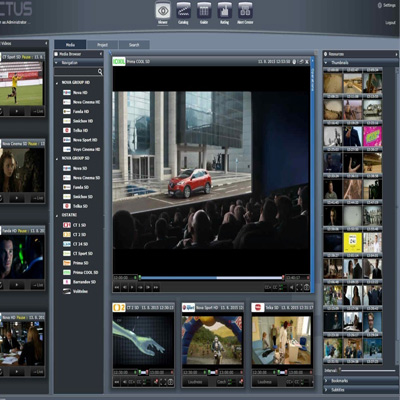
    MUMBAI: Hinduja Group’s headend-in-the-sky (HITS) digital service platform NXT Digital has installed the Actus broadcast monitoring platform.


    The recently launched HITS platform offers over 500 channels to the fast-growing television market in India.


    By implementing the latest version of Actus’s broadcast monitoring platform, NXT is being guaranteed that all IP-based channels are reliably recorded 24×7 and that whenever more channels are added; Actus’s scalable broadcast recording platform will be easily expanded. In order to comply with the current requirements, Actus has deployed Actus View to record and monitor the 350 IP-based channels, Actus Multitrak to support multiple audio tracks, Actus EncoderPro to save hardware resources, Actus Loudness to monitor audio levels, and Actus AlertCenter to provide NXT with real-time alerts for any audio or video issues.


    Grant Investrade MD Tony D’Silva said, “In the dynamic digital video world, we are assured that Actus Digital will not only fulfil our current requirements but also comply with future requirements that the digital world will dictate. Actus has vast experience with installations worldwide and we are confident that the platform will grow as our business expands constantly.”


    Actus was selected for this premier service after a rigorous four-stage RFP evaluation process conducted by Castle Media – Asian broadcast consultancy tasked with end-to-end programme management and delivery of the HITS project.


    “The Actus platform is scalable and modular, which makes the solution cost-effective by allowing GIL to implement only the modules required yet be assured that once additional requirements arise, Actus’s platform will provide us the solution,” added Castle Media executive director Vynsley Fernandes.


    Shaf Broadcast, Systems Integrator, implemented the solution. 


    “We have the knowledge base and experience to deploy Actus Digital’s solutions. The installation, implementation and integration of the Actus platform went fluently and complied with all of our high expectations. The Actus local team worked closely with Shaf engineers to make sure the system will be up and running and meet the high demands and tight time frames. I am assured Actus will provide an excellent platform to NXT Digital also in the future,” said Shaf Broadcast director P.R. Suresh. 


    “One of the challenges, beyond the installation of a large system, was the fastest-possible deployment that was required to meet the time frames of launching the digital rollout of NXT Digital services. In order to be sure that Actus would meet the tight time frames, we sent an Actus-trained local team to the customer’s site to prepare the site ahead of time. With good cooperation with Shaf, we optimized our recorders to take advantage of recent improvements in hardware and of a new version of Actus’s EncoderPro technology and were thus able to offer better performance than initially proposed for the same budget,” said Actus CEO Sima Levy. 

  • NXT Digital organises roadshows for LMOs across 19 cities

    NXT Digital organises roadshows for LMOs across 19 cities

    MUMBAI: Hinduja’s headend in the sky (HITS) platform NXT Digital is looking at a smooth rollout when it launches by this month end. In keeping with the launch timeline, the platform is talking to the last mile owners (LMOs) across the country directly to help them understand the functioning of the system as well as the advantages of moving from the current multi system operator (MSO) to the HITS platform.


    Over the last 11 days, NXT Digital has covered 19 cities including Delhi, Mumbai, Goa, Bhubaneswar and Kolkata among others through its roadshows. The final destination will be Visakhapatnam, where the HITS player will meet city LMOs on 10 August. 


    Through the initiative, NXT Digital has met close to 6000 LMOs so far. Additionally, as part of the training, the HITS player will run a live demo van covering 10 states. 


    As reported earlier by Indiantelevision.com, NXT Digital has signed up as many as one million analogue TV households in phase III markets in a span of three weeks.


    Grant Investrade Limited managing director Tony D’silva said, “The fraternity is extremely excited about NXT Digital. In just over three weeks since NXT Digital was announced, it has already been signed up to reach one million analogue TV households in phase III markets through LMOs and MSOs who have opted for our services.”


    “NXT Digital will empower and enable the distribution fraternity including LMOs and MSOs to offer a world of exciting digital services to their end-subscribers in all the analogue households across markets. Crucially, NXT Digital will not only help the LMOs and MSOs go digital as per government mandated standards and within the set deadlines, but, throughout the process, help them be independent and retain the ownership of their network,” added D’silva.


  • NXT Digital to use Thomson Video Networks’ compression technology

    NXT Digital to use Thomson Video Networks’ compression technology

    MUMBAI: Hinduja Group’s headend in the sky (HITS) platform NXT Digital will use Thomson Video Networks’ compression technology.


    Thomson Video Networks has provided a wide range of equipment and solutions for the broadcast centre and master headend platform, including its Vibe SD and HD broadcast encoders and its multiplexing and network management system.


    “We designed our HITS system to deliver best-in-class picture quality with a robust architecture and the highest level of uptime. To make that design a reality, we needed a world-class digital delivery platform to reach the network operators across India from a centralised location, and Thomson met our requirements,” said Grant Investrade managing director Tony D’Silva.


    “NXT Digital is here to help the distribution community in analog markets make a smooth and timely transition to digital, and we are hopeful it will help write what could perhaps be the biggest chapter in the ‘Made in India’ story,” he added.  


    “Thomson Video Networks’ compression technology with advanced statmux features will give us pristine broadcast picture quality at lower bandwidth consumption. The solution is flexible and future-proof, and Thomson Video Networks has a strong local presence, which is an important requirement of the project,” said Castle Media executive director Vynsley Fernandes.


    NXT Digital is scheduled to roll out pan-India services in 2015, and tests of various components of the business are underway.


    “The Hinduja Group is one of the leading business houses in India and one with a global footprint. GIL’s selection of our compression chain will increase Thomson Video Networks’ market share in the satellite segment in India, push the company to among the top compression vendors in the region, and also boost overall market share substantially. This significant project will further strengthen our presence in Southeast Asia,” said Thomson Video Networks vice president, worldwide sales Eric Louvet.