Tag: Tom Goodwin

  • Zenith’s Tom Goodwin dismisses concept of a digital world

    Zenith’s Tom Goodwin dismisses concept of a digital world

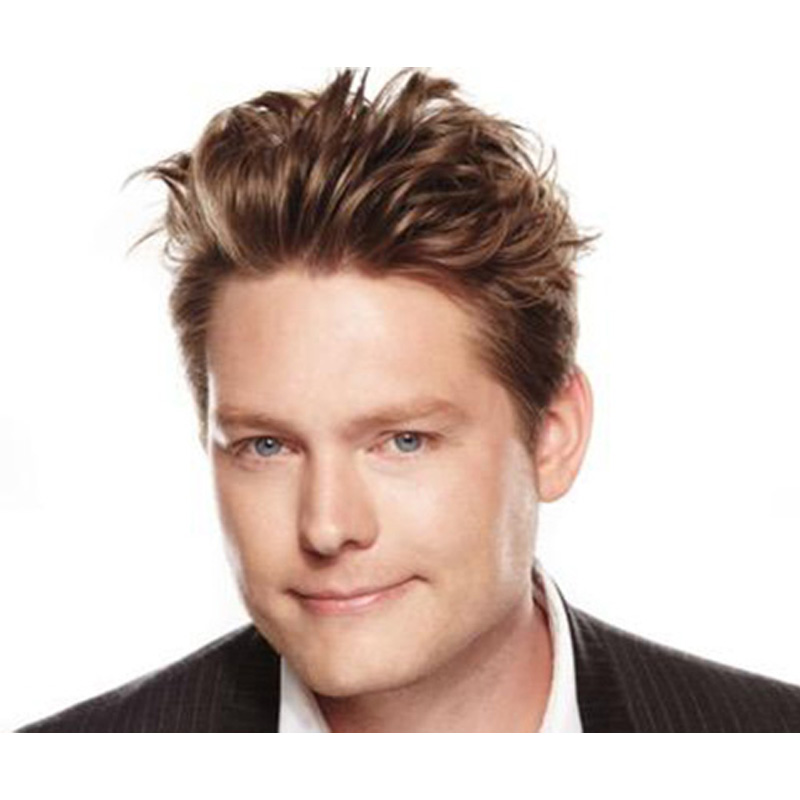
    MUMBAI: The last few years have seen a major shift in consumer behaviour and the way brands interact with them through various mediums. So, the industry is evolving and changing? Well, if Zenith Media EVP and Head of Innovation Tom Goodwin is to be believed, nothing is changing.

    “All we hear now is how the world is changing and the [advertising and marketing] industry is evolving, which is not true. Nothing is changing. Our businesses will not be hampered with drones overnight. It’s easier for people living in big cities to say that the world is changing, which is not the reality,” Goodwin said.

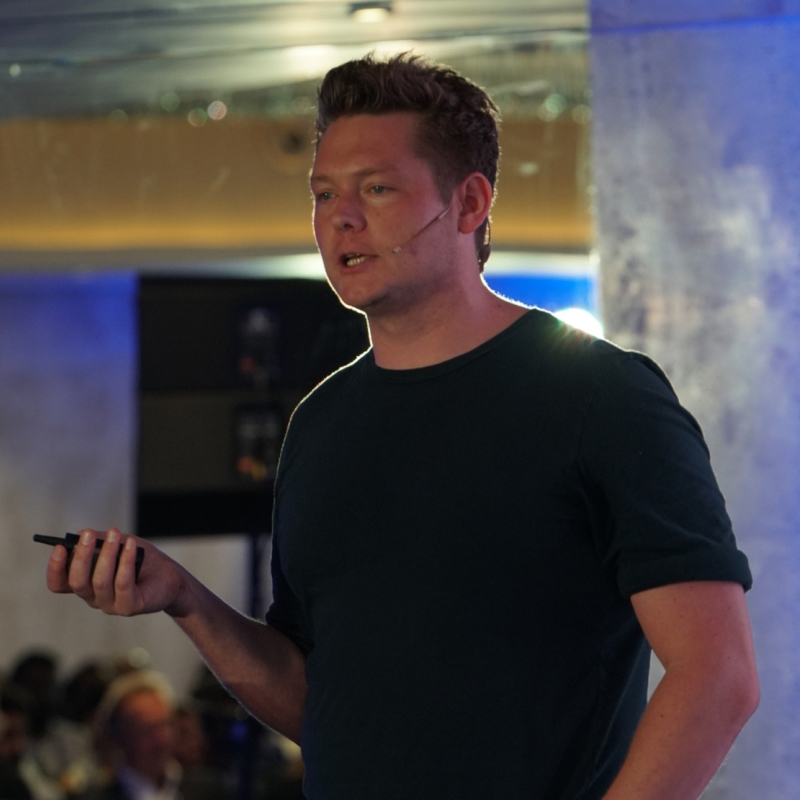
    Speaking at Zee Melt 2018 marcom event here yesterday, Goodwin not only shattered some of the common perceptions and myths about the advertising and marketing industry but expounded too on his theories.

    Take, for example, the perceptive trend of newspaper readerships on the decline globally with people now accessing news on hand-held devices like mobile phones and tablets. Goodwin rubbished this belief by stating that newspaper readerships have increased significant, especially in countries like India and Africa.

    According to the Zenith executive, in a perfect future, passwords and payments could become a thing of the past and one would be able to unlock devices or pay a bill via face recognition software or a smile or a just a gesture. “But that’s far from today and we have to work actively in the right direction to make that happen as we, as an industry, only talk about technologies but know very little about them,” Goodwin explained, adding the industry hasn’t been able to use chatbots effectively.

    Expounding more on technology, he said people were still trying to figure out technology and its many uses in, what he calls, the “mid-digital era”. “As our expectations are high, we tend to refer [to] the past and layer it up without completely understanding it. For instance, reading newspaper should give different consumer experience on different mediums. But it doesn’t. Most newspapers today tend to copy-paste the same model of the physical paper and put it up on the internet without any innovation,” Goodwin explained.

    Pointing out that the world hasn’t “really seen any innovation in advertising since 1950”, while taking pride in being in the creative industry, he didn’t mince words: “We keep making the same mistakes”.

    While everyone talks about how the millennials were difficult to connect with, Goodwin thought they were the “easiest generation to target”. Reason? As the millennials were always connected or on their mobile phones, there, probably, hasn’t been an easier group to “reach in the entire history of humanity”. Though he’s not the only one now saying so, but Goodwin is of the opinion that “TV is not going anywhere” or dying out due to a digital onslaught simply because “TV is now being watched at more places than ever” and it was “irritating to hear” about the death of television.

    However, Goodwin certainly is not wishing away the march of digital altogether. The post “digital age” will be a world where digital will become a part of everybody’s existence and, for that to happen, “markets and agencies collectively need to create brand new experiences from the scratch”, was the advice. He added: “In order to do better business in times of chaos, brands need to transform their communication strategy by understanding people and what they need at what time.”

    While everyone talks about a digital world, Goodwin thinks there is no digital world and people were just “obsessed with the idea of digital being a thing”. Why so? He explained: “We still talk about digital as a thing and a behaviour. We have heads for digital and digital strategy and digital advertising. For the next generation, digital will be a part of their lives just as electricity is. Do we have a global head for electricity? People today don’t do internet banking but do banking in 2018, they don’t do e-commerce, they just buy stuff as and when they feel like it.”

    Not content with countering some presently held popular industry beliefs, Goodwin had some observations on brand expectations too. “Brands today like to set expectations of being the best or giving the best experience ever, which is not at all true. For instance, every bank wants to compare with every other big bank on the street,” the master said, adding, “But that’s not how a consumer judges you. They [consumers] judge you for your own service. Brands need to look into that [aspect], rather than setting high expectations.”

    Moving on to technology and companies, Goodwin advised people to apply technology correctly though they may not necessarily be technology companies. Driving home the point that beyond all the hype, consumer was the king and that every company should keep consumers at the heart of their businesses, he said, “It’s an incredible balance to be made and brands like Uber, WeWork, Whatsapp, Facebook are doing a tremendous work in that area.”

    He also noted that it was easy to presume that most companies don’t know what they were doing today, which is not the case really. “Most companies in the market today have had a large legacy behind them, and whatever and whichever version we see of them today, is a compilation of all the work they’ve been doing for so many years,” Goodwin explained, however, cautioning them of the need to “revamp and relook at their consumers” with a different lens to keep up with the changing needs and demands.

    What does he think of the present era? “It’s the most exciting time to work in business, advertising and marketing. And to be alive,” was how Goodwin summed it all up.

  • Digital is nothing, says Havas Media’s Tom Goodwin

    Digital is nothing, says Havas Media’s Tom Goodwin

    NEW DELHI: Tom Goodwin is not happy with the way marketers have abused the word ‘digital.’ In fact, he doesn’t want the word to be used at all. To the roomful of marketing enthusiasts gathered at Zee MELT 2016, who anticipated a lecture on cutting edge technology and the disruption it brings to the brand world, this 37-year-old SVP of strategy and Innovation at Havas Media said: ‘Sorry, no change.’

    “Things have never changed so fast before, but it will never change so slowly again. If you look at the daily everyday lives of people in suburbs, not everything is changing. While it’s important to look ahead, we need to pay more attention to what is not changing,” Goodwin made it clear.

    One needs to be mindful of the human behaviour that has evolved from centuries, that won’t change so easily.

    Through a number of pictorial slides, Goodwin then took the audience to a time before the industrial revolution to point out how that big change had effected how we function, and its implication in the new world of disruption.

    Giving the analogy of how power plants looked almost the same before and after electricity was discovered, Goodwin implied that technology can be embraced at surface and at deeper levels. Only when the latter is done that real efficiency kicks in a system.

    Putting it in context with the current ‘digital’ onslaught, “currently businesses are trying new technology only at the fringes. Whenever something new comes up, they are tacking it on their existing system without rebuilding the entire structure,” Goodwin said.

    Goodwin then cautioned creative agencies from celebrating their so called ‘digital ads.’ “Simply sticking a TV ad on a pre roll before an online video, or publishing an ad on an online portal doesn’t make it digital. There is nothing new about using the same old ideas in different devices,” he said.

    Calling the current use of technology in marketing as a ‘digital garnish’ done mostly for PR attention rather than serving a functional purpose, Goodwin called said businesses were getting complacent on using digital in silos or add-ons.

    “That Dominos ad with drones delivering pizza was an attractive piece of content but we still await a drone to deliver pizza at our doorstep. British Airways went all high tech and introduced Neuroblankets that would gauge its passenger’s emotions for collecting data, when its website doesn’t have an email address to write to! That’s a perfect waste of marketing spends when the same purpose could be served if they get their basics right,” Goodwin advised.

    In order for business to get these basics right, Goodwin suggested a few pointers. To start with “we need to stop getting awed by digital like we are still in the 90s, as if it is some place to go to. In today’s world there is no concept of ‘online’ or ‘offline.’ An 11 year old boy who has grown up with Internet, doesn’t go to shop ‘online on his smart phone’, he simply shops. Marketers need to understand this concept of ‘disappearing of digital world,’ and stop introducing new ‘digital arms’ in their respective organisations,” Goodwin explained.

    “People really don’t care about how a product gets to them, they don’t want to understand what is radio, print, digital, display, out of home, television or streaming, so marketers too should stop overanalysing over the different channels,” he said.

    Marketers should be mindful of the new realities like virtual reality augmented reality, chat bots and even AI; but ensure that technology or tools aren’t limiting their imagination and growth. “There is a famous saying that goes ‘we shape tools and then they shape us.’ Hotel lobbies still use a giant desk to separate the consumer from the staff, when it was a product of pre digital age and can be done without off now,” cited Goodwin.

    Goodwin sees huge potential in the use of anticipatory computing in advertising where contextual information on how a consumer lives his or her day can help brands target them with meaningful and relevant advertising. “The goal of an advertiser is to make people’s life easier. Brand building can play a huge role in this. Advertising should help us navigate through life not woo us at points with cool tech toys,” Goodwin opined.

    Lastly, Goodwin left the room with a thought: Digital is nothing. It is vital but noticeable only through its absence. This mad race to add another ‘digital’ silo to our business isn’t challenging any system, but following it. No changes there.

  • Digital is nothing, says Havas Media’s Tom Goodwin

    Digital is nothing, says Havas Media’s Tom Goodwin

    NEW DELHI: Tom Goodwin is not happy with the way marketers have abused the word ‘digital.’ In fact, he doesn’t want the word to be used at all. To the roomful of marketing enthusiasts gathered at Zee MELT 2016, who anticipated a lecture on cutting edge technology and the disruption it brings to the brand world, this 37-year-old SVP of strategy and Innovation at Havas Media said: ‘Sorry, no change.’

    “Things have never changed so fast before, but it will never change so slowly again. If you look at the daily everyday lives of people in suburbs, not everything is changing. While it’s important to look ahead, we need to pay more attention to what is not changing,” Goodwin made it clear.

    One needs to be mindful of the human behaviour that has evolved from centuries, that won’t change so easily.

    Through a number of pictorial slides, Goodwin then took the audience to a time before the industrial revolution to point out how that big change had effected how we function, and its implication in the new world of disruption.

    Giving the analogy of how power plants looked almost the same before and after electricity was discovered, Goodwin implied that technology can be embraced at surface and at deeper levels. Only when the latter is done that real efficiency kicks in a system.

    Putting it in context with the current ‘digital’ onslaught, “currently businesses are trying new technology only at the fringes. Whenever something new comes up, they are tacking it on their existing system without rebuilding the entire structure,” Goodwin said.

    Goodwin then cautioned creative agencies from celebrating their so called ‘digital ads.’ “Simply sticking a TV ad on a pre roll before an online video, or publishing an ad on an online portal doesn’t make it digital. There is nothing new about using the same old ideas in different devices,” he said.

    Calling the current use of technology in marketing as a ‘digital garnish’ done mostly for PR attention rather than serving a functional purpose, Goodwin called said businesses were getting complacent on using digital in silos or add-ons.

    “That Dominos ad with drones delivering pizza was an attractive piece of content but we still await a drone to deliver pizza at our doorstep. British Airways went all high tech and introduced Neuroblankets that would gauge its passenger’s emotions for collecting data, when its website doesn’t have an email address to write to! That’s a perfect waste of marketing spends when the same purpose could be served if they get their basics right,” Goodwin advised.

    In order for business to get these basics right, Goodwin suggested a few pointers. To start with “we need to stop getting awed by digital like we are still in the 90s, as if it is some place to go to. In today’s world there is no concept of ‘online’ or ‘offline.’ An 11 year old boy who has grown up with Internet, doesn’t go to shop ‘online on his smart phone’, he simply shops. Marketers need to understand this concept of ‘disappearing of digital world,’ and stop introducing new ‘digital arms’ in their respective organisations,” Goodwin explained.

    “People really don’t care about how a product gets to them, they don’t want to understand what is radio, print, digital, display, out of home, television or streaming, so marketers too should stop overanalysing over the different channels,” he said.

    Marketers should be mindful of the new realities like virtual reality augmented reality, chat bots and even AI; but ensure that technology or tools aren’t limiting their imagination and growth. “There is a famous saying that goes ‘we shape tools and then they shape us.’ Hotel lobbies still use a giant desk to separate the consumer from the staff, when it was a product of pre digital age and can be done without off now,” cited Goodwin.

    Goodwin sees huge potential in the use of anticipatory computing in advertising where contextual information on how a consumer lives his or her day can help brands target them with meaningful and relevant advertising. “The goal of an advertiser is to make people’s life easier. Brand building can play a huge role in this. Advertising should help us navigate through life not woo us at points with cool tech toys,” Goodwin opined.

    Lastly, Goodwin left the room with a thought: Digital is nothing. It is vital but noticeable only through its absence. This mad race to add another ‘digital’ silo to our business isn’t challenging any system, but following it. No changes there.

  • Zee Mindspace Awards 2016 to acknowledge marketing fraternity

    Zee Mindspace Awards 2016 to acknowledge marketing fraternity

    MUMBAI: Zee Entertainment Enterprises Limited (ZEEL) has instituted the Zee Mindspace Awards to give recognition to brands.

    The awards ceremony will be held on 27 August at #ZEEMelt 2016 in the capital.

    ZEE Mindspace Awards aim to serve as an additional independent barometer for marketers. It will recognize the overall marketing mix implemented by the brand owners to carve a mindspace within the consumers.

    ZEEL chief business officer Sunil Buch said, “Achieving ‘consumer mindspace’ is every marketer’s ultimate goal. The thought of extending our three-year old brand intellectual property ‘ZEE Mindspace’ also as an awards property was based on this very essence. The marketing fraternity is an integral part of our overall business value chain, and in today’s digital era it is indeed a challenge for the marketers to arrive at the right marketing mix. The proof of the pudding is being present in the ‘Mindspace’, which is the foundation of ZEE Mindspace Awards.”

    The network has partnered with market research company Nielsen to execute a nationwide research to identify brands which have created maximum impact on the minds of the consumers. The primary criteria to arrive at the winning brands are popularity, advocacy, desire and buzz. Brands which have a top of mind recall are also a part of the structured research methodology.

    Nielsen has targeted a sample size of 12000+ audiences, covering key zones across the country.

    The winning brands will be awarded at the ZEE Mindspace Awards 2016 in the presence of over 500 CMOs and stalwarts from the marketing and advertising industry.

    Nielsen South Asia MD Prashant Singh said, “Nielsen’s research methodology is a brand assessment among consumers who have adopted new age media in addition to traditional media and provides brand owners’ insights into how brands are adapting to this fast-evolving space. More than 12000 online surveys were conducted to evaluate 288 brands across 36 categories. The research was broken into multiple phases – from initial screening of brands to final rounds focusing on understanding what makes a brand resonate in the consumer’s mind. The winners were identified after undertaking a rigorous process, based on top-of-mind recall, popularity, the kind of advocacy the brand commands, the desire to own the brand and finally the buzz it generates. Above all, it’s the brand’s ability to pop-up in mind at the first instance that holds maximum weightage.”

    #ZEEMelt 2016 will also witness the 4th edition of Zee Mindspace Conference which aims at bringing the marketing fraternity together to connect, discuss and explore new possibilities. The sessions under conference comprise of two main themes: Previewing tomorrow – where one gets insights into the future of several areas in the industry, and Open possibilities which introduces the many advantages that data, content, consumer analysis and branding offer in transforming businesses.

    The speakers at the conference are Constellation Research founder and chairman and principal analyst R Ray Wang, News Works deputy chief executive Vanessa Clifford, Havas Media SVP of strategy and innovation Tom Goodwin, strategist and speaker Jeff Bullas, Financial Times chief data officer Tom Betts, Semcon corporate communication and marketing director Per Nilsson, XAxis global CEO Brian Gleason, technology and media author, strategy consultant Tomi Ahonen.

    ZEEL has embarked on an extensive promotion campaign in key markets targeting print, outdoor, digital, social media platforms and PR. Further, as a part of integration with Twitter, the awards ceremony will be live-streamed on Periscope and extensively promoted on the social media platform. Actor and Television presenter, Gaurav Kapur who would be the event anchor, will also interact with the users through Twitter’s #BlueRoom today at 6.30 pm.

  • Zee Mindspace Awards 2016 to acknowledge marketing fraternity

    Zee Mindspace Awards 2016 to acknowledge marketing fraternity

    MUMBAI: Zee Entertainment Enterprises Limited (ZEEL) has instituted the Zee Mindspace Awards to give recognition to brands.

    The awards ceremony will be held on 27 August at #ZEEMelt 2016 in the capital.

    ZEE Mindspace Awards aim to serve as an additional independent barometer for marketers. It will recognize the overall marketing mix implemented by the brand owners to carve a mindspace within the consumers.

    ZEEL chief business officer Sunil Buch said, “Achieving ‘consumer mindspace’ is every marketer’s ultimate goal. The thought of extending our three-year old brand intellectual property ‘ZEE Mindspace’ also as an awards property was based on this very essence. The marketing fraternity is an integral part of our overall business value chain, and in today’s digital era it is indeed a challenge for the marketers to arrive at the right marketing mix. The proof of the pudding is being present in the ‘Mindspace’, which is the foundation of ZEE Mindspace Awards.”

    The network has partnered with market research company Nielsen to execute a nationwide research to identify brands which have created maximum impact on the minds of the consumers. The primary criteria to arrive at the winning brands are popularity, advocacy, desire and buzz. Brands which have a top of mind recall are also a part of the structured research methodology.

    Nielsen has targeted a sample size of 12000+ audiences, covering key zones across the country.

    The winning brands will be awarded at the ZEE Mindspace Awards 2016 in the presence of over 500 CMOs and stalwarts from the marketing and advertising industry.

    Nielsen South Asia MD Prashant Singh said, “Nielsen’s research methodology is a brand assessment among consumers who have adopted new age media in addition to traditional media and provides brand owners’ insights into how brands are adapting to this fast-evolving space. More than 12000 online surveys were conducted to evaluate 288 brands across 36 categories. The research was broken into multiple phases – from initial screening of brands to final rounds focusing on understanding what makes a brand resonate in the consumer’s mind. The winners were identified after undertaking a rigorous process, based on top-of-mind recall, popularity, the kind of advocacy the brand commands, the desire to own the brand and finally the buzz it generates. Above all, it’s the brand’s ability to pop-up in mind at the first instance that holds maximum weightage.”

    #ZEEMelt 2016 will also witness the 4th edition of Zee Mindspace Conference which aims at bringing the marketing fraternity together to connect, discuss and explore new possibilities. The sessions under conference comprise of two main themes: Previewing tomorrow – where one gets insights into the future of several areas in the industry, and Open possibilities which introduces the many advantages that data, content, consumer analysis and branding offer in transforming businesses.

    The speakers at the conference are Constellation Research founder and chairman and principal analyst R Ray Wang, News Works deputy chief executive Vanessa Clifford, Havas Media SVP of strategy and innovation Tom Goodwin, strategist and speaker Jeff Bullas, Financial Times chief data officer Tom Betts, Semcon corporate communication and marketing director Per Nilsson, XAxis global CEO Brian Gleason, technology and media author, strategy consultant Tomi Ahonen.

    ZEEL has embarked on an extensive promotion campaign in key markets targeting print, outdoor, digital, social media platforms and PR. Further, as a part of integration with Twitter, the awards ceremony will be live-streamed on Periscope and extensively promoted on the social media platform. Actor and Television presenter, Gaurav Kapur who would be the event anchor, will also interact with the users through Twitter’s #BlueRoom today at 6.30 pm.