Tag: TOI

  • Wunderman Thompson, TOI empower Indians to be corona warriors

    Wunderman Thompson, TOI empower Indians to be corona warriors

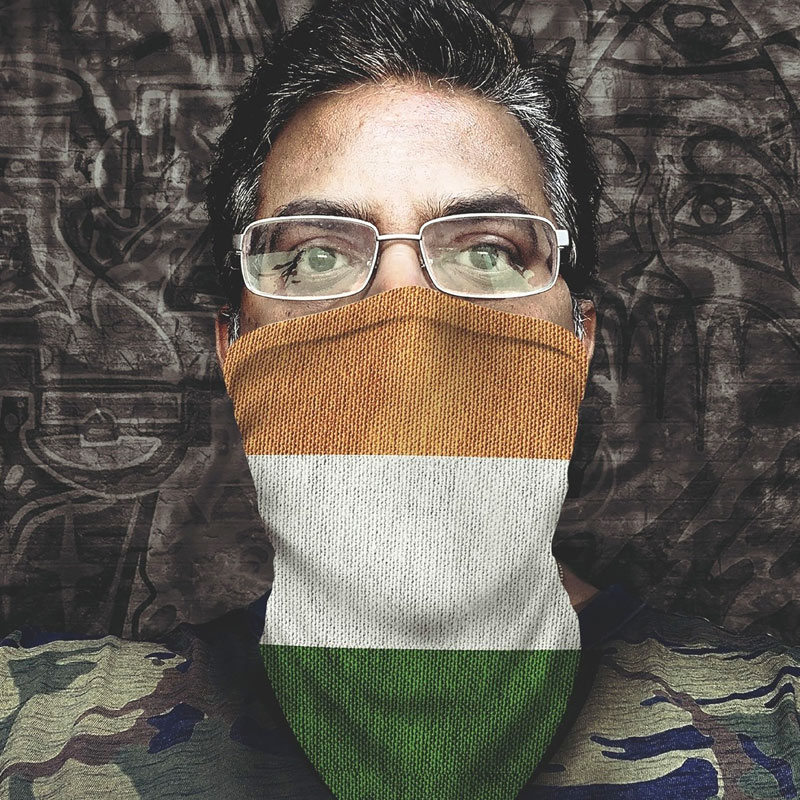
    MUMBAI: In response to Covid2019 pandemic, The Times of India has appealed Indians to make and wear their own masks at home with their #MaskIndia movement. Conceptualised by Wunderman Thompson South Asia, the movement empowered every citizen of the country to take charge of protecting themselves, their families and communities — encouraging individual action and responsibility among Indians, getting them ready to fight the single largest fight our generation has seen, globally. The campaign also focused on proper sanitation and disposal of the masks.

    The ‘Make Your Own Mask’ campaign was launched on the front page of The Times Of India on 6th April involving the power of print, social media and national activation that received a phenomenal response and activated its purpose. 

    The MaskIndia movement has been elevated into a national movement with the Prime Minister Narendra Modi supporting it and himself sporting different homemade ghamcha masks on several occasions during the lockdown. Over a hundred thousand Indians have responded already with their own versions of homemade masks and posted their Mask Selfies and DIY How to Make Your Own Mask Videos with the #maskindia hashtag on social media and many unique, original and cool homemade masks have gone viral across Whatsapp Groups. Check out over 100,000 homemade mask and DIY mask posts on www.maskindia.com

    The Times of India president marketing Sanjeev Bhargava said, “The Times of India has always stood by its motto: “Change Begins Here” and the #maskindia campaign is another link in the long chain of initiatives that we have launched in the recent past. What makes it special is that it has immediate relevance and benefit to everyone in the country. We strongly believe it can play a critical role in our fight against the pandemic. I would like to specially congratulate Wunderman Thompson for not only turning around and developing the campaign from scratch within 2 days but having done so  in the times of a complete lockdown!” 

    Wunderman Thompson Delhi managing partner Joy Chauhan said, “The true character of a country is revealed by how its people and organisations behave in times of crises. With this timely and crucial initiative, The Times of India has proven India’s fortitude, agility and ability to go the distance. All of us at Wunderman Thompson are thankful and proud to be partners.”

    The #MaskIndia movement culminated into a #MaskIndia film featuring a thousand different images of a thousand different homemade masks in a breathe in breathe out the composition of history and culture. The most innovative DIY homemade masks were curated from over 100,000 images posted by Indians during the lockdown with the hashtag #MaskIndia. Editorial photographs of the Masked Statues of National heroes like Mahatma Gandhi, Subash Chandra Bose and the Times Of India’s iconic Common Man feature as special masked characters along with thousands of Indians who have made their own masks and joined the movement.

    Sharing details on the film, Wunderman Thompson India chief creative officer Senthil Kumar said, “The edit has been painstakingly crafted to lock the eyeline in all images so that the transitions from one homemade mask to another are all seamless. The simulation of eye movements is designed to invite a live face-off with audiences who are watching the film on their mobile or television screens. Experience the emotion of a thousand eyes talking to you to deliver a powerful narrative through the masks. All the cultural folk masks and ancient mythological masks have been carefully chosen to share only wearable masks made from jute, coconut husk, bamboo, wood, leaves, paper mache and natural fibre. It’s time to revive our cultural habit of wearing a mask to fight the evil virus, whenever we leave our homes for work and play, for life and family, for our country and for the future of humankind. It’s time to turn the humble ghamcha, dupatta, pallu, turbans, urma, lungi, dhoti, angavastram or any clean cloth into a mask and wear it for India. It’s time to dig deep into our cultural roots and create popular culture, inspiring every Indian to wear a mask like a warrior.”

    www.maskindia.com  features  a unique interactive innovation where every Indian can upload their homemade mask selfie and their image will feature in a custom version of the #MaskIndia video.

    “The idea is to inspire every Indian to Make their Own Mask and share their mask selfie to inspire every other Indian. With over a hundred thousand unique homemade masks already uploaded, the MAKE YOUR OWN #MASKINDIA movement will be amplified further with this interactive innovation”, added Kumar.

    Follow Tellychakkar for the consumer facing news & entertainment
  • Times of India & Healthians celebrate National Health Check-up Day with free health check-ups on

    Times of India & Healthians celebrate National Health Check-up Day with free health check-ups on

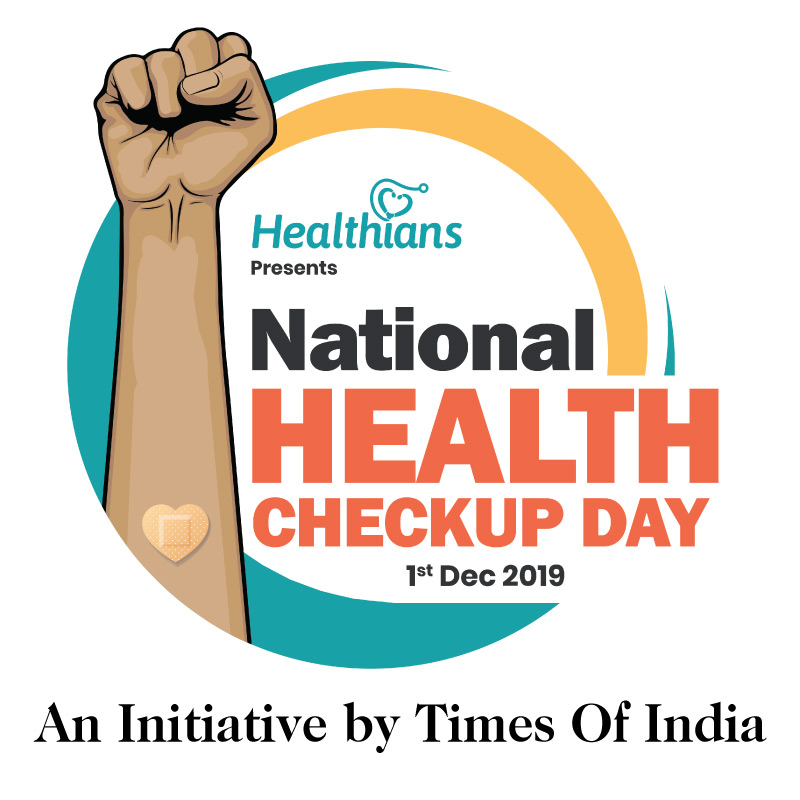
    MUMBAI: To celebrate India’s first National Health Check-up Day, instituted by the Times of India in association with Healthians, people across seven major Indian cities got free health check-ups to educate them about the importance of periodic check-ups.

    As a part of the observations, TOI and Healthians instated a total of 11 checkup camps across seven major locations – Delhi, Gurgaon, Pune, Bangalore, Mumbai, Thane, and Noida. The activity looked to impact and enable more than 500 families to consider preventive healthcare measures.

    As of now, only 9.6 per cent of the overall healthcare expenditure goes towards preventive healthcare. The National Health Check-up Day is a constituent of the Healthy India Fit India (HiFi) movement organised, a joint undertaking by TOI and Healthians, that aims to encourage people to adopt preventive healthcare as a lifestyle choice to help them avoid significant repercussions to their health and wallets.

    Speaking on the initiative, Healthians founder and CEO Deepak Sahni said, "The idea of dedicating a day for health stemmed from the behavior of millennials, both men and women in the age group of 29-40 years. They are so busy in their careers and improving the quality of their lives, that health is often ignored. It’s only when they cross a certain life stage, or when someone close suffers a health problem they realise what they have lost in terms of health. We want people to realise that before it’s too late, their health needs their attention to be able to avoid illnesses.”

    The HiFi initiative was commenced with a pilot campaign that saw over 3 lakh people from across the country pledging to undertake health check-ups on 1 December, signifying its impact on raising awareness about healthcare.

    Multiple celebrities including famous Indian boxers Mary Kom and Vijender Singh, cricketer Sushma Verma, Table Tennis player Manika Batra, Bollywood actresses Sameera Reddy, Chavvi Mittal, and Nisha Rawal had also pledged to undertake health check-ups to celebrate the National Health Checkup Day.

    Times Internet COO Puneet Gupt said, “We firmly believe in supporting causes with initiatives that truly matter. Observing an annual National Health Day is a part of our mission to help India grow stronger by enabling every Indian to pledge for a healthier version of themselves through preventive health checkups. We are excited to partner with Healthians to be a part of this journey to call for a healthier and happier India.”

  • Bombay Dyeing and TOI urge India to #TakeBackSleep

    Bombay Dyeing and TOI urge India to #TakeBackSleep

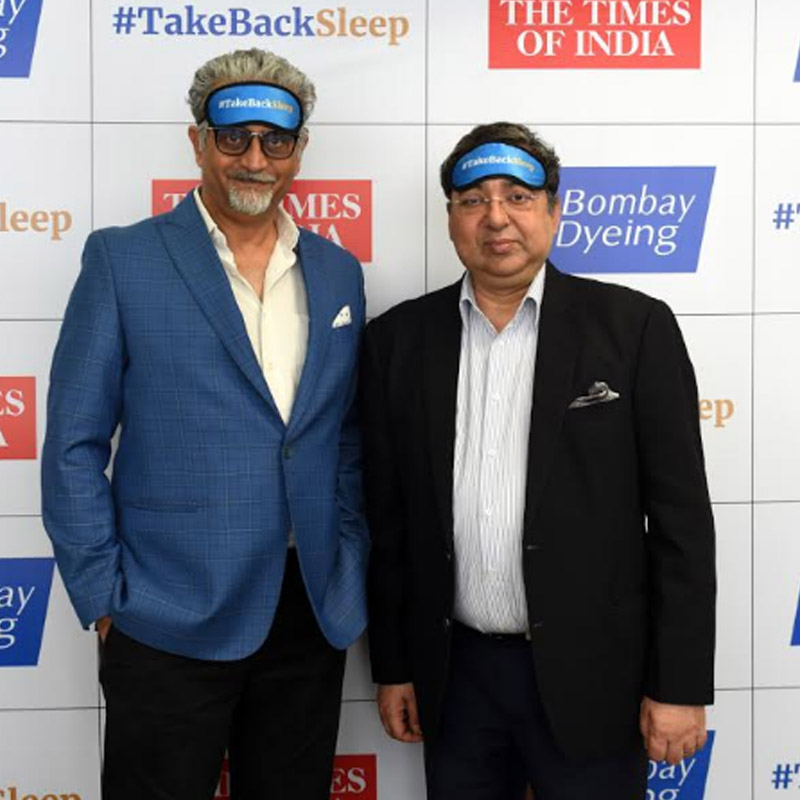
    MUMBAI: Bombay Dyeing, India’s most trusted brand in Home Décor along with The Times of India, India’s largest English newspaper daily, have joined hands to launch a unique cause called #TakeBackSleep. Launched just before Diwali, #TakeBackSleep highlights the importance of adequate sleep for physical health and mental agility and calls attention to the apathetic attitude that young adults have towards their sleep routines. Excessive use of screens, work and social stress, work life imbalance, unhealthy lifestyle habits etc. are leading causes of poor sleep habits. In a world where millennials glorify the ‘sleep less culture’, there is a pertinent need to educate and sensitize the generation about the need for adequate sleep.

    Sleep deprivation and sleep related disorders have emerged key factors that are directly and indirectly leading to physical and mental health issues among the urban Indian population. As a parent or care-giver, one is very sensitive to sleep habits of their wards. Parents monitor the child’s screen time and their sleep routines. However, the same adult is careless about own sleep routines. Sometimes there is even a misplaced pride in sleeping less or being sleep deprived. The problem becomes more complex as there is a serious reservation, bordering shame, in talking about sleep disorders. 

    The multimedia campaign aims to make India realize the need for proper sleep habits, and not fall into a ‘sleep debt’. It will engage with the millennials across print, radio, digital and television. Through a series of short films, conversations, interviews anddebates, #TakeBackSleep is designed to educate, sensitize and showcase the need to adopt good sleep habits along with diet and fitness routines. The campaign dons an optimistic and sensitive tone as it presents relatable situations from daily lives of millennials when they have been neglecting sleep. The campaign is supported by a panel of sleep experts to share deep insights and advise on good sleep habits. Aninteractive Sleep Quiz has been designed keeping in mind the modern lifestyle habits. Using contemporary scenarios, this Sleep Quiz draws attention to triggers for sleep deprivation. Visit www.takebacksleep.org and take the Sleep Quiz.

    Speaking about the campaign, Jeh Wadia, MD of Bombay Dyeing said, “For 140 years Bombay Dyeing has provided comfortable sheets, duvets, pillow cases, mattresses and pillows that have helped millions of Indians to have a sound sleep. As a market leader, I feel it is incumbent on Bombay Dyeing to make everyone realize the importance of 8 hours of sleep – 1/3rd of our lifetime. And by the way it is one of the longest and most consistent activity in our lifetime.Our internal research shows that millennials are sleep deprived due to variety of reasons. Bombay Dyeing presents #TakeBackSleep campaign, where we intend to educate the virtues of adequate and sound sleep. My biggest learning is that leading a fit lifestyle is not limited to working out, eating healthy and meditating, it is also about giving your body the rest. I choose to spend 1/3 of my lifetime with Bombay Dyeing, I hope and suggest you do too.”

    Speaking about the initiative Dr.Aloke Banerjee, CEO-Retail,Bombay Dyeing said, “The statistics on sleep debt was quite astonishing and we knew that we could help make adifference. #TakeBackSleep is an endeavour towards building a fitter and healthier India,especially the urban Indian population. Keeping in mind our aim, we are glad to havepartnered with The Times of India to help extend the reach of our campaign across thenation.”

    Excited about this initiative, Sanjeev Bhargava, Director, Brand TOI, said, “As India’s largest news media brand, it is our responsibility to enable a better India. However, in the relentless pursuit of growth and glory, the millennials often compromise on sleep hours. A positive mind and a healthy body are essential for a prosperous future. And, we cannot achieve that if majority of India is sleep deprived. We hear a lot of chatter around diet and fitness routines, but we rarely read about the need to rest and sleep well. Therefore, we are glad to partner with Bombay Dyeing for this campaign that rightly urges the ‘always-on’ generation to adopt good sleep habits, so that they rest well and are ready to soar higher echelons of success.”

    A good night’s sleep is incredibly important for one’s health, but often that is not given the due importance. Today’s generation is always on the move, packing in more every day, stretching the work hours, socializing and hooked on the screens. There are reams of literature and content created every single day to educate on better nutrition, fitness regimes, workouts, stress management, weight loss and preventive health care. Yet, there is hardly any talk of better sleep management and the ill effects of sleep deprivation. Taking this conversation ahead, and reinstating the importance of good sleep habits, the initiative is geared to jolt people out of their neglectful sleep habits and urge them to re-think their sleep patterns and make good sleep habits a part of daily routine. 
     

  • TOI’s flagship property Times Fresh Face joins hands with Livon to launch its 11th season

    TOI’s flagship property Times Fresh Face joins hands with Livon to launch its 11th season

    MUMBAI: The Times of India brings on board Livon to partner for the 11th season of its flagship talent-hunt platform – Livon Times Fresh Face powered by Set Wet. Since a decade, the hunt has been the national platform that brings together young and talented collegians from all over the country. What sets the competition apart is the focus on recognizing real talent. Last year, the contest introduced the concept of ‘What’s your Fresh Factor?’, wherein the participants go beyond exhibiting their charming personalities and demonstrate their talents in unconventional ways. In continuation, this season will focus on both talent and personality while the search will be more rigorous and advanced. Entering the next decade of the property, there is a twist in the launch of this edition, Bollywood personalities, Nushrat Bharucha and Amit Sadh will be flagging off the contest via a Facebook Premiere with anchor Sanket Bhosale. Apart from discussing their own fresh factor, they will also be opening up about their life and creative journeys and engage in some interesting games and activities.

    Over the years, it has snowballed into a multimedia platform. Garnering over 1 million social media followers and over 1 lakh participants till date, the past editions have wowed the audience and created a stronger connect with the participants creating the largest talent-hunt platform in India. With celebrities like Alia Bhatt, Varun Dhawan, Siddharth Malhotra, Sonakshi Sinha, Ayushmann Khurrana, Neha Kakkar and Yami Gautam sharing their stories about their Fresh Factors in the previous editions, it has always been a star-studded event.

    This year the hunt will stretch over 180 college auditions and open mall auditions across 11 cities; Mumbai, Delhi, Bangalore, Pune, Chandigarh, Nagpur, Chennai, Kolkata, Hyderabad, Ahmedabad and Indore. The talent-hunt is targeted at college students in the age group 16-22. Interested participants can apply via the Livon Times Fresh Face Season 11 website. This year, girls get salon finish hair with Livon Serum and boys styled by Set Wet. The competition will be spread across several rounds of audition, starting with the college auditions followed by open mall auditions, leading participants will then compete at the semi-finale from where the winners will move to the city finales; city winners will then go on to compete at the Grand Finale, which will be held in Mumbai. The most talented male and female participants with the Fresh Factor will be crowned Livon Times Fresh Face 2018.

    Commenting on the contest, Sanjeev Bhargava, Director of Brand TOI said, “The Times of India is not only a chronicler of change but an enabler of positive change. We attempt to impact positive change in many different ways through initiatives that empower the citizens of this country to impact the environment, the health issues facing the country, improving the economic and political awareness in the country. One of the key areas we have identified is to empower the upcoming generations of Indians with self-confidence and recognition, opening the doors to new opportunities for them. Livon Times Fresh Face is one such initiative. We believe that by reaching out to ambitious and talented youth in colleges around the country, and encouraging them to recognize and showcase the power of their talent and personalities, we are not only giving these bright future stars a big platform but also inspiring thousands of other fellow students through our events and amplification in media. The change their talent can bring about is what will contribute to defining the future of this country.’’

    Expressing her views, Bollywood actress Nushrat Bharucha said, “Having seen the talent garnered in the previous years, I have to say I am amazed at how gifted the youth of the country is. I am so honoured to be a part of the Livon Times Fresh Face and I am confident we will be seeing a lot of extraordinary talent this year. If you think you have the personality and talent that will wow the world, this is definitely where you should head to.”

    Speaking about the contest, famed actor Amit Sadh said, “I have always held that talent and determination will help you scale the heights you want to reach. I know for a fact that our country is full of young and talented individuals and it is very heartening to see them get the platform and recognition they deserve with Livon Times Fresh Face. I’m very glad to be a part of this initiative and I cannot wait to see what this edition has in store.”

    Last year, the participants contributed towards a power packed competition, showcasing their talents in various arenas from martial arts to belly dancing. With this edition the property hopes to expand engagement and discover some fresh and innovative talents.  

  • TOI’s #NoConditionsApply campaign wins big at Cannes Lions 2018

    TOI’s #NoConditionsApply campaign wins big at Cannes Lions 2018

    MUMBAI: Times of India recently won four honours at Cannes Lions International Festival of Creativity for its campaign #NoConditionsApply that was launched in 2017 to shed light on the disparity with the female gender in modern society.

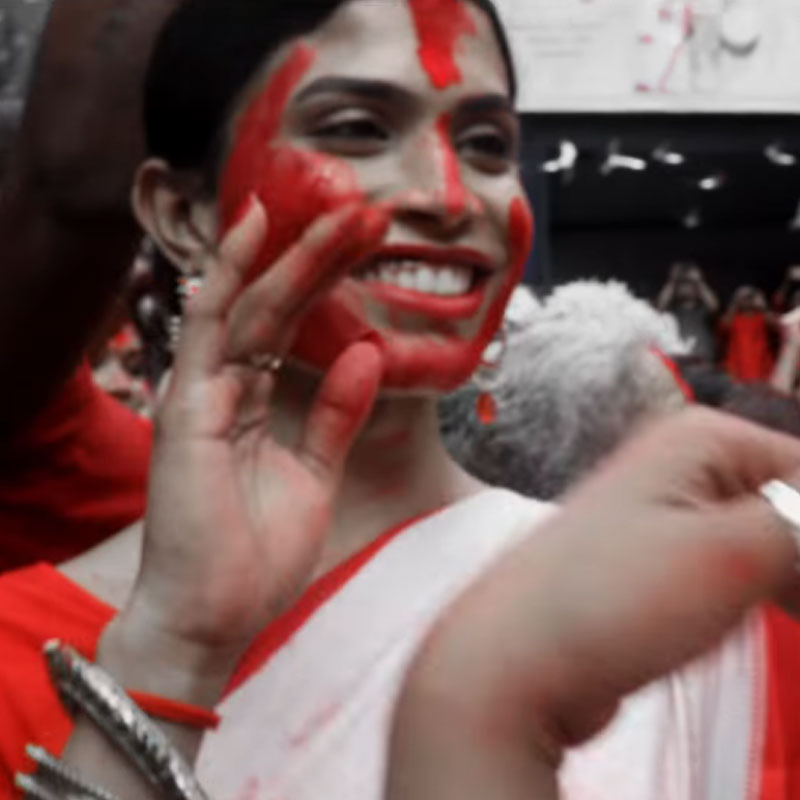
    It focussed on Shindoor Khela, a 400 year old traditional followed in the Bengali culture where on the 10th day of Durga Pujo, married women would celebrate sisterhood by applying vermilion on each other. As a part of the campaign TOI joined hands with Tridhara Sammilani, one of the prestigious Durga Pujo organisers in Kolkata, to host an all-inclusive Shindoor Khela celebration. 

    #NoConditionsApply was conceptualised by FCB Ulka India and created a wave across digital and social media transcending the boundaries of caste and culture becoming a national force which voiced the same message social inclusion for all women. The celebration was captured as a shot film by Bakery Film Productions and the communication amplification was managed by Moe’s Art.

    The campaign that sparked a revolution has received the top honour at Cannes Lions 2018 by winning a gold Lion in Glass, The Lion for Change category that celebrates culture shifting creativity. It has also won a gold Lion in Direct Lions: Excellence in Single Country. The campaign also picked up two bronze Lions one in Direct Lions, excellence in Low budget/high impact campaign and marketing category another in brand experience and activation Lions.

    TOI brand director Sanjeev Bhargava said, “When it comes to campaigns for social good, usually communication provokes action by a thoughtful spotlighting of the issue. The #NoConditionsApply Shindoor Khela campaign went a little further and there lies the power of the idea. This realisation and its amplification by simply inviting the marginalised sections of society to participate equally in the festival and investing a new symbol of womanhood with the two dots created an emotional significance in Bengali society that women are an absolute entity and not dependent on their male counterparts for either validation or special privileges.”

    “While the initiative started off with one Puja Pandal in the city, the amplification of the initiative in various media has brought us a tremendous response and going forward, we intend to spread what is likely to snowball into a movement to multiple festivities all over the country and help establish a strong symbol of gender equality with our brand of newspaper reiterating its influence as a change maker in the country,” he added

    FCB Ulka India national creative head Swati Bhattacharya said, “I’m absolutely overjoyed with the success of the campaign at Cannes, but more so, with the fact that there were so many women from the world over, who resonated with the campaign. In a world, which is full of rage and anger, this women’s movement is born out of love, joy, friendship and dancing. This initiative doesn’t turn to men either to make them change their mind or to recalibrate their views of women. This campaign was accepted as the movement owned and led by the women. This reaffirms our belief that we can improve things for ourselves if we come together as one – as sisters.”

    #NoConditionsApply was the most trending campaign on social media and had a reach of over 20 million when it was launched.

  • TOI celebrates womanhood; #NoConditionsApply

    TOI celebrates womanhood; #NoConditionsApply

    MUMBAI: When we speak of womanhood, what comes to mind is a single state of being; as if it were an undifferentiated gender. However, through the years, society has created labels and tags that exist within this gender. The married and the unmarried, the happily married and the divorced, the straight and the lesbian, the proverbial ‘complete woman’ and the transgender.

    In order to raise awareness about gender equality, Times Of India (TOI) has launched its #NoConditionsApply campaign and has recently launched a short film on inclusive Shindoor Khela. Relating I to Durga Pujo, which is a mega celebration of the homecoming of Shakti (goddess Durga and a symbol of divine femininity) to her maternal home with her sons and daughters, #NoConditionsApply campaign calls for an all-inclusive community celebration.

    Celebrated as a community gathering on the last day of Durga Pujo (Dashami), Shindoor Khela is a tradition that has been celebrated by married women for hundreds of years. TOI brought together married, widowed, transgender, lesbian, single mothers and divorced women to celebrate the day. This film captures the journey of this inclusive celebration – that brings humanity closer and boundaries fade away. The short documentary sheds light on the way in which we can help our own people feel happy and together. It also features women who were a part of the celebrations and showcases their joy to be included.

    Conceptualised by FCB Ulka, the campaign has touched the hearts of millions of people across the globe including the Indian film fraternity celebrities like Bipasha Basu, Tapasee Pannu, Celina Jaitly national award winner Srijit Mukherji among others.

    FCB Ulka chief creative officer Swati Bhattacharya adds, “This movement wasn’t for those who had opted out. It was for those who had been pushed out, it was about erasing a line not drawn by them, but by others. It was about two dots of red with no barrier in between, it was about equality in symbology because after all, that is where it all begins and where it all flows back to. Every progressive, inclusive thought is only as powerful as the ritual it permeates, at least in a country like India where rituals are everything.”

    Times Of India director brand Sanjeev Bhargava says, “It is wonderful to see the #NoConditionsApply campaign receive such a positive and welcoming response from men and women across the country, the campaign has touched over 5 million hearts so far.”

  • TOI  app launches virtual assistant service

    TOI app launches virtual assistant service

    MUMBAI: Times Internet, which already has a 51 per cent market share in user engagement has gone a step further to inform, engage and enable its users by incorporating a virtual personal assistant service in the Times of India App.

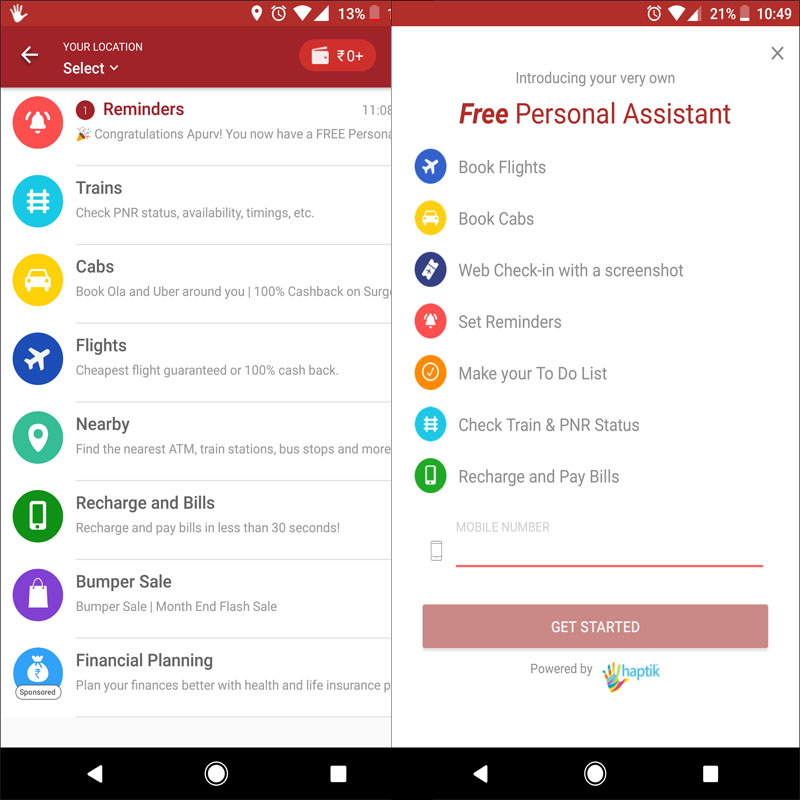
    Powered by Haptik, India’s leading artificial intelligence based personal assistant and chatbot platform, the virtual assistant enables users to set reminders, recharge their mobile, book flights, do web check-ins, make to-do lists, and much more through the Times of India Android News app. Sprite is the exclusive brand partner for this launch integrating the brand very closely with the service.

    This first-of-its-kind innovation in a news app also allows users to book cabs (Uber & Ola), make bill payments (DTH and electricity), and pay through the app via credit card, debit card, netbanking and wallets. For the launch period, where users can get 50 per cent cash back on Recharges, Bill Payments, & more via Amazon Pay.

    To access the Personal Assistant, users need to tap the hand icon at the top right of the home screen, validate the mobile number and then choose one of the many services that the virtual assistant provides. Users can expect many more features to be enabled on this platform in the coming days.

    Commenting on the launch of this new feature in TOI app, Puneet Gupt, COO & Business Head, The Times of India, said, “We are excited with the launch of Virtual Assistant inside the Times of India app. The launch enables us to empower our users with both news-and-information & virtual assistant led productivity within the app that they love.”

    Aakrit Vaish, Founder & CEO, Haptik, said, “Over the last few years, the Haptik virtual assistant chat platform has grown to millions of users and is one of the highest rated apps in India. Our vision is that the service should be accessible from anywhere people want, and not just be restricted to a single app. Integrating into a news app is a natural fit, and the audience of TOI is exactly the type who will appreciate the service,”

    To download the Times of India app on their smartphone or to upgrade to the latest version with the virtual assistant, users can use the link below
    https://play.google.com/store/apps/details?id=com.toi.reader.activities&hl=en

    The Economic Times Power of Ideas, India’s biggest entrepreneurial platform for aspiring and budding entrepreneurs, is back. Presented by Facebook in partnership with DST (Govt. of India) and CIIE. Sign up at www.etpowerofideas.com. Entries accepted till Monday, 13 November 2017

  • OTT trumps TV by 44 min among youth: Chrome DM

    OTT trumps TV by 44 min among youth: Chrome DM

    BENGALURU: Online was larger of the two platforms for consumption of content by youngsters who consumed content only on television or only online in India, a Chrome Data Analytics and Media (Chrome) “OTT Consumption” study has revealed.

    The average daily time spent on content consumption online was 44 minutes higher than the average daily time spent on content consumption on television. Chrome’s survey included 2,505 respondents of which 28 per cent were aged between 15 and 24 years and 72 per cent were in the age group of 25 to 34. 49 per cent of the respondents were male and 51 per cent were female.

    Television versus online

    According to the study, 16 per cent of the respondents consumed content only on online devices, while only two per cent said that they consumed content on television alone. 81 per cent of the respondents said that they consumed content on both the platforms.

    Consumption patterns by respondents who used both platforms for content consumption

    2,054 respondents consumed content both on television and online.

    Genres consumption

    A mobile phone was the preferred device for music consumption among respondents who used both platforms. Eighty three per cent of the 2,054 respondents said that they consumed music on mobile phones as compared to 34 per cent that said that they also consumed music on television and 17 per cent who said that they also used a desktop/laptop for listening to music.

    In the case of movies, television was the preferred device with 66 per cent saying that they watched movies on television as compared to 39 per cent who watched movies on mobile phones and 29 per cent who watched movies on a desktop/laptop.

    Television was also the preferred device for news consumption, with 64 per cent watching it on television and 29 per cent who also watched it on a mobile phone and 9 per cent who also consumed news on a desktop/laptop.

    Seventy four per cent of the respondents consumed sports content on television. 21 per cent and 14 per cent also consumed it on mobile phone and desktop/laptop respectively.

    Sixty nine per cent consumed GEC content on television, and 17 and 6 per cent watched it on mobile phone and desktop/laptop respectively.

    Daily time spent on the mediums

    The average daily time spent online by the 2,054 respondents who consumed content on both television and online was 1 hour 37 minutes on television and 2 hours and 21 minutes online.

    Twenty nine per cent spent less that 30 minutes viewing television, 39 per cent spent between 1 and 2 hours viewing television daily; 26 per cent spent between 2 and 3 hours daily watching television, 3 per cent spent 3 to 5 hours viewing television daily and 3 per cent spent more than 5 hours on daily television viewing.

    Comparative numbers for online consumption of content were: 23 per cent spent each less than 30 minutes daily and between 1 and 2 hours daily; 29 per cent spent between 2 and 3 hours daily; 9 per cent spent between 3 and 5 hours and 17 per cent spent more than five hours on online content consumption daily.

    Frequency

    Seventy four per cent of were daily watchers of television and 26 per cent had no fixed routine for watching television. 77 per cent watched content online daily; 14 per cent watched content online during weekends and 9 per cent had no fixed routines.

    Apps

    YouTube was the preferred app for consumption of all types and genres of content. Other apps/websites such as hotstar, JioTV, Eros Now, Voot, gaana, saavn, Wynk Music, Sony Liv, TOI and NDTV were used for different content genres.

    Top three apps for music consumption

    The top three apps for Hindi music consumption were YouTube, Hungama and gaana , while for English music consumption they were YouTube, Wynk Music and gaana. In the case of Regional Music, the top three apps were YouTube, saavn and JioTV

    Top three Movie apps

    The top three apps for Hindi content consumption were YouTube, hotstar and Eros Now, for both English and Regional content they were YouTube, hotstar and JioTV.

    Top three GEC apps

    The top three apps for Hindi GEC content were YouTube, hotstar and Voot, while for English and Regional content they were YouTube, hotstar and JioTV.

    Top 3 sports apps.

    The top 3 sports apps were YouTube, hotstar and Sony Liv

    Top 3 News apps/websites

    The top 3 News apps/websites were YouTube, NDTV and TOI

    Top 3 apps for Online exclusive content

    The top 3 apps for online exclusive content were YouTube, Hotstar and Voot

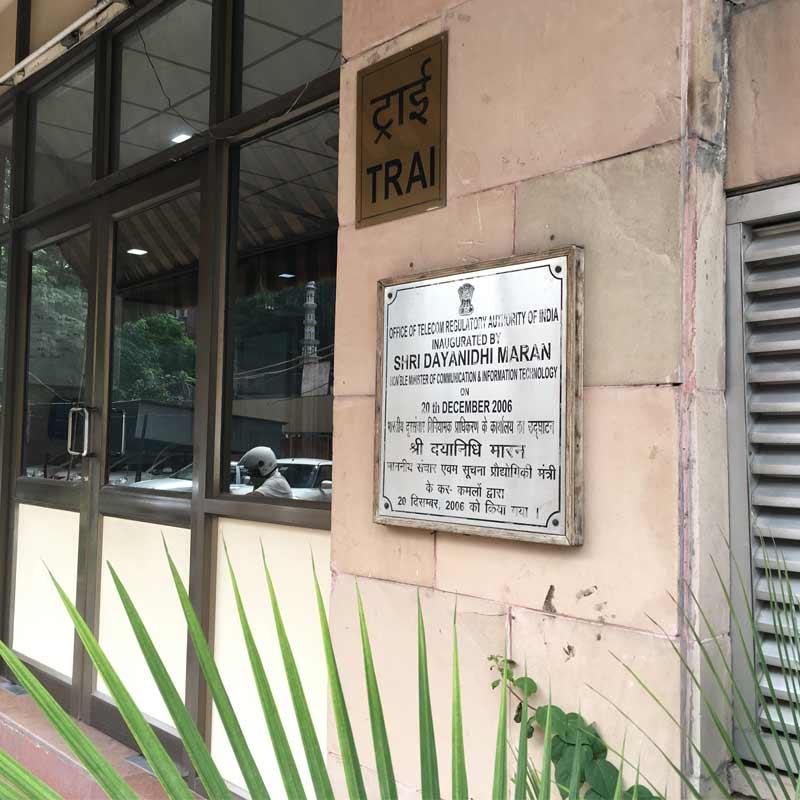
  • TRAI questions Jio tariff; GSMA seeks 700 MHz band price recalibration

    TRAI questions Jio tariff; GSMA seeks 700 MHz band price recalibration

    MUMBAI: There has been palpable unrest among the Indian telcos since Reliance Jio disrupted the telecom ecosystem by bringing in lucrative data and voice offers for the price-conscious Indian consumer a few weeks ago. Telecos instantly put together their counter-offers and also made some quick tie-ups to face the newest competition from the late entrant. Blocking inter-connectivity to calls to and from Jio seemed to a part of strategy of some telcos while the regulator TRAI watched from close quarters.

    After several meetings with the competing telcos, TRAI has now sought an explanation from Reliance Jio Infocomm over its offer of free-calling as it differed from the Rs 1.20-per-minute voice tariff plan reported to the regulator. Jio officials reportedly may soon make changes in their tariffs, which would be conveyed to TRAI.

    TRAI officials discussed with Reliance Jio executives seeking details of the tariff plan, TOI reported. Jio had printed two paise-per-second call plan on its SIM card brochures.

    Jio may have to tackle an issue related to an amendment to the 2004 telecom tariff order. Telecom companies cannot have tariffs below the interconnect user charge (IUC), or the charge that a mobile operator pays to another for terminating its calls. The IUC rate is currently 14 paise per minute, while Jio has made calls free.

    Telcos had alleged that Jio was engaging in predatory practices by offering free voice calls. However, TRAI did not find any merit in this accusation.

    Meantime, GSMA wants the government to revisit 700 MHz spectrum band pricing. Global mobile industry body GSMA has called upon the government to reconsider pricing of 700 MHz band that failed to find takers in the just-concluded auction due to its “unrealistically” high price.

    GSMA chief regulatory officer John Giusti, urged the government to reassess the approach to spectrum auction reserve prices after India “failed” to sell any of the critical 700 MHz band last week. The reserve prices for this highly sought-after band were set at an unrealistically high level of more than USD 60 billion (over Rs 4 lakh crore), Glusti said.

    GSMA added that high reserve prices inhibit investment or delay deployment in next-generation networks at a time when demand for mobile data is growing mani-fold.

    “Regulators should consider the conditions of the local market while setting reserve prices for spectrum auctions. In India, mobile operators have been asked to pay some of the highest rates for spectrum compared to other markets even though it has a low average revenue per user, PTI quoted Glusti’s statement.

    Urging the Indian government to work with the regulator to recalibrate spectrum pricing, GSMA said that timely deployment of this spectrum will expand the reach of mobile broadband services and deliver positive social and economic benefits to the country’s citizens, creating a truly digital India.

  • TRAI questions Jio tariff; GSMA seeks 700 MHz band price recalibration

    TRAI questions Jio tariff; GSMA seeks 700 MHz band price recalibration

    MUMBAI: There has been palpable unrest among the Indian telcos since Reliance Jio disrupted the telecom ecosystem by bringing in lucrative data and voice offers for the price-conscious Indian consumer a few weeks ago. Telecos instantly put together their counter-offers and also made some quick tie-ups to face the newest competition from the late entrant. Blocking inter-connectivity to calls to and from Jio seemed to a part of strategy of some telcos while the regulator TRAI watched from close quarters.

    After several meetings with the competing telcos, TRAI has now sought an explanation from Reliance Jio Infocomm over its offer of free-calling as it differed from the Rs 1.20-per-minute voice tariff plan reported to the regulator. Jio officials reportedly may soon make changes in their tariffs, which would be conveyed to TRAI.

    TRAI officials discussed with Reliance Jio executives seeking details of the tariff plan, TOI reported. Jio had printed two paise-per-second call plan on its SIM card brochures.

    Jio may have to tackle an issue related to an amendment to the 2004 telecom tariff order. Telecom companies cannot have tariffs below the interconnect user charge (IUC), or the charge that a mobile operator pays to another for terminating its calls. The IUC rate is currently 14 paise per minute, while Jio has made calls free.

    Telcos had alleged that Jio was engaging in predatory practices by offering free voice calls. However, TRAI did not find any merit in this accusation.

    Meantime, GSMA wants the government to revisit 700 MHz spectrum band pricing. Global mobile industry body GSMA has called upon the government to reconsider pricing of 700 MHz band that failed to find takers in the just-concluded auction due to its “unrealistically” high price.

    GSMA chief regulatory officer John Giusti, urged the government to reassess the approach to spectrum auction reserve prices after India “failed” to sell any of the critical 700 MHz band last week. The reserve prices for this highly sought-after band were set at an unrealistically high level of more than USD 60 billion (over Rs 4 lakh crore), Glusti said.

    GSMA added that high reserve prices inhibit investment or delay deployment in next-generation networks at a time when demand for mobile data is growing mani-fold.

    “Regulators should consider the conditions of the local market while setting reserve prices for spectrum auctions. In India, mobile operators have been asked to pay some of the highest rates for spectrum compared to other markets even though it has a low average revenue per user, PTI quoted Glusti’s statement.

    Urging the Indian government to work with the regulator to recalibrate spectrum pricing, GSMA said that timely deployment of this spectrum will expand the reach of mobile broadband services and deliver positive social and economic benefits to the country’s citizens, creating a truly digital India.