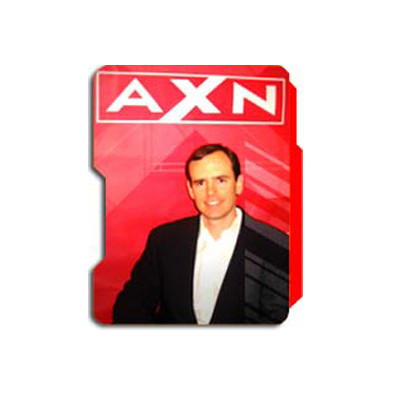
Tag: Todd Miller

  • CASBAA elects new board directors

    CASBAA elects new board directors

    MUMBAI: The Cable and Satellite Broadcasting Association of Asia (CASBAA) has announced the election of several new directors to its board, and the return of a number of long-serving directors.

    Following its AGM on 8 November, first-time directors elected were James Ross (Lightning International), Belinda Lui (Time Warner), and Desmond Chan (TVB). Also re-elected to the board were previous directors Joe Welch (21st Century Fox), Andrew Jordan (AsiaSat), Ricky Ow (Turner Asia Pacific), and Amit Malhotra (The Walt Disney Company).

    They join existing Directors Todd Miller (Celestial Tiger Entertainment), Andrew Stott (CMS Asia), Marcel Fenez (Fenez Media), Rohit D’Silva (FOX Networks Group Asia), and Alexandre Muller (TV5MONDE) to form the 2017-18 CASBAA board of directors.

    “CASBAA is fortunate to have such an excellent group of subscription TV industry executives willing to serve on the association’s board,” said chairman Joe Welch. “We are deeply appreciative of the long and committed service of our out-going directors, and thank them tremendously. At the same time, we offer a heartfelt welcome to our new directors, and look forward to working together with them to lead the association for the benefit of CASBAA’s members and the industry as a whole”.

  • Jonathan Spink new CASBAA board chairman

    Jonathan Spink new CASBAA board chairman

    MUMBAI: Following its first meeting on 06 December, the CASBAA Board of Directors announced that Jonathan Spink, CEO of HBO Asia, has been elected Chairman of the Board of Directors for the next 12 months.

    With almost three decades of experience in the pay television industry, Jonathan Spink is responsible for the overall management of HBO in South East and South Asia. Under Spink’s leadership, HBO Asia has built a growing network of standard-definition and high-definition channels and services, as well as developing several groundbreaking original local productions.

    Spink succeeds Sompan Charumilinda, Vice Chairman of TrueVisions, as Chairman of the CASBAA Board. “Khun Sompan has been a Board member for more than a decade, and most recently, served diligently in his term as Chairman of the Board,” said Spink. “On behalf of my fellow Directors and the broader membership, we thank him for his guidance and insights over the years and we look forward to his continued contribution on the Association’s Board.”

    Spink also welcomed new Directors elected during the Association’s 2016 AGM held 10 Nov in Macau; namely, Rohit D’Silva (FOX Networks Group Asia), Jonas Engwall (RTL CBS Asia Entertainment Network), Marcel Fenez (Fenez Media), Todd Miller (Celestial Tiger Entertainment), Alexandre Muller (TV5MONDE), and Andrew Stott (Olswang Asia). They join returning Directors Sompan Charumilinda (TrueVisions), Andrew Jordan (AsiaSat), Amit Malhotra (The Walt Disney Company Southeast Asia), Ricky Ow (Turner International Asia Pacific), Mark Patterson (GroupM), Joe Welch (21st Century Fox), and Christopher Slaughter (CASBAA) to make up CASBAA’s Board.

    “With the multichannel TV industry in all its forms facing unprecedented challenges as well as opportunities in 2017,” Spink added, “the coming year promises to be busier than ever for CASBAA. I look forward to working with my fellow Directors and the CASBAA Executive Office to ensure that the work of the Association is relevant to all its Member companies, as they adapt to a rapidly developing operating environment.”

    Following the announcement of the Chairman and Board of Directors 2017, CASBAA CEO Christopher Slaughter highlighted the increasingly broad Membership of the Association. He noted that during 2016 several new members joined, including the Premier League, Rewind Networks, Nielsen, Strategic IP Information, Metrasat, Trilegal, and Kantar Media. Also during the year, TV5MONDE, Intelsat, RTL/CBS and INVIDI all upgraded to Patron status. “It is a delight to welcome these new additions across all our membership categories,” Slaughter said. “We are confident they will prove to be valuable additions to the CASBAA community, and we look forward to their participation in our activities and on our Committees.”

  • Jonathan Spink new CASBAA board chairman

    Jonathan Spink new CASBAA board chairman

    MUMBAI: Following its first meeting on 06 December, the CASBAA Board of Directors announced that Jonathan Spink, CEO of HBO Asia, has been elected Chairman of the Board of Directors for the next 12 months.

    With almost three decades of experience in the pay television industry, Jonathan Spink is responsible for the overall management of HBO in South East and South Asia. Under Spink’s leadership, HBO Asia has built a growing network of standard-definition and high-definition channels and services, as well as developing several groundbreaking original local productions.

    Spink succeeds Sompan Charumilinda, Vice Chairman of TrueVisions, as Chairman of the CASBAA Board. “Khun Sompan has been a Board member for more than a decade, and most recently, served diligently in his term as Chairman of the Board,” said Spink. “On behalf of my fellow Directors and the broader membership, we thank him for his guidance and insights over the years and we look forward to his continued contribution on the Association’s Board.”

    Spink also welcomed new Directors elected during the Association’s 2016 AGM held 10 Nov in Macau; namely, Rohit D’Silva (FOX Networks Group Asia), Jonas Engwall (RTL CBS Asia Entertainment Network), Marcel Fenez (Fenez Media), Todd Miller (Celestial Tiger Entertainment), Alexandre Muller (TV5MONDE), and Andrew Stott (Olswang Asia). They join returning Directors Sompan Charumilinda (TrueVisions), Andrew Jordan (AsiaSat), Amit Malhotra (The Walt Disney Company Southeast Asia), Ricky Ow (Turner International Asia Pacific), Mark Patterson (GroupM), Joe Welch (21st Century Fox), and Christopher Slaughter (CASBAA) to make up CASBAA’s Board.

    “With the multichannel TV industry in all its forms facing unprecedented challenges as well as opportunities in 2017,” Spink added, “the coming year promises to be busier than ever for CASBAA. I look forward to working with my fellow Directors and the CASBAA Executive Office to ensure that the work of the Association is relevant to all its Member companies, as they adapt to a rapidly developing operating environment.”

    Following the announcement of the Chairman and Board of Directors 2017, CASBAA CEO Christopher Slaughter highlighted the increasingly broad Membership of the Association. He noted that during 2016 several new members joined, including the Premier League, Rewind Networks, Nielsen, Strategic IP Information, Metrasat, Trilegal, and Kantar Media. Also during the year, TV5MONDE, Intelsat, RTL/CBS and INVIDI all upgraded to Patron status. “It is a delight to welcome these new additions across all our membership categories,” Slaughter said. “We are confident they will prove to be valuable additions to the CASBAA community, and we look forward to their participation in our activities and on our Committees.”

  • Television…. will remain eternal

    Television…. will remain eternal

    MUMBAI: Television will continue to be a dominant medium notwithstanding the emergence of new means of consuming content. New mediums of content delivery are likely to change viewing habits, but more importantly are likely to increase the time spent on watching the stories that are delivered and also provide more opportunities to content creators.


    Rather than fragment television viewership, new mediums of content delivery would open up new opportunities for content creators as well as platform providers.


    To drive home this message, India’s largest broadcaster Star India COO Sanjay Gupta pointed out that 10 years ago the topic of discussion was that newspapers are dead. The fact is that in the last 10 years the size of the newspaper industry has doubled.


    The topic now is ‘Television is Dead’ but like the newspaper industry television will continue to grow, said Gupta, participating in a panel discussion on “Television is Dead – Long Live Television” on the second day of FICCI Frames 2014.


    Fundamentally, new mediums provide new avenues to carry content and to tell stories, Gupta said underlining that there will be greater opportunities with the digital medium opening up.


    IndiaCast Media Distribution Group CEO Anuj Gandhi said, “Fundamentally, we as a nation are a daily soap market. In India daily soaps sell.”


    IndiaCast distributes a multitude of content but in the global markets it has found demand for its serial 24, based on an American thriller series in a real-time format, and not for the Indian staple daily soaps. IndiaCast is mandated to drive domestic and international channel distribution, placement services and content syndication for TV18 Broadcast, Viacom18 and A+E Networks I TV18.


    Celestial Tiger Entertainment CEO Todd Miller echoed the prevalent view. He said, “It is still the living room that is the bulk of our business.” Celestial Tiger is a Hong Kong-based diversified media company that focuses on Asian consumers.


    TELEVISION TO TRANSFORM


    Television as a medium is expected to undergo a transformation from being a linear gadget to a multi-functional smart device. The reinvention of television will allow it to not only survive but blossom despite the onslaught of new mediums of content delivery.


    Effective use of the mobile as a means of content delivery is still a distant given the bandwidth constraints. “For me the biggest challenge is bandwidth. 3G and 4G will change consuming patterns. It will still be sports and news that will be largely consumed on mobiles,” said IndiaCast’s Gandhi.


    There have been so far no serious efforts at making differentiated content. With 3G and 4G, there would be real efforts at making meaningful content.


    Star India’s Gupta said Star Sports’ tie-up with Vodafone has shown there is deep desire among consumers to view content on mobile, even though not at huge costs but by spending smaller amounts.


     “Millions are coming in to check content on Vodafone. They may not want to spend in small amounts,” Gupta said.


    Consumers will seek more and more stories, different stories with the rise of the digital medium of content delivery.  The broadcasters as they now exist and the new means of content delivery and the new content creators would be collaborating rather than working at cross-purposes.


    IndiCast’s Gandhi reiterated that TV Everywhere in the digital era will still remain largely confined to shorter duration content.


    CHANGING DYNAMICS


    Almost 50 per cent of Olympics was watched on mobile. This suggests there is great opportunity to deliver what the consumer wants.


    “We can’t wish it away. Dynamics are changing fast. The distinction between the content creators and platforms is blurring,” said Gupta.


    Industry players expect disruptions to happen but are wary as history shows an outsider has most of the time been the disruptive force.


    New mediums will provide new platforms for content. The broadcasters may go downstream to business to consumer model and the distributors may move up the chain to be the content producers.


    In the US, the average time spent watching television is six hours. In India the average time spent is three hours and the new mediums are seeing an increase in the time spent watching television content.


    Celestial Tiger’s Miller said, “Most of the innovation that comes is from Telcos and DTH.”


    Media Partners Asia executive director Vivek Couto, anchoring the panel discussion, said, “Precedents have already been set for digital deals in the US.”


    Gupta, however, said the cap on prices of television content is hindering creation of quality content. “People are willing to spend. We have 2.5 million HD customers, which is likely to rise to 8 million by the end of this year,” he said.


    The whole ecosystem of story-telling is set for a transformation aided by improved delivery platforms and more creative content creation, and a dominant part of the viewership would still be on television.

  • Industry leaders foretell the future

    Industry leaders foretell the future

    MUMBAI: The 15th edition of FICCI FRAMES witnessed a panel on ‘Television 3.1 Era’, where thought leaders discussed the future of the broadcast industry in terms of content, marketing and distribution in an era of convergence and multi-platform delivery mechanisms.  


    The panel was constituted by Celestial Tiger Entertainment CEO Todd Miller, Reliance Broadcast CEO Tarun Katial, NDTV Group CEO Vikram Chandra, MSO Alliance president Ashok Mansukhani, TV France International executive director Mathieu Bejot and Zee Entertainment chief content and creative officer Bharat Kumar Ranga.


    Having been there in the cable industry for nearly two decades, Mansukhani said there was a need for the industry to start providing content at a time of the viewer’s choice, at a price of the viewer’s choice, and in a manner of the viewer’s choice. “The young generation watches television on the iPhone or iPad. There is one big change that needs to come in the entire industry, which is to start addressing the young consumer in terms of his/her technological needs, content needs and legal rights to access content in whichever way they want to,” he said.


    Chandra said, “Years ago, we used to say that TV as we knew it will be gone forever. That trend is going to accelerate and linked to that is the crashing of price point of smart phone devices. We have to be prepared to change the way we are viewing our own models.”


    He said monetization is a challenge because online in India is still not at a stage it is in say the US though it will get there.


    According to Ranga, “We must not remain an India-based multi-national company, but we need to become a meta-national company. Every market in India, whether it is Tamil Nadu or Karnataka, we have to look at each market individually, closely, and work on it. The moment we do that, we will be able to call ourselves a meta-national company. That is a big change.”


    Ranga further said that the understanding between the network and the consumer is all important. “Finally, consumer-ish understanding is important as compared to market-ish understanding,” he said and added that the first two things would add up to the value of off-screen talent going up and that would take India ahead.


    Miller opined that while multi-screen content viewing would become fundamental in India in the next ten to fifteen years, it was a long road ahead. “TV viewing will still be the primary medium. So in India, HD is the thing and has a lot of room to grow,” he said.


    On his part, Katial said, “India has to see content as the central issue. In this area, India is very much ahead of some other countries where companies are providing content specifically for digital or TV. India however does broadcast quality content for digital.”


    Mansukhani drew attention to the fact that the youth will probably want to view more niche television. “There is a lot of international content that has to be made available. Also, regional content has to be customized. The value of local content cannot be ignored. A little more money for a little more valuable content can lead to better changes in the way we watch television,” he concluded.

  • Casbaa adds Todd Miller and William Wade to board of directors

    Casbaa adds Todd Miller and William Wade to board of directors

    MUMBAI: Casbaa, the Asia Pacific multichannel TV association, has announced the election of Celestial Tiger Entertainment CEO Todd Miller and AsiaSat president and CEO William Wade to the board of directors.

    Re-elected as chairman of Casbaa was Marcel Fenez, global leader, entertainment & media practice, PricewaterhouseCoopers (PwC) and re-elected for additional terms on the board were PCCW TV and New Media MD Janice Lee and GroupM APAC CEO Mark Patterson.

    “We are delighted to welcome William Wade and to have Todd Miller return to the Casbaa board of directors. With their vast experience and wide-ranging knowledge of the multichannel TV landscape in the region, Miller and Wade will prove to be invaluable in helping chart the future of the association,” said Casbaa chairman Marcel Fenez. “We are also pleased to have the continued support of Lee and Patterson whose contributions to the governance of the association has been an integral part of our success.”

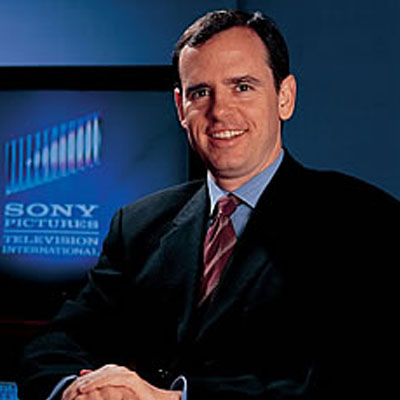
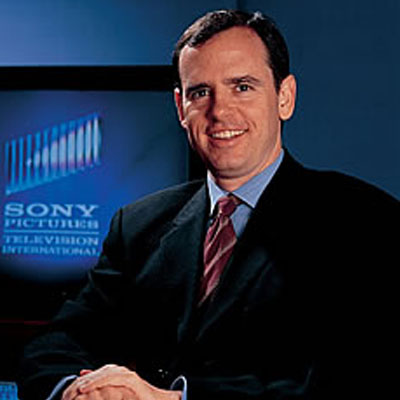
    Celestial Tiger Entertainment CEO Todd Miller is responsible for driving the company’s core businesses of branded pay-TV channels, content creation and content distribution across Asia and beyond. Prior to joining Celestial Tiger Entertainment, Miller spent 17 years at Sony Pictures Television, where he last served as executive VP, Networks, Asia-Pacific, overseeing and managing over 25 television networks and channel investments in the region. Miller has previously served two terms on the board of directors of Casbaa.

    William Wade was appointed as CEO on 1 August 2010 to lead AsiaSat, with his title changed to president and CEO from 1 January 2011.  Prior to assuming his role as CEO, he had served as AsiaSat’s deputy CEO for 16 years. Wade has over 26 years of experience in the satellite and cable television industry. Prior to joining AsiaSat in April 1994, he was with Hutchison Whampoa, as director of business development for Pan Asian Systems, and was in charge of all sales and regional operations.

    Miller and Wade will be replacing retiring members Disney-ABC International Television (Asia Pacific) SVP & MD Robert Gilby and Turner Broadcasting System Asia Pacific president and MD Steve Marcopoto.

    Added Fenez: “On behalf of the board of directors, council of governors and the executive office, Casbaa would also like to recognise the incredible efforts and hard work of both Robert Gilby and Steve Marcopoto. Their guidance and dedication to the evolution of the association will be greatly missed.”

  • ‘Shows that are optimistic, hopeful, aspirational resonate well with viewers’ : Todd Miller – SPTI Asia executive VP, MD

    ‘Shows that are optimistic, hopeful, aspirational resonate well with viewers’ : Todd Miller – SPTI Asia executive VP, MD

     Last year Sony Pictures Television International (SPTI) set up an office in India. The aim was to get more closely involved with the market and help it grow by offering content in the form of formats. SPTI is also looking at developing more local content from India which can travel overseas. Indiantelevision.com’s Ashwin Pinto caught up with SPTI Asia executive VP, MD Todd Miller to find out more.


    Excerpts:

    When you say that SPTI is the Asian Hollywood Studio what does it mean?
    We are by ownership an Asian company. We pride ourselves that our business combines the best of US and Asian content. As a distribution company we offer locally relevant content and global content.


    SPTI has distribution, a networks segment and a production business. We are the most active of the US studios in terms of producing and distributing Asian content across Asia. So it positions us in a unique way from the others who only focus on US content. Asia is the fastest growing region for us. Korea, China, East Asia and India are key for us.

    Could you talk about the partnerships SPTI has with local Asian players in terms of co-producing with them and distributing their content overseas?
    We make and distribute content. On the film front we have been active making films like Crouching Tiger, Hidden Dragon. Recently we started to make Indian films. Sawaariya was our first film. We also distribute content on behalf of key Asian partners. With CJ Media in Korea we distribute films and shows.


    We distribute it not just in Asia but also outside. This enables our partners to access a wider market for Asian content. So we add value for our business partners. We have also worked with CCTV in China to distribute their show The Stories of Han Dynasty.

    How has SPTI boosted its production facilities and distribution network over the last couple of years?
    We have a strong distribution practice as there is great content to sell. On the distribution side to get closer to clients we set two offices last year – one in India in October and the other in Korea. We want to have a local presence and develop relationships on the ground. We already have offices in Tokyo, Beijing, Hong Kong and Singapore.


    So from a footprint perspective we have Asia well covered from a distribution point of view. On the production front we did a lot of work in South East Asia for formats last year. This year we will focus on India.

    How important is India and what is the gameplan to grow the business here?
    This year we will sell formats to India. Power of 10 is one show. It is a primetime game show and airs on CBS in the US. We are also planning to a local version of Ripley’s Believe It Or Not. We also have a lot of scripted formats as well like telenovellas from Latin America. Our dubbed films area is also growing. We were one of the first studios to offer local dubbing of films to channels.


    A year from now I can give you examples of how the formats are being developed. Emerging platforms will open up more business avenues. We recently did a deal with Dish TV for pay per view films.

    Are you also looking to create IP as well?
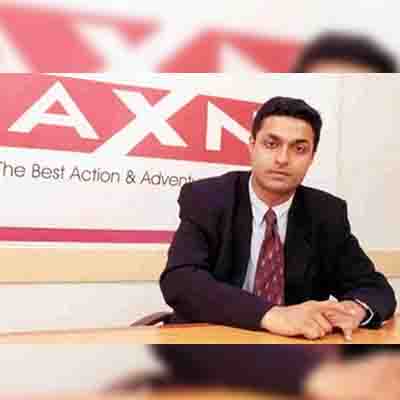
    Through films we are already doing this. Sony is also doing this with its Hindi channel. With AXN we are looking to create original shows that can travel. One of these will be a magic show.

    Have you formed any deals with Indian companies besides the Sony companies in terms of long term partnerships?
    We are talking with parties. One of the things that we pride ourselves on is that we develop relationships with major players across the TV spectrum. These are broadcasters, new media clients.


    We sell content to many players beyond just the Sony channels. India is a top five market for us in Asia. As new delivery platforms emerge we support them. As we continue to beef up our distribution infrastructure I would hope that one would see Sony content consumed across all the digital platforms.

    Are you also looking at co-productions in India?
    Our focus is on growing the format business. Once this area is up and running then we will look at other areas.


    We recognise the potential in India. We have been doing business for well over a decade in this country. Our management looks to India to be a major driver. One of the advantages we have is that we have different assets (channels, film division, the electronics business) that are already present. We have interesting pieces that often work together.

    We want to have a local presence and develop relationships on the ground

    What have the learnings been in terms of what works and what does not across the region?
    Great content from the US sells. But we also recognise the power of locally produced content and its connection with viewers of each country and even each state. In general though shows that are optimistic, hopeful, aspirational tend to resonate well with viewers across the board.

    A lot of your content comes from the US. What impact will the WGA strike have on this?
    It is having a big impact in terms of scripted shows. We are hopeful that the issue will be resolved soon.

    Viva Laughlin was cancelled by CBS after just two episodes. Do you feel that such an unusual format would have worked better on a cable network like USA Network where there is not so much pressure on ratings?
    It is quite possible that it might have done well there. Truly original shows sometimes do need time to find an audience.


    US networks are impatient and they have to be as they are ratings focussed. They do not have the luxury to wait for numbers to grow.

    Besides Damages what are the other high profile shows from Sony US that will debut in India?
    We are looking forward to Cashmere Mafia. It stars Lucy Liu. It is about a group of successful, powerful women friends living and working in New York. The show will come to AXN soon.

    SPTI also tailors content of shows for the mobile in Asia. From a production point of view what are the challenges?
    Our strategy is to make content for mobile and various digital platforms. Taking a multi platform approach allows us to spend more money on our content which results in better production values. At the same time we are not too dependent on any one platform from a revenue standpoint. So a show like Afterworld is a good example of how we are creating content for multiple platforms.


    Last year we acquired all television, Internet, digital sell-through, gaming and mobile rights to Afterworld, which is a futuristic 2.5D animated episodic property. This marked SPTI’s first-ever acquisition of a project for exploitation across all of these platforms.


    At the same time we also have a catalogue which we can and have repurposed for the mobile. This is what we call ‘minisodes’ which are edited versions of full length episodes of famous TV series Like Charlies Angels. It is a short but complete burst of entertainment. In some parts of Asia where 3G has a high penetration like Korea we are getting really good feedback on our mobile video content. We are also expanding our linear channels into the mobile space. We have created a mobile extension of AXN and Animax.

    When will these services come to India?
    Our mobile content is already available on all key carrier platforms in India through local partners such as Hungama Mobile. Hungama Mobile won the first Meffy (Mobile Entertainment Forum Award) awarded to an Asian company for their campaign on our Casino Royale mobile content.

    Digitisation offers the opportunity to launch more channels. Does SPTI have plans in this regard?
    Yes! We are extremely bullish on India and the region. AXN recently launched a new channel AXN Beyond in East Asia. It is a supernatural, sci fi channel that complements AXN.


    It also showcases out of the ordinary shows such as The Dresden Files, a mystery/fantasy series based on the books by Jim Butcher and has actor Nicolas Cage as one of the executive producers. The lead character, Harry Dresden, is a professional wizard and reluctant hero who often helps the police with cases involving ‘unusual’ circumstances.


    Another highlight is a sci-fi series called PainKiller Jane which is based on the cult comic book series of the same name. It stars Kristanna Loken as Jane Vasco, a.k.a. PainKiller Jane, she is recruited to contain the threat of Neuros – individuals with superhuman neurological powers. However, she soon discovers that she has a super power herself – that she cannot be killed, but she can still feel the pain.