Tag: tobacco

  • Akshay Kumar issues public apology for endorsing pan masala brand

    Akshay Kumar issues public apology for endorsing pan masala brand

    Mumbai: Bollywood superstar Akshay Kumar often remains in the discussion for his films. The actor has been in talks on social media again for the past several days. Nonetheless, the discussion is not a film but an advertisement, which he recently did for a tobacco company.

    Kumar was recently seen in an ad of Vimal, after which he was trolled fiercely on social media. The actor is constantly facing criticism from the people, has now come forward and issued an apology for hurting his fans’ sentiments.


    He took to instagram and twitter to write an apology to his fans and followers. His post reads, “I am sorry. I would like to apologise to all my fans and well-wishers. Your reaction over the past few days has deeply affected me. While I have not and will not endorse tobacco, I respect the outpouring of your feelings in light of my association with Vimal Elaichi. With all humility, I step back. I have decided to contribute the entire endorsement fee towards a worthy cause.”

    “The brand might continue airing the ads till the legal duration of the contract that is binding upon me, but I promise to be extremely mindful in making my future choices. In return, I shall forever continue to ask for your love and wishes,” he added.

    It is worth noting that this advertisement of Akshay Kumar was released recently. The ad features actors Shahrukh Khan and Ajay Devgan too, who were seen welcoming Akshay Kumar in this advertisement. This was the first time that three big Bollywood actors had come together in an ad. Ajay Devgan has already appeared in many pan masala brand advertisements for a long time. There was not much ruckus when Shahrukh Khan appeared in this advertisement. But as soon as Akshay came in this ad, people criticized him fiercely and trolled him.

  • Despite industry’s closure threats, govt. implements 85 per cent pictorial warning on tobacco packets

    Despite industry’s closure threats, govt. implements 85 per cent pictorial warning on tobacco packets

    New Delhi: Close on the heels of imposing stringent punishments to vendors of tobacco products in the vicinity of educational institutions in January and raising the tax in the budget in February, the Government has implemented its decision asking manufacturers to use 85 per cent space on tobacco packets on health warnings. The decision has come into effect from this month. An affidavit filed by the Health Ministry before the Rajasthan High Court on 28 March said the warning would appear on both sides of tobacco products and come into force from 1 April.

    This follows a decision taken in September last year, after an earlier order for implementation from April 2015 was stayed in June by the Government to allow a parliamentary committee to study the issue further. The Cigarettes and Other Tobacco Product (Prohibition of Advertisement & Regulation of Trade and Commerce, Production, Supply and Distribution) Act also prohibits the sale of cigarettes or other tobacco products to people below 18 years and in areas within a 100- metre radius of educational institutions.

    The Government nailed its latest decision by informing the Rajasthan High Court earlier this week to stick to its decision of 85 per cent pictorial warnings on every packet, thus forcing major tobacco companies to consider shutting shop in India. Interestingly, the Government has bypassed the advice of the Parliamentary Committee which recommended only 40 per cent pictorial warning. Until now, the coverage was forty per cent.

    The Tobacco Institute of India  said a unanimous ‘closure’ decision was  made by the players in the industry in response to the ‘ambiguity’ in the centre’s policy on pictorial warnings on tobacco product packs. Prominent members of the TII including ITC, Godfrey Phillips and VST have already announced their decision in this regard. ITC is already understood to have shut down five of its units. ITC, Godfrey Phillips and VST reportedly account for over 98 per cent of domestic cigarette sales, along with other members of the Institute.

    TII in a press release estimated a daily loss of Rs 350 crore in revenue for the tobacco industry from the production stoppage. It asserted that the revised pictorial warning would promote the trade in illegal cigarettes and affect the livelihood of 45.7 million (4.57 crore) people dependent on the industry.

    The Indian tobacco industry had in mid-March written to the Health Ministry seeking clarification but did not get any reply, leading to the decision for closure ‘fearing, potential violation of rules by continuing production.’
    TII has claimed that illegal cigarettes account for one-fifth of the industry, resulting in an annual revenue loss of Rs 9,000 crore to the exchequer. It even blamed ‘foreign-funded anti tobacco activists’ and ‘vested interests’ for pushing such a policy.

    In fact, many of the tobacco majors in the country have already made inroads in other sectors like hotels, FMCG etc.

  • Despite industry’s closure threats, govt. implements 85 per cent pictorial warning on tobacco packets

    Despite industry’s closure threats, govt. implements 85 per cent pictorial warning on tobacco packets

    New Delhi: Close on the heels of imposing stringent punishments to vendors of tobacco products in the vicinity of educational institutions in January and raising the tax in the budget in February, the Government has implemented its decision asking manufacturers to use 85 per cent space on tobacco packets on health warnings. The decision has come into effect from this month. An affidavit filed by the Health Ministry before the Rajasthan High Court on 28 March said the warning would appear on both sides of tobacco products and come into force from 1 April.

    This follows a decision taken in September last year, after an earlier order for implementation from April 2015 was stayed in June by the Government to allow a parliamentary committee to study the issue further. The Cigarettes and Other Tobacco Product (Prohibition of Advertisement & Regulation of Trade and Commerce, Production, Supply and Distribution) Act also prohibits the sale of cigarettes or other tobacco products to people below 18 years and in areas within a 100- metre radius of educational institutions.

    The Government nailed its latest decision by informing the Rajasthan High Court earlier this week to stick to its decision of 85 per cent pictorial warnings on every packet, thus forcing major tobacco companies to consider shutting shop in India. Interestingly, the Government has bypassed the advice of the Parliamentary Committee which recommended only 40 per cent pictorial warning. Until now, the coverage was forty per cent.

    The Tobacco Institute of India  said a unanimous ‘closure’ decision was  made by the players in the industry in response to the ‘ambiguity’ in the centre’s policy on pictorial warnings on tobacco product packs. Prominent members of the TII including ITC, Godfrey Phillips and VST have already announced their decision in this regard. ITC is already understood to have shut down five of its units. ITC, Godfrey Phillips and VST reportedly account for over 98 per cent of domestic cigarette sales, along with other members of the Institute.

    TII in a press release estimated a daily loss of Rs 350 crore in revenue for the tobacco industry from the production stoppage. It asserted that the revised pictorial warning would promote the trade in illegal cigarettes and affect the livelihood of 45.7 million (4.57 crore) people dependent on the industry.

    The Indian tobacco industry had in mid-March written to the Health Ministry seeking clarification but did not get any reply, leading to the decision for closure ‘fearing, potential violation of rules by continuing production.’
    TII has claimed that illegal cigarettes account for one-fifth of the industry, resulting in an annual revenue loss of Rs 9,000 crore to the exchequer. It even blamed ‘foreign-funded anti tobacco activists’ and ‘vested interests’ for pushing such a policy.

    In fact, many of the tobacco majors in the country have already made inroads in other sectors like hotels, FMCG etc.

  • Two new anti-Tobacco health spots for ‘Tobacco-Free Film Rules’ released under COTPA

    Two new anti-Tobacco health spots for ‘Tobacco-Free Film Rules’ released under COTPA

    NEW DELHI: Two new anti-tobacco spots titled ‘Child’ and ‘Dhuan’ have been released by the Health Ministry to be screened on movies and television whenever smoking scenes are depicted, even as studies have shown very little effect of government’s attempts to prevent smoking scenes.

    The spots have been released under the Cigarettes and Other Tobacco Products (Prohibition of Advertisement and Regulation of Trade and Commerce, Production, Supply and Distribution) Act (COTPA) rules and will be effective from today. These spots have been dubbed in 16 Indian languages for a pan India coverage. It is mandatory for cinema halls to prominently display these spots whenever smoking scenes are shown as part of the movie. These spots were released to media by Health Ministry Additional Secretary C K Mishra.

    Interestingly, studies undertaken by the Ministry in collaboration with the World Health Organisation after the promulgation of  “The Cigarettes and Other Tobacco Products (Prohibition of Advertisement and Regulation of Trade and Commerce, Production, Supply and Distribution) Act” (COTPA) shows that while 76 per cent films were depicting tobacco use in 2003, this had increased to 89 per cent in 2006.

    Similarly, the percentage of the lead character shown smoking had gone up from 40.9 per cent to 75.5 per cent in these years, of the films which showed tobacco scenes. Tobacco brands/product placement and visibility also rose from 15.7 per cent to 41 per cent between 2003 and 2006.

    In 2003 before COTPA was enforced, the Ministry with the support of World Health Organization commissioned the study titled “Bollywood: Victim or Ally” to help develop a strategy to reduce smoking in films.  The aim of the study was to understand the extent to which movies impact youth’s lifestyles and the impact of portrayal of tobacco in Indian films

    In 2006, after COTPA 2003 banned tobacco advertisements of any kind, another study was commissioned to document changes in tobacco imagery in films.

     The anti-tobacco health spots and disclaimers are being provided by the Ministry under the COTPA Rules. Two spots ‘Mukesh’ and ‘Sponge’ depicting harmful effect of usage of smokeless and smoking forms of tobacco were used with effect from 2 October 2012.

    Speaking at the media launch of the two new spots, Mishra said since 2 October 2013 marks the completion of five years of implementation of smoke-free laws in India, the launch of these two spots, ‘Child’ and ‘Dhuan’,  reinforces the government’s emphasis on the issue of secondhand smoke and implementation of smoke-free policies in India. While the narrative at present is more on control on smoking, the Ministry will soon move towards the smokeless form of tobacco. He said that the ban on ‘gutka’ was a major achievement in the direction of banning the use of tobacco in the country.

    ‘Child’ and ‘Dhuan’  have been developed to warn about the health costs of smoking and second hand smoke and of the penalties to be faced by violating the smoke free law.  ‘Child’ focuses on the health risks of smoking and secondhand smoke, while ‘Dhuan’ especially models the behavior expected of business managers, advocates, enforcement officials, smokers and non-smokers. The spots have been developed by World Lung Foundation (WLF).

    COTPA was aimed at regulating consumption, production, supply and distribution of tobacco products, by imposing restrictions on advertisement, promotion and sponsorship of tobacco products; prohibiting smoking in public places; prohibiting sale to and by minors, prohibiting sale within a radius of 100 yards of educational institutions and through mandatory depiction of specified pictorial health warnings on all tobacco product packs.  

    Section 5 of COTPA prohibits all forms of advertisements, promotion and sponsorship of tobacco products.

    The 2006 study clearly established that tobacco imagery, including brand display had markedly increased in the wake of tobacco advertising bans in other media. Consequently, COTPA’s rules were refined in 2005 to meet the challenge of tobacco imagery in films. However, these rules could only be implemented from 2 October, 2012 after addressing all the implementation concerns of the Information and Broadcasting Ministry.

    As per the Rules all films and TV programmes certified/produced on or after 2 October, 2012 that depict tobacco product or its use must have a strong editorial justification explaining the necessity of display of tobacco products or its use (to the Central Board of Film Certification); anti-Tobacco Health Spot of 30 seconds duration each (beginning and middle); anti-Tobacco Audio Visual Disclaimer of 20 seconds duration each (beginning and middle); anti-Tobacco Health Warning as a prominent static message during the period of display of tobacco products or their use.

  • Experts call for football alcohol advertising restrictions

    Experts call for football alcohol advertising restrictions

    MUMBAI: Newcastle University academics have called for the government to consider restricting alcohol marketing during televised football matches after studying a selection of games and finding they were ‘bombarded’ by references to drink.

    They found that on average there were 111.3 visual references to alcohol for every hour of football broadcast in the six games they looked at, nearly two every minute. This includes images on billboards at the side of the pitch and other references during replays or when scores were shown or substitutions were being made.

    The total broadcast time for the six matches, shown on the BBC, ITV and Sky TV, was 18 hours and 21 minutes. During that time there were 2042 visual references to alcohol of various types, mainly beer. There were also 32 verbal mentions, mainly of match or competition sponsors and 17 adverts during the matches, from last season, including games in the Premier League, Champions League, FA Cup, League Cup, UEFA Cup and Championship.

    In the UK ?202.5 million is spent every year on advertising alcohol, while over ?800 million goes on marketing every year. Previous studies have shown that alcohol marketing increases the likelihood that young people will start to use alcohol and will drink more if they already use it.

    It has been found that 96 per cent of all 13 years olds are aware of alcohol marketing and it has been suggested that 5.2 million 4-15 year olds were exposed to alcohol advertising during the 2008 European Championship.

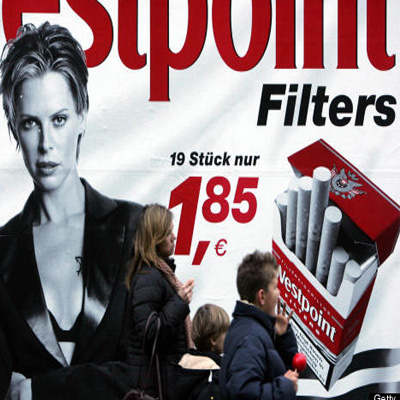
    In the UK tobacco advertising has been banned since 1989 and in 2003 it was made illegal for tobacco companies to sponsor sporting events. Alcohol advertising is self-regulated by the industry itself through a code of practice and the Advertising Standards Authority, but previous studies have highlighted the belief that self-regulation is not working. There are restrictions, such as not equating drinking with social or sexual success or promoting irresponsible behaviour but there are no legal powers of enforcement.

    Dr Jean Adams, senior lecturer in public health at Newcastle University and a member of Fuse, the Centre for Translational Research in Public Health, said: “Alcohol – related hospital admission are continuing to rise, despite alcohol consumption falling overall because the heaviest drinkers are consuming more.”

    “This type of study has never been done before in the UK, looking at alcohol marketing during televised football matches. We wanted as broad a picture as possible, which is why we chose the matches from different broadcasters and from different competitions.”

    Andy Graham, speciality registrar in public health with the NHS, said: “Our findings show that young people are likely to be hugely exposed to alcohol marketing during televised football matches, and this is likely to have an influence on their attitudes to alcohol. We were surprised by just how many images there were during these games, it was a constant bombardment.

    “We believe a similar restriction to that imposed on tobacco products may be justified.”