Tag: Times of India

  • Times Of India announces next leg of award winning #NoConditionsApply campaign, makes a national movement

    Times Of India announces next leg of award winning #NoConditionsApply campaign, makes a national movement

    MUMBAI: The Times of India has launched the second leg of its critically acclaimed campaign #NoConditionsApply Sindoor Khela that raises a pertinent question on inclusion during celebrations. Last year, the campaign was launched with a slam poetry video that pointed out the discrimination a woman goes through owing to her marital status, childbearing capability or sexual orientation.  What followed, was an all-inclusive Sindoor Khela that was hosted by TOI at one of the most prestigious pandals in Kolkata – Tridhara Sammilani – where all women participated in the social celebrations sans their societal tags of transgender, widow, separated, divorced, single mother, married and so on. This year, the campaign takes a step forward to urge the Puja Committees across the nation to take up the mantle and host #NoConditionsApply Sindoor Khela at their premises during the last day of Durga Puja. What started with a localized campaign in Kolkata set in one Puja Pandal, is all set to travel to several cities across the nation. 

    The campaign is a part of TOI’s larger umbrella #NoConditionsApply (NCA) – which is a campaign that calls for gender equity and equal opportunities across ambition, education, celebrations by both the genders. NCA Sindoor Khela takes up the issue of inclusive celebration during festivals with a context to Durga Puja which itself is a celebration of femininity. The Double Dot of Sindoor is the sisterhood mnemonic that calls for treating all women equal as Sisters without societal labels, and has been carried forward from last year as modern-era ‘Symbol of Sisterhood’.

    Last year, when the campaign was launched, it received a stupendous reaction from people who wanted to offer their support and be a part of the movement. The second leg of the campaign gives them the opportunity and encouragement to make that happen. TOI has launched a powerful video which is narrated by leading ladies from Kolkata: Rituparna Sengupta, Gargee Roychowdhury, Manobi Bandyopadhyay and Sohini Sengupta come together once again along with Imon Chakraborty and Sudeshna Roy and invite women to #BringaSisterAlong this Pujo. The short video is based during the days leading up to Pujo where we see women from different walks of life: a banker, a sex worker, a cancer survivor, a transgender and an unlikely but heartwarming friendship between a woman and her ex mother-in-law. Through shared stories that intertwine their struggle and survival, the campaign talks about women empowering women and standing with each other with a call to inclusion. 

    The Double Dot Sindoor – is the symbol of modern day sisterhood – that stands out in the monochromatic video that is backed by powerful beats of the Durga Puja drums (dhaak), bound to leave you stirred. With this edition, TOI aims to extend the campaign by reaching out to pandals across the nation; encouraging readers to host an inclusive Sindoor Khela and “Bring a Sister Along”. The campaign urges everyone to celebrate an inclusive Sindoor Khela where everyone is invited and feel included, and discard the tags of transgender, widow, lesbian, divorcee, separated, married and so on. TOI is also encouraging readers to share stories and pictures of their inclusive celebrations, which can be shared via social media. Committees interested in being a part of the movement can reach out on 9326819922 via calls or whatsapp. This year, as the campaign goes national, over 50 of the most prominent pandals across India have pledged to host an all-inclusive Sindoor Khela, and this number keeps going up with every passing hour. 

    Commenting on the launch, Sanjeev Bhargava, Director, Brand TOI, said, “The Sindoor Khela #NoConditionsApply initiative launched last year was a resounding success. True to our brand philosophy, we were able to seed a positive change in the age old tradition of exclusion of the marginalised women in our society. This year we want this initiative to gather the momentum of a movement. This year more and more Pujo committees are requested to throw open their doors to all marginalised sections of women in our society and women are encouraged to bring a sister along. A sister that has thus far been excluded from the wonderful celebration of Sindoor Khela. The Times of India continues to provide thought leadership on hundreds of issues that need redressal and continues to live up to its brand promise of ‘Change Begins Here’.”

    Speaking about the launch of the next leg of the campaign, Swati Bhattacharya Chief Creative Officer, FCB Ulka India said, "Following the massive success of the launch and initiation of #NoConditionsApply campaign last year, we are proud to take it up a notch this year and extend the reach of the thought beyond Kolkata and to many more cities across the nation. Together with TOI, the aim this year is to bring the entire nation together and echo the same message #BringASisterAlong, and celebrate an all-inclusive Sindoor Khela. We look forward to another successful run and hope that this year we are able to unite the entire nation to celebrate the power of womanhood."

    The initiative has brought about a wave a change in the way festivals are celebrated in the country. Critically acclaimed actor, Rituparna Sengupta commented on the success of the campaign saying, “I am really happy to be a part of this wonderful campaign especially since I feel very strongly about the cause. All credit to Times of India for coming up with such a great idea and giving us an opportunity to bring about a change. I hope that people will support us in this initiative and help us take it to the next stage, to numerous Pandals across. It fills me with pride that I was able to be a part of something like this, I would love to extend my support in any way possible in making this a Global Movement.”

    The first edition kick-started with a heartwarming slam poetry titled “Sindoor Khela: #NoConditionsApply”, narrating stories sharing the perspective of women who have been sidelined by society and find themselves unwelcome to the festivities of Durga Puja. The video struck such a chord with the masses that it crossed 6 mn views with a 20 MN campaign reach across social media. Following which, one of the most revered Durga Pujo organizers in Kolkata, Tridhara Sammilani was brought on board to host an all-inclusive Sindoor Khela – a custom that is traditionally reserved for married women – by inviting widows, single mothers, sex workers, LGBTQ folks and anyone who might be considered as an outsider to join them in celebration.

    This celebration of women from all walks of life resonated with millions across the world including personalities from the Indian Film Fraternity like Bipasha Basu, Taapsee Pannu, national award winner Srijit Mukherji, music maestro Shekhar Ravjiani among many others. The effort was also lent support by luminaries like Vidya Balan and LGBT activist Laxmi Narayan Tripathi.

  • Comment: DNPA formation raises key questions & upsets independent publishers

    Comment: DNPA formation raises key questions & upsets independent publishers

    “When it comes to rain making, not all followers are equally valuable. Some people have a lot more influence than others,” said Areva Martin, author and autism expert, in `Make It Rain!: How to Use the Media to Revolutionize Your Business & Brand’.

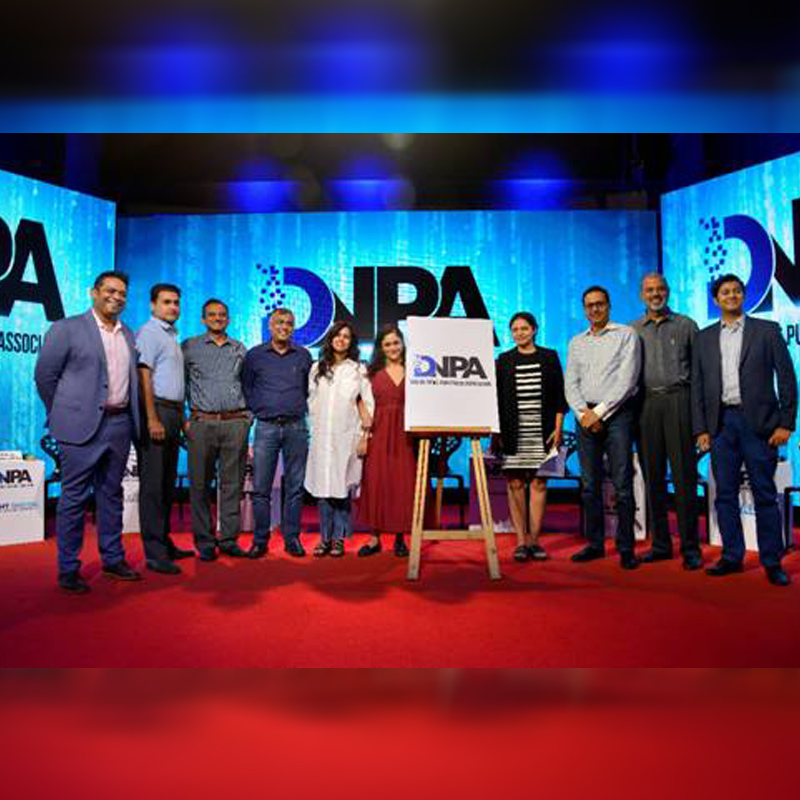
    A hurriedly called press conference, which was delayed because of last-minute deliberations in the India Today office on the outskirts of New Delhi on 21 September 2018, made public a development that resulted in more gasps on social media and WhatsApp groups than surprise from the attendant journalists at the conference to cover the event.

    And since then, the announcement of the formation of a Digital News Publishers Association (DNPA) has continued to keep various WhatsApp groups and social media users busy discussing the pros and cons of the newest entrant in the field of media industry advocacy in India. Especially because DNPA claims to be one more voice of the stakeholders amidst a plethora of already-existing industry bodies and sectoral alliances in the approximate Rs 1.5 trillion Indian media and entertainment sector.

    According to the most updated data from the India Brand Equity Foundation (IBEF), an organisation established by India’s Ministry of Commerce and Industry, the Indian digital advertising industry is expected to grow at a CAGR of 32 per cent to reach Rs 18,986 crore or $ 2.93 billion by 2020, backed by affordable data and rising smartphone penetration. FICCI-E&Y 2018 report on India’s media and entertainment sector stated 84 per cent of India's total digital population consumed news digitally in April 2017.

    Juxtaposed against the present political set-up in the country, the aforementioned data gets perspective, which was visible in the press release issued. “Ten of India’s biggest media companies who collectively serve 70 per cent of India’s online audience have today announced a new collective, Digital News Publishers Association,” the official statement read. Upfront it has been made clear that the 10 founding members of the new organisation hold sway over online audience. What was left unsaid was that such high coverage of online population also makes them important influencers.    

    The official statement also leaves another clue behind its formation: “The organisation is committed to…self-regulation and to promoting the business and editorial interests of all members.” The 10 founding members are Dainik Bhaskar, India Today Group, NDTV, Hindustan Times, Indian Express, Times of India, Amar Ujala, Dainik Jagran, Eenadu and Malayala Manorama — all traditional media houses with digital extensions to keep pace with the march of technology. Many of these organisations also own several other media ventures like TV and FM radio channels.

    With the India government, still grappling with ways to rein in rampant fake news being spread more via social media platforms and dodgy websites, has also come up with a framework for regulations — self or government mandated — for digital and online publishers of content, formation of DNPA, consisting of legacy media houses, raises important questions and has the potential of opening up of a can of worms leading to further making the country a regulatory challenge. Add to the fact that the government has mandated a committee to explore regulations for all genres of online content and that, reportedly, the committee is finding it difficult to suggest solutions that are a win-win for both stakeholders and the government making the regulatory landscape very tricky.

    Now, DNPA’s formations raises three crucial questions.

    Question No. 1: Why form another industry advocacy group when several such bodies already exist?

    For the overall development of the digital news segment and the publishers, is the official explanation. Does that mean organisations like the Indian Broadcasting Foundation, News Broadcasters Association (both these bodies have self-regulatory set-up for its members), Internet & Mobile Association of India (IMAI), Broadband India Forum (BIF), Editors’ Guild of India, Producers Guild of India, which consists of digital players too, and a host of smaller versions of these organisations are unable to deliver for the founding members of DNPA?

    It’s imperative to remember a majority of the DNPA’s 10 present members are also members of various other bodies too like the IBF, NBA and IMAI. NBA itself was formed several years back when the TV news players thought the IBF was not representing their viewpoints properly.

    An independent observer quipped after DNPA came into existence: “If the industry body is serious about its avowed goals, the members should stop giving free content to the likes of Facebook and Twitter.”

    Question No. 2: Though DNPA has admitted it’s open to other digital companies as members, why weren’t the independent and other comparatively smaller publishers of digital news initially contacted?

    Technology certainly has made innovations and entrepreneurship in digital publishing more competitive. And, this initial cold-shouldering of smaller competitors has made them question the claimed goals of the Big 10, as the DNPA founders are being labelled as.

    “Yet another big daddies club. Formed by big media companies discreetly, without the ones who spent blood & sweat to create independent internet news publishing platforms without a muscle. Despicable. I would call upon all the independent digital news publishing platforms with sizable reach to express their protest and tweet about it to I&B Minister. This [Digital News Publishers] Association should not be recognised,” rued Alok Verma in a two-part tweet last Friday. A veteran journalist who has worked in senior positions in both the print and electronic news media segments earlier, Verma is founder and chief editor of NYOOOZ.com, an online video-first platform delivering news from over 62 small and medium scale cities.

    Question No. 3: Will DNPA’s birth lead to the formation of another organisation comprising the independent digital news players?

    This is a very possible scenario and, if such an advocacy group or alliance does come into effect, it should get off the block like Usain Bolt. If it manages the inherent content and business contradictions of its members efficiently, it also has the potential to be a strong industry voice having good fire (and leveraging) power. But it’s a big IF.

    However, some of the `bigger’ independent digital publishers of news have not articulated their views — at least publicly. Owners and managers of The Wire, BloombergQuint, VICE India, Scroll.in, HuffPost India, The Print, etc. who otherwise opine on almost all industry and regulatory issues, apart from being very active on social media, have been quiet. Industry gossip says — though to be taken with a pinch of salt — feelers sent by some independent players to the likes of The Print, The Wire, BOOM, which is a part of Ping Digital Network, have elicited lukewarm response on the issue of an independent digital publishers alliance so that DNPA and its legacy members cannot start influencing the regulatory environment.

    With general elections in India lurking around the corner, the hordes of independent digital news venture gain importance as providers of news and being influencers of the hoi-polloi that may not be so exposed to the national media.

    Trying to summarise the DNPA development and its possible fallouts, Pankaj Pachauri founder and editor of mobile app based and online GoNews rued the fact that legacy players kept the DNPA formation hush-hush despite some of them being members of NBA too, just like his venture. Incidentally, NBA’s annual meeting was held earlier last week.

    “Why did India become a powerhouse in technology and software? Because at a time when the sector was in its infancy and growing, there was just one organisation, Nasscom, that championed the sector’s cause with policy-makers and did it effectively. In the media industry, especially so in the fledgeling digital space, all the players must remember that unless we present a united front, regulators can try hemming us in with restrictive legislations,” said Pachauri, who was also a media advisor to former Indian PM Manmohan Singh.

  • Vodafone, Idea pay Rs 72 bn to DoT for merger

    Vodafone, Idea pay Rs 72 bn to DoT for merger

    MUMBAI: Vodafone India and Idea Cellular have paid Department of Telecommunications (DoT) Rs 72 billion in cash that was the key condition for approving their merger. With the financial dues out of the way, the merger of Vodafone and Idea Cellular is likely to be approved in the next few days.

    “Idea has submitted its compliance to the DoT’s conditional approval letter dated July 9 2018, for the merger of Vodafone India Ltd and Vodafone Mobile Services Ltd with Idea Cellular Ltd, including the payment of Rs 3,926.34 crore (in cash) and bank guarantee of Rs 3,322.44 crore. With this we hope to get final approval from DoT for the merger at the earliest,” said a spokesperson from Idea as quoted by Economic Times.

    To avoid any kind of delay the two companies- Idea and Vodafone decided to pay the full amount demanded by the government. The two companies have started joint training sessions.

    Vodafone Idea will be the country’s largest telecom operator, with a revenue market share of around 37.4 per cent and more than 438 million subscribers. Headquartered in UK, Vodafone had announced the merger of its India operations with Kumar Mangalam Birla-led Idea Cellular in March last year. The companies were hoping to complete the merger by the end of June but the process got delayed by a month.

    The Vodafone – Idea merger is expected to make the country a three player universe, one of the biggest being Reliance Jio, which has captured a revenue market share of around 20 per cent in just 18 months of commercial operations. Recently, Bharti Airtel (India) CEO Gopal Vittal had said that the telecom sector was set to have just three big players holding similar market share.

    If that’s the case, then Vodafone Idea could lose some market share as Airtel and Jio are expected to continue to exert pressure on margins.

    The companies have earlier announced that Kumar Mangalam Birla will be at the helm as non-executive chairman while the Vodafone insider and current chief operating officer (India) Balesh Sharma will be CEO of the merged entity.

  • The 13th Edition of The Times of India Sudoku Championship offers players an opportunity to represent India at the global stage

    The 13th Edition of The Times of India Sudoku Championship offers players an opportunity to represent India at the global stage

    MUMBAI: The Times Sudoku Championship, flagship tournament of the Times of India enters its 13th edition this year. As flag-bearers of Sudoku in the country, The Times of India has successfully spearheaded the championship for over a decade. One of India’s longest running Sudoku Championships provides the winners with an opportunity to represent the country at the World Sudoku Championship, which will take place on 4th -11thNovember 2018, in Prague, Czech Republic.

    The first set of rounds of the Times Sudoku Championship will be held across 5 cities including, Mumbai, Delhi, Bangalore, Kolkata and Chennai over the next few weeks. Winners for the regional rounds will be picked on the basis of their performance during the on-ground event. The city finalists will be brought to Bennett University, Greater Noida for the national finale. The top four talented players will get a once in a lifetime opportunity to represent India at the World Sudoku Championship 2018, to be held in Prague.

    Sudoku has remained a mainstay in the publication’s leisure pages. In its 13th edition, the property will see an amplified push across the most engaging sections in Bombay Times, Delhi Times, Calcutta Times, Bangalore Times and Chennai Times as well as their digital platforms.

    Speaking about the Times Sudoku Championship 2018, Sanjeev Bhargava, Director-Brand TOI said, “Sudoku has a rich history of challenging intellectuals across the world. Its addictive nature comes from the fact that it can be formulated at varying degrees of difficulty and hence force the player to rise to that level of difficulty.Readers of The Times of India are the intellectual elite of this country and have always been fond of the puzzle that the newspaper has published regularly for the last 13 years. The Championship is yet another initiative by TOI to provide an opportunity to take their intellectual interest to a world stage.”

    The previous editions have seen some skilled minds take their passion and addiction for Sudoku to the next level. The Championship will be an opportunity for ardent players to compete with the best from around the world and win some medals for the country. The registration process is fairly simple and can be done via their website or a SMS to 56161 with the message ‘SUDOKU <space> Full Name <space> City’.

  • Seenu Kurien joins Carnival Cinemas as VP sales and marketing

    Seenu Kurien joins Carnival Cinemas as VP sales and marketing

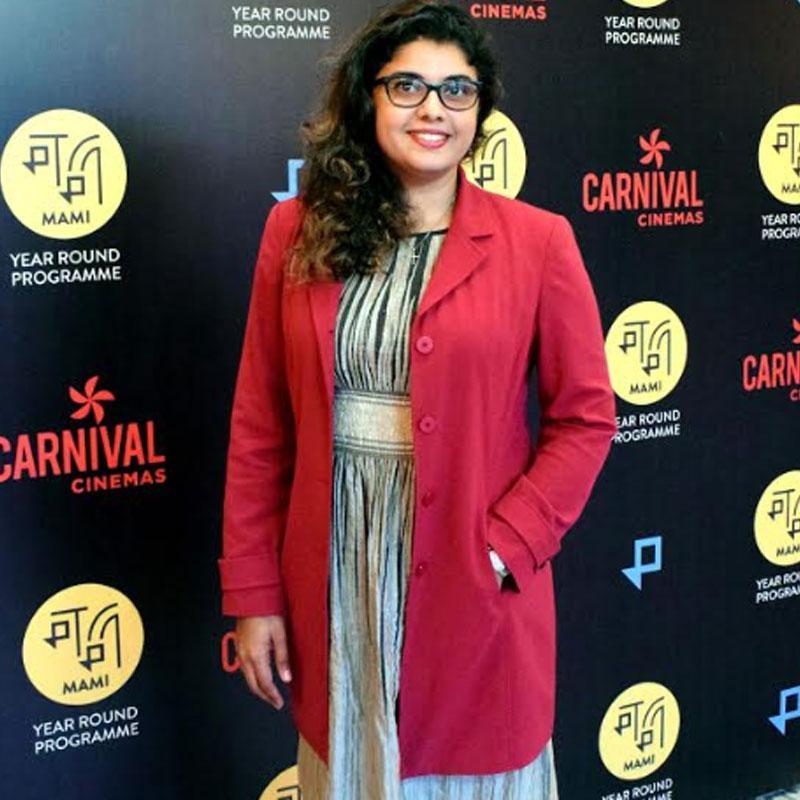
    MUMBAI: Carnival Cinemas, a motion picture exhibitor, today announced the appointment of Seenu Kurien as VP- sales and marketing. At Carnival Cinemas, Kurien will be heading sales and marketing functions and will be responsible for ad sales – off screen and onscreen, marketing, branding, alliances and PR.

    Commenting on her new innings with Carnival Cinemas, Kurien said, “I have long admired Carnival Cinemas for its commitment to its vision and excited to be a part of making this vision a reality. I am delighted and look forward to working with the teams to further the brand.”

    Kurien has over 13 years of work experience in sales, strategy, branding and operations. She has worked across industries including media and construction in various functional roles in emerging (India) and developed markets (USA). Before joining Carnival, she was national head – exhibitions with Bennett Coleman (The Times of India) and was responsible for creating joint exhibition IPs, and driving ad revenues via exhibitions to all print products across all markets nationally & internationally.

    Prior to becoming national head for exhibitions, she was a regional sales head and was responsible for advertising space sales, developing partnerships, agency relations, providing integrated marketing solutions and identifying new business opportunities. She also had stints in corporate strategy and branding.

    Speaking on the appointment, Carnival Group founder and chairman Shrikant Bhasi said, “We are incredibly pleased to welcome Seenu to our Carnival family and executive leadership team.The entertainment business is seeing huge growth and we are confident that Seenu’s experience will help the company build the next phase of growth. Her extensive experience in media will be extremely useful as the group moves towards leadership position in the film exhibition sector.”

    She has also spent a considerable amount of time working in the real estate and construction sector in the US handling project management, contract management & operations.

  • Vice Media starts Indian journey promising edgy content

    Vice Media starts Indian journey promising edgy content

    MUMBAI: Global youth media brand Vice Media, which officially launched its operations in India on Thursday in partnership with the Times of India group, will bring content in Hindi and English and has introduced all its digital brands under the VICE.com banner.

    Along with its digital brands, Vice will also premier a late-night prime time television block across the Times of India portfolio, bringing the best of Viceland’s award-winning content to a mass market like India. Viceland is a multinational brand of television channel owned by Vice Media, which also provides programming and was started in 2016.

    According to a statement put out by the company, Vice India’s local content programming will span conversations across topics such as food, music, politics, sports, sex, identity, nightlife, arts, and comedy. The company plans to showcase a wide range youth-oriented content in the coming months, including local mental health crisis, sexual assault on university campuses, navigating life in India as an LGBTQI+ individual, the taboo sex industry, and political action in the region.

    However, it must be added here that last month some media reports indicated that at least a couple of people associated with content generation quit Vice India alleging interference of corporate bosses in editorial matters, especially in those edgy news stories that involved a particular political party in India.

    Beyond Vice’s main partnership with the Times of India group, additional partnerships, including with Facebook, will bring Vice’s content to millions of new viewers in the region through original local production and reporting, and licensing.

    “We are humbled by the response we have received on our content as we launch and are excited to partner people, brands and organisations who are on a mission to connect with India’s youth and impact their future positively,” Vice India CEO Chanpreet Arora said in a statement.

    New offices in Mumbai and Delhi will host full-scale Vice operations, including a local offering of Virtue Worldwide, Vice’s in-house creative agency, and a full-service content production studio, Vice Studio, producing local news, culture, documentary, film and scripted content for television, SVOD, OTT and digital platforms.

    “A large number of people on Facebook in India are young. We are happy to see Vice Media launch in India and excited about the opportunity that people will get to see content that will be relevant, high quality and something, which will encourage meaningful conversations,” Facebook entertainment partnership head, Asia Pacific, Saurabh Doshi said.

    Virtue Worldwide has entered into major brand partnerships that will provide creative services throughout India. Launch partnerships in the region include Mountain Dew (PepsiCo) and Anheuser-Busch InBev. On the heels of its global association, Vice India, in partnership with Anheuser-Busch InBev, the world’s largest brewer, will be working together to create, curate and distribute culture-centric content to augment the reach of the latter’s portfolio brands such as Budweiser in the country.

    “We are excited to extend our global relationship with Vice in India to collaborate on creating immersive experiences. We are confident that this partnership will allow both entities to cater and connect to the passion points of India’s youth,” Anheuser-Busch InBev India marketing director Kartikeya Sharma said. 

    Hosi Simon, CEO of Vice APAC, who was in the country to launch the brand, said, “Our aim is to reach the aspirational mass audience, which is about to make their voices heard loudly in India. We are looking beyond urban India, into the regional emerging and highly curious youth population, which, we believe, will own the future of the country very soon.”

    Rishi Jaitly, CEO of Times Bridge, the arm of The Times Group that has invested  in Vice India, expressed the hope that the operation would become the country’s leading youth media company, “engaging and delighting millennial and Gen Z audiences” across the sub-continent.

    More details on multiple platform partnerships would be announced in the coming months, Vice India said. But it is not clear whether Vice India has applied for Indian government permissions for the Viceland TV channel and whether it would be introduced here at all.

    Also Read :

    Vice Media to launch Vice India on April 2

    Chanpreet Arora appointed CEO of Vice Media India

    VICE to launch digital service with ToI Group 1Q 2017

  • 2017 – The year of long-format ads

    2017 – The year of long-format ads

    MUMBAI: It’s the beginning of a new year! We are pumped up and optimistic about the year ahead and what new challenges it will throw up for the ever-changing, dynamic, uncertain and fast-evolving advertising industry. But what we are assured of is that we will continue to see some fascinating, some magnificent and a few lousy ads thrown in here and there in 2018 as well.

    Let’s pause for a minute and take a look back at how the ad industry fared last year. The key highlights included — growth of long format films, evolution of six-second ads, brands taking the digital route to connect with consumers and influencer marketing making it big.

    The first thumb rule of advertising that ad honchos vouch for is to understand your audience and engage them with well-written storytelling. But having a 20-second timer noosed around your neck doesn’t allow creative minds to conjure up enthralling stories that build an emotional connect with the consumer while also delivering the product information. The definite advantage of shorter commercials from a media investment POV is that clients can afford to run the spot more often, for a longer period of time.

    But in 2017, long-format ads showed themselves as serious contenders fighting for audience attention. What helped their growth was that both the makers and viewers embraced the magic of long-format storytelling. It was soon known that the engagement in it is higher allowing for better brand building. With television ad rates skyrocketing, marketers took the plunge into the more economical digital bandwagon that allows both freedom of time and creativity. Clients can choose to run an ad between 1-15 minutes or even longer without cost constraints. In an earlier interview with Indiantelevision, Mindshare South Asia CEO Prasanth Kumar said that some stories need longer duration and compelling ads will keep the audience hooked.

    There are five ways to buy ad slots digitally—cost per thousand impressions (CPM), cost per click (CPC), cost per lead (CPL), cost per thousand (CPT) and cost per fixed buy (CPFB) without a minimum or maximum limit. YouTube, arguably the most popular platform for ads, charges per view giving the power to advertisers to choose. Instances of viewers skipping ads before 30 seconds are not counted as a charge.

    Digital ad is usually measured by click-through rate (CTR). CTR is the ratio of the number of times the ad is clicked to the total number of ad impressions. Success cannot be measured by CTR alone because an ad which is viewed but not clicked may still have an impact. Large formats usually attract 1-2 per cent CTR as opposed to small formats, which generate anywhere between 0.5 and 1 per cent.

    Cost per click (CPC), also known as pay per click, is used to direct traffic to websites, where an advertiser pays a publisher only when the ad is clicked. CPC is used to assess the cost effectiveness and profitability of internet marketing. In case of CPC, price for an entertainment content click would be as low as Rs 2 while a high transacting piece of content like travel could be upwards of Rs 30-35.

    2017 witnessed a plethora of brands taking the digital-first long format route right from insurance to FMCG, electronics and e-commerce. The product to be sold either took a step back or was incorporated seamlessly into the story.

    Indiantelevision brings you a compilation of the most touching, memorable and effective brand stories told in a longer ad film, by Indian brands in 2017:

    LG Technical School ad:

    Vicks ad:

    Ghadi detergent ad:

    Kashmir Tourism ad:

    Amazon Diwali ad:

    Kolkata Times Durga Puja ad:

    Parachute Hot oil ad:

    Also read:

    BFSI’s changing communication in the digital era

    Guest column: Ads that didn’t work!

    How iProspect’s Vivek Bhargava foresaw a digital future two decades ago

    The year of sex scandals

  • Comment: Is BCCI lbw on Star’s sponsorship googly?

    Why blame Virat Kohli & Co. for crumbling on a doctored pitch in Pune in the first Test against the visiting Ausssies? And, why should it come as a surprise? Indian cricket — administrators, (most) cricketers, sponsors, various rights holders, other stakeholders, et al — itself lives in a fairly land of its own making where games are played on dusty bowls and fiercely fought with no punches pulled. Star India’s latest googly to BCCI just goes on to amplify these. BCCI, though, has played the ball with a straight and dead bat.

    A month before its contract for the Team India’s jersey sponsorship comes to an end in March 2017, Star India’s Chairman and CEO Uday Shankar has set the game up. “Given all the volatility, we are indeed concerned about the health of cricket in the days ahead. We have been very proud that our name is carried on the jersey of Team India. But given all the uncertainties, we have decided not to bid for it again. The commitments being asked for are too onerous without any clarity,” Shankar bared a marketing fang in an interview given to Times of India.

    A veteran of many journalistic face-offs earlier and now a master corporate strategist, Shankar’s message to BCCI or Indian cricket’s administrative body was clear, if not politically loaded: forget Team India’s indifferent performances at times on field, we can live with it; it’s the off-field boardroom games that’s making us uneasy to risk our money.

    If the government of the day believes that ‘desh badal raha hai’ or the country is changing, why should BCCI also not reflect that narrative? Finding itself in the throes of controversies, some which are self-induced and some inflicted by the Supreme Court, BCCI seems unable to extricate itself from conflicts with itself and those with the cricket’s international governing body, ICC. What with some past office-bearers threatening to oppose moves of the Supreme Court-appointed interim administrative body shorn of politicians, it’s a piquant situation worthy of a Bollywood potboiler. Especially when there are question marks over India’s participation in strong cricketing properties, including the Champions Trophy and the IPL prospects not looking so rosy.

    Though some cricket observers feel that Star India is playing a who-would-blink-first game with BCCI, admittedly weakened by SC-induced structural changes, subsequent internal wrangling and flexing of muscle by ICC, presently led by former Indian chief administrator Shashank Manohar, others feel Star does have a point. A big financial point.

    According to Espncricinfo.com, Star India had bagged the Indian team sponsorship rights for a four-year period, starting 1 January 2014 and ending 31 March , 2017, with a bid worth Rs 19.2 million (US$315,000 approx) per match for bilateral series and Rs 6.1 million (US$100,000 approx) per match for ICC-sponsored tournaments. This had brought to an end a 12-year partnership with Sahara.

    Star, which also holds the broadcast, internet and mobile rights to Indian cricket until March 2018, had invested a few billions of dollars in Indian cricket overall, as per Shankar’s own admission to Times of India recently. Star’s jersey sponsorship contract that expires this March-end included the right to be called the official team sponsor and to display a commercial logo on the men’s, women’s, Under-19 and `A’ players and on their teams’ kits.

    Though Star obliquely may not be in favour of Test cricket — “If there are millions of people…not so attached to Test cricket but are very excited about the T20, then there’s a certain message that needs to be taken seriously”, says Shankar — the exposure that it has got as the team sponsor of men’s and women’s Indian cricketers in Tests, one-dayers and other smaller format of the game also cannot be denied.

    However, despite wanting to control things, Star India has been unable to influence much the twists and turns in soap opera called `BCCI’s transformation’, directed by the Supreme Court, which has raised uncertainties and question marks over return on investments for Star. Especially if Team India did not play in some tournaments or against certain country (like Pakistan) owing to not only India’s national political narrative, but also waning of support from other cricket-playing nations that Star describes as ebbing of India’s controlling power over international cricket despite being the biggest contributors.

    That one of the biggest investors in Indian cricket was never consulted on matters cricketing (“I don’t think we have ever been consulted or our views have been sought. This is a bit intriguing for us…as people committed to such high sums of contractual value, we have a point of view,” Shankar says) would have been rankling Star much. But that it still continued to invest in cricket, including Indian, also highlights the gains.

    In this tug-of-war of investment vs. RoI, BCCI may seem to be on a weak wicket presently, but it cannot be denied that other stakeholders, including Star, are trying to put pressure in an effort to close the game early on this turning pitch. But don’t think it’s all over for BCCI if Star backs out as team sponsor. Even Star has left itself room to manoeuvre as Shankar in the TOI interview states: “However, given all the volatility in the cricket world, we will have to be very careful before making any further commitments.”

    Remember what they say in cricket that the match isn’t over till the last ball has been bowled. And, the last ball remains to be still bowled in this game.

  • Bleeding Pak theatres may become ‘Raees’ again

    Bleeding Pak theatres may become ‘Raees’ again

    MUMBAI: Four months after Pakistan stopped screening Hindi films in its cinemas responding to Bollywood’s unofficial ban on Pakistani artistes following the Uri attack, Pakistan is again attempting to allow screening as theatre-owners are bleeding financially.

    PEMRA (Pakistan Electronic Media Regulatory Authority) had then banned Indian TV channels and entertainment programmes and cinema hall owners decided not to screen Bollywood films, the Times of India reported.

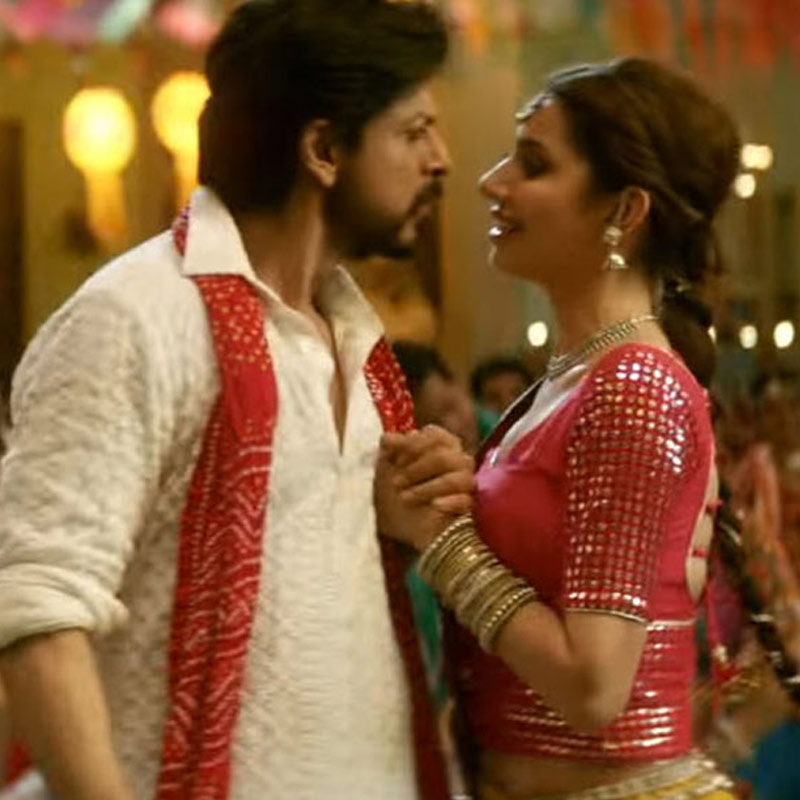
    Pakistan’s prime minister Nawaz Sharif has constituted a panel to consider a request by distributors and theatre-owners to resume the import of Bollywood films. Distributors are hoping to get the permission before SRK’s ‘Raees’ releases on 25 January.

    The Sharif committee is headed by minister of state for information Maryum Aurangzeb and includes the secretary of commerce, advisor to the PM on national history and literary heritage and a representative of ISI.

    Films from India are in the list of items banned in Pakistan. But, the commerce ministry, under the import policy order, had issued NOCs (no-objection certificates) at per information ministry request thus allowing the import of 2-3 Indian films each month.

    Sources told the Hindu that business in cinema halls in Pakistan was down after the unofficial ban on Indian movies and revenues had fallen up to 75 per cent in some theatres. Around 50 per cent of workers in halls lost their jobs. Bollywood films are also widely available through pirated DVDs in Pakistan.

    Atrium Cinema owner in Karachi Nadeem Mandviwalla had earlier said that 70 per cent of their business comes from Bollywood and Hollywood. He said that they could only survive a temporary suspension, and not a continued one.

    Also Read :

    Pak theatres showing Indian films again

    States may decide Pak artistes films fate

    Pakistan gets tough on Indian DTH & content