Tag: Times Network

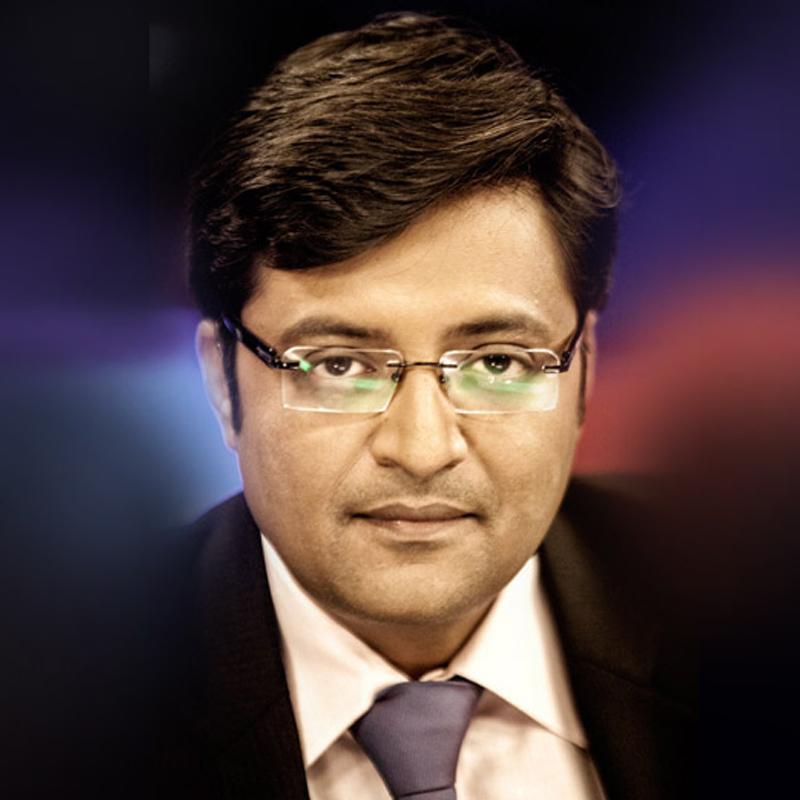
  • The after-effect of Arnab Goswami’s exit

    The after-effect of Arnab Goswami’s exit

    MUMBAI: Seldom in the media industry, there are days when the newscaster becomes the breaking news. November 1 was one such day. November 1 was Arnab Goswami’s last day in office. Tuesday’s episode of The Newshour was Goswami’s last.

    The dynamic broadcast journalist who is often credited with pioneering debate-style news programming in India has called it a day as the editor-in-chief of the news channel — Times Now.

    Since the news surfaced, the media world has gone loony trying to guess ‘what is next for Arnab?’ Some speculate that Goswami plans to start his own independent media venture with digital media leanings, based on the strong hints that he had earlier dropped at a conference.

    Amid the hue and cry of ‘The nation wants to know’ what Goswami is up to post-Times Now, a question that hasn’t been entertained is — what does Arnab Goswami’s exit from Times Now mean for the channel and its network?

    While the channel hasn’t come out with an official statement (until the filing of this article) to address Goswami’s resignation, or its plans to find a replacement of Goswami, both as the face of the channel as well as the host of The Newshour, it goes without saying that the channel’s flagship prime time debate show ‘The Newshour’ that brings the channel its highest ad rates will not retain its brand identity without Goswami’s emphatic voice and pointed questions.

    Credited to most often boasting a full ad inventory, the show’s contribution to the network’s revenues is uncontested, and rumoured to be north of Rs 100 crore.

    A media expert requesting anonymity outright rejected the Rs 100-crore plus effect on Times revenue that is being bandied about in the news industry circles. According to this expert, the total revenue of Times Network was in the range of Rs 160-170 crore; how could the effect of the departure of an anchor be three-fourths of that figure?

    Although he admitted that it would definitely dent Times Network’s revenues, he was not willing to put a figure to it. He however acknowledged that The Newshour revenue commanded 8-10x the overall ‘Times Now’ channel’s ER. He sought to extrapolate a figure at the rate of Rs 20,000 per 10-second ad slot of the program.

    While other media experts shied away from commenting on the immediate monetary effect that Goswami’s decision would cost the network, most unanimously agreed that this event will definitely have significant repercussions.

    “Arnab has created a distinct identity within the English News consumers mind space. Newshour commands a premium over the channel’s operating rates to the tune of 10X, and that will have its impact on perception and pricing of the show. Having said that, organisations are larger than individuals, and Times is an entity that is a seasoned media / news group,” said Reliance Broadcast Network Limited’s chief business officer Vikas Khanchandani.

    Echoing similar sentiments was Dentsu Aegis Network south Asia chairman Ashish Bhasin. “Whenever someone as prominent and established as Arnab Goswami, who was akin to the face of Times Now the channel, leaves, it does shake up the network. I foresee a period of settling down on the part of the channel, post-Goswami’s resignation. Having said that, I believe organisations are larger than individuals and they will find an appropriate content replacement and a presenter on air.”

    Commenting on the ad rates of the show post-Goswami, Bhasin shared, “Tying it (Goswami’s resignation) to a loss in the network’s revenue and business will be making a hasty judgement. Ad rates aren’t as spontaneous as the stock exchange. The first effect, if any, will be on the viewership numbers. Only if the viewership numbers continue to drop for a prolonged period of time will there be an effect on the ad rates.”

    Whether Goswami’s goodbye will blow a hole in Times Now’s pockets or whether The Newshour will retain its glory amid loyal advertisers, or whether the network will replace the debate show with an equally engaging content are things that we can’t put a finger on for certain. What we do know for sure is that Goswami quitting Times Now is unprecedented in the industry.

    Said senior journalist in CNN-News18 is Bhupendra Chaubey: I have not worked with him for almost 10 years now but, what I remember of him as a colleague in NDTV, he is a bright companion. I wish him all the luck with whatever he plans to do.

    Similarly senior media executive and BTVi COO Monica Tata too expressed her shock upon hearing the news. “Waiting to hear more news about his future plans,” she added.

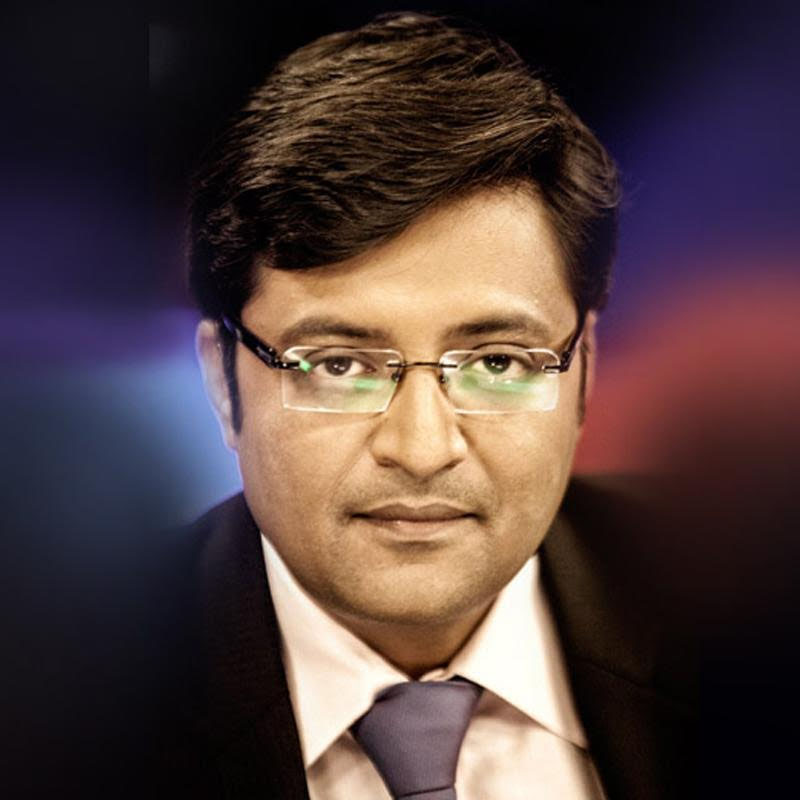
  • The after-effect of Arnab Goswami’s exit

    The after-effect of Arnab Goswami’s exit

    MUMBAI: Seldom in the media industry, there are days when the newscaster becomes the breaking news. November 1 was one such day. November 1 was Arnab Goswami’s last day in office. Tuesday’s episode of The Newshour was Goswami’s last.

    The dynamic broadcast journalist who is often credited with pioneering debate-style news programming in India has called it a day as the editor-in-chief of the news channel — Times Now.

    Since the news surfaced, the media world has gone loony trying to guess ‘what is next for Arnab?’ Some speculate that Goswami plans to start his own independent media venture with digital media leanings, based on the strong hints that he had earlier dropped at a conference.

    Amid the hue and cry of ‘The nation wants to know’ what Goswami is up to post-Times Now, a question that hasn’t been entertained is — what does Arnab Goswami’s exit from Times Now mean for the channel and its network?

    While the channel hasn’t come out with an official statement (until the filing of this article) to address Goswami’s resignation, or its plans to find a replacement of Goswami, both as the face of the channel as well as the host of The Newshour, it goes without saying that the channel’s flagship prime time debate show ‘The Newshour’ that brings the channel its highest ad rates will not retain its brand identity without Goswami’s emphatic voice and pointed questions.

    Credited to most often boasting a full ad inventory, the show’s contribution to the network’s revenues is uncontested, and rumoured to be north of Rs 100 crore.

    A media expert requesting anonymity outright rejected the Rs 100-crore plus effect on Times revenue that is being bandied about in the news industry circles. According to this expert, the total revenue of Times Network was in the range of Rs 160-170 crore; how could the effect of the departure of an anchor be three-fourths of that figure?

    Although he admitted that it would definitely dent Times Network’s revenues, he was not willing to put a figure to it. He however acknowledged that The Newshour revenue commanded 8-10x the overall ‘Times Now’ channel’s ER. He sought to extrapolate a figure at the rate of Rs 20,000 per 10-second ad slot of the program.

    While other media experts shied away from commenting on the immediate monetary effect that Goswami’s decision would cost the network, most unanimously agreed that this event will definitely have significant repercussions.

    “Arnab has created a distinct identity within the English News consumers mind space. Newshour commands a premium over the channel’s operating rates to the tune of 10X, and that will have its impact on perception and pricing of the show. Having said that, organisations are larger than individuals, and Times is an entity that is a seasoned media / news group,” said Reliance Broadcast Network Limited’s chief business officer Vikas Khanchandani.

    Echoing similar sentiments was Dentsu Aegis Network south Asia chairman Ashish Bhasin. “Whenever someone as prominent and established as Arnab Goswami, who was akin to the face of Times Now the channel, leaves, it does shake up the network. I foresee a period of settling down on the part of the channel, post-Goswami’s resignation. Having said that, I believe organisations are larger than individuals and they will find an appropriate content replacement and a presenter on air.”

    Commenting on the ad rates of the show post-Goswami, Bhasin shared, “Tying it (Goswami’s resignation) to a loss in the network’s revenue and business will be making a hasty judgement. Ad rates aren’t as spontaneous as the stock exchange. The first effect, if any, will be on the viewership numbers. Only if the viewership numbers continue to drop for a prolonged period of time will there be an effect on the ad rates.”

    Whether Goswami’s goodbye will blow a hole in Times Now’s pockets or whether The Newshour will retain its glory amid loyal advertisers, or whether the network will replace the debate show with an equally engaging content are things that we can’t put a finger on for certain. What we do know for sure is that Goswami quitting Times Now is unprecedented in the industry.

    Said senior journalist in CNN-News18 is Bhupendra Chaubey: I have not worked with him for almost 10 years now but, what I remember of him as a colleague in NDTV, he is a bright companion. I wish him all the luck with whatever he plans to do.

    Similarly senior media executive and BTVi COO Monica Tata too expressed her shock upon hearing the news. “Waiting to hear more news about his future plans,” she added.
  • News channels witnessed drop in ratings, says BARC

    News channels witnessed drop in ratings, says BARC

    MUMBAI: All the players from the news ecosystem have witnessed a decrease in their respective ratings, according to the Broadcast Audience Research Council (BARC) All India data for this week (i.e week 41). The channels from every category observed a significant fall in the viewership.  

    While genre leaders continued to lead in their respective categories, English News channel News X made an exit this way paving way for BBC World News.

    English news

    Times Now continued to remain the undisputed leader this week though with a decrease in ratings from 1340 Impressions (000s) to 999 Impressions (000s). CNN News18  sustained the second position with 354 Impressions (000s). India Today Television settled on the third berth with 298 Impressions (000s). NDTV 24×7 grabbed the fourth spot with 233 Impressions (000s). News X made an exit in this week’s data making way for BBC World News at the fifth position with 151 Impressions (000s).

    English business news

    CNBC TV 18 with a decline in the ratings stayed at the number one position with 312 Impressions (000s) followed by ET Now at the second slot with 216 Impressions (000s).  NDTV Profit and NDTV Prime with 79 Impressions (000s) and BTVi with 14 (‘000s) Impressions (000s) took the third and fourth positions respectively.

    Hindi news

    Aaj Tak stood at the first spot with fall in the viewership from 164583 Impressions (000s) in week 40 to 131643 Impressions (000s) this week followed by India TV at the second position with 115059 Impressions (000s).  India News sustained its third position with112803 Impressions (000s) followed by ABP News at the fourth position with 92968 Impressions (000s). Zee News took the fifth position with 90968 Impressions (000s).

    Hindi news – rural

    Aaj Tak continued to dominate the rural market with 65150 Impressions (000s) followed by India News with 60326 Impressions (000s). India TV grabbed the third slot with 52451 Impressions (000s). News 24 managed to sustain at the fourth place with 43696 Impressions (000s) followed by ABP News at the fifth berth with 43176 Impressions (000s).

    Hindi news – urban

    Aaj Tak was at the number one position with 66493 Impressions (000s) followed by India TV at the second position with 62607 Impressions (000s).  Zee News grabbed the third position with 55046 Impressions (000s) followed by India News at the fourth position with 52477 Impressions (000s). ABP News took the fifth position with 49792 Impressions (000s).

    Hindi business news

    CNBC Awaaz also witnessed a decline in the ratings this week with 896 Impressions (000s) from 1432 Impressions (000s) in week 40. Zee Business stood at the second spot with 787 Impressions (000s).

  • News channels witnessed drop in ratings, says BARC

    News channels witnessed drop in ratings, says BARC

    MUMBAI: All the players from the news ecosystem have witnessed a decrease in their respective ratings, according to the Broadcast Audience Research Council (BARC) All India data for this week (i.e week 41). The channels from every category observed a significant fall in the viewership.  

    While genre leaders continued to lead in their respective categories, English News channel News X made an exit this way paving way for BBC World News.

    English news

    Times Now continued to remain the undisputed leader this week though with a decrease in ratings from 1340 Impressions (000s) to 999 Impressions (000s). CNN News18  sustained the second position with 354 Impressions (000s). India Today Television settled on the third berth with 298 Impressions (000s). NDTV 24×7 grabbed the fourth spot with 233 Impressions (000s). News X made an exit in this week’s data making way for BBC World News at the fifth position with 151 Impressions (000s).

    English business news

    CNBC TV 18 with a decline in the ratings stayed at the number one position with 312 Impressions (000s) followed by ET Now at the second slot with 216 Impressions (000s).  NDTV Profit and NDTV Prime with 79 Impressions (000s) and BTVi with 14 (‘000s) Impressions (000s) took the third and fourth positions respectively.

    Hindi news

    Aaj Tak stood at the first spot with fall in the viewership from 164583 Impressions (000s) in week 40 to 131643 Impressions (000s) this week followed by India TV at the second position with 115059 Impressions (000s).  India News sustained its third position with112803 Impressions (000s) followed by ABP News at the fourth position with 92968 Impressions (000s). Zee News took the fifth position with 90968 Impressions (000s).

    Hindi news – rural

    Aaj Tak continued to dominate the rural market with 65150 Impressions (000s) followed by India News with 60326 Impressions (000s). India TV grabbed the third slot with 52451 Impressions (000s). News 24 managed to sustain at the fourth place with 43696 Impressions (000s) followed by ABP News at the fifth berth with 43176 Impressions (000s).

    Hindi news – urban

    Aaj Tak was at the number one position with 66493 Impressions (000s) followed by India TV at the second position with 62607 Impressions (000s).  Zee News grabbed the third position with 55046 Impressions (000s) followed by India News at the fourth position with 52477 Impressions (000s). ABP News took the fifth position with 49792 Impressions (000s).

    Hindi business news

    CNBC Awaaz also witnessed a decline in the ratings this week with 896 Impressions (000s) from 1432 Impressions (000s) in week 40. Zee Business stood at the second spot with 787 Impressions (000s).

  • Times Network in 100 countries now; launches two channels in Europe

    Times Network in 100 countries now; launches two channels in Europe

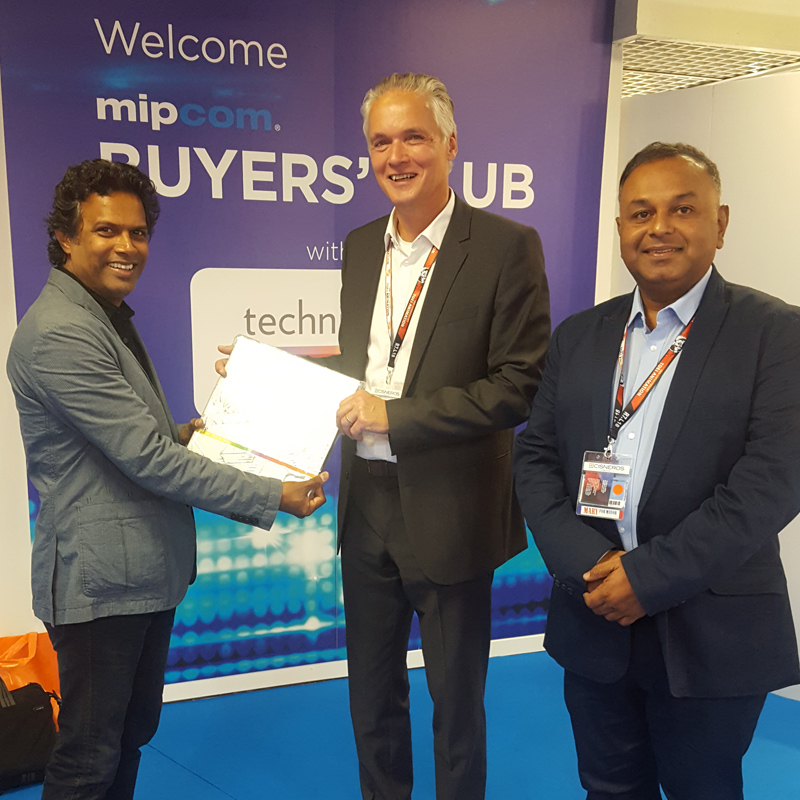
    CANNES: Times Network, a part of India’s largest media conglomerate, The Times Group, is set to launch two of its channels in Europe, marking its presence in over 100 countries.

    The network will launch Times Now, India’s most popular English News Channel and Zoom — India’s No. 1 Bollywood channel, on the Bobbles Media GmbH DTH and OTT platforms in Europe. This will enable them to reach into territories like Europe including Austria, Belgium, Bulgaria, Croatia, the Czech Republic, Finland, Germany, Greece, France, Hungary, Ireland, Italy, Latvia, Liechtenstein, Lithuania, Luxembourg, Malta, the Netherlands, Norway, Poland, Portugal, Romania, Slovakia, Slovenia, Spain, Sweden and Switzerland.

    Backed by Bennett, Coleman & Co, the Times Networks’s International Business recently received the ‘Porter Prize 2016’ for ‘Creating Distinctive Value’. It will be the fastest Indian TV network to cross the 100 country mark in under five years. Within under a year of its launch in the UK, where it reaches Engliand’s 1.4m Indians, the network is all geared up for further expansion in Europe.

    Times Network head, international business, Naveen Chandra, said, “From Times Now’s commercial launch in Australia in early 2011 to its launch in Western Europe this month has been an incredible journey for the Network. We now reach over 10mn Indians globally. We are also all set to launch our first local content initiatives in Europe and look forward to growing aggressively in the region.”

    Times Now commands 43% market share in the English News category, and 58% overall market share during prime time English News, according to Broadcast Audience Research Council (BARC) India.

    Zoom, a trendsetter in its genre, is available across five continents and 83 countries worldwide and also has a wide presence in the social media space.

    Times Network houses upscale brands including; Times Now, ET Now, Magicbricks Now, Moview Now, MN+ – The Gold class of Hollywood; Romedy Now. The network delivers segmented and differentiated content under one umbrella. It informs, entertains and engages over 100 million urban affluent viewers in India and is available in over 82 countries across the globe.

  • Times Network in 100 countries now; launches two channels in Europe

    Times Network in 100 countries now; launches two channels in Europe

    CANNES: Times Network, a part of India’s largest media conglomerate, The Times Group, is set to launch two of its channels in Europe, marking its presence in over 100 countries.

    The network will launch Times Now, India’s most popular English News Channel and Zoom — India’s No. 1 Bollywood channel, on the Bobbles Media GmbH DTH and OTT platforms in Europe. This will enable them to reach into territories like Europe including Austria, Belgium, Bulgaria, Croatia, the Czech Republic, Finland, Germany, Greece, France, Hungary, Ireland, Italy, Latvia, Liechtenstein, Lithuania, Luxembourg, Malta, the Netherlands, Norway, Poland, Portugal, Romania, Slovakia, Slovenia, Spain, Sweden and Switzerland.

    Backed by Bennett, Coleman & Co, the Times Networks’s International Business recently received the ‘Porter Prize 2016’ for ‘Creating Distinctive Value’. It will be the fastest Indian TV network to cross the 100 country mark in under five years. Within under a year of its launch in the UK, where it reaches Engliand’s 1.4m Indians, the network is all geared up for further expansion in Europe.

    Times Network head, international business, Naveen Chandra, said, “From Times Now’s commercial launch in Australia in early 2011 to its launch in Western Europe this month has been an incredible journey for the Network. We now reach over 10mn Indians globally. We are also all set to launch our first local content initiatives in Europe and look forward to growing aggressively in the region.”

    Times Now commands 43% market share in the English News category, and 58% overall market share during prime time English News, according to Broadcast Audience Research Council (BARC) India.

    Zoom, a trendsetter in its genre, is available across five continents and 83 countries worldwide and also has a wide presence in the social media space.

    Times Network houses upscale brands including; Times Now, ET Now, Magicbricks Now, Moview Now, MN+ – The Gold class of Hollywood; Romedy Now. The network delivers segmented and differentiated content under one umbrella. It informs, entertains and engages over 100 million urban affluent viewers in India and is available in over 82 countries across the globe.

  • Arnab NOW wants to challenge BBC and CNN International

    Arnab NOW wants to challenge BBC and CNN International

    MUMBAI: “No news is good news. No journalists is even better”, so said Nicolas Clerihew Bentley, British author and illustrator, best known for his humorous cartoon drawings in books and magazines in the 1930s and 1940s. In India Bentley, probably, would have been proved wrong as Indians — at least a large swathe of the population — just cannot do without news and certainly not without Arnab Goswami.

    You can hate him, you can love him, you can call him names or you can even say he’s God’s gift to Indian TV journalism, but you just cannot ignore him. And, why not? That’s a question that the nation wants to knowdespite debating it on social media everyday. From being the quintessential outsider to be the top of the pops as the most watched television news anchor on Indian television, it has been a roller-coaster of a ride.

    From the point Times NOW was considered a laughing stock soon after it debuted in 2006, to becoming the undisputed leader in the news industry, Arnab’s contributions behind the channel’s success cannot be neglected. Just like a global food brand was born when an experimentation in the kitchen went haywire by accident, it was another such accident — some would say twist of fate — that gave India a TV news anchor who’s loathed as much as he’s revered during his daily news show called Newshour, which actually runs beyond an hour.

    Not only Arnab quit print journalism with the Kolkata-based The Telegraph after just a stint of leas than a year in 1995 to come to India’s capital city, but he also quit Delhi a few years later to migrate to Mumbai, leaving one of India’s famous nursery for news journalism, NDTV, to take up an assignment with the Times of India group’s TV venture. So much so, at one of time, Arnab wanted to quit journalism altogether.

    Yes, you read it right. Arnab wanted to leave journalism. “I wanted to leave journalism 12 years back when I was in Delhi. That is one city that will ruin your courage and leave you with two options — either quit or to be crazy. I chose the latter,” he asserted at the EEMAX Global Conclave & Awards 2016 to gasps from the swooning audience, comprising mostly young people aspiring to be TV journalists.

    But happy accidents do happen.

    Feeling blessed to be capable of reaching out to millions every night, Arnab doesn’t shy away from goof-ups or life’s low points. “I did mess up for the initial six months in Times NOW, “ he admitted frankly, “but, the experiences of taking up people’s stories and making the ordinary person a headline and championing him (or her), fundamentally made me realise that one needs to finally go down to the core.”

    India’s most watched TV news anchor — audience measurement data has proved that time and again — can also afford to be preachy when he asserts for him there’s no shades of grey (forget the 50 shades) but just

    right and wrong. “In everything in life, you have to bring it down to the binary. Don’t tell me about the grey areas. Those people who reside in the grey areas are those who are fooling themselves and won’t stick their necks out. Running down my republic (read country) is wrong and I will stick my neck out (to defend it),” he added, which many critics feel is just being pompous.

    Often accused of ruining neutrality of news or the non-partisan approach that journalists and news anchor should champion as per gospel, for Arnab neutrality in news is baseless. “I have not dumbed down journalism. Each story that I have done runs a personal risk on me. Behind what seems engrossing, is a lot of heart, a lot of feeling, a lot of soul, a lot of idealism and a lot of risk,” he explained, adding, “Oh boy, did we hear some glasses breaking at some homes of people whom Arnab loves to refer as the `Lutyen Delhi’s privileged lot’.”?

    And, true to his on-screen style — where he shouts down panellists who return to his shows despite being shut out at times — Arnab thrashed the English news media in India by accusing it of alienating people. “They used language that is only available in a dictionary, editorial meetings happened in a sacred space where there is no communication with people outside. When analytical programmes are done, there are more people from abroad than from your own country and they speak in a language that nobody understands. That is what English language journalism had done over the years,”he makes his intentions clear, adding with satisfaction, “But the country is seeing a change.”

    There are innumerable anecdotes about Arnab, his style, his posturing on TV and, yes, also his arrogance, but those don’t faze the man who seems to be on a mission.

    Recently, Mukesh Ambani, considered one of the most powerful men in India with diversified interests in many businesses, including media, was asked for his views on noisy TV shows and, predictably, the shows he watched at 9 pm. The Reliance Industries boss said, “I watch Arnab and I like him very much.” So what does Arnab feel about such encomiums about him being an influencer and opinion moulder? “I am happy to know that. There is no responsibility that I have on me. If anyone wants to listen, I don’t bring my ego in the way. I do a story and move on,” he dead-panned.

    There is also an incident that he himself recollected when Delhi’s incumbent chief minister Arvind Kejriwal asked him a reason for not supporting him or his cause to which Ornob (one of the many names by which he’s referred to on social media) had counter-punched that Kejriwal was a marketing genius.

    He has also been questioned about the way he conducted his interview with the Indian prime minister Narendra Modi and how he was very `soft’ and `docile’, unlike the fiery role that he essays on Times NOW. But, Arnab sees no problem with such an approach: “Most people have a problem with that interview. They want me to call the PM as Mr. Narendra Modi, but I am a journalist. When you have eight boxes open on a screen (with panellists), I have to shout to be heard. But, when you are doing a one on one, you don’t have to shout.”

    That is why when Arnab professed his love for a free media and his dream, one naturally has to do a double take. “I dream of an independent media with a capital `I’and the word underlined,” he highlighted and added that he wished to merge the independent media with the digital with an aim to bring the power of TV directly to the people while breaking the clutter at the same time. In his own words: “All this has to be achieved in the next three years. We will challenge BBC and CNN (International), and there should be no reason why we will not be able to do it.”

    Considering Arnab has a view on almost everything and anything — good researchers, notwithstanding — his advice to budding entrepreneurs at a conclave was, in fact, quite simple and straight: “Accept your faults, build partnerships, do not compromise on your ethics and do not have too many plans. Most importantly, do not let your ego come in the middle of your dream.” Touche!

    No wonder such simplicity at times, which may look so unlike most of his Newshour shows, leads his friends and colleagues to support him. Speaking to indiantelevision.com, Partho Dasgupta, a former colleague of Arnab at Times TV Network and now the chief executive of BARC, said, “Am very happy to see him succeed in the news business that is not easy. Beyond our professional lives, I know him more personally and know how good a human being he is.”

    Despite the seeming on-screen pompousness and arrogance, Arnab must be connecting with professionals, friends and audience at some level. At least the data, popularity (his critics call it notoriety) and personal vouching indicate to that.

  • Arnab NOW wants to challenge BBC and CNN International

    Arnab NOW wants to challenge BBC and CNN International

    MUMBAI: “No news is good news. No journalists is even better”, so said Nicolas Clerihew Bentley, British author and illustrator, best known for his humorous cartoon drawings in books and magazines in the 1930s and 1940s. In India Bentley, probably, would have been proved wrong as Indians — at least a large swathe of the population — just cannot do without news and certainly not without Arnab Goswami.

    You can hate him, you can love him, you can call him names or you can even say he’s God’s gift to Indian TV journalism, but you just cannot ignore him. And, why not? That’s a question that the nation wants to knowdespite debating it on social media everyday. From being the quintessential outsider to be the top of the pops as the most watched television news anchor on Indian television, it has been a roller-coaster of a ride.

    From the point Times NOW was considered a laughing stock soon after it debuted in 2006, to becoming the undisputed leader in the news industry, Arnab’s contributions behind the channel’s success cannot be neglected. Just like a global food brand was born when an experimentation in the kitchen went haywire by accident, it was another such accident — some would say twist of fate — that gave India a TV news anchor who’s loathed as much as he’s revered during his daily news show called Newshour, which actually runs beyond an hour.

    Not only Arnab quit print journalism with the Kolkata-based The Telegraph after just a stint of leas than a year in 1995 to come to India’s capital city, but he also quit Delhi a few years later to migrate to Mumbai, leaving one of India’s famous nursery for news journalism, NDTV, to take up an assignment with the Times of India group’s TV venture. So much so, at one of time, Arnab wanted to quit journalism altogether.

    Yes, you read it right. Arnab wanted to leave journalism. “I wanted to leave journalism 12 years back when I was in Delhi. That is one city that will ruin your courage and leave you with two options — either quit or to be crazy. I chose the latter,” he asserted at the EEMAX Global Conclave & Awards 2016 to gasps from the swooning audience, comprising mostly young people aspiring to be TV journalists.

    But happy accidents do happen.

    Feeling blessed to be capable of reaching out to millions every night, Arnab doesn’t shy away from goof-ups or life’s low points. “I did mess up for the initial six months in Times NOW, “ he admitted frankly, “but, the experiences of taking up people’s stories and making the ordinary person a headline and championing him (or her), fundamentally made me realise that one needs to finally go down to the core.”

    India’s most watched TV news anchor — audience measurement data has proved that time and again — can also afford to be preachy when he asserts for him there’s no shades of grey (forget the 50 shades) but just

    right and wrong. “In everything in life, you have to bring it down to the binary. Don’t tell me about the grey areas. Those people who reside in the grey areas are those who are fooling themselves and won’t stick their necks out. Running down my republic (read country) is wrong and I will stick my neck out (to defend it),” he added, which many critics feel is just being pompous.

    Often accused of ruining neutrality of news or the non-partisan approach that journalists and news anchor should champion as per gospel, for Arnab neutrality in news is baseless. “I have not dumbed down journalism. Each story that I have done runs a personal risk on me. Behind what seems engrossing, is a lot of heart, a lot of feeling, a lot of soul, a lot of idealism and a lot of risk,” he explained, adding, “Oh boy, did we hear some glasses breaking at some homes of people whom Arnab loves to refer as the `Lutyen Delhi’s privileged lot’.”?

    And, true to his on-screen style — where he shouts down panellists who return to his shows despite being shut out at times — Arnab thrashed the English news media in India by accusing it of alienating people. “They used language that is only available in a dictionary, editorial meetings happened in a sacred space where there is no communication with people outside. When analytical programmes are done, there are more people from abroad than from your own country and they speak in a language that nobody understands. That is what English language journalism had done over the years,”he makes his intentions clear, adding with satisfaction, “But the country is seeing a change.”

    There are innumerable anecdotes about Arnab, his style, his posturing on TV and, yes, also his arrogance, but those don’t faze the man who seems to be on a mission.

    Recently, Mukesh Ambani, considered one of the most powerful men in India with diversified interests in many businesses, including media, was asked for his views on noisy TV shows and, predictably, the shows he watched at 9 pm. The Reliance Industries boss said, “I watch Arnab and I like him very much.” So what does Arnab feel about such encomiums about him being an influencer and opinion moulder? “I am happy to know that. There is no responsibility that I have on me. If anyone wants to listen, I don’t bring my ego in the way. I do a story and move on,” he dead-panned.

    There is also an incident that he himself recollected when Delhi’s incumbent chief minister Arvind Kejriwal asked him a reason for not supporting him or his cause to which Ornob (one of the many names by which he’s referred to on social media) had counter-punched that Kejriwal was a marketing genius.

    He has also been questioned about the way he conducted his interview with the Indian prime minister Narendra Modi and how he was very `soft’ and `docile’, unlike the fiery role that he essays on Times NOW. But, Arnab sees no problem with such an approach: “Most people have a problem with that interview. They want me to call the PM as Mr. Narendra Modi, but I am a journalist. When you have eight boxes open on a screen (with panellists), I have to shout to be heard. But, when you are doing a one on one, you don’t have to shout.”

    That is why when Arnab professed his love for a free media and his dream, one naturally has to do a double take. “I dream of an independent media with a capital `I’and the word underlined,” he highlighted and added that he wished to merge the independent media with the digital with an aim to bring the power of TV directly to the people while breaking the clutter at the same time. In his own words: “All this has to be achieved in the next three years. We will challenge BBC and CNN (International), and there should be no reason why we will not be able to do it.”

    Considering Arnab has a view on almost everything and anything — good researchers, notwithstanding — his advice to budding entrepreneurs at a conclave was, in fact, quite simple and straight: “Accept your faults, build partnerships, do not compromise on your ethics and do not have too many plans. Most importantly, do not let your ego come in the middle of your dream.” Touche!

    No wonder such simplicity at times, which may look so unlike most of his Newshour shows, leads his friends and colleagues to support him. Speaking to indiantelevision.com, Partho Dasgupta, a former colleague of Arnab at Times TV Network and now the chief executive of BARC, said, “Am very happy to see him succeed in the news business that is not easy. Beyond our professional lives, I know him more personally and know how good a human being he is.”

    Despite the seeming on-screen pompousness and arrogance, Arnab must be connecting with professionals, friends and audience at some level. At least the data, popularity (his critics call it notoriety) and personal vouching indicate to that.

  • Amagi’s Mix  challenge

    Amagi’s Mix challenge

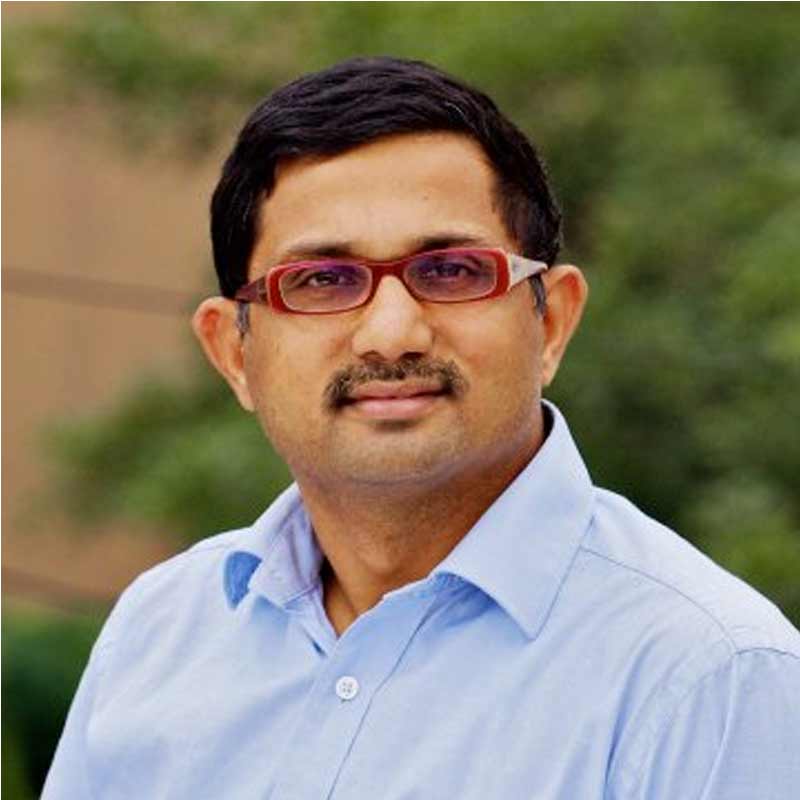
    MUMBAI: “Small and medium enterprises that participate in TV advertising, can help broadcasters expand their revenues. While the combined media spends of 100 such SMEs would equate to the TV spends of one of heavyweights in the brand world, SMEs can contribute around 15 per cent of total advertising dollars in India, if trends in other markets are to be believed,” Amagi Media Labs co-founder Baskar Subramanian said.

    Giving a fresh new twist to the line ‘anything can be bought online these days,’ Amagi recently launched the much-talked-about online media buying and planning platform Amagi Mix that aims to make media buying more inclusive for small and medium-sized enterprises (SMEs) and the ever-growing start-up companies in India. While the service is currently available for only television buying, Amagi intends to expand it for other media as well.

    A senior broadcasting professional and advertising industry expert, however, was skeptical of Amagi Mix calling it an “evaluation biz” that does not focus on profit-making. He did not think Amagi’s geo-targeting model was very successful either. He also doubted the broadcasters on board had a bulk inventory on sale on the platform.

    But, Amagi Mix, as per Subramanian, is win-win initiative for both broadcasters and brands. On the one hand it allows brands with limited budget to access a national television broadcaster’s reach and customise it to reach its target audience. This is enabled by Amagi’s existing geo-targeting technology that allows a single ten second slot to be multiplied according to different regions, so that different advertisement plays on the same spot in different locations.

    “TV goes national with the help of satellite signals – which could be DTH or cable – and these then come down to different headends in the country, which pipe the content to your homes. We intercept these signals in each of these headends in thousands of locations in the country. It allows us to change the content only for 10 or 30 secs of the ad slot. We buy one spot which then gets spliffed to different content at the headends,” Subramanian explained, adding that the broadcasters install it on Amagi’s behalf as part of their deal. Some of the networks that Amagi has partnered with for its geo-targeting service are ZEEL, Viacom18 group and Times Network.

    “Since we are not competing with the big agencies, we are actually adding or expanding the advertising pie rather than eating away from it,” Subramanian added. It is good for broadcasters to have a variety of advertisers rather than few spenders, because if there is a cost cut in one, it adds more burden to the broadcaster.

    Since going online, the platform has already attracted 5500 visitors, some even resulting in buys starting as Rs 25,000 to tens of lakhs. As per Subramanium, the ideal budget for an average SMEs should start at at least Rs 1 lakh to see the effectiveness of a campaign on Amagi Mix.

    Given the restricted budget of the said advertisers, Amagi is also offering to create creative content for the ad spots in a cost-effective way. “We also create advertisements for those who don’t want to spend a bomb on making ads via big name creative agencies, some of them for as low as Rs 20,000. It is an add-on to our services that ties up well with the rest,” Subramanian informed.

    As to how SMEs would embrace being hands-on with the complex work of buying the right TV media mix for themselves, Subramanian clarified that they have deliberately kept the website simple and easy to use. So far, Subramanian observed that Maharashtra, Uttar Pradesh, Tamil Nadu and Delhi have emerged as strong markets where SMEs are interested in buying media online.

    The idea was to leave the complex knowledge of media buying at the backend, while brands can concentrate on their simple marketing needs.

    “The challenge,” Subramanian said, “is to grow the breadth of media options the SMEs have now. We want to ensure that Amagi Mix is the most trusted platform available to them so that these advertisers, who used to shy away from buying national TV ads thinking it’s too expensive, feel comfortable buying online. It’s not easy to spend lakhs of rupees on a faceless online transaction. Therefore, making ourselves the most trusted brand is very critical.”

    To address this, Amagi has also launched a television commercial, titled ‘Yaari Yaari’ which has gone on-air across Amagi’s vast channel bouquet to educate TV audiences about the viability of the tool. The entire TVC has been scripted, conceptualized, financed, shot, produced and edited in-house at Amagi.

    Amagi Mix works on an algorithm that extrapolates and processes historical data of successful campaigns from around 4000 brands to learn and take intelligent decisions for an advertiser using the service.

    Currently the service offers an ad inventory of 70 national and regional channels, who are already partners with Amagi for its other services. “It’s at a nascent stage now so we don’t have clear figures but channels have come on board with some thousands of 10 seconders for now. We are aiming to broaden the width of channels as well to be more relevant to regional SMEs.”

    About the kind of commissions Amagi expects from transactions online, Subramanian made it clear that currently they aren’t looking at making money right now. “We haven’t really planned the commissions yet. Our primary focus is to make Agami Mix the best place for SMEs to trade in media by making it really user friendly. We will figure out the economics of it once we have established Amagi Mix as the most trusted brand for being media online for SMEs.

    He however affirmed that the company expects the platform to reach maturity in 18 months, post which it is expected to contribute 20 per cent of the agency’s overall business.

    “We had to wait till online buying became more commonplace in the county. It took us two to three years to be ready with everything, in our wish to give a quality service. Especially for brands in the tier II and tier III cities who often complained about the lack of skills or access to the right media inventory for their campaign needs. Either relevant media agencies didn’t exist there or they didn’t have the heavy budget to deal with the media behemoths of the country,” Subramanium shared.

    While media reports suggest that the company is looking to raise series D funding of $25 million, Subramanian stated that the company is adequately funded for the time being and looking to execute in three areas — smooth sailing of Amagi Mix in India expanding into online video business by providing targeted advertising solutions to broadcasters for streaming videos online, and growing its international base.

  • Amagi’s Mix  challenge

    Amagi’s Mix challenge

    MUMBAI: “Small and medium enterprises that participate in TV advertising, can help broadcasters expand their revenues. While the combined media spends of 100 such SMEs would equate to the TV spends of one of heavyweights in the brand world, SMEs can contribute around 15 per cent of total advertising dollars in India, if trends in other markets are to be believed,” Amagi Media Labs co-founder Baskar Subramanian said.

    Giving a fresh new twist to the line ‘anything can be bought online these days,’ Amagi recently launched the much-talked-about online media buying and planning platform Amagi Mix that aims to make media buying more inclusive for small and medium-sized enterprises (SMEs) and the ever-growing start-up companies in India. While the service is currently available for only television buying, Amagi intends to expand it for other media as well.

    A senior broadcasting professional and advertising industry expert, however, was skeptical of Amagi Mix calling it an “evaluation biz” that does not focus on profit-making. He did not think Amagi’s geo-targeting model was very successful either. He also doubted the broadcasters on board had a bulk inventory on sale on the platform.

    But, Amagi Mix, as per Subramanian, is win-win initiative for both broadcasters and brands. On the one hand it allows brands with limited budget to access a national television broadcaster’s reach and customise it to reach its target audience. This is enabled by Amagi’s existing geo-targeting technology that allows a single ten second slot to be multiplied according to different regions, so that different advertisement plays on the same spot in different locations.

    “TV goes national with the help of satellite signals – which could be DTH or cable – and these then come down to different headends in the country, which pipe the content to your homes. We intercept these signals in each of these headends in thousands of locations in the country. It allows us to change the content only for 10 or 30 secs of the ad slot. We buy one spot which then gets spliffed to different content at the headends,” Subramanian explained, adding that the broadcasters install it on Amagi’s behalf as part of their deal. Some of the networks that Amagi has partnered with for its geo-targeting service are ZEEL, Viacom18 group and Times Network.

    “Since we are not competing with the big agencies, we are actually adding or expanding the advertising pie rather than eating away from it,” Subramanian added. It is good for broadcasters to have a variety of advertisers rather than few spenders, because if there is a cost cut in one, it adds more burden to the broadcaster.

    Since going online, the platform has already attracted 5500 visitors, some even resulting in buys starting as Rs 25,000 to tens of lakhs. As per Subramanium, the ideal budget for an average SMEs should start at at least Rs 1 lakh to see the effectiveness of a campaign on Amagi Mix.

    Given the restricted budget of the said advertisers, Amagi is also offering to create creative content for the ad spots in a cost-effective way. “We also create advertisements for those who don’t want to spend a bomb on making ads via big name creative agencies, some of them for as low as Rs 20,000. It is an add-on to our services that ties up well with the rest,” Subramanian informed.

    As to how SMEs would embrace being hands-on with the complex work of buying the right TV media mix for themselves, Subramanian clarified that they have deliberately kept the website simple and easy to use. So far, Subramanian observed that Maharashtra, Uttar Pradesh, Tamil Nadu and Delhi have emerged as strong markets where SMEs are interested in buying media online.

    The idea was to leave the complex knowledge of media buying at the backend, while brands can concentrate on their simple marketing needs.

    “The challenge,” Subramanian said, “is to grow the breadth of media options the SMEs have now. We want to ensure that Amagi Mix is the most trusted platform available to them so that these advertisers, who used to shy away from buying national TV ads thinking it’s too expensive, feel comfortable buying online. It’s not easy to spend lakhs of rupees on a faceless online transaction. Therefore, making ourselves the most trusted brand is very critical.”

    To address this, Amagi has also launched a television commercial, titled ‘Yaari Yaari’ which has gone on-air across Amagi’s vast channel bouquet to educate TV audiences about the viability of the tool. The entire TVC has been scripted, conceptualized, financed, shot, produced and edited in-house at Amagi.

    Amagi Mix works on an algorithm that extrapolates and processes historical data of successful campaigns from around 4000 brands to learn and take intelligent decisions for an advertiser using the service.

    Currently the service offers an ad inventory of 70 national and regional channels, who are already partners with Amagi for its other services. “It’s at a nascent stage now so we don’t have clear figures but channels have come on board with some thousands of 10 seconders for now. We are aiming to broaden the width of channels as well to be more relevant to regional SMEs.”

    About the kind of commissions Amagi expects from transactions online, Subramanian made it clear that currently they aren’t looking at making money right now. “We haven’t really planned the commissions yet. Our primary focus is to make Agami Mix the best place for SMEs to trade in media by making it really user friendly. We will figure out the economics of it once we have established Amagi Mix as the most trusted brand for being media online for SMEs.

    He however affirmed that the company expects the platform to reach maturity in 18 months, post which it is expected to contribute 20 per cent of the agency’s overall business.

    “We had to wait till online buying became more commonplace in the county. It took us two to three years to be ready with everything, in our wish to give a quality service. Especially for brands in the tier II and tier III cities who often complained about the lack of skills or access to the right media inventory for their campaign needs. Either relevant media agencies didn’t exist there or they didn’t have the heavy budget to deal with the media behemoths of the country,” Subramanium shared.

    While media reports suggest that the company is looking to raise series D funding of $25 million, Subramanian stated that the company is adequately funded for the time being and looking to execute in three areas — smooth sailing of Amagi Mix in India expanding into online video business by providing targeted advertising solutions to broadcasters for streaming videos online, and growing its international base.