Tag: Time Warner

  • Dopfner elected to join Time Warner Board of Directors

    Dopfner elected to join Time Warner Board of Directors

    MUMBAI: Time Warner Inc. has announced that Mathias Dopfner has been elected to join its Board of directors. Dopfner is chairman, CEO and head of the Newspapers Division of German publishing giant Axel Springer AG.

    Dopfner becomes the 12th member of Time Warner’s Board. His election is part of the company’s previously announced plan to add two new independent directors to its Board. Under the leadership of the Nominating and Governance Committee, the company is continuing the process of recruiting an additional independent director, informs an official release.

    Robert C. Clark, who chairs the Time Warner Board’s Nominating and Governance Committee, said, “We’re delighted that Dopfner has joined Time Warner’s Board. He’s an energetic and widely respected executive, with a solid record of leadership in the media industry. Dopfner not only brings the personal qualities that we seek in directors, but also enhances our Board’s independence and geographic diversity.”

    Time Warner Chairman and CEO Dick Parsons said, “Mathias Dopfner has done a terrific job of running one of the leading media companies in Europe, which is a key region of growth and opportunity for our company. In doing so, he has emerged at the top of a new generation of media industry leaders. He has a deep understanding of the challenges and opportunities facing media businesses around the world as well as the intelligence and character to enable him to serve the interests of our shareholders effectively.”

    Dopfner added, “I’m honoured to join Time Warner’s Board of Directors. I look forward to the opportunity to work with my fellow Board members and management in helping this great company achieve its strategic objectives and provide superior returns for its shareholders.”

    Since 2002, Dopfner has been CEO of Axel Springer which publishes more than 150 newspapers and magazines in 32 countries. He joined Axel Springer in 1998, as editor-in-chief of Die Welt. From 2000 to 2002, he served as the member of Axel Springer’s Management Board responsible for the company’s Multimedia and Newspapers Divisions. Before joining Axel Springer, Dopfner waseEditor-in-chief of Hamburger Morgenpost (1996-1998) and Wochenpost (1994-1996), adds the release.

    The other members of Time Warner’s Board are Richard D. Parsons, James L. Barksdale, Stephen F. Bollenbach, Frank J. Caufield, Robert C. Clark, Jessica P. Einhorn, Reuben Mark, Michael A. Miles, Kenneth J. Novack, Francis T. Vincent, Jr. and Deborah C. Wright.


  • Adelphia closes asset sale to Time Warner Cable & Comcast

    Adelphia closes asset sale to Time Warner Cable & Comcast

    MUMBAI: US cable television company Adelphia Communications Corporation has completed the sale of all of its assets to Time Warner Cable and Comcast Corporation for the aggregate consideration of approximately $12.5 billion in cash and approximately 16 percent of the equity of Time Warner’s cable subsidiary.

    As a result of the sale, Adelphia will no longer operate as a U.S. cable company. Its approximately 4.8 million customers will be distributed between Time Warner Cable and Comcast.

    Teams from the buyers and Adelphia have worked together for months to ensure an orderly transition for customers, communities and the almost 13,000 Adelphia employees who will transfer to Time Warner Cable and Comcast, states an official release.

    Concurrent with the closing of the sale, Adelphia also consummated a plan of reorganization for the former joint ventures with Comcast (Century-TCI and Parnassos), resulting in the repayment in full of approximately $1.7 billion of indebtedness. Adelphia will hold the remaining sale proceeds for distribution to its creditors through a Plan of Reorganization as it seeks to resolve its Chapter 11 bankruptcy case in the US Bankruptcy Court for the Southern District of New York.

    On 24 July 2006 Adelphia announced an agreement on a framework for a Plan of Reorganization intended to result in a fourth quarter 2006 emergence from Chapter 11. The agreement enjoys widespread support among Adelphia’s major unsecured creditors, including the Official Committee of Unsecured Creditors, though several constituencies do not support it. Adelphia’s obligations under the agreement and the reorganization plan envisioned by it are subject to approval by the Bankruptcy Court.

    UBS Investment Bank and Allen & Company LLC served as Adelphia’s financial advisors for the sale transaction. Sullivan & Cromwell LLP served as Adelphia’s legal advisor for the sale. Willkie Farr & Gallagher LLP continues to serve as Adelphia’s legal counsel for the Chapter 11 bankruptcy process.

  • Cable TV channel sues Time Warner, Comcast

    Cable TV channel sues Time Warner, Comcast

    MUMBAI: Heathrow based The America Channel (TAC), which is yet to start beaming, has sued cable conglomerates Time Warner Inc. and Comcast Corp. in an attempt block their $16.9 billion planned acquisition of bankrupt Adelphia Communications Corp.

    A startup niche cable channel, TAC has filed the lawsuit because the two cable companies have allegedly refused to sign carriage deals with it.

    In its lawsuit TAC claims that the deal violates federal antitrust laws and will reduce competition in the cable television industry.

    Comcast and Time Warner last year jointly agreed to acquire Adelphia and divide its systems among the two of them.

    The lawsuit accuses Time Warner and Comcast of scheming to monopolize local cable systems and of using their monopoly to refuse to deal with independent networks such as TAC, thus making it virtually impossible for unaffiliated networks to get access to cable subscribers.

    The lawsuit also accuses the duo of price-fixing and bid-rigging in their submission of a joint bid instead of competing against each other to acquire Adelphia’s assets.

    A Time Warner spokesperson was quoted in a media report as saying, “The allegations in this complaint are entirely frivolous, and we are confident that this matter will not impede closing of the Adelphia transaction.”

    TAC attorney Joseph Alioto, on the other hand, said that the two big operators freeze out independent channels like TAC because the independents produce programmes that compete against their own offerings.

    Alioto also said that besides seeking an injunction to block the Adelphia deal, TAC would also be seeking monetary compensation of around $1 billion.

    TAC plans to launch late this year and reached an agreement in April with telecommunications company BT Americas that will make it available to 50 million homes in Europe and the Middle East with satellite TV.

    The federal trade commission has already reviewed the case on anti-trust concerns. According to a media report, Alioto has asked for a jury trial and is hopeful of having the case heard before the deal is scheduled to be completed on 31 July.

    As per the report, if the deal fails to close by 31 July, Comcast and Time Warner could walk away and perhaps collect a $440 million termination fee.

    Founded in January 2003, TAC describes itself in the suit as “a new 24-hour, seven-day-a-week niche entertainment programming channel that explores and celebrates America in the 21st Century.”

  • Ted Turner bids adieu to Time Warner

    Ted Turner bids adieu to Time Warner

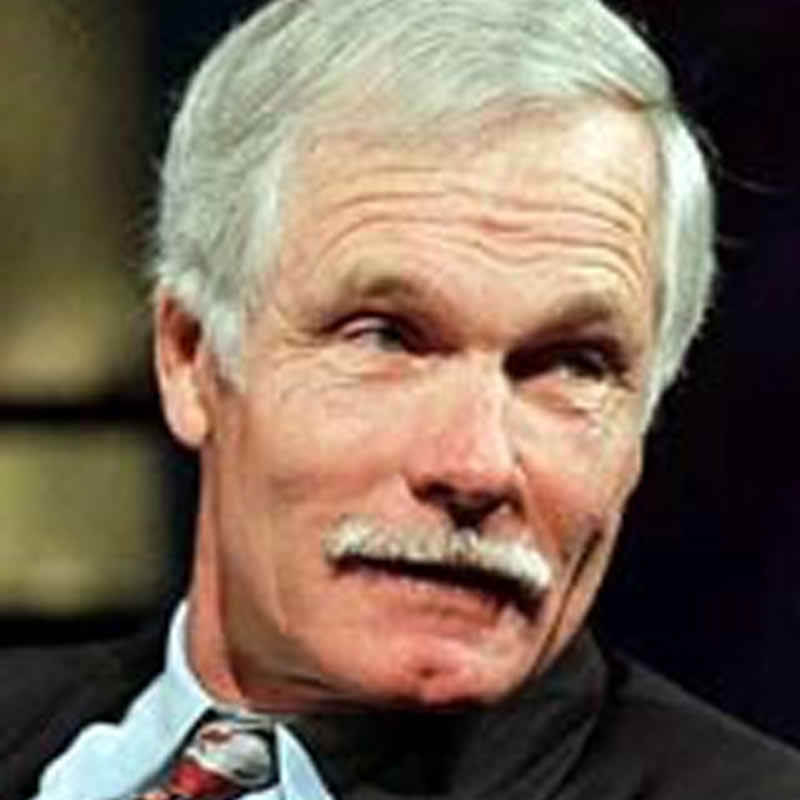
    MUMBAI: For one so flamboyantly outspoken – he once famously challenged nemesis Rupert Murdoch to a face-off in the boxing ring – Ted Turner’s departure from the network he founded was pretty low key.

    There were none of the usual verbal fisticuffs, just a relatively quiet fading away for the maverick “former” media mogul as he bid goodbye on Friday to Time Warner inc, the media behemoth that had swallowed the network he created – CNN.

    The severing of all direct ties to Time Warner was made official Friday after Turner chose not to stand for re-election at the company’s annual meeting.

    Expectedly, the two-hour meeting, held in Atlanta instead of the Time Warner’s headquarters in New York, was underpinned by the recurring theme of Turner’s legacy, which saw more than one senior executive, including chairman and CEO Richard Parsons, giving their eulogies to the now ex-vice chairman.

    The fact that all the paens sung about his “legacy” had nothing more than sentimental value was not lost on anyone, including Turner, who chose not to stay till the end of the meeting and left mid-way through it and headed for his home in upscale Atlanta.

    And he did throw in a not-so-gentle parting shot before he left saying, “I have been with the company and its successors for 35 years now. I just wished that the last five years, I could have made a bigger contribution. I didn’t have that opportunity, unfortunately, but I hung in there as long as the company, I felt, needed me — until the class-action lawsuits and the antitrust problems were resolved.”

    That about summed up the regret that Turner, 67, now officially part of Time Warner’s past, will always carry with him – not to have any say in the world’s first truely global news network CNN. Well maybe he still might. After all he remains the company’s largest individual shareholder.

    But that’s not on his mind at the moment anyway. He has his philanthropic work and he has his restaurant chain – Ted’s Montana Grill that serves bison meat – as his main priorities. Turner is chairman of the United Nations Foundation, which he started with a $1 billion pledge to the agency in 1997, and co-chairs the Nuclear Threat Initiative with former US senator Sam Nunn of Georgia.

    His final words to Time Warner shareholders: “I’ve done my best and, like (famed newsman) Edward R. Murrow said in that great Warner Bros. movie that was just released a month ago, good night and good luck.”

    CNN certainly could use some of that luck as it tries desperately to catch up with Murdoch’s news ratings leader Fox News, which has left Turner’s former network in its wake these past few years.

  • Time Warner buys Liberty Media’s Court TV for $735 million

    Time Warner buys Liberty Media’s Court TV for $735 million

    MUMBAI: Media conglomerate Time Warner has acquired Liberty Media Corporation’s half of Courtroom Television Network LLC, the owner of Court TV, for $735 million.
    Time Warner now owns Court TV in its entirety. Court TV will operate as part of Turner Broadcasting System Inc., within its entertainment division, under the direction of entertainment group president, Mark Lazarus.

    Time Warner’s Turner Broadcasting unit, also manages a large group of cable networks including CNN, Turner Classic Movies and the Cartoon Network.

    Seen in 86 million households, according to an official release, Court TV covers all aspects of the US system of justice. It is the leading producer of original programming in the crime and justice genre as well as other content, which appear on its network and popular Web sites as well as, increasingly, new distribution platforms.

    Time Warner chairman and CEO Dick Parsons said, “Acquiring all of Court TV represents a strategic investment in one of Time Warner’s most successful lines of business – our news and entertainment cable networks. We’re confident that Court TV will continue its top-notch performance and become an important contributor to our growth. We look forward to working with our friends at Liberty Media in the future.”

    Liberty chairman John C. Malone said, “We have enjoyed our long association with Court TV and its exceptional management team. The business has created tremendous value for our shareholders. We wish Henry Schleiff and his team well and have no doubt Court TV will continue its strong track record of success and value creation for Time Warner’s shareholders.”

    Henry Schleiff, who served as Court TV’s chairman and CEO, will be the network’s non-executive chairman for the next six months, focused on Court TV’s transition to Turner and the network’s public service initiatives.

    Liberty president and CEO Gregory B Maffei said, “We’ve enjoyed building Court TV with Henry and Time Warner, and we’ll welcome the opportunity to work together again. Liberty is pleased with the value created for our shareholders by this business and transaction.”

    Time Warner president and COO Jeff Bewkes said, “Let me express our appreciation to Henry Schleiff for his keen vision and inspired leadership at Court TV. Court TV has made outstanding progress in its programming, marketing and distribution operations. Turner’s presence and relationships will help us further strengthen Court TV’s competitive position.”

    Turner Broadcasting System chairman and CEO Phil Kent said, “Court TV’s established brand, programming franchises and robust new media extensions complement our successful branded entertainment and news networks and businesses. This integration into Turner will ensure Court TV’s future growth and success, as well as make our portfolio stronger.”

  • Time Warner plans job cuts at AOL

    Time Warner plans job cuts at AOL

    MUMBAI: Time Warner Inc. is planning to cut about 1,300 jobs at its AOL internet unit. This is in line with the company’s plans to reduce costs by $1 billion.

    AOL will close its call centre in Florida and will eliminate jobs in its other call centres located in Ogden, Utah and Tucson. It will be cutting 780 jobs in Jacksonville. The Tucson call center will eliminate 300 jobs and Ogden will cut down 125.

    Two years ago, Time Warner CEO Richard Parsons had decided to cut costs of the organisation. Accordingly, AOL cut its workforce by 700 people in the fourth quarter. It also eliminated 400 jobs in other divisions, including its publishing outfit.

  • 2 days for downlink deadline: TV channels slumber on

    2 days for downlink deadline: TV channels slumber on

    NEW DELHI: With the deadline to adhere to downlink norms just two days away, not only does confusion reign, but television channels are still making last ditch attempts to push back the D-day.

    A senior government official admitted that the number of applicants seeking landing rights in the country is still “very low” compared to doubts and queries being raised. “This is surprising considering the deadline is 10 May,” the official added.
    If this lackadaisical attitude is not enough, government officials say, TV channels are still seeking clarifications whether those uplinking from India also need to register under the downlink guidelines.

    For example, a senior executive of a news organization told Indiantelevision.com that he doesn’t think his company needs to apply under the downlink norms as it has completed all formalities and given the necessary information while seeking a green signal for uplinking from India.

    “We have sought a clarification from the I&B ministry. Though we think downlink norms are more for those channels uplinking from outside India, but if the government insists, we would have to do the needful,” the news executive explained.
    Ditto for some international news channels like the BBC, CNN, which want to be on the right side of the law, but are confused on some portions of the downlink guidelines that state news content and advertisements targeted specifically at Indians would not be allowed and for which special waiver has to be taken on a case-by-case basis.

    ”BBC World is aware of the timetable set out by the Indian government for completion of all formalities of registration under the new down linking guidelines issued on 11 November 2005. In compliance with the timetable, BBC World has prepared its application and will submit the same within the 10 May deadline set,” a BBC spokesperson said.

    The downlink guidelines, formulated in November 2005 states, “No person/entity shall downlink a channel, which has not been registered by the ministry of information and broadcasting under these guidelines.”

    The seeming confusion is being created by Clause 1.1 in the guidelines, which goes on to say, “The entity applying for permission for downlinking a channel, uplinked from abroad, must be a company registered in India under the Indian Companies Act, 1956, irrespective of its equity structure, foreign ownership or management control.”

    In a country like India where there’s negligible restrictions on beaming into the country or the capability to be accessed by cable networks, according to industry estimates, 350-400 TV channels of various hues can be downlinked. Of this, almost 50 per cent can be considered regular TV channels.

    Though the government is always wary of giving out such information, it is estimated 130-150 TV channels, including news, sports and general entertainment, uplink from India.

    However, of the 75-odd popular channels, which in some form or other are in demand in 61 million cable homes in India, 35-40 per cent uplink from outside India and most of them are yet to file their papers with the government.

    The Indian government issued an ultimatum last week that those channels not fulfilling all the downlink criteria by 10 May 2006 would be denied landing rights.

    The I&B ministry also posted on its website communications sent to the Indian Broadcasting Foundation, Star Group, Time Warner and a lawyer. The missive made it clear that the deadline of 10 May stays.

    The lobbying against the downlink norms as a whole and partly is understandable. The moment a television company sets up a permanent establishment (PE) in India, as per downlink norms, its tax liabilities in India would go up drastically. Rather, more the revenues collected in India, higher would be the tax component.

    Recently, Economic Times reiterated this fact in a report also. “After unveiling the downlinking policy for satellite television channels, the government is set to re-examine the tax treatment of revenues earned by foreign TV channels (FTCs). These companies earn advertising revenues from ad agencies, sponsors, and subscription revenues from cable operators.

    “The task force on emerging issues in non-resident taxation, constituted by the finance ministry, is understood to have made an attempt to bring greater clarity and certainty in the tax treatment of FTCs. This, in turn, may enable India to get a larger share of the pie. Going by the recommendations, FTCs will be liable to pay tax in India if they have a permanent establishment (PE) here. Alternatively, a dependent agent who has the authority to conclude contracts, also constitutes a PE,” the newspaper said.

    Before 2001, foreign TV channels used to pay taxes on a presumptive basis on their advertisement revenues earned in India, which ranged between 35-40 per cent.

  • Time Warner Telecom expands fiber network arm

    Time Warner Telecom expands fiber network arm

    MUMBAI: Time Warner Telecom Inc., one of the leading providers of managed voice and data networking solutions for businesses in the US, has announced the expansion of its 180-mile Dallas fiber network into Frisco, one of the fastest growing cities in North Texas.

    Time Warner Telecom extends its local networks into suburban office parks and downtown commercial areas to meet customer demand for an alternative fiber facilities-based choice for communications services. This Sonet network is similar to the company’s 43 other networks across the country that deliver national business-class voice and data solutions, locally and nationally, states an official release.

    “Customer demand typically includes the need for business continuity, diverse routing, data storage, metro Ethernet and a variety of next generation services that only fiber, facilities-based carriers, like Time Warner Telecom and larger incumbents, can offer,” says Time Warner Telecom’s vice president and general manager in Dallas John Schuchart.

    “This network extension also connects Frisco businesses to our 800-mile fiber ring that runs between Dallas, Austin, San Antonio and Houston, as well as to our national network of 20,000 route miles of fiber and 10 Gbps IP backbone,” adds Schuchart. “Time Warner Telecom offers communications solutions that enable businesses to converge their networks, reduce their total communications costs and improve their operating efficiencies.”

  • Former Disney honcho Eisner turns his attention to IPTV

    Former Disney honcho Eisner turns his attention to IPTV

    MUMBAI: Former Walt Disney CEO Michael Eisner and media conglomerate Time Warner have invested in a startup that aims to build a delivery platform for IPTV.

    Media reports indicate that Eisner’s venture capital group Tornante Company together with Spark Capital and Time Warner will be investing a total of $12.5 billion in the company. How much Eisner is exactly pumping into the venture is another unknown.

    The San Diego based Veoh Networks is building a system for delivering broadcast-quality entertainment and informational content via the Internet, using distribution technology, the firm says will allow for unlimited capacity. Veoh envisions marketing its platform to everyone from independent video producers and hobbyists to large studios.

    In a statement Eisner said, “Cable and satellite fundamentally changed the way television was distributed by creating the capacity for greater choice in programming. Veoh revolutionises television again by leveraging the Internet to expand broadcast capacity to the point that every single user, whether an individual or a media company, can create their own `channel` and every `channel` can be supported by its own business model.

    “In the past, distributing television programming required an enormous broadcast infrastructure. Veoh enables anyone with an Internet connection to distribute and receive programming in the highest quality.”

    Eisner will be a member of the board of directors of Veoh Networks.Under Veoh’s model, TV networks and individuals will be able to programme their own channels on the service. At the moment, it shows programming already in the public domain and content sent by users.

    Veoh founder and CEO Dmitry Shapiro says, “Having Michael involved in the company gives us incredible credibility, experience and knowledge, not to mention the contacts”.