Tag: Time Warner

  • Media mogul Sumner Redstone passes away at 97

    Media mogul Sumner Redstone passes away at 97

    Mumbai: Sumner Redstone, the influential US media mogul who owned CBS and Viacom, passed away at the age of 97, as confirmed by his family on Tuesday. Redstone had been a central figure in the entertainment industry for decades, serving as chairman of the board of directors for both CBS and Viacom until stepping down in 2016 due to declining health. His resignation followed internal family disputes over the companies’ control, with his family maintaining a majority stake.

    In late 2019, CBS and Viacom were merged into one entity, managing some of the most well-known television networks and film studios in the world, including CBS, MTV, Comedy Central, Nickelodeon, Showtime, and Paramount Pictures. This consolidation placed the company in the same league as other major U.S. media corporations such as Disney, Time Warner, and 21st Century Fox.

    Born Sumner Murray Rothstein in Boston in 1923, Redstone changed his surname in 1940 to Redstone. He graduated from Harvard University and served in U.S. military intelligence during World War II. In 1954, he joined his father’s business, which he later transformed into National Amusements, one of the largest cinema operators in the United States.

    Redstone survived a near-fatal fire in 1979 and went on to play a pivotal role in shaping the media landscape throughout the 1980s and 1990s. He fought fiercely to gain control of Paramount Pictures and later took over Viacom, which owned MTV and CBS. Viacom and CBS merged in 2000 but split again in 2006.

    Redstone’s remarkable career left an indelible mark on the entertainment industry and his legacy continues through the companies he built and reshaped.Sumner Redstone

  • ‘New doesn’t kill off the old but grows the industry’ – Phil Schuman

    ‘New doesn’t kill off the old but grows the industry’ – Phil Schuman

    MUMBAI: “One thing is always clear: those who embrace change consistently end up better off than those who can’t or don’t. All of this to say the entry of streaming into our industry is likely going to add more,” said  FTI Consulting senior managing director in business transformation and a leader of the media and entertainment practice globally Phil Schuman.  He was delivering a virtual keynote address "content strategies in the streaming era’  during the online version of  MIPTV 2020 earlier this month. MIPTV is normally held in the Palais des Festivals in Cannes, France every year, but was called off this year due to the Covid2019 pandemic, and the conference was streamed online.

    “New technologies emerge in consumer taste and demands always evolve but in the end the industry is still going to be here; and content will still be king. Again and again we have seen that the new doesn’t kill off and replace the old but grows the industry, creating more opportunities for everyone, and when I say more opportunity, I mean a lot more,” he says.

    “Let’s talk about the change in television. It’s been around as long as TV, but I have always found that my colleagues in the industry have the view that change is great, but just don’t change me! Every major change over the past 60 years in the television industry has been met with fear. Back in the 1970’s in the US when HBO started, people were concerned that it would kill theatrical, but it didn’t,” he said.

    “When multichannel pay TV broke out in the 1980’s as a mass medium people thought it would kill broadcasting. It didn’t at all. Now the fear is that Netlfix is killing television; but let’s look back and see how the industry fared among these changes in the past. PTV turned out to be a goldmine for studios, creating new rights windows for film libraries and syndication of popular broadcast series driving massive new incremental revenue streams,” he explained.  

    According to him, the innovation of pay television also paved the way for retransmission fees for free-to-air broadcasters an entirely new revenue stream that is projected to bring in over 12 billion dollars this year. Now I know hindsight is always 2020, looking back it’s hard to imagine what the broadcasters were so worried about the emergence of cable and pay television was probably the best thing that ever happened to them.

    “As we know the driver in television growth today has been the VOD segment and it’s been brisk at 15-plus per cent compounded annual growth rate since 2014. The number of scripted TV shows on TV now tops 500, growing 30 per cent in the last five years. And the diversity of channels and platforms has proliferated more in the last few years than in the previous 60. All this change has led to crazy stock valuations and huge mergers that have remade the landscape. Just five years ago, the capitalization of major players in the television landscape looked like this on the chart. With digital players being big but still close in scales of legacy players and they are being more major participants,” he said.  

    Today, he said, the major player comparative landscape looks quite different with major tech players with overwhelming capital size and fewer major legacy companies in pursuit and those legacy players are falling further behind in size to the digital players. “One point I would like to make though is that history tells us that today’s giants will not show all of the world they’d never seen. Let’s take a stroll down memory lane to emphasize that point.”

    “Do you remember when AOL met Time Warner they were going to be twice as big as their next rival and that spread fear in all the industry, and I don’t know that one worked out. How about when Comcast met Universal vertically integrating a major studio networks and distribution it was expected to be the end of non-exclusive network distribution. How about when AT&T met Warner Media. This deal also led to calls of doom that never happened and Disney and Fox? Looks to me these mergers generally add to the landscape after the integrations are completed. Now I will admit today is tricky. There is more competition, more diverse competition, than ever before. New guys have stormed the gates and everyone has had to adjust. Yes, Netflix can buy out Apple, so can Amazon, may be even Disney at this point,” he said.

    Streamers are also making huge investments in funding content production around the world, unlocking opportunities for storytellers everywhere. “By our count, content spent by Netflix, Amazon, Apple and Hulu in 2019 was over 30 billion dollars, much of it incremental increase in spend in the sector.

    The streaming sector itself continues to grow too. By our count, there are at least 15 sizable global or regional streamers, with more on the way.”

    Regarding the broadcasting sector, none of these legacy players have gone or going away. They may be a little smaller part of the overall puzzle, but there is clear tried and trusted demonstrated value in broadcasting that won’t be disappearing anytime soon.

    He asserts that broadcast is still unbeatable in reach. One major sporting event still brings an audience far larger than Netflix’s entire global subscriber base. Just look at the FIFA World Cup audience when compared to Netflix. This reach comparison remains true within local markets, too.

    “Take a look at the UK for example. As you can see the broadcast reach surpasses OTT service penetration. Today, the content creation market is crowded and competitive, but open. In the global category we have the major powerhouses such as Netflix, Amazon, Disney, and Apple. These are already flexing their muscles in buying global rights of the content; but let’s be clear. There are potential emerging global players as well, such as HBO Max and Peacock Hulu,” he added.  

    The landscape for buyers and sellers is drastically shifting with an influx of new entrants to the buyer market; buyers becoming sellers, and sellers becoming buyers.

    Creating organisations that are able to sell content tailored to their environment using an adaptive business model and varying return on investment. One related trend is to have in place financing for shows in advance for production as opposed to traditional deficit financing with later syndication.

    Another funding model is co-productions between US premium networks and other global networks with upside and risk shared across the partners.

    Go global in a local way. We have heard from streamers and broadcasters alike that the demand for locally produced content is very strong especially in Latin America. Local language content tops the most popular Netflix releases of 2019 in eight countries. So here’s the opportunity: while streamers may be building up internal development capabilities in the US and perhaps the UK, they have not yet built that capacity at scale in other countries, and when they do turn their focus to particular markets, they still need local production teams to satisfy content demand.

    Consortium content creation among various localised participants is the most common success tack that we have seen. This model has one major benefit: it allows for higher content cost shows to be acquired in any given market, but with the cost spread so that all parties can obtain the content within their respective budget. Atrium TV with member companies in Europe, Latin America and Asia is a private company trying to create consortium is just an example.

    There are also examples of ad hoc consortiums being created show by show where rights are shared.

    "With respect to streamers’ best practices, Netflix and Amazon, they will likely to need more local production access and all participants can work with them on this. With respect to the emerging global streamers such as Hulu, Disney+, Peacock, HBO Max, etc. They will likely need additional content above their own supply and can provide good partners for local broadcasters," he said. 

  • US DOJ to appeal AT&T-Time Warner deal

    US DOJ to appeal AT&T-Time Warner deal

    MUMBAI: The US Department of Justice (DOJ) will appeal the AT&T-Time Warner merger approval which was cleared last month by a lower court. Following the announcement, AT&T’s share fell down more than one per cent in after-hours trading .

    Last month, a federal judge ruled approved the $85.4 billion deal as legal without any imposed condition. The DOJ maintained that the deal would make the pay TV market less competitive and less innovative as well. It also said that it would lead to higher prices for consumers.

    “The court’s decision could hardly have been more thorough, fact-based and well-reasoned. While the losing party in litigation always has the right to appeal if it wishes, we are surprised that the DOJ has chosen to do so under these circumstances. We are ready to defend the court’s decision at the DC Circuit Court of Appeals,” AT&T general counsel David McAtee said.

    Other than AT&T, the ruling was also a green light for similar deals on the way. The company has already started moving ahead with plans and holding discussions for what to do with properties like HBO.

  • Hulu signs deal for Viacom series

    Hulu signs deal for Viacom series

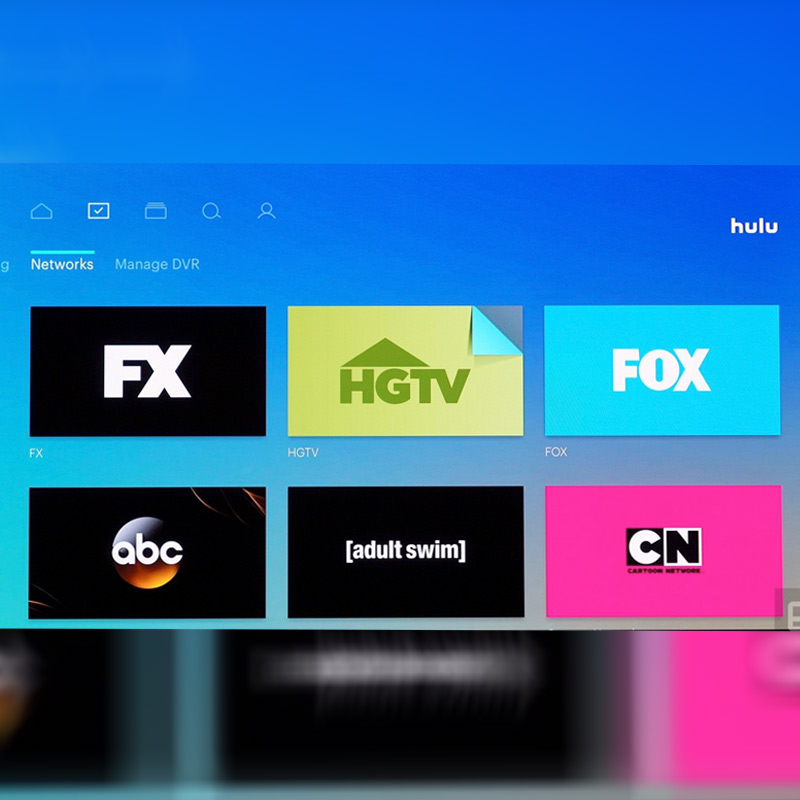
    MUMBAI: Hulu has obtained exclusive rights to stream full series from Viacom, including Daria, Nathan for You, My Super Sweet 16 and The New Edition Story. The company will gain the rights to 20 films, including School of Rock.

    According to the reports, the agreement includes content from Nickelodeon as well, like Nick Cannon’s musical show Make It Pop, animated programs Kung Fu Panda: Legends of Awesomeness and Penguins of Madagascar.

    Hulu, co-owned by Comcast, Disney, Fox and Time Warner, said earlier that it is parting ways with chief content officer Joel Stillerman, as well as senior VP of experience, Ben Smith and a senior VP in partnerships and distribution Tim Connolly.

    A combined technology and product group that will report to new CTO Dan Phillips, formerly COO at TiVo is being created by the company. That organisation will span engineering, data centre operations, network and broadcast operations centres, information technology and program management, as well as product management, user experience and product development.

  • Time Warner to be renamed Warner Media, Turner CEO exits

    Time Warner to be renamed Warner Media, Turner CEO exits

    MUMBAI: AT&T announced on Friday, its first full day of owning Time Warner, that the operating businesses in the $85 billion acquisition will be contained in an entity called WarnerMedia. The names of the operating units — HBO, CNN, Warner Bros., TNT, etc. — will stay the same.

    AT&T’s media business CEO John Stankey who is tasked  with running WarnerMedia after integrating it into AT&T, also announced the exit of Turner CEO John Martin.
    Those who reported to Martin — Turner President David Levy, Turner International President Gerhard Zeiler and CNN Worldwide President Jeff Zucker — report now to Stankey.

    “This initial Turner org structure will allow me to work more closely with more Turner leaders and accelerate my personal learning of the business,” Stankey wrote in a memo to his “new colleagues.”

    The heads of WarnerMedia’s two other divisions — HBO CEO Richard Plepler and Warner Bros. CEO Kevin Tsujihara will stay in their jobs.

    Among Time Warner’s top executives, however, Stankey said only general counsel Paul Cappuccio will join the new regime.

    That means former Time Warner chairman and CEO Jeff Bewkes, whom Stankey profusely thanked for his support throughout the deal’s 21-month approval process, will retire after a brief transition.

    WarnerMedia, to meet its goal of $1.5 billion in cost savings, is expected to announce further job cuts.

    Stankey promised daily operations would see “little change,” but he didn’t mince words about further paring of the old Time Warner.

    He further added, “Many of the redundant corporate support functions between our companies at the HQ/holding company level will be eliminated in the coming months,”
    Getting back to the name change, Stankey cited lingering confusion between Time Warner the media company and, until its takeover by Charter Communications, Time Warner the cable company. “Our consumer research suggests this confusion isn’t going away,” he said.

    Also Read:

    Enterr10 to launch two Bengali channels

    Industry optimistic about RPD technology for viewership

    The era of regional music dawns in India

  • After megamerger with AT&T, five Time Warner executives set for $180 million payout

    After megamerger with AT&T, five Time Warner executives set for $180 million payout

    MUMBAI: Patience, they say, is a virtue. And sometimes, patience pays . Just ask Time Warner’s top five executives who will  will walk away with combined exit packages worth $180 million after their company’s merger with AT&T was approved by a federal court. The $85 billion deal between the two giant corportations has been two years in the making.

    Among those who hit pay dirt, CEO Jeffrey Bewkes top the list. He will collect close to $97.7 million, according to a report on CNN money. Bewkes received a retention bonus in stock in February 2017. Based on Tuesday’s closing price, he will get shares worth $28 million as part of that bonus. Other than that, the 66-year-old will take home $33.2 million in severance.

    Chief financial officer Howard Averill’s exit package is worth about $32.3 million, while Paul Cappuccio, the company’s general counsel, will get $26.7 million. Executive vice president of marketing and communications Gary Ginsberg is due $12.2 million, while Carol Melton, executive vice president of global public policy, will get an estimated $11 million.

    When the deal  between AT&T (T) and Time Warner (TWX) deal was first announced in 2016, Bewkes and the other top executives were each granted retention bonuses. For companies involved in a merger, handing retention bonuses and severance packages to top executives is standard procedure.

    However, it must be noted that these executive payouts are tied to the company’s performance and depend on when these individials leave the organization. The  executives who decide to stay put in the the merged company won’t be given a severance check.

    Also Read:

    AT&T, Time Warner’s merger cleared by court

    AT&T unveils live video streaming service, DirecTV Now

  • AT&T, Time Warner’s merger cleared by court

    AT&T, Time Warner’s merger cleared by court

    MUMBAI: 20 months after AT&T’s announced its potential deal for Time Warner, the US District Court for the District of Columbia has cleared the merger between the two giant companies. The ruling will now enable AT&T to purchase Time Warner for $85 billion.

    Many analysts see the judgment as a blow to the Donald Trump administration that was not in favour of the deal.

    US district judge Richard Leon said the government’s objections “rested on improper notions”. The deal will enable AT&T to acquire Time Warner’s blue-chip media properties including HBO and CNN.

    “We are pleased that, after conducting a full and fair trial on the merits, the Court has categorically rejected the government’s lawsuit to block our merger with Time Warner,” AT&T General Counsel David McAtee said in a statement.

    The statement also mentioned the plan to close the merger on or before June 20. Vanity Fair’s intrepid media writer Joe Pompeo has reported that AT&T will rename Time Warner soon.

    The merger will bring change in the field of online distribution of content. AT&T will have a big library of content including big hits like HBO’s “Game of Thrones”.

    With the emergence of giants like Netflix and Amazon, it has been often said that content creation and distribution needs innovation to survive against their onslaught.

    With AT&T and its considerable finanacial clout now in the mix, the market dynamics are bound to change, impacting all the key players.

    Also Read:

    Time Warner shareholders approve merger with AT&T

    AT&T unveils live video streaming service, DirecTV Now

  • Discovery APAC MD & president Arthur Bastings resigns

    Discovery APAC MD & president Arthur Bastings resigns

    MUMBAI: Discovery Networks Asia Pacific (DNAP) managing director and president Arthur Bastings has put down his papers. 

    A Discovery Communications spokesperson confirmed the news  to Indiantelevision.com. 

    Bastings is serving his notice period till 31 December.

    Based out of Discovery’s headquarters in Singapore, Bastings is responsible for the company’s commercial and operational units, including sales, channel distribution, production operations, research, marketing, communications and digital media for 15 entertainment brands in the region.

    Bastings joined Discovery from Millicom International Cellular, where he was a member of the executive committee responsible for Africa and financial services. Prior to this, Bastings was CEO of Bigpoint, Europe’s largest browser-based online games developer, developing new business and leading the organisation’s expansion.

    Bastings has over 20 years’ experience of working in the TV and media business. He was previously with Discovery, as executive vice president and managing director for Europe, Middle East and Africa (EMEA) from 2004 to 2010. During his tenure, Bastings delivered EMEA’s transformational change by doubling audiences and generating exceptional organic growth, resulting in EMEA becoming one of the fastest-growing and largest pay-TV businesses in the region.

    Before his first stint with Discovery, Bastings held senior international roles including at Time Warner as MD of Northern and Central Europe for Turner Europe; and at Viacom, where he held senior strategy and planning roles at MTV International, spending a number of years working in Asia.

  • Time Warner numbers up for third quarter

    Time Warner numbers up for third quarter

    BENGALURU: Time Warner Inc., (Time Warner) reported increase in revenues and income – both operating as well as adjusted – due to increase across these parameters by all its segments – Turner, Home Box Office (HBO) and Warner Bros. The company’s total revenue increased 6 percent for the quarter ended 30 September 2017 (Q3-17, current quarter) to $7,595 million from $7,167 million for the corresponding year ago quarter (y-o-y). Total operating income increased 11.5 percent y-o-y in the current quarter to $2,245 million from $2,014 million. Total adjusted operating income increased 13 percent y-o-y to $2,339 million from $2,070 million. It may be noted that the company continues to expect its pending merger with AT&T to close before yearend 2017.

    Time Warner chairman and CEO Jeff Bewkes said, “We delivered very strong third-quarter results, keeping us on track to achieve our objectives for 2017. Both Turner and Home Box Office achieved double-digit gains in Subscription revenues, including HBO’s highest quarterly growth in 13 years, while Warner Bros. had a terrific quarter in theatrical, which all contributed to us increasing Operating Income by 11 percent and Adjusted Operating Income by 13 percent. Warner Bros.’ latest blockbuster, It, followed other box office successes, including Annabelle: Creation, Dunkirk and Wonder Woman, which have earned Warner Bros. the #1 spot at the domestic box office so far this year. Turner boasted the #1 comedy across all television among adults 18-34 with Adult Swim’s Rick and Morty and TNT’s NBA Opening Night doubleheader averaged 4.9 million total viewers, up 53 percent compared to last year. CNN also maintained its strength as the #1 news network among adults 18-49 in both primetime and total day, and had its most-watched third quarter ever among total viewers.”

    Bewkes continued: “Home Box Office’s creative excellence was again recognized at the Primetime Emmy Awards where HBO received more Primetime Emmys than any other network for the 16th consecutive year. The seventh season of Game of Thrones concluded during the quarter with an average of 33 million viewers, a record for an HBO original series. Our results and these highlights reflect our continued focus on executing our strategy, which includes both creating the most engaging content and advancing the ways that consumers can enjoy and experience our content and brands across platforms. The ability to accelerate our pace of innovation and connect more directly with consumers are among the reasons we are excited about our proposed merger with AT&T, which remains on track to close before year end, pending regulatory review and consents.”

    Segment results

    Turner

    The segment reported 6.1 percent ($158 million) y-o-y increase in revenue for the current quarter to $2,678 million from $2,610 million. Operating income for the segment increased 7 percent to $1,243 million in Q3-17 from $1,162 million in Q3-16. Adjusted operating income increased 5.3 percent y-o-y in the current quarter from $1,267 million from $1,203 million.

    Time Warner says that revenue at Turner increased due to increases of 13 percent ($186 million) in subscription revenues and 4 percent ($5 million) in content and other revenues, partially offset by a decline of 3 percent ($33 million) in advertising revenues. Subscription revenues benefited from higher domestic rates and growth at Turner’s international networks, partially offset by lower domestic subscribers.Content and other revenues increased due to higher licensing revenues. The decline in advertising revenues was due to lower delivery at certain domestic networks, partially offset by increases at Turner’s news businesses.

    The company says that operating income at Turner increased ($81 million) to $1.2 billion due to the growth in revenues partially offset by higher expenses, including increased programming and marketing costs. Programming expenses grew 8 percent primarily due to higher original programming costs at Turner’s domestic entertainment networks. Marketing expenses increased mainly to support original series on Turner’s domestic entertainment networks.

    Home Box Office (HBO)

    HBO revenue increased 12.6 percent ($179 million) y-o-y in Q3-17 to $1,605 million from $1,426 million. Operating profits increased in Q3-17 by 4.2 percent y-o-y to $552 million from $530 million. Adjusted operating profits increased in the current quarter by 6.6 percent y-o-y to $565 million from $530 million.

    Time Warner says that HBO revenue increased due to increases of 12 percent ($156 million) in subscription revenues and 14 percent ($23 million) in content and other revenues. Subscription revenues increased due to higher domestic subscribers and rates and international growth. The increase in content and other revenues was primarily due to higher international licensing and home entertainment revenues.

    Operating income at HBO increased 4 percent ($22 million) to $552 million. The growth in revenues more than offset increased expenses, including higher marketing and programming costs. Programming expenses increased 7 percent due to higher original programming costs, primarily related to the timing of original series. The increase in marketing costs was related to HBO’s OTT products and original programming.

    Warner Bros.

    Warner Bros. is Time Warner’s largest segment in terms of contribution to overall revenue. Warner Bros revenue increased 1.7 percent y-o-y in the current quarter to $3,460 million from $3,402 million. Operating profit increased 25.7 percent to $538 million from $428 million. Adjusted operating profit increased 33 percent to $576 million from $433 million.

    Time Warner says that Warner Bros. revenue increase of the segment reflected higher theatrical and videogames revenues partially offset by lower television revenues. Theatrical revenues increased due to higher home entertainment and television licensing revenues of theatrical product. Videogames revenues increased primarily due to carryover revenue from Injustice 2. The decrease in television revenues was mainly related to lower initial telecast revenues. 5

    Operating Income at Warner Bros. increased due to the increase in revenues and higher contributions from this quarter’s box office releases, including It and Annabelle: Creation, as well as lower print and advertising costs due to fewer releases.

  • Time Warner revenues, net income up in first quarter

    BENGALURU: Time Warner Inc., (Time Warner) reported growth in revenue across all its segments – Turner, Home Box Office (HBO) and Warner Bros in the quarter ended 31 March 2017 (Q1-17, current quarter) as compared to the corresponding year ago quarter (y-o-y). Reported total revenue in Q1-17 was $ 7,735 million 5,8 percent more than  in Q1-16, at $7,308 million. Net Income attributable to Time Warner shareholders increased 17.3 percent y-o-y to $1,424 million in the current quarter from $1,214 million in Q1-16.

    Time Warner chairman and CEO Jeff Bewkes said: “We’re off to a strong start to 2017, as we continue to benefit from the investments we’re making in the best content while also developing new revenue streams that will drive growth and meet consumer demand for great experiences built around their favorite programming and brands. Warner Bros. delighted audiences in both film and television, with global hits in Kong: Skull Island and The LEGO Batman Movie and more series across broadcast for the current season than any other studio. Turner had another successful airing of the NCAA Division I Men’s Basketball Tournament across platforms, while CNN grew its total day ratings by 21 percent among adults 25-54, and remained the leader in digital news. Together, Turner and Warner Bros. also launched our new Boomerang-branded SVOD service, adding to our growing portfolio of products that are reaching consumers directly.”

    “Home Box Office shined in the quarter highlighted by our limited series Big Little Lies, which was both a critical and cultural breakout. Last Week Tonight with John Oliver is having its most-watched season to date, and we recently had the much anticipated returns of Silicon Valley and Veep. Looking ahead, we remain on track, pending completion of regulatory reviews and receipt of consents, to close our merger with AT&T Inc. before the end of 2017. We remain excited about the potential for this combination to accelerate the pace of innovation in our businesses,” Bewkes continued.

    Turner

    Revenues increased 6.3 percent ($182 million) to $3,088 million, due to increases of 12 percent ($175 million) in Subscription revenues and 16 percent ($29 million) in Content and other revenues, partially offset by a decline of 2 percent ($22 million) in Advertising revenues. The company says that Subscription revenues benefited from higher domestic rates and growth at Turner’s international networks, partially offset by lower domestic subscribers. Content and other revenues increased due to higher domestic licensing revenues. The decline in Advertising revenues was primarily due to lower delivery at certain domestic networks, partially offset by increases at Turner’s sports and news businesses and growth at Turner’s international networks.

    Operating Income decreased 5.6 percent ($69 million) to $1,170 million. The growth in revenues was more than offset by higher expenses mainly due to increased programming costs. Programming expenses increased 17 percent primarily due to higher sports costs related to the first year of Turner’s new agreement with the NBA and higher original programming costs.

    HBO

    HBO revenues increased 4 percent ($62 million) to $1.6 billion, due to an increase of 5 percent ($66 million) in Subscription revenues, partially offset by a decline of 1 percent ($4 million) in Content and other revenues. Subscription revenues increased due to higher domestic rates and subscribers and international growth. The decrease in Content and other revenues was primarily due to lower home entertainment revenues, partially offset by higher licensing revenues.

    Operating Income increased 22 percent ($106 million) to $583 million, reflecting the growth in revenues and lower selling, general and administrative, programming and distribution expenses says that company. Programming costs decreased 2 percent, reflecting lower original programming expenses related to a reduction in amortization resulting from using a longer estimated utilization period for original programming beginning in the second quarter of 2016, partially offset by higher acquired theatrical programming expenses.

    Warner Bros

    Revenues increased 8.2 percent ($256 million) to $3.4 billion, primarily due to higher television and theatrical revenues partially offset by lower videogames revenues. Television revenues increased primarily due to higher domestic licensing revenues related to certain library series. Theatrical revenues grew due to an increased number and the mix of box office releases, which included Kong: Skull Island and The LEGO Batman Movie, as well as higher home entertainment revenues primarily related to the release of Fantastic Beasts and Where to Find Them and higher carryover revenue. Videogames revenues declined due to a fewer number and the mix of releases in the current year period and lower carryover revenue.

    Operating Income increased 15.1 percent ($64 million) to $488 million, due to the increase in revenues, partially offset by higher associated theatrical and television costs of revenues and print and advertising expenses.