Tag: TikTok

  • Chingari’s explosive short format video journey

    Chingari’s explosive short format video journey

    KOLKATA: Chingari is a Hindi word which means spark.  But Chingari is also a homegrown short format video and user-generated content app which Is firing ahead on all cylinders, attracting millions of users. That too in a short period of time ever since the Indian government placed a ban on TikTok, which had 200 million users in India. Of course, other Indian apps – like Mitron and Roposo – have also stepped into the vacuum created by the Chinese platform’s banishment. However, Chingari has been getting some plaudits as well as funding from investors which have been more than pleased with its performance. It recently raised 1.4 million dollars in funding, even as it was rated as the Best App in the social category in the recently-held #Atmanirbhar Bharat Challenge.

    “India is a land of myriad cultures and colours. Each has its own flavour. We have seen many through films and other media. Yet, there’s so much more to explore – The raw talent hidden in the remotest of alleys and quietest of villages,” says Chingari co-founder and COO Deepak Salvi.  “The sheer potential of the masses. This makes ours a land of possibilities. All we needed was the right platform. One that was proudly ours.”

    Media reports say that within 24 hours of TikTok’s ban, Chingari recorded 26 million video views, with three million videos swiped per hour and 10,000 users per minute. The app pays its users based on the virality of the video. For each video a user shares on the app, the content creator gets points per view, and these points can be redeemed for money.

    Salvi says Chingari has attracted over 28 million users on the platform majorly in the 14 to 38 age bracket. The users span across tier-1, 2 and  3 cities. The app has also lured some major social media influencers and content creators, and more and more of them are hopping onto it by the hour.

    Chingari is available in English, Hindi, Bangla, Gujarati, Marathi, Kannada, Punjabi, Malayalam, Tamil, and Telugu. The homegrown app recently partnered with Alt Balaji to further aid both the platforms in strengthening their reach and increase their audience base across ‘Bharat.’ The short format video platform will introduce a verified account/page of ALTBalaji through which Chingari users will be able to follow and receive the latest updates from the streaming platform.

    Read more news on short video format category

    “We are getting calls for brand integrations as Chingari gets more acknowledged over time. While it recently entered a partnership with ALTBalaji, the coming months will see many such strong partnerships with brands,” reveals Salvi.

    Chingari is not just limited to video-sharing but allows users to read local and international news, check the city-specific weather forecast, play games, participate in quizzes, and win prizes. Media reports say that it has plans to foray into social commerce in the next six to nine months but with the core focus being, making it the best short-form video app platform.

    “Believe it or not, but we haven’t spent a single penny on marketing or promotions yet. ‘word of mouth’ publicity has been our best way forward so far. However, as we expand, we have a lot of research-backed innovations and strategies in place which we are ready to roll out, in case the market dynamics require us to,” he added.

    Interestingly, the app has investments from some of the biggest names such as Tinder CPO Brian Norgard and OLX founder Fabrice Grinda.

    “Within a short span, we were able to raise $1.4  million, which only speaks of our head-strong growth plans and the investors’ faith in us. This list too is certain to see some big names in the months to come,” explains Salvi.

    He accepts that the user-generated content platform space is getting red hot competitive as each day passes with Roposo and Moj scaling up steadily and many more pawing on the sidelines to launch.  But his belief is that Chingari certainly holds an upper edge from a first and fast-mover perspective.

    Read more news on Chingari

    “Constant up-gradation of content and influencer data and maximum activities to keep them engaged on our platform will always hold top priority to us. Like mentioned earlier, this is just the beginning of a big revolution in entertainment. Soon you will see, not just the nation, but the entire world adopting short video formats of entertainment, at large,” he contends.

    Media observers however, aver that it’s early days in the homegrown UGC short format space. “TikTok had finetuned its service over years and with hundreds of millions of dollars being invested in technology, research, and innovation,” says an industry veteran. “The platform was also managing scale operations with hundreds of millions of concurrent users and generating revenue worldwide. Indian short-form video platforms have to climb that learning curve, they have to make mistakes and learn. It’s not an easy space to be in, if one is not careful, cash can burn up pretty fast. Investors will have to have tough as nails stomachs until the platforms scale up and prove their business models and start generating cash. Chingari will have to keep its spark burning bright for some time to come.”

  • TikTok selects Oracle in the US after rejecting Microsoft offer

    TikTok selects Oracle in the US after rejecting Microsoft offer

    KOLKATA: TikTok has chosen Oracle for a business partnership after abandoning talks with Microsoft. The Bytedance owned short-video app has chosen Oracle as a technology partner.

    According to reports, the terms of the deal are still evolving. It is not clear yet if Oracle would take an ownership stake in TikTok’s US operations. The decision comes at a time when the social media app is running out of time to close a deal in the US within the tight schedule given by the Trump administration. It has to block a deal within 20 September.

    Earlier on Sunday, tech giant Microsoft, another bidder for TikTok’s US operation announced that the latter has rejected its offer. “ByteDance let us know today they would not be selling TikTok’s U.S. operations to Microsoft,” Microsoft said. “We are confident our proposal would have been good for TikTok’s users, while protecting national security interests,” it added.

    However, the future of the deal is subject to approval from Washington and Beijing. TikTok’s US stake sell has turned to be more difficult since Beijing issued new restrictions or bans in late August on tech exports, requiring companies to seek government approval.

    TikTok has more than 175 million downloads in the US. While the administration alleged TikTok could misuse user information, the company has continuously refuted any claim of providing any US user data to the Chinese government. 

  • TikTok CEO Kevin Mayer steps down

    TikTok CEO Kevin Mayer steps down

    NEW DELHI: Amidst the global political ousting of TikTok, including in the US, its CEO Kevin Mayer has announced his departure from the company with a letter addressed to the employees, reported Financial Times. Vanesa Pappas, who is currently general manager of TikTok, will become the interim head. 

    Mayer had ended his 15-year-long stint with Disney to join TikTok in May this year. 

    According to reports, Mayer wrote in his letter, “In recent weeks, as the political environment has sharply changed, I have done significant reflection on what the corporate structural changes will require, and what it means for the global role I signed up for. Against this backdrop, and as we expect to reach a resolution very soon, it is with a heavy heart that I wanted to let you all know that I have decided to leave the company.”

    He added, “I understand that the role that I signed up for — including running TikTok globally — will look very different as a result of the US administration's action to push for a sell-off of the US business.”

    “We appreciate that the political dynamics of the last few months have significantly changed what the scope of Kevin's role would be going forward, and fully respect his decision. We thank him for his time at the company and wish him well,” TikTok said in a statement to the FT.

    Over the last few weeks, TikTok has been under tremendous pressure from the Trump administration. Donald Trump demanded that the app should be banned in the US as it poses a national security threat because of its China ownership.
     

  • US imposes ban on TikTok and WeChat

    US imposes ban on TikTok and WeChat

    NEW DELHI: US President Donald Trump has announced that social media apps TikTok and WeChat are barred from operating in the US starting 20 September if they are not sold by their Chinese-owned parent companies.

    The video-sharing app TikTok has come under the lens of US lawmakers over national security concerning data collection, amid intensified tension between Washington and Beijing.

    The order regarding TikTok says that after 45 days "any transaction by any person, or with respect to any property, subject to the jurisdiction of the United States, with ByteDance Ltd" the Chinese company that owns the social media platform is prohibited.

    The ban comes days after tech giant Microsoft was in talks to acquire the US arm of TikTok, which has over 80 million users in the country.

    However, the messaging app WeChat has a much smaller presence than TikTok in the US, where it is used mainly by members of the Chinese diaspora, and its owner Tencent.

  • Microsoft in talks with ByteDance to acquire TikTok in the US

    Microsoft in talks with ByteDance to acquire TikTok in the US

    NEW DELHI: Tech giant Microsoft yesterday confirmed that it has held talks with Chinese technology company ByteDance to acquire its social app TikTok in the US. Microsoft said in a statement that it will keep working with the US government on a deal and intends to conclude talks by 15 September.

    Microsoft stressed that it "fully appreciates the importance" of addressing president Donald Trump's concerns. A full security review of the app will be conducted, the company added.

    Microsoft said it was looking to purchase the TikTok service in the US, Canada, Australia, and New Zealand, and would operate the app in these markets.

    The tech firm added that it "may" invite other American investors to participate in the purchase "on a minority basis."

    "Microsoft is committed to acquiring TikTok subject to a complete security review and providing proper economic benefits to the United States, including the United States Treasury," the company said, adding that it will "move quickly" to talk with ByteDance "in a matter of weeks."

    "During this process, Microsoft looks forward to continuing dialogue with the United States government, including with the president," the company added.

  • Chinese app ban leads to higher uptake of Facebook, Instagram: Kantar

    Chinese app ban leads to higher uptake of Facebook, Instagram: Kantar

    KOLKATA: In the wake of the government of India banning 59 popular Chinese Apps, Kantar, has released insights on the impact of this ban on consumers’ digital behaviour. The ban came into effect from 29 June 2020. 

    The app-ban impacted platforms with a sizeable following. Given that users were spending hours every week across these platforms, one would have expected to see a dip in the overall time spent online once these platforms were no longer accessible. However, the average time-spent dropped only marginally (-6 per cent), indicating that consumers were switching over to rival platforms much faster than anticipated. 

    Instagram and Facebook saw an immediate increase in engagement. Avg. Time/Day on Instagram more than doubled (2.3X), and Facebook too saw a significant 35 per cent jump in time-spent on the platform with the bulk of this additional engagement being driven by smaller town consumers. Among the youth audience aged below 24 yrs, average time/day on Instagram grew by 35 per cent.

    Sharechat, India’s very own video sharing platform which focuses content around regional languages also witnessed a 2.5X increase in time spent. This has primarily been driven by the younger faction of internet audience (aged below 24 yrs). It has more than tripled (3.4X) its average time/day on Sharechat since the ban came into effect.

    The most impressive gain was seen on YouTube. Already the most popular digital video platform in the country, it saw a further 25 per cent increase in time-spent. Other players also enjoyed their fair share of the rise in engagement levels. Hotstar, India’s leading video OTT player saw its daily time spent grow by over 25 per cent. Time spent in the video OTT space grew by 40 per cent overall once the ban was imposed.

    Summarising the learnings, Kantar vice president (Insights) Akhil Almeida said, “Although consumers lost access to some of their favourite short-form video sharing apps, the bulk of consumers switched over to alternate platforms in an almost seamless manner. We saw that overall time-spent online was not as strongly impacted as one might have expected, given the size and scale of the affected platforms.” 

  • Instagram Reels and what it means for brands and content creators

    Instagram Reels and what it means for brands and content creators

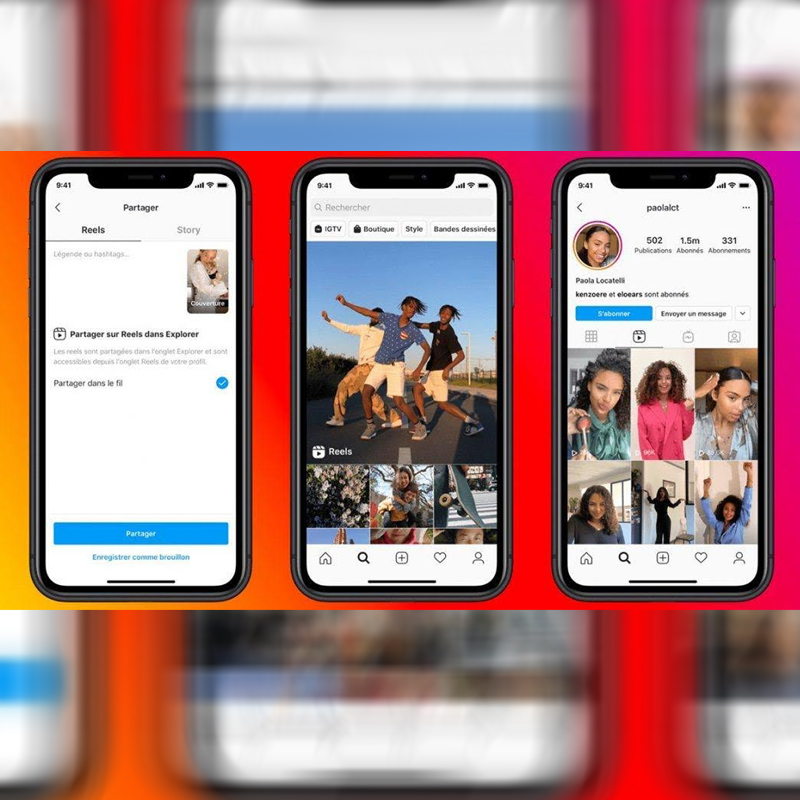
    NEW DELHI: The ban on TikTok surely made a dent in influencer marketing since it wasn’t just a space for content creativity but also for brands to connect with audiences. This gave the opportunity for other homegrown brands to scale up. Meanwhile, Instagram introduced a new feature ‘Reels’, allowing users to record and share short videos, much like TikTok.

    The new feature proposed by Instagram allows users to create and share 15-second videos with camera effects, editing tools and music. There is also a handy timer and option to adjust the video’s speed. The tool which was rolled out last week has become a quite hit among influencers and celebrities and people are trying their hands on the new feature.

    However, there is a sharp distinction in where these apps were used dominantly. TikTok had a user base of 200 million in India, which was a massive user growth base, and it was highly popular in Tier II and Tier III markets, while Instagram is more widely used in metro and urban markets.

    The Marcom Avenue director Divanshi Gupta shares that influencer marketing will see a shift. “Users and content creators will try to find their comfortable space amidst the chaos. But, eventually, influencer marketing will find its balance as the latest feature gains traction from the right kind of target audience and brands.”

    Grapes Digital COO Shradha Agarwal explains, “With Reels, Instagram has sent a signal to the entire country that we have evolved from being aspirational to massy. They have combined Instagram music with Reels where you can look at the lyrics while selecting the song and then create snippets of videos to combine them. From a user perspective, it is easier for them as they don’t have to manage multiple social handles. Influencers have already moved to Instagram. The only challenge is that while some TikTokers had a huge following on Instagram as well others may have had just 3000 compared to millions on TikTok. So, the biggest challenge for these influencers will be to first grow their numbers and then get business from brands.”

    The ban on TikTok enabled many Indian apps like Chingari, Roposo, Mitron and others to provide similar user experience and engage the disgruntled content creators and consumers. When TikTok was banned, Roposo claimed to bag 22 million users in only 48 hours. Chingari reported that the app has garnered more than 16 million users in just 25 days. Mitron also stated that the brand has observed an 11x jump in daily traffic after the ban.

    However, the popularity of Instagram is huge and could have an edge over the competition. In fact, all these apps will have a tough fight attracting users towards them and gain a market share. This means that brands will have to also choose platforms.

    Gupta feels that brands should be where their audiences are. “In a country like India, where the population varies from A to Z, it is difficult to find a micro-targeted audience at one place or in a particular ecosystem, especially amongst the Indian apps. With the change in demographics, gender, income and other personal factors, the choices of people change and so, to say that brands should focus more on Indian apps is quite irrational.”

    Agarwal explains, “I don’t think we should focus on only Indian apps. What is the benefit of globalisation if we are not adoptive and competitive? I don’t disagree that we should be proud of using Indian brands but the country should be open to foreign brands which have an edge.”

    For homegrown apps, consumer acquisition and sustenance also remains a big challenge.

    Media Moments MD Sandeep Sreekumar says, “Instagram is undoubtedly the most preferred choice of brands and influencers alike. Thus, it will be quite natural and easy for both to leverage the power of Instagram and its latest feature. As far as Indian apps are considered, they are likely to face the rough waters ahead and it will be an uphill battle to fight against this social media behemoth.”

    In this situation, advertisers will also play a pertinent role because influencers or content creators are usually attracted to brand endorsements and paid partnerships.

    It would be interesting to see if Instagram Reels will manage to fill the void left by TikTok in India.

  • MX Player launches home-grown short-video app TakaTak

    MX Player launches home-grown short-video app TakaTak

    KOLKATA: It seems that with the sudden boom of short-video platforms, even streaming services providing premium original content are keen to take the lead while TikTok stays banned. With the Chinese app being blocked, it has created a huge void in the market and the latest player to enter is MX Player with MX TakaTak.

    "MX TakaTak is a short video community, made locally and especially by MX Media & Entertainment in India. On MX TakaTak, we provide rich video content and encourage creation full of imagination," reads the description on Google Play Store.

    MX TakaTak offers users real and fun videos that they can watch and share on social media. They can browse all types of videos, ranging from dialogue dubbing, comedy, gaming, DIY, food, sports, memes, and many more.

    It has entered the market at a moment when the anti-Chinese sentiment and also call for local apps rising. In its description, MX Player emphasises that it is grown “locally’. 

    With the MX TakaTak app, users can create short fun music videos on the go, dub their favourite movies dialogue, dance videos, and a lot more, and also share on Facebook, Whatsapp, and other social media platforms. They can edit videos using the app's editing features and share them directly.

  • Chinese apps saw drop in usage post Galwan; ban sealed fate: BARC-Nielsen

    Chinese apps saw drop in usage post Galwan; ban sealed fate: BARC-Nielsen

    NEW DELHI: India on 29 June banned 59 Chinese mobile applications amidst a border stand-off with its neighbouring country. The government cited national security for banning these apps and included popular apps like TikTok, SHAREiT, UC Browser and WeChat.

    According to the latest BARC Nielsen report, the weekly usage of Chinese apps by those having such apps installed on their phones decreased by five per cent to 77 per cent in the week ended 20 June , which further dropped to 76 per cent.

    The report said that the highest impact was among users in tier-I cities, and those aged between 15-24, adding that both the segments reported an 11 per cent drop in the percentage of users per week.

    Those who were visiting the app, did so fewer times in a day, it said, pointing to a 10 per cent decline in the average number of sessions to 5.4 per day for the week ended 27 June from 7.4 in the week ended 20 June.

    According to the data, males between the age of 15-24 led the reduction in the number of sessions as well, with an 18 per cent decline, while tier-II cities witnessed a 20 per cent decline.

    During the lockdown, the percentage of users per week had touched a peak of 80 per cent for the week ended 13 June and the average number of sessions had touched nearly eight per day, the report further said.

  • TikTok ban to see influencer spillover onto YouTube & social spaces

    TikTok ban to see influencer spillover onto YouTube & social spaces

    KOLKATA: The recent ban on Chinese social media platform TikTok in India sent shockwaves across the country's TikTok community. The platform, which leverages viral, user-generated content, has more than 120 million users as recorded in June 2020.

    TikTok has emerged as a viral phenomenon in India, providing the power of digital content creation and virtual stardom to many in India. The country is also the largest market for the app outside China. Currently, TikTok influencers command a sizeable following, benefitting from lip dub, stunts and quickie content on the short video format platform.

    "The TikTok ban will lead to a boom in influencers and viewers onto other video-based platforms and homegrown competitors. We at Bisbo India, expect a surge in influencers and viewers to hit YouTube, Instagram and Sharechat," explained Bisbo India founder and creator Shakir Ebrahim.

    "TikTok works because of its short content length. Recently, TikTok users had begun working with informative and educative content (including explainers). I look forward to how they'd synergise their short video sensibilities to YouTube," he added.

    Ebrahim also talked about how the ban on TikTok would fuel similar, homegrown startups. "TikTok had hooked its specific junta. Platforms like Mitron, Chingari or Roposo would be an easier adjustment for them."

    This is not the first time the app has faced public ire and legislative action. India had banned the platform in April 2019, when an Indian court ruled that the app could expose children to sexual predators, pornography and inappropriate content. TikTok had successfully appealed against the move, convincing the court it had taken steps to safeguard against such dangers. However, recently it has clarified that it is not going to take any legal route.