Tag: TikTok

  • ZASH set to acquire remaining 20 % stake in TikTok rival Lomotif

    Mumbai: ZASH Global Media and Entertainment on Thursday announced it has agreed to acquire the remaining 20 per cent stake in the video-sharing platform, Lomotif. In February, ZASH entered into a definitive agreement to acquire a majority controlling interest in Lomotif.

    The global expansion of Lomotif is currently underway in India, the world’s second-largest market, and a country where competitor TikTok is banned. With the number of social media users in India expected to be nearly 450 million in 2023, the penetration into the Indian market is a major focus for Lomotif and the parent company ZASH.

    Speaking about its strategic business move, ZASH’s co-founder Ted Farnsworth said, “We believe very strongly in the user-generated contact space (UGC) and it is a great honor for us to be able to purchase the remaining shares of Lomotif. With the growth that we have seen recently and continue to see overall in UGC, we feel that this is the perfect positioning to become one of the top leaders competing with TikTok and others for Vinco and Zash as the completion of our two company’s merger becomes imminent.”

    The addition of Lomotif enhances ZASH’s offering by adding a short-form video component to its overall ecosystem. Lomotif has recently introduced a new format for talent discovery titled “You’ve Been Scouted,” which invites users to compete in a global competition to crown the platform’s top music performer and reward them with a record label deal and album produced by Grammy Award winning, multi-platinum mega producer Teddy Riley. The launch proved to be a success achieving over one million downloads in the first 30 days alone, said the company.

  • ByteDance’s founder Zhang Yiming to step down by end of 2021

    ByteDance’s founder Zhang Yiming to step down by end of 2021

    KOLKATA: Chinese giant ByteDance’s founder Zhang Yiming has decided to step down as chief executive and move into a key strategy role at the end of 2021. The company which owns the short video platform TikTok will now be led by it’s co-founder and head of human resources Liang Rubo.

    Yiming wrote in a letter that he would have a better impact on ByteDance if he moved out of his current CEO position. He also noted how Rubo has played a key role in advancing the company’s technology and hiring and managing people.

    “The truth is, that I lack some of the skills that make an ideal manager. I’m more interested in analyzing organizational and market principles, and leveraging these theories to further reduce management work, rather than actually managing people,” he wrote.

    He expressed his interest in analysing organizational and market principles, and leveraging these theories to further reduce management work, rather than actually managing people. “Similarly, I’m not very social, preferring solitary activities like being online, reading, listening to music, and daydreaming about what may be possible,” he added.

    This is the biggest corporate shakeup of the company after the appointment of chairman Zhang Lidong and chief executive Kelly Zhang at its China business. Yiming will work side by side with Rubo over the next six months for a smooth transition.

  • After year-long ban, TikTok India head Nikhil Gandhi quits

    After year-long ban, TikTok India head Nikhil Gandhi quits

    Kolkata: TikTok Middle East, Turkey, Africa (META), and south Asia head Nikhil Gandhi has quit, according to media reports. 

    Gandhi joined TikTok in 2019 as India and south Asia CEO. He was redesignated to his current position in January 2021 after parent company ByteDance decided to fold it’s TikTok operation in India following the ban on the short form video app. 

    “After much reflection on my time here at ByteDance and looking at my future goals, I have made the difficult decision to leave my role in the company,” Gandhi said as quoted in media reports. 

    “Working with TikTok, I have seen our app shepherd in a new era of connection, communication and cultural appreciation,” he added.

    The app which revolutionised short format video in India was banned by the government in 2020 along with multiple other Chinese apps amid rising geopolitical tension. 

    In a career spanning over two decades, Gandhi has been a part of leading media and entertainment companies and held leadership roles at Times Network, The Walt Disney Company, and Viacom Media Networks.

  • Tik Tok appoints Shouzi Chew as CEO

    Tik Tok appoints Shouzi Chew as CEO

    New Delhi: Chinese short-video sharing platform TikTok has tapped Shouzi Chew as the company’s new chief executive officer.

    TikTok’s interim head Vanessa Pappas, based in Los Angeles, will be the new chief operating officer.

    Chew is based in Singapore and was named chief financial officer of TikTok parent company ByteDance in March this year, and will continue in that role, the company said.

    The decision was taken after TikTok CEO Kevin Mayer quit the company in August 2020 amid India’s decision to ban the app.

    Chew has served as Xiaomi’s chief financial officer from 2015 to 2020, and ran its international business for a year, and took the company in one of the largest ever Chinese tech listings on the Hong Kong Stock Exchange.

    “The leadership team of Shou and Vanessa sets the stage for sustained growth,” said ByteDance CEO Yiming Zhang. “Shou brings deep knowledge of the industry, having led a team that was among our earliest investors and having worked in the technology sector for a decade.”

    TikTok became the most downloaded non-gaming app worldwide, with more than 58 million installs in March. Over 11 per cent of these installs were from China followed by the US at 10 per cent. The second most popular app was Facebook, with more than 56 million installs in March, according to data shared by app analytics firm Sensor Tower.

  • Short video platforms rise with Bharat positioning

    Short video platforms rise with Bharat positioning

    KOLKATA: The star of user-generated content was on the rise in India due to TikTok, only to be abruptly curtailed when the government banned the Chinese-origin app. Now, nearly a year after TikTok’s exit, a number of homegrown short form video platforms have emerged to plug the gap. It seems that these apps have been able to capture the space well, as a report from RedSeer says they have retained 65-70 per cent of TikTok users.

    "Indian short form apps have been able to retain over 65-70 per cent of TikTok users, adding 30-35 per cent new users in the past year, essentially back to 97 per cent of the TikTok user base," the report said.

    The newly acquired “30-35 per cent users” have been reeled in through aggressive customer acquisition and marketing push by Indian short form video apps. The new users getting onboarded have a higher share of tier-2+ users driven by stronger focus of platforms on vernacular content and ‘Bharat’ positioning.

    A finding of the report that may give TikTok pause is that nearly 75 per cent of current short-form video users are likely to stick with these domestic apps and are unlikely to switch back to Chinese apps even if the ban was lifted.

    The short form industry has seen strong recovery with respect to both traffic and engagement. It has differentiated itself from other global social media and content through a strong ‘Bharat’ positioning and moving from the middle of the internet funnel towards the top.

    Time spent on short-form video has reached 55 per cent of June 2020, which indicates that Indian platforms are still maturing and there is a strong market opportunity, the report added. At present, daily active users spend close to 30 minutes on average on short-video apps.

    55 per cent users mention availability of regional vernacular content as the key reason for using those apps. 45 per cent users would like more professionally generated content. Live commerce and online education are prominent features in the user wish-list. However, 60 per cent users mention data privacy as the main challenge, while 50 per cent complained about streaming quality and unregulated content.

    Users and influencers are driving each other’s growth on the platforms. While influencer availability is the most important decision making factor for more than half of the users, large user base helps influencers to decide to choose the platform.

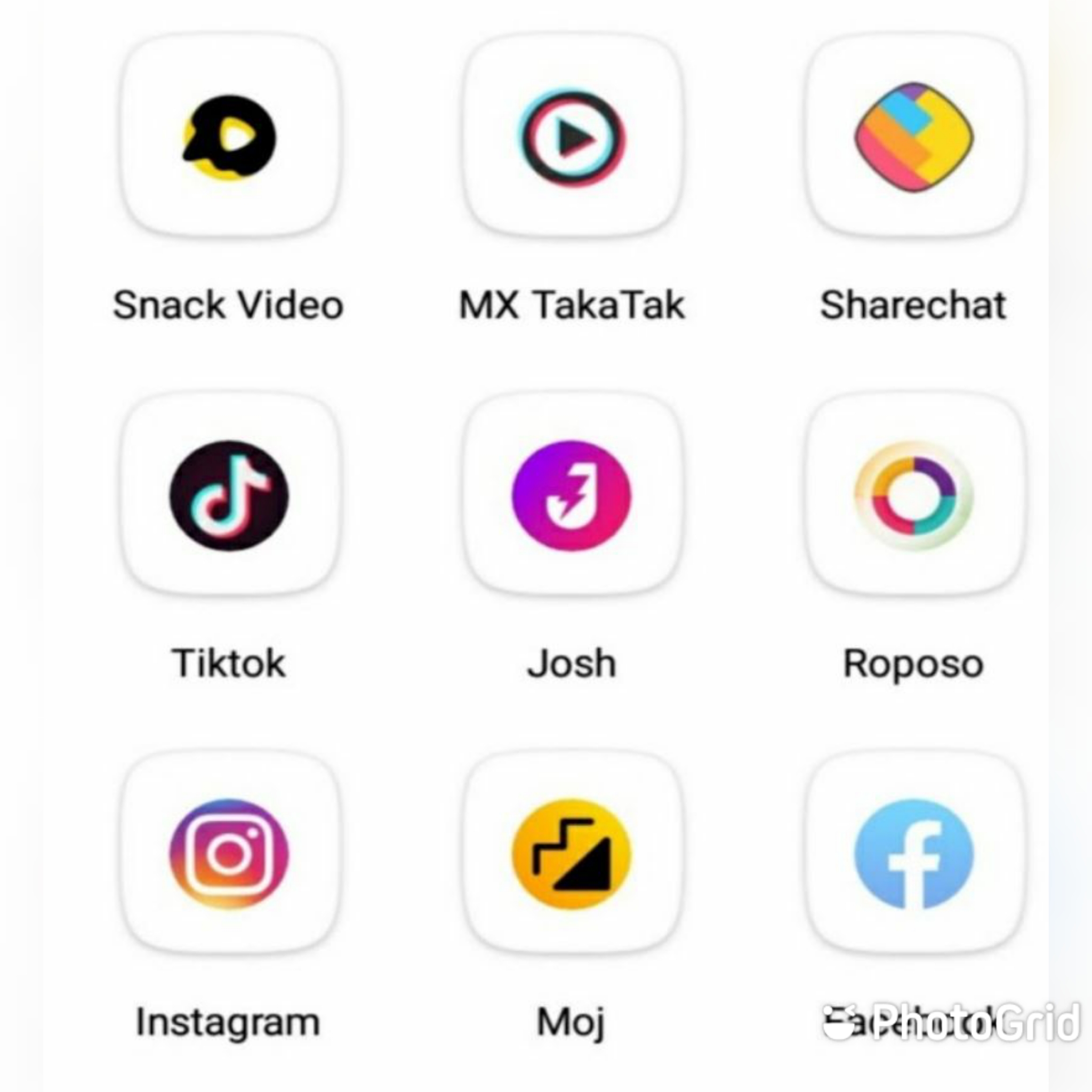
    “Moj has been a strong gainer across consumer and business metrics, as compared to the last quarter. The growth has been driven by regional language markets, especially in the southern states. On the other hand, Roposo has shown strong performance in tier-1 cities compared to the smaller ones. MX TakaTak leads in the net promoter score (NPS) in the metro cities. The platform has held challenges and hashtag events similar to TikTok, to gain market share,” the report detailed.

    Josh has fared higher on the NPS primarily on the back of increased satisfaction (47 per cent) of tier-2 users. On the other hand, Moj has performed well in the vernacular region, leading to best satisfaction (51 per cent) in tier-2+, and second best (38 per cent) in tier-1 cities.

    In metro and tier-1+ cities, MX TakaTak and Roposo are leading the pack. The former has secured the highest satisfaction (38 per cent) across the competition in metro cities and Roposo has done reasonably well in tier-1+ cities.


  • HC dismisses Bytedance’s plea, directs it to deposit $11 million in dues

    HC dismisses Bytedance’s plea, directs it to deposit $11 million in dues

    NEW DELHI: In a major setback for TikTok developer ByteDance's India operations, the Bombay high court has dismissed its plea to unblock its bank accounts frozen by Indian authorities in an alleged case of tax evasion.

    The bench of justices SP Deshmukh and Abhay Ahuja, however, granted Bytedance the leeway to operate its bank accounts in HSBC and Citibank after depositing the dues allegedly owed by the company to the Goods and Services Tax (GST) authorities.

    The court has directed Bytedance to deposit around $11 million that tax authorities believe the tech company owes. The company would need to keep that amount blocked in a state-run bank and cannot use it for any other purpose.

    ByteDance has submitted that it does not owe the tax demanded by the Indian government and does not agree with the tax authority's decision to freeze its accounts. It further appealed that it needed access to the bank account in order to disburse salaries to its employees in India.

    Counsel for the Union government opposed the plea, stating that no interference was warranted from the court at this stage. Following the ban on its top moneymaker, TikTok, in India, tax authorities were apprehensive that due to failing business, Bytedance will "run away". Hence, the freezing of the firm's bank accounts was undertaken to safeguard the interests of the tax authorities.

    In mid-March, GST authorities had ordered HSBC Bank and Citibank in Mumbai to freeze accounts of ByteDance India as it probed some of the firm's financial dealings. The Chinese software developer challenged the move in court, saying the freeze amounts to harassment and was done illegally.

  • Rizzle’s Rimix to allow users to mashup up to five videos

    Rizzle’s Rimix to allow users to mashup up to five videos

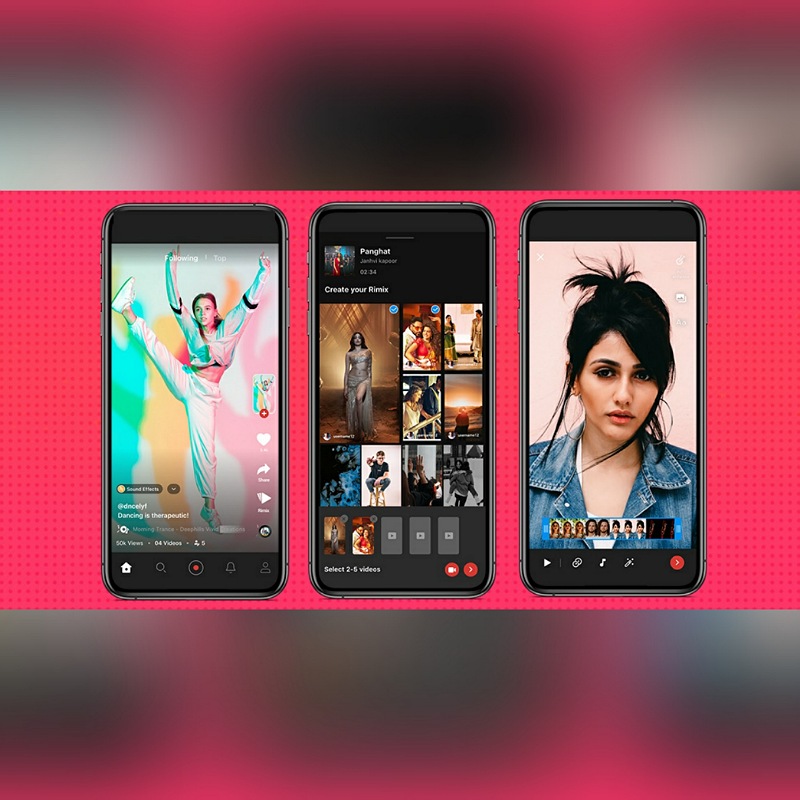
    NEW DELHI: The void that TikTok left in the Indian short video sharing ecosystem has been plugged by a rash of similar homegrown apps, which are vying to become king of the hill. These Made in India platforms are constantly coming up with new and improved features to outdo rivals and reel in new users. In keeping with this trend, Rizzle has launched Rimix, touted as the world's first video mixing feature on short-video apps.

    This feature allows users to make video mashups using two to five videos within a matter of a few seconds. Users can either choose existing videos from the Rizzle app or record their own videos, add a soundtrack of their choice, and share their masterpiece with the world. 

    According to a statement issued by Rizzle, Rimix is the industry’s first-of-its-kind spec that empowers users to create personalised short videos that are unique to them.

    Developers at Rizzle have created Rimix as a user-friendly feature, and a person does not need extensive prior knowledge of advanced video editing tools to create mashups. Rimix has been introduced at a time when other short video platforms in the industry are trying to reinvent the 'duet' feature launched around four years ago. 

    "At Rizzle we constantly strive to empower all our users to become creators of content. And with Rimix, we are a step closer to our goal. Rimix allows all our users- with no to minimum to advanced video editing skills, to create videos and share their stories," said Rizzle marketing head Sapna Patel. 

    Rizzle’s music library has 35,000+ tracks owing to their partnerships with Sony Music Entertainment and Aditya Music. This, combined with Rimix, can bring about a wide variety of exciting user generated content.

    It may be recalled that Instagram has rolled out a new feature called Remix on its Reels platform, which essentially lets users upload a video next to another user's, building on top of the original clip – similar to TikTok's duet function. What the Mark Zuckerberg-owned platform’s reaction to the similar-sounding ‘Rimix’ will be is anyone’s guess.

  • India’s freeze on bank accounts is harassment, ByteDance tells court

    India’s freeze on bank accounts is harassment, ByteDance tells court

    New Delhi: Video sharing app TikTok's parent company,ByteDance has told the Bombay high court that the government's decision to freeze its bank accounts in a probe of possible tax evasion amounts to harassment and was done illegally, Reuters reported on Sunday.

    The Chinese technology company had reduced its Indian workforce in January amid uncertainty over its future business in the country and its short-lived foray into one of the biggest markets. The decision came months after the government announced a ban on its popular video app TikTok which had amassed hundreds of millions of users in India. The ban was announced following a border clash between India and China.

    Reuters had reported that an Indian tax intelligence unit had ordered HSBC and Citibank in Mumbai to freeze bank accounts of ByteDance India in March, as part of its probe of the company’s financial dealings. The Chinese firm challenged the freeze in Bombay high court. The court declined to grant ByteDance immediate relief last Wednesday and listed the case for next hearing on 6 April.

    ByteDance India also told the court it has a 1,335-strong workforce, including outsourced personnel, and the account freeze has impacted the release of their March salaries. In the 209-page court filing lodged on 25 March accessed by Reuters, the Chinese company told the court that the "authorities acted against the company without any material evidence and gave no prior notice, as required by Indian law, before such drastic action". It further added, that “blocking accounts during the process of investigation amounts (to) applying undue coercion. It is intended, improperly, to harass the petitioner.”

    The Beijing-headquartered company is also facing global scrutiny over TikTok’s data collection practices.

  • Instagram follows TikTok, launches ‘Remix’ on Reels

    Instagram follows TikTok, launches ‘Remix’ on Reels

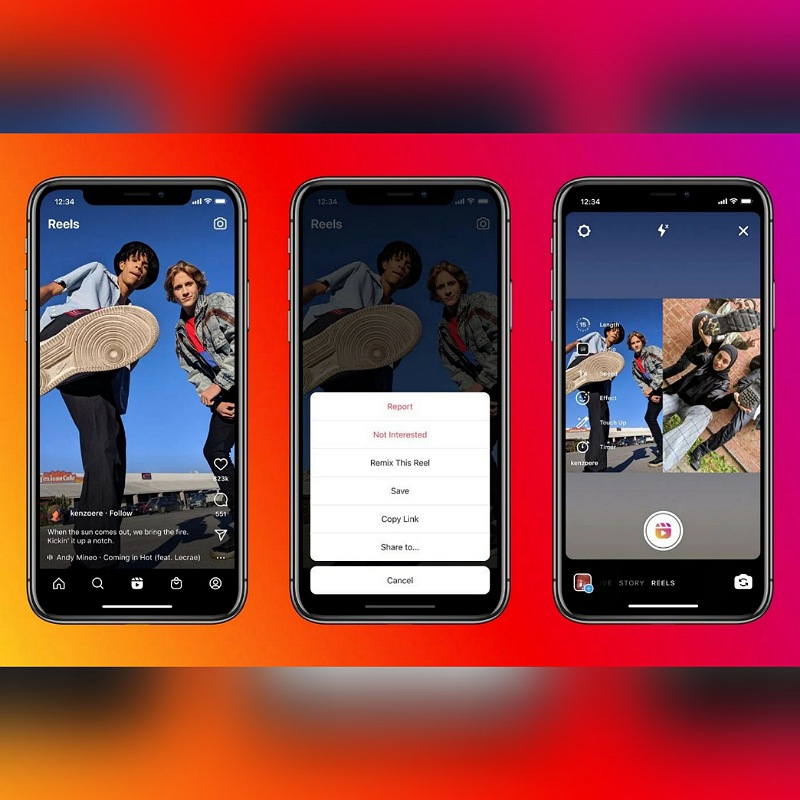
    NEW DELHI: In a bid to overpower short-video platform TikTok, image sharing app Instagram has rolled out a new feature called Remix. The Remix feature allows users to remix reels which means they can upload a video next to another user's, building on top of the original clip.

    To launch the Remix feature, users should click on the three dots that show up on the top right corner of the Reel, and choose Remix This Reel option. While using this feature, the screen will split into two parts; one part will carry the original reel, while the second will be your new reel. After recording, users can control the volume for the original audio, your recorded audio, and can even add a voiceover. 

    A similar feature is already popular in TikTok under the duet, and is being widely used for dance challenges. As TikTok is banned in India, Instagram believes that its new feature will garner huge popularity in the country. 

    "Remix lets you create your own Reel, along-side an existing reel. Interactive tools like Live Rooms, polls and questions in Stories, and AR effects have always been a huge part of how people connect on Instagram," said Instagram in a recent statement. 

    Facebook-owned Instagram had launched Reels last year, and since then, several features have been added to it. Some of these new specs include an extension of recording time to 30 seconds, and extending the countdown timer to 10 seconds while recording. It is also possible to trim and delete audio clips from the timeline. 

    It is to be noted that the Remix option will be enabled only in newly uploaded reels. If you want older reels to be remixed by others, the feature should be enabled manually. If you do not want people remixing your reels, you should go to settings, tap on reels, and disable the option. 

  • Bombay HC grants no relief to ByteDance in tax evasion case

    Bombay HC grants no relief to ByteDance in tax evasion case

    KOLKATA: TikTok’s parent company ByteDance continues to remain in limbo as Bombay high court granted no relief in the case where the company challenged Indian authorities’ decision to freeze the its bank accounts.

    According to a Reuters report, the court heard the plea on Wednesday. Despite ByteDance counsel Prakash Shah submitting that the company was bleeding and needed to withdraw funds for operational expenditures like staff salaries and rent, the court gave no relief.

    Shah also added that four of the company’s bank accounts have been frozen. The next hearing in the matter is set for 6 April.

    According to media reports, In mid-March, authorities ordered ByteDance India's accounts at Citibank and HSBC to be blocked because of alleged evasion of certain taxes in online advertising dealings between the ByteDance unit in India and its parent entity in Singapore, TikTok Pvt Ltd. The Chinese tech company moved to court asking to quash the directive as it fears that the move will hit Indian operations hard.

    In January 2021, ByteDance decided to cut down its Indian workforce amid the uncertainty over its biggest business TikTok’s future in India. Following the political conflict between India and China, the Centre imposed a ban on a number of Chinese apps including short-video app TikTok last June.