Tag: Tihar Jail

  • Sahara asset attracts Rs 150 crore bids; SC turns into auction room

    Sahara asset attracts Rs 150 crore bids; SC turns into auction room

    MUMBAI: Sahara Group’s press and television business have taken a hit. Not just this, the group’s 45 acre property in Gorakhpur, Uttar Pradesh, has been entangled in a courtroom bidding war, with the Supreme Court turning into an auction room.


    Samriddhi Developers and Gorakhpur Real Estate Developers are the two companies that are vying for the property.


    While Samriddhi Developers had initially put an offer of Rs 64 crore, the amount rose to Rs 150 crore by the end of the bidding.


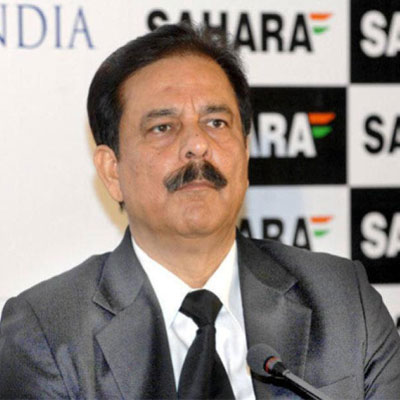
    According to an Economic Times report, the group needs to raise Rs 1,800 crore by way of cash as part of a Rs 5,000-crore payment it needs to make to free chairman Subrata Roy on bail. Aside from this, the Supreme Court has also asked for a Rs 5,000-crore bank guarantee in a case involving refunds to investors. 


    What is notable is that while Samriddhi and Sahara had signed an initial memorandum of understanding (MOU) for the sale of the plot at Rs 64 crore, the scenario changed after Gorakhpur Real Estate Developers made an offer of Rs 110 crore for the plot.


    Samriddhi Developers, senior advocate Paras Kuhad took instructions from one of the partners present in the court, and jacked the bid to Rs 125 crore. Later, the rival took it up to Rs 140 crore, adding another Rs 5 crore, before finally settling at Rs 150 crore.


    The bench has now asked both parties to show their bonafides by depositing 25 per cent of the amount by 31 July in the Sebi-Sahara account. The rest needs to be arranged in three equal installments by 31 October. If either of them fail to meet the deadline, the amount deposited will be forfeited.  


    The money generated from the sale of the Gorakhpur property will be added to the amount already deposited by the Sahara Group in the Sebi-Sahara account and go towards securing Roy’s release. 


    Complying with the July order, Gorakhpur Real Estate Developers has already deposited Rs 11 crore with the Supreme Court Registry to establish its bonafides. Samriddhi too has placed a letter and a cheque from its bankers to show its bonafides.


    The bench has now posted the matter for hearing on 3 August. 

  • Delhi HC refuses to lift ban on ‘India’s Daughter;’ says media trial influences judges

    Delhi HC refuses to lift ban on ‘India’s Daughter;’ says media trial influences judges

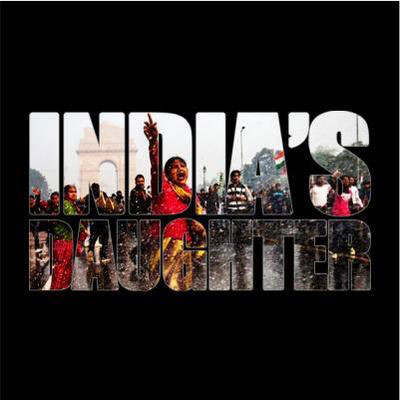
    NEW DELHI: The Delhi High Court today refused to stay the ban on BBC’s documentary India’s Daughter by British filmmaker Leslee Udwin on the Nirbhaya gang rape of December 2012, saying the case was sub judice in Supreme Court and allowing its display in the masses could affect the case.
     

    Justices BD Ahmed and Sanjeev Sachdeva said media trials tend to influence judges by subconsciously creating pressure. Although the judges said they were prima facie not opposed to airing of the documentary, it should be released after the Supreme Court decides the appeals of the convicts in the matter.
     

    “Media trials do tend to influence judges. Subconsciously a pressure is created and it does have an effect on the sentencing of the accused/ convict,” it said in support of its observation.


    The bench was of the view that the documentary could “interfere with the justice system” but refused to pass any interim orders. “Had it been originally placed before us, we would have asked you to place material before us on why the ban should be lifted. But it has come here from the roster bench of Chief Justice, so we will not pass any interim orders.”


    Observing that airing of the video could make or ruin the case of one of the rape convicts, Mukesh, it said, “Whether he has shown remorse or not would be considered at the time of his sentencing. Why not wait till the Supreme Court decision?”


    On the contention that ban on airing of the video till the apex court judgement could also lead to gag on reporting of all sub judice matters, the bench said, “We agree.” It said that earlier media had a self-imposed code of not reporting sub judice matters, but now “media has thrown it (the code) to the winds.”


    The Central government represented by advocate Monika Arora opposed airing of the documentary saying it would give a platform to the convict to air his views and that it also contains derogatory statements against the victim. 

    She also said that the Information and Broadcasting Ministry only issued an advisory to cable TV networks to abide by the magisterial court’s order banning airing of the documentary.

    The petitioners claimed that since the documentary was freely available on the Internet, and its viewing by lakhs of people had caused no untoward or law and order situation, there are no grounds for banning the video. The petitioners also said that parts of the convict’s interview are already part of the judgment in the case by the trial court and High Court and thus are public records.

    The court had earlier refused to give urgent hearing after three law students –Vibhor Anand, Arun Menon and Kritika Padode– in their two separate PILs said “fundamental right of freedom of speech and expression have been infringed due to government’s illegal action to ban the broadcast.” They had approached the High Court after a trial court on 4 March had banned until further orders the broadcast of the interview of 16 December, 2012 gangrape convict Mukesh Singh, allegedly conducted in July 2013 inside Tihar jail.


    Earlier, a trial court had restrained the media from broadcasting or publishing the interview of Mukesh Singh after the Delhi Police moved the court seeking the restraint. The Information and Broadcasting Ministry had also issued an advisory to all television channels not to broadcast the film or excerpts from it.


    The pleas had sought lifting of the ban on the ground that it is “a look at the mindset of one of the convicted rapists.” One of the pleas had also sought direction to the Bar Council of India to expedite action against the two lawyers — advocate AP Singh and ML Sharma — who had allegedly made derogatory anti-women remarks in the documentary. It also claimed that the parents of the gangrape victim have not objected to the telecast of the documentary.


    Meanwhile, Udwin told the Los Angeles Times that the Indian government should hang its head in shame for banning her film. 

    However, the government claims she was permitted to interview the convicts in jail when she said was doing research and would not use the film for commercial purposes. The film has already been aired in several countries including the United States and the BBC4 in the United Kingdom. NDTV was to have aired the film on International Women’s Day but could not do so in view of the ban.

  • Shahid: This one is for the critics

    Shahid: This one is for the critics

    MUMBAI: Shahid is a bio-pic of a Mumbai lawyer, Shahid Azmi, whose story itself is a readymade film plot with so many twists and turns and an untimely death as he was shot down in his office at the young age of 32.

    Shahid and his three brothers, along with their mother, occupy a mezzanine one-room house in a congested Muslim locality of Mumbai. Shahid is keen to study and for this purpose argues with his family to keep the lights on at night even though it disturbs them. One such night, Shahid hears some commotion in the area and steps out to check the cause. There he sees bodies burning or slain with swords. Wanting to return home, he keeps knocking but the family is not sure it is him. The incident makes an instant impact on Shahid who, on an impulse, leaves home to head to Pakistan-occupied Kashmir to train as a terrorist. He soon realizes that he was in the wrong place and runs away to head back home.

    But here he is arrested for plotting against the state and charged under TADA to serve seven years in Tihar jail, Delhi. Like Shahid, there are also others behind bars even though they are innocent. The jail also has an inmate belonging to a terrorist group who tries to brainwash Shahid and other Muslim inmates to join the group. But Shahid is lucky to meet a character played by Kay Kay Menon, and a professor, both framed under false charges. Menon warns him to keep away from bad elements and advises that if he wanted to change the system, he needed to join it. Shahid decides to study further from within the jail and the professor helps him. Soon he is acquitted.

    Producer: Ronnie Screwvala, Siddhartha Roy Kapoor, Anurag Kashyap, Sunil Bohra.
    Director: Hansal Mehta.
    Cast: Rajkumar, Kay Kay Menon, Mohammed Zeeshan Ayub, Tigmnshu Dhulia, Vipin Sharma, Prabhleen Sandhu, Yusuf Hussain.

    After being freed, Shahid goes on to finish his masters in law and joins a renowned law firm where he lasts only few months before going on to work independently. He fights for the Muslim youth charged under another stringent law, POTA, but who Shahid thinks are innocent. Shahid fights these cases pro bono on requests from NGOs, winning 17 acquittals in his seven-year career before being shot dead defending a 26/11 accused who too was later acquitted by the Supreme Court.

    The film’sportrayal of the Muslim pockets of the city looks authentic. While it would have been tempting for the director to linger a bit longer on riots and the Kashmir training parts, he wisely avoids it, keeping only as much footage as needed to make the point. The jail portion is made to look too easy and the inmates look like they are on a picnic. Though a lot of the film is shot in court rooms, the court rooms look shoddy. However, the court duels between Shahid and opposing lawyers are interesting. Rajkumar playing Shahid is excellent throughout the film, whether in his interactions with family or clients; his portrayal of a concerned lawyer is lifelike. Kay Kay Menon, in a brief role, is pleasant. Mohammed Zeeshan Ayub, Prabal Punjabi, Tigmanshu Dhulia, Vipin Sharma, Prabhleen Sandhu and Baljinder Kaur (as Ammi) are all very good.

  • Miditech’s documentary on Tihar Jail wins Intl Gold Panda Award

    MUMBAI: Delhi-based production company Miditech has won the International Gold Panda Award for its documentary ‘Inside: Asia’s Largest Jail’ at the Sichuan TV Festival, 2011.

    The documentary is part of National Geographic Channel’s ‘Inside’ – a series which enters the world’s most restrictive places, unraveling the non stop drama helmed by a compelling cast of characters.

    Inside: Asia’s Largest Jail goes behind the walls of Asia’s largest jail complex in New Delhi, India. Through stories of several prisoners and staff, the film explores the challenges, fears, anxieties, hopes and disappointments of those who live and work inside Tihar. It’s a world set apart, on the one hand, with dreaded criminals who are prone to violent conflict with each other and with the staff. On another it is a correctional facility with a range of educational facilities and meditation programs, designed for reform and rehabilitation of prisoners.

    Miditech president Niret Alva said, “This film is restless, roving, ever present, the camera is at once ubiquitous, yet seemingly invisible. Why, because Tihar jail inmates seem completely oblivious of it. The stories of different characters intersect and sometimes merge, so beautifully that you feel you have a ring side view of a big living thing called Tihar. We at Miditech enjoyed making this film and are truly thrilled by this news.”

    Miditech MD and CEO Nikhil J Alva added, “Documentaries are an important part of Miditech’s DNA as a production company. With this win, Miditech’s documentary division has once again proved it can create compelling documentaries on Indian subjects that appeal to audiences all over the world because of their universal themes, strong research, innovative storytelling and high end production value.”