Tag: ticket prices

  • Capping ticket prices could be the blockbuster move India needs

    Capping ticket prices could be the blockbuster move India needs

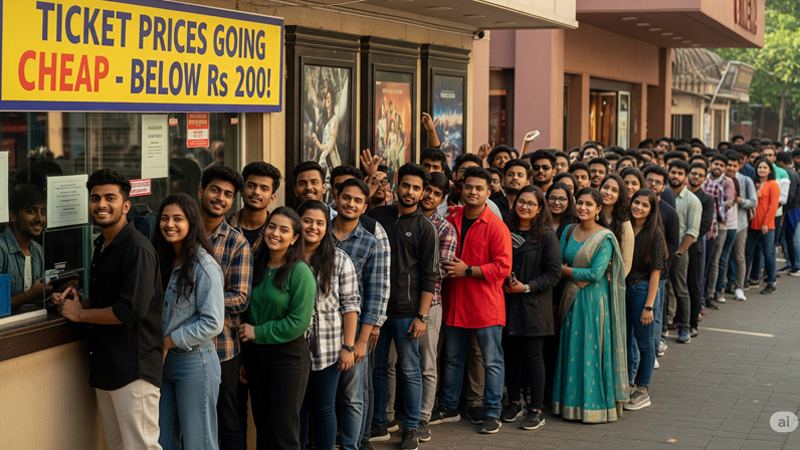
    MUMBAI: Lights, camera… exit? For many Indian cinemagoers, that’s the current script thanks to ticket prices that have crept from “reasonable” to “ridiculous.” With average Hindi movie tickets hovering around Rs 203, a family outing to the movies now rivals a restaurant bill. It’s no surprise then that India’s total cinema footfalls in 2023 dropped to 88.3 crore, down six per cent year-on-year despite record-breaking hits.

    Now compare that to states that have capped ticket prices. In Karnataka, a Rs 200 ceiling (inclusive of taxes) has been formally introduced across all formats, aiming to widen access and stabilise footfalls. Tamil Nadu continues to enforce an effective price limit of Rs 150 (excluding GST), especially for regional films. Andhra Pradesh has a structured pricing framework where regular seats are capped at Rs 177 and recliners at Rs 295, with special government permissions needed for hikes. Meanwhile, Telangana sets Rs 295 as the multiplex cap, but with a softer hand that allows occasional hikes.

    These capped states, many of which are strongholds for south Indian cinema actually offer a crucial insight. Despite lower average ticket prices (ATP- as low as Rs 94–Rs106 for Telugu and Tamil films), these industries continue to deliver some of India’s highest-grossing films. Pushpa, RRR, and Leo weren’t powered by premium pricing they were powered by massive turnout. Volume over margin, and accessibility over exclusivity, has been the winning formula.

    Now contrast that with the Hindi film industry’s ATP of Rs 203. While Bollywood does see big openings, the high price point restricts repeat viewing and deters casual audiences. When a movie ticket costs nearly as much as a one-month OTT subscription, families weigh their choices and increasingly choose the sofa.

    A nationwide cap  of Rs 150 for regular seats, Rs 200 for premium, across all languages wouldn’t just level the playing field, it could dramatically boost footfalls for Hindi films, which continue to rely heavily on urban, multiplex markets. Lowering the barrier to entry could reopen the gates to India’s vast middle-class audience. Let’s not forget: a single Rs 100 ticket sold to 1,000 people earns more than a Rs 300 ticket sold to 200.

    Even with a cap on ticket prices, theatres and multiplexes can continue to thrive by shifting focus from high-margin tickets to high-volume footfalls and diversified revenue streams. More affordable prices draw in larger crowds, especially families and repeat viewers, creating consistent occupancy rates across weekdays and not just weekends. Multiplexes can optimise profits through premium experiences charging modest surcharges for IMAX, recliner seats, or 4DX formats while also driving revenue through food and beverage sales, branded partnerships, and on-screen advertising.

    Additionally, bundled offers, loyalty programmes, and dynamic pricing during off-peak hours can further boost margins. With lower pricing unlocking access to wider audiences, the overall revenue pie can grow not shrink by getting more bums in more seats, more often.

    An excellent case in point is Saiyaara, the breakout romantic drama that is shattering expectations at the box office not by charging more, but by charging smart. Yash Raj Films rolled out discounted pricing strategies from day one, offering Buy 1 Get 1 free deals, Rs 99 weekday tickets, and up to 50 per cent off on early bookings, particularly targeting youth and family audiences. Far from cannibalising revenue, this pricing hack did the opposite Saiyaara earned over Rs 105 crore in just four days, with weekday occupancy soaring to 80 per cent in some centres, a rare feat for non-franchise films.

    The promotional pricing widened the film’s reach beyond urban cinephiles to first-time and return viewers alike. It proved that lower prices didn’t shrink earnings, they supercharged them. Instead of relying on premium ticket margins, Saiyaara leaned on volume, accessibility, and buzz making a powerful case for why affordable cinema might just be the industry’s best blockbuster strategy.

    Hindi films once thrived in single screens packed with cheering crowds. But rising costs and shifting consumption habits have turned cinema into a weekend indulgence rather than a weekly ritual. Reintroducing affordability could revive that mass magic, bringing back the audiences who made the movies matter.

    The numbers don’t lie: when tickets are cheaper, people come in droves. And that’s a happy ending the Indian film industry desperately needs.

  • The matter of high ticket & F&B pricing in cinema halls

    The matter of high ticket & F&B pricing in cinema halls

    MUMBAI: Film maker Karan Johar’s plaint that high ticket and F&B prices are what are keeping cinema-goers away from theatres has been seriously objected to by the Multiplex Association of India (MAI) which has issued a clarification. 

    It may be recalled that Karan Johar, Zoya Akhtar and other directors had sat down and done a free-wheeling conversation with the debut podcast of The Hollywood Reporter India editor Anupama Chopra, the video of which was released earlier this week. During the course of the chit-chat, Johar had mentioned that a single visit to the cinema would set back a family by about Rs 10,000; hence the visits have fallen, films are failing  and the box office is getting affected. 

    MAI president Kamal Gianchandani has issued a note in which he has stated that the issue of ticket pricing and F&B needs to be viewed in a “more balanced manner.”

    According to Gianchandani, the average ticket price (ATP) in 2023 across all theatres in India was Rs 130 per ticket. “The country’s largest cinema chain, PVRInox, reported an ATP of Rs 258 for the fiscal year 2023-24. Additionally, the Average spend per head (SPH) on F&B at PVRIox during this period stood at Rs 132. This brings the total average expenditure for a family of four to Rs 1,560 —significantly different from the Rs 10,000 figure carried in the media reports,” he explained.

    Gianchandani further pointed out that cinema pricing is dynamic and flexible and fluctuates based on factors like location, day of the week, seat type, film format, and cinema format. “Exhibitors utilise sophisticated digital tools to stimulate audience demand and optimize pricing, frequently offering discounts and promotions that make cinema outings more affordable, not just during off-peak times but even on popular days. Many of these initiatives can lower the overall cost of a cinema visit by more than 50 per cent providing families and moviegoers with affordable options. All pricing structures are clearly listed both at cinemas and online, ensuring transparency and choice for customers,” he elucidated.

    “More than anything else, it’s a well-recognised fact that the demand for a film is largely driven by its content and appeal, rather than by pricing alone. Any evaluation of pricing in the cinema industry must account for the broader economics of the movie business, which involves multiple stakeholders, including producers, distributors, and exhibitors. Each of these players contributes to the final cost to consumers, with prices ultimately shaped by the market forces of demand and supply. If lowering prices could optimize revenue for everyone involved, cinema operators would naturally make those adjustments without needing to be told. “

    “Additionally, unavoidable factors such as inflation play a role, and India has historically experienced high inflation rates. Nevertheless, cinema exhibitors continuously experiment with pricing models, collecting customer feedback and leveraging data analytics to refine their strategies,” he spelt out. “This ensures that the current pricing is both competitive and fair in the context of today’s market.” 

    Gianchandani concluded the note whilst saying: “At the heart of it all, our industry remains committed to delivering a diverse, high-quality, and accessible entertainment experience for all moviegoers. We believe it’s crucial to consider the full picture before drawing conclusions about pricing, as it’s a complex issue involving many moving parts. The goal remains the same: to provide audiences with the best possible experience at a fair value.”