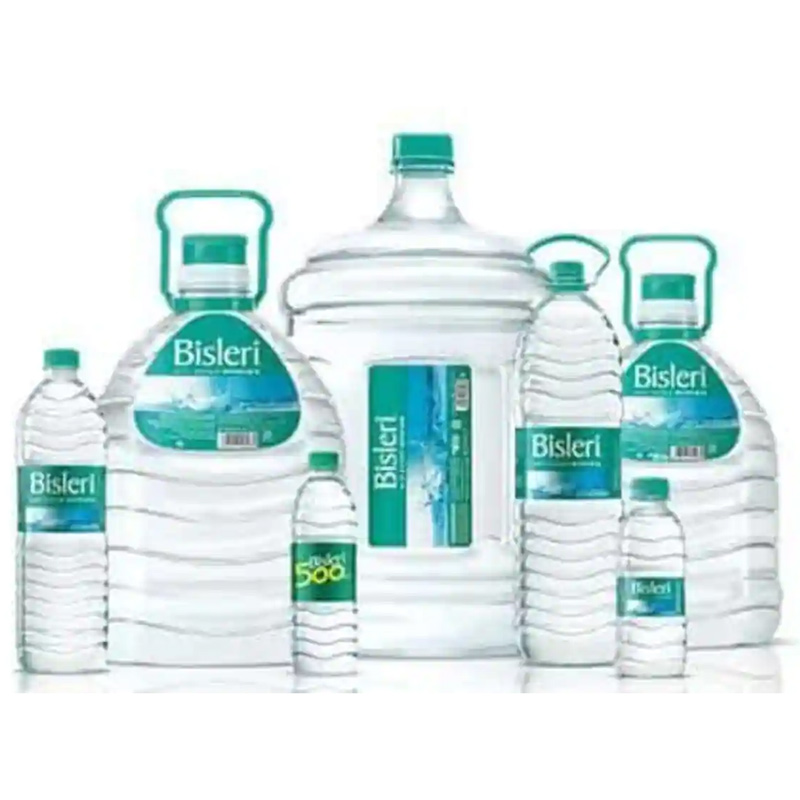
Mumbai: Ramesh Chauhan has done it again. After selling his brands – Thums Up, Maaza, Citra, Gold Spot and Limca to Coca Cola almost three decades back, the 82-year old business tycoon and chairman of Bisleri International has planned to divest his stake in the company to Tata Consumer Products Ltd (TCPL) for an estimated sum of Rs 6,000 – 7,000 crore, as per media reports.
The reports say that the current management will continue for two years as part of the deal. Bisleri brand’s turnover is estimated at Rs 2,500 crore with profit at Rs 220 crore for FY’ 23, reveal reports.
Media reports cite that Chauhan’s motive behind selling the brand was the fact that he has no successor to expand and handle the brand. His daughter Jayanti isn’t too keen on taking care of it.
Ramesh Chauhan-led Bisleri International functions in the segment with bottled water brand Bisleri and spring water Vedica. It is also existent in fizzy drinks with brands – Spyci, Limonata, Fonzo and PinaColada.
The Tata Group runs its consumer business under Tata Consumer Products Ltd (TCPL) which also sells packaged mineral water under the brand Himalayan, and also has brands such as Tata Copper Plus Water and Tata Gluco+ in the hydration segment.
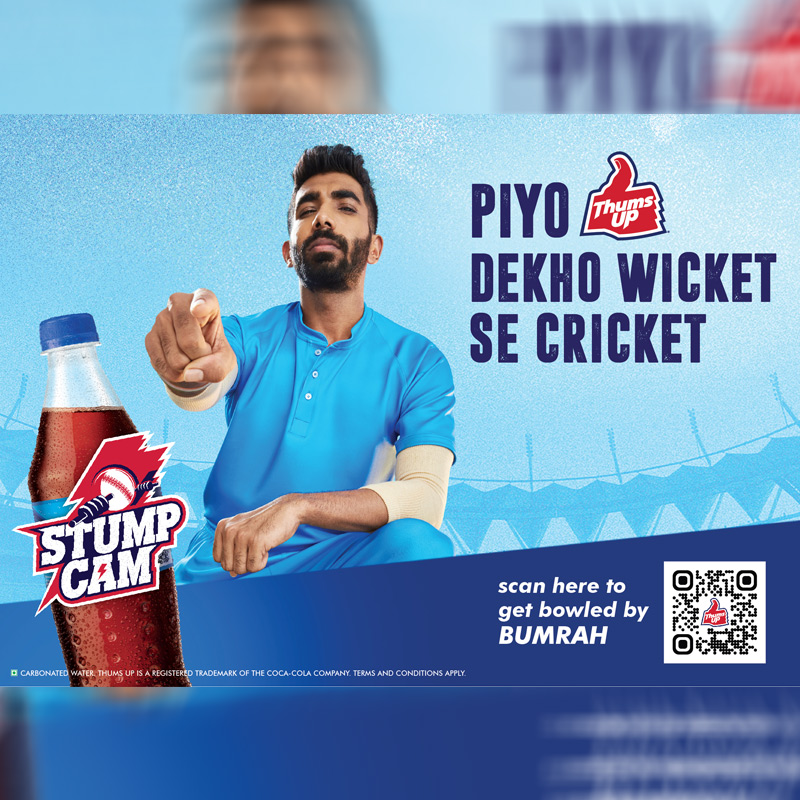
Mumbai: Thums Up, Coca-Cola India’s first billion-dollar homegrown brand, has unveiled a new ‘StumpCam’ campaign, just in time for the ICC T20 Men’s World Cup. This will provide audiences with exclusive access to match footage and content. The brand will be adopting a digital-first, multi-tech marketing approach to drive consumer engagement for the content-led campaign.
The campaign, which features renowned cricketers and superstar bowlers Jasprit Bumrah, Umran Malik, and Brett Lee, aims to amplify Thums Up’s new “Stump Cam” offering, which will offer a thrilling view into exclusive ’Toofani’ match moments, straight from the pitch. After each World Cup match, the Stump Cam video of ‘Toofani’ cricketing moments will be accessible to viewers by scanning a QR code on the Thums Up bottle. The offering will enable cricket lovers to access unique content from the tournament like never before.
Commenting on the new campaign, Coca-Cola India & Southwest Asia vice president & head – marketing Arnab Roy said, “Cricket is a shared passion which connects billions of fans across genders, generations, and cultures. We are always finding innovative ways to activate passion points like cricket and especially the ICC T20 World Cup. Thums Up’s “Stump Cam” will offer audiences the most ‘Toofani’ view of key moments of the tournament – leveraging the Stump Cam footage was a disruptive opportunity that would bring to fans a complete new way of experiencing the game. We are elated to have on board with us India’s lead bowler and star Jasprit Bumrah, who is an indispensable asset for the Indian team; Umran Malik, who is touted as the fastest bowler in the country today; and one of the legends of the game, Brett Lee. This is the first time we are doing a content-led campaign, voiced by cricketing stalwarts like Harsha Bhogle”.
Commenting on his association with Thums Up, Indian fast bowler Jasprit Bumrah, said, “Thums Up has been a longstanding partner and supporter of events and athletes across sporting formats and I’m extremely happy to have been associated with it for over a year now. It’s exciting to bring to cricket lovers and fans the brand’s new offering “Stump Cam” which will enable them to access thrilling cricketing content from a never-seen-before angle, straight from the pitch and get closer to the game.”
Australian former international cricketer and one of the fastest bowlers of his time, Brett Lee added, “I am ecstatic to be partnering with India’s most iconic soft beverage brand Thums Up, for their new StumpCam campaign. I have lived and breathed cricket all my life, and I am thrilled to be part of Thums Up’s “Stump Cam” offering, which will excite consumers beyond measure as it gives them the ultimate view of key match moments as if they were watching it right from the pitch. #WicketSeCricket!”
The campaign film has been conceptualized by Ogilvy India. Ogilvy India chief creative officer Sukesh Nayak stated, “Thums Up’s ‘Stump Cam’ is the most daring end-to-end experience idea. It’s the most Toofani, the closest possible view of the ICC T20 Men’s World Cup. And the ticket for this is the Thums Up bottle. We are proud to conceptualise and execute this end-to-end engagement idea in partnership with some incredible partners from the world of content. #WicketSeCricket campaign is an invitation for every Thums Up drinker to experience a Toofan he or she hasn’t had so far.”
Ogilvy India- North chief creative officer Ritu Sharda added, “From sitting on tree-tops, to gathering around paan shops, India has watched cricket in every possible way. But we wanted to give Thums Up fans an opportunity to get the most toofani ‘view’ in the house and frankly that’s where Thums Up Stump Cam found its genesis. We wanted people to really feel the rush of a ball coming right at them at 95 mph. We wanted them to experience cricket, like a cricketer does, right from the middle of the pitch. We are partnering with ICC and Oaktree Sports, for a 24-hour match to pack to screen marathon, making World Cup 2022, the most toofani World Cup you have ever seen. Dum hai toh dekho #WicketSeCricket”
Thums Up has been a longstanding partner of the ICC (International Cricket Council). The Coca-Cola Company has a long history of partnering with major sporting events around the world, including an eight-decade long association with the Olympics, four decades with the FIFA, and nearly 25 years with World Cup Rugby. These associations with sporting events underscore the company’s philosophy of endeavoring to be a part of the joyous moments and occasions of its consumers.
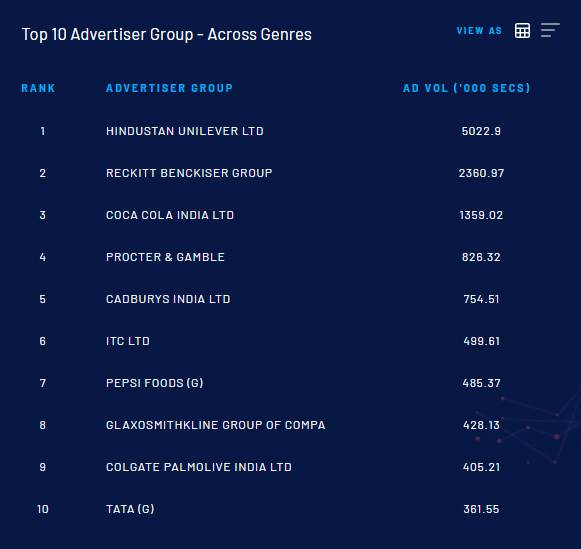
Mumbai: With ad volumes of 5022.9 (against last week’s 4557.7), FMCG giant Hindustan Unilever Ltd (HUL) was the top advertiser in the ninth week of 2022 (From 26 February to 4 March), according to Broadcast Audience Research Council (Barc) data. It was followed by Reckitt Benckiser at 2360.97.
All set to ride the upcoming summer wave and the next IPL season, beverages company Coca-Cola India delivered ad volumes of 1359.02 to emerge as the third most prolific advertiser.
Procter & Gamble, Cadbury’s India, ITC, Pepsi Foods (G), GSK Group of Companies, Colgate Palmolive India, and Tata Group followed, in that order.
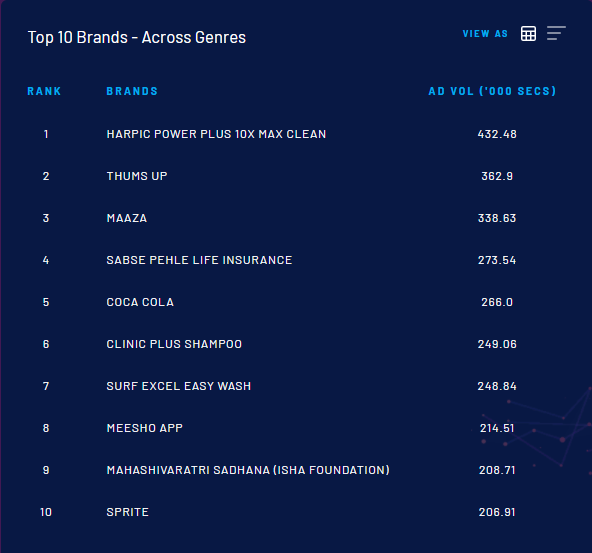
There were four summer beverage brands (all from The Coca-Cola Company) in the Brands list this week, as compared to three in the eighth week. The top slot, however, was taken by Harpic Power Plus 10X Max Clean with ad volumes of 432.48 (‘000s).
Delivering ad volumes of 362.9, Thums Up jumped from the sixth spot in the eighth week to the second place this time. Last week’s leader Maaza slipped to the third position at 338.63. Coca-Cola and Sprite were at number five and ten, respectively.
Sabse Pehle Life Insurance bagged the fourth slot, while Clinic Plus Shampoo, Surf Excel Easy Wash, and Meesho App clinched the sixth, seventh and eighth spots, respectively.
Isha Foundation’s ‘Mahashivaratri Sadhana’ was the new entrant in ninth place. Mahashivaratri was celebrated on 1 March this year.
Mumbai: With ad volumes of 4557.7 (against last week’s 4940.43), FMCG firm Hindustan Unilever was the top advertiser in the eight week of 2022 (19 to 25 February), according to Barc data. It was followed by Reckitt Benckiser at 2917.61.
All set to ride the upcoming summer wave and the next IPL season, Beverage company Coca Cola India delivered ad volumes of 1184.0 to emerge as the third most prolific advertiser in the eight week.
Godrej Group, Cadbury’s India, Pepsi Foods (G), Procter & Gamble, Colgate Palmolive India, ITC and GSK Group of Companies followed, in that order.
The brands list signalled the arrival of summer with three beverage brands, all belonging to the Coca Cola Company. While the mango-based drink Maaza was at No. one with ad volumes of 427.85, Thums Up (263.38) and Coca Cola (257.3) were at number six and eight. All of them were new entrants in this week.
Harpic Power Plus 10X Max Clean (407.9) and Mortein Insta (new entrant with 293.64) occupied the second and third slots.
They were followed by Amazon.in and Ultratech Cement at the fourth and fifth spots. Colgate Vedshakti debuted at the seventh rank. Moov Strong Diclofenac Gel and Sabse Pehle Life Insurance, a new entrant again, grabbed the last two positions
Mumbai: Made-in-India soft drink brand Thums Up has become a billion-dollar brand in 2021, announced The Coca-Cola Company, which owns the brand.
“Our local Thums Up brand became a $ one billion brand in India, driven by focussed marketing and execution plans,” said The Coca-Cola Company chairman and CEO James Quincey on Thursday evening during a post-earnings call.
With this, the original fizzy drink to emerge from the country becomes the first home-grown Indian beverage brand to scale to billion-dollar sales, finding its place amongst the billion-dollar brands in the global beverages market.
During the December quarter, the company’s sales grew by nearly 30 per cent in the country as “initiatives in India to build omnichannel presence and marketing campaigns around key occasions by leveraging festivals and passion points, through occasion-led marketing and integrated execution, drove a sequential increase in market share,” Quincey added.
The locally-made fizzy drinks brand Thums Up was launched more than four decades back in 1977, after Coca-Cola had exited from the Indian market following the Indian government’s directive to reduce the ownership stake of its Indian operation.
The brand was then re-acquired by The Coca-Cola Company in 1993 when it re-entered the Indian market. Coca-Cola had then bought the entire portfolio of aerated drinks from Ramesh Chauhan of Parle Bisleri. which also included Gold Spot and Limca.
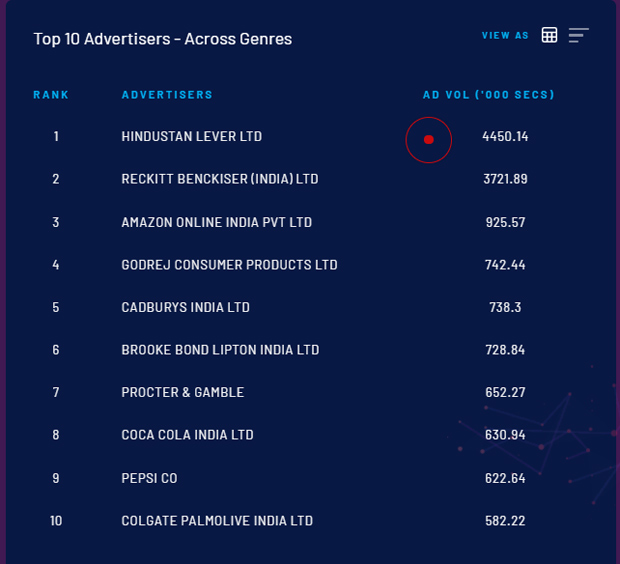
Mumbai: Continuing with last week’s trend, Hindustan Unilever Ltd. maintained its position as the top advertiser across genres during BARC week 28 (10 July – 16 July). The recorded ad volume, however, fell from 4893.09 (‘000 sec) in week 27 to 4450.14 (‘000 sec).
HUL was followed by Reckitt Benckiser (India) ltd. with ad volume of 3721.89 (‘000sec). The figure stood at 4180.54 in week 27.
The top two advertisers were followed by Amazon Online India, Godrej Consumer Products, Cadburys India, Brooke Bond Lipton India, Procter & Gamble, Coca Cola India, Pepsi Co, and Colgate Palmolive India, in that order.
Wipro and Ponds India which held the seventh and ninth position in week 27 went off the list making way for Procter & Gamble and Coca Cola India at number seven and eight, respectively.
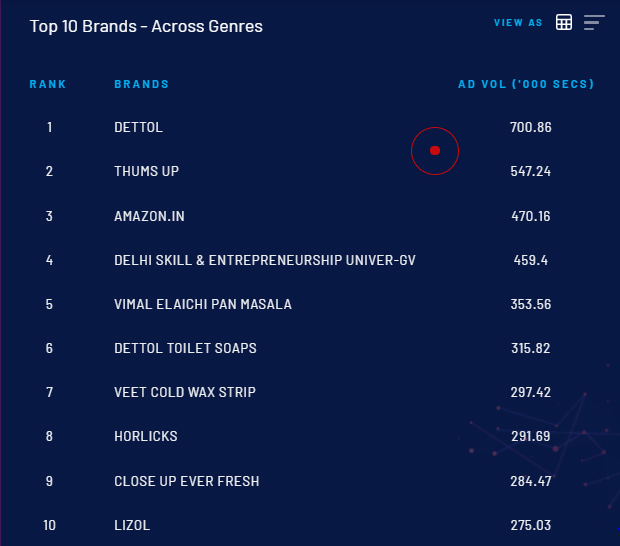
Among the brands, RB’s Dettol held onto the top slot with ad volume of 700.86 (‘000sec), as against 754.83 (‘000sec) in week 27. Thums Up made its way to the second position clocking ad volume of 547.24 (‘000 sec). The beverage brand from Coca Cola India was not on the top-ten list last week.
Dettol and Thums Up were followed by Amazon.in, Delhi Skill and Entrepreneurship University, Vimal Elaichi Pan Masala, Dettol Toilet Soaps, Veet Cold Wax Strip, Horlicks, Close Up Ever Fresh, and Lizol.
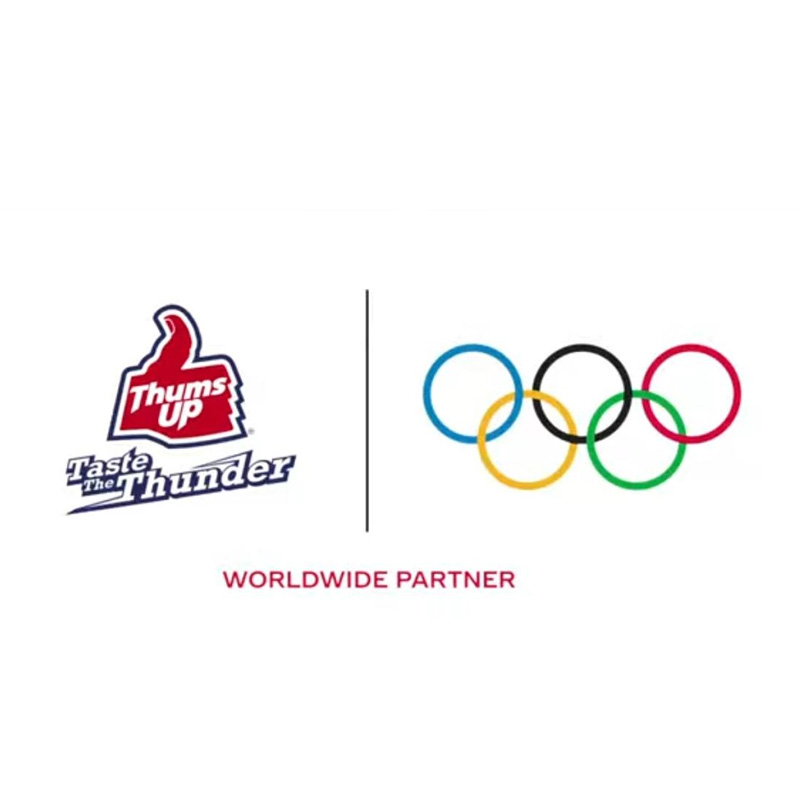
New Delhi: As India enters its 100th year of participation at the Olympic Games this July, Thums Up has set out to celebrate the historic feat and salute the real heroes – the athletes who overcame tremendous odds to reach where they are today. The home-grown brand on Wednesday announced its worldwide partnership with the international event which is set to begin in Tokyo Games to be held in Tokyo on 23 July.
As part of the partnership, Thums Up has launched its new campaign – Toofan wahi jo sab palat de, that tries to capture the mood of not just the athletes representing India at the Olympic Games, but the entire nation. “The upside down Thums Up bottle is a visual symbol that celebrates determination, strength, and the fierce challenger spirit,” said the company on Wednesday. “Every bottle in the hand of every consumer is now also their voice to ‘Palat De‘ all the naysayers who say they can’t or shouldn’t do it.”
Ogilvy India, chief creative officer, Sukesh Nayak said, “Completely turning the conversation upside down, it’s a game changer that takes the brand a notch higher. We believe it very well captures the emotion of the nation, when it comes to the Olympic athletes, our real heroes.”
According to the company, the task at hand was to create a brand shift, without taking away anything from it and to make the campaign relatable and emotional, without disturbing the DNA of the brand. The first film was launched on Tuesday, which was directed by Shashanka Chaturvedi in association with the production house- Good Morning Films. The uplifting tone of the campaign perfectly complements Thums Up’s repositioned brand message of resilience and real heroism of everyday people.
Ogilvy India (north), chief creative officer, Ritu Sharda said, “All of us have faced these naysayers, telling us what we can and can’t do. The emotion is real and relatable. And that’s why we think the idea is going to cut through the masses and turn into a cheer-storm for our athletes. Of course, the idea lives beyond a campaign and is a personal statement for anyone to say ‘Palat De’ to any challenge”
Coca-Cola India and Southwest Asia, vice president and head of marketing, Arnab Roy said, “Consumers are at the heart of Coca-Cola’s beverage portfolio. The company is acutely attuned to their preferences and continuously looks at innovative ways to connect people with our brands. Our partnership is a statement of empowerment, and our intent is to instill the ‘thunder’ of hope and strength amongst our consumers. The new upside down Thums Up bottle is a visual symbol of resilience that people showcase in their daily lives, against all odds.”
MUMBAI: Taking forward its vision to become a ‘Total Beverage Company with strong local roots’, Coca-Cola India announced West Bengal as its key growth market and unveiled strategic plans to showcase commitment to the state. West Bengal is the first Indian state where the entire portfolio and marketing initiatives of Coca-Cola’s brands have been hyper-localized to resonate with local language and suit consumer preferences. The initiative begins with West Bengal and would extend nationally with local execution in other states. The company also announced its partnership with Kolkata Knight Riders (KKR) to turn up the excitement of the upcoming season of the Indian Premier League (IPL) for fans in Bengal.
Coca-Cola India is deeply intertwined with the vibrancy of West Bengal through its relationship with music, sports, food, festival and culture. Consumers in West Bengal have a special love for Coca-Cola beverages, making it a priority market for the company. The initiative has been developed in line with local affinity and preferences of consumers in West Bengal and their strong emotional connect with their culture.
Speaking at the launch of the initiative, Coca-Cola India and South West Asia President T Krishnakumar said, “West Bengal is a vital part of our India story, and we will continue to build for the state by customizing our brand and product propositions with an improved understanding of the local consumers’ consumption patterns and desires. West Bengal has and always will remain close to our hearts and with this initiative, we aim to showcase our gratitude by celebrating the unique, diverse culture of Bengal with our differentiated offerings and continued investment. We are initiating this as a pilot in West Bengal and plan to extend this nationally with local execution in other states”
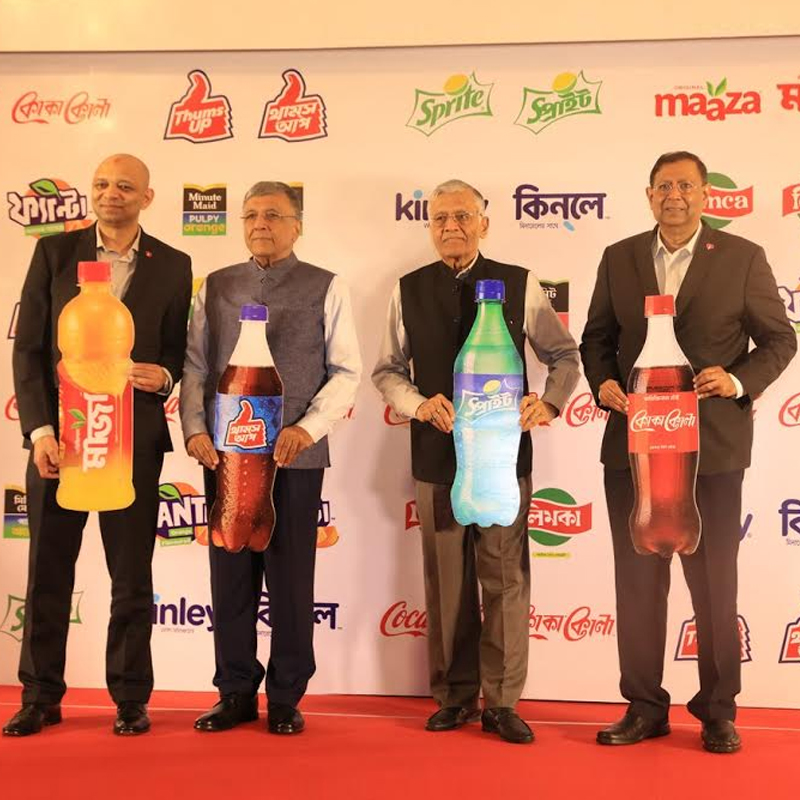
To kickstart the initiative, Coca-Cola has rolled out Bengali packaging labels for all beverages across its portfolio, which includes Coke, Sprite, Thums Up, Maaza, Fanta, Limca, Kinley, and Minute Maid. Each brand will devise a hyperlocal campaign to deepen connect and bring on-ground experience alive for consumers in Bengal.
> Coca-Cola India senior VP Shehnaz Gill added “The initiative is built on the premise of creating joyful moments that are of true cultural significance in West Bengal. We will engage with consumers across multiple touchpoints using three key pillars: Language & Culture, Festivals, and Passion Points such as Cricket, Food, Music etc. Coca-Cola India’s hyper-local strategy will reflect in the marketing mix, packaging, advertising, social media activations and a range of on-ground events across portfolio. This will be further anchored in a strong marketing framework to create an edge while keeping the consumers’ sensibilities at the forefront of all decisions.”
As part of the initiative, Coca-Cola is tapping consumer passion moments such as Language and Cricket to build a strong emotional connect and cultural relevance. The pride for Bengali language is ubiquitous across West Bengal and Coca-Cola fueled the excitement by rekindling the love for storytelling during International Mother Language Day. Consumers were invited to participate in the contest by sharing their love for the language through short poems, tiny tales, and haikus. The winning entries were shared on Coca-Cola’s social media handles and also featured on Radio Mirchi by RJ Somak. Brand Coca-Cola will be the official beverage partner with Kolkata Knight Riders (KKR) to turn up the excitement of the upcoming season of the Indian Premier League (IPL) for fans in Bengal. A host of activities are planned both in stadium, as well as across the state to engage consumers and create unique experiences.
MUMBAI: In a recent development, Indian cola brand – Thums Up – appointed Lowe Lintas to handle its creative duties. The mandate comes after an intense multi-agency pitch involving leading agencies in India.
Exhilarated about the win, Lowe Lintas deputy CEO Naveen Gaur said, "We are thrilled to have won Thums Up, the iconic Cola brand of the country! Lowe Lintas is known for creating and nurturing leader brands. To be awarded a brand like Thums Up that is already India’s icon is a great compliment to our brand building capabilities."
Thums Up is a 40-year-old home-grown cola brand. Over the years, the brand has stood tall in the highly competitive Indian beverages market, as the largest cola brand by far.
Leading the charge at The Coca-Cola Company is Coca-Cola India and South West vice president, sparkling category Shrenik Dasani. Speaking about the agency’s appointment, he said, “For over 40 years running, Thums Up has brought the taste of thunder to Indian taste buds. It has always been a unique icon of masculinity which reminds us that heroism is a choice, that we can unleash our true potential if we only choose to push the boundaries of self-belief. We are very excited to continue finding refreshed expressions of this thought, now with our new partner – congratulations to Lowe Lintas on winning the pitch and agreeing to join hands with us. This partnership comes at a truly epic stage of our journey, as we move ever closer to reaching the 1 billion-dollar mark, and as the brand begins to expand beyond India, into South-West Asian markets. We couldn’t have thought of a better ally to help us take the thunder deeper into Indian youth’s hearts and minds.”
The fact that the brand has been consistent in its messaging over the past four decades has helped it immensely. In order to retain its market share, the ‘adventure enticing’ brand will have to employ approaches beyond consistency alone.
The scope of the account includes creative services for Thums Up and its brand extensions. The business will be handled out of Lowe Lintas Delhi.
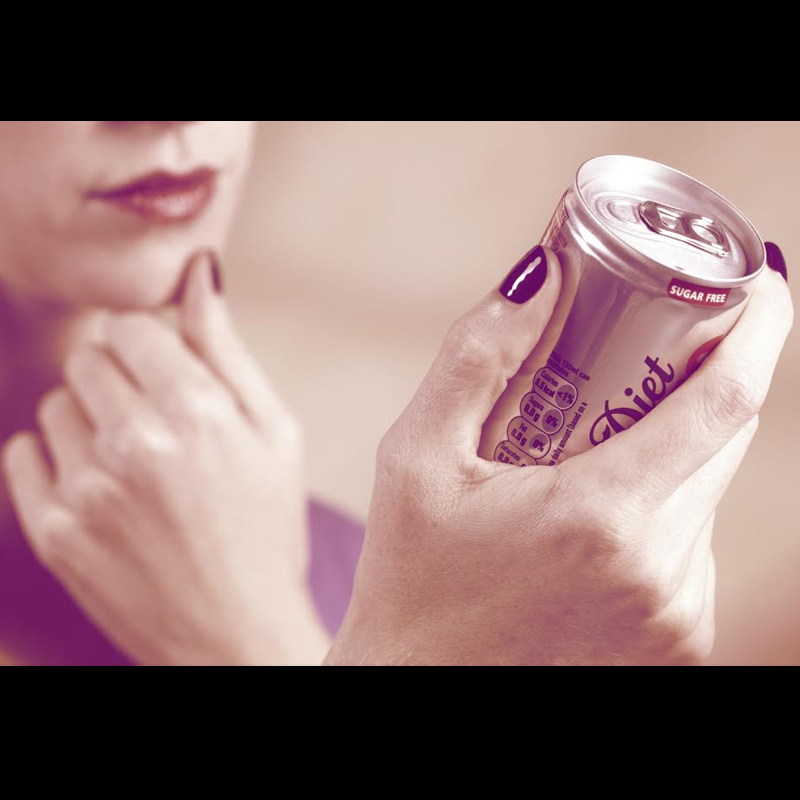
MUMBAI: Diet soda seems to be a dying beverage breed. Despite having been around for the longest time in the market, diet sodas fallen out of favour with consumers and redemption isn’t in sight. Ever since carbonated drinks hit the market, countless inventors, entrepreneurs and engineers have tried to enhance the taste, flavour and packaging of the product while also trying to reduce the sugar content.
The beginning of the diet refreshment was in 1952, when Kirsch Bottling in Brooklyn, New York launched a sugar-free ginger ale called No-Cal, which was designed for diabetics, not dieters, and distribution remained local. In 1962, American soft drink company, Dr Pepper released a diet(etic) version of its soft drink, although it sold slowly due to the misconception that it was meant solely for diabetic consumption.
It was only in 1963 when Coca-Cola saw the power and joined the diet soft drink market with Tab, which proved to be a huge success.
Pepsi entered in the segment with Patio Diet Cola in 1963 and renamed it as Diet Pepsi the following year. Diet 7 Up was released in 1963 under the name Like but was soon discontinued in 1969 due to the United States government ban of cyclamate sweetener. After its reformulation and renaming it to Diet 7 in 1979, Coca-Cola countered this by releasing Diet Coke in 1982. After the release of Diet Coke, Tab took a backseat on the Coca-Cola production lines as Diet Coke could be more easily identified by consumers.
According to researches, many people turn to diet carbonated soda believing these would be a healthy alternative to sugary drinks or alcohol. But, several reports have revealed that aerated drinks actually cause people to feel empty which further leads them to over eating. This is primarily due to high levels of carbon dioxide present in these drinks that trigger a hunger hormone called ghrelin.
The global multinational beverage company Coca Cola recently launched a £10 million (Rs 90.4 crore) ad campaign to commence a refreshed packaging for Diet Coke along with two new flavours, Exotic Mango and Feisty Cherry.
The brand is banking on millennials who don’t drink Diet Coke to turn around the fortune of the struggling soda brand.
Coca Cola CEO James Quincey isn’t completely satisfied with Diet Coke’s performance and the introduction of new flavours and the new revamped identity is a desperate attempt to gain some lost market share. “One of our points of dissatisfaction in 2017 was that we were not about to turn around Diet Coke. We hope to find a path forward for Diet Coke, and at the very least stop declining sales.”
The new flavours and packaging, Quincey says are a step in the right direction, but they may not be enough to actually increase Diet Coke sales.
With an emphasis on millennials, the revamp and experimentation is targeted to those who don’t regularly drink Diet Coke. For the last few years, Diet Coke has been the weakest link in Coca Cola’s lineup despite being a zero-calorie drink and has struggled to win over many health-conscious shoppers.
People across the globe are increasingly cutting out sugar from their diet. The market of diet sodas in the US has dropped by a whopping 34 per cent since 2005 and the US industry beverage digest reported a sales drop in Diet coke’s portfolio by 1.9 per cent in 2016.
In India, Diet Coke and Diet Pepsi failed miserably. Although the products were launched with much fanfare, they were not able to capture any market share and Pepsi decided to pull the plug on the Diet variant. Similar was the fate of Diet Coke.
Another reason for the products’ failure could be its peculiarly artificial taste that due to less sugar content.
The distribution aspect has been another roadblock for the company as the concept of diet soda continues to remain unpopular and unknown in rural segments of India.
But with the new revamped brand identity and introduction of new flavours which might hit the Indian market soon, Coca Cola is hoping for better days ahead as it still continues to be one of the largest beverage manufacturers globally and Thums Up is the most consumed aerated drink in India.