Tag: Thomas Cook

  • Clicks and trips go hand in hand as travel ads chart new routes

    Clicks and trips go hand in hand as travel ads chart new routes

    MUMBAI: When it comes to travel, Indians aren’t just packing bags, they’re packing pixels. In a year when revenge tourism fuelled wanderlust and digital-first habits reshaped holiday planning, Excellent Publicity’s latest report captures a sector that’s going places literally and virtually. Based on over 30,000 campaigns and TAM Media insights, the 2024 Travel & Tourism Advertising Landscape offers a fascinating peek into how brands sold dreams of getaways to a nation ready to escape.

    Total ad spends in the sector rose by 28 per cent in 2024, with digital commanding a staggering 78 per cent of that pie. Video platforms like YouTube and Instagram accounted for over 62 per cent of these digital spends, thanks to their scroll-stopping visuals and seamless influencer integration. The age of the static banner, it seems, is on a one-way trip to oblivion.

    It’s not just metros that are dreaming big 35 per cent of digital ad impressions came from Tier II and III cities, marking a shift in aspiration and affordability. Goibibo, Redbus, and Yatra rode this wave with vernacular campaigns, cashback offers, and destination-led storytelling.

    Short-form videos emerged as the MVP of campaign visibility, with influencer-led Reels and Youtube Shorts growing 45 per cent year-on-year. Micro and mid-tier creators proved to be the hidden gems of the media mix, converting eyeballs into bookings with hacks, hauls, and heartfelt narratives.

    Despite digital’s dominance, traditional formats still held ground. Television retained a 12 per cent share, proving useful in prime-time slots and regional infotainment, especially for family-oriented travel brands. Print (3 per cent) was used for tactical bursts like seasonal guides, while OOH (6 per cent) stayed visible near airports and high-footfall spots. Radio, though a modest 1 per cent of the mix, was used smartly around long weekends and festive peaks.

    Ad activity spiked during April-June (summer holidays) and again from October to December (festive breaks and destination weddings). Destinations like Ladakh, Rishikesh, Udaipur, and Bali drew big bucks from brands focused on adventure, wellness, and cultural experiences.

    Top spenders included Makemytrip, Easemytrip, Club Mahindra, Agoda, Thomas Cook, and Air India together accounting for over 33 per cent of the total digital travel ad budget. Campaigns ranged from AR-powered itinerary planning to influencer-hosted travelogues and loyalty program launches.

    Emotional hooks also proved effective, with storytelling leaning into themes of nostalgia (“first trip post-COVID”) and purpose (“make memories, not plans”). There was a noticeable pivot to experiential travel, with brands showcasing offbeat stays, cultural immersions, and eco-conscious itineraries.

    “The media mix is evolving, but the message remains timeless: travel is emotional,” said Excellent Publicity co-founder & director, Vaishal Dalal. “The brands winning today are those combining data-led precision with creative ambition making the journey to booking feel as exciting as the journey itself.”

    As Gen Z and millennials continue to shape spending habits, travel brands will need to mix immersive formats, voice AI, sustainability and hyper-personalisation to stay relevant and stay booked. Because in 2024, even holidays needed good content.

  • Thomas Cook unveils  gee-whiz multicurrency travel card for Indian globetrotters

    Thomas Cook unveils gee-whiz multicurrency travel card for Indian globetrotters

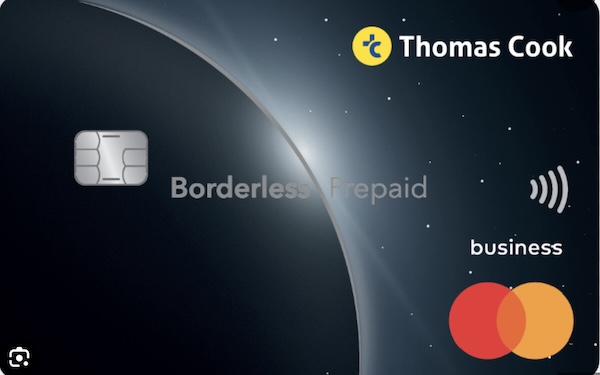
    MUMBAI: Thomas Cook India today launched its revolutionary borderless prepaid multi-currency travel card, crafted specifically for India’s burgeoning overseas holiday market amid record-breaking foreign travel spending.

    The card—unveiled in partnership with Mastercard and Visa—arrives as Indian travellers splashed out a staggering $17 billion on overseas travel in FY 2024, marking a 25 per cent year-on-year surge. Industry projections suggest this figure could rocket to $55.4 billion by 2034.

    This first-of-its-kind eco-friendly travel card, made from recycled plastic, supports 12 global currencies and offers cardholders seamless spending power across more than 70 million merchant establishments and three million ATMs worldwide.

    “We’ve built this card to address the evolving needs of India’s leisure segment,” said Thomas Cook India executive vice-president of foreign exchange Deepesh Varma. “It offers smooth multi-currency access, worldwide acceptance, and exclusive travel benefits—all with the reliability and security that our customers demand.”

    Security features include embedded chip and pin technology, complimentary insurance cover up to Rs 7.5 lakh, and free emergency cash assistance if the card is lost or stolen.

    The borderless travel card also packs a punch with exclusive perks, including:
    * Free airport lounge access at select international airports in India
    * Complimentary porter services
    * A free international sim card
    * 25 per cent off select global attractions
    * Reward points redeemable for Thomas Cook holidays, flights and hotels

    Mastercard senior vice president for South Asia Anubhav Gupta  highlighted the changing landscape: “Today, the number of Indians travelling abroad in a single quarter is comparable to annual numbers from just 10 years ago.”

    The timing of the launch—at the start of India’s key travel booking season—appears strategic as Thomas Cook seeks to reinforce its position as “India ka Forex Specialist” while tapping into the growing demand from tier two and three cities.

    Visa India  country manager Rishi Chhabra called the new offering “a joint commitment to financial inclusion and delivering unparalleled convenience to Indian globetrotters.”

    The card represents Thomas Cook’s latest innovation in its prepaid portfolio, which already includes Study Buddy for students and EnterpriseFX for business travellers.

  • #Retrace2021: The long road to recovery for the travel sector

    #Retrace2021: The long road to recovery for the travel sector

    Mumbai: ‘Tis the Season! To be jolly and ring in the holidays. Except that it is not.

    Just when it seemed like life was returning to normal, the spread of the omicron variant has once again put a question mark over the travel plans. The new restrictions being announced across states and countries have dashed hopes of a cheery festive season for many, including the travel sector that had just begun its road to recovery in 2021.

    “The year ushered in significant opportunities for the brand to leverage, but it remained challenging nonetheless,” summed up Thomas Cook president and group head, marketing, service quality, value-added services, and innovation Abraham Alapatt. “A big win for us is that it gave us the ability to rapidly accelerate our digital journey – to build scale and create a contactless journey through digital means for both our B2C and B2B customers.”

    The company worked on its conversation and brand messaging which underwent a major shift from price to safety-first and ease of travel.  Digital became the new normal, as companies experimented with online tools – self-service apps, AI-enabled chatbots, build-your-own holiday platforms for personalisation, and CRM connectivity across business lines to its leisure and corporate travelers. “We decided to educate customers on the most credible and updated travel restrictions and guidelines and become the first point of contact for our customers. We organised virtual events to showcase travel experiences in the new normal in Europe, Dubai, and the Maldives to encourage customers to travel,” he elaborated.

    From launching a series of campaigns to building consumer confidence, travel companies and hotels also invested in strengthening customer safety. There was continued emphasis on vaccinated hotel staff, drivers & co-travellers, offering facilities of flexible rescheduling and cancellation when required and travel insurance that covers Covid related quarantine and/or hospitalisation, with some even going the extra mile by offering 24×7 doctor-on-call and contactless Covid-negative certification services with doorstep delivery.

    Continued to pump money into advertising

    The year saw the travel-booking platforms pumping money into advertising across all media channels, and leveraging social media. There was a significant shift from print to digital/social media which was not only used to inspire travel, but more importantly to spread positive news on travel and thereby build customer confidence. Online travel brand Goibibo rolled out its campaign ‘Apna Rule Toh Full Vasool’, announcing ‘Daily Steal Deals’ for hotels and last-minute flight bookings on its platform. While, My Trip roped in the hit-duo of Ranveer Singh and Alia Bhatt for its campaign ‘JoHogaWOWHoga’ to encourage travellers to plan, book and travel once again without any worries arising out of cancellation or hassle of refund claims.

    Club Mahindra, the flagship brand of Mahindra Holidays & Resorts India also reached out to travel enthusiasts through its ‘Jaana Kahaan Hai’ campaign starring the ‘Shershah’ actor, Siddharth Malhotra. The campaign captured people’s desire to travel and explore new destinations and indulge in newer adventures in the new normal.

    “Our 2021 visibility is almost back to the pre-pandemic levels while our share of voice in print has almost doubled to that of pre-Covid levels,” said Thomas Cook president. 

    2021: The year of domestic tourism

    As most foreign destinations remained out of reach due to restrictions, 2021 emerged as the year for domestic tourism. There was a growing appetite for non-standard elements and a rising trend for deeper exploration of smaller yet undiscovered locales and a pronounced shift from micro-cations to in-depth stays. The trend also shifted from emergency travel to leisure travel, according to industry experts.

    “India’s growing appetite for outdoor and adventure is fuelled by the desire to get away from crowds,” said Alapatt sharing insights on the changing consumer behavior. “We are seeing a strong uptick for our camping, hiking, trekking, and biking trips; jungle and safari experiences too. Our biking trips are in high demand – equally from millennials as India’s C-suite, with routes across rugged yet spectacular terrain from Kashmir, Leh-Ladakh, Rajasthan, Sikkim to South India’s Madikeri, Yercaud, etc. and the option of riding your own bike or hiring a premium Ducati, Harley Davidson or equivalent.”

    According to Cleartrip chief business officer Prahlad Krishnamurti, there was at least 25 per cent improvement over 2020. “We have approximately doubled our user base from August to December which corresponds to a 30 per cent increase in conversion rates. There was a sharp recovery at almost 70-80 per cent pre covid levels in H2 2021. This recovery was stronger than what we saw post first wave in 2020,” he added.

    Apart from the metros commanding the usual high share, the leisure destinations preferred during the festive season during the second half of 2021 were Goa, Jaipur, Bhubaneswar, Chandigarh, Guwahati, and Srinagar- making up for nearly 15 per cent of the market share on the ClearTrip portal- with Goa and Rajasthan having the lion’s share in hotel bookings.

    “However, there was and still exists a lot of anxiety and uncertainty around travel due to the pandemic,” said Krishnamurti. But he remains optimistic about the prospects for next year. “ClearTrip spent 2021 ramping up and investing in building our flight and hotel products, with the goal of making travel simple for customers. We are looking to gain larger mindshare with our customers and expect this to translate into a sizable market share.”

    High hopes for 2022

    Despite the challenges, the industry remains hopeful that the pent-up demand for travel could drive rapid growth in travel ad-spend over the next few years, but it will no doubt, be a long road back to pre-pandemic spending.  According to Zenith’s latest Travel adspend forecast released in November, the fastest growth in travel advertising is expected to come from India, but it will take until 2023 for the travel ad spend to be 31 per cent above the 2019 baseline.

    Looking ahead at 2022, sustainable tourism could become a very important factor as travellers become environment-conscious.  According to industry experts, the post-pandemic travellers are going to be characterised by discerning, detail-driven, and discovery-oriented – seeing more value in depth of experience rather than whistle-stop ‘photo-op’ travel. Travellers will continue to depend on technological advancement to ensure reduced physical contact, even as safety and hygiene will remain the top most important factors in their 2022 travel decisions.

    So, here’s looking forward to a stronger and safer 2022.

  • Thomas Cook’s Abraham Alapatt on looking beyond the pandemic

    Thomas Cook’s Abraham Alapatt on looking beyond the pandemic

    MUMBAI: Travel and tourism were among the first sectors to be hit in 2020, due to the outbreak of the Covid2019 pandemic and the resultant closure of borders. It has also been one of the most affected industries and probably will take the longest to revive, with both leisure and business travel taking the brunt. According to the World Travel and Tourism Council (WTCC), the pandemic is likely to cost the tourism sector almost $22 billion and 50 million jobs. Last year alone, India's hospitality and tourism sector suffered an economic wipe-out estimated to be up to Rs 15 lakh crore. And just when it began to show signs of recovery, the country is witnessing a resurgence in cases, dimming the outlook for the sector.

    Indiantelevision.com’s Anupama Sajeet spoke to Thomas Cook (India) president and group head of marketing Abraham Alapatt about how the travel industry plans to beat Covid 2.0 and assuage consumer fears. Alapatt also talked about the company's roadmap to deal with the large-scale disruption caused by the second wave of the pandemic.

    Edited excerpts:

    On the humongous challenge facing the tourism industry.

    The travel and tourism industry has been one of the hardest hit due to the Covid2019 pandemic. Given the vaccine rollouts, we are now witnessing a growth in positive consumer sentiment and are seeing fear being replaced with cautious optimism. In the short to medium term, the opportunity for tourism will be dominated by a few new keywords — safety and hygiene, clear focus on less crowded, more open space, sunshine-oriented destinations, and as a result possibly more unexplored, undiscovered, destinations and experiences.

    Going forward in the new normal, marketers have talked of the post-pandemic ‘3C’ customer, who is effectively going to be constrained — mentally, physically, and financially and will be connected to what’s happening in their country and the world. The post-pandemic customer is going to be defined by 4Ds, especially for travel:

    · Will Deliberate more on decisions on leisure travel

    · More Discerning about the choice of destinations

    · Demanding/Detail-oriented regarding all aspects of the travel programs

    · Discovery-oriented

    On marketing strategies for the upcoming summer holiday season.

    Summer is one of the primary seasons to travel for families given that most school vacations are during this time. While our marketing strategy in 2020 had been primarily digital, we have now reintroduced print to our mix of promotions. We believe in an omnichannel approach, giving the customer the choice to connect with us digitally, at our outlets, or via our toll-free numbers. Customers have now become more digital-savvy post-2020. We have seen an increase in the web traffic on our sites as well as walk-ins at our stores for final discussions and closures. We will continue to invest digitally and boost our retail network across the country.

    Also, we quickly adapted to the new normal and created products and services in line with the requirements of the Covid2019 era. The consumer wish-list had changed and our teams worked accordingly to create easy to book, practical holidays such as workations, staycations, drivecations, affordable luxury holidays. We focused on quick breaks to counter the stress of work from home and home chores at convenient short drivable distances.

    As international borders reopened, our teams negotiated deals with our vendors/partners to offer customers the best rates at Dubai and Maldives’ luxury and super-luxury resorts. The reopening of borders for additional countries has boosted outbound demand to destinations like Russia, Turkey, Egypt, and Seychelles. We have added the exciting Aurora Borealis/Northern Lights experience in Murmansk and launched our Nepal tours with a special offer. We are seeing growing confidence in international travel and the return of group travel. 

    On Thomas Cook’s roadmap for 2021 and beyond.

    We conducted a survey with over 2500 customers across India’s metros and tier-1 and tier-2 cities to understand key consumer behaviours and trends. Our Holiday Readiness Travel Report – Future of Travel post-Covid2019 revealed key drivers in this new era of travel. Health and safety ranks as the primary concern for 75 per cent of respondents. We took this challenge head-on and put together a three-pronged customer confidence-building program in the form of 'Assured-Insured-Secured', that covers every aspect of physical safety, as well as mental and financial security to give the customer complete peace of mind.

    We also launched the Assured Safe Travel Program and Doctor on Call 24×7 service in partnership with Apollo Clinics; a free-service offering expert guidance and assistance for safe holiday planning via a tie-up with ICMR accredited labs.

    Given the situation, the demand for virtual and contactless sales and services has accelerated. Our survey also revealed that given the prevailing uncertainty, a significant 71 per cent of respondents stated that they require the guidance of a holiday expert and preferred to visit an outlet/Virtual Store/video chat while planning their holidays. We introduced Virtual Holiday Store and our dedicated team of travel experts will be available over video chat to guide customers with contactless and convenient holiday planning. This is in addition to our retail outlets pan India, that are operational where permitted by local authorities.

    (In addition to Thomas Cook, the Thomas Cook India Group operates leading B2C and B2B travel brands including SOTC, Asian Trails, AlliedTPro (ATP), Australian Tours Management (ATM), Desert Adventures, Luxe Asia, Kuoni Hong Kong, TC Travel, Private Safaris East & South Africa and Sterling Holidays.)

  • Rebuilding consumer trust, meeting altered expectations: Brands on the 2021 challenge

    Rebuilding consumer trust, meeting altered expectations: Brands on the 2021 challenge

    MUMBAI: Our world, as we know it, changed irrevocably last year in the wake of Covid2019. As people everywhere struggled to make sense of an evolving reality, organisations too were forced to reassess and recalibrate their businesses in a bid to survive and grow. Consumer behaviour having gone through a paradigm shift during the pandemic, has posed additional challenges for brands. There is understandably uncertainty on all fronts.

    In order to understand the strategies devised by top brands to tackle the challenges of this global crisis and to look beyond it, the Indian Society of Advertisers (ISA), in association with the Free Press Journal and ABP Network, organised a two-part webinar – Brands and Consumers: 2021 and Beyond.

    While the first part of this series on the manufacturing sector was held last week, the second part on the service sector was held on Wednesday with some of the best marketing minds from across the service sector. The panel discussion that followed aimed to share the best practices during the pandemic and the way to look forward with hope.  

    The session was moderated by ISA executive council member and former Johnson & Johnson MD Narendra Ambwani. Panelists included Thomas Cook (India) president & group head-marketing, service quality, financial services & innovation Abraham Alapatt, Aditya Birla Capital CMO Ajay Kakar, Jio Platforms group vice president- advertising & innovations Mohit Kapoor, and Amazon India’s director, mass & brand marketing international Ravi Desai.

    Opening the session, Ambwani spoke about how post-Covid, brands face many challenges with consumers‘ expectations as well as behaviours changing. He shared the main question confronting the industry today: “what are the lessons learnt in overcoming the disruptions posed by lockdown, WFH and fears caused by Covid.” Alapatt voiced his opinion on how the travel sector was the most affected in the crisis with the entire industry’s demand going down to “zero”, in part due to the physical restrictions in place. “The past twelve months have given a learning equivalent to twelve years,” he stated.

    From a marketer’s perspective, he encapsulated the year gone by into six Cs of 60 days each, with the first 60 days being a state of “confusion”, turning to “concern” in next 60, then going on to “careful” where the initial paranoia had subdued, proceeding to a mix of “cautious + careless” when the lockdowns eased and finally learning to “coexist” with the pandemic and the restrictions.

    Sharing Thomas Cook’s marketing strategy during the crisis, he highlighted the importance of staying connected to the consumer via newsletters and surveys, while reassuring them on the safety protocols being adopted by the company. The travel company also guaranteed the customer’s financial security by giving them the freedom to reschedule or cancel flights without monetary loss. 

    Aditya Birla’s Ajay Kakar agreed with Alapatt on the importance of remaining connected with the customer, while also stressing on brand visibility and relevance. Being primarily from the health and life insurance sector, he said it was equally crucial to be there for existing customers and listen to their concerns, rather than only focus on new customers. He agreed that the sector benefited from people having time to spare to finally explore investing in the capital market.

    Jio’s Mohit Kapoor was more upbeat regarding the past year, although he admitted that the April 2020 quarter was the worst in many years for the company. He shared the forecast of Jio’s smartphones reaching a market of 800 million from existing 500 million, paving the way for a ‘2G-Mukt Bharat’. He predicted that social is the way forward for commerce with social networking sites like Facebook and Instagram seeing a huge spike in users. He also touched on the upcoming relevance of social gaming and e-sports genres with India becoming one of the biggest gamers markets.

    Amazon’s Ravi Desai was also quite optimistic about the e-commerce giant’s prospects in the past, as well as the coming year. As he put it, “consumers’ needs for a wide selection of products, delivered quickly and safely is not going to change,” even with local retailers opening up and customers stepping out to buy. His advice to brands: To look for the ‘permanent’ factor in their business module which will remain relevant to customers, and to focus on that core part.

    Summing up the main takeaways for brands from the discussion –

    u  Stay connected and relevant to customers

    u  Reach out and reassure existing customers

    u  With changed consumer-expectations, brands that step up will remain in the game

    u  Trust is the keyword – rebuilding and reassuring customer’s trust in a crisis

    After the bloodbath of last year, the travel industry is on the road to recovery, with a huge spate of bookings for the months of November and December, shared Alapatt. He added that Maldives, which had never figured in the top destinations for Indians now, had single largest visitors from India. Even enquiries post-lockdown were record-breaking, indicating that people were frustrated after remaining indoors for so long. With prices lower than ever and great travel deals, he concluded that things can only look up from hereon for travel and tourism. At the same time, he emphasised there was no compromise on the safety factor of customers, and that adding safety value to a brand where required will pay dividends with customers willing to pay for the extra. He cited the example of Thomas Cook’s partnership with Apollo, to enable the customer to avail the ‘doctor-on-call’ facility while travelling.

    In conclusion, this optimism was shared by all other service sectors when it came to looking forward at 2021 and beyond. They surmised that this was a powerful opportunity for the hospitality and service sector, with the worst over and behind them. And that in this pursuit, the relevance and value of customer engagement has grown even more significant for all brands.

  • Statement from the desk of Mr. Madhavan Menon, Chairman & Managing Director, Thomas Cook (India) Ltd.

    Statement from the desk of Mr. Madhavan Menon, Chairman & Managing Director, Thomas Cook (India) Ltd.

    MUMBAI: We categorically deny a rumour purposefully confusing Thomas Cook (India) Ltd with Thomas Cook Group Plc (UK), being forwarded via a social messaging platform. This rumour appears to have been created and spread deliberately with an intent to cause irreparable damage to the Thomas Cook India Group.

    We believe that it is important that we clarify for the record two key points:

    1) Thomas Cook (India) Ltd. is part of Fairfax Financial Holdings, is a completely different entity from Thomas Cook PLC and has been an independent company since August 2012

    Thomas Cook India Group is a completely different entity from Thomas Cook PLC and has been an independent company since August 2012 when a 77 percent stake in Thomas Cook India Ltd. (TCIL) was acquired by Fairfax Financial Holdings (Fairfax), a Canada based multinational with varied interests across the globe as well as in India. 

    Post transfer of its entire stake in Thomas Cook (India) Limited to Fairfax, Thomas Cook UK ceased to be the promoter of Thomas Cook (India) Limited from the said date and since then, Thomas Cook UK has had no stake in Thomas Cook (India) Limited. 

    In the last seven years since, TCIL continues to grow and build its independent legacy as a leading integrated transnational travel and travel related services company offering a broad spectrum of services that include Foreign Exchange, Corporate Travel, MICE, Leisure Travel, Insurance, Visa and Passport services and E-Business. It operates leading B2C and B2B brands including Thomas Cook, SOTC, Sterling Holidays, TCI, SITA, Asian Trails, Allied T Pro, Australian Tours Management, Desert Adventures, Travel Circle International Limited, Travel Junkie (Ithaka), Digiphoto Entertainment Imaging (DEI), Private Safaris East & South Africa – across 29 countries, making it one of the largest travel companies in the Asia Pacific region.

    2) Thomas Cook (India) Limited is financially strong, profitable and maintains a positive outlook in the travel and tourism sector and continues to witness strong growth:

    · Cash and bank deposits balance of the Thomas Cook India Group (consolidated level) is at Rs. 10588 Mn. as of March 31, 2019.

    · On a standalone basis Thomas Cook India is debt free upon pre-payment of Rs. 670 Mn debenture obligations ahead of schedule. This has been made possible using stable and strong cash flows that the Thomas Cook India Group is generating year over year. Group generates an annual free cash flow of around Rs. 2000-2500 Mn.

    · As earlier reported, for the Financial Year ended March 31, 2019 on a comparable basis, the Group’s consolidated revenue from operations increased by 18% from Rs.56 Bn. to Rs.66 Bn. Consolidated PBT increased by 985% from Rs. 53 Mn. in FY18 to Rs. 573 Mn. in FY19.

    · Our Travel businesses have negative working capital and therefore do not require any external funding.

    · We have witnessed a turnaround of our international Destination Management Specialist companies during FY 2019. Additionally, during FY 2020, contribution to the profitability is expected from our recent acquisitions including Digiphoto Entertainment Imaging (DEI).

    · Our forward booking position reflects a healthy increase of over 12%.

    Mr. Madhavan Menon, Chairman and Managing Director, Thomas Cook (India) Ltd., said, “We have witnessed robust performances across all our key travel and foreign exchange businesses and continue to remain at a healthy financial position having prepaid our obligations and are debt free at a holding company level.”

    He added, “We are bullish on both the foreign exchange as well as the inbound and outbound businesses. We are scouting for new investments, and are looking for the right opportunity.”

  • Thomas Cook India launches AI-powered chatbot ‘TeeCee’

    Thomas Cook India launches AI-powered chatbot ‘TeeCee’

    MUMBAI: Thomas Cook (India) Ltd announced the launch of ‘TeeCee’, a first-of-its-kind AI-powered chatbot, reiterating the company’s digital evolution strategy in its journey towards a seamless digital customer experience.

    According to a report by Bain & Company and Google, India has the second-highest active internet user base globally at 390 million in 2018. The report also indicates that the share of online travel booking spends, having increased by 25 per cent in 2018, is anticipated to grow to 35 per cent in 2021.

    Thomas Cook India’s growth reinforces this with over 27 per cent of its overall holidays being booked online.

    The launch of Thomas Cook India’s chatbot ‘TeeCee’ is part of a strategic initiative to service today’s impatient, digital-native customers, with a seamless near-human experience, across digital devices. The multi-use case and context-aware TeeCee is equipped with superior NLP (Natural Language Processing) capabilities for better understanding of user intent and offering appropriate services.

    TeeCee is built in association with Senseforth’s proprietary conversational AI platform for intelligent assistants that mimics human cognitive ability in understanding and actionising user intent. 

    Speaking on the launch, Thomas Cook (India) Ltd president and group head – information technology and ebusiness Amit Madhan said, "Thomas Cook India has always been at the forefront of cutting-edge digital innovation that focusses on seamless customer experience. I am hence truly excited with the launch of TeeCee – a first of its kind chatbot offering customers a near human experience. Our phased roll out in this digital evolution will enable end-to-end Forex transactions, which will be followed by Holiday and Visa service capabilities.”

    He concluded with, “TeeCee is a key step in our transformational journey to serving Digital First customers better."

    Senseforth.ai CEO Shridhar Marri said, “Today’s traveller expects a user-friendly, real-time, consistent and intuitive experience for their travel requirements and TeeCee is designed to address these needs. It is great working with Thomas Cook India, a leader in this space to create a virtual travel assistant that is poised to transform the way travel is serviced and fulfilled today.”

  • Festival Tourism is driving Travel Demand  Thomas Cook India observes 20% growth in bookings

    Festival Tourism is driving Travel Demand Thomas Cook India observes 20% growth in bookings

    Mumbai: Thomas Cook (India) Ltd., India’s leading integrated travel and related financial services company, has reported a strong growth in ‘Festival Tourism’ as the Indian traveller seeks to combine spiritual elements with unique cultural experiences. This year, the Kumbh Mela and Holi have proved to be significant drivers, with over 20% growth from the previous year. The company has also recognized that a ‘smart weekend holiday’ concept (taking a day off from work to extend festival holidays) is creating a distinctive boost to travel demand.

    This year, Holi has reiterated the trend of Festival Tourism and this has been a boon to Thomas Cook India’s domestic travel business, with demand up by over 12%. Indians are showing significant interest in the celebrations at Vrindavan’s famous Banke-Bihari temple and Gulal Kund’s re-enactment of Holi by local Krisha-leela drama troupes in Brar; equally Mathura-Dwarka; or joining in Shantiniketan’s cultural events started by Tagore.

    Thomas Cook India’s customer data and analytics also reveal that Festival Tourism is no longer restricted to India, with the country’s new age travellers opening up to cultural experiences globally, and an increase in demand of approximately 20% for experiences including the water festival/ Songkran in Thailand, the lantern festival in Taiwan, Chinese New Year in Singapore, the Dragon Boat Festival in Hong Kong, the colourful Carnival in Rio de Janeiro, Brazil and Venice, Italy, Mardi Gras festivities in Louisiana, USA, the famed tomato festival/ La Tomatina in Spain, a colourful display of costume and culture – Dia de los Muertos in Mexico, and the Boryeong Mud Festival in Korea, amongst others.

    The concept of ‘smart weekend holidays’ is another significant trend being witnessed this Holi weekend, with work-weary millennials taking a Friday off to create an extended weekend from Thursday to Sunday. Short haul, no-visa or easy visa regime destinations are in high demand, with an increase of over 25% to destinations like Dubai-Abu Dhabi, Singapore, Bali, Thailand, Sri Lanka; also off-roading and adventure getaways to Uttarakhand, Corbett, Kufri, Neemrana, Kolad/Dandeli in Maharashtra, Andamans, Mysore-Coorg, and more. Growth is being witnessed predominantly from millennials/the DINKs-SINKs segment and ad-hoc groups of friends and families.

    Rajeev Kale, President and Country Head, Leisure Travel, MICE, Thomas Cook (India) Ltd. said, “Festival Tourism is the new trend, with India’s new age travellers rediscovering their roots and joining in the celebrations of festivals like Holi in India’s Vrindavan, Mathura-Dwarka; also Mardi Grass, Songkran, and several others in international locations. Extending the weekend by taking a day off from work, is giving rise to an interesting concept of ‘smart weekend holidays’. Both are catalysing our travel demand this year, and clearly trends that we are looking forward to!”

    About Thomas Cook (India) Limited: Set-up in 1881, Thomas Cook (India) Ltd. (TCIL) is the leading integrated travel and travel related financial services company in the country offering a broad spectrum of services that include Foreign Exchange, Corporate Travel, MICE, Leisure Travel, Insurance, Visa and Passport services and E-Business. It operates leading B2C and B2B brands including Thomas Cook, SOTC, TCI, SITA, Asian Trails, Allied T Pro, Australian Tours Management, Desert Adventures, Travel Circle International Limited, Private Safaris East & South Africa.

    As one of the largest travel service provider networks headquartered in the Asia-Pacific region, The Thomas Cook India Group spans 25 countries across 5 continents, a team of over 8226 and a combined revenue in excess of Rs. 11,411.6 Cr. (over $ 1.75 Bn).

    TCIL has been felicitated with The Best Outbound Tour Operator and Leading Company with Cutting Edge Travel Innovation at the Times Travel Awards 2018, Excellence in Domestic Tour Operations at the SATTE Awards 2018, Best Travel Entrepreneur of The Year at TTG Travel Awards 2017, The French Ambassador’s Diamond Award for Exemplary Achievements in Visa Insurance– 2015 to 2018 and the Condé Nast Traveller – Readers’ Travel Awards from 2011 to 2018.

    CRISIL has removed its rating from ‘rating watch with developing implications’ and reaffirmed the rating of ‘CRISIL AA–’ on the long-term bank facilities of TCIL, while reaffirming its ‘CRISIL A1+’ rating on the short-term bank facilities and short- term debt of the Company.

    For more information, please visit www.thomascook.in

    Fairbridge Capital (Mauritius) Limited, a subsidiary of Fairfax Financial Holdings Limited promotes TCIL by holding 66.94% of its paid up capital and is responsible for the execution of acquisition and investment opportunities.

  • Thomas Cook targets India’s high potential, high growth segment: Women Travellers

    Thomas Cook targets India’s high potential, high growth segment: Women Travellers

    MUMBAI: Thomas Cook India (Ltd.), India’s leading integrated travel and related financial services company, has curated its exclusive Ladies First, women-only group tours, to popular domestic and international destinations. Recognizing safety as one of the top concerns of women travellers, a key element is the inclusion of a dedicated Thomas Cook woman Tour Manager. The tours celebrate and cater to India’s women with a range of local experiences, out-door/adventure, shopping, spa-wellness, etc. and will be launched on International Women’s Day (8th March).

    According to Frost & Sullivan’s report, travel by India’s business women is expected to increase ten-fold to aprox.10,000,000 (ten million) outbound annual trips by 2030. A recent survey by Thomas Cook India further validated the strong potential of Indian women travellers, reporting a significant 34% growth in both international and domestic trips, across business, leisure and b-leisure segments. Hence, to address this discerning and high growth segment, Thomas Cook India conceptualised women-only tours, keeping security paramount via the selection of safe destinations and the inclusion of an accompanying Thomas Cook woman Tour Manager.

    The women-only tours curated by Thomas Cook India, allow women to enjoy a sense of freedom and comfort in the company of women co-travellers while exploring a range of destinations on offer, including, Switzerland, France, Singapore, Thailand, Dubai, Abu Dhabi; also Bhutan, Ladakh, Goa, Kerala, Rajasthan and the Andamans across the Indian sub-continent. The tours range from 5 to 9 days, starting from Rs. 8,999 for domestic and from Rs. 39,900 onwards for international packages. (Prices are per person on twin sharing)

    Thomas Cook’s data reveals that women today are no longer limited to being part of family vacations, but are increasingly travellers in their own right. Hence to cater to India’s new age women consumers Thomas Cook India’s Customised Holidays offers its “What Women Want” tailor-made programmes and journeys of self-discovery. Included are enriching local experiences such as Muay Thai/kick boxing in Thailand, Flamenco dancing in Spain, or a cooking class with local chefs in Malaysia, Tuscany or at Le Cordon Bleu in France. Fun experiences range from a Vespa tour in Singapore, a pool party in Vegas, kayaking in Qatar’s unique mangrove ecosystem to adrenalin-infused elements like an F1 drive around the Yas Marina circuit or a bungee jump off South Africa’s Bloukrans Bridge. Relaxed programmes offered are a temple stay  amidst Korea’s serene mountains, spa-wellness in Bali or a laid back self-drive through New Zealand’s spectacular outdoors.

    The appetite of India’s HNI-UHNI women travellers has seen a 25% increase for Thomas Cook’s luxury brand Indulgence, with demand for eclectic elements: classic open top car touring along Britain’s coast, private cruises in Croatia, glamping set against breath-taking views of the Swiss Alps, unparalleled wine-dine experiences in Melbourne’s Yarra Valley or high end shopping with a personal shopper/guide in Paris and Dubai.

     Age is no longer a barrier to the Indian woman’s travel aspirations. Thomas Cook has witnessed a significant rise in girl students for its Travel Quest study tours, equally from millennials and corporate women to empty nesters and retired women – speaking highly of their willingness to embrace new cultures, and break out of their comfort zones.

    ‘BFF’ (Best Friends Forever)/‘girl gang tours’, ‘kitty party’ groups as well as bachelorette getaways are also seeing strong uptake of over 27%, with Indian women showing interest in Singapore’s pub crawls, a beach break at Malaysia’s Redang Island, a wild ride on Abu Dhabi’s Formula Rossa or Miami’s famed club hopping.

    While India’s metros and mini metros (including Mumbai, Delhi, Pune, Ahmedabad, Bengaluru) have been contributing over 63% to the overall pie of women travellers, regional India’s Tier 2 and Tier 3 cities have been emerging strongly, and these include Chandigarh, Nagpur, Kochi, Coimbatore, Panaji, Guwahati, etc.

    Domestic destinations too are showing growth of 18% over the previous year; locales like Shillong, Rann of Kutch, Hampi, Kovalam and Dharamshala are popular for their heritage tours and rich natural beauty. Local experiences include archery sessions, ayurveda, yoga and spa sessions, local cooking experiences, etc.

    Mr. Rajeev Kale, President and Country Head – Leisure Travel, MICE, Thomas Cook (India) Ltd. said, “Women are power driving travel demand and our exclusive Ladies First, women-only group tours are designed for women seeking immersive and fun experiences without the hassle of travel logistics. We have already witnessed a growth of 34% in bookings from women travellers with destinations including Paris, U.K., Dubai, Abu Dhabi, Singapore, Indonesia, Korea, Japan and Canada-USA in high demand.”

    He added, “Safety is a vital element, and we have ensured that our expert women Tour Managers accompany all our group tours to ensure security and comfort.”

  • GCPL’s Sunil Kataria is ISA’s new chairman

    GCPL’s Sunil Kataria is ISA’s new chairman

    MUMBAI: The newly elected executive council of the Indian Society of Advertisers (ISA) has recently elected Godrej Consumer Products SAARC and India -business head Sunil Kataria as the chairman.

    On his election, Kataria said, “Our focus would be to deliver the desired benefit to the advertisers and other stakeholders. I look forward to working with all and make this a credible, meaningful and business impacting ecosystem.”

    Kataria joined GCPL in 2011 to oversee the sales and marketing organisation for the India and SAARC businesses. He has diverse work experience across FMCG and consumer services sectors in sales, marketing and business. He had a stint of 12 years at Marico Industries.

    Other members of the Executive Council are as follows:

    Atul Agrawal, SVP-Corporate Affairs, Group Corporate Communications, Tata Services
    Anuradha Aggarwal, Chief Marketing Officer, Marico
    Abraham Mathew Alapatt, President & Group Head-Marketing, Service Quality, Financial Services & Innovation, Thomas Cook (India)
    Narendra Ambwani, Director, Agro Tech Foods
    Ajoy H Chawla, Sr. VP, Chief Strategy Officer, Titan Company
    Paulomi Dhawan, Advisor, Raymond
    Sonali Dhawan, Brand Director, Procter & Gamble Hygiene & Health Care
    Chandru Kalro, Managing Director, TTK Prestige
    Sandeep Kataria, Director – Commercial, Vodafone India
    Sandeep Kaul, Divisional Chief Executive – India Tobacco Division, ITC
    Sandeep Kohli, Executive Director – Personal Care, Hindustan Unilever
    Beena Koshy, Executive VPr, Advertising, Digital & Branding, Bajaj Electrical
    Bharat V Patel, Independent Director, Birla Sun Life Asset Management Company
    Prashant Richard Peres, Director Marketing Chocolate, India, Mondelez India Foods
    Ramakrishnan Ramamurthi, Vice-Chairman, Joint MD & Group CEO, Polycab Wires
    Samardeep Sunil Subandh, Chief Marketing Officer, Flipkart
    Amit Tiwari, Director, Philips India
    Brahm Vasudeva, Chairman, Hawkins Cookers

    ISA has advertiser members from across industries who contribute to approximately over two-thirds of the annual national non-governmental ad spends. ISA played a significant role in the formation of BARC and is closely partnering with it towards advertisers getting robust and credible data.