Tag: Theatre

  • Insider.in & Bhasha Centre present Tanvi Shah’s ‘Unshared Childhoods’

    Insider.in & Bhasha Centre present Tanvi Shah’s ‘Unshared Childhoods’

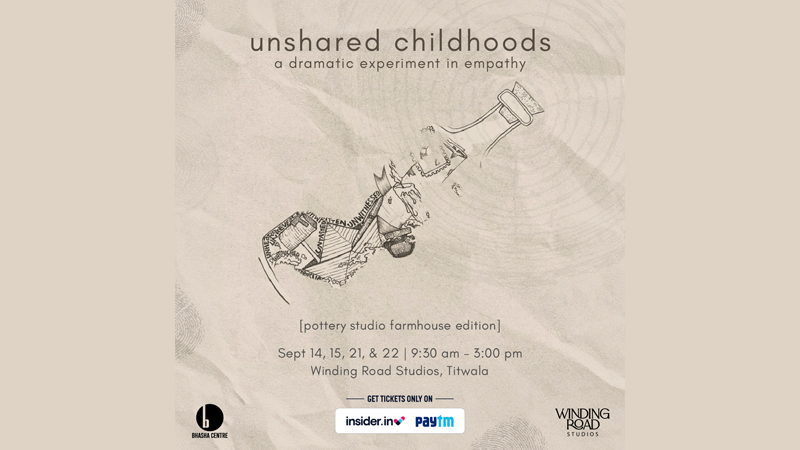
    Mumbai: Insider.in and Bhasha Centre, in collaboration with director Tanvi Shah, present ‘Unshared Childhood’, an immersive theatrical experience under their ‘Manch’ initiative. The performance will take place at Winding Road Studios, Titwala, on 14 & 15 September and 21 & 22 September.

    ‘Unshared Childhoods’, conceived and directed by Tanvi Shah, explores human desires and absence in an increasingly isolated world. It showcases eight unsent letters from across the globe, combined with live music, movement, and food to create a unique narrative.

    The performance invites the audience to sit around a handmade patchwork quilt created by generational godhadi weavers, reflecting on their shared pasts. Inspired by party games, Marquez’s short stories, and the image of messages in bottles, the performance seeks to evoke empathy in an intimate setting.

    After the show, participants will interact with the artists and carve telegrams onto clay tablets, recreating one of the oldest forms of expression. Attendees can have their clay pieces fired in a kiln. The experience also includes authentic Maharashtrian food for breakfast and lunch.

    ‘Unshared Childhoods’ premiered in 2019 in Glasgow and has since captivated audiences across Mumbai, performing in spaces like living rooms, art galleries, and rooftop terraces. Tickets for this immersive experience start at Rs 2799 and include pick-up and drop service from Titwala train station. Book now on https://www.insider.in.

  • What’s next for film and theatre: Trends and predictions for the next five years

    What’s next for film and theatre: Trends and predictions for the next five years

    As the world emerges from the pandemic, both film and theatre stand at a transformative crossroads, driven by rapid technological advancements and a renewed passion for storytelling. The Indian film industry is pushing boundaries with a surge in independent cinema and the dominance of streaming platforms, reaching broader audiences and redefining the cinematic experience. Meanwhile, theatre is experiencing a revival, fueled by a growing enthusiasm for live, communal performances and the rise of cultural festivals. Over the next five years, these art forms will evolve as they navigate the rise of AI in content creation, the survival of traditional cinema halls, and the challenge of maintaining the communal spirit of theatre in an increasingly digital world. Poised to redefine how stories are told and experienced, film and theatre are set to embrace a future where innovation and tradition converge in new and exciting ways.

    The renaissance of art festivals

    The explosion of art festivals across India signals a profound shift in cultural engagement. With over 50 significant festivals, from the India Art Fair to the Kochi-Muziris Biennale and the Kala Ghoda Art Festival, these gatherings are evolving beyond mere entertainment to become cultural powerhouses. Their surging popularity raises questions: Is this a fleeting trend or indicative of a deeper shift in India’s cultural landscape? Biennales, for instance, have transformed from niche events into cultural phenomena, drawing massive crowds and influencing contemporary exhibition-making. With over 300 biennials worldwide, they’ve become pivotal in shaping artistic perspectives.

    In the next five years, we can expect these festivals to diversify further, offering immersive experiences that blend traditional and contemporary art forms. The rise of outdoor exhibitions and open-space venues will cater to post-pandemic anxieties, while digital platforms will extend their reach, making art more accessible than ever before.

    Coexistence of long-form and short-form content

    While social media and OTT platforms push for bite-sized content, there is a growing appreciation for longer, more immersive storytelling. Theatre and cinema will adapt to this dichotomy, offering both quick, engaging pieces and extended, in-depth narratives. It’s true that most theatre artists do not prefer their work to be watched on small screens, as their plays are meant to be engaged physically. The immersive experience of live theatre, with its immediate audience interaction and spatial dynamics, is challenging to replicate in a digital format. However, the current landscape necessitates a more flexible approach.

    Given the realities of our time, it’s crucial to understand that many people do not have access to theatres or come from low-income backgrounds. In such cases, short-form content becomes a boon, reaching people in the remotest regions. This democratisation of art through digital platforms ensures that theatre and cinema can touch lives far beyond traditional venues. We will likely see a resurgence of epic theatre productions and longer cinema formats alongside innovative short-form content designed for digital platforms. This trend will cater to diverse audience preferences, ensuring something for everyone in the evolving performing arts landscape.

    Curious case of cinema as a vehicle for soft power

    The growing global success of Indian cinema, exemplified by movies like “RRR”, heralds a new era of cultural diplomacy. In fact, the world went crazy over a regional song like “Naatu Naatu” from the movie, which won the Oscar award for Best Original Song, beating out two songs featuring American pop megastars. The 2016 Bollywood film “Dangal” also earned $216.2 million in China, making it one of the country’s top 20 highest-grossing foreign films. The movie’s success in China was unexpected and more than double what it earned in India. This shows that in the coming years, we can expect a surge in films that blend mass appeal with artistic merit, crafted with a global audience in mind. This trend can potentially elevate India’s soft power on the world stage, just like it has been doing for the USA and South Korea, and foster cross-cultural dialogues and collaborations, enriching the global cinematic landscape.

    AI is the antihero of art

    Contrary to both utopian and dystopian predictions, Artificial Intelligence will emerge as a sophisticated tool in the artist’s kit, not a replacement for human creativity. Over the next five years, we’ll see AI enhance the technical aspects of film and theatre production—from streamlining administrative tasks to assisting with CGI and visual effects. However, its role will remain firmly in the realm of the auxiliary, not the essential.

    The true essence of art – the personal touch, the human experience, the authenticity that resonates with audiences – will remain squarely in the domain of human creators. AI might offer shortcuts, but just like physical fitness, these shortcuts bypass the crucial growth that comes from fully engaging in the creative process. The endless rewrites, the gruelling rehearsals, the personal perspectives that shape a director’s vision – these human elements will continue to be the soul of meaningful art. Instead, the most successful artists will be those who leverage AI to handle routine tasks, freeing up more time and energy for the deeply human aspects of creation.

    Global fusion and cross-cultural narratives

    As the world becomes increasingly interconnected, we’ll witness a rise in cross-cultural collaborations and globally influenced narratives. Filmmakers and theatre artists will draw inspiration from diverse cultural traditions, creating hybrid art forms that transcend national boundaries. This trend will manifest in multilingual productions, a fusion of artistic styles, and stories that resonate with global themes while retaining local flavours. The next five years will likely see Indian cinema and theatre positioning themselves as bridges between cultures, facilitating a rich exchange of ideas and aesthetics on the world stage.

    A prime example of this cross-cultural fusion is “Ramayana: The Legend of Prince Rama,” a 1992 anime film co-produced by Japan and India. Directed by Yugo Sako, Koichi Sasaki, and Ram Mohan, with music composed by Vanraj Bhatia, this unique adaptation of the Indian epic Ramayana showcases the potential for blending different artistic traditions. The film, first released at the 24th International Film Festival of India, has since become a cult classic with a huge fan following even now. This successful collaboration between Japanese anime artistry and Indian storytelling serves as a blueprint for future cross-cultural projects in the realm of film and theatre.

    As we look ahead, the future of film and theatre appears vibrant and dynamic. The industry is poised to embrace technological advancements, cross-cultural collaborations, and innovative storytelling formats while maintaining the essence of these timeless art forms. The coming years promise a fascinating journey of artistic evolution, blending tradition with innovation and local perspectives with global appeal.

    The article has been authored by NCPA’s head of theatre and film Bruce Guthrie.

  • “The offer came as a delightful surprise, tinged with a hint of disbelief”: Laapata Ladies’ screenwriter Sneha Desai

    “The offer came as a delightful surprise, tinged with a hint of disbelief”: Laapata Ladies’ screenwriter Sneha Desai

    Mumbai: As the latest Kiran Rao-directed movie “Laapata Ladies” continues to make waves since its release on 1 March 2024, let us applaud the lady behind the screenplay, Sneha Desai.

    A prominent figure in film, television, and theatre, Desai has crafted compelling narratives not only for the silver screen but also for hit shows like ‘Pushpa Impossible’ and ‘Wagle Ki Duniya’. With over 1200 shows to her credit on stage, Desai is not just a prolific writer but also an actor, gracing both stage and screen with her talent, enriching the world of entertainment with her diverse skills and contributions.

    Indiantelevision.com in conversation with Sneha Desai discussed her journey in the entertainment industry, about portraying strong female characters, on being multifaceted and more…

    Edited Excerpts:

    On your journey into entertainment, and could you share some memorable moments along the way

    Transitioning from the world of stage performances to the dynamic realm of screen productions felt like a natural progression. The sheer love and admiration poured in by audiences have been the driving force behind my pursuit in this industry. Not to mention, the humbling experience of receiving critical acclaim and prestigious awards has only fuelled my passion further. Over time, I found myself delving into the art of writing almost instinctively, realising that audiences don’t just watch but truly absorb and resonate with the content. It’s these moments of connection and resonance that continually inspire me to push boundaries and delve deeper into the world of storytelling.

    On writing for “Laapataa Ladies,” and your reaction to Aamir Khan’s offer during lockdown

    My journey with “Laapataa Ladies” began unexpectedly during the unprecedented times of the COVID lockdown. It all started with a casual narration session for a different project, but fate had other plans. Months later, I received a call from none other than Aamir Khan himself, presenting me with the opportunity to bring life to a story they had in mind. The offer came as a delightful surprise, tinged with a hint of disbelief. Who wouldn’t be awe-struck when approached by a personality of Mr Khan’s calibre? However, amidst the surrealism, there was an underlying sense of responsibility and pressure to deliver nothing short of excellence.

    On your preference in writing for a specific genre

    With my journey still in its early stages, I’ve consciously avoided confining myself to a particular genre. Instead, I’m eager to explore through the diverse landscape of storytelling, embracing various styles and narratives along the way. After all, the beauty of storytelling lies not in the limitations of genres but in the boundless possibilities of expression and creativity.

    Your works feature strong female characters; what drives crafting such empowered perspectives

    Crafting strong and empowered female characters has always been an organic process for me, rooted in my firm belief in individual rights and freedom. Whether male or female, I strive to infuse my characters with depth, agency, and relatable flaws, allowing them to evolve and resonate with audiences on a profound level. It’s this commitment to authenticity and complexity that breathes life into my characters, making them not just figures on a screen but embodiments of resilience and empowerment.

    On the challenges that you have faced in the industry and how did you overcome them

    Navigating through the legalities, contracts, and rights can often be a daunting task, especially for someone relatively new to the industry. However, with the guidance of experienced mentors and the support of a professional network, I’ve learned to tackle these challenges head-on while keeping my focus firmly grounded in my passion for storytelling. Additionally, in an era where audience attention spans are fleeting and competition is fierce, capturing and retaining viewers’ interest presents its own set of hurdles. Nevertheless, by staying true to my creative vision and adapting to changing landscapes, I’ve managed to navigate through these challenges with resilience and determination.

    On the industry evolution in terms of women’s representation, and the changes you hope to see

    While the entertainment industry has made significant strides towards inclusivity and gender representation, there’s still ample room for growth and improvement, particularly concerning women’s roles and opportunities. Beyond just representation on screen, I believe in creating a conducive environment that prioritises the safety, security, and well-being of women behind the scenes as well. This entails measures such as flexible working hours, pay parity, and job security, ensuring that women have the support and resources they need to thrive in their respective roles. Ultimately, by fostering a culture of empowerment and equality, we can pave the way for a more diverse and inclusive industry for future generations.

    On challenging yourself creatively as a writer wearing multiple hats

    Juggling various roles within the creative sphere, from writing scripts to penning lyrics and stepping into the shoes of diverse characters on screen, presents a unique set of challenges and opportunities for growth. Each project serves as a canvas for exploration and self-discovery, allowing me to push beyond my comfort zone and tap into different facets of my creativity. Whether it’s experimenting with new storytelling techniques or delving into uncharted territories of expression, I constantly challenge myself to evolve and innovate, keeping the spark of creativity alive and thriving.

    On the upcoming projects or aspirations that you have for the future

    Exciting ventures lie on the horizon, with YRF’s ‘Maharaj’ set to grace screens on Netflix as my next release. Additionally, a long-awaited Gujarati play is in the pipeline, alongside discussions for intriguing film projects that hold promise. With optimism and enthusiasm, I eagerly await the next chapter of my creative journey, embracing the unknown with open arms and a heart full of aspirations.

  • BMC, NCPA and Westside brings NCPA@thePark

    BMC, NCPA and Westside brings NCPA@thePark

    Mumbai: Westside in association with NCPA brings to you NCPA@thePark, a performance-filled event with acts across theatre, music, dance, and poetry and symphony orchestra. The event will be hosted at Cooperage Bandstand Park, Fort (near army navy store) on 6 and 7 of January 2024, 6 P.M onwards.

    NPCA@thePark is a free of cost event that is open to the public. The two-day event is scheduled for this weekend with an exciting lineup of artists.

    Know more about the event on NPCA@thePark

  • Net Insight drives multinational theater play fusing culture and tech

    Net Insight drives multinational theater play fusing culture and tech

    Mumbai: Net Insight is proud to support a groundbreaking theatrical production, “Tre Rum” taking place in September. This innovative play explores the life of a woman across different stages of her life and is performed simultaneously in three countries, Sweden, Finland and Norway. This unique format was made possible through Net Insight’s innovative media technology, ensuring minimal delay in video and audio, and a real-time experience for audiences in each location.

    The play is part of the collaborative project “Innovative Rooms”, part of the EU program Interreg Aurora, and a development project that supports collaborations between Nordic cultural actors, technology developers and educators, specifically in the northern parts of the countries. Net Insight is committed to supporting creative initiatives that merge culture and technology, and “Tre Rum” represents a significant step forward in this regard.

    “By harnessing Net Insight’s low latency network technology to transport media, we have been able to revolutionize theater production with “Tre Rum”, performed simultaneously in three countries. This level of innovation is a testament to the transformative power of technology on cultural expression,” said Riksteatern, Swedish National Touring Theatre (one of the involved parties) , project manager Ann-Cathrine Fröjdö.

    “We are delighted to see our technology serve as a key component in realizing this spearheading production and equally thrilled to support and develop cultural projects that enable a wider audience reach,” said Net Insight CEO Crister Fritzson. “We eagerly anticipate the transformative impact this will have on the arts.”

    The production of ‘Tre Rum’ exemplifies how technology can profoundly reshape the landscape of performing arts. With a physical actress on each stage in the three countries, the three women meet in a virtual world before three different audiences in real time. The result is an out-of-body experience; a new form of stage art where the performance is unique depending on which of the three rooms you are in. Net Insight’s commitment to this project aligns with its strategy of expanding into new market segments and customer segments.

    The play is made possible in partnership with Net Insight, Epson, Servanet and Remote North, the Nordic community for distributed presence (NCDP), a network of universities, theaters, music schools, system specialists and organisations within performing arts.

    Besides this play, Remote North utilises Net Insight’s ultra-low latency solution to foster all forms of live remote artistic performances, collaborations, and arts education. This allows for cultural exchange between artists, students, and teachers beyond geographical constraints. The result is a boost in efficiency, enhanced knowledge sharing, and professional growth. Moreover, it reduces the necessity for physical travel for rehearsals, lectures, and performances, thus contributing to sustainability by diminishing the environmental impact related to travel and logistics.


  • Zee Theatre, Nine Rasa team up to showcase ‘Pashmina’

    Zee Theatre, Nine Rasa team up to showcase ‘Pashmina’

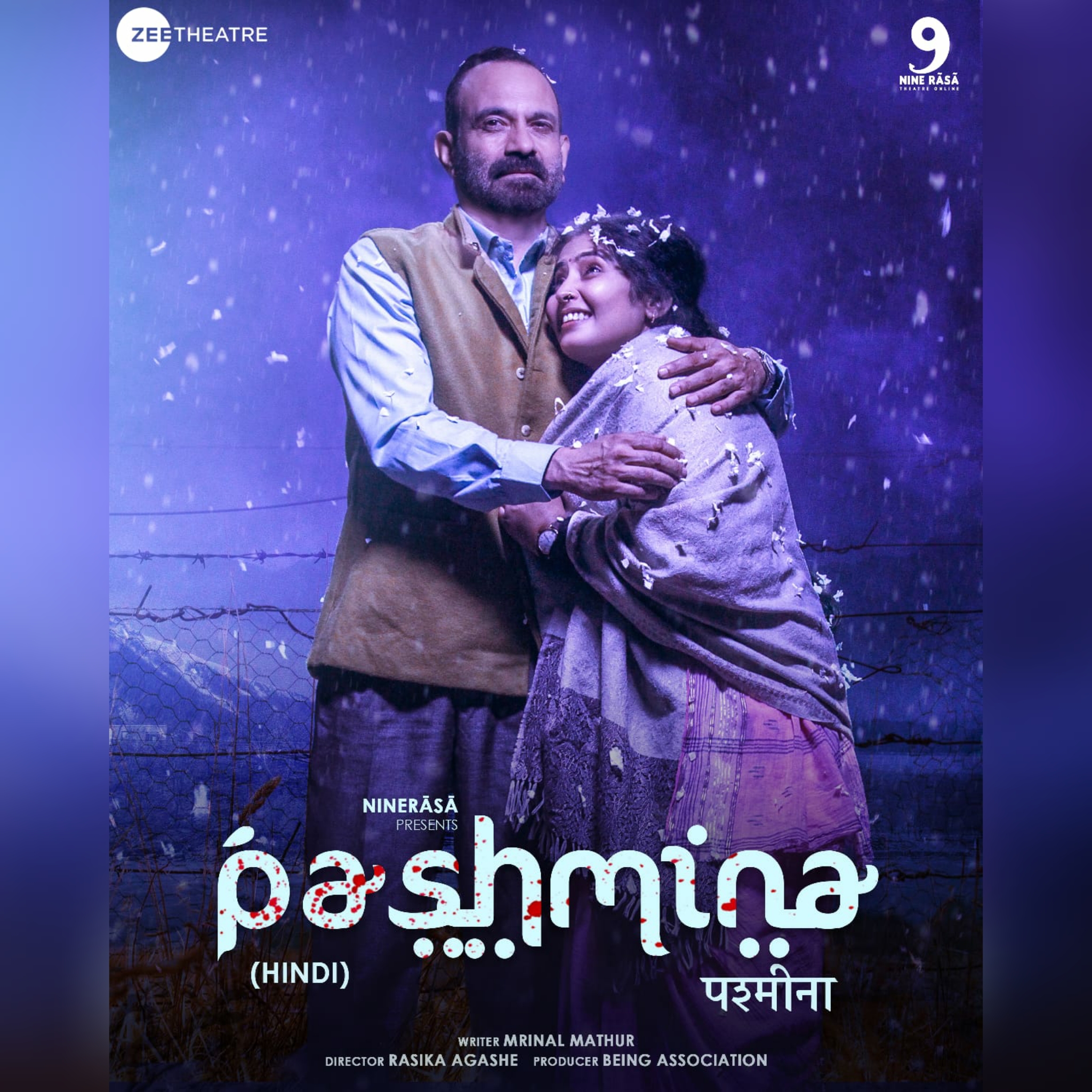
    Mumbai: Zee Theatre has collaborated with performing arts-focused OTT platform Nine Rasa to showcase Manish Chaudhary and Anamika Tiwari starrer “Pashmina”. Tata Sky Theatre will air the play on 26 September at 2 p.m and 8 p.m.

    “This collaboration between Zee Theatre and Nine Rãsã is an attempt to make nuanced stories accessible to audiences and to familiarise them with the power and poignance of good theatre,” said the statement.

    “Pashmina” follows the story of Amar and Vibha Saxena, who habitually visit a new place every summer. However, a holiday in Kashmir turns out to be an eventful trip down memory lane. Directed by Rasika Agashe, the play also stars Shaurya Shanker, Paramvir Singh, Manjeet Yadav and Yasir Iftikhar Khan.

    “Zee Theatre and Nine Rasa are aligned in the belief that theatre must reach people even if they can’t reach it. By bringing immersive theatrical experiences to the audience on their screens, we collaboratively aim to expand the reach of poignant stories like Pashmina,” said Zee Entertainment’s chief creative officer of special projects Shailja Kejriwal.

    “The idea of Nine Rasa was started keeping in mind that the plays, skits, storytelling are accessible to all and also help the theatre community,” said Nine Rasa founder and actor Shreyas Talpade. “Zee Theatre coming on board is a positive sign that Nine Rasa is heading in the right direction and this collaboration will surely help reach more people.”

  • Shreyas Talpade’s new OTT platform Nine Rãsã is here

    Shreyas Talpade’s new OTT platform Nine Rãsã is here

    KOLKATA: Another OTT platform enters the booming ecosystem with actor-producer Shreyas Talpade’s video streaming service Nine Rãsã. The new streamer stands out on the back of its content dedicated to different performing arts and theatre.

    Nine Rãsã offers content in multiple variations including plays, skits, storytelling, stand-up across genres. The platform is available in multiple languages, including Hindi, Marathi, Gujarati and English, and plans to regularly introduce other languages to match the preferences of every audience set.

     It already has 100+ hours of pre-created original content, exclusively for Nine Rãsã, which is ready to go live in a phase-wise manner. The team is also already geared up to initiate filming for an additional 120 hours of content.

    The name Nine Rãsã is inspired from Nav Ras, which means nine emotions. As human lives revolve around these emotions, Talpade thought to name the platform in sync with those emotions. Moreover, he also wanted to give an Indian touch to the name with a global appeal, according to reports.

    The idea stemmed from the will to help theatre artists and technicians when theatres were shut. The content curation started during lockdown itself, the actor said.

    “Theatre is one of the oldest and purest forms of entertainment. Amidst our busy lives and newer entertainment options available, theatre has taken a back-seat over the years, and that kept bothering me. In order to bring theatre back with a similar vigour and excitement, this time was the most suitable. Through Nine Rãsã, we got an opportunity to not only enrich the lives of our audience through superior, original content but also collaborate with the entire theatre community at large,” Talpade detailed.

    The platform will work under the subscription model at Rs 59 per month and Rs 599 per year. The associated cost is only for its premium plays while the remaining content can be availed free of cost.

  • This generation will witness shift from linear TV to OTT: Sameer Nair

    This generation will witness shift from linear TV to OTT: Sameer Nair

    MUMBAI: Ever since the Covid2019 pandemic cast its shadow over the world, the consumption pattern of audiences has altered drastically. The entertainment industry, for one, has witnessed radical changes as the shutdown of theatres led to viewers taking to smartphones to keep themselves engaged. This shift has further prodded the digital landscape to pick up the pace and the streaming platforms across the world to acquire a fresh audience base. To bring these changes to light and platform an in-depth discussion, the Asia Society in southern California held a  webinar on ‘Cinemas to Smartphones: Streaming Wars and the Future of Bollywood and India Content’.

    The discussion was a part of the eleventh US-Asia Entertainment Summit, and the country in focus was one of the largest consumer markets in the world – India. To represent the country on a global scale, Applause Entertainment CEO Sameer Nair shared his insightful perspective on the topic. Other panellists included filmmaker Shekhar Kapur and entertainment lawyer Gowree Gokhale.

    On OTT landscape in India

    Nair began by highlighting the impact of Covid2019 on the streaming industry in India, the future of television, and the big opportunities that await in a nation of content-hungry viewers.

    The current state of the OTT landscape in India is a lot like the early days of television, related Nair. Just like in the ‘90s when a whole bunch of TV channels emerged from a number of players and investors, a similar trend is at play in the streaming business now. “In India we have a potential of 500 million-strong audience base and the streaming platforms have touched around 20 million, so it is a long way to go. India is a large market connected with smartphones and broadband connectivity, cheapest data in the world, already savvy with television and film. This is a growth phase where there will be a lot of investment as we essentially move audiences from television to streaming,” said Nair.

    He went on to add that theatrical revenue is a very important income stream –

    Those who draw a comparison between 9,000 theatrical screens versus 900 million smartphone screens miss the fact that the 900 million smartphones are not going to generate the sort of revenue compared to what the country can potentially generate theatrically. “So, taking the theatrical experience off the market translates to a significant economic change and you are also leaving a great chunk of retail revenue on the table. I think streaming platforms can compensate for those $80-100 billion to offset the theatrical revenue loss.”

    On the other hand, film Director and producer Shekhar Kapur quipped that there is no competition between theatre and OTT platforms. The success of any content, be it on television or OTT platform, largely depends on the technology as well. Every new technology creates a new culture of content creation and a new culture of content consumption. Therefore, he finds Netflix and Amazon as technology companies rather than content companies who, in the end, took advantage of technology to deliver content. But due to Covid2019, people are very comfortable watching content while sitting at home, and so it becomes very difficult for theatres to bring audiences back, mused Kapur.

    On the future of television in India

    The linear television industry in India has reached 197 million TV and cable satellite homes. There is about 10-15 million more to go and it is now scraping the bottom of the barrel. As every content platform and every technology creates a content habit, TV was the classic talking to the consumer technology and it told you to watch your favourite shows at specific time slots so you had to reorder your life accordingly.

    But then came the streaming platforms, which made content available to you whenever you want it, thereby precipitating one of the biggest changes in consumer habits. Nair theorised that it won’t be long before traditional TV viewing becomes completely obsolete. Said he: “The way TV is progressing, dependent on advertising and subscribers, it has reached its scale. This is a decade where we will be able to see a gradual transitioning out of typical linear television to streaming platforms and then moving on to even more dramatic technological advancements.”

    On the success of Scam 1992: The Harshad Mehta Story

    One of the platform’s latest offerings, Scam 1992: The Harshad Mehta Story, has become the talk of the town. It is currently the highest rated show on IMDB in India (9.6) and #16 amongst the top 50 television shows globally. With phenomenal ratings and record-breaking performance, the show has made it to the list of the top five OTT shows for the last week of October, according to a streaming tracker by Ormax Media.

    This is a clear indication of the demand for differentiated content and the need to cater to the audience in this regard.

    “People watch programmes, not channels. And in a way how people watch movies and go to theatres because of the ambience, similarly now with platforms or with any form of content, people are more drawn to individual experiences and a collection of that content makes a platform,” Nair said.

    He noted that for a platform to succeed, its offerings have to be much larger and deeper, as eventually they depend on a subscription model or they want their customers to come back again and again.

  • Inox Leisure’s QIP raises Rs 250 crore

    Inox Leisure’s QIP raises Rs 250 crore

    MUMBAI: Multiplex chain Inox Leisure has raised Rs 250 crore through a qualified institutional placement (QIP) of shares. Under the QIP issue, over-subscribed by 3.5 times, Inox allotted 9,803,921 shares of face value of Rs 10 each at Rs 255 per share to highly reputed and marquee global and Indian institutional investors. 

    Some of the global investors included Abu Dhabi Investment Authority and Eastspring Investments, while the Indian investors included some of the largest domestic mutual fund houses like ICICI Prudential, Birla Mutual Fund, Nippon India Mutual Fund, DSP Mutual Fund and Sundaram Mutual Fund. The issue allocation is approximately 69 per cent and 31 per cent to Indian and foreign investors respectively. 

    Inox Group director Siddharth Jain said, “The stupendous response to our QIP endorses the faith our investors have in the future of our business model and the strength of the management team. We are delighted with the participation and support of high quality investors, which will fuel the journey of Inox 2.0 in the future. I extend my deepest gratitude towards our investors for the trust they have bestowed upon us.”

    The funds raised through the QIP would be utilised by Inox to meet capital expenditure requirements for ongoing and future projects, to sustain growth in the business, for expansion and to improve the financial leveraging strength of the company. 

    The funds raised will also be invested towards working capital requirements, towards debt repayments including repayment of any existing or future debt incurred for any purpose including for paying off any liability, for investments in subsidiary companies as well as for general corporate purposes, including but not limited to pursuing new business opportunities, acquisitions, alliances etc. Overall, Inox aims to augment its business growth with the freshly accrued funds.

  • Maharashtra allows opening up of cinema halls from tomorrow

    Maharashtra allows opening up of cinema halls from tomorrow

    KOLKATA: After months of closure due to Covid2019 crisis, the Maharashtra government has given green signal to the film exhibition sector to restart the business. The state government has allowed cinema halls, theatres, and multiplexes outside containment zones to open from tomorrow.

    On the lines of the central government’s decision, screenings will be limited to 50 per cent of the overall seating capacity. No eatables will be allowed inside, the notification stated.

    The SOP for the same will be issued by the cultural affairs department and local authorities. It will also take into consideration the SOP issued by the ministry of information and broadcasting (MIB). Earlier, ministry of home affairs (MHA) allowed the opening of cinema halls from 15 October but all states did not follow the decision immediately. However, the industry was awaiting the decision of the Maharashtra government specifically.

    Since late March, the cinema halls have been shut amounting to huge losses for the cinema owners. The producers opted for OTT platforms to release their movies. As the move comes just before Diwali, it could be a breather for the industry which is bleeding for last six months.