Tag: The Walt Disney Company

  • Disney+Hotstar crosses 26 mn subs, makes up 30% of Disney’s global base

    Disney+Hotstar crosses 26 mn subs, makes up 30% of Disney’s global base

    New Delhi: The Walt Disney Company conducted its annual Investor 2020 day where it shed light on the current properties and the future plans associated with them. Several executives – including media & entertainment distribution chirman Kareem Daniel, Disney+ and ESPN+  president Michale Paull,  international operations and D2C chairman Rebecca Campbell, Hulu president Kelly Campbell, ESPN and sports content chairman Jimmy Pitaro, Walt Disney Television entertainment chairman Dana Walden, FX chairman John Landgraf, Lucasfilm president Kathleen Kennedy, National Geographic content president Courteney Monroe, Walt Disney Studios Motion Pictures Productions president Sean Bailey, Walt Disney Animation Studios chief creatie officer Jennifer Lee, Pixar chief creative officer Pete Docter, Marvel Sutidos president and Marvel chief creative officer Kevin Feige, executive chairman &  chairman of the board  Bob Iger, senior executive vice president & chief financial officer Christine McCarthy – spoke at length about their progress of their charges and the milestones they have set for them globally and in the US. 

    McCarthy shared that Disney+ Hotstar subscribers accounted for 30 per cent of Disney+'s 86.8 million subscriber base as of December 2, 2020. This accounts for nearly 26 million sign ups for the OTT platform in India. One of the primary drivers for this has been its partnership with Jio. 

    This accounts for nearly 7.5 million increase in the subscriber in the last two months, as the last reported numbers on the Hotstar’s subscriber base were 18.5 million in September 2020.

    Indian Premier League has clearly played a strong role in increasing this subscriber base.

    Disney+Hotstar is currently offered in seven languages and has over 17,000 hours of original local programming. It also plans to expand Disney+ Hotstar to more markets. The service is currently available in India and Indonesia.

    “With a rapidly growing middle class, India is a promising market opportunity and we are uniquely positioned to succeed in the country due to our existing presence with Star TV and Hotstar,” added Campbell.

    McCarthy further mentioned that Disney+ Hotstar is expected to contribute 30-40 per cent of its projected paid subscriber base of 230-260 million by 2024. It also expects to become profitable in the same year.

    Disney+ has added over 16 million subscribers to it already existing 73.7 million global subscriber base pool (reported in the last earnings call).

    The overall portfolio of the organisation including Hulu, ESPN+ and Disney+ includes over 137 million plus paid subscribers. This includes – Hulu (38.8 million), ESPN+ (11.5 million) and Disney + (86.8 million). The company shared its expectations to hit 300 – 350 million subscriber base by 2024.

    The executives  further announced that the company  will include its general entertainment content brand Star on Disney+ in a few international markets. It will be launched in Latin America in June 20201 while in Europe, Canada, Australia-New Zealand, and Singapore the date has been set as  February 2021. Star has a huge library of television shows and movies and thousands of hours of local programming content including content from multiple sources – Disney Television Studios, FX, 20th Century Studios, 20th Television, and others. The cost for service in ANZ, Europe, Canada and Singapore will be at 8.99 euros.

    The company also revealed its original content slate over the next few years. Disney+ plans to release approximately 10 Star Wars series and 10 Marvel series, as well as 15 Disney live-action, Disney Animation, and Pixar series, as well as 15 Disney live-action, Disney Animation, and Pixar features.

  • The Walt Disney Co’s Q4 gains: IPL boosts Disney+Hotstar subs

    The Walt Disney Co’s Q4 gains: IPL boosts Disney+Hotstar subs

    KOLKATA: It has been only one year since Disney+ entered the streaming war but the growth has been phenomenal. The streaming service from The Walt Disney Company (Disney) has reached 73.7 million subscribers as of 3 October. Disney+Hotstar has pushed the growth contributing around 25 per cent of the global subscribers which effectively makes for around 19 million subscribers.

    “Disney+ ended Q4 with 73.7 million paid subscribers or an increase of over 16 million subscribers versus Q3. Disney+ Hotstar subscriber additions were the largest contributor to this increase, driven by the start of the delayed IPL season. Disney+ Hotstar subscribers now account for a little over a quarter of our global subscriber base. Disney+ overall ARPU this quarter was $4.52. However, excluding Disney+ Hotstar, it was $5.30,” Disney senior executive vice president and chief financial officer Christine McCarthy said in an earnings call.

    This means that Disney+Hotstar’s ARPU is at about 78 cents or around Rs 58.

    Disney+ entered India coupling with its existing service Hotstar, which the mouse house  took over as a part of its Twenty First  Century Fox acquisition in April. The rebranded service Disney+Hotstar has  signed up around 19 million subscribers in six months which is no small feat, especially in a crowded market like India.

    Originally, Disney planned the launch in March with the beginning of IPL 2020. Unfortunately, the Covid2019 crisis forced the company to change the plan. Although it could not exploit the unparalleled popularity of IPL at its launch, it is reaping the benefits now. Moreover, the timing of launch may have also worked in its favour as the lockdown has massively boosted the OTT ecosystem.

    Disney+Hotstar contributed around 15 per cent of Disney+ overall subscriber base in Q3. The service can grow its base faster as it has expanded its footprint to Indonesia in September. The company also announced its debut in Singapore on 1 November

    The giant media conglomerate is gradually focusing more on direct-to-consumer (DTC) business making up for its late entry in the game. “We are going to continue to ramp up our investment in DTC and we will be heavily tilting the scale from our linear networks over to our DTC business as we see it as a primary catalyst for growth,” Disney CEO Bob Chapek commented.

    Disney’s direct-to-consumer and international segment revenue grew 41 per cent to $4.9 billion in Q4, while segment operating loss declined from $751 million to $580 million, as a result of better results at Hulu and ESPN Plus.

    “The real bright spot has been our direct-to-consumer business, which is key to the future of our company, and on this anniversary of the launch of Disney+ we’re pleased to report that, as of the end of the fourth quarter, the service had more than 73 million paid subscribers – far surpassing our expectations in just its first year,” Chapek said.

  • The Walt Disney Co restructures media & entertainment business globally

    The Walt Disney Co restructures media & entertainment business globally

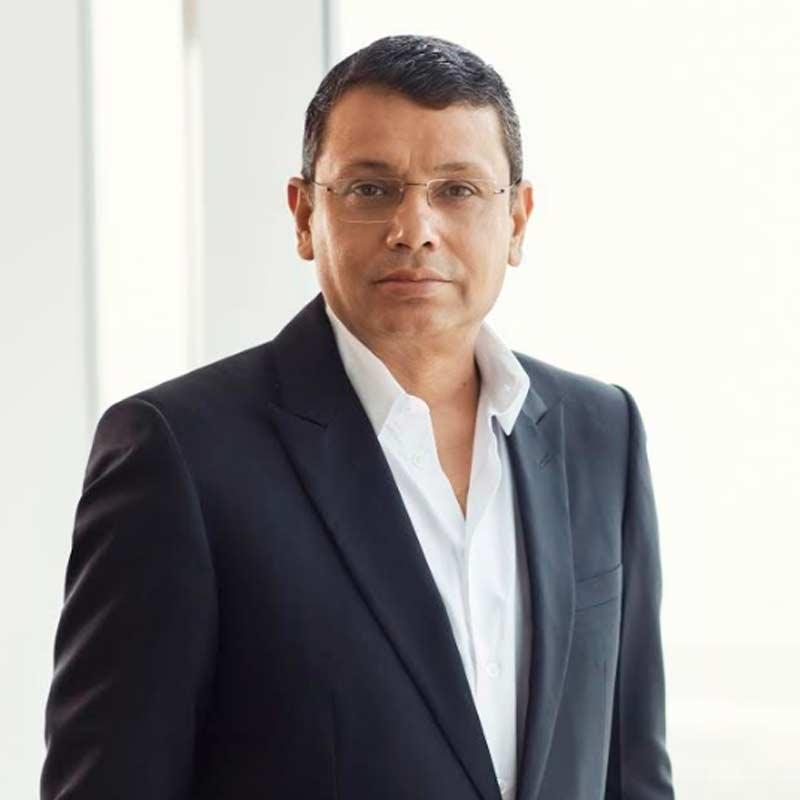
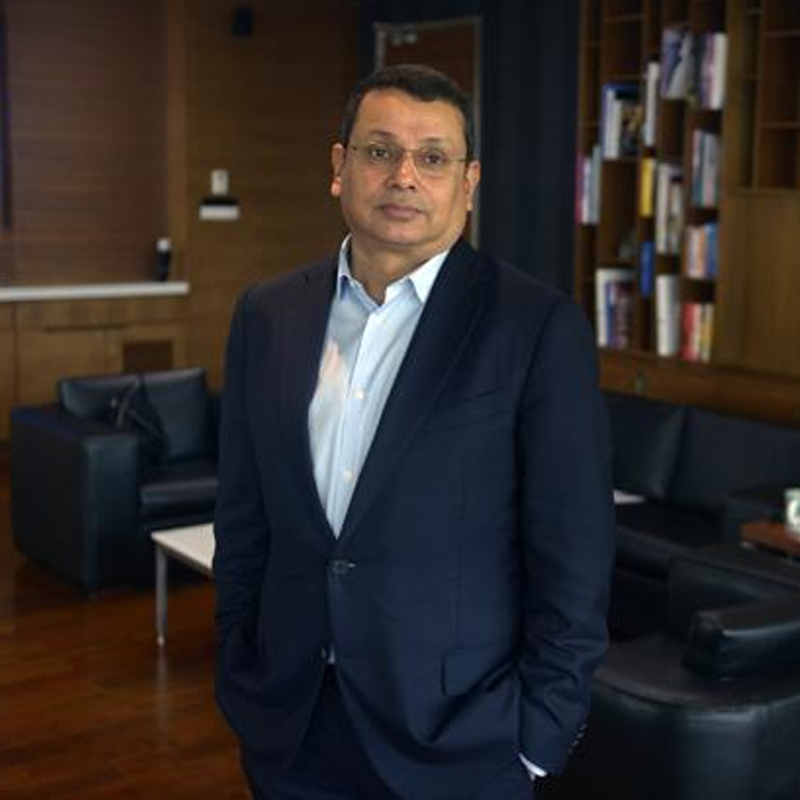
    MUMBAI: The last two weeks have seen a spate of departures at Disney Star India. It began with the announcement of chairman India and APAC president Uday Shankar exiting the company by end this year. Star Sports boss Gautam Thakar followed quickly, along with another three executives at senior levels. Uday said the entrepreneurial bug had bit him, and Gautam too might go the same way. Disney Star India CEO K. Madhavan quickly found in Sanjog Gupta a replacement for Gautam, but could the departures have something to do with the reorganisation that was announced yesterday by The Walt Disney Co CEO Bob Chapek is a question that needs to be asked.

    Chapek said that Disney’s media and entertainment businesses are being restructured.

    Under the new organisation, Disney’s world-class creative engines will focus on developing and producing original content for the company’s streaming services, as well as for legacy platforms, while distribution and commercialization activities will be centralized into a single, global media and entertainment distribution organisation.

    The new media and entertainment distribution group will be responsible for all monetisation of content—both distribution and ad sales—and will oversee operations ofDisney’s streaming services. It will also have sole P&L accountability for Disney’s media and entertainment businesses.

    The creation of content will be managed in three distinct groups—studios, general entertainment, and sports—headed by current leaders Alan F. Horn and Alan Bergman, Peter Rice, and James Pitaro.

    The media and entertainment distribution group will be headed by Kareem Daniel, formerly president, consumer products, games and publishing. All five leaders will report directly to CEO Bob Chapek. Disney parks, experiences and products will continue to operate under its existing structure, led by chairman Josh D’Amaro, who continues have Chapek as his immediate boss. 

    The reshuffling has led to the direct to consumer business division no longer being managed on a combined basis. Rebecca Campbell, who chairs that as well as the international business, will report to Chapek for the latter piece, while having Daniel as her reporting superior for Hulu, Disney+ and ESPN+.

    Creative structure of content groups

    Under the new structure, Disney’s  three content groups will be responsible and accountable for producing and delivering content for theatrical, linear and streaming, with the primary focus being its  streaming services:

    Studios: Horn and Bergman will serve as chairmen, studios content, which will focus on creating branded theatrical and episodic content based on Disney’s powerhouse franchises for theatrical exhibition, Disney+ and its  other streaming services. The group will include the content engines of The Walt Disney Studios, including Disney live action and Walt Disney Animation Studios, Pixar Animation Studios, Marvel Studios, Lucasfilm, 20th Century Studios and Searchlight Pictures.

    General Entertainment: Rice will serve as chairman, general entertainment content, which will focus on creating general entertainment episodic and original long-form content for Disney’s streaming platforms and its cable and broadcast networks. The group will include the content engines of 20th Television, ABC Signature and Touchstone Television; ABC News; Disney Channels; Freeform; FX; and National Geographic.

    Sports: Pitaro will serve as chairman, ESPN and sports content, which will focus on ESPN’s live sports programming, as well as sports news and original and non-scripted sports-related content, for the cable channels, ESPN+, and ABC.

    The Distribution group

    The media and entertainment distribution group, led by Daniel, will be responsible for the P&L management and all distribution, operations, sales, advertising, data and technology functions worldwide for Disney’s content engines, and it will also manage its streaming services and domestic television networks’ operations The group will work in close collaboration with the content creation teams on programming and marketing.

    The new structure is effective immediately, and Disney expects to transition to financial reporting under it in the first quarter of fiscal 2021.

    Its virtual investor day is scheduled for 10 December, where it will present further details of its direct-to-consumer strategies.

  • Need to use Covid2019 situation to create 21st century content delivery biz: Uday Shankar

    Need to use Covid2019 situation to create 21st century content delivery biz: Uday Shankar

    MUMBAI: “We are in for a long, dark and scary winter,” says Uday Shankar, president, The Walt Disney Company, APAC and chairman, Star & Disney India, regarding the current situation, in an interview with ET Now. He dwelt at length on the Covid2019 crisis, its impact on the media, especially the TV business, and the road ahead.

    Regarding advertising revenue, he said, April and May are the months when advertising climaxes. “This is the time of IPL. In the seven weeks of the IPL matches, it generates six to seven thousand crores of economic value just around the IPL. And all of that has become zero this year. A larger number of advertisers wait for IPL to launch special campaigns and products. All of them have stopped."

    Regarding post-covid2019 world, he feels that life has changed a lot. “But the basics are remaining the same. We are still alive and still looking positively about priorities. We are running our businesses. We have to run our businesses very differently. We can't travel or go to the office. My portfolio stretches across the Asia Pacific region. So the level of my challenges is even higher. But one I think I realize is that people are extremely adaptable and they are trying to make it work."

    According to him, the new ways of working and adaptability to them are pretty exciting, he states. The biggest challenge, he says, is that the economy has taken a massive hit, especially in India which is going through a lockdown.

    Regarding the impact on advertising revenue, he said: "Leave aside sports, even entertainment too has come down: from the normal to down to 20-25 per cent. That's the aggregate level. The news business is holding up there."

    Programming has stopped due to lockdown, but even when they restart it will be difficult.   

    According to him, all broadcasters will have to aggressively revisit their programming costs. So those who are doing ten shows will start with four. The financial pressure will pose even bigger challenges. And there is only going to be so much advertising available.

    “We make our money in this country disproportionately from advertising; the distribution income is still small. People advertise only because they realize that there is a market for their goods to be bought and sold. If nobody is going to buy a car, why would a car manufacturer advertise? So we are in it for a long and dreaded winter. Newspapers are going to face even bigger problems. And everybody thinks that it is a great time for digital, but I don’t think so. Digital advertising has taken a hit and it will continue to be like that for a while.”

    Regarding sporting activity for which his company has invested heavily, he said: “Sports has taken a hit globally. There is nothing you can do. People’s health and safety come before everything else. It would be naturally selfish or immature on our part to even think that regardless of everything, sports should happen.”

    He feels that once the situation is back to normal, live sports events will happen with massive restrictions on spectators’ presence. You can’t have a plan-B for live sports, he said.

    Regarding cost-cutting across the media sector, he said that his organisation has also taken some measures. “We urged our senior executives to take a voluntary reduction in salaries. People have responded very positively to that.”

    But some organisations, he said, have been forced to take measures as a last resort. Job losses will happen, he said.

    According to him, the way the media works in this country is “very antiquated.”  Do you need so many people to shoot a show? Does everybody have to sit in one place? If supply chains are distributed globally, why is the entire media chain different?”

    On what he is trying at this moment of crisis, he said: “I am trying three things. First of all, we don’t treat this as new normal. I believe this is a passage into a new world. Within the discipline of my company I won’t really put pressure on people to come to work every day even if everything becomes normal. Star has already taken some lead in that direction. We don’t have mandatory attendance. We don’t ask people to sign in at a time. Or we don’t have fixed leave. I think we were pretty liberal. We should actively encourage people to work from wherever they are. We should look at lighter ways of creating content, which is less resource-intensive, less human power-intensive, but very heavy on creativity and technology.”

    “And I think we should revisit the whole concept of gigantic headquarters where everybody sits together. For our business television has always been under pressure, partly because of the shift that has been happening in the environment and also because of the fact that television in this country is unfortunate to have a regulator who has no understanding of the business and who is out to destroy the business. So the television business has been under pressure. And its odds for regaining its health are much less than I would like to think.”

    So how can we make it lighter, nimbler, direct to consumer and use this Covid2019 situation to make a 21st century content delivery business in this country is the question.

    According to him, regulation means that there should be an even-playing field and transparency. If businesses are not able to succeed, then nobody is going to invest, he says. “That’s the real risk of the TV sector in India. Advertising income was strong and the regulatory fees pressure that was value-destructive in the distribution side was sort of mitigated to some extent. Now it is a twin shock on the advertising and distribution fronts. It is going to be really tough for the television business. And it is very challenging for fresh investments. I don’t think people will come and pour money,” he explained.

    As to why his company wants to invest in India, he said: “Star India is the number one media company in India. Everyone knows in the power of India. When I took over Star India the entire television business was much smaller, but today it is one of the biggest media and entertainment markets in the world despite all the challenges. We remain optimistic about the power of 1.3 billion people, the big market, and the creativity in this country. So those who have already invested, they will continue to be committed. But new people who have to start from scratch many of them will rethink before investing.”

    Regarding the kind of content consumers will consume in the times to come, he said: “We give too much credit to ourselves and too less to consumer. Consumers may not be able to articulate it, but they are usually far ahead of the business. Our innovation usually catches up with where the consumers’ mind is. When we started Hotstar, people said I was being delusional and that we were going to lose money. And with the data revolution that happened we have seen the explosive change. In the next three year or so there will be 700-750 million people who will watch content on their mobile devices. And 250 million on TV. That’s where Covid crisis has taken us to. People are home, working but also catching up entertainment.” 

    Follow Tellychakkar for the consumer facing news & entertainment

  • Hotstar brings some cheer to Disney numbers

    Hotstar brings some cheer to Disney numbers

    BENGALURU: Covid2019 has hit most businesses and hard! Events, including all the sporting ones, have been cancelled globally. Ad and other revenues have been impacted for media companies. The Walt Disney Company (Disney) had a steep fall in diluted earnings per share (EPS) in the quarter ended 28 March 2020 (Q2 2020, quarter under review) as compared to the corresponding year ago quarter. The company reported a 63 percent fall in diluted adjusted EPS to $0.60 in Q2 2020 versus $1.61 in the corresponding year ago quarter. Diluted EPS from continuing operations for the quarter under review decreased 93 percent to $0.26 from $3.53 in the prior-year quarter.

    Disney has four segments: Media Networks, parks, experiences and products (Parks), studio entertainment and direct-to-consumer (DTC) and international.

    Disney said in an earnings press release for Q2 2020, “The impact of Covid2019 and measures to prevent its spread are affecting our segments in a number of ways, most significantly at parks, experiences and products where we have closed our theme parks and retail stores, suspended cruise ship sailings and guided tours and experienced supply chain disruptions. In addition, we have delayed, or in some cases, shortened or cancelled theatrical releases and suspended stage play performances at studio entertainment and have seen advertising sales impacts at media networks and direct-to-consumer and International. We have experienced disruptions in the production and availability of content, including the cancellation or deferral of certain sports events and suspension of production of most film and television content. Many of these businesses have been closed consistent with government mandates or guidance. We estimate the Covid2019 impact on operating income at our parks, experiences and products segment was approximately $1 billion primarily due to revenue lost as a result of the closures. In total, we estimate that the Covid2019 impacts on our current quarter income from continuing operations before income taxes across all of our businesses was as much as $1.4 billion, inclusive of the impact at the parks, experiences and products segment. Impacts at our other segments include lower advertising revenue at media networks and direct-to-consumer and international driven by a decrease in viewership in the current quarter reflecting Covid2019’s impact on live sports events and higher bad debt expense and a loss of revenue at studio entertainment due to theater and stage play closures.”

    Total revenues for Q2 2020 increased 21 percent Y-o-Y to $18,009 million from $14,922 million in Q2 2019. Total segment operating income declined 37 percent Y-o-Y in the quarter to $2,416 million from $3,816 million. Disney’s OTT Platform Disney+ includes Indian OTT platform Hotstar. Disney+ Hotstar is a part of Disney’s direct-to consumer and international segment and Disney+ Hotstar helped alleviate a bit of the drop in numbers according to the company. Disney+ average monthly revenue per user at $5.63 was higher than ESPN’s $4.24 and about 47 percent of Hulu SVOD only at $12.06  in Q2 2020, The company estimates that it had 54.5 million Disney+ subscribers as of 4 May 2020.

    “Disney+ launched in a number of European markets during the quarter, which contributed to a total paid subscriber base of $33.5 million at the end of the quarter. And we are very pleased with the success of our rollout in Western Europe and India, including the execution of previously announced deals with some European platforms to distribute the service to all paid subscribers on certain of the widely distributed tiers and in India to convert our pre-existing subscription based Hotstar service to Disney+ Hotstar, revealed senior executive vice president and chief financial officer Christine M McCarth during an investor call.

    Parks, experiences and products

    The largest drop in absolute numbers was from Disney’s Parks segment, followed by a steep increase in operating loss from Disney’s DTC and international segment. Parks' segment operating revenue and segment income declined 10 percent and 58 percent respectively. Disney reported revenue of $5,543 million for Q2 2020 and $6,171 million for Q2 2019 from the Parks segment. Income from the segment was $639 million in Q2 2020 and $1,506 million in Q2 2019.

    “As you know, Disney, like many other companies, has experienced widespread disruption. In mid-March, we closed our domestic parks and hotels indefinitely, suspended our cruise line, halted film and TV productions and shuttered our retail stores. And while these were necessary steps to ensure the safety and well-being of our guests and employees, our businesses have been hugely impacted,” said Disney CEO Bob Chapek.

    “While it's too early to predict when we'll be able to begin resuming all of our operations, we are evaluating a number of different scenarios to ensure a cautious, sensible and deliberate approach to the eventual reopening of our parks. We will take a phased approach with limits on attendance using an advanced reservation and entry system, controlled guest density using social distancing and strict government required health and prevention procedures. These include the use of masks, temperature screenings and other contact tracing and early detection systems," revealed Chapek.

    Disney’s direct-to consumer and international

    Disney’s DTC and International segment operating revenue increased more than threefold (increased 260 percent) y-o-y in Q2 2020 to $4,123 million from $1,145 million in Q 2019. However, loss from the segment more than doubled (increased 111 percent) in Q2 2020 to $812 million from $385 million. Average monthly revenue per user (AMRPU) from Disney+ in Q2 2020 was $5.63. AMRPU for other contributors to Disney’s direct-to consumer and international segment numbers are:

    ESPN ARMPU $4.24 in Q2 2020 versus $5.13 in Q2 2019, a drop of 17 percent; Hulu SVOD only ARMPU $12.06 in Q2 2020, which was 5 percent lower than $12.73 in Q2 2020 and Hulu Live TV + SVOD ARMPU which increased 29 percent in Q2 2020 to $67.75 from $52.58 in Q2 2019.

    The company says that the increase in operating loss from its DTC and International segment was due to costs associated with the launch of Disney+ and the consolidation of Hulu. Results for the quarter under review also reflected a benefit from the inclusion of the TFCF businesses due to income at the international channels, including Star.

    “Results at our DTC businesses had an adverse impact on the year-over-year change in segment operating income of about $500 million which came in a little better than the guidance we provided last quarter. We expect our DTC and International segment to generate about $1.1 billion in operating losses for the third quarter and we expect the continued investment in our DTC services, in particular, Disney+ to drive an adverse impact on the year-over-year change in operating income of our DTC businesses of approximately $420 million, revealed McCarth to investors.

    Media Networks

    Disney’s largest segment is media networks which comprises of 2 sub-segments – cable networks and broadcasting.

    Media networks segment saw revenue increase 28 percent Y-o-Y in Q2 2020 to $7,257 million from $5,683 million in Q2 2019. Operating Income increased 7 percent Y-o-Y to $2,375 million from $2,230 million. Cable networks sub-segment revenue increased 17 percent Y-o-Y to $ 4,445 million from $3,793 million in Q2 2019. Cable networks operating income increased 1 percent to $1,799 million from $1,789 million. Disney says that the increase in cable networks operating income was due to the consolidation of TFCF businesses (primarily the FX and National Geographic networks), partially offset by a decrease at ESPN, and to a lesser extent, the Domestic Disney Channels and Freeform. The decrease at ESPN was due to higher programming and production costs and lower advertising revenue, partially offset by higher affiliate revenue

    Broadcasting revenue increased 49 percent Y-o-Y to $2,812 million from $1,890 million. Broadcasting operating income increased 53 percent in Q2 2020 to $397 million from $259 million. Disney says that the increase in operating income was due to the consolidation of TFCF, largely reflecting program sales, and to a lesser extent, an increase at its legacy operations

    Studio entertainment

    Studio entertainment segment revenue increased 18 percent in Q2 2020 to $2,539 million from $2,137 million in the corresponding year ago quarter. Studio entertainment operating income declined 8 percent in the quarter to $466 million from $506 million. Disney says the decrease in operating income was due to lower results at its legacy operations, partially offset by the consolidation of the TFCF businesses. The decrease at Disney’s legacy operations was due to higher film impairments and decreases in theatrical distribution and stage play results, partially offset by an increase from TV/SVOD distribution

    Confident about the future

    “While the Covid2019 pandemic has had an appreciable financial impact on a number of our businesses, we are confident in our ability to withstand this disruption and emerge from it in a strong position,” said Chapek. “Disney has repeatedly shown that it is exceptionally resilient, bolstered by the quality of our storytelling and the strong affinity consumers have for our brands, which is evident in the extraordinary response to Disney+ since its launch last November.”


  • Disney’s Marvel HQ to offer fresh content

    Disney’s Marvel HQ to offer fresh content

    MUMBAI:The Walt Disney Company India is making some changes to its newly renamed channel Marvel HQ. To attract viewers, the chanel will undergo a content change. 

    The channel aims to transport viewers into the world of epic storytelling told through inspiring characters and will reach out to kids 9+ (boys and girls) introducing them to the world of Marvel and also bring in youth and audiences who are fans of Marvel animation and the movies.

    The Walt Disney Company (India) executive director and head of product media networks Devika Prabhu said that the content will be available in Hindi, English, Tamil and Telugu and the cluster will look at animation, live action, action adventure genre. “For series, the channel has Hulk and the agents of smash, Avengers Assemble, Avengers BlackPanther’s Quest, Guardians of the galaxy, Rising secret warriors and among others.”

    Apart from Marvel collection, the channel will also offer shows like Pokemon, Digimon, Beyblade and along others. The fresh new offering is expected to be rolled out on 20 Jan, while having the programs throughout the day.

    When asked whether coming up with Marvel HQ was because of the tariff regime, Prabhu refuted, “If you want to plan a channel, it has to be much in advance. We believed that it is the right time and within our portfolio we want to cater to all of our consumers and viewers. In Disney Junior we managed our pre-school space well, with Disney channel we have the whole family and kids and with Marvel we get the opportunity to tap into the whole action adventure space.”

    When asked about the strategy for refreshing the content at such an early time when kids get their summer vacations during the month of April or May, Prabhu replied that the strategy was to create a base in advance. “So we will build up a viewer base over the next few months and in summer it will be there already, so that they don’t have to look for it and that they will be habituated to it.”

  • Disney XD to be rebranded Marvel HQ

    Disney XD to be rebranded Marvel HQ

    MUMBAI: Disney XD, the action, adventure and comedy channel for boys from The Walt Disney Company (India) umbrella brand is all set to rebrand as Marvel HQ.

    According to broadcaster’s RIO published by the TRAI website, Marvel HQ will be an SD channel and priced at Rs 4. As per the new tariff regime that was supposed to be implemented by all the broadcasters, the MRP and the price of the bouquets were reworked in order to ensure wide adoption of the channels by the consumers. Similarly, if you buy the company’s four kids channels — Disney Junior, Hungama, Disney XD (Marvel HQ) and Disney Channel — it will cost Rs 12 per month.

    The channel runs shows like The Avengers: Earth's Mightiest Heroes, Marvel's Avengers Assemble, Phineas and Ferb and Hulk and the Agents of S.M.A.S and among others. Apart from English and Hindi, it also has Tamil and Telugu audio feeds. 

  • Uday Shankar’s meteoric rise from Star India to Disney APAC

    Uday Shankar’s meteoric rise from Star India to Disney APAC

    MUMBAI: The man running India's largest media company – Star India-  has made it to the top in the Asia Pacific region at probably the world’s most admired entertainment company – Disney. Uday Shankar, who once was a reporter with The Times of India, and then went on to successfully lead news channels such as Aaj Tak and Star News, on Thursday added another glorious chapter to his awe-inspiring journey.

    Late in the evening of 13 December came the announcement that Uday – as he is referred to – would be taking over as chairman of Star and Disney India and president of the Walt Disney Company Asia Pacific.

    Ever since the acquisition of Fox was announced by Disney, many expected Uday  – the blue-eyed boy of the Murdoch family – to get the corner office in the new entity. Doubting Thomases wondered whether the Mouse House would allow an entrepreneurial executive to steer its fortunes in Asia, let alone India.

    Uday has, by sheer dint of his risk-taking ability and innate knowledge of how Indian consumers watch television, transformed the Star Network from a struggling channel  (which was under attack from a slew of old and new players) into India’s largest TV network serving viewers entertainment in many languages as well as delivering India’s top passion, cricket, on its sports channels and its OTT service Hotstar.

    As much as Uday believes in a free culture which encourages entrepreneurialism thanks to his previous direct bosses Rupert and James Murdoch, Disney believes in extreme systems and processes which is a positive for most companies but that has not worked as well as far as its India operations are concerned. Star India overpowers Disney India by multiples in revenue terms.

    Under the new structure, the 55-year-old has a phalanx of old-time Disney executives reporting into him. Among these: Greater China, Japan, and Korea executive vice president & managing director Luke Kang;  Australia and New Zealand managing director Kylie Watson-Wheeler,  and  Middle East senior vice president and managing director Chafic Najia.

    That he has chosen Uday over old Disney timers is a clear sign of the confidence that the Disney direct to consumer and international segment’s chairman Kevin Mayer has reposed in him; that he is the man who will do the job and give him a free hand to help shape the Disney-Fox-Star combine into an even bigger money making machine that it can be in the region.

    On Uday’s shoulders rests the responsibility of steering Disney – and Star India – to entertain more than half the world’s population – the middle east, APAC, and China account for about 4 billion people. And an estimated $10 billion-plus in revenues for The Walt Disney Co.

    It probably is the highest an Indian executive has risen in a global entertainment company. He has his challenges ahead: a merger always means some amount of chop and change and he has to manage that first mainly in India because of the business scale differences between Star and Disney in the country.

    But the bigger challenge will be staving off the competition that Disney faces from the rising FAANGs in India, southeast Asia, Australia New Zealand well as from players from China such as Tencent, Youkou, Iqiyi who could very well eat into the huge pie that Disney China has in its studio business there.

    In Uday, Disney has a go-getting decisive no-nonsense APAC lead exec who likes to get things done; no task is impossible. Every problem brings with it opportunity. That attitude should serve him in good stead in the years to come.

  • The Walt Disney company appoints Mahesh Samat as asia pacific head of consumer products commercialization

    The Walt Disney company appoints Mahesh Samat as asia pacific head of consumer products commercialization

    MUMBAI: The Walt Disney Company today announced the appointment of Mahesh Samat, Executive Vice President, Disney Consumer Products Commercialization for the Asia Pacific region.  Reporting into Ken Potrock, President, Disney Consumer Products Commercialization, Mahesh takes on responsibility for the commercialization of Disney franchises across merchandise, publishing and licensed games throughout India, Southeast Asia, Greater China, Korea, Japan, Australia and New Zealand.

    Mr. Samat rejoined The Walt Disney Company in India in November 2016 and went on to integrate the Southeast Asia and India businesses to form The Walt Disney Company’s South Asia regional hub in September 2017.  Mahesh led most of Disney’s integrated business units driving new strategies that are providing tremendous growth for global franchises and unilaterally creating new business opportunities for all Disney businesses. He previously led The Walt Disney Company’s India operations from 2008-2012.

    “The Asia Pacific region continues to provide immense opportunity for Disney products and experiences,” said Mr. Potrock. “I am confident that Mahesh’s proven leadership and steadfast focus on innovation and entrepreneurship will deliver dynamic growth across our brands and product categories.”  

    “Disney products and experiences bring our stories and characters closer to fans every day. I am pleased to have the opportunity to lead this exceptional team to delight kids and families across these high growth Asian markets,” said Mr. Samat.

    With more than twenty-five years of experience in FMCG, Media and Healthcare across India, Asia-Pacific and Europe, Mr. Samat previously worked with Johnson & Johnson, Kellogg’s, Warner-Lambert/Parke-Davis and Boots India Limited. Between 2012 and 2016, he established the Epic Television Networks and its popular Hindi-language, The Epic Channel in India. 

  • 21CF special meet on Disney merger issue on July 10

    21CF special meet on Disney merger issue on July 10

    NEW DELHI: Is the Disney-21st Century Fox merger a done deal? The twists and turns in real life probably match a Hollywood corporate thriller produced by the media company. Second suiter Comcast hasn’t yet given up even as the Rupert Murdoch family-promoted company said on Wednesday that on 10 July 2018 a special meeting has been scheduled for vote on the merger agreement with The Walt Disney Company.

    In a statement put out, 21CF said the special meeting of its stockholders would, among other things, “consider and vote” on a proposal to adopt the previously announced merger agreement with The Walt Disney Company and certain of its subsidiaries.

    21CF’s board of directors recommends that stockholders vote in favour of the proposal to adopt the Disney Merger Agreement and the other proposals to be voted on at the special meeting.

    Comcast in recent times has said that it’s preparing a new bid for 21CF to counter the Disney offer, which if okayed by both the companies’ shareholders and boards, and regulators, would go on to create a global behemoth straddling most streams of media and entertainment sectors. It would also decide the roadmap for India’s biggest (unlisted) media company, Star India.

    The official statement from the Murdoch company said: “21CF is aware of the press release of Comcast Corporation of 23 May 2018, in which Comcast states that ‘it is considering, and is in advanced stages of preparing, an offer for the businesses of Fox that Fox has agreed to sell to Disney’. Under the Disney Merger Agreement, if any event occurs that 21CF determines, after consultation with outside legal counsel, is reasonably likely to require under applicable law the filing or mailing of any supplemental or amended disclosure, 21CF may postpone or adjourn the special meeting of its stockholders to allow reasonable additional time for the filing, mailing, dissemination and review by its stockholders of any such disclosure prior to the special meeting.”

    21st Century Fox is one of the world’s leading portfolios of cable, broadcast, film, pay TV and satellite assets spanning six continents across the globe. Reaching more than 1.8 billion subscribers in approximately 50 local languages every day, 21st Century Fox is home to a global portfolio of cable and broadcasting networks and properties, including FOX, FX, FXX, FXM, FS1, Fox News Channel, Fox Business Network, FOX Sports, Fox Sports Network, National Geographic Channels, Star India, 28 local television stations in the U.S. and more than 350 international channels.

    The portfolio also includes film studio Twentieth Century Fox Film, television production studios Twentieth Century Fox Television, 50 per cent ownership interest in Endemol Shine Group, apart from approximately 39.1 per cent of the issued shares of Sky, Europe’s leading entertainment company, which serves nearly 23 million households across five countries.

    Also Read :

    With Star India, Disney emerges as India’s largest M&E firm

    Lachlan Murdoch to lead New Fox after Disney sale, James is out

    Uday Shankar becomes president of 21st Century Fox, Asia

    Disney expected to announce 21 CF buyout tomorrow: media reports